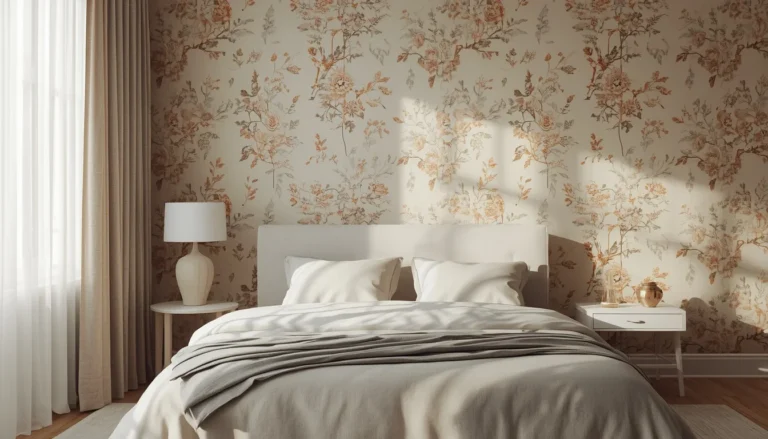
16 Mudroom Design Ideas That Make the Messiest Space in Your Home Look Amazing
Every house has one. The spot by the back door where backpacks land, shoes pile up, and somehow a single glove sits there for three weeks.
Your mudroom doesn’t have to stay that way.
With the right combination of storage, seating, and durable materials, that same small space can become the most functional room in your house — one that actually keeps the mess contained instead of just hiding it for a few hours.
This list covers 16 mudroom design ideas that work whether you’ve got a dedicated room off the garage or a narrow hallway nook by the front door.
Table of Contents
1. A Built-In Bench with Cubbies
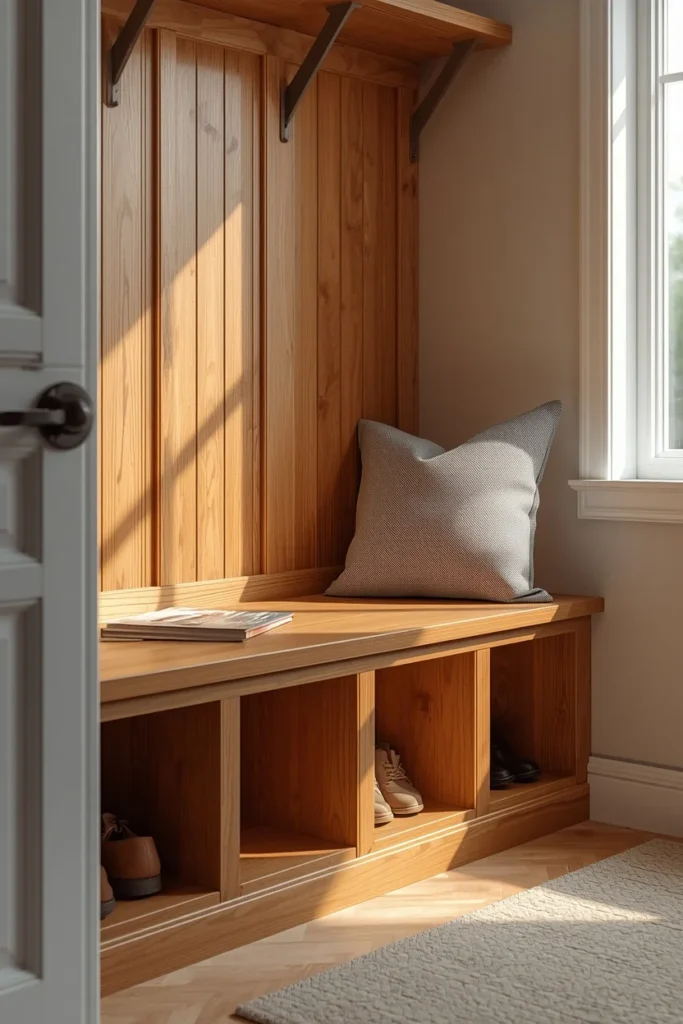
A built-in bench is the backbone of almost every well-designed mudroom, giving family members a place to sit while pulling off boots instead of balancing on one foot in the doorway. Open cubbies above or below the seat keep shoes visible and easy to grab, which cuts down on the daily hunt for a missing sneaker. Choose a solid wood or painted MDF bench that can handle daily scuffs, and size the cubbies for your household — wider slots for boots, narrower ones for kids’ shoes. Placing the bench under a window, if your layout allows it, adds natural light to a space that often gets overlooked. This single feature does more to organize daily chaos than almost anything else on this list.
2. Full-Height Lockers for Each Family Member
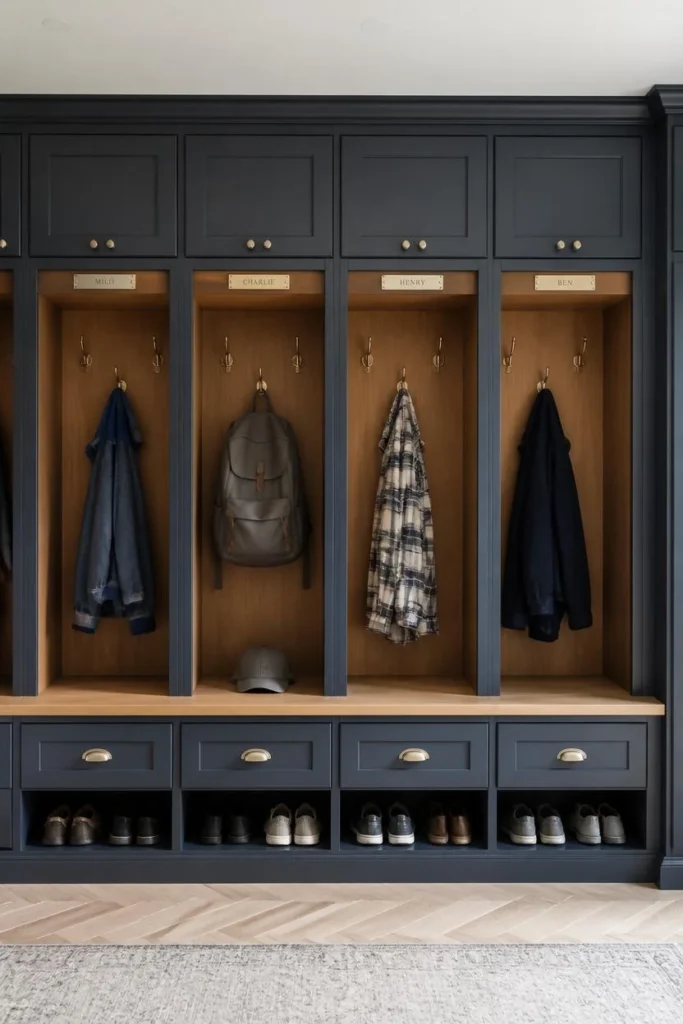
Individual lockers give every person in the house their own dedicated spot for coats, backpacks, and shoes, which eliminates the daily scramble over shared hooks and shelves. Full-height units make the most of vertical wall space, especially useful in mudrooms with a small footprint. Add a nameplate or label above each locker so younger kids know exactly where their things belong, which genuinely helps keep the system working long-term. Two-tone finishes — a painted exterior with a natural wood interior, for example — keep the look from feeling too institutional. This setup works particularly well for larger families where a single shared bench and hook rail just isn’t enough storage.
3. Labeled Woven Baskets & Bins
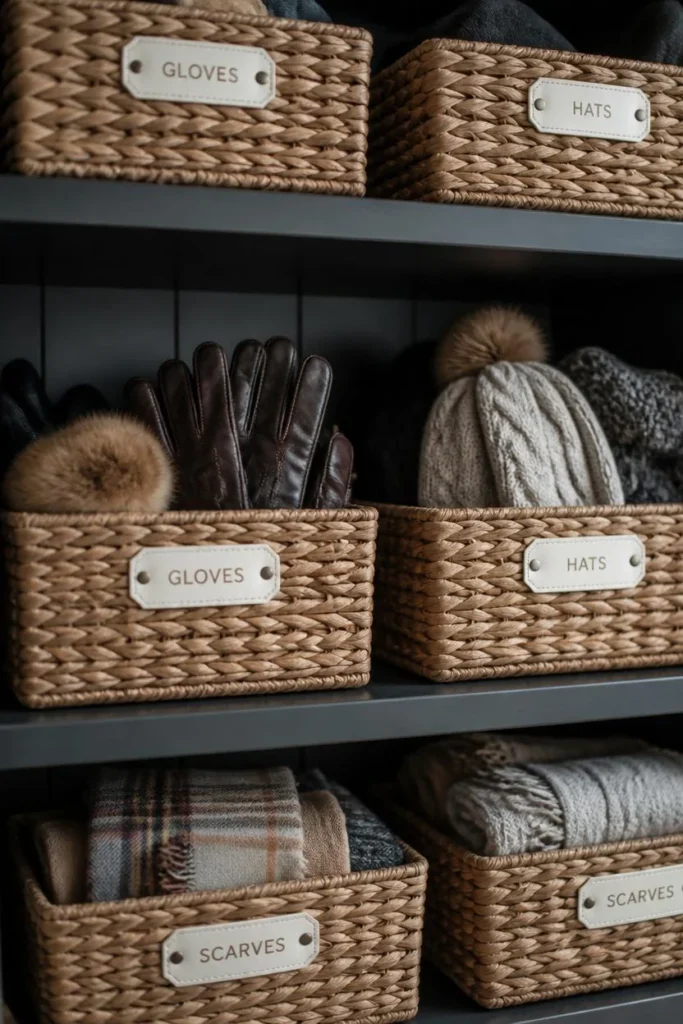
Baskets and bins are the detail that actually makes a mudroom system work day to day, giving loose items like gloves, hats, and dog leashes a specific home instead of a random pile. Choose baskets in a natural material like wicker, seagrass, or metal wire so they add warmth and texture rather than looking like plain plastic storage. Label each one clearly, whether with a printed tag or a simple chalkboard label, so every family member — including guests — knows where things go without asking. Slide the baskets into open cubbies or onto a lower shelf so they stay accessible without needing to be lifted down. This is one of the most affordable upgrades on the entire list and one of the highest-impact for actual daily organization.
4. Bold Patterned Tile Flooring
A bold mosaic, encaustic, or checkerboard tile floor does two jobs at once: it gives the mudroom real personality, and its pattern naturally camouflages everyday dirt and scuffs far better than a plain solid floor would. Black-and-white or terracotta-and-cream patterns both read as classic rather than trendy, so the floor won’t feel dated in a few years. Because mudrooms take heavy daily traffic, choose a durable porcelain tile rated for high-use areas rather than a softer material. This is often the single most photographed element in a mudroom design, since the pattern reads clearly even in a quick phone photo. If a full tile floor isn’t in the budget, a patterned tile runner over existing flooring gives a similar visual effect for far less cost.
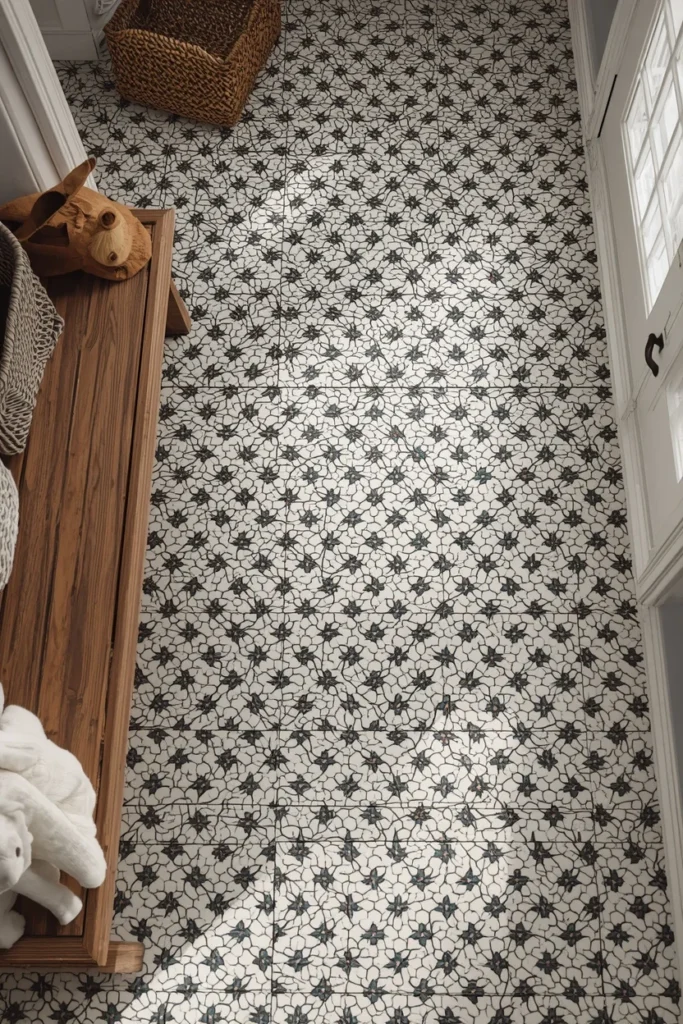
5. Two-Tone Cabinetry
Painting upper and lower cabinets in two complementary tones — a deep navy base with a soft white upper, for example — adds visual interest to what could otherwise be a plain wall of storage. This approach also helps break up a large run of cabinetry visually, so a full wall of storage doesn’t read as one flat, heavy block. Choose a darker tone for lower cabinets where scuffs and dirt are more likely, and a lighter tone up top to keep the room feeling bright. Brass or matte black hardware finishes the look and keeps it from feeling like a builder-grade closet system. This is a detail many homeowners skip, but it’s one of the easiest ways to make a mudroom feel designed rather than purely functional.
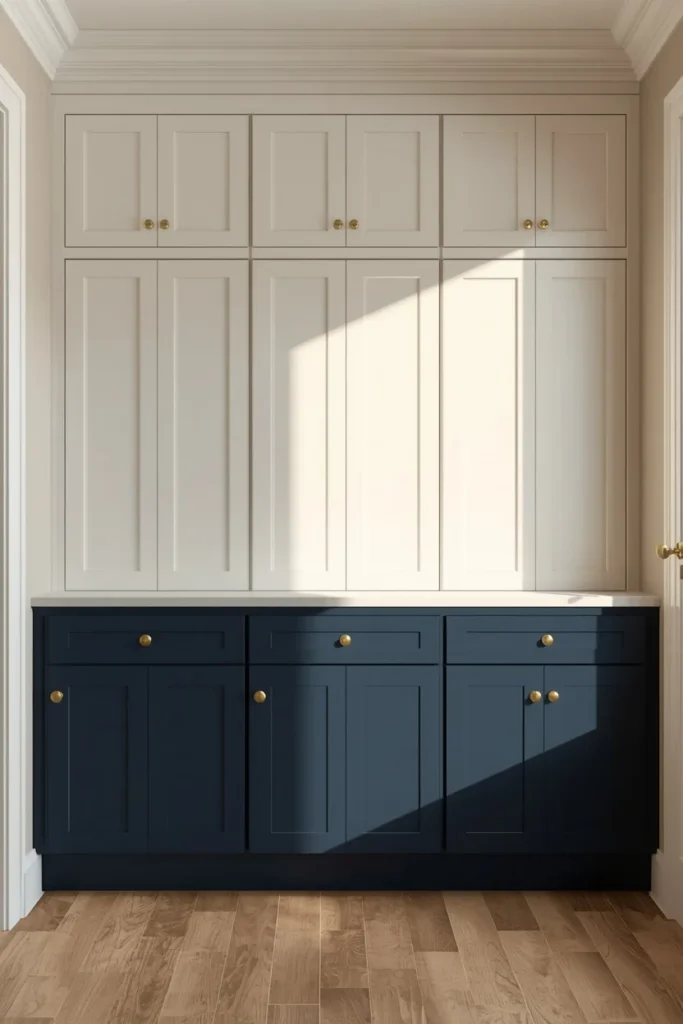
6. A Row of Wall-Mounted Hooks
A simple row of hooks along an open wall is the fastest, cheapest mudroom upgrade on this list, and it works even in the smallest hallway nook where a full bench system isn’t possible. Choose sturdy metal hooks in black or brass rather than plastic, since they’ll be holding heavy coats and backpacks daily. Space them generously — roughly a foot and a half apart — so bulky winter coats don’t crowd each other. Mount a second, lower row for kids at their own reachable height, which genuinely helps younger children hang up their own things instead of dropping them on the floor. Pair the hooks with a narrow shelf above for hats and mittens to round out the storage.
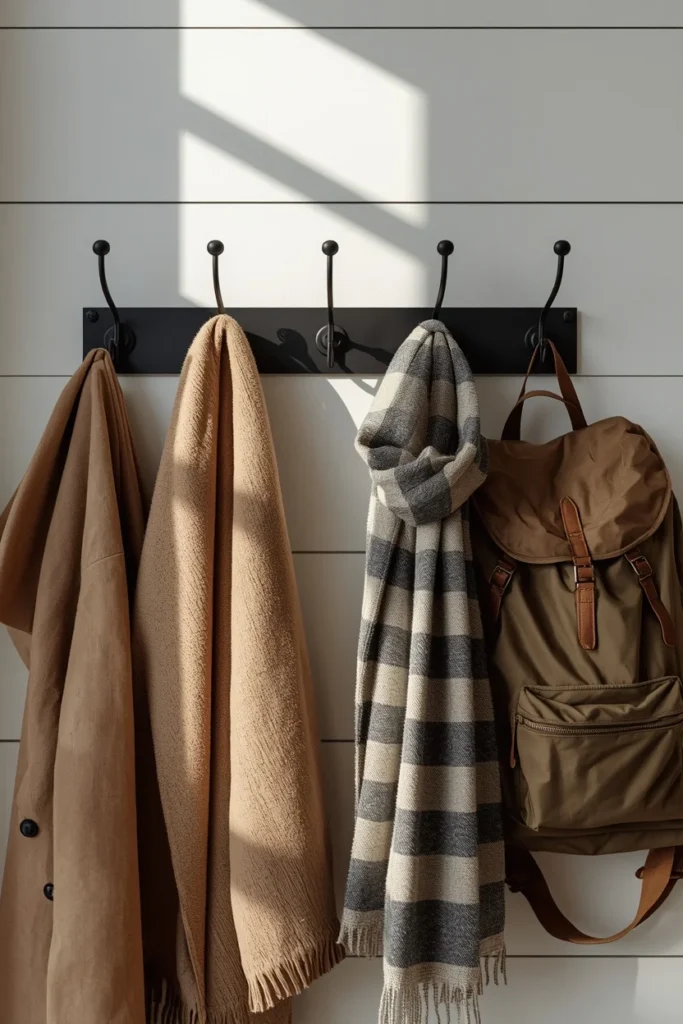
7. Shiplap or Wainscoting Walls
Adding shiplap or wainscoting to the lower half of a mudroom wall brings texture and a classic, farmhouse-adjacent character to a space that’s often left as plain drywall. It also happens to be practical — the horizontal boards or paneled lower half hold up better to scuffs and bag straps than flat drywall does. Paint the panel section in a slightly deeper tone than the upper wall for definition, or keep it all crisp white for a brighter, more traditional look. This detail pairs especially well with black hooks and warm wood benches, since the texture gives those darker elements something to stand out against. It’s a moderate weekend project that makes a noticeable difference in how finished the room feels.
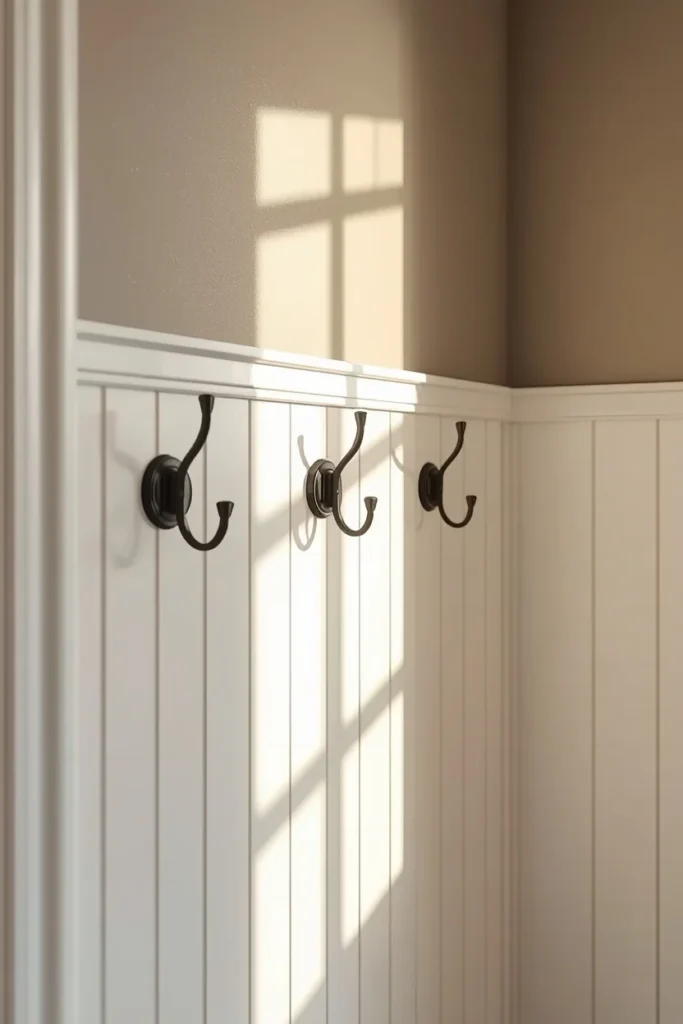
8. A Statement Light Fixture
A mudroom is often the room homeowners spend the least on lighting, which is exactly why a single statement fixture makes such a strong impression. A rustic lantern-style pendant, a sculptural drum shade, or a row of simple schoolhouse globes can all shift the room from purely functional to genuinely welcoming. Choose a fixture style that echoes something else already in your home — brass tones if your hardware is brass, for example — so the mudroom feels connected to the rest of the house rather than like an afterthought. Layer in a wall sconce or under-cabinet lighting near the bench for practical task lighting on darker mornings. This is a relatively small investment that has an outsized visual payoff.
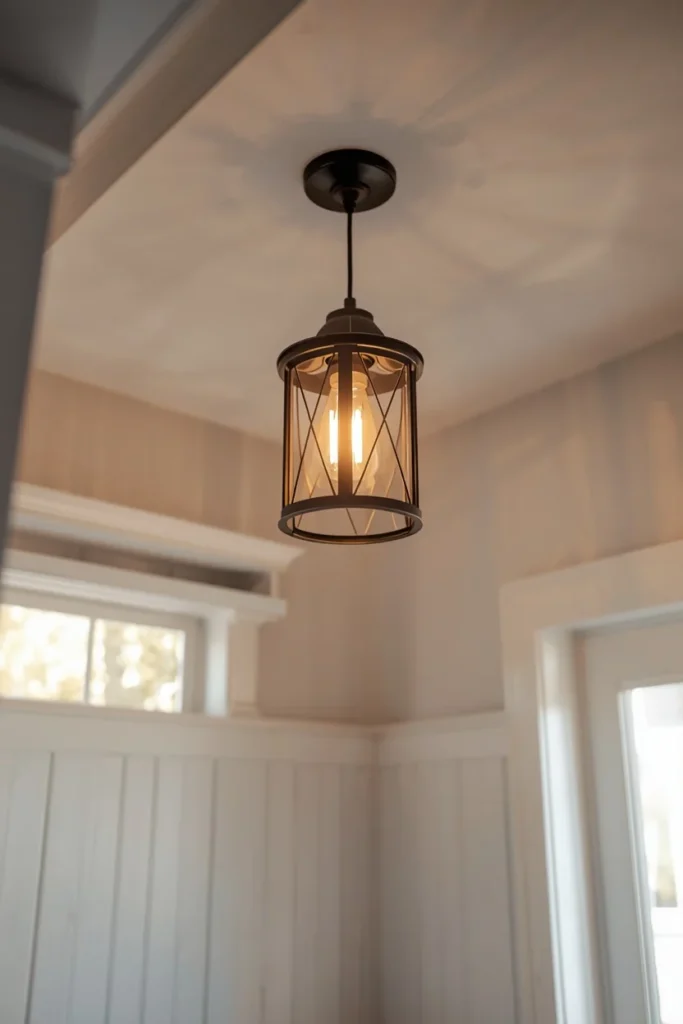
9. A Wall Mirror for Small Spaces
In a small mudroom, a wall mirror does double duty — it gives you a last-glance check before heading out the door, and it visually expands a cramped space by bouncing light and reflecting the room back on itself. Choose a mirror with a simple frame in a material that matches your hardware finish, whether that’s black metal, brass, or natural wood. Position it at a height that works for the main users of the space rather than centering it purely for symmetry. This is one of the easiest fixes for a narrow hallway-style mudroom that doesn’t have room for a full bench-and-locker system, since it adds visual interest without taking up any floor space.
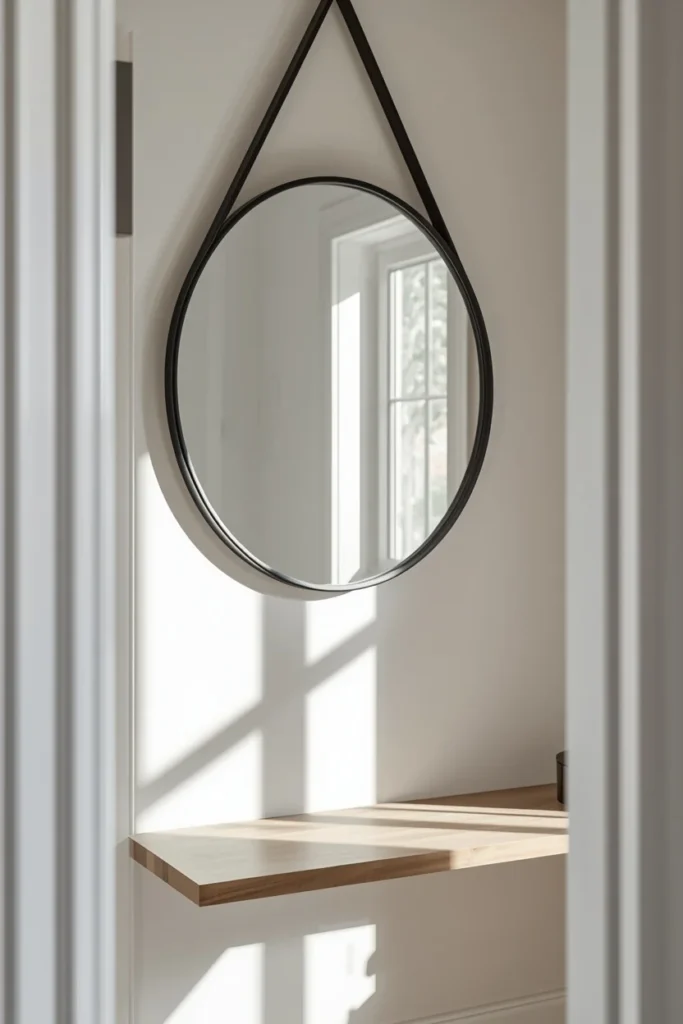
10. A Dedicated Pet Station
If pets come and go through the same entrance as the rest of the family, a built-in pet station keeps leashes, food, and towels from turning into their own separate mess. A low cubby for a dog bed, a pull-out drawer for food and water bowls, and a hook specifically for the leash all keep pet gear contained in one predictable spot. Some newer mudroom designs even build in a small wash station with a handheld sprayer for cleaning muddy paws before pets reach the rest of the house. This idea has grown in popularity as more mudrooms are designed as true multi-use entry points rather than spaces built for humans alone. Even without a full built-in, a single labeled basket for pet items goes a long way.
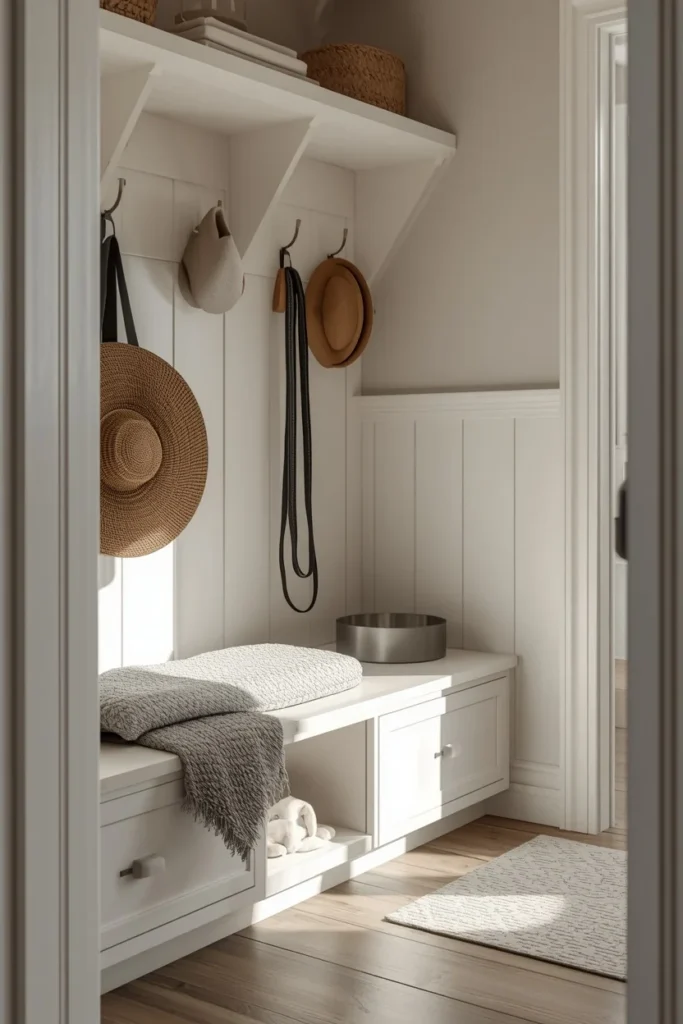
11. Open Shelving Paired with Closed Cabinets
Balancing open shelves with closed cabinet doors gives a mudroom both display space and hidden storage, which keeps the room from feeling either too bare or too cluttered. Use open shelves for items you want visible and easy to grab, like everyday shoes or a basket of sunscreen and bug spray, and closed cabinets for anything you’d rather not see day to day, like seasonal gear or cleaning supplies. This combination also adds visual rhythm to a wall of storage, since solid cabinet doors and open shelving read as two different textures side by side. Keep whatever sits on the open shelves tidy and limited in color palette, since open storage only looks intentional when it isn’t overloaded.
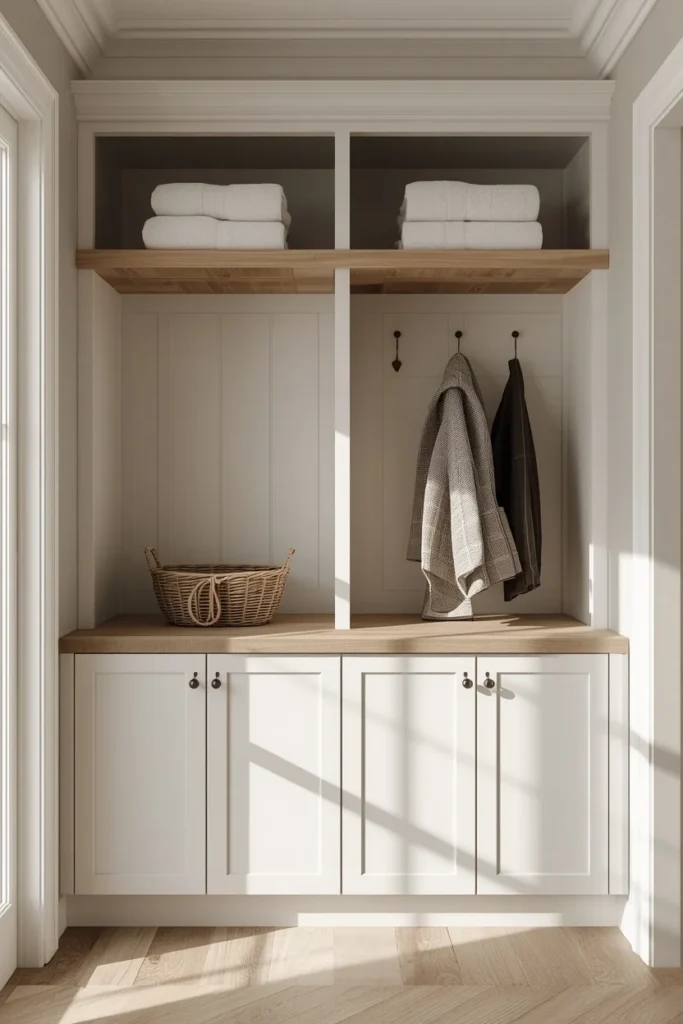
12. Waterproof Flooring That Hides Mess
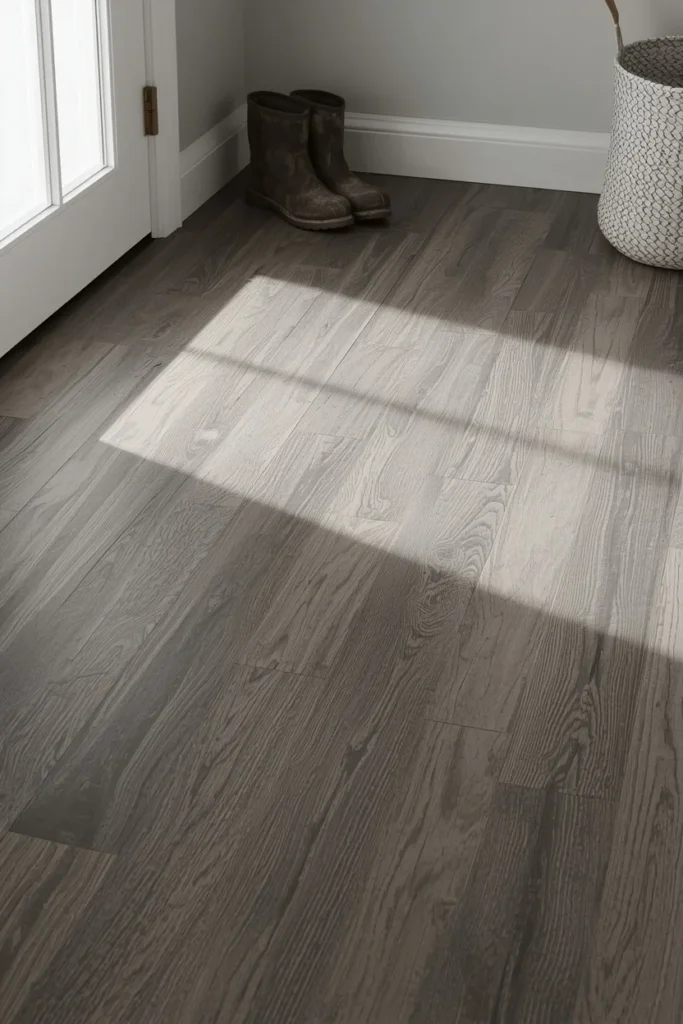
Because a mudroom takes the brunt of mud, snow melt, and daily foot traffic, flooring choice matters more here than almost anywhere else in the house. Waterproof luxury vinyl plank gives the look of real hardwood while standing up to moisture far better, and it’s significantly easier to install and maintain than natural wood. Porcelain tile is another strong option, especially in a pattern or darker tone that won’t show every scuff between cleanings. Whatever material you choose, prioritize function first in this particular room — a beautiful floor that warps or stains within a year isn’t actually a good long-term choice, no matter how it photographs on day one.
13. A Bold Wallpaper Accent Wall
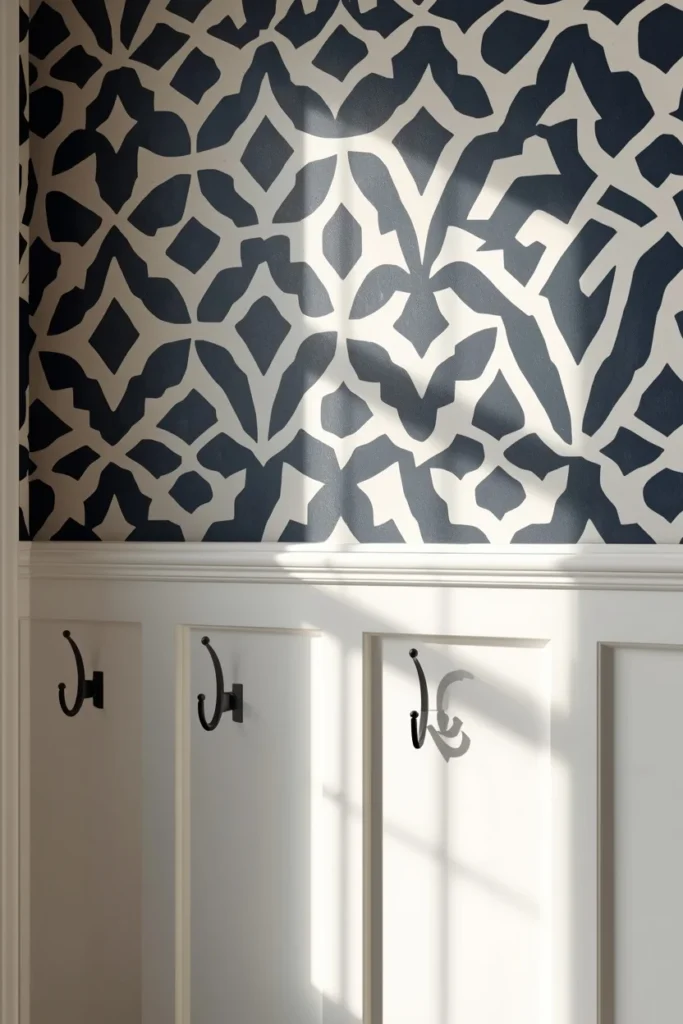
Wallpaper on just one wall or the upper half above a wainscoted lower section brings personality into a mudroom without overwhelming a small space. A geometric print, a subtle botanical, or a classic stripe all work well, since the pattern gives the eye something to enjoy in a room that’s otherwise mostly functional storage. Choose a scrubbable, moisture-resistant wallpaper given the room’s exposure to wet coats and boots. This is a detail that costs relatively little but photographs extremely well, especially paired with simple black hooks or a wood bench that lets the pattern stay the visual focus of the room.
14. A Utility Sink or Laundry Combo
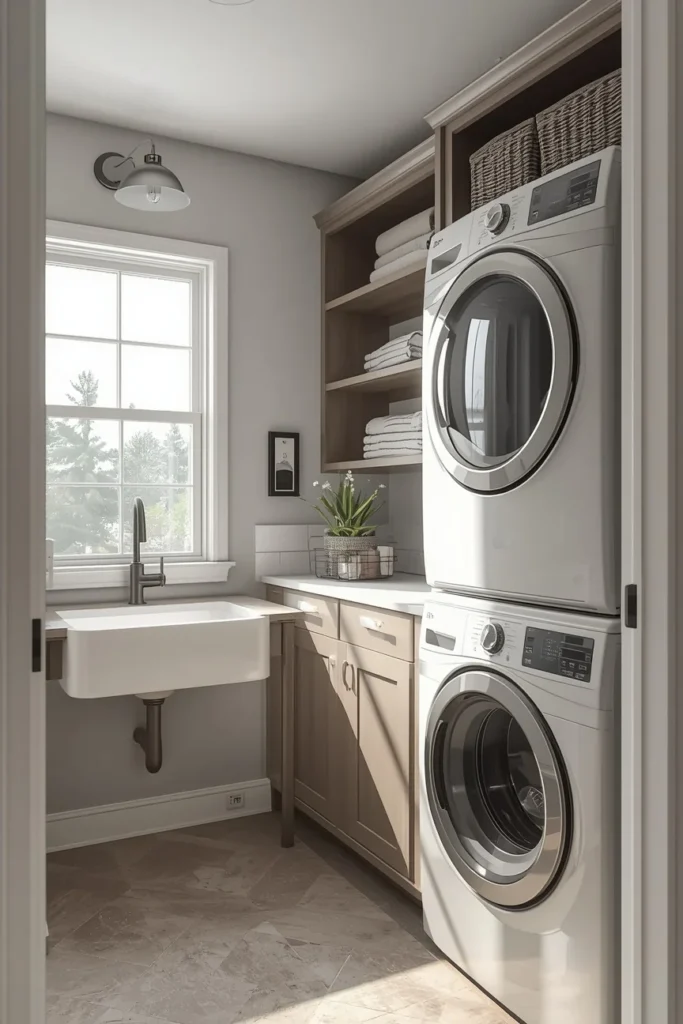
Combining a mudroom with a utility sink or a laundry area turns the space into a genuine multi-purpose zone, giving you somewhere to rinse muddy boots, wash garden hands, or start a load of laundry the moment you walk in. This layout works especially well for households near a garage entrance, where dirty gear from yard work or sports practice needs to be dealt with immediately rather than tracked further into the house. A deep, farmhouse-style sink in a durable material like fireclay or stainless steel handles heavy daily use better than a standard bathroom-style sink. If a full combo room isn’t possible, even a small slop sink tucked into one corner adds real functionality without requiring a full room addition.
15. A Charging & Tech Nook
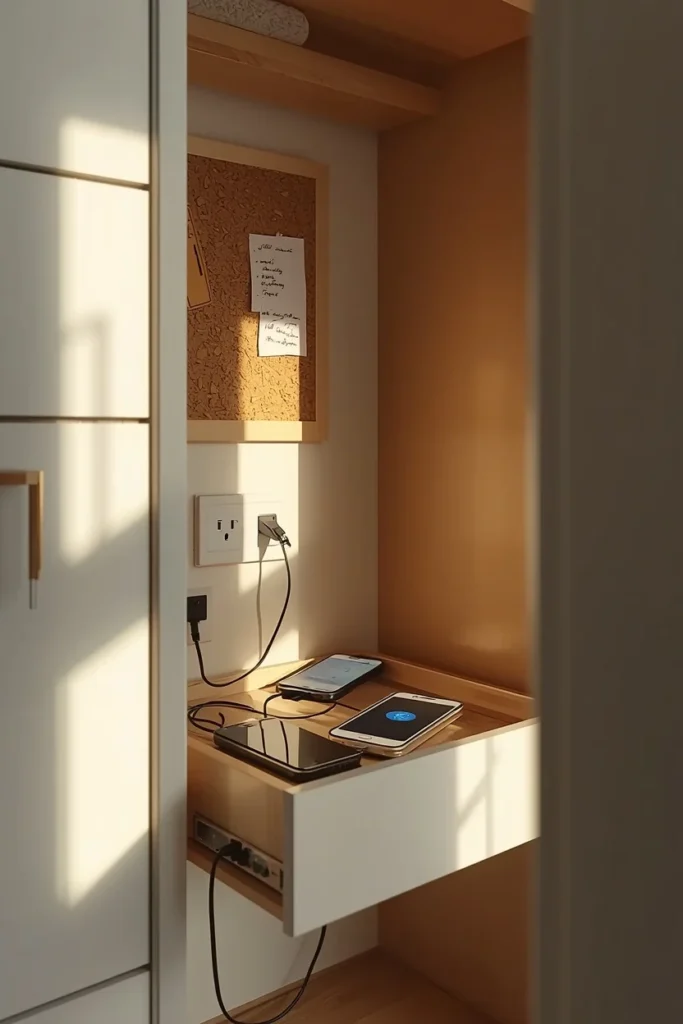
A small built-in charging station solves a genuinely modern mudroom problem — where do phones, tablets, and other devices go the moment everyone walks through the door. A shallow drawer or cubby with a hidden power strip keeps cords out of sight while still giving devices a consistent spot to charge overnight. This nook works especially well positioned near the main bench, since it’s the natural stopping point where bags and devices already tend to land. Adding a small cork board or dry-erase panel nearby for schedules and reminders extends the idea into a genuine family command center, not just a place for gadgets.
16. Herringbone Flooring with Deep-Toned Casework
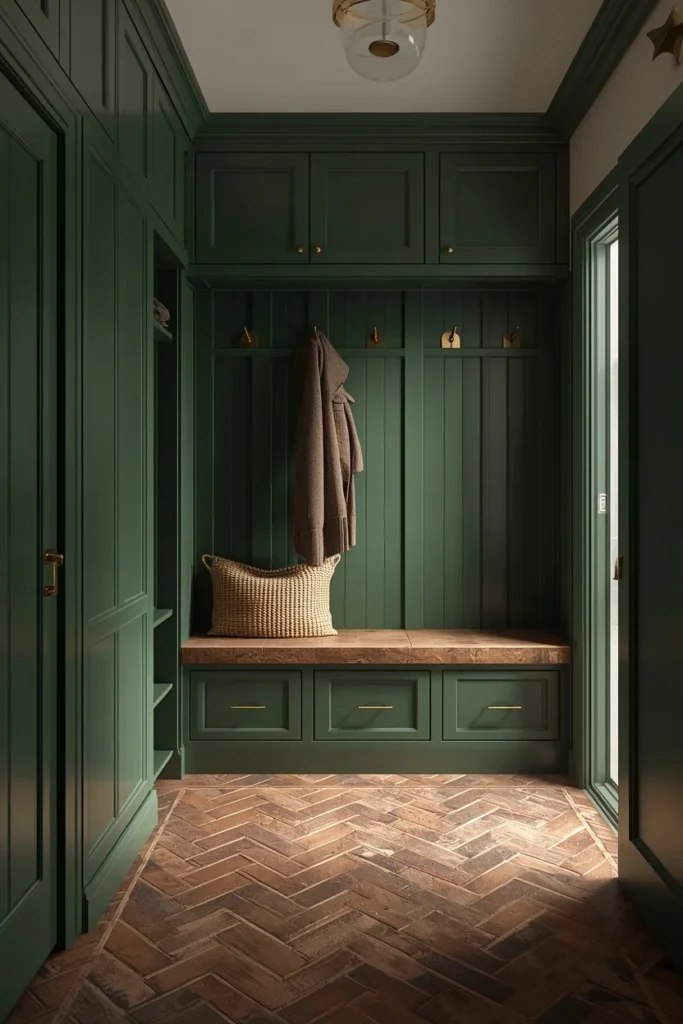
For a more elevated, design-forward mudroom, pairing a herringbone brick or wood floor with deep-toned cabinetry — a rich forest green, charcoal, or plum — creates real visual weight and warmth. The strong floor pattern grounds the room, while the saturated cabinet color keeps the space from feeling like a purely white, sterile utility area. Brass or aged hardware against the dark casework adds a final touch of contrast that photographs beautifully. This combination works best in larger, dedicated mudrooms where there’s enough wall space for the deep color to feel intentional rather than cramped, and it’s a strong choice for homeowners who want their mudroom to feel like a true extension of the home’s design, not just a storage closet.
Styling Tips
Choose one dominant material palette — wood tones, a paint color family, and a hardware finish — and repeat it across the bench, cabinetry, and hooks so the room reads as one cohesive design rather than a mix of mismatched pieces. Keep visible open storage limited to items that actually look tidy when out in the open, and let closed cabinets or drawers absorb everything else. Add at least one soft or natural texture, like a woven basket or a cushioned bench seat, so the room doesn’t feel purely utilitarian.
Practical Implementation Ideas
Start with the flooring and any built-in bench or cabinetry first, since those are the hardest and most expensive elements to change later. Add hooks, baskets, and labels once the bigger structural pieces are in place, since those smaller elements are easy to adjust as your family’s needs change. If you’re renting or working with a smaller budget, focus on hooks, a slim bench, and labeled bins rather than full built-in cabinetry.
Common Mistakes to Avoid
Choosing flooring purely for looks without considering water resistance and durability is one of the most common and costly mudroom mistakes. Skipping a bench or seating area makes the space far less functional day to day, even if the storage itself is well designed. Overcrowding open shelving with too many visible items quickly turns a stylish mudroom back into a cluttered one.
Small-Space Alternatives
In a narrow hallway mudroom, a single slim bench, a row of hooks, and one mirror often deliver the same organizational benefit as a full room of built-ins. Wall-mounted, floating shelves save floor space compared to freestanding furniture. A single tall, narrow locker-style cabinet can hold as much as several feet of open shelving while taking up a fraction of the footprint.
Budget-Friendly Alternatives
A freestanding bench with baskets underneath delivers much of the same function as a built-in system at a fraction of the cost. Peel-and-stick wallpaper or paint can mimic the impact of a full accent wall without a major renovation budget. Thrifted or secondhand hooks and hardware, given a fresh coat of spray paint, work just as well as new designer pieces.
Pro Styling Recommendations
Match your mudroom’s hardware finish to what’s already used in your kitchen or entryway so the spaces feel connected rather than randomly styled. Leave a small amount of empty space in cubbies and on shelves rather than filling every inch, since a slightly underfilled storage system is easier to maintain long-term. Reassess your bin and basket system every season, since a family’s storage needs shift noticeably between summer and winter gear.
FAQs
Conclusion
A mudroom doesn’t need a full renovation budget to go from chaotic to genuinely functional. Start with a bench and a place for shoes, add hooks and labeled bins for the smaller stuff, and choose flooring that can actually handle daily life. Once those basics are in place, the finishing touches — a light fixture, a mirror, a bold tile pattern — are what turn a purely practical room into one that feels like part of your home instead of an afterthought by the back door.