24 Tiny Powder Room Ideas That Make the Biggest Impression
Most people design their powder room last and think about it least. That’s a mistake, because it’s usually the one room every single guest actually sees.
A powder room doesn’t need a shower, a tub, or much square footage at all. It needs one good idea, executed with confidence. That’s exactly why small bathrooms are where homeowners take the biggest design risks — the kind of wallpaper, paint color, or lighting choice that would feel like too much in a primary bath feels exactly right in a room the size of a closet.
This list covers 24 ideas for tiny powder rooms, organized by what actually makes the room work: color and pattern, materials and fixtures, storage, and lighting. Some of these you can do in a weekend. Others are worth saving for a full remodel. Either way, by the end you’ll have a real plan instead of a folder of pins you’re not sure how to use.
Table of Contents
1. Bold, Oversized Wallpaper
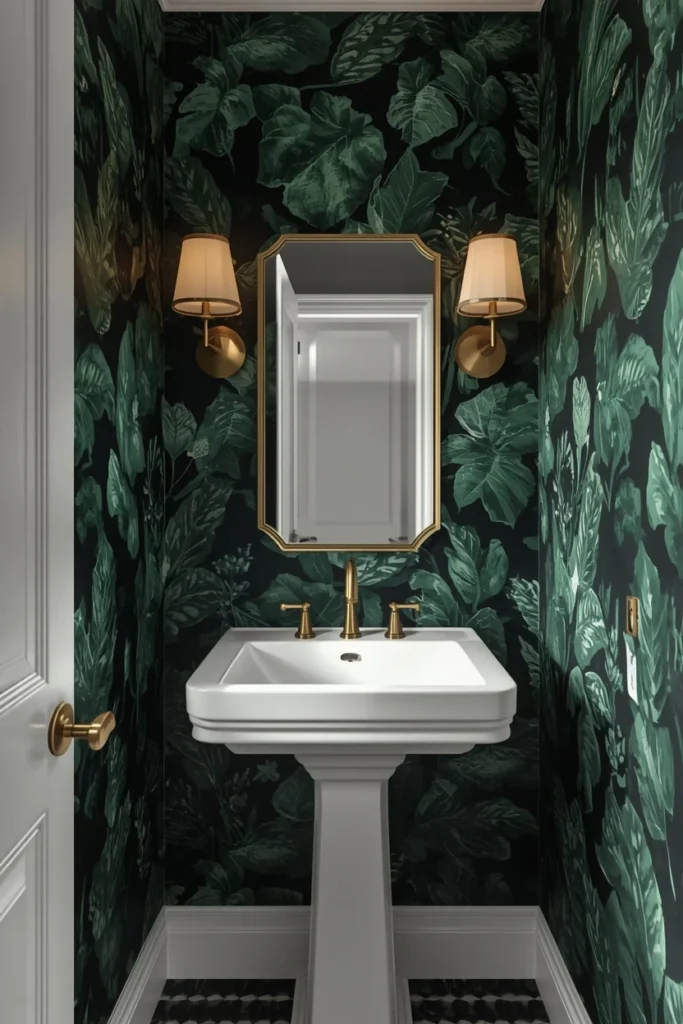
A powder room is the one room in the house where an oversized floral or a dramatic mural actually makes sense, because you’re only looking at it for a few minutes at a time. Pick a print with real scale — large botanical leaves, a geometric repeat, or a hand-painted-look mural — instead of a small, busy pattern that can feel fussy in a tight space. Dark, saturated backgrounds like deep green, navy, or black-based prints tend to read as intentional rather than overwhelming, especially once the walls disappear into shadow at the corners. Pair the paper with simple, unfussy trim and a plain white ceiling so the pattern stays the star of the room. This is usually the single highest-impact, lowest-effort change you can make to a small bathroom.
2. Color-Drenched Walls, Trim, and Ceiling
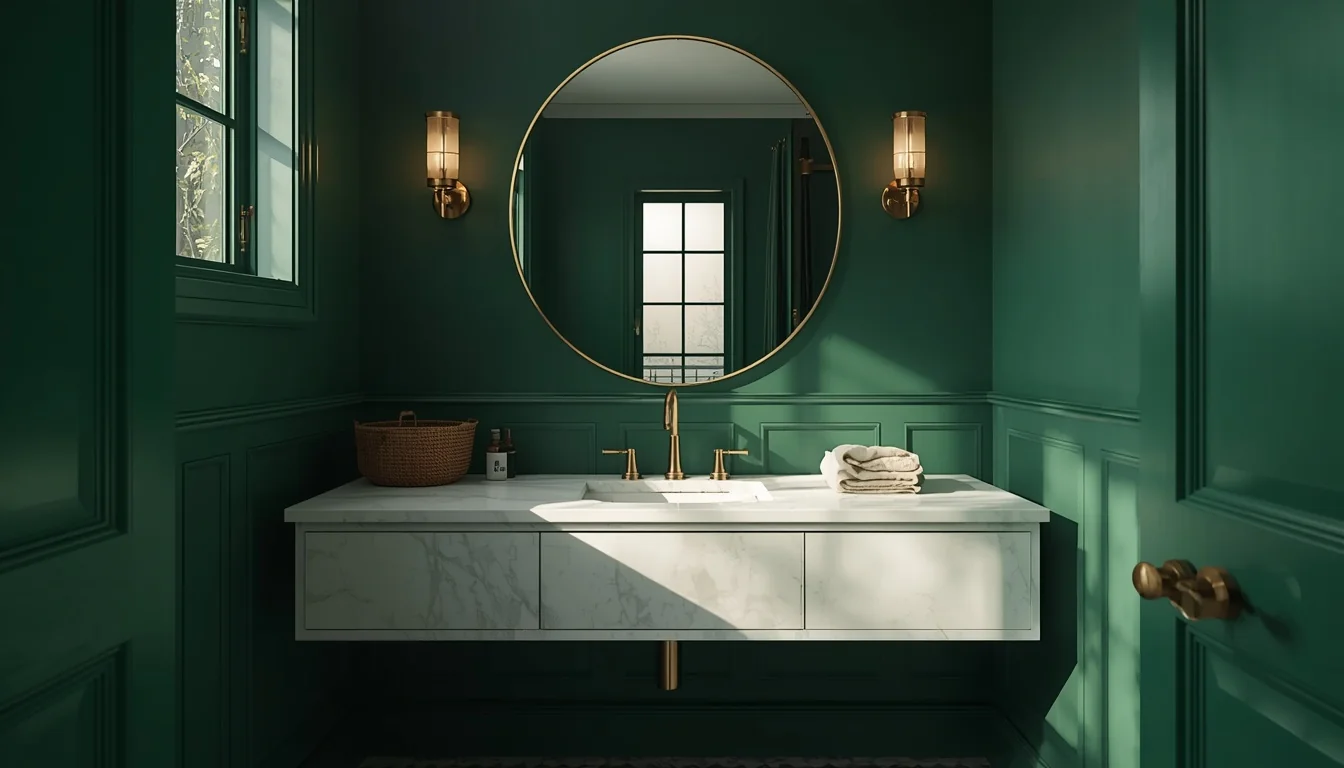
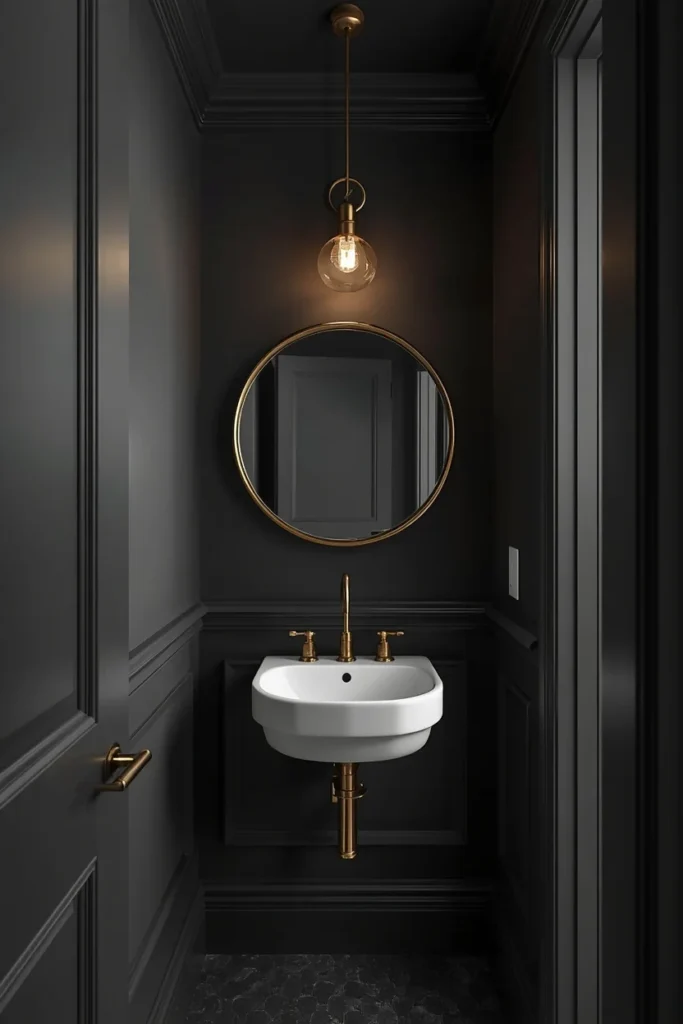
Painting the walls, trim, and ceiling the exact same color removes the visual stopping points that usually make a small room feel chopped up. Deep, moody colors like charcoal, forest green, or aubergine work especially well here because the lack of contrast actually makes the room’s edges harder to find. This trick, sometimes called color drenching, works because your eye stops registering where the wall ends and the ceiling begins. Keep the hardware and mirror frame in a warm metal so they stand out against the flat color instead of disappearing into it. It’s one of the few paint tricks that genuinely makes a small room feel larger rather than smaller.
3. Monochromatic Palette for Visual Flow
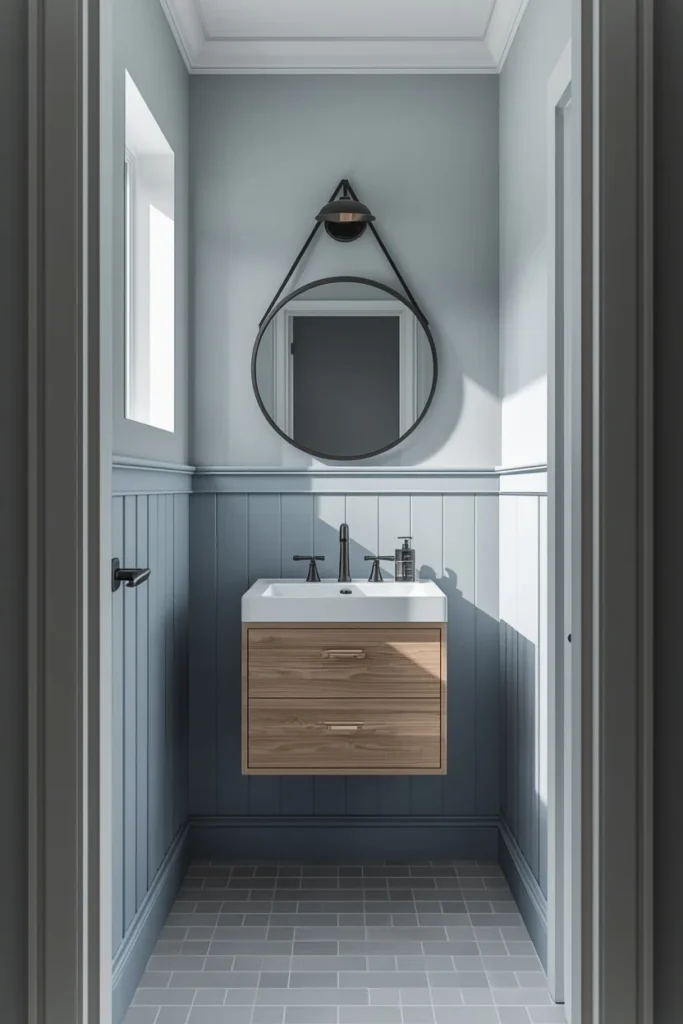
Choosing one color family for the walls, tile, and even the vanity keeps a small room from feeling broken into segments. A soft blue-gray palette, for example, can move from a slightly darker tile floor to a mid-tone wall to a pale ceiling without ever feeling matchy. This approach is especially useful in powder rooms with awkward angles or a low ceiling, since it smooths over the architecture instead of highlighting it. Add contrast through materials rather than color — a matte black faucet against a soft blue wall, for instance — so the room still has depth. It’s a quieter approach than color drenching, but it solves the same problem.
4. Grasscloth or Textured Wallcovering
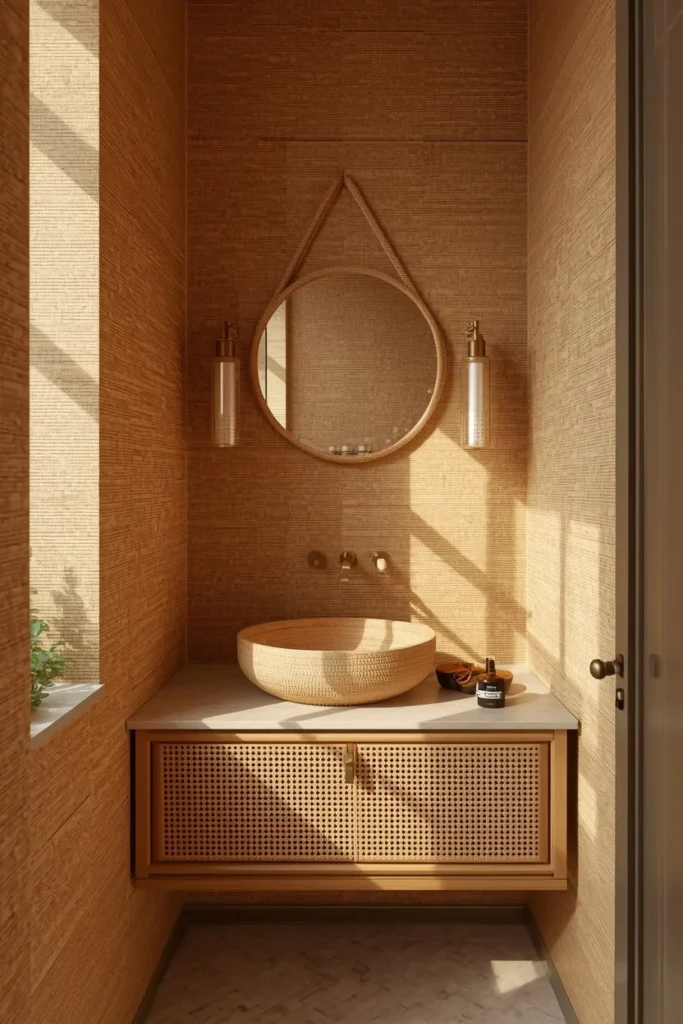
If a bold print feels like too much commitment, a grasscloth or subtly textured wallcovering gives a powder room depth and warmth without a loud pattern. The natural fiber catches light differently than painted drywall, which adds a layer of visual interest even in a plain neutral tone. Grasscloth pairs especially well with warm wood accents and brass fixtures, since both lean into the same organic, collected feeling. It also happens to be forgiving of small wall imperfections, which regular paint tends to show off. This is a good middle-ground choice for anyone who wants a designed look without going full pattern.
5. Floating or Wall-Hung Vanity
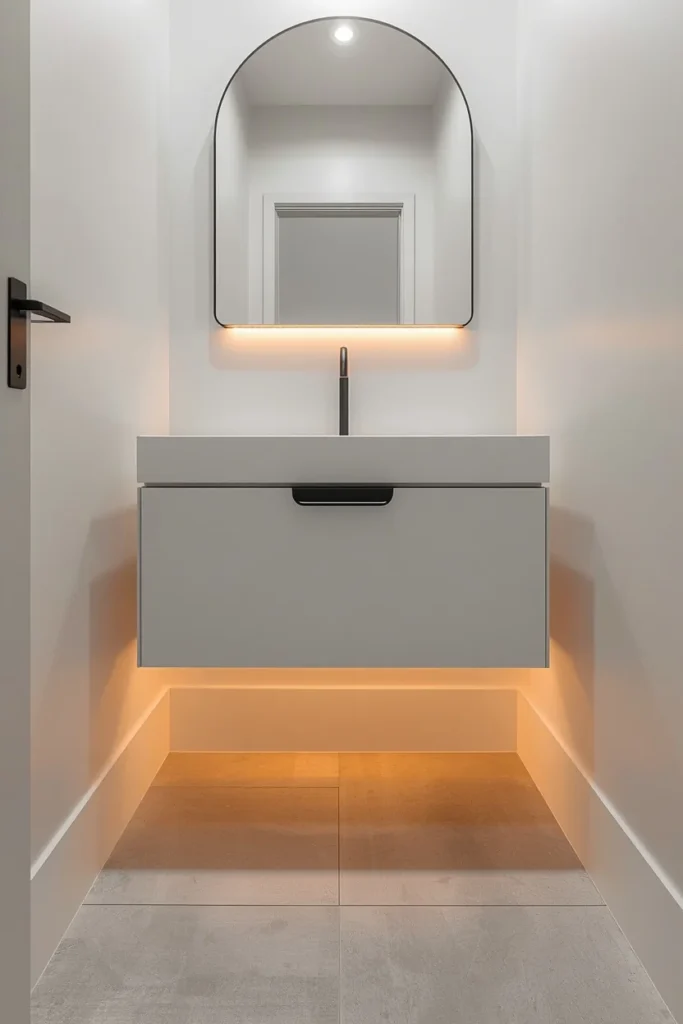
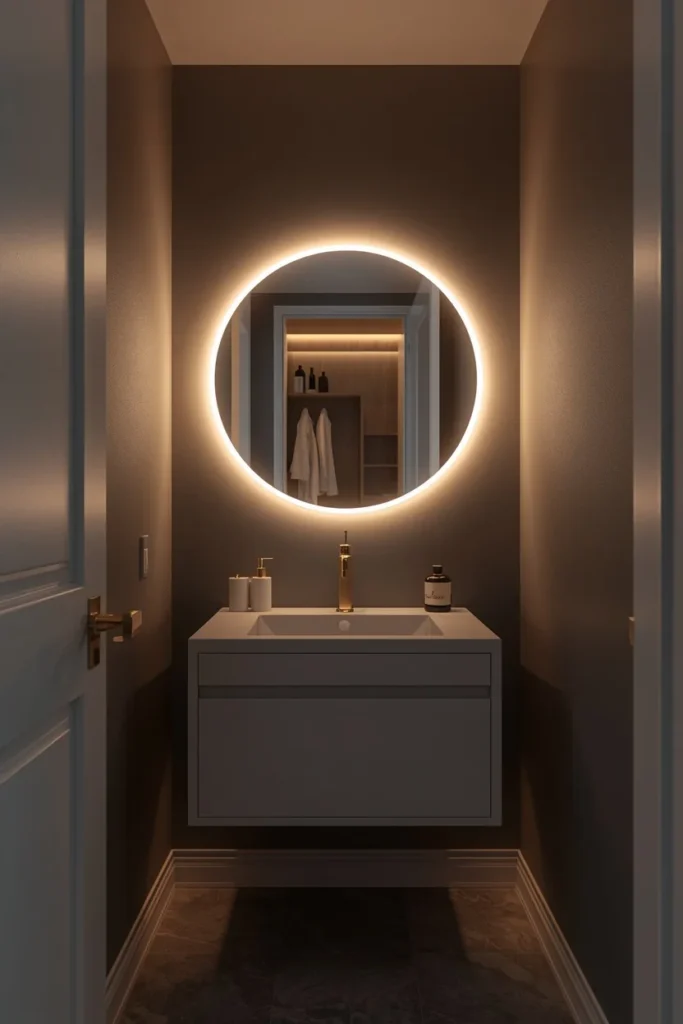
Mounting the vanity to the wall instead of letting it sit on the floor is one of the simplest ways to make a tiny powder room feel less cramped, because you can see the floor continue underneath it. This works especially well with light-colored or large-format flooring, since the visible floor space reads as more square footage than there actually is. A floating vanity also gives you a spot to add discreet lighting underneath for a soft glow at night. Choose a vanity with a single drawer or open shelf rather than double doors, which can look bulky in a small footprint. It’s a small structural choice that changes how the whole room reads.
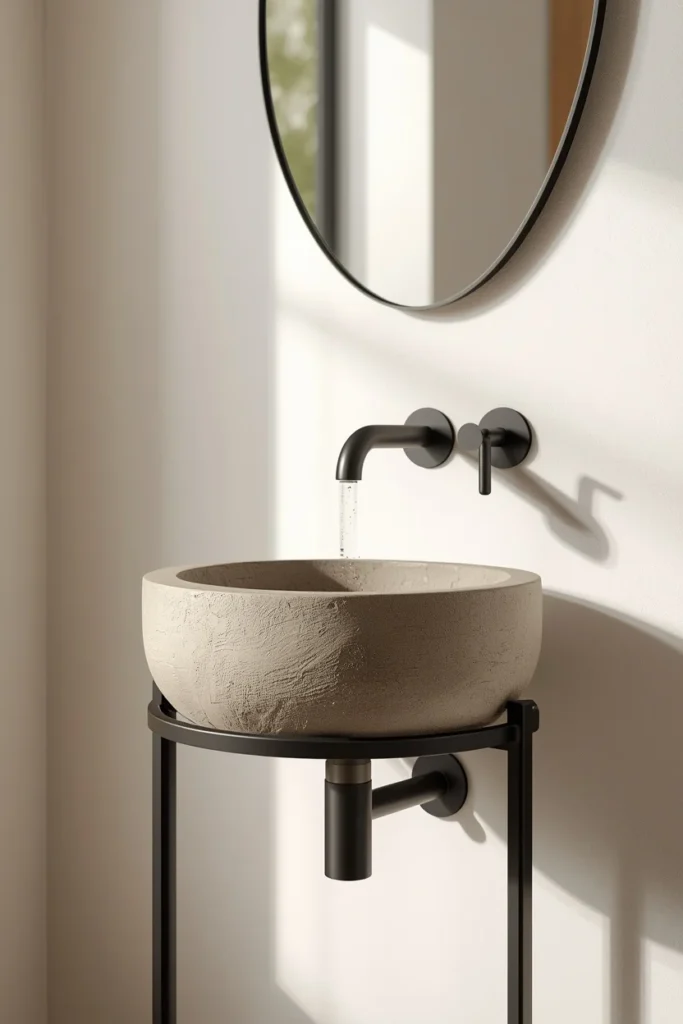
6. Sculptural Stone Vessel Sink
A single stone or concrete vessel sink sitting on a simple base turns the vanity into a piece of sculpture rather than just a fixture. This works because it gives the eye one clear focal point instead of asking it to take in a whole cabinet’s worth of detail. A veined marble or honed concrete basin looks especially striking against a plain wall, since the material itself is doing the visual work. Pair it with a wall-mounted or gooseneck faucet so the plumbing doesn’t compete with the shape of the basin. This idea suits anyone who wants their powder room to feel more like a gallery moment than a functional stop.
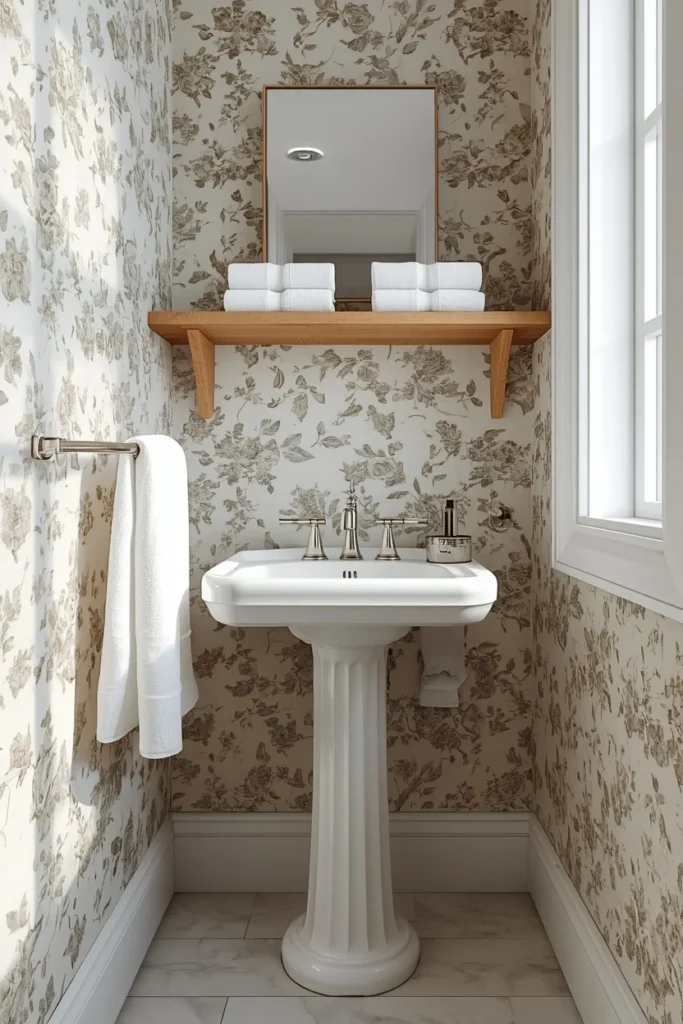
7. Vintage-Style Pedestal Sink
A pedestal sink takes up far less visual and physical space than a full vanity, which makes it one of the most practical choices for a genuinely tiny footprint. Choosing one with a slightly vintage silhouette, like a fluted base or curved bowl, adds character without adding bulk. Since there’s no cabinet to hide storage, pair the pedestal sink with wall-mounted shelving or hooks nearby so the room still functions day to day. Polished nickel or unlacquered brass fixtures tend to suit the vintage shape better than a stark modern finish. This is a strong option for older homes or anyone leaning traditional rather than modern.
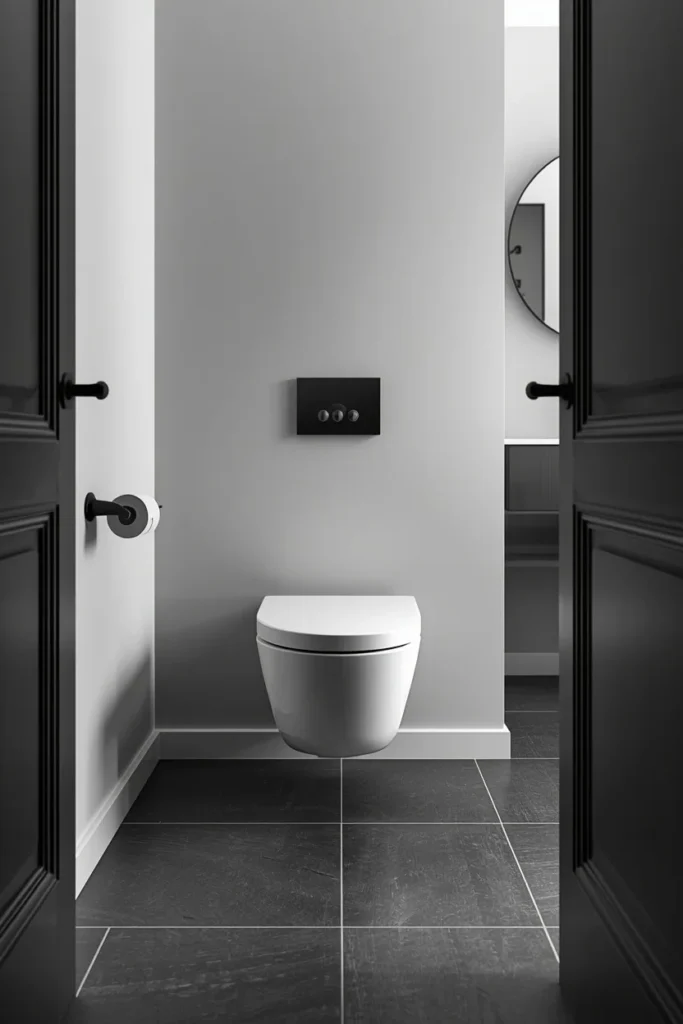
8. Wall-Mounted Toilet
A wall-mounted toilet hides the tank inside the wall, which frees up several inches of visible floor space and makes the entire room easier to clean underneath. In a powder room this small, those few inches can be the difference between a room that feels tight and one that feels comfortable to move around in. It also gives the room a cleaner, more modern silhouette overall, since there’s no bulky tank breaking up the wall line. This option requires more plumbing work than a standard toilet, so it’s best planned during a full remodel rather than a quick refresh. For anyone gutting a powder room down to the studs, it’s worth the extra step.
9. Large-Format Floor Tile
Switching from small mosaic tile to large-format tile on the floor reduces the number of grout lines in the room, and fewer grout lines read as a bigger, calmer space. This works especially well in a small footprint where a busy tile pattern would otherwise fight with the walls for attention. Light gray, warm beige, or soft greige tones tend to make the floor recede visually, letting a bolder wall choice take center stage. Large-format tile is also easier to keep clean, since there’s less grout to scrub in a room that gets frequent use. It’s a quiet upgrade that most guests will never consciously notice, which is exactly the point.
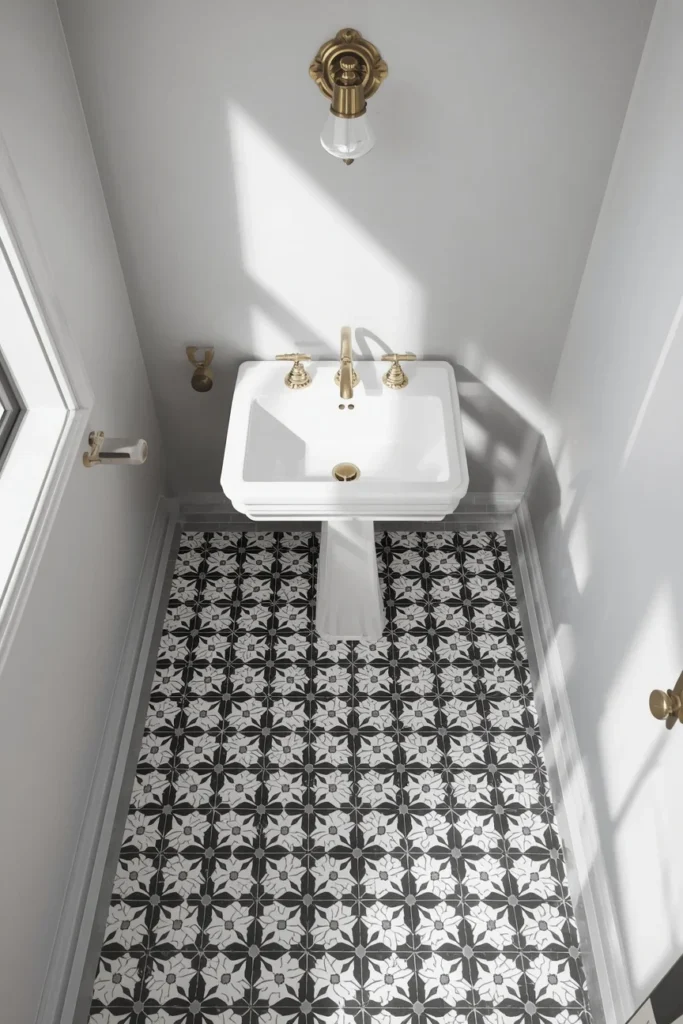
10. Patterned Cement or Mosaic Floor Tile
If the walls are staying neutral, the floor is the perfect place to add pattern instead. A patterned cement tile or a small mosaic in a Moroccan or Spanish-inspired design gives the room personality from the ground up, without competing with anything at eye level. Black and white patterns tend to feel timeless, while terracotta or blue tones lean more into a warm, collected look. Since the floor is the one surface guests glance at but don’t stare at, it’s a lower-risk place to experiment with a bold pattern than the walls. Keep the vanity and walls simple so the floor gets to do the talking.
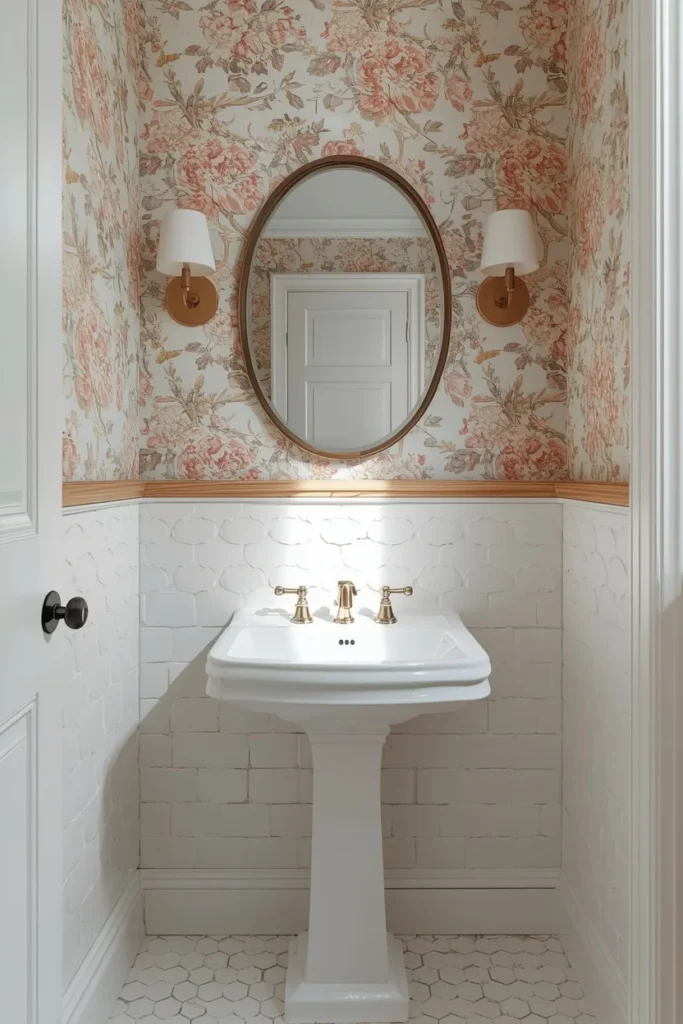
11. Tile Wainscoting or Half-Wall Tile
Running tile partway up the wall, then switching to paint or wallpaper above, adds texture and a sense of craftsmanship without tiling the entire room. This half-and-half approach also protects the lower wall from water splashes near the sink, which matters more in a powder room than people expect. A simple subway tile in a herringbone or vertical stack pattern keeps the look classic, while a scalloped or fish-scale tile adds a softer, more decorative edge. Cap the tile with a simple wood or tile ledge so the transition between materials looks finished rather than accidental. This idea works particularly well when paired with a bold wallpaper on the upper half.
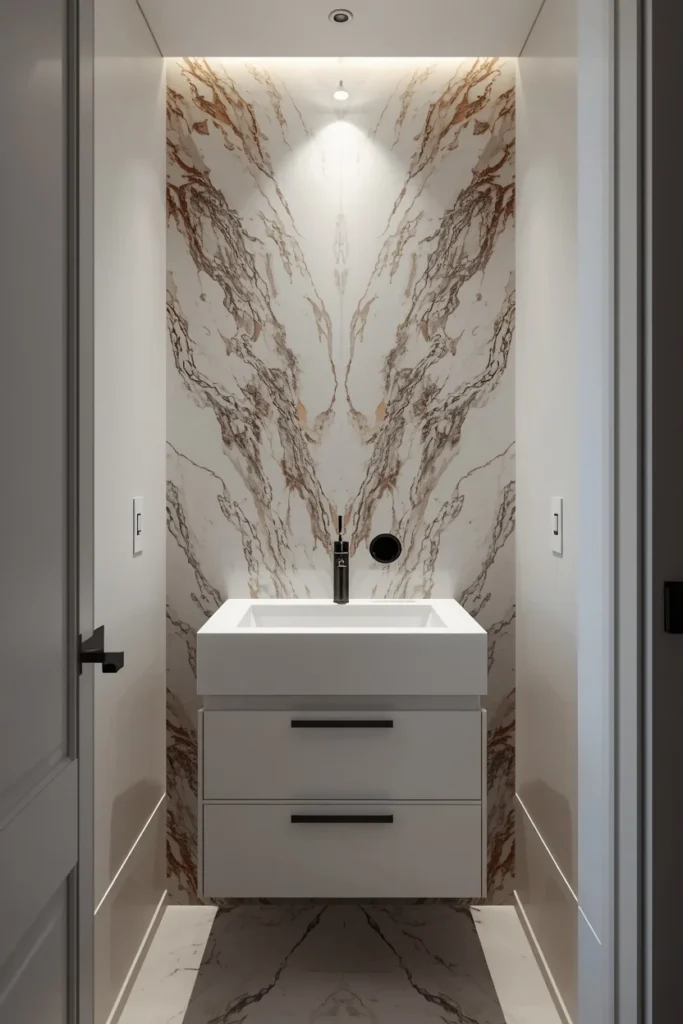
12. Full Stone Slab Feature Wall
For a more dramatic, high-end look, one full wall of a bookmatched marble or quartzite slab can turn a plain powder room into the most memorable room in the house. The natural veining does the decorative work on its own, so the rest of the room can stay simple and let the stone be the focal point. This is a higher-budget choice, but even a single accent wall behind the vanity delivers most of the visual impact without tiling the entire room. Pair it with a simple floating vanity and understated fixtures so nothing competes with the stone’s pattern. It’s the kind of detail that photographs beautifully and tends to be the thing guests remember.
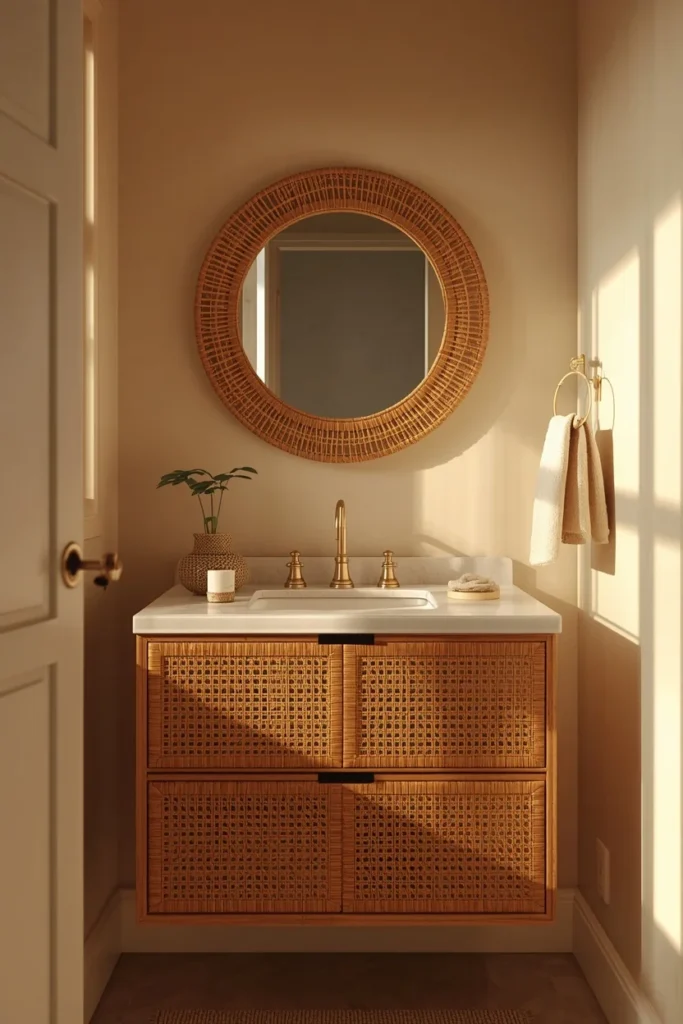
13. Rattan and Natural Wood Accents
Bringing in rattan, cane, or warm wood tones softens a powder room that might otherwise feel cold or overly polished, especially when the rest of the palette leans toward stone and metal. A rattan-front vanity cabinet, a woven mirror frame, or a simple wood stool all add the same relaxed, collected texture without adding visual clutter. These natural materials also pair well with almost any wall color, from a crisp white to a deep jewel tone, which makes them an easy addition to an existing space. The goal is warmth, not a full coastal theme, so one or two natural pieces are usually enough. This idea works especially well in homes that lean transitional or organic modern rather than strictly formal.
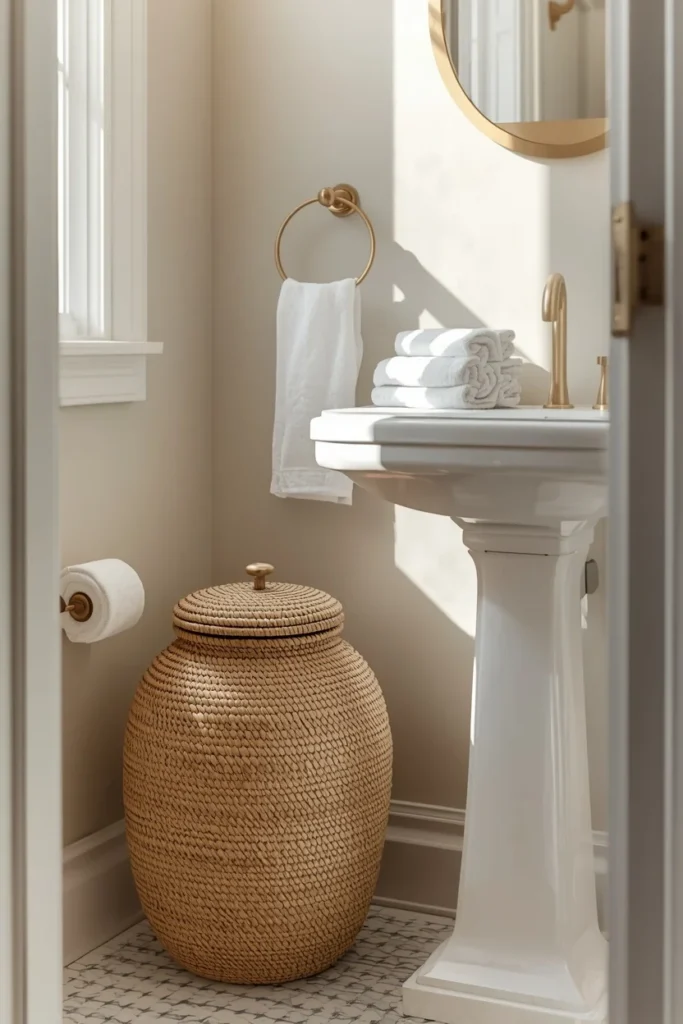
14. Woven Baskets for Soft Storage
A simple woven basket placed on the floor or a shelf gives you a spot to hide extra toilet paper, hand towels, or cleaning supplies without needing a single extra cabinet. Because baskets are soft and textured rather than hard-edged, they add warmth to a room that might otherwise feel a little sterile. This is one of the easiest storage upgrades to make in a rental or a room you’re not ready to remodel, since it requires no installation at all. Choose a basket with a lid if you want the contents fully hidden, or an open one if you’d rather use it to display rolled towels. It’s a small detail, but it’s usually the first thing that makes a powder room feel finished rather than just functional.
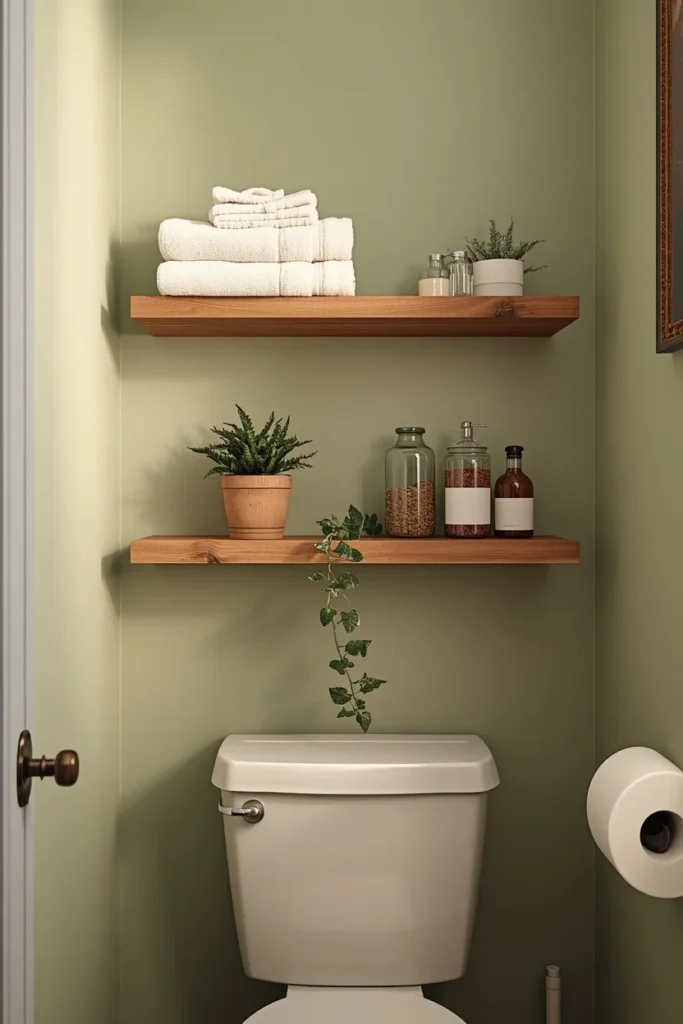
15. Floating Shelves Above the Toilet
The wall above the toilet is almost always empty, which makes it the easiest place to add storage in a tiny powder room without touching the floor plan at all. A pair of simple floating wood shelves can hold folded towels, a small plant, or a stack of glass jars, giving the room both function and a spot for personality. Keep the styling loose rather than symmetrical and packed, since an over-decorated shelf in a small room reads as cluttered fast. Matching the shelf material to another wood tone in the room, like a vanity or mirror frame, helps it feel built-in rather than added on. This is one of the highest-value, lowest-cost upgrades on this entire list.
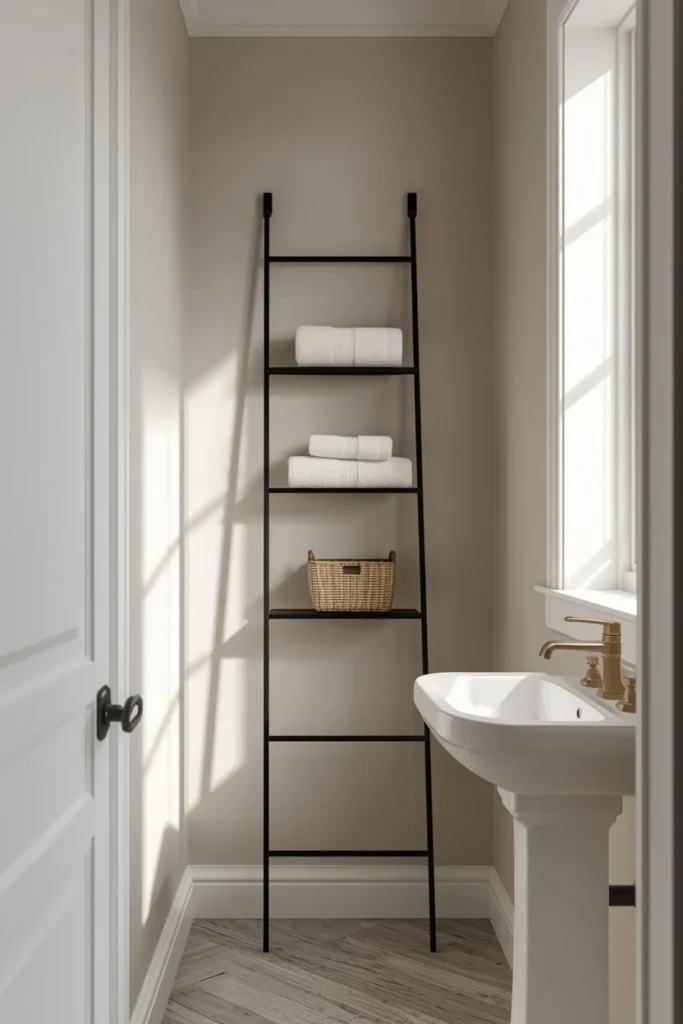
16. Vertical Ladder Shelf
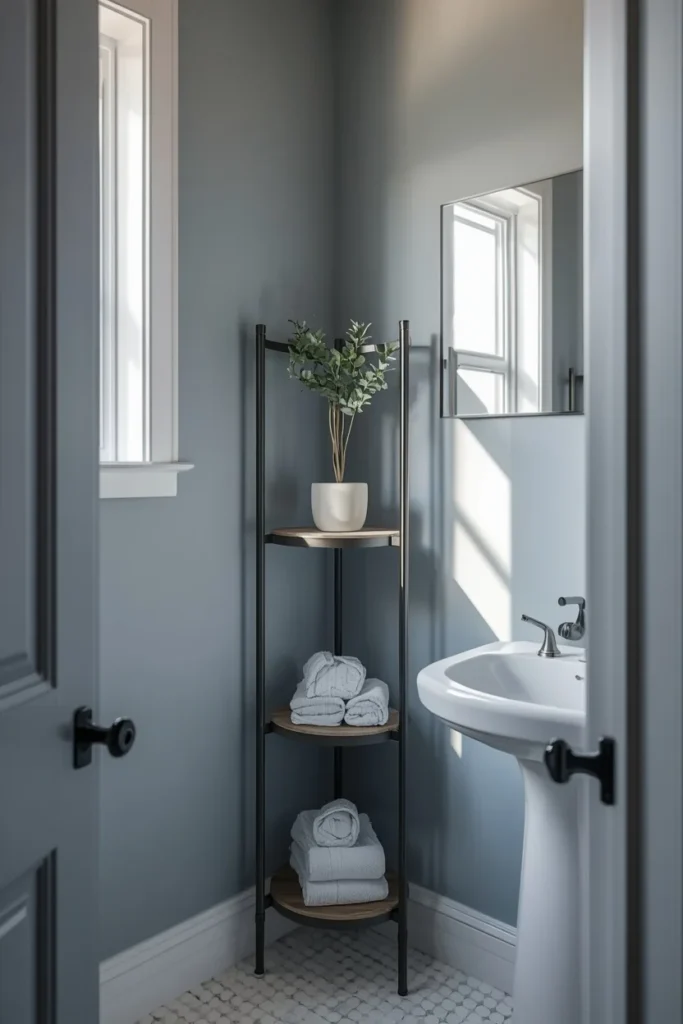
A slim ladder-style shelving unit leans against the wall rather than needing to be mounted, which makes it one of the easiest storage pieces to add without any tools or drilling. Because it’s tall and narrow, it takes advantage of the room’s height instead of eating into the already-limited floor space. This style works well for holding rolled towels, a small stack of baskets, or a few decorative objects on the top shelf. A wood or black metal ladder shelf tends to suit almost any design style, from farmhouse to modern. It’s a good renter-friendly option for anyone who wants more storage without a permanent change.
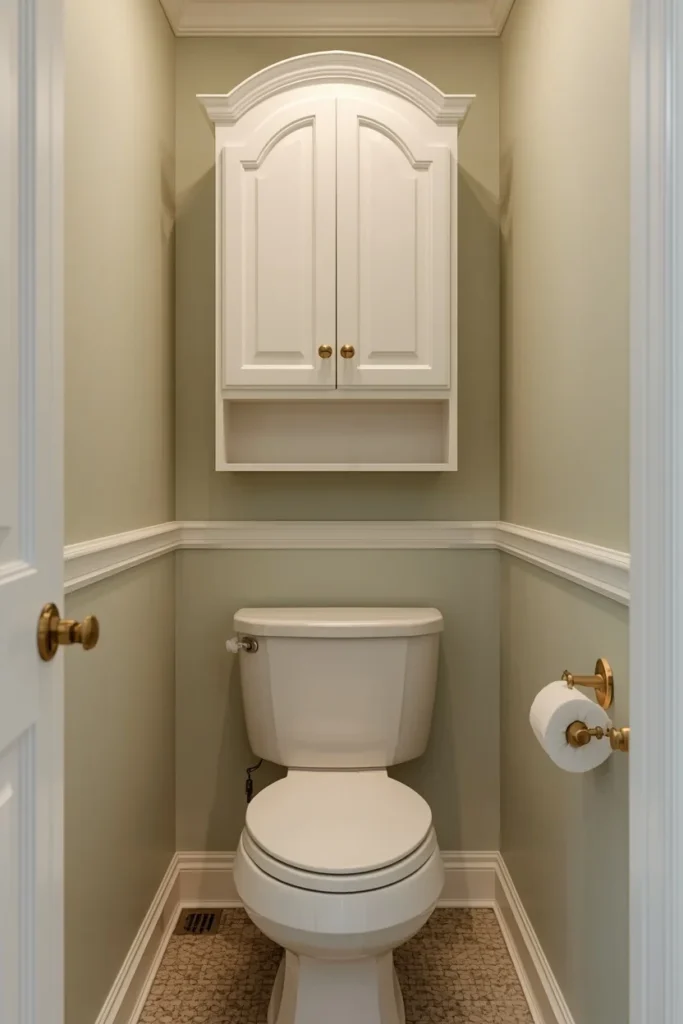
17. Over-the-Toilet Cabinet
For anyone who wants storage above the toilet but prefers a closed, tidy look over open shelving, a wall-mounted cabinet is the better choice. It hides everyday essentials like extra toilet paper and cleaning supplies completely out of sight, which keeps the room looking calm even with a full stock of supplies behind the doors. An arched or paneled cabinet front adds a bit of architectural detail, so it reads as a design feature rather than pure function. This option suits smaller households that still need meaningful storage but don’t want the upkeep of styling open shelves. It’s a practical upgrade that also raises the perceived finish level of the whole room.
18. Corner Shelving for Awkward Layouts
Powder rooms often have one oddly shaped corner that’s too small for furniture but too big to ignore, and that’s exactly where a corner shelving unit earns its space. A few tiered corner shelves can hold a small plant, folded towels, or a scented candle without blocking the door swing or crowding the sink. This is especially useful in narrow half baths where every other wall is already accounted for by the toilet, sink, and door. Choosing open shelves rather than a closed cabinet keeps the corner from feeling heavy in a room that’s already tight. It’s a small fix for a layout problem almost every tiny powder room shares.
19. Backlit or Medicine Cabinet Mirror
A mirror with built-in LED backlighting solves two problems at once: it adds usable light right where guests need it, and it removes the need for a separate light fixture that might crowd a small wall. Choosing a recessed medicine cabinet version instead of a plain mirror also sneaks in extra storage behind the glass, which is valuable in a room with no vanity cabinet to speak of. Warm-toned LED light, somewhere around 3000K, tends to feel more flattering and less clinical than a cooler white light. This upgrade works particularly well in a powder room with limited wall space for traditional sconces on either side. It’s a modern, low-maintenance lighting solution that still feels intentional.
20. Statement Pendant or Mini Chandelier
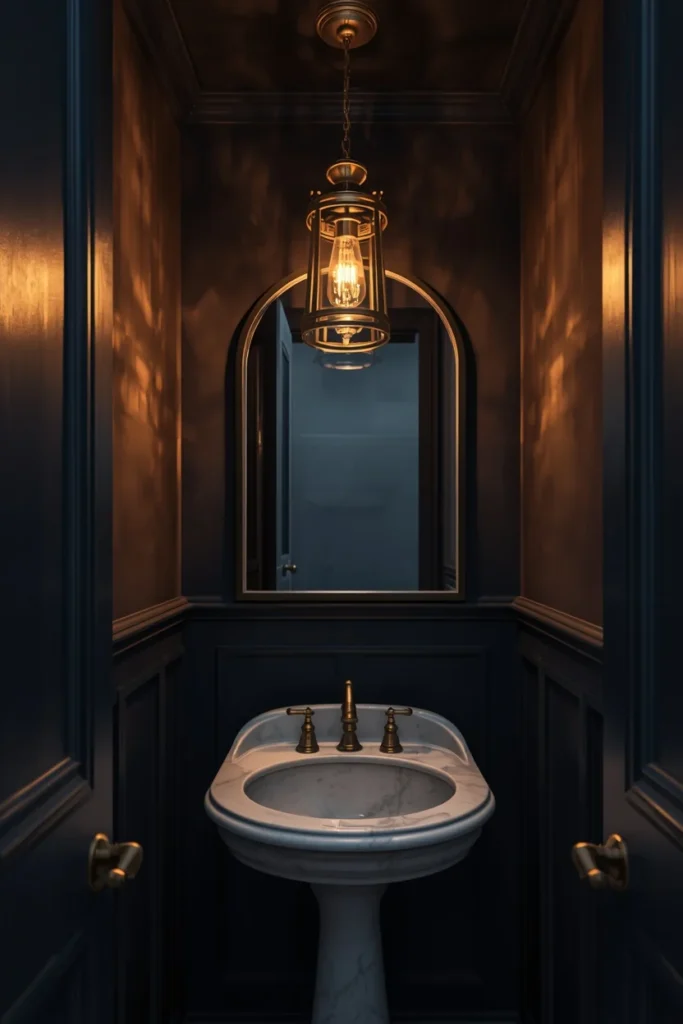
Swapping a standard overhead light for a single statement pendant or a small chandelier turns the ceiling into part of the design instead of an afterthought. Because a powder room ceiling is usually close overhead, even a modest fixture reads as a bigger visual statement than it would in a taller room. A brass lantern, a small crystal fixture, or a woven pendant can all set the tone for the whole room’s style, whether that’s traditional, modern, or organic. Center the fixture over the sink rather than the middle of the ceiling so it doubles as functional task lighting. This is one of the fastest ways to make a plain powder room feel finished and considered.
21. Wall Sconces Flanking the Mirror
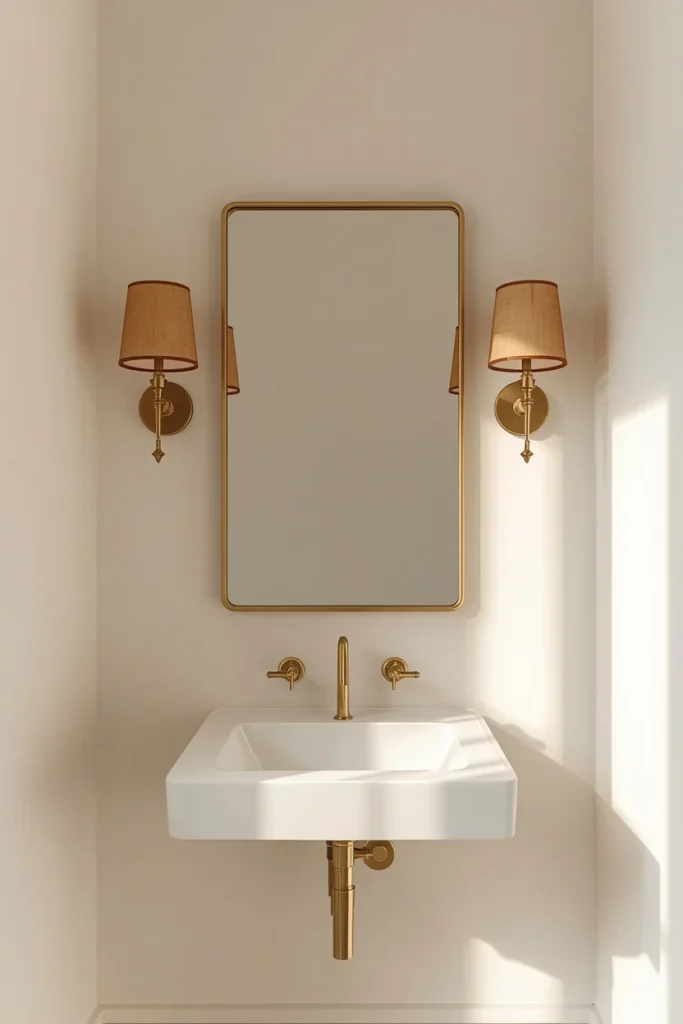
Placing a sconce on either side of the mirror, rather than relying on a single overhead light, eliminates the harsh shadows that overhead lighting tends to cast across the face. This layout is the same one used in professional makeup and vanity lighting for a reason, and it translates well to a small powder room where guests will glance in the mirror before rejoining a party. Warm brass or matte black sconces with a fabric or glass shade soften the light further, avoiding a bright, clinical feel. This setup also fills the wall space beside the mirror, which otherwise tends to sit empty in a small room. It’s a small change that noticeably improves how the whole room feels to actually use.
22. Small Gallery Wall
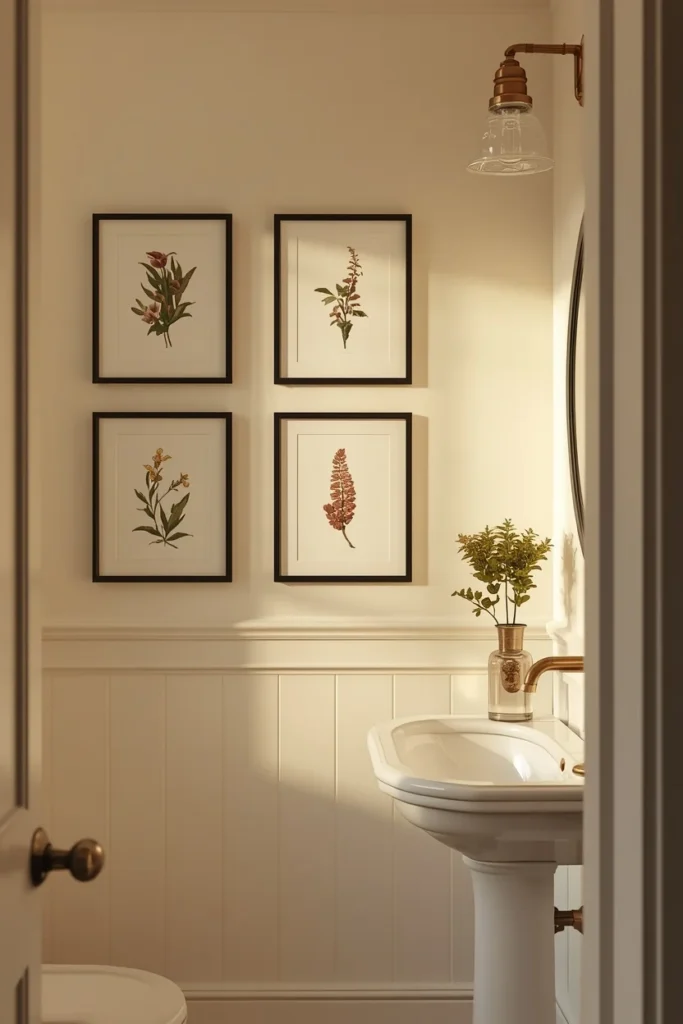
A cluster of small framed art pieces on the wall opposite the vanity gives guests something to look at while they wait, and it’s one of the only rooms in the house where a slightly quirky or personal art choice fits naturally. Botanical prints, vintage postcards, or a set of small abstract pieces all work well at this scale, since the room is viewed up close rather than from across a space. Keep the frames a consistent color, like all black or all brass, so the collection reads as intentional rather than random. Three to five pieces is usually enough for a powder room wall without overwhelming the space. This is an easy way to add personality that has nothing to do with plumbing or tile.
23. Styled Vanity Tray
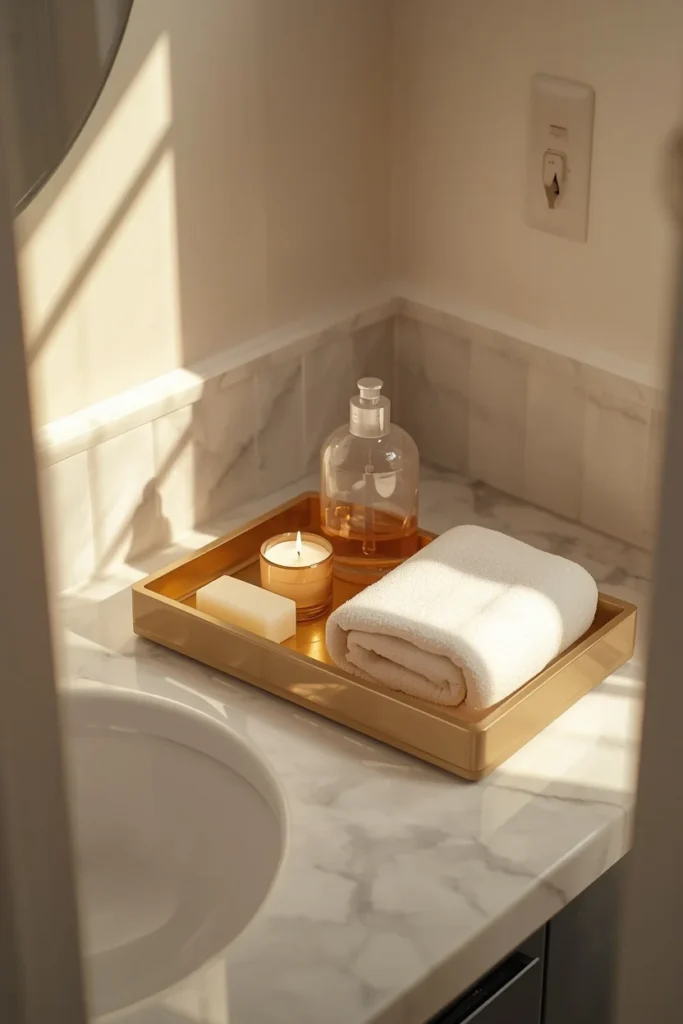
A small tray on the vanity counter, holding a bar of soap, a short candle, and a folded washcloth, keeps everyday clutter contained while still giving the counter a finished, styled look. Without a tray, loose soap and hand towels tend to spread across the counter and make even a beautifully designed room look messy within a day. Choosing materials that echo the rest of the room, like a brass tray to match brass fixtures, ties the small details back into the overall design. This is a five-minute styling trick, but it’s often the difference between a powder room that looks staged for photos and one that looks staged and lived-in at the same time. It costs very little and takes almost no time to set up.
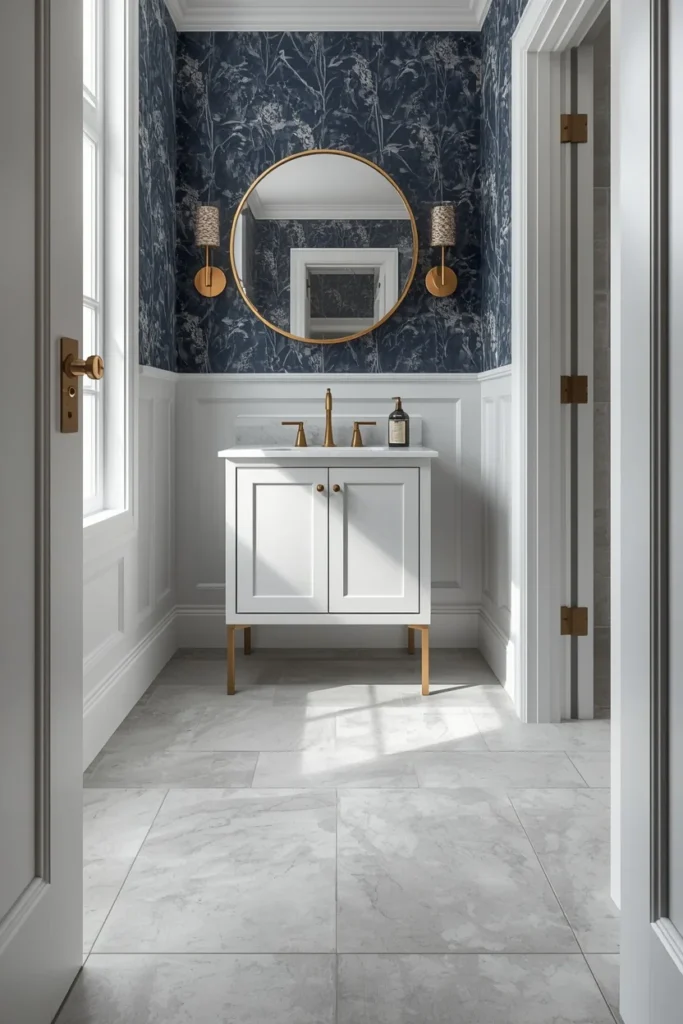
24. Architectural Molding or Paneled Walls
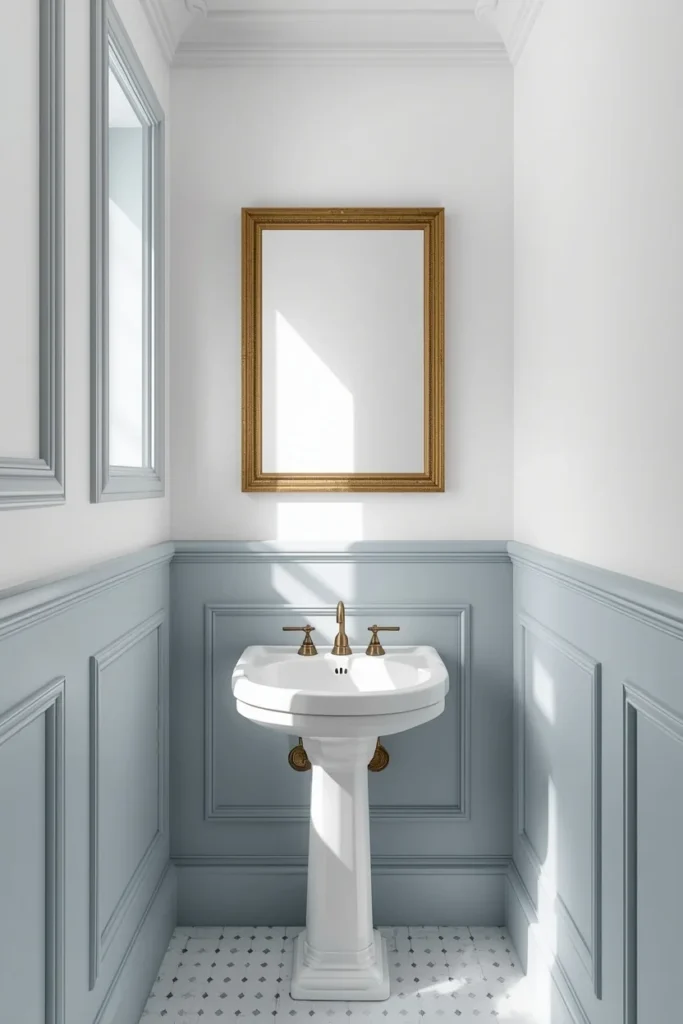
Adding simple picture-frame molding, board and batten, or fluted wood paneling to the lower walls gives a plain powder room the kind of architectural detail usually reserved for larger, higher-budget rooms. Painted a single color along with the wall above it, the molding creates dimension through shadow lines rather than pattern or color, which suits anyone who wants a quieter, more classic look. This detail pairs especially well with a traditional pedestal sink and brass fixtures, though a more modern fluted panel version also works in a contemporary space. It’s a project that takes a weekend for a confident do-it-yourselfer, or a straightforward job for a local carpenter. Molding is one of the few upgrades on this list that adds real resale value to the home, not just visual interest.
Styling Tips
- Stick to one bold decision per room — wallpaper, a stone feature wall, or a saturated paint color — and keep everything else quiet so the room doesn’t compete with itself.
- Match your metals in pairs rather than scattering three or four different finishes; brass fixtures with a black mirror frame reads as intentional, while five different metals reads as unplanned.
- Keep the counter down to two or three objects at most. A tray, a candle, and a small plant is plenty for a room this size.
- Choose a mirror shape that contrasts with the room’s other lines — an arched mirror in a room full of straight edges, or a round mirror against a rectangular vanity.
- Let the floor do quiet work with a large-format neutral tile if the walls are already busy, or let it carry pattern if the walls are staying plain.
Practical Implementation Ideas
- Start with paint and wallpaper before touching plumbing. It’s the cheapest, fastest way to test a bold direction without committing to a full remodel.
- If you’re keeping the existing toilet and sink layout, focus your budget on lighting and mirror upgrades, since both have an outsized visual effect for the cost.
- Order tile and wallpaper samples before buying in bulk. Powder rooms are usually lit differently than a showroom, and colors read differently under warm bathroom lighting.
- If you’re hiring a contractor, tackle the wall-mounted toilet and floating vanity changes in the same visit, since both usually require opening the same section of wall.
- Photograph the room in natural daylight and again at night with the lights on before finalizing paint colors, since powder rooms are used at both times of day.
Common Mistakes to Avoid
- Combining more than one bold pattern, like a busy wallpaper with a heavily patterned floor tile, which tends to make a small room feel chaotic rather than curated.
- Choosing a light fixture that’s too small for the room, which leaves the space feeling dim and unfinished even after everything else is done.
- Skipping ventilation. A powder room this size needs a working exhaust fan more than almost any other room, especially with wallpaper or paint that can be damaged by trapped moisture.
- Overfilling open shelves with too many small objects, which reads as clutter rather than styled decor from just a few feet away.
- Picking a vanity or cabinet with double doors when a single drawer or open shelf would leave more visible floor space in a genuinely tiny footprint.
Small-Space Alternatives
- If a floating vanity isn’t in the budget, a wall-mounted pedestal sink gives almost the same visual lightness for a fraction of the cost.
- If a full wallpaper install feels like too much, try it on a single accent wall behind the mirror instead of all four walls.
- If a backlit mirror is out of reach, a simple round mirror with two flanking sconces gives similar flattering light for less money.
- If floor space is too tight for any storage furniture, wall-mounted hooks and a single floating shelf can cover the same needs.
- If a stone feature wall isn’t realistic, a large framed piece of art with similar tones can deliver a smaller version of the same impact.
Budget-Friendly Alternatives
- Peel-and-stick wallpaper gives most of the visual impact of traditional wallpaper at a lower cost and without hiring an installer.
- Spray-painting existing brass or chrome fixtures in a matte black or warm brass finish updates the whole room’s hardware for the cost of a can of paint.
- A secondhand or vintage mirror, reframed or left as-is, often has more character than a new big-box store option at a similar price point.
- Swapping just the cabinet or drawer pulls on an existing vanity is one of the cheapest updates on this entire list, and it takes under an hour.
- A single new light fixture, installed on the existing wiring, updates the whole feel of the room without touching plumbing or tile at all.
Pro Styling Recommendations
- Treat the powder room like a jewelry box for the house: one or two intentional choices, executed well, rather than a dozen half-finished ideas.
- If you’re unsure about a bold color, test it in the powder room first. It’s a low-risk room to experiment in since it’s small and separate from the main living space.
- Choose warm-toned lighting throughout, since it flatters skin tone in the mirror and makes the whole room feel more inviting to guests.
- Keep hand towels and soap dispensers in a material and color that matches the room’s finish, not just whatever was on sale, since these small details are what guests notice up close.
- If you only make one change this year, prioritize lighting and the mirror. They have the most visible daily impact of anything on this list.
FAQs
Conclusion
A powder room this small doesn’t leave much room for indecision, and that’s actually its biggest advantage. One good wallpaper, one confident paint color, or one well-placed mirror is usually enough to carry the whole space, which means you don’t need a big budget or a big room to make a real impression. Pick the one or two ideas from this list that fit your house and your comfort level, and let the rest of the room stay simple around them.