19 Bedroom Wallpaper Designs That Instantly Make Your Space Feel Dreamy
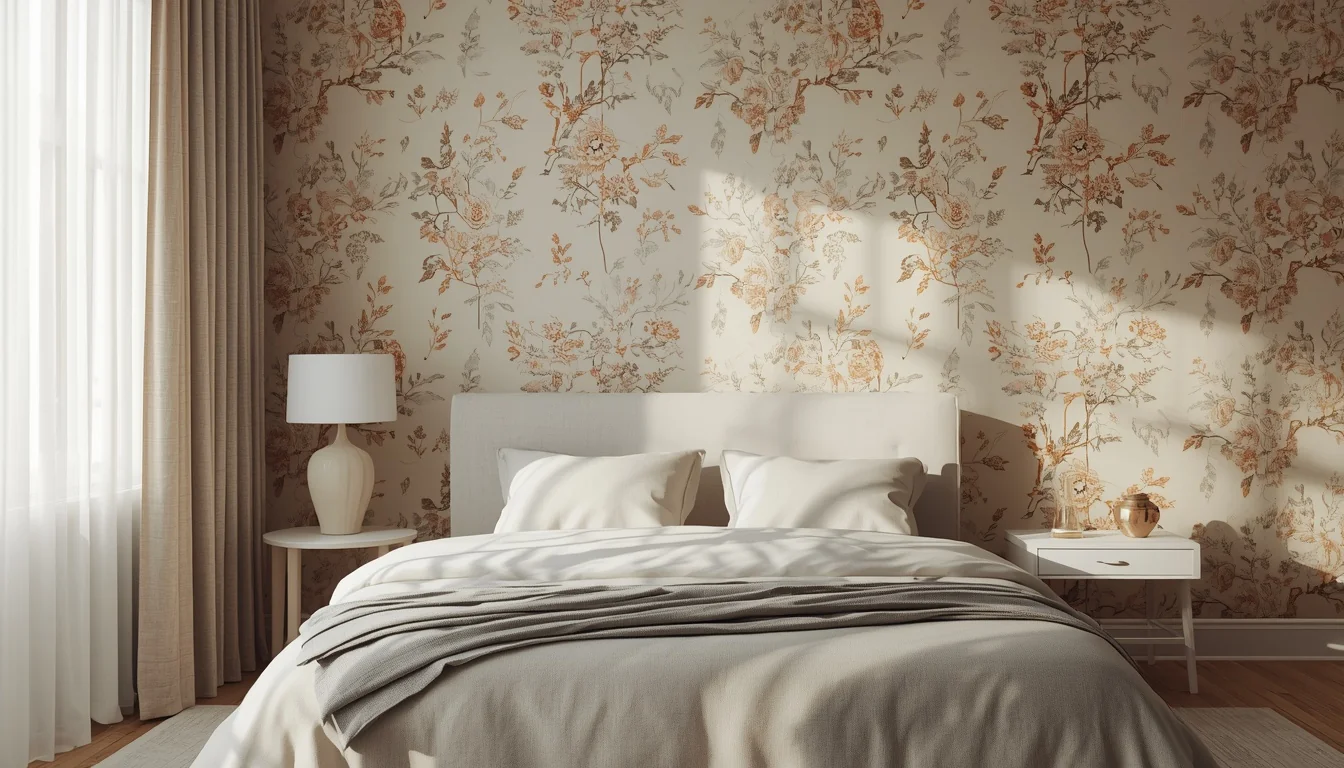
Wallpaper can do something paint never quite manages: it makes a bedroom feel like a room that was designed, not just decorated. The right pattern behind a bed can turn an ordinary room into something you genuinely look forward to returning to — the kind of space that makes people stop at the door and say “wow” before they say anything else.
The challenge is that wallpaper decisions carry more visual weight than almost any other bedroom choice. Choose wrong and it’s both expensive to undo and impossible to ignore while you’re living with it. Choose right and it becomes the single element that makes everything else in the room finally fall into place.
This guide covers 19 bedroom wallpaper designs for 2026 — from the softest linen textures to full-wall botanical murals — organized so you can find the right design for your room’s size, light, and style before committing. Each idea comes with exactly the information you need: where to place it, what to pair it with, how to test it first, and whether it works as a renter.
Table of Contents
- The Rules Before You Choose: Placement, Scale & Light
- Soft & Textured: Dreamy Without Drama (Ideas 1–5)
- Botanical & Floral: Nature-Inspired Bedroom Designs (Ideas 6–10)
- Moody & Bold: Statement Wallpapers That Earn Their Place (Ideas 11–14)
- Pattern & Geometry: Structured Dreamy (Ideas 15–17)
- Murals & Full-Room Immersion (Ideas 18–19)
- Designer Tips and Common Mistakes
- Frequently Asked Questions
The Rules Before You Choose: Placement, Scale & Light
Before picking a pattern, three decisions determine whether a bedroom wallpaper succeeds or fails — and none of them are about the pattern itself.
Which wall to wallpaper. The headboard wall is almost always the right choice. You face away from it while sleeping, so the drama is there when you walk in but doesn’t stimulate you at rest. It also naturally frames the bed as the room’s focal point — the same function an expensive headboard performs, at a fraction of the cost.
Which pattern scale suits your room. Small rooms and small patterns isn’t always the right pairing. A large-scale botanical or mural on one wall can make a tight room feel more expansive, while a small all-over print across every wall can read as busy and cramped. The rule that holds: bold patterns on one wall only in rooms under 150 square feet; all-four-wall wallpaper only in rooms with strong natural light or very light-toned patterns.
How your room’s light interacts with the color. Dark wallpaper in a north-facing room or a room with small windows can read as oppressive rather than atmospheric. The same deep navy in a south-facing room with large windows reads as rich and cocooning. Always order a sample and live with it for 48 hours in your actual light before committing.
These three decisions matter more than any specific pattern recommendation in this guide.
Soft & Textured: Dreamy Without Drama (Ideas 1–5)
These five designs create a dreamy bedroom atmosphere through material depth and tonal subtlety rather than bold pattern — the right starting point if you’re wallpaper-curious but commitment-cautious.
1. Linen-Effect Textured Wallpaper
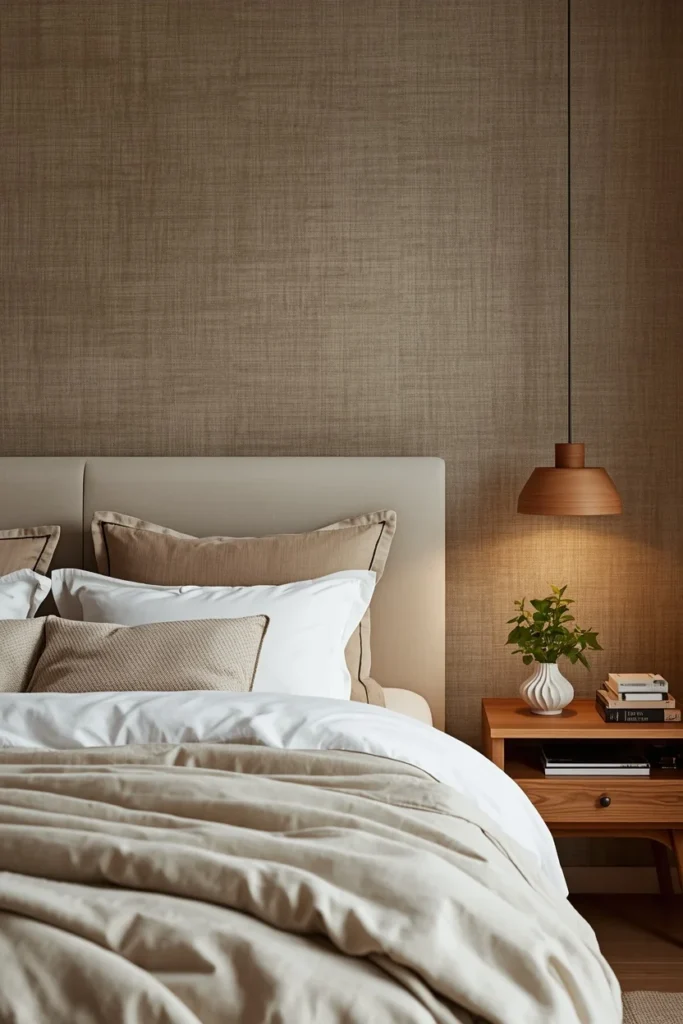
Answer: A linen-effect wallpaper — a printed or embossed simulation of woven linen fabric — adds depth and warmth to a bedroom wall without introducing any pattern, making it one of the most versatile and universally flattering wallpaper choices available.
Explanation: This quiet luxury direction relies on tone-on-tone styling and a focus on materials — the wall texture almost disappears at first glance but catches the light just enough to add depth, like linen stretched across the space. The result feels calm, grounded, and a little indulgent.
Practical Example: A linen-effect wallpaper in a warm taupe or soft sand on the headboard wall, paired with cream bedding and a warm pendant light, creates exactly the kind of layered neutrals that define 2026’s quietest and most enduring bedroom trend.
Renter Tip: Linen-texture peel-and-stick options are among the highest-quality removable wallpapers available — the texture hides seam imperfections better than smooth prints, making them significantly easier to install cleanly as a DIY project.
Best For: Rooms that already have strong architectural or furniture interest and need a wall treatment that adds warmth without competing.
2. Limewash and Plaster-Effect Wallpaper
Answer: Limewash and plaster-effect wallpapers simulate the aged, softly mottled finish of traditional European lime plaster — a look that feels artisanal, warm, and distinctly handmade in a way smooth paint never achieves.
Explanation: The trending wallpaper designs of 2026 focus on tactile depth and quiet sophistication, with faux plaster effects creating character without overwhelming a room. The organic variation in these patterns means no two walls look identical — each one reads as genuinely bespoke.
Practical Example: A warm clay or terracotta limewash effect across all four bedroom walls creates a cocooning, den-like warmth that suits both boho and quiet luxury aesthetics without committing to a definite style.
Designer Secret: Pair a limewash-effect wallpaper with matte, low-sheen fixtures and furniture — any high-gloss surface (lacquered nightstands, chrome hardware) will visually compete with the intentionally soft, imperfect finish of the wall.
Common Mistake: Choosing a limewash-effect in a cool gray or blue undertone when the point of the style is warmth — look for terra, sand, blush, or warm white tones rather than anything with a distinctly cool base.
3. Grasscloth-Effect Wallpaper
Answer: Grasscloth wallpaper — real woven natural fiber or a printed simulation of it — adds tactile richness and subtle pattern through material texture alone, creating a depth that neither paint nor smooth wallpaper can replicate.
Explanation: Grasscloth and cork wallcoverings satisfy a primal need for tactile engagement that painted drywall simply cannot. In the bedroom specifically, natural texture across all four walls creates a den-like intimacy that suits rest and retreat.
Practical Example: A deep-toned grasscloth on all four bedroom walls — in warm charcoal, olive, or natural straw — creates exactly the den-like intimacy designers are prescribing for bedrooms in 2026, particularly in rooms with warm artificial light.
Comparison — Texture Wallpaper by Mood:
| Texture Style | Mood Created | Best Color Family | Best Room Light |
| Linen-effect | Calm, quiet luxury | Warm taupes, cream | Any direction |
| Limewash/plaster | Artisanal, cocooning | Terra, blush, sand | South/west facing |
| Grasscloth | Rich, organic, intimate | Natural, charcoal, olive | Works all directions |
4. Subtle Tonal Abstract Wallpaper
Answer: A tonal abstract — where a pattern emerges through variations in a single color family rather than high-contrast multiple colors — adds visual interest without competing with furniture, making it one of the most sophisticated bedroom wallpaper choices of 2026.
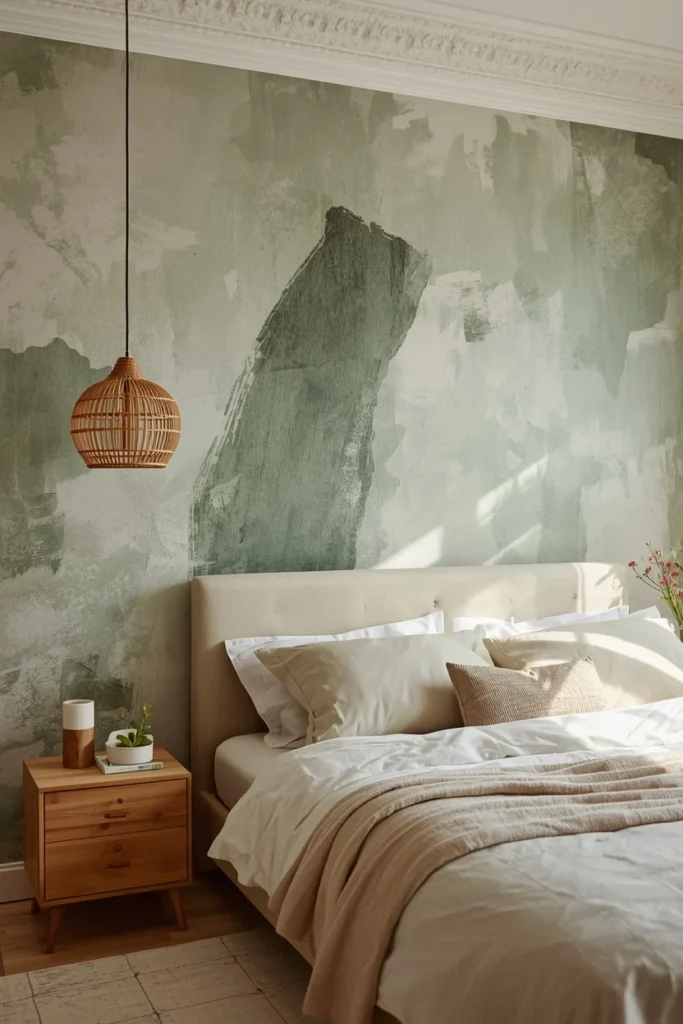
Explanation: Tonal abstracts represent one of 2026’s most exciting pattern categories. Imagine washes of sage green that shift from olive to mint, or warm terracotta tones that blend from rust to peach — these subtle, immersive patterns add visual interest without competing with furnishings.
Practical Example: A sage green tonal abstract on the headboard wall, where the pattern is visible up close but reads as a single, layered wall color from across the room, gives a bedroom the depth of wallpaper and the restraint of paint simultaneously.
Renter Tip: Tonal abstract peel-and-stick options photograph especially well and are among the most requested patterns in removable wallpaper because they suit a wide range of furniture styles without requiring any adjustment to existing decor.
5. Soft Microprint and Ditsy Pattern Wallpaper
Answer: Microprint wallpapers — all-over tiny florals, small geometric repeats, or delicate botanical illustrations — offer visual interest and personality without the scale commitment of a large pattern, making them ideal for bedroom walls in most sizes and light conditions.
Explanation: Microprints and small-scale motifs are emerging as a key direction in 2026, providing a refined alternative to bold all-over pattern — subtle patterns offer visual interest without dominating a space, making them ideal for versatile all-over use in rooms where a large bold pattern might feel overwhelming.
Practical Example: A soft ditsy floral in earthy neutrals used across all four bedroom walls creates a gentle, cottagecore warmth that works especially well in rooms with lower ceilings, where a large-scale pattern would feel cramped.
Quick Tip: When using a microprint across all four walls, choose a background color within two shades of your room’s existing trim color — the closer these align, the more the pattern reads as an intentional design choice rather than a random addition.
Mini Checklist — Soft & Textured Direction:
- Confirm your undertone preference (warm vs cool) before ordering
- Order a sample and live with it for 48 hours across different light conditions
- Pair with matte or soft-sheen fixtures that don’t compete with the texture
- Consider all-four-wall application for texture wallpapers (they’re subtle enough to handle it)
Botanical & Floral: Nature-Inspired Bedroom Designs (Ideas 6–10)
Botanicals and florals are consistently the most saved wallpaper category on Pinterest — and for good reason. They do something no other pattern category quite manages: they make a bedroom feel alive.
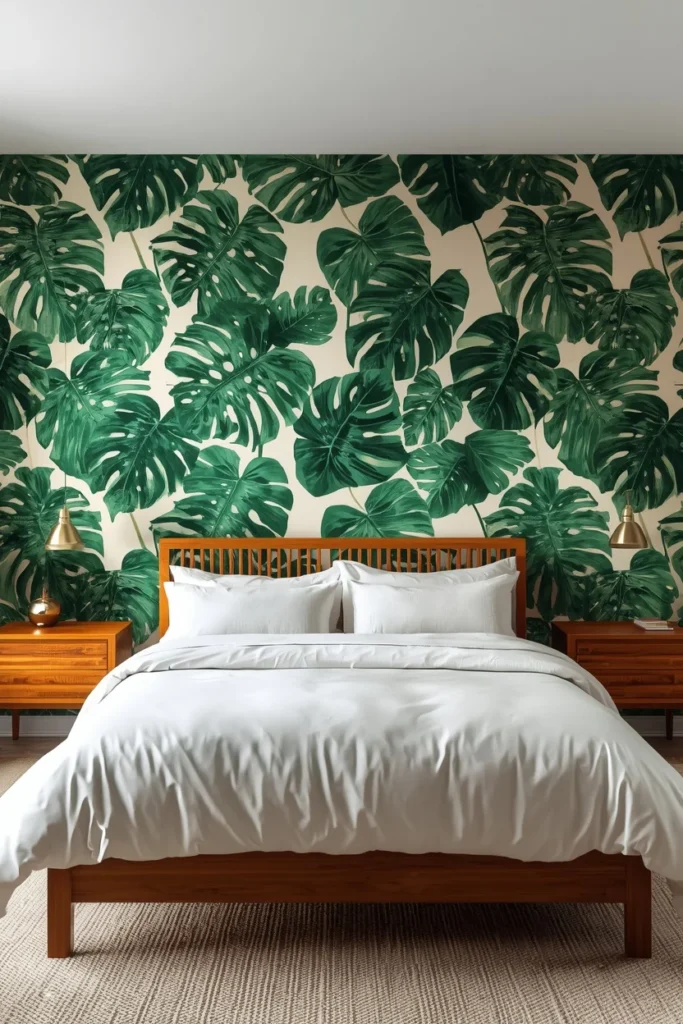
6. Oversized Botanical Leaf Wallpaper
Answer: Large-scale tropical or botanical leaf prints — monstera, banana leaf, or palm — bring a sense of lush, organic life to a bedroom wall that smaller patterns simply can’t achieve.
Explanation: Botanical leaf prints add character without overwhelming a room — the key is in scale. When the leaves are large (at least 18 inches per leaf), the pattern creates depth and movement. When they’re too small, they can read as busy rather than lush.
Practical Example: An oversized botanical on the headboard wall, in deep greens against a pale or cream background, creates a private garden feeling that suits both maximalist and more restrained bedrooms — the background color is the most important variable for controlling the overall mood.
Designer Secret: Choose a botanical with significant white or cream negative space between the leaves — this prevents the wall from reading as claustrophobically dark even when the leaves themselves are deep, saturated green.
Best For: Rooms with at least one good-sized window and neutral, wood, or earthy-toned furniture that won’t compete with the pattern.
7. Delicate Wildflower and Meadow Wallpaper
Answer: Delicate wildflower or meadow-style wallpapers — small illustrated botanicals scattered across a pale or warm background — create a storybook, almost-dreamlike bedroom aesthetic that suits cottagecore, romantic, and quiet country styles.
Explanation: A delicate wildflower mural stretches across the wall creating a soft, almost storybook-like backdrop — it adds movement and life to the room without making it feel busy, like waking up in a quiet meadow but with the comfort of your own bed.
Practical Example: A wildflower-scattered wallpaper in cream, blush, and soft sage, across the headboard wall only, pairs beautifully with white cotton bedding and brass or antique gold hardware — a complete bedroom palette built from one wallpaper choice.
Renter Tip: This is one of the most requested patterns in peel-and-stick format, and it’s also one of the most forgiving for DIY installation — the irregular placement of wildflowers means seam lines are far less visible than in geometric or large-scale repeat patterns.
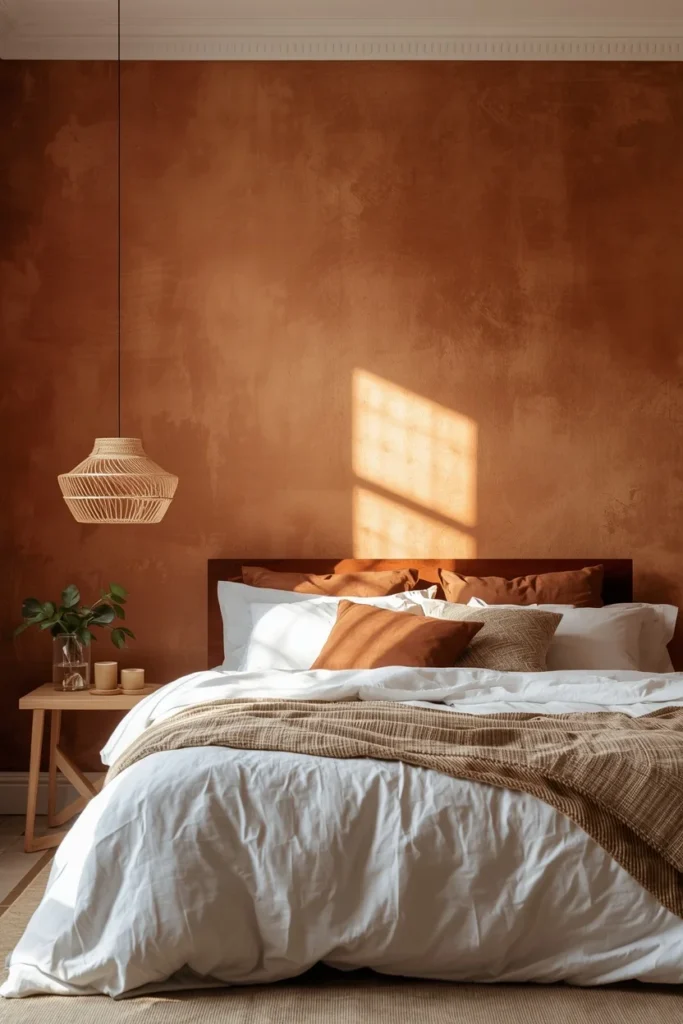
8. Chinoiserie Wallpaper
Answer: Chinoiserie — hand-painted-style Oriental scene wallpaper featuring birds, blossoms, and landscape elements — is one of the most timelessly elegant bedroom wallpaper choices, and one of the few patterns that’s genuinely difficult to date to a specific decade.
Explanation: The most impactful placement for chinoiserie is on a single focal wall behind the bed — the intricate, narrative quality of these patterns creates a sense of depth and story that no other wall treatment can match, and the design’s inherent complexity means the rest of the room should stay deliberately simple.
Practical Example: Chinoiserie on a midnight navy or deep teal background behind a simple upholstered headboard, with crisp white bedding and brass accents, creates one of the most sophisticated and photographically striking bedrooms available in any budget.
Who Benefits: Chinoiserie suits formal master bedrooms, guest rooms aiming for a “boutique hotel” feel, and any room where the owner wants the wallpaper to function as genuine art rather than pattern.
Common Mistake: Placing chinoiserie on a wall that competes with other strong visual elements (a TV, gallery wall, or large mirror). Chinoiserie needs a clear wall with nothing else on it — the pattern is the art and cannot share the wall with anything.
9. Vintage-Style Botanical Illustration Wallpaper
Answer: Vintage botanical illustration wallpaper — in the style of 18th and 19th century scientific illustration, with detailed plant drawings on a pale or antique background — offers botanical personality with a more restrained, bibliophilic aesthetic than tropical leaf prints.
Explanation: Heritage-inspired design is experiencing a strong revival in 2026 wallpaper trends, and botanical illustration patterns offer that heritage feel without the heaviness of damask or the drama of chinoiserie — they feel bookish, thoughtful, and quietly warm.
Practical Example: A vintage botanical illustration in soft greens and blush on an aged ivory background, used on the headboard wall of a bedroom with warm wood furniture and linen bedding, creates a room that feels like it belongs in a beautiful countryside home.
Budget Alternative: Vintage botanical illustration peel-and-stick options are among the most widely available in the removable wallpaper market, with many options between $40 and $120 for a single headboard accent wall.
10. Oversized Floral With Moody Dark Background
Answer: Large-scale florals on deep, moody backgrounds — midnight blue, forest green, or charcoal — represent the boldest and most dramatically photogenic bedroom wallpaper choice of 2026, creating an enveloping botanical cocooning effect.
Explanation: Deep, moody backgrounds make the florals pop while keeping the overall effect sophisticated rather than busy — primary bedrooms where enveloping botanical motifs create a cocooning effect are named as the best room for this treatment.
Practical Example: A large floral in jewel-toned blossoms against a deep navy background on the headboard wall, paired with a matching navy or deep teal ceiling, creates a fully immersive botanical retreat where the bed feels like it’s nestled inside the pattern rather than just in front of it.
Styling Pairing: When combined with color drenching — painting trim and ceiling in a shade pulled from the wallpaper — the effect becomes truly immersive. Crisp white bedding provides the essential counterpoint that prevents the room from feeling too dark.
Moody & Bold: Statement Wallpapers That Earn Their Place (Ideas 11–14)
These four designs are for the bedroom owner who wants a space that makes a genuine visual statement — rooms that feel designed rather than assembled, and that photograph with a depth and intentionality most bedrooms can’t match.
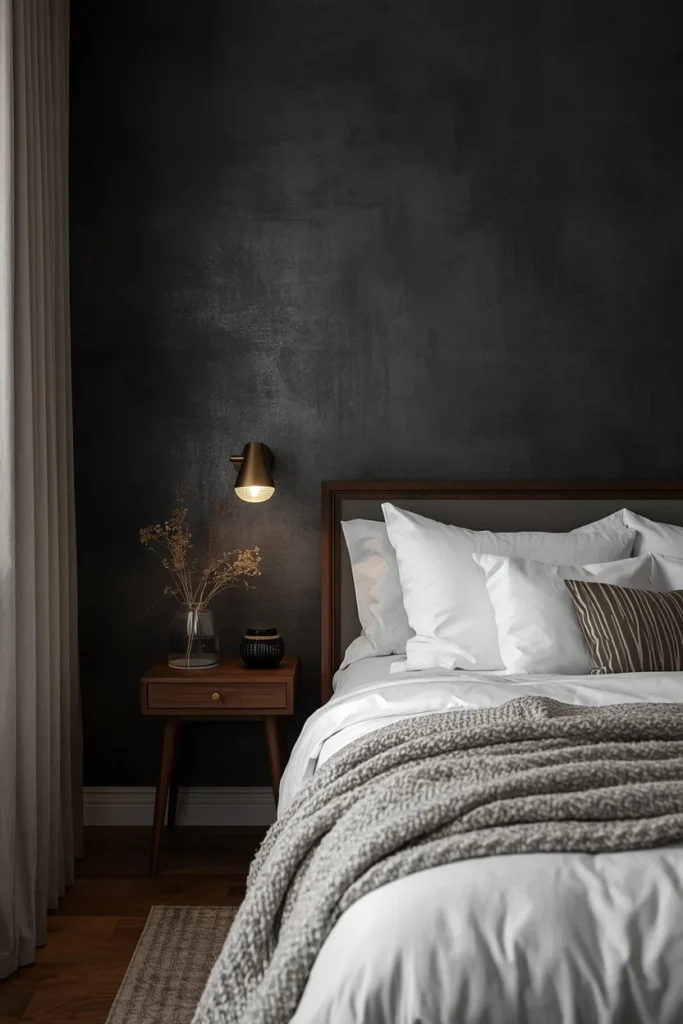
11. Deep Moody Single-Color Wallpaper With Subtle Texture
Answer: A deep-toned wallpaper in charcoal, midnight navy, or forest green — with just enough surface texture to create visual interest — creates the cocooning, enveloping bedroom atmosphere that defines 2026’s quietest luxury direction.
Explanation: Dark wallpaper in a north-facing room can feel oppressive, but in a room with good natural light, the same deep shade reads as rich and cocooning — the key is ensuring at least one well-sized window on a perpendicular wall to keep the space from feeling airless.
Practical Example: A charcoal textured wallpaper across all four bedroom walls, paired with warm bedside lighting at 2700K and white or cream bedding as the essential counterpoint, creates one of the most genuinely restful bedroom environments available — dark, enclosed, and deeply calm.
Who Benefits: This design suits light sleepers, anyone who finds their bedroom too visually “awake,” or owners with south-facing bedrooms where strong natural light makes darker tones viable.
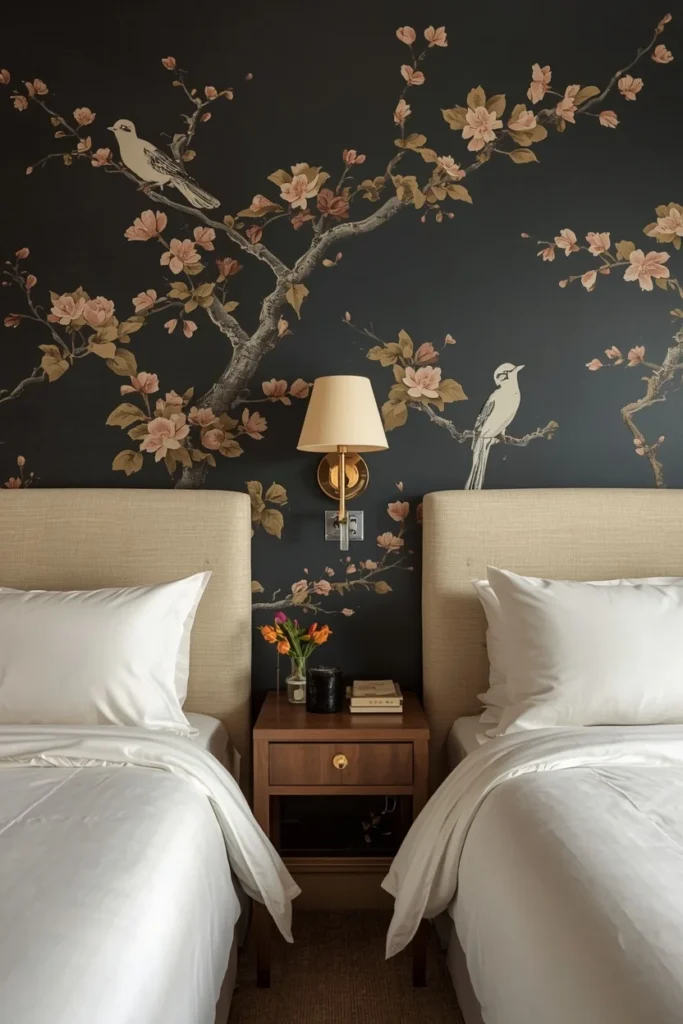
12. Sage Green Wallpaper — The Defining Color of 2026
Answer: Sage green is named as the most popular bedroom accent wall color of 2026, and it works in wallpaper form as well as paint — particularly in textured, botanical, or tonal abstract patterns that add depth to the green’s inherent versatility.
Explanation: Soft clay, sage green, warm browns, and creamy whites come together in a palette that feels calm, natural, and quietly refined — these tones bridge contemporary and traditional interiors with ease, making sage green a defining direction in 2026 wallpaper trends.
Practical Example: A sage green tonal wallpaper behind the headboard — whether in a soft textured linen effect, a faint botanical, or a washed abstract — pairs with almost any existing bedroom furniture and requires fewer supporting changes than a bolder, more specific color.
Quick Tip: Choose a sage with warm yellow-green undertones rather than a cool blue-green for bedrooms — the warm version reads as more naturalistic and harmonious against wood furniture and warm textiles, while cool sages can shift blue in low-light evening conditions.
13. Damask and Heritage Pattern Wallpaper
Answer: Damask and heritage-pattern wallpapers are experiencing a genuine revival in 2026, shedding their “grandmother’s house” association and emerging as a considered choice for rooms wanting depth, history, and a refined alternative to purely contemporary design.
Explanation: Heritage-inspired designs are returning with renewed appreciation for texture and traditional craftsmanship — the key for 2026 is choosing damask in updated colorways (deep charcoal, olive, dusty blush, teal) rather than dated burgundy-and-gold combinations.
Practical Example: A deep charcoal damask on the headboard wall, with matching charcoal bedside tables and warm brass hardware, creates a room with the same moody, composed quality as a high-end boutique hotel without relying on any individual statement piece.
Designer Secret: The trick that makes 2026’s damask revival work is treating the pattern as a texture first and a design second — the room should read as deeply tonal from across the room, with the pattern emerging as a detail when viewed up close.
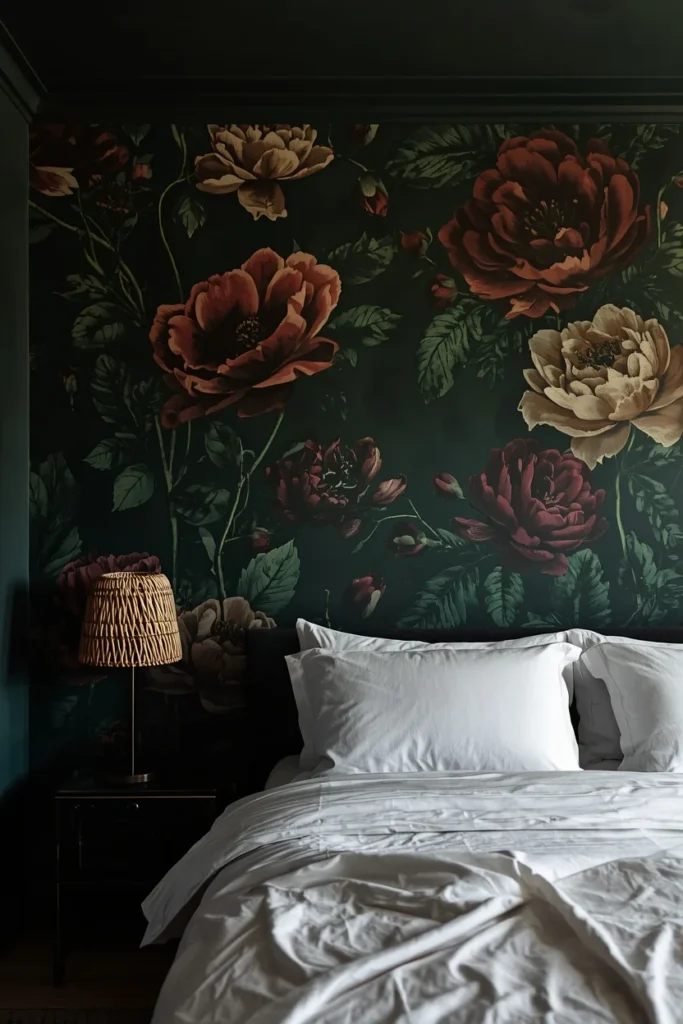
14. Animal Print Wallpaper — Refined, Not Retro
Answer: Refined animal prints — leopard in muted stone, zebra in warm cream, or snake in dusty sage — have re-entered bedroom design as a textural element rather than a trend statement, working as a sophisticated alternative to geometric or botanical patterns.
Explanation: Refined animal prints add character without overwhelming a room when chosen in muted, tonal colorways — the key distinction from the maximalist animal print of previous decades is that the 2026 version is used as a neutral, not as a statement.
Practical Example: A muted leopard print in warm sand and caramel tones on the headboard wall, treated as a neutral pattern alongside cream bedding and warm wood furniture, reads as sophisticated rather than loud — the tonal palette does all the work of restraint.
Common Mistake: Choosing an animal print in highly saturated or contrasting colors (black-and-white zebra, bright gold leopard) in a bedroom, where these high-contrast versions compete with the need for rest and visual calm. Muted colorways are the rule for this category.
Mini Checklist — Moody & Bold Wallpaper Direction:
- Check light direction before committing to dark wallpaper
- Choose sage green with warm undertones, not cool
- Update damask colorways away from traditional burgundy-gold
- Choose animal prints in muted, tonal colorways only
- Always pair bold wallpaper with at least one strong neutral counterpoint (white bedding, pale ceiling)
Pattern & Geometry: Structured Dreamy (Ideas 15–17)
Geometric and structured patterns offer a different path to a dreamy bedroom — one built on order and visual rhythm rather than organic or naturalistic forms.
15. Soft Checkerboard Wallpaper
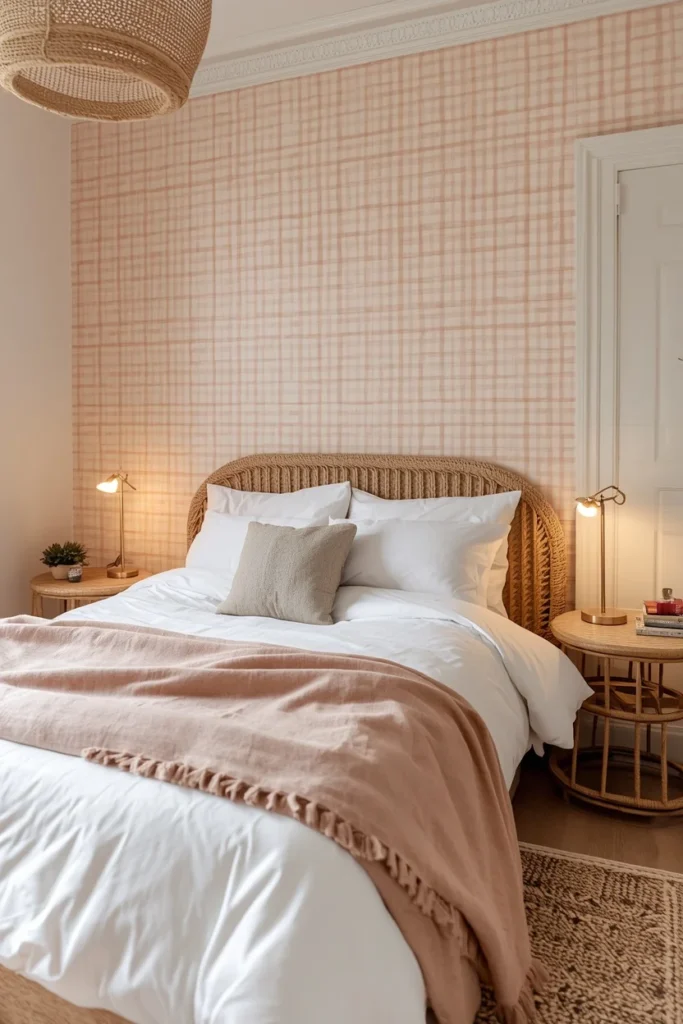
Answer: A muted checkerboard or grid wallpaper — in tonal, close-value colors rather than high-contrast black and white — adds a playful graphic structure to a bedroom without feeling busy or overly bold.
Explanation: A soft checkerboard pattern adds structure but keeps it from feeling too bold when the palette stays soft — it’s a perfect example of how a graphic pattern can still feel relaxed when the color story stays muted and warm.
Practical Example: A dusty blush and cream checkerboard on the headboard wall, or a sage and white grid in a smaller scale for all four walls, creates a bedroom that photographs with an immediately distinctive quality while feeling entirely calm to live in.
Who Benefits: This suits bedrooms with otherwise plain furniture and simple styling that needs one strong pattern element to feel complete — the checkerboard provides that anchor without requiring any other design changes.
16. Art Deco Geometric Wallpaper
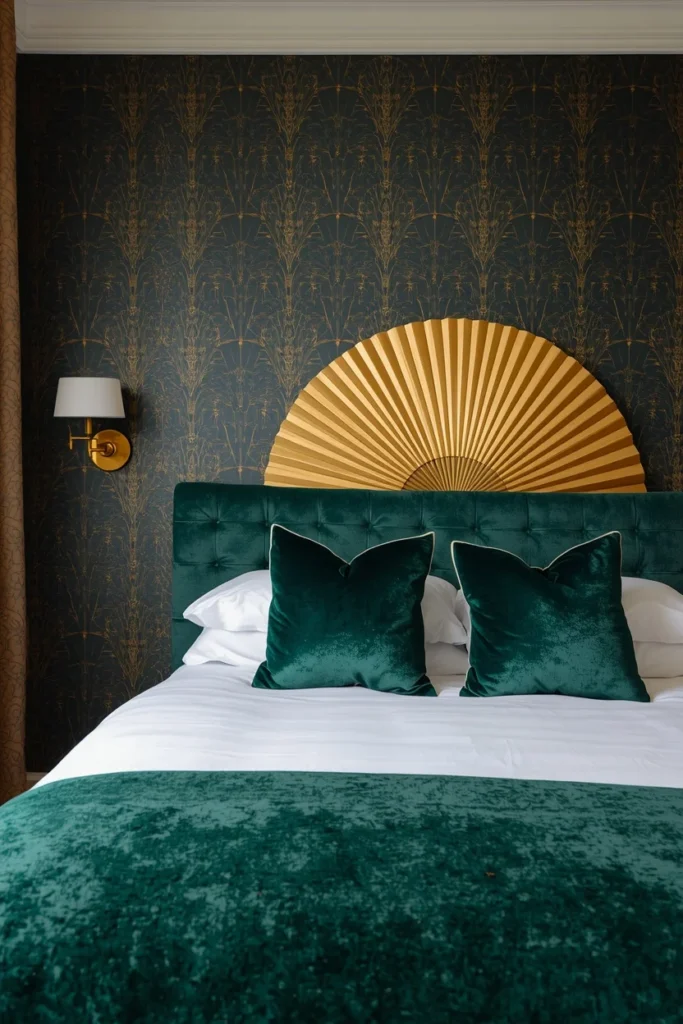
Answer: Art Deco geometric wallpaper — featuring fan shapes, stepped arches, or repeated angular motifs — brings glamour and structure to a bedroom wall, especially when used in gold, brass, or metallic tones against a deep background.
Explanation: Geometric wallpaper patterns are experiencing a sophisticated revival in 2026, drawing heavily from Art Deco’s glamorous heritage while incorporating contemporary color palettes — the most impactful versions use metallic elements to add a surface-level shimmer that changes with the light.
Practical Example: A deep midnight blue wallpaper with a subtle gold Art Deco fan motif behind the headboard, paired with brass lamps, crisp white bedding, and velvet throw cushions in teal or emerald, creates one of the most richly photogenic bedroom aesthetics available.
Budget Alternative: Several peel-and-stick Art Deco geometric options exist at a fraction of traditional wallpaper cost — the metallic ink versions photograph especially well and deliver most of the visual impact of premium wallpaper at DIY price points.
17. Stripe Wallpaper — Vertical, Wide, and Tonal
Answer: Wide vertical stripes in tonal or close-value colors — two shades of the same family rather than high-contrast opposites — make bedroom ceilings feel higher, walls feel calmer, and the overall space feel more considered without a bold pattern commitment.
Explanation: Tonal stripe patterns in two shades of the same color family create depth while maintaining a clean aesthetic — in a bedroom specifically, the vertical line adds perceived height and a sense of order that supports rest.
Practical Example: Wide alternating stripes in soft sage and muted cream, or warm taupe and ivory, on the headboard wall add a structured elegance that pairs with almost any furniture style — from Scandinavian minimal to traditional and transitional.
Common Mistake: Choosing high-contrast stripes (white and black, or stark white and bold color) in a bedroom. The high contrast creates visual energy that works against the room’s purpose. Wide, tonal, or tone-on-tone stripes are the bedroom-specific rule for this pattern family.
Murals & Full-Room Immersion (Ideas 18–19)
The final two ideas represent wallpaper’s most transformative and most commitment-intensive applications — full-wall mural designs that turn a bedroom wall into something closer to a landscape painting than a surface treatment.
18. Landscape Mural Wallpaper
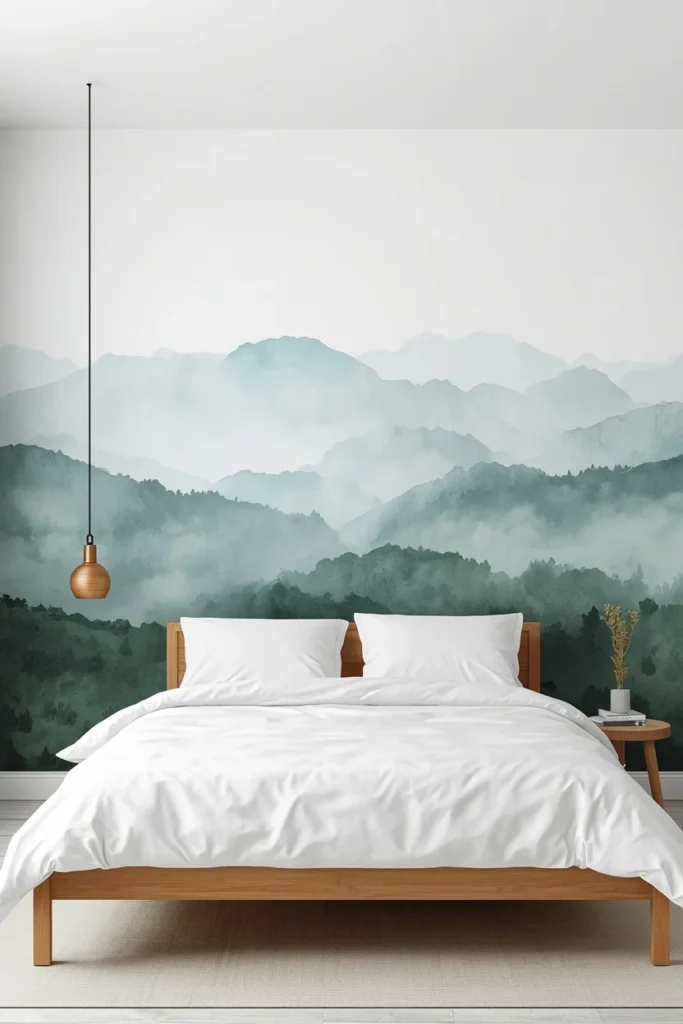
Answer: A full-wall landscape mural — misty mountains, an abstract forest, a watercolor meadow, or a scenic panoramic scene — turns the headboard wall into art, making the room feel expansive, serene, and genuinely unlike any other interior.
Explanation: A landscape mural transforms the entire room into a landscape — soft greens, trees, and architectural details stretch across the wall, making the space feel expansive and serene. It’s more than decor; it’s an experience, the kind of backdrop that makes the room feel like a retreat even on the most ordinary days.
Practical Example: A misty mountain watercolor mural in soft blues, grays, and sage greens on the full headboard wall, with simple white bedding and minimal furniture, creates a meditation-like bedroom environment where the mural does all the visual work and nothing else competes.
Renter Tip: Mural wallpaper is one of the most successful applications of peel-and-stick technology — the large-panel format that murals require hides seams well, and the single-wall application means even a renter can achieve a full transformation for $40 to $120 depending on wall size and brand.
Common Mistake: Choosing a landscape mural with a very high horizon line (where the sky takes up most of the image) and placing it behind a tall headboard, which blocks the most interesting visual part of the scene. Choose a mural where the main visual interest falls at or above headboard height.
19. Full-Room Color Drenching With Ceiling Wallpaper
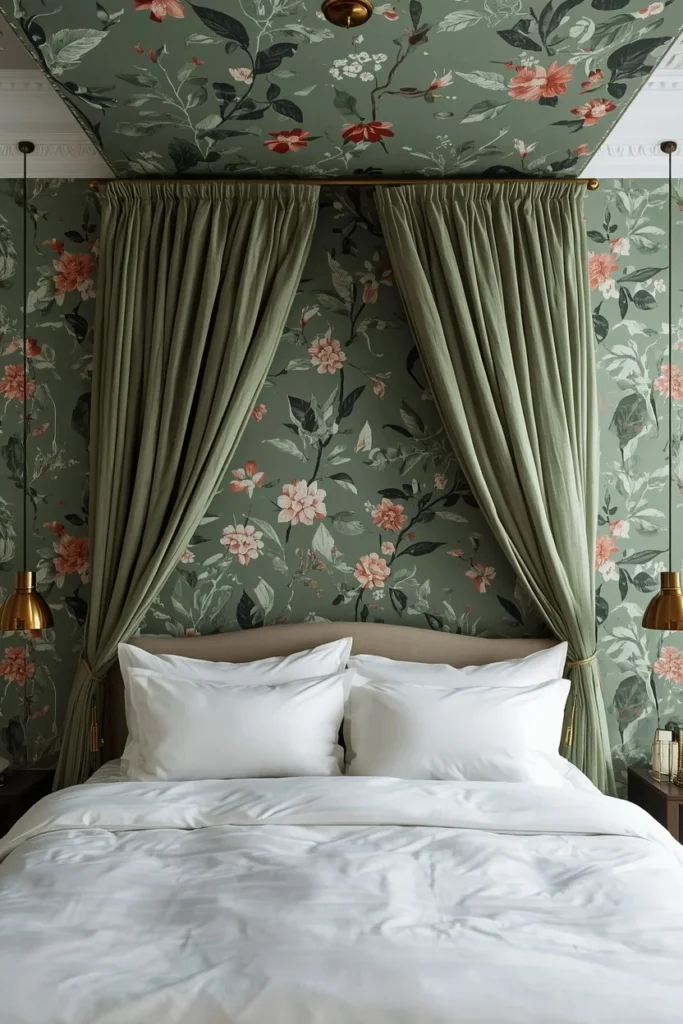
Answer: Extending wallpaper from the headboard wall up onto the ceiling — or using it across all four walls and the ceiling simultaneously — creates a full-room immersion that 2026’s designers are calling the most powerful bedroom transformation available.
Explanation: The bedroom is where wallpaper can create its most powerful emotional effect — in 2026, bedroom wallpaper trends lean toward enveloping, cocooning treatments that wrap the sleeper in color and texture. This means taking wallpaper across the wall behind the headboard and continuing onto the ceiling for a canopy effect.
Practical Example: A flowing botanical or deep-toned textured wallpaper starting at the headboard wall and extending across the ceiling creates a canopy-like enclosure that makes the bed feel nestled within the pattern — the same psychological effect as a four-poster bed, achieved entirely through wallpaper.
Styling Pairing: When combined with color drenching — painting trim and ceiling in a shade pulled from the wallpaper’s background color — the effect becomes truly immersive. This works best with patterns that have a clear, consistent background color (midnight blue, deep forest green, soft sage) that can be matched in paint.
Who Benefits: This is the most impactful idea in this entire guide for homeowners who want a bedroom that feels completely transformed without changing a single piece of furniture. It requires only one or two rolls of additional wallpaper beyond a standard headboard wall application.
Mini Checklist — Mural & Full-Room Immersion:
- Choose mural with key visual interest at or above headboard height
- Keep bedding and furniture simple — the mural is the star
- For ceiling extension, use a consistent background color to blend wall-to-ceiling seam
- Peel-and-stick murals are genuinely viable — order samples and check seam quality first
- Color drench trim in the wallpaper’s background tone for a fully integrated effect
Designer Tips: The Pre-Purchase Wallpaper Checklist
Before clicking “buy” on any bedroom wallpaper, run through these five checks:
- Sample it physically on your actual wall. A digital rendering or a phone screen cannot show you how a wallpaper reads in your specific light at different times of day. Order a sample — most companies provide them for under $5 — and tape it to your headboard wall for 48 hours before committing.
- Check the pattern repeat and calculate your roll requirement carefully. A large-scale botanical with a 24-inch pattern repeat requires significantly more material (and creates more waste) than a smaller-scale or non-directional print. Measure twice and order at least one extra roll.
- Decide on paste-the-wall vs peel-and-stick based on your surface, not just your rental status. Textured, plaster, or previously painted walls can cause peel-and-stick to fail prematurely. Homeowners with textured walls are often better served by traditional paste-the-wall even when peel-and-stick would otherwise be acceptable.
- Choose your background color before your pattern. The background color of a wallpaper spends more time in your visual field than the pattern itself — two wallpapers with the same botanical motif can feel completely different if one has a warm cream background and the other a cool white.
- Plan your furniture adjustments before installation. Wallpaper changes the visual weight of a room significantly — dark or bold wallpaper on the headboard wall often means existing bedside lamps feel too dim, and existing bedding colors look different against the new backdrop. Plan for at least minor furniture and textile adjustments alongside the wallpaper.
Common Mistakes to Avoid
Mistake: Choosing pattern scale without considering room size. A small all-over print in a small room can make the space feel busier and tighter. A single large-scale botanical in that same small room, on one wall only, can make it feel more expansive. Pattern scale and room size require deliberate matching, not instinct.
Mistake: Installing peel-and-stick wallpaper on textured or freshly painted walls. Textured surfaces prevent proper adhesion and cause premature peeling. Freshly painted walls (within 30 days) haven’t cured fully and will pull the paint off when the wallpaper is removed. Always install on clean, smooth, fully cured surfaces.
Mistake: Wallpapering too many walls in a bold pattern. When every wall competes for attention, no single wall wins and the room feels chaotic. The headboard wall is almost always the right starting point — add more walls only if the initial choice feels too restrained after living with it.
Mistake: Buying without a sample. Wallpaper colors and pattern scales consistently look different on a screen versus on a wall in real light. The sample step costs under $5 and prevents a mistake that could cost hundreds to fix.
Mistake: Ignoring the ceiling. Extending wallpaper onto the ceiling, even just in the zone directly above the bed, is the single additional step that elevates a headboard wall from “accent wall” to “immersive retreat” — and it typically adds only one roll of material to the project cost.
FAQs
Conclusion
The right bedroom wallpaper does something no paint color, no furniture upgrade, and no styling accessory can quite replicate: it makes the room feel completely and unmistakably yours. It transforms a backdrop into an experience.
Start with placement — the headboard wall, properly chosen, is all most bedrooms need. Order a sample before you commit to anything. Give yourself 48 hours with it on the wall across different light conditions. Then choose the pattern that genuinely excites you, not the one that feels safely acceptable.
A dreamy bedroom isn’t a style — it’s a feeling. And the right wallpaper is one of the most direct routes to it.