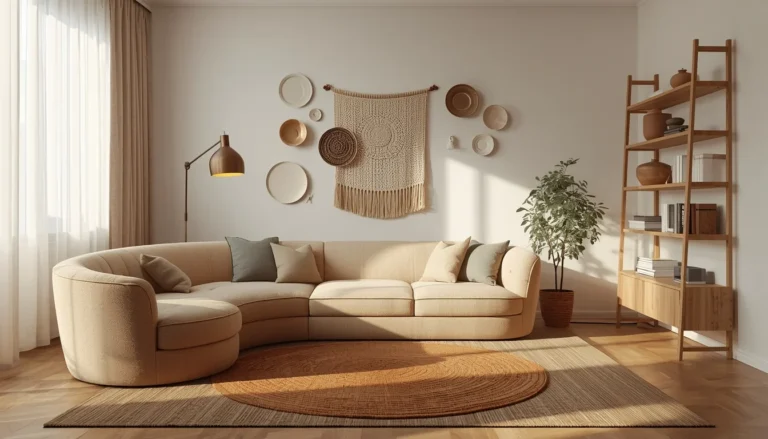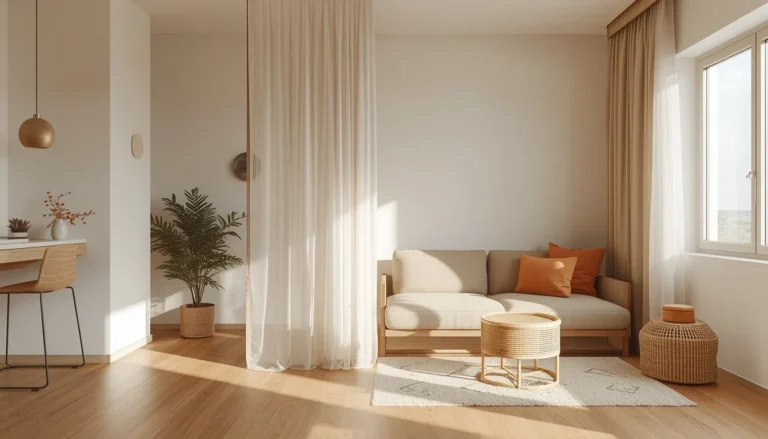
25 Apartment Living Room Ideas That Are Stylish, Smart and Totally Renter-Safe
Renting shouldn’t mean living in a room that feels like a waiting area. No drilling, no painting, no permanent anything, sure, but that’s not the same as no personality. Some of the best-looking living rooms out there right now belong to renters who figured out exactly which upgrades travel with them and which ones don’t.
The trick is knowing where to spend effort. A rug, a lamp, and a gallery wall built entirely on adhesive strips can do more for a room than people expect, while a few smart furniture choices can make a small apartment layout actually work instead of just looking cluttered. None of it touches a wall permanently, and all of it comes down in an afternoon when the lease is up.
Below are 25 apartment living room ideas built specifically around renter restrictions, small square footage, and real budgets. Pull the ones that fit your space and skip the rest.
Table of Contents
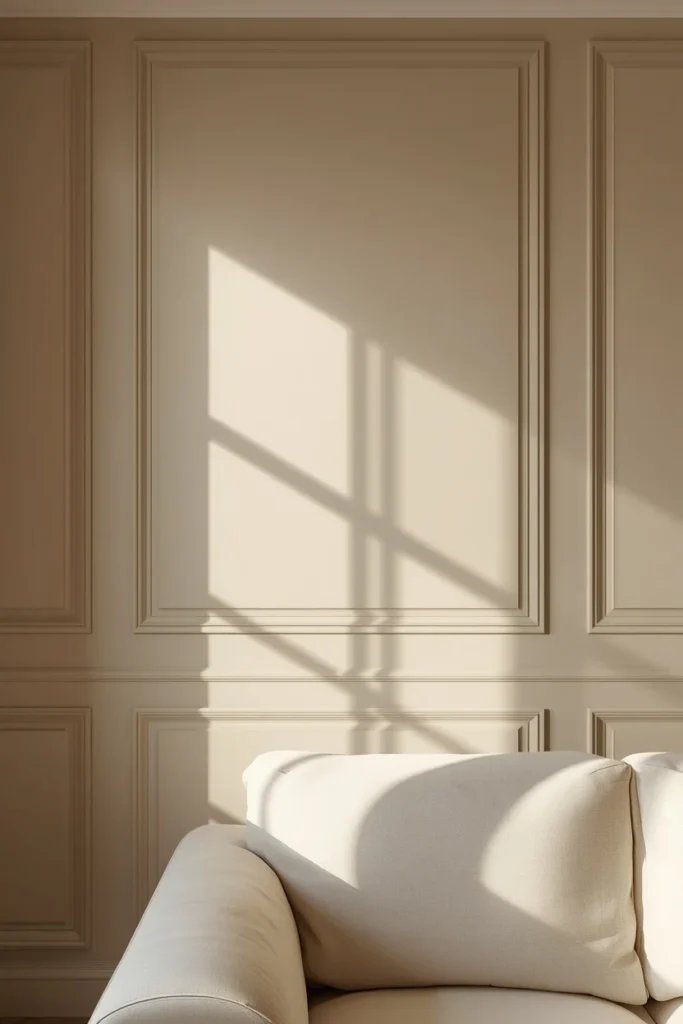
1. Removable Plaster Moulding Panels
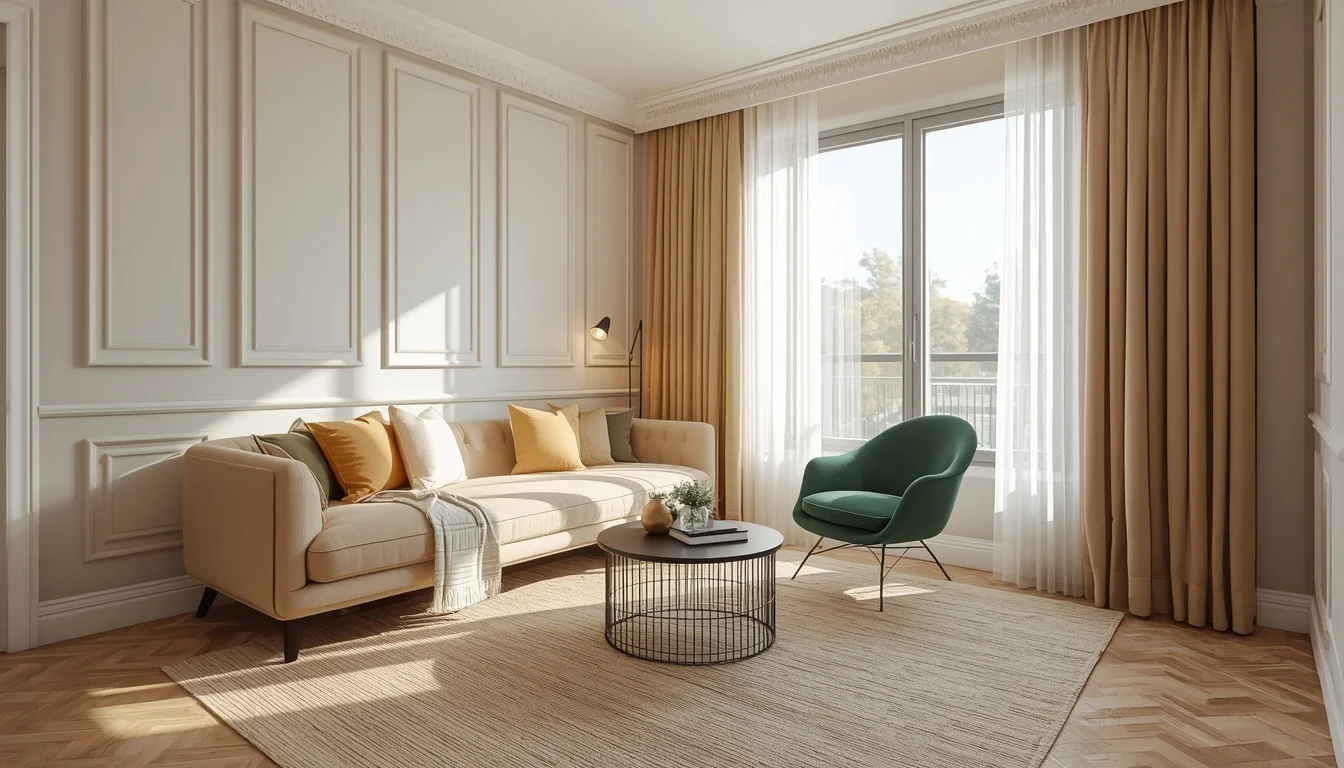
Peel-and-stick plaster moulding panels have quietly become one of the most convincing rental upgrades available, turning a flat, builder-grade wall into something that looks like real architectural trim. Apply them in a simple grid or arch pattern behind the sofa or around a television, using a light adhesive designed to come off cleanly without damaging paint. Paint the panels the same color as the wall for a subtle, tone-on-tone effect, or go a shade lighter for more definition depending on how much contrast the room can handle. This detail alone shifts a living room from generic apartment to something that reads as a considered, almost European-style interior. Because the panels are lightweight and adhesive-based, the whole installation and eventual removal usually takes less than a weekend.
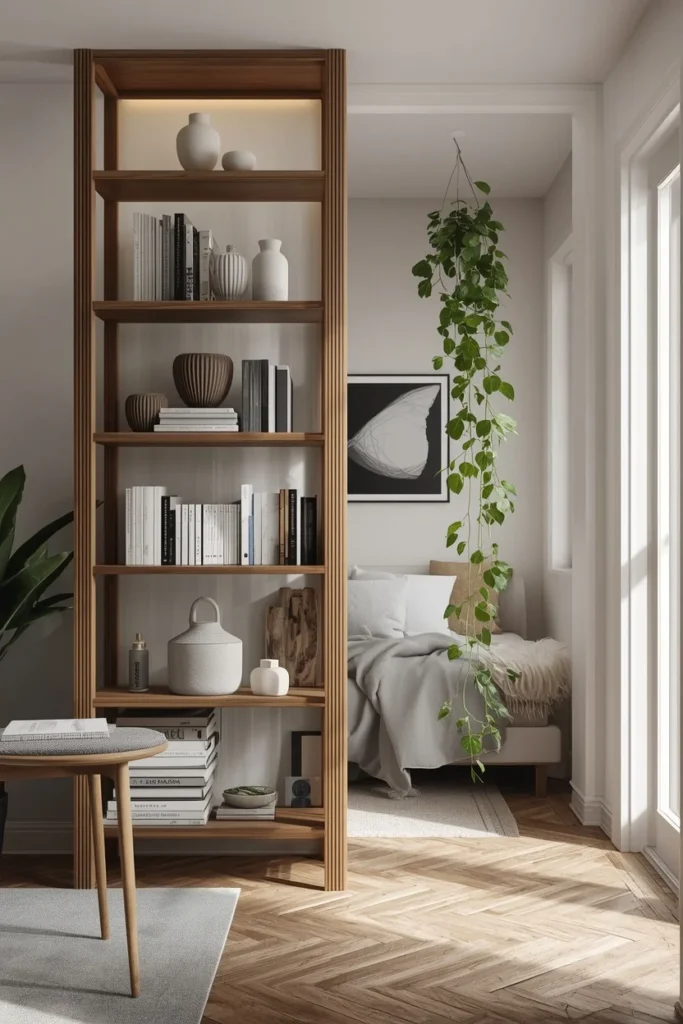
2. Freestanding Shelving as Room Divider
A tall freestanding shelving unit does double duty in an apartment living room, adding storage and display space while also splitting an open studio or combined living-dining layout into two visually distinct zones. Choose a unit that’s open on both sides rather than a solid-backed bookcase, so light and sightlines still pass through and the room doesn’t feel chopped in half. Style it with a mix of books, ceramics, and a trailing plant so it reads as intentional decor from both sides rather than a wall of storage. Because it’s freestanding, it requires zero wall anchoring and moves with you to the next apartment without leaving a mark behind. This is one of the most practical ideas on this list for studio apartments where the living room, sleeping area, and sometimes a workspace all share one open footprint.
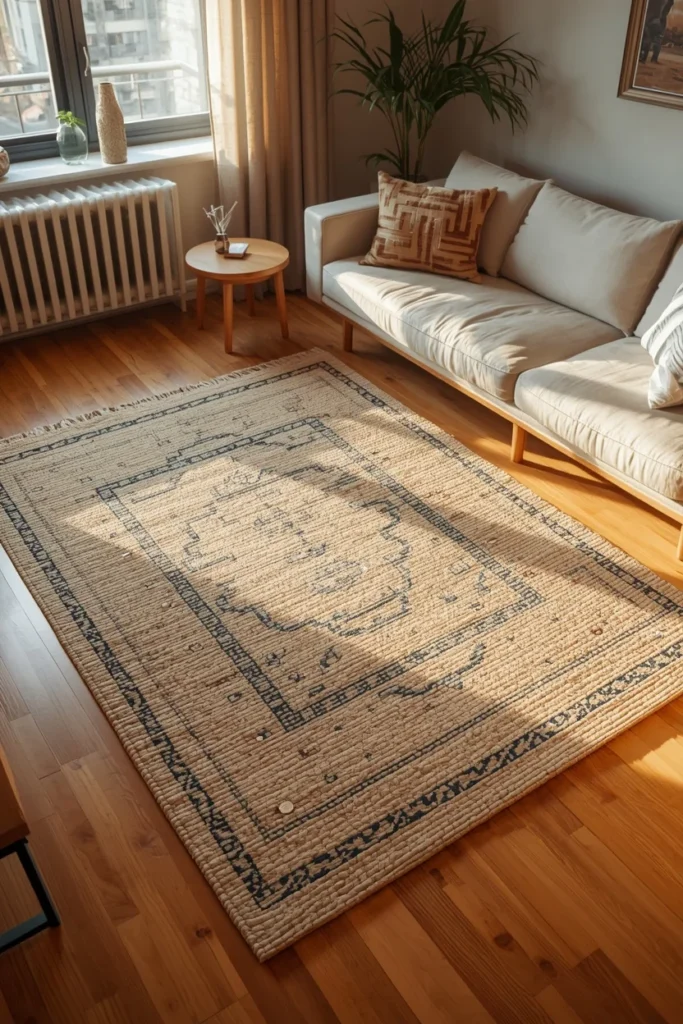
3. Layered Rugs to Define Zones
In an apartment with one open room handling multiple jobs, layering two rugs is one of the simplest ways to visually separate a living zone from a dining or work zone without touching the floor plan itself. Start with a larger, neutral base rug under the full seating area, then layer a smaller, more textured or patterned rug on top to anchor just the coffee table and sofa cluster. Natural fiber materials like jute or sisal work well as the base layer, since they’re durable and neutral enough to sit under almost any second rug on top. This trick also adds real warmth and texture underfoot in apartments with hard flooring, which is common in most rental units. Because rugs are entirely freestanding, this idea requires no installation and rolls up completely when moving day comes.
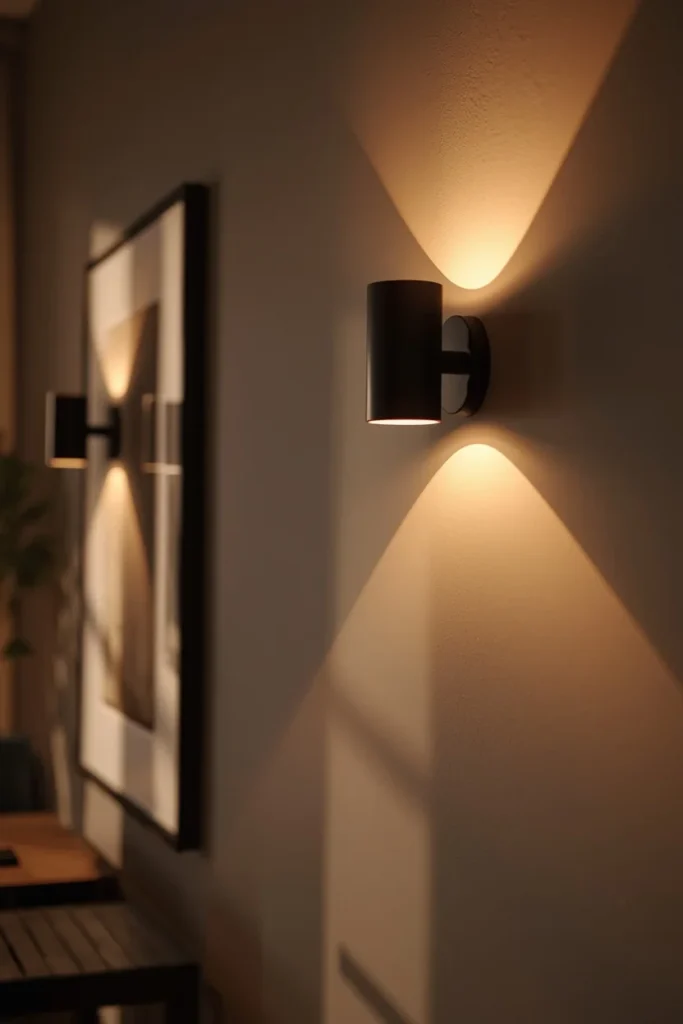
4. Cordless Rechargeable Wall Sconces
Battery-powered, rechargeable wall sconces solve the biggest lighting problem renters face, needing an accent light exactly where a hardwired fixture doesn’t exist. Mount them using removable adhesive strips rated for the sconce’s weight, positioned to flank a piece of art, a mirror, or a reading chair the way a hardwired sconce would in a fully renovated home. Most models include a built-in dimmer or multiple brightness settings, giving you the same layered lighting effect as a permanent installation without an electrician. Recharge them on a monthly rotation so they’re never caught dead at the exact moment you want ambient light in the evening. This upgrade is one of the fastest ways to make a rental living room stop relying on a single harsh overhead fixture.
5. Arc Floor Lamp Lighting
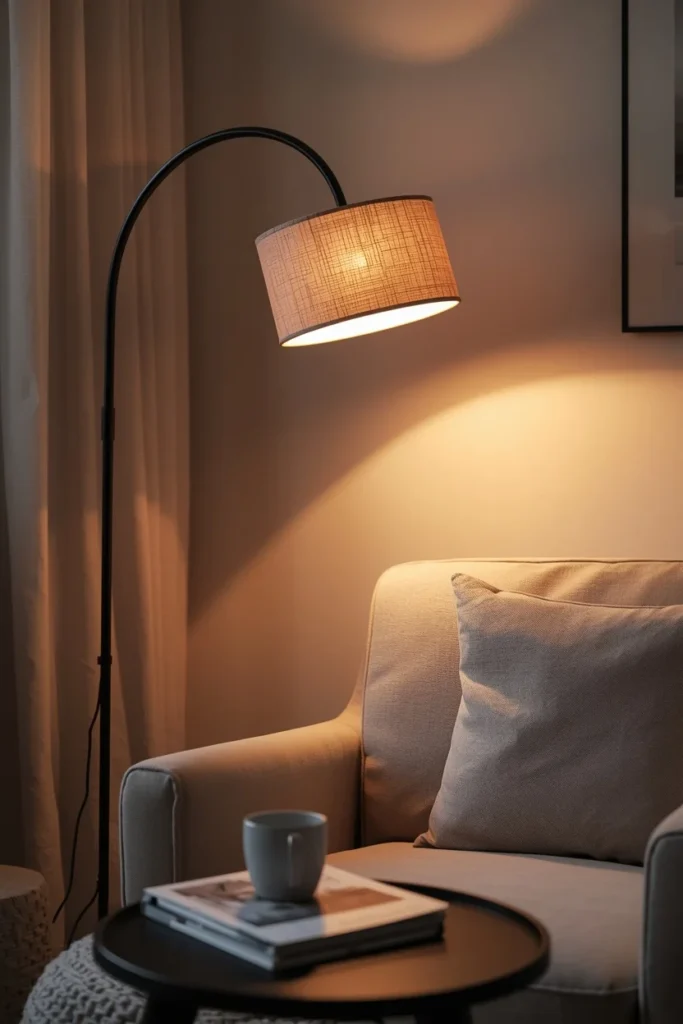
An arc floor lamp placed in a corner does more for a room’s ambiance than almost any other single furniture piece, since its curved arm lets you position warm light exactly over a reading chair or coffee table without a lamp base competing for floor space. Choose one with a heavy, weighted base and a shade in linen or a warm opal glass, both of which diffuse light softly rather than casting harsh direct glare. Position the arc so the light falls where you actually sit and read, not just wherever the cord happens to reach, since the whole point of the design is directional lighting. This piece also acts as a sculptural moment in the room on its own, filling a tall corner that would otherwise sit empty. Because it’s entirely freestanding, it’s one of the easiest lighting upgrades to bring straight into your next apartment.
6. Adhesive-Strip Gallery Wall
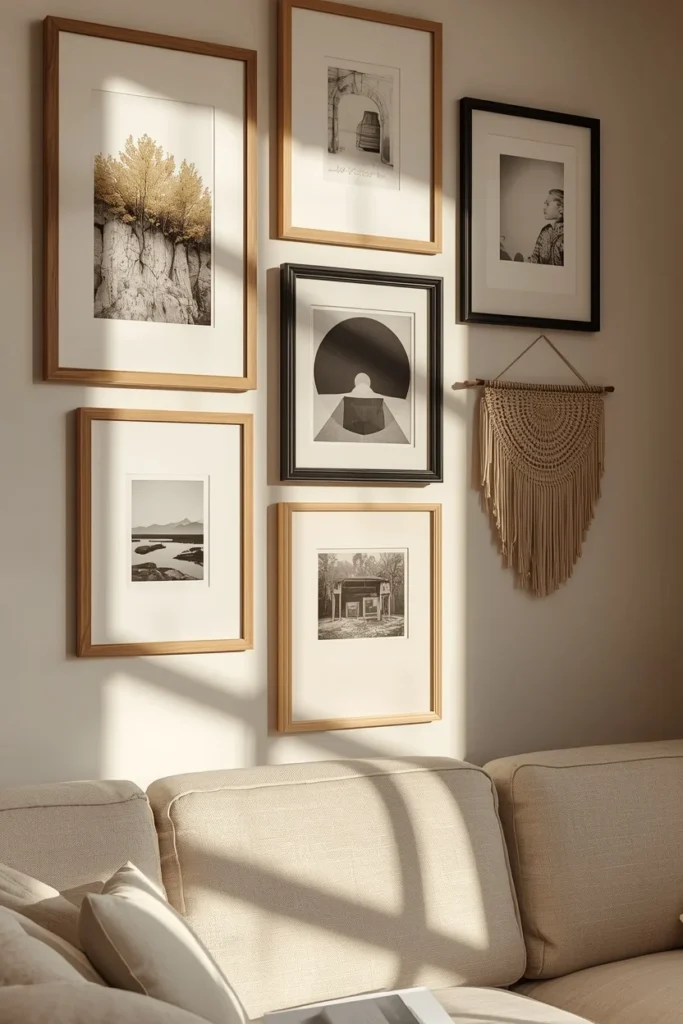
A gallery wall built entirely with adhesive picture-hanging strips gives an apartment living room instant personality, and because nothing goes in with a nail, the whole layout removes cleanly at the end of your lease. Mix frame sizes, finishes, and a couple of unframed prints or textiles for variation, rather than using identical frames in a strict grid, which tends to look more like a hotel hallway than a personal collection. Lay the full arrangement out on the floor first, adjusting spacing and balance before a single strip goes on the wall, since gallery walls are far easier to plan on the ground than to reposition once mounted. Even a single wall with five or six pieces makes a noticeable difference in how personal and finished the room feels. This idea works in almost any room shape, but it reads especially well behind a sofa or along a hallway leading into the living space.
7. Bold Jewel-Toned Accent Chair
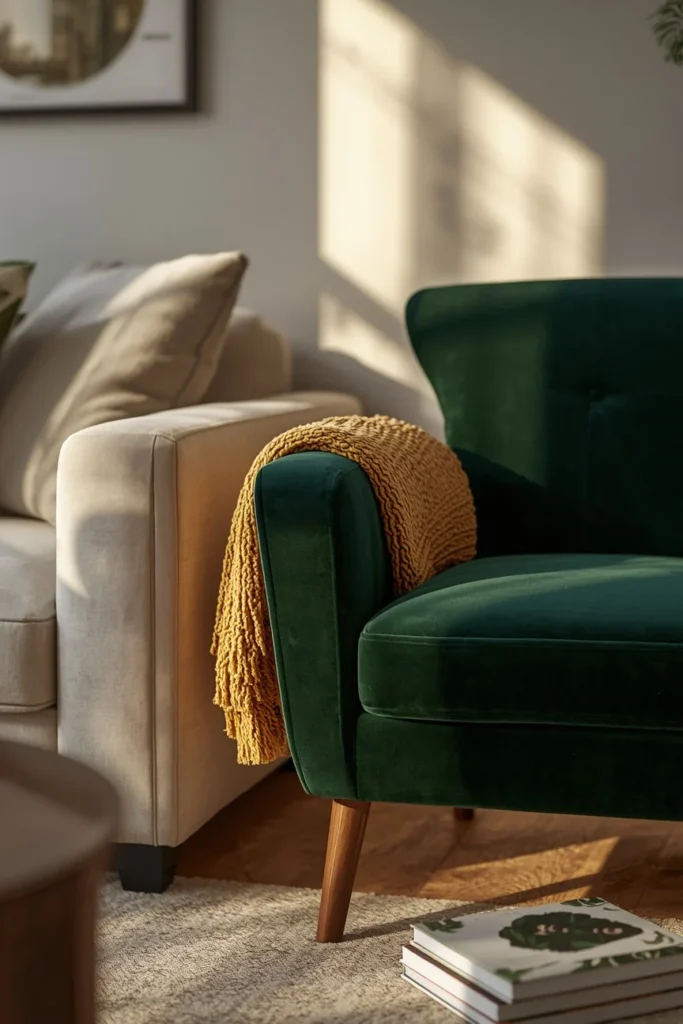
A single jewel-toned accent chair, emerald, sapphire, or a deep garnet, gives an otherwise neutral rental living room a strong focal point without requiring a single change to the walls or floors. Keep the rest of the room’s palette calm and warm, cream, oat, soft grey, so the chair reads as an intentional pop of color rather than one competing element among many. Pair it with a textured throw in a complementary tone and a small stack of books on the floor beside it, which grounds the chair and keeps it from floating awkwardly in the room. Because it’s a single freestanding piece, it moves easily between apartments and can anchor a completely different palette in your next place if your color preferences shift. This is one of the most efficient ways to add personality to a rental room, since one piece does the visual work an entire accent wall would otherwise need to do.
8. Low-Back Sofa as Work Divider
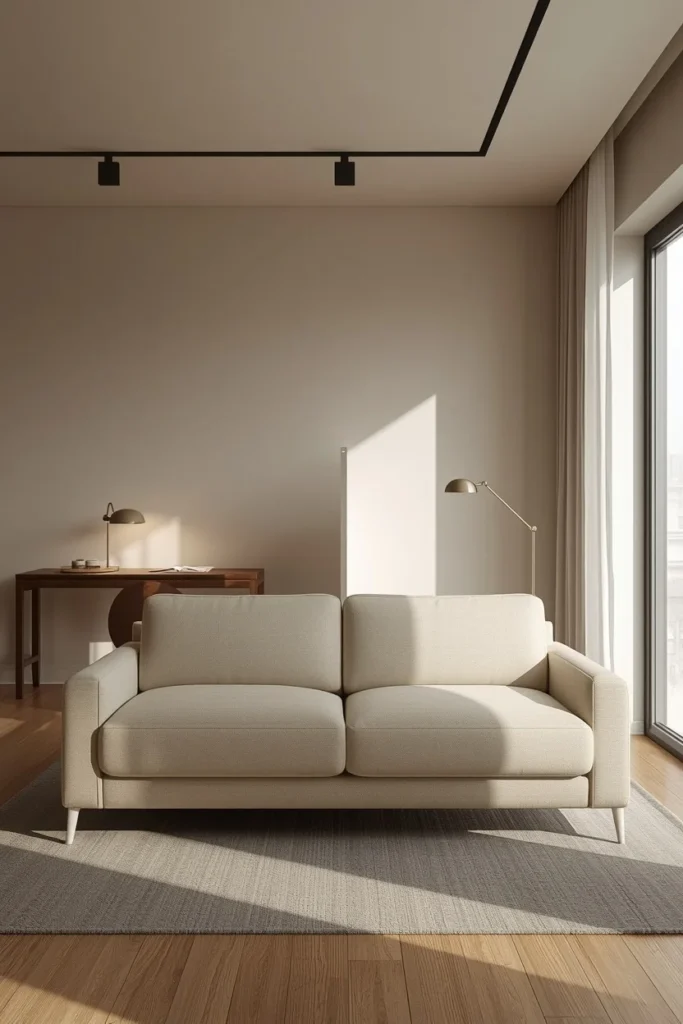
With remote work folding into so many apartments now, a sofa with a low back can double as a functional room divider, separating a living zone from a small desk setup without blocking sightlines or making the room feel chopped up. Position the sofa so its back faces the desk area, using the low profile to keep the space feeling open while still creating two distinct functional zones on either side. Add a slim console table behind the sofa to hold a lamp and a small tray, which reinforces the divider effect and gives the desk-facing side a finished look as well. This setup lets an apartment flip between living room and home office in the same footprint without any permanent partition or construction. It works especially well in studio apartments and one-bedrooms where a dedicated office simply isn’t in the floor plan.
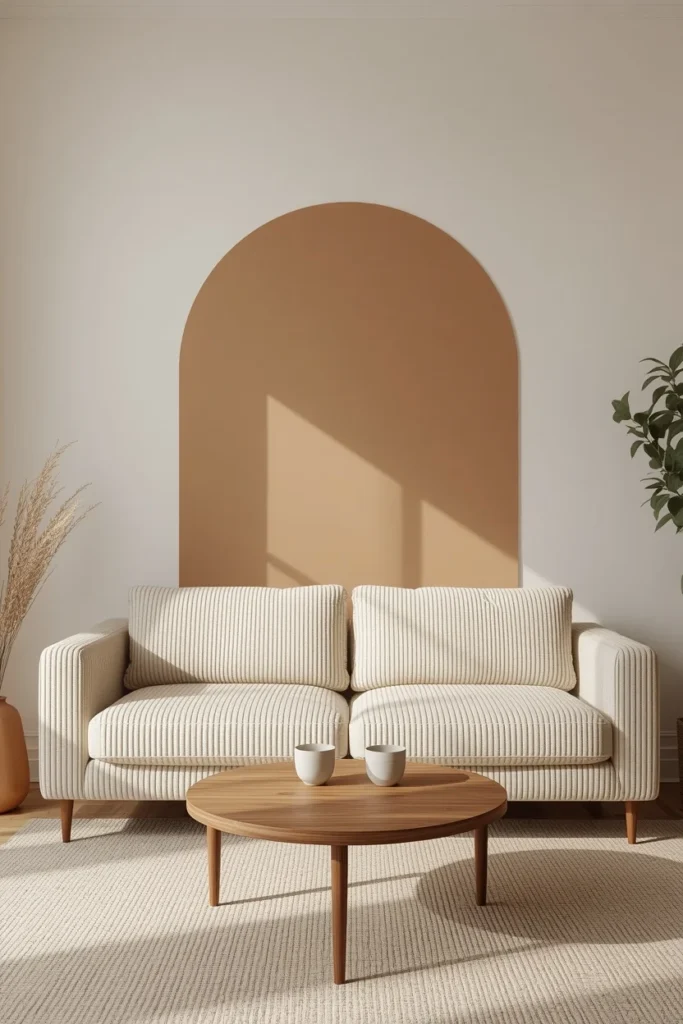
9. Removable Painted Arch Decal
For renters who can paint but can’t commit to a full accent wall, a removable arch-shaped wall decal delivers the same graphic impact as a hand-painted mocha or terracotta arch without any actual paint touching the wall. Choose a matte vinyl decal in a warm, saturated tone that contrasts gently with the wall color behind it, positioned centered behind the sofa or a console table for maximum visual impact. Keep the furniture in front of it simple, a ribbed corduroy sofa or a plain linen piece, so the arch stays the clear focal point of the room instead of competing with busy upholstery. Because it’s a decal rather than paint, it peels away cleanly at move-out with no patching or repainting required. This idea delivers one of the boldest visual transformations on this entire list for one of the lowest levels of actual commitment.
10. Tension Rod Sheer Curtains
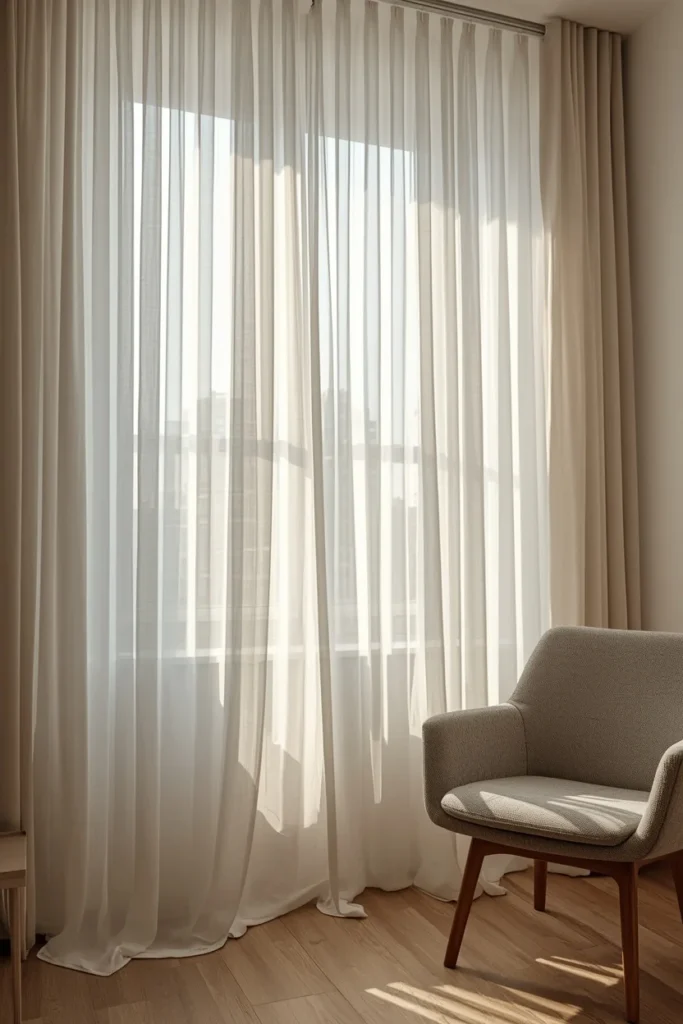
Sheer curtains hung on a tension rod let renters completely change the mood of a window without a single hole drilled for a permanent curtain rod bracket. Choose a floor-to-ceiling length so the curtains pool slightly at the base, which instantly makes the ceiling feel taller and the window feel more substantial than it actually is. A soft block-print or subtly textured sheer adds pattern without blocking the natural light that makes a small apartment feel bigger, which is especially important in units without much square footage to spare. Layer a slightly heavier curtain panel behind the sheer on a second tension rod if you need actual privacy or light-blocking at night, giving you both function and softness from the same window. This is one of the fastest, least expensive upgrades on the entire list, and it’s fully reversible in the time it takes to unscrew a tension rod.
11. Multifunctional Storage Furniture
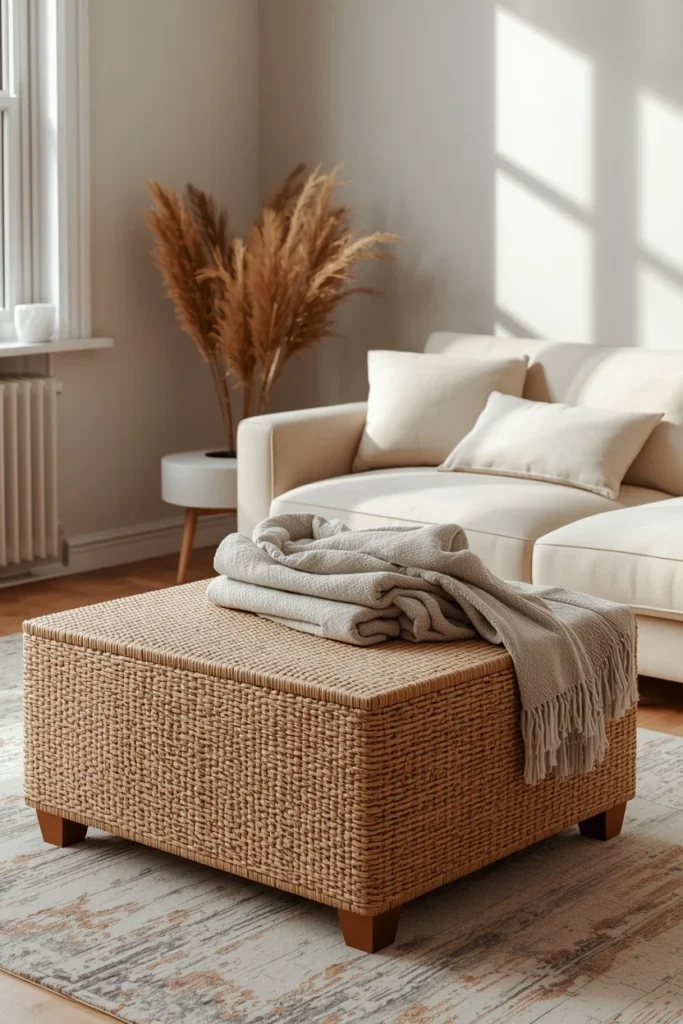
Furniture that pulls double duty is one of the most practical upgrades for any apartment living room, since square footage is almost always tighter than storage needs. A storage ottoman works as a coffee table, extra seating, and a place to hide blankets or remote controls all at once, while a sofa bed lets the living room flip into a guest space without a dedicated spare room. Look for pieces with lift-top lids or pull-out drawers rather than purely decorative storage, since the whole point is function you actually use daily. Keeping walkways clear by choosing furniture that consolidates several jobs into one footprint also improves both the room’s flow and its safety, especially in smaller layouts. This idea matters most in studio and one-bedroom apartments, where every piece of furniture needs to justify the space it takes up.
12. DIY Basket Pendant Light Cover
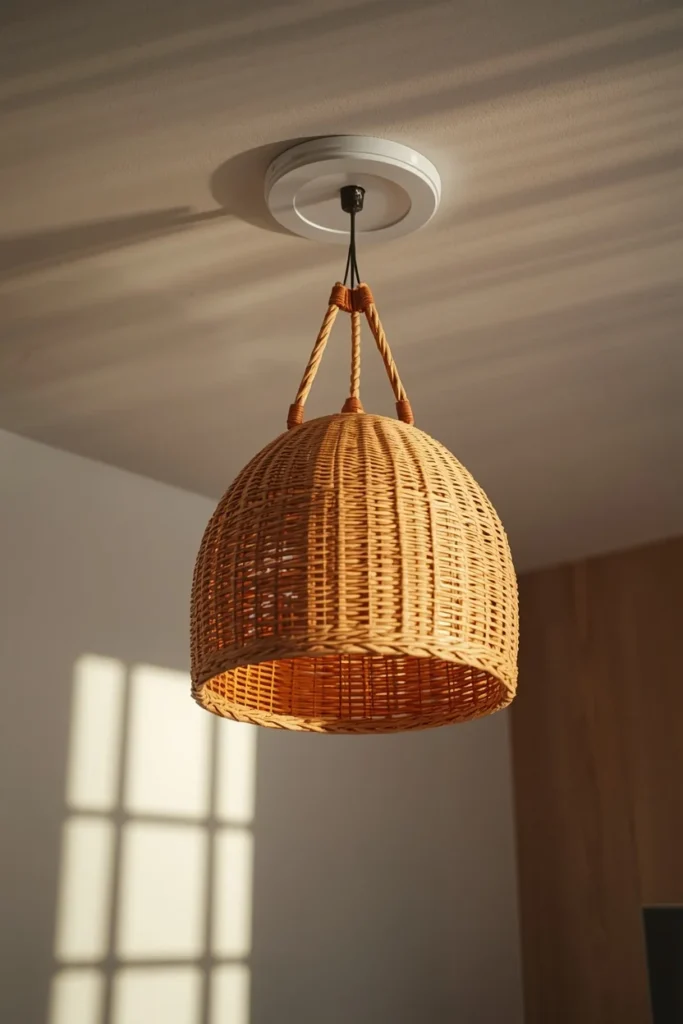
One of the easiest and cheapest renter hacks around involves a thrifted woven basket, the bottom cut out and shoulder-cup hooks attached, slipped directly over an existing recessed light to fake the look of a custom woven pendant fixture. This trick works especially well over a recessed light in a dining nook or a corner of the living room, instantly softening what’s usually the least personal light source in a rental. Choose a basket with an open, textured weave so light still filters through attractively rather than getting blocked entirely. Because the basket simply hooks over the existing fixture without any wiring or hardwiring changes, it comes right back off when you move, leaving the original recessed light untouched. It’s a small project, usually under twenty dollars in materials, but it changes the character of a recessed light dramatically.
13. Natural Fiber Rug Grounding
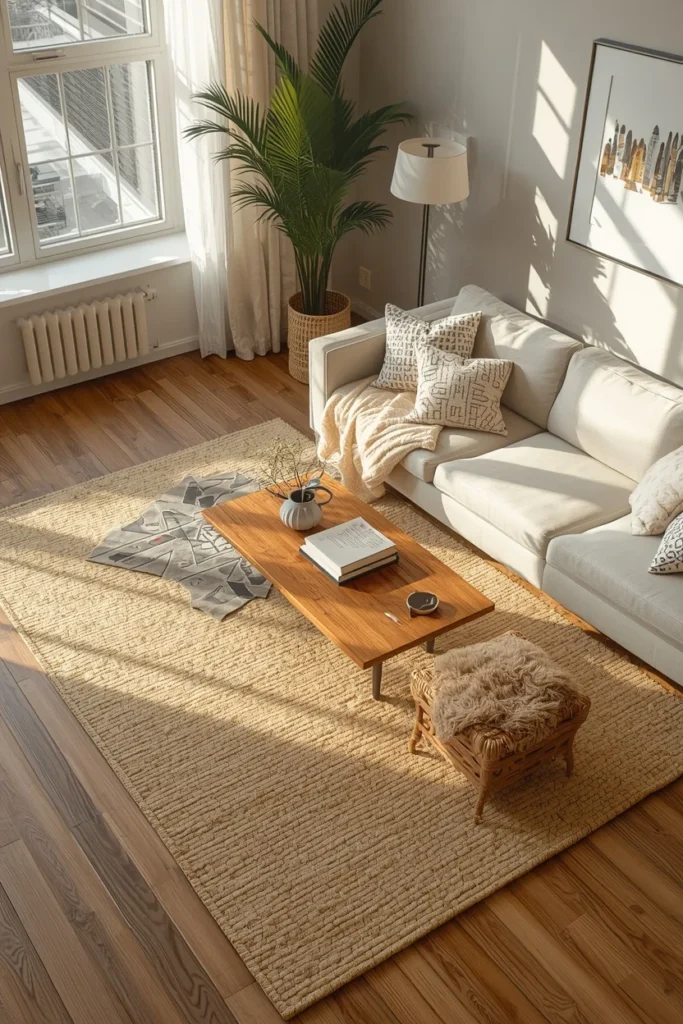
A natural fiber rug in jute, sisal, or seagrass grounds an apartment living room in a way that feels warm and textural without introducing any color commitment that might clash with future furniture. These materials also tend to be more budget-friendly than wool or synthetic alternatives of comparable size, which matters in a space you might only live in for a year or two. Layer a smaller patterned or plush rug on top if you want softness underfoot, since natural fiber rugs on their own can feel a little rough for bare feet. Because the rug is entirely freestanding, it requires zero installation and rolls up in minutes when you’re ready to move. This is one of the simplest ways to add texture to a rental living room without touching a single wall or fixture.
14. Mixed Vintage and Thrifted Furniture
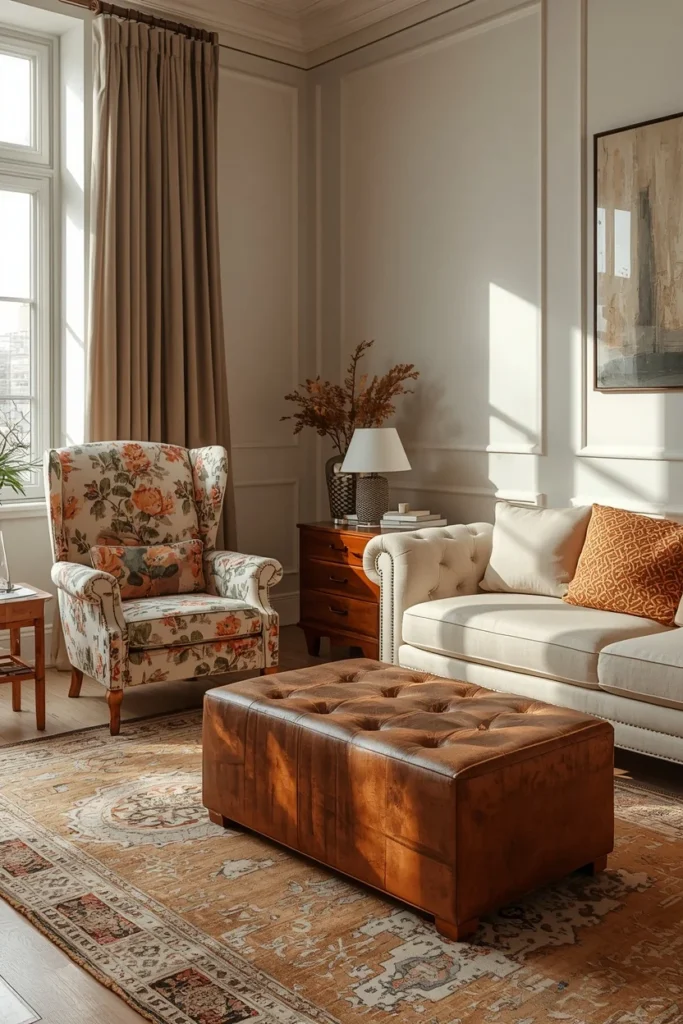
Mixing vintage and thrifted pieces, a bone-inlay side table, a floral wingback chair, a leather ottoman, all in the same room might sound like a recipe for visual chaos, but it’s actually one of the strongest looks in rental decorating right now precisely because nothing is trying to match. The trick is choosing one unifying element, often the rug or the wall color, to hold the mismatched pieces together, so the eclectic mix reads as curated confidence rather than random accumulation. Every piece stays freestanding and moveable, which makes this approach uniquely renter-friendly since the whole collection travels intact from apartment to apartment. Thrifted and vintage furniture also tends to be sturdier and more interesting than flat-pack alternatives at a similar price point, since older pieces were often built with better joinery and materials. This look rewards patience, since the best version of this style is built slowly over time rather than purchased all at once.
15. Statement Indoor Plants
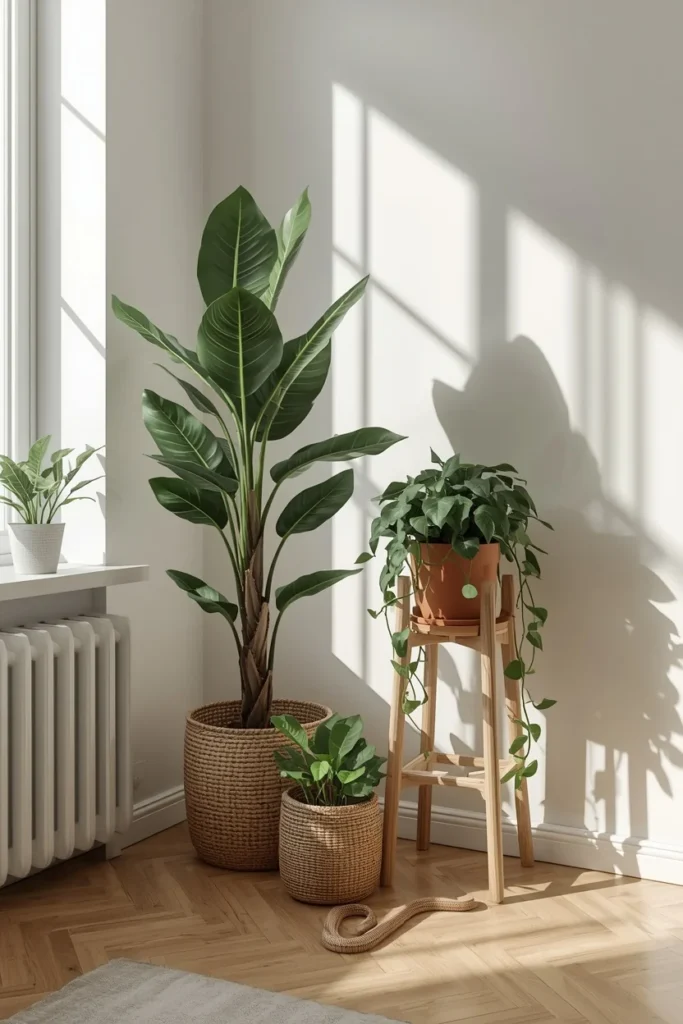
A few well-placed indoor plants do more for an apartment living room’s earthy, lived-in feel than almost any other budget upgrade, and they require zero installation or lease-breaking commitment. Choose one or two larger statement plants, a fiddle leaf fig or a rubber plant, for floor-level impact, then add a smaller trailing pothos or philodendron on a shelf or plant stand for variation in height. Group plants of different heights together rather than spacing them evenly around the room, since clustering reads as more intentional and jungle-like rather than scattered. Terracotta, woven, or stoneware planters reinforce the earthy color trend currently popular in apartment decor without adding another loud pattern into the mix. Even renters without much natural light can lean on lower-maintenance varieties like snake plants or ZZ plants to get the same visual effect.
16. Removable Wallpaper Accent Wall
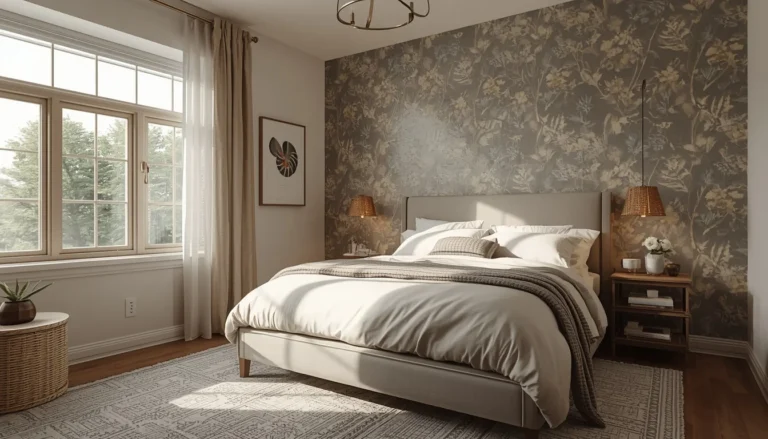
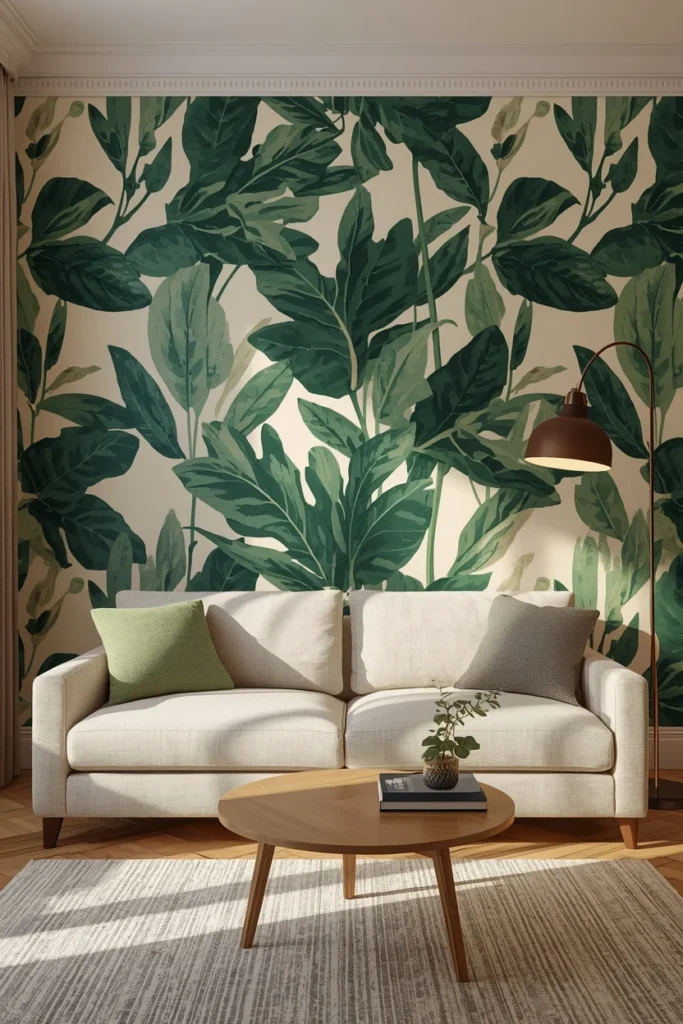
Peel-and-stick wallpaper remains one of the highest-impact, lowest-risk upgrades available to renters, since a full accent wall of pattern and color comes down cleanly whenever the lease ends. Choose a bold botanical, geometric, or textured print for the wall behind the sofa or television, since that’s the wall most visible from the main seating area and the one that benefits most from a strong focal point. Keep furniture and other decor in the room simple and neutral so the wallpaper stays the star rather than competing with busy upholstery or multiple patterns. Test a sample section first in the actual lighting of your apartment, since colors and patterns can look noticeably different under apartment lighting than they do in a product photo. This idea alone can make a rental living room feel completely transformed for the cost of a few rolls of paper and an afternoon of installation.
17. Command-Strip Mirror Placement
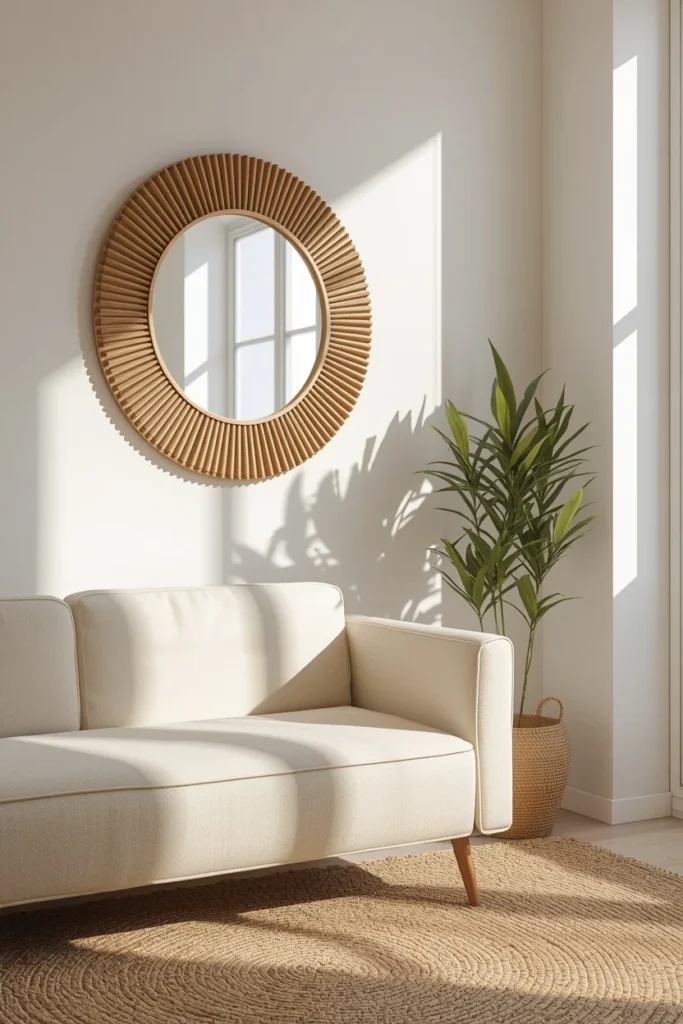
A large mirror hung with heavy-duty adhesive strips rated for its weight is one of the most effective tricks for making a small apartment living room feel larger, and it requires no drilling at all when the strips are sized correctly for the mirror’s weight. Position it directly opposite a window so it reflects natural light back across the room, which brightens the space and adds a sense of depth that a small living room otherwise lacks. Choose a mirror with an interesting frame, arched, fluted wood, or a simple round shape, so it doubles as a decorative piece rather than reading as purely functional. Always check the weight rating on the adhesive strips carefully and use enough of them, since an underrated mount is the most common reason this trick goes wrong. This is one of the simplest single upgrades on the list, but it consistently gets credit for making small apartments feel noticeably bigger and brighter.
18. Nesting and Modular Coffee Tables
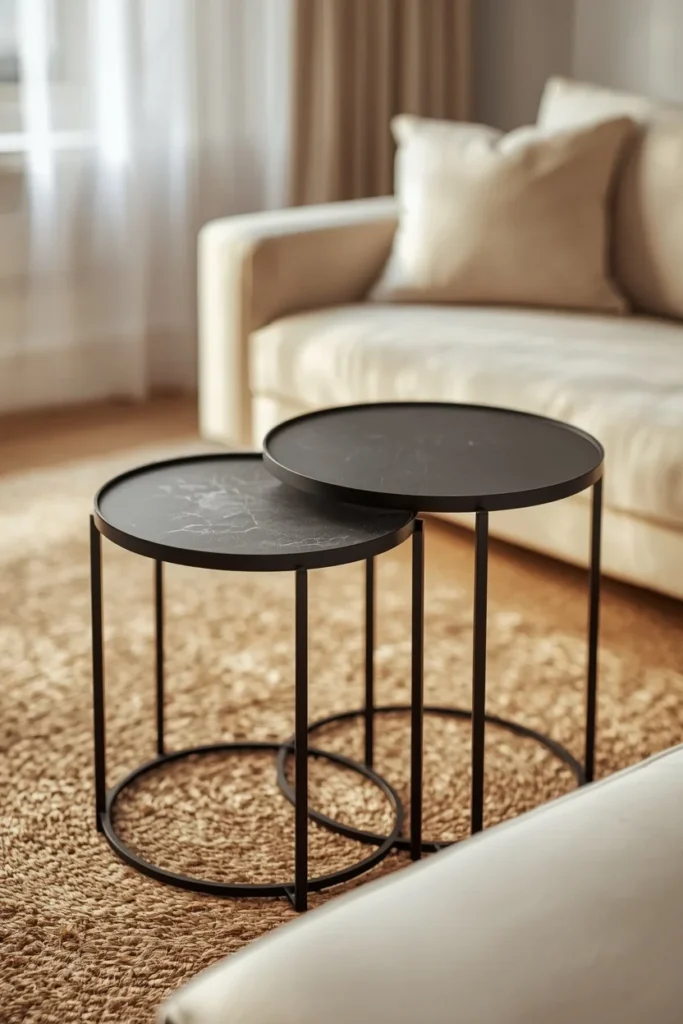
Nesting coffee tables give an apartment living room flexibility that a single large table can’t match, since the smaller pieces pull apart for extra surface space during a gathering and tuck back together the rest of the time to save floor space. Choose a set in a material that contrasts nicely with your flooring and rug, a matte black metal base with a stone or glass top works especially well against a natural fiber rug. Use the tables asymmetrically rather than perfectly stacked, sliding the smaller table slightly out to create visual interest and make the pairing feel more like a styled moment than just furniture. Because each piece is lightweight and freestanding, the whole set is easy to rearrange as your layout changes or easy to move entirely when you relocate. This idea works particularly well in smaller living rooms where a single oversized coffee table would eat up too much of the walking path.
19. Handcrafted Woven Wall Hangings
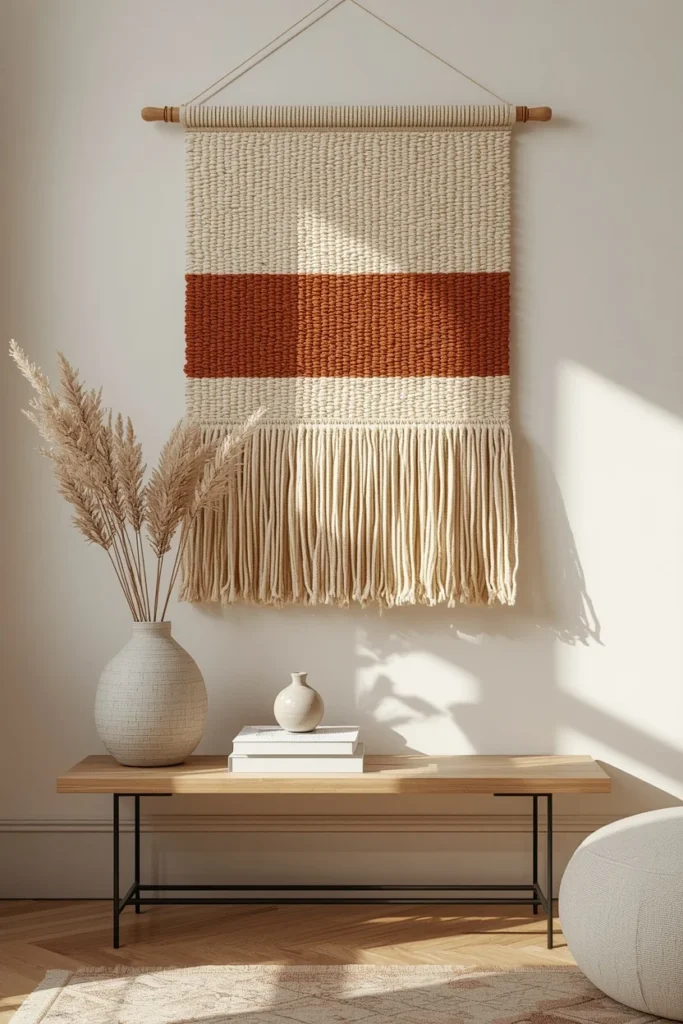
A handwoven wall hanging brings texture and warmth to an apartment living room without needing more than a single small hook or adhesive strip to mount, making it one of the lowest-commitment ways to add craftsmanship to a rental. Choose a piece in natural fibers, cream, oat, or a soft rust tone, so it complements an earthy or neutral palette rather than fighting with the rest of the room’s colors. Hang it above a console table, beside a window, or as the centerpiece of an otherwise simple wall, letting the texture do the visual work instead of surrounding it with competing decor. Because handcrafted textiles tend to be timeless rather than trend-driven, this is one of the few decor purchases that genuinely works across multiple apartments and multiple style phases. It also adds a sense of intention to a room that mass-produced decor rarely achieves on its own.
20. Furniture on Wheels
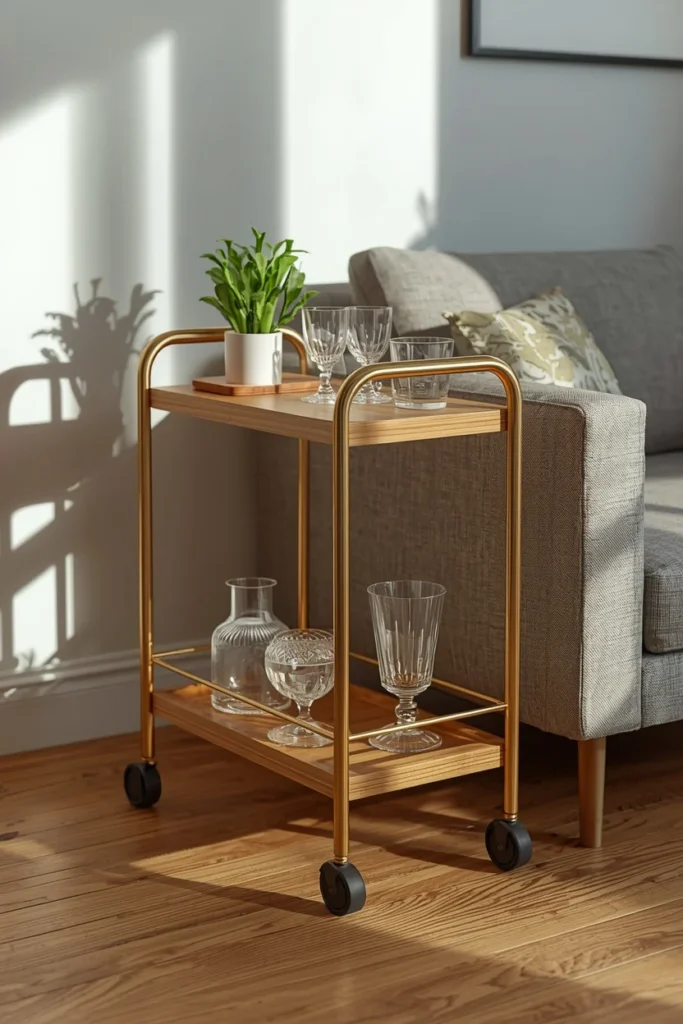
Furniture with locking casters, a rolling bar cart, a mobile side table, or even a small rolling ottoman, gives an apartment living room the flexibility to shift layouts on demand, which matters most in multipurpose spaces that flip between living room, workspace, and guest zone throughout the week. Choose pieces with locking wheels so they stay put during normal use but roll easily out of the way when you need to open up floor space for guests or a temporary desk setup. A rolling bar cart doubles as a drink station for entertaining and a mobile side table the rest of the time, maximizing the return on one piece of furniture. This idea pairs particularly well with the low-back sofa divider concept, since wheeled furniture makes it easy to reconfigure the room entirely for a video call versus a weekend gathering. It’s a small detail, but it consistently shows up in apartments that manage to feel flexible rather than cramped.
21. Layered Warm Ambient Lighting
Relying on a single ceiling fixture is one of the fastest ways to make a rental living room feel flat and impersonal, while layering table lamps, floor lamps, and warm-toned bulbs throughout the room creates the kind of ambiance usually associated with a much more expensive renovation. Choose bulbs in the 2700K to 3000K range across every fixture, since mismatched color temperatures between lamps is one of the most common and most fixable lighting mistakes in a living room. Position at least one lamp near every seating area, rather than clustering all your light sources on one side of the room, so no corner goes dark once the sun sets. Dimmable plug-in lamps let you adjust the whole room’s mood throughout the evening without touching a single hardwired switch. This upgrade costs relatively little compared to its visual impact, and it’s fully portable to your next apartment.
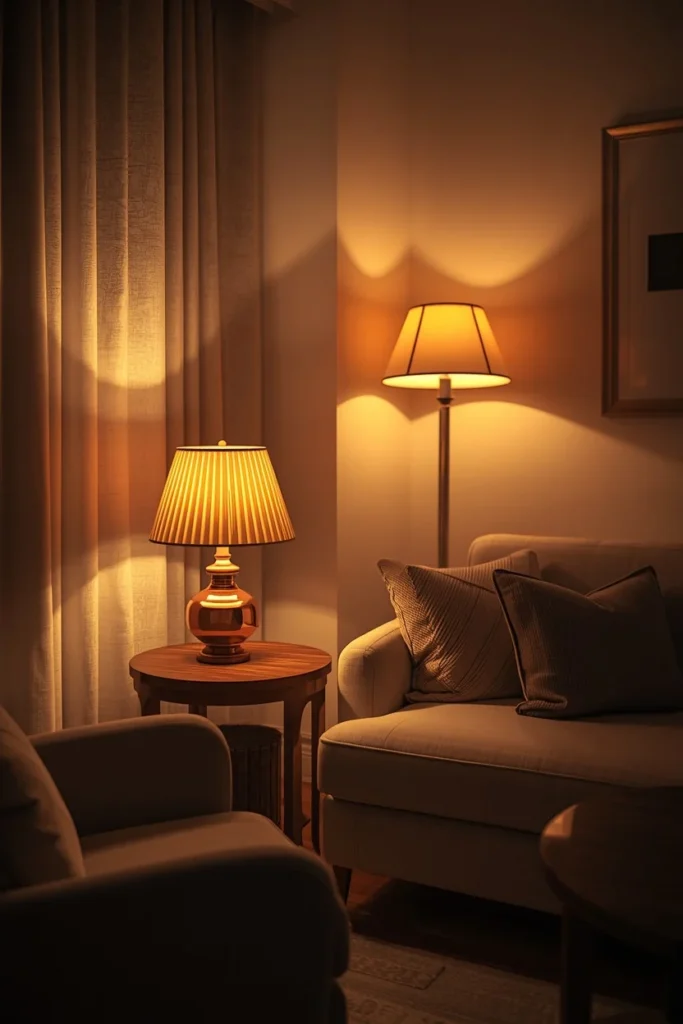
22. Tension Curtain Room Divider
A curtain hung on a ceiling-mounted tension track or a freestanding rod creates a soft, flexible room divider in an open apartment layout, letting you close off a sleeping nook or a small office corner from the main living space without any construction. Choose a heavier fabric than a sheer curtain if privacy is the main goal, since the divider needs to actually block sightlines rather than just suggest a boundary. This approach works especially well in studio apartments, where a single open room needs to feel like it has more than one function without permanently splitting the space. Because the entire system is tension-mounted or freestanding, it comes down completely at move-out with no patching or wall repair required. It also adds a soft, textile element to a room that might otherwise feel entirely hard-surfaced between furniture and flooring.
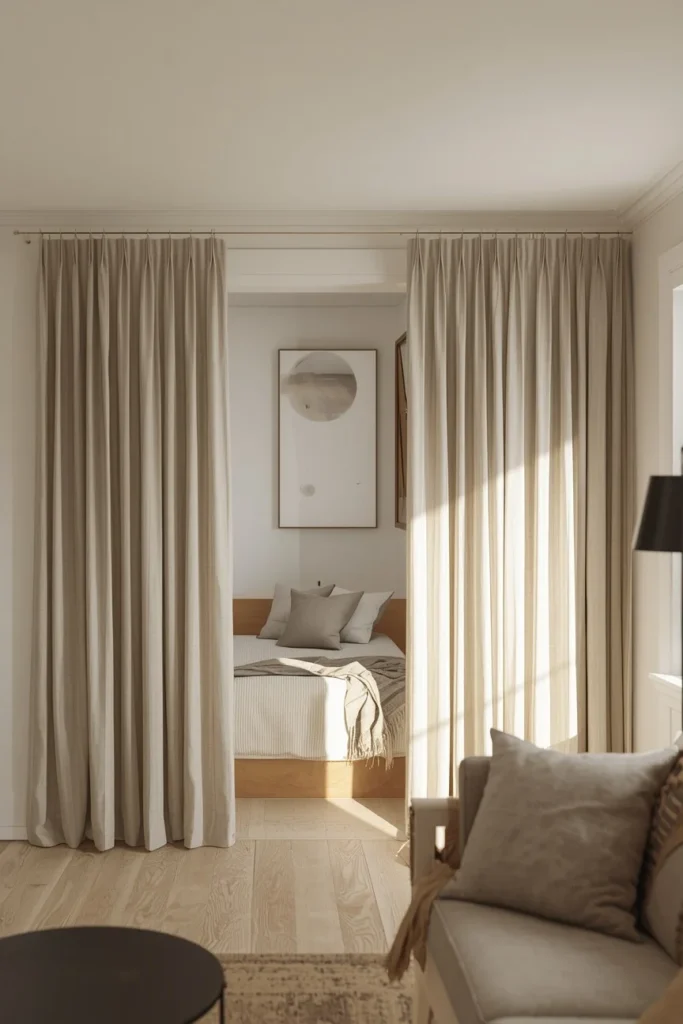
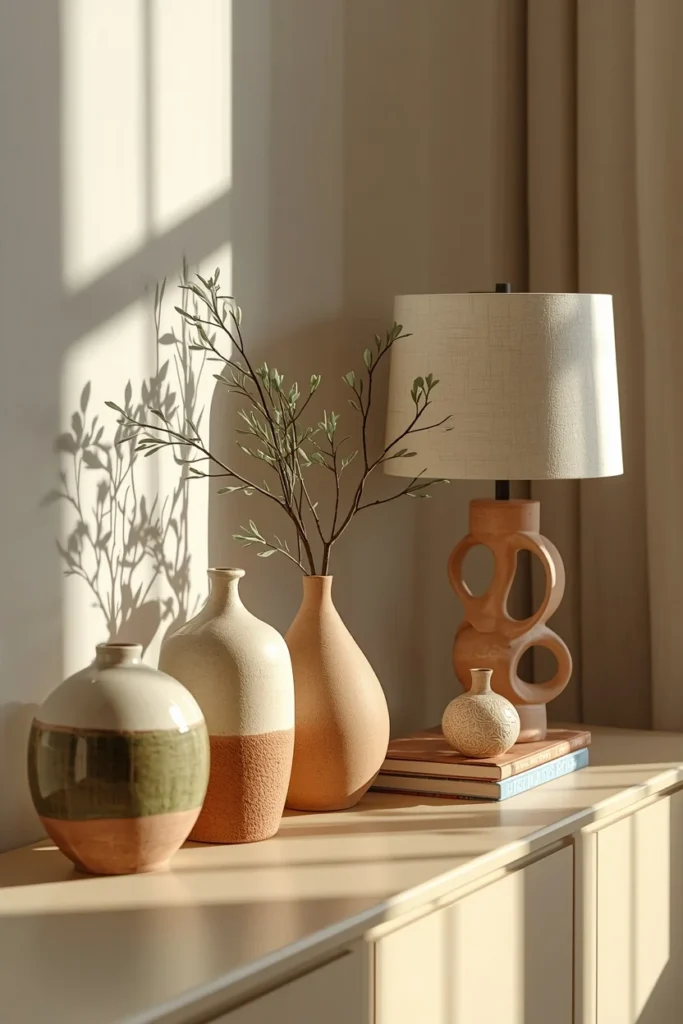
23. Collected Ceramic Lamp and Vase Display
A small collection of ceramic lamps, vases, and bowls, mismatched in shape but united by a similar earthy glaze or tone, gives a rental living room a personal, collected feel that mass-matched decor sets never quite achieve. Group pieces of varying heights together on a console table or shelf rather than spacing them evenly, letting the collection read as gathered over time instead of purchased in a single trip. Choose ceramics with visible texture or hand-thrown irregularity over perfectly uniform, machine-made pieces, since the slight imperfections are exactly what make the collection feel intentional and crafted. Rotate a few pieces seasonally, swapping a vase of dried grasses for fresh flowers or greenery, to keep the display feeling current without buying anything new. Because every piece is small and freestanding, the entire collection packs easily and travels with you to your next place.
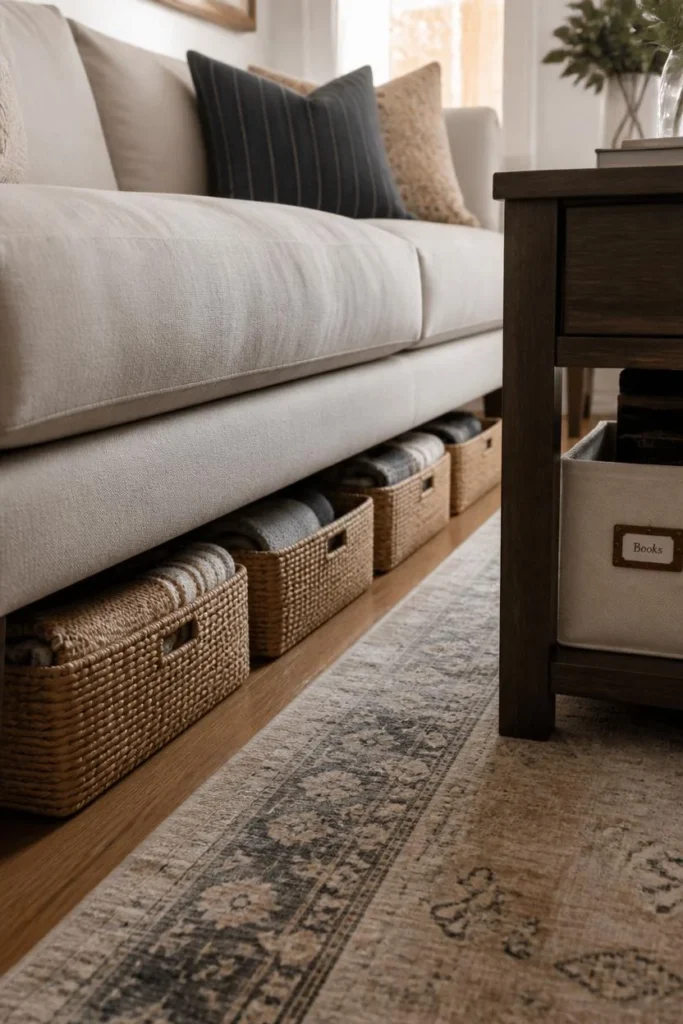
24. Under-Furniture Hidden Storage
Storage bins and baskets tucked beneath a sofa, console table, or open shelving unit make use of dead space that almost every apartment living room has, without requiring any built-in cabinetry or permanent changes. Choose low-profile bins specifically sized to slide under your sofa’s clearance, and label or color-code them so what’s inside stays easy to find without pulling everything out. Woven baskets work well for items you want visible and stylish, blankets, extra pillows, while opaque bins under furniture handle less attractive necessities like seasonal storage or cords and chargers. This approach keeps a small living room’s floor space and walkways clear, which matters both for the room’s visual calm and for basic safety in a tight footprint. Because every container is freestanding, the whole system moves with you and can be reconfigured instantly for a completely different apartment layout.
25. Removable Floor Runner or Vinyl Decal
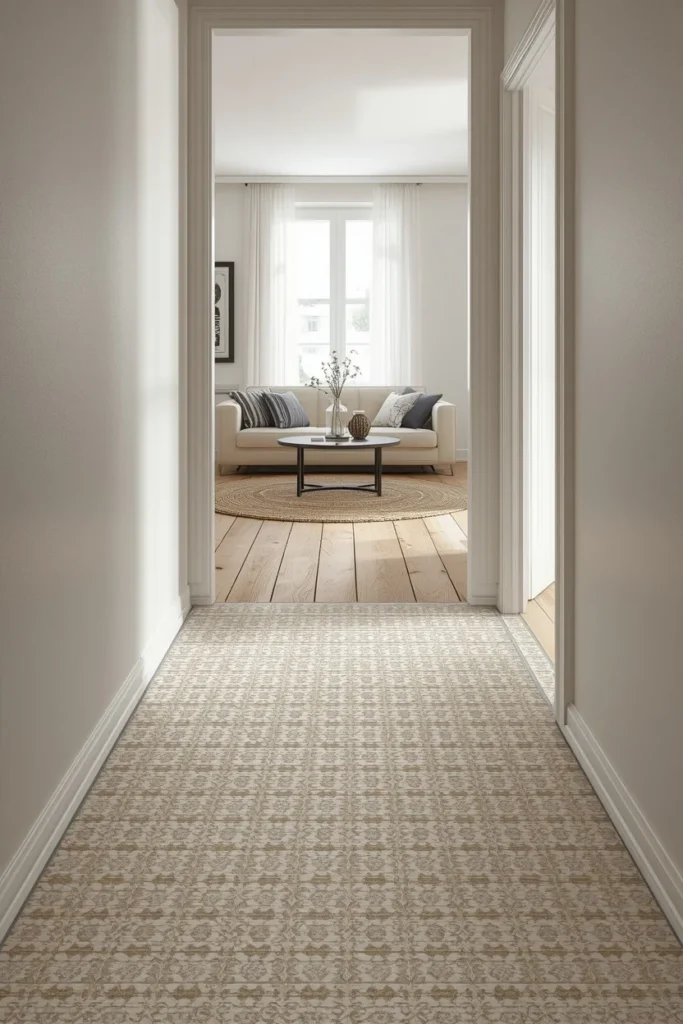
For apartments with dated or heavily worn flooring, a removable vinyl floor decal or a simple runner rug can visually reset the entire room without a single change to the actual floor underneath. Choose a decal or runner in a pattern that complements your existing rug and furniture rather than introducing an entirely new color scheme, so the floor treatment feels like part of one cohesive design rather than a separate project. Position it in a hallway leading into the living room or along an entry path, which is often the most worn and least attractive stretch of flooring in a rental unit. Vinyl floor decals typically lift cleanly at move-out, especially when applied to sealed hardwood or laminate rather than raw or unfinished surfaces, so always test a small corner first. This is a smaller-scale idea compared to most on this list, but it solves a specific, common rental problem that otherwise has very few renter-safe fixes.
Styling Tips
Repeat one accent color at least three times across the room, in a pillow, a vase, and a piece of art, so the space reads as intentional rather than randomly assembled. Mix at least two different wood tones among your furniture pieces instead of matching everything, since a slight variation in finish adds depth that a fully coordinated set can’t achieve. Group small decor items in odd numbers, three ceramics or three framed prints, rather than spacing them evenly, since asymmetry tends to look more natural and collected. Keep one wall or surface deliberately simple as a visual resting point, even in a maximalist or layered room, so the eye has somewhere calm to land.
Practical Implementation Ideas
Always check the weight rating on any adhesive hanging strips before mounting mirrors, shelves, or art, and use more strips than the minimum suggested for heavier pieces. Test removable wallpaper and vinyl decals on a small, hidden section of wall or floor first, since some paint finishes and flooring sealants react differently to adhesive than others. Keep a small toolkit of touch-up paint matching your walls on hand, in case any adhesive product needs a light patch at move-out despite being labeled removable. Photograph your original walls, floors, and fixtures before making any changes, which gives you a clear reference for returning the space to its original condition when your lease ends.
Common Mistakes to Avoid
Choosing decorative wall hooks or hanging strips without checking their actual weight rating is one of the most common ways renters end up with a fallen mirror or shelf and a damaged wall. Overcrowding a small apartment living room with too many furniture pieces, rather than choosing a few multifunctional ones, makes the space feel smaller and busier than it needs to. Skipping a test patch before applying removable wallpaper or paint-alternative decals can lead to unexpected peeling or residue that’s harder to fix than it would have been to test first. Relying entirely on a single overhead light, rather than layering in lamps and warm bulbs, leaves even a well-decorated apartment living room feeling flat once the sun goes down.
Small-Space Alternatives
A slim console table behind a sofa can replace a full entryway table in an apartment without one, doubling as both storage and a place to drop keys and mail. Wall-mounted or over-the-door hooks handle coats and bags without eating into floor space that a small living room can’t spare. A folding or nesting side table tucks away completely when not in use, which matters most in studio layouts where every square foot serves more than one purpose. Choosing furniture with visible legs rather than solid, boxy bases makes a small room feel more open, since sightlines continue underneath the furniture instead of stopping at a solid base.
Budget-Friendly Alternatives
Thrifted and secondhand furniture, given a fresh cushion cover or a coat of paint where appropriate, often costs a fraction of new pieces while adding more character than anything mass-produced. Peel-and-stick wallpaper or a removable arch decal delivers the visual impact of a full accent wall for far less than the cost of paint, primer, and the labor of repainting at move-out. A DIY basket pendant cover over an existing recessed light costs under twenty dollars in most cases and dramatically changes the character of a rental’s least personal light fixture. Swapping only the lamp shades on existing fixtures, rather than buying entirely new lamps, is one of the cheapest ways to shift a room’s lighting warmth and mood.
Pro Styling Recommendations
Choose one dominant neutral for your large furniture pieces, the sofa and rug especially, and let smaller accent pieces carry the bolder color and pattern, which keeps a rental room flexible for future style changes. Layer textures deliberately, a smooth leather ottoman next to a woven basket next to a nubby wool throw, since texture variation reads as considered even in an otherwise simple, neutral room. Leave a little visual breathing room on shelves and surfaces rather than filling every inch, since a slightly edited display reads as more curated than one packed with decor. Reassess your gallery wall or shelf styling every few months and swap a few pieces around, since even small changes keep a rental space feeling current rather than static.
FAQs
Conclusion
An apartment living room doesn’t have to feel like a placeholder until you own a house someday. Some of the best rental spaces out there right now belong to people who leaned into what actually travels, a good rug, the right lamp, a gallery wall built entirely on adhesive strips, instead of waiting for permission to make it feel like home. Start with whichever idea from this list solves your space’s biggest gap right now, whether that’s storage, lighting, or just a splash of color, and build from there. The best part about a renter-safe upgrade is that it’s never really finished; it just moves with you to the next place.