16 Home Library Aesthetic Ideas That Turn Any Corner Into a Reader’s Paradise
There’s a specific kind of quiet that happens when a home has a reading corner. Not a whole room. Just a corner, a chair, and enough good light to lose an afternoon in a book you meant to finish weeks ago.
Reading nooks have quietly become one of the most requested features in home listings, and it’s not hard to see why. After years of screens and open-concept everything, people want a small, enclosed spot that feels like it belongs only to them.
You don’t need a library room with a rolling ladder to get that feeling (although, yes, we have that idea on this list too). You need the right corner, the right shelf, and a chair you’ll actually fight your family for.
Here are 16 home library aesthetics, from dramatic and moody to soft and sunlit, built to turn whatever corner you have into a reader’s paradise.
Table of Contents
1. Arched Built-In Bookshelf Nook
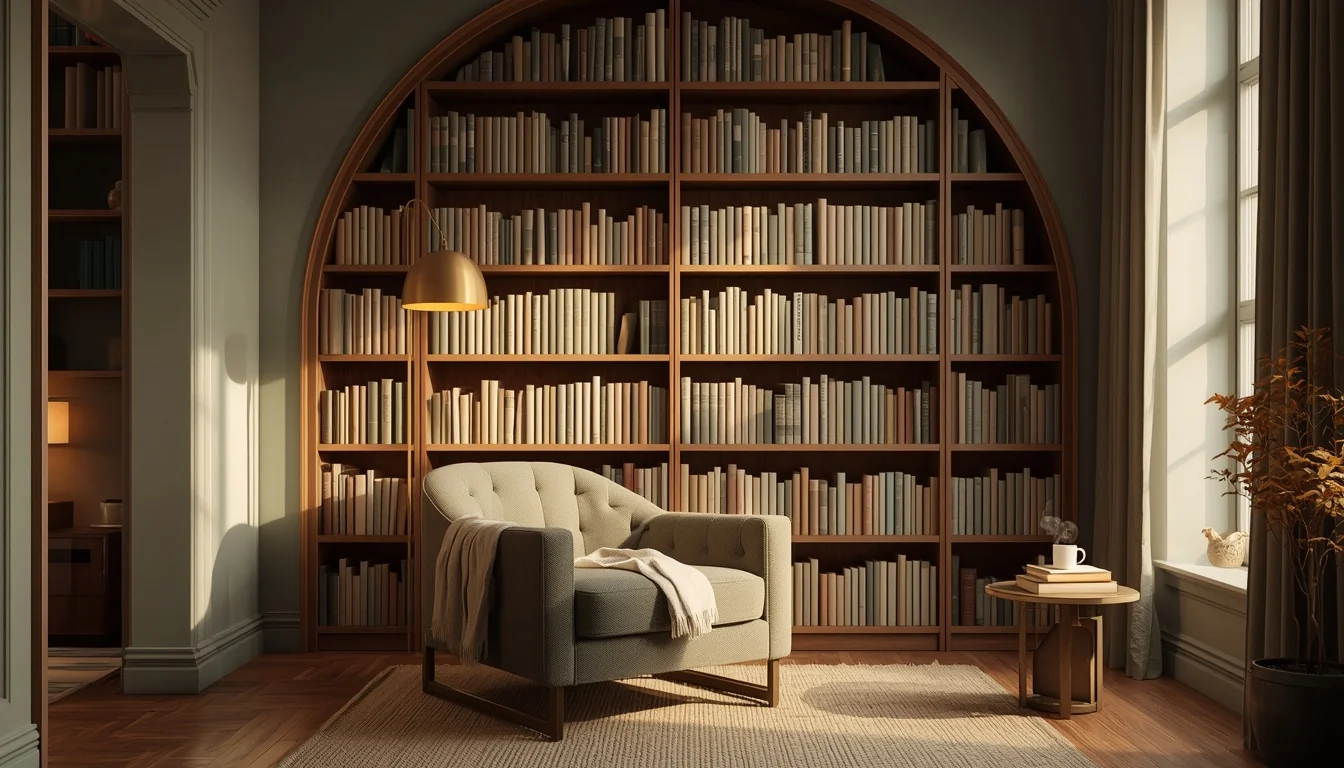
An arched built-in is the closest thing to walking into a chapter of a novel. The curve softens what would otherwise be a boxy wall of shelves, and it draws the eye upward, making even an 8-foot ceiling feel taller. Paint the interior of the arch a shade darker than your wall color to add depth, then fill the shelves with a mix of upright and stacked books so the eye has somewhere to rest. A single cushioned bench tucked into the base turns the whole thing into seating, not just storage. If a full built-in isn’t in the budget, a tall arched mirror or an arched wallpaper panel behind open shelving gets you 80% of the look for a fraction of the cost.
2. Rainbow Color-Coded Bookshelf Corner
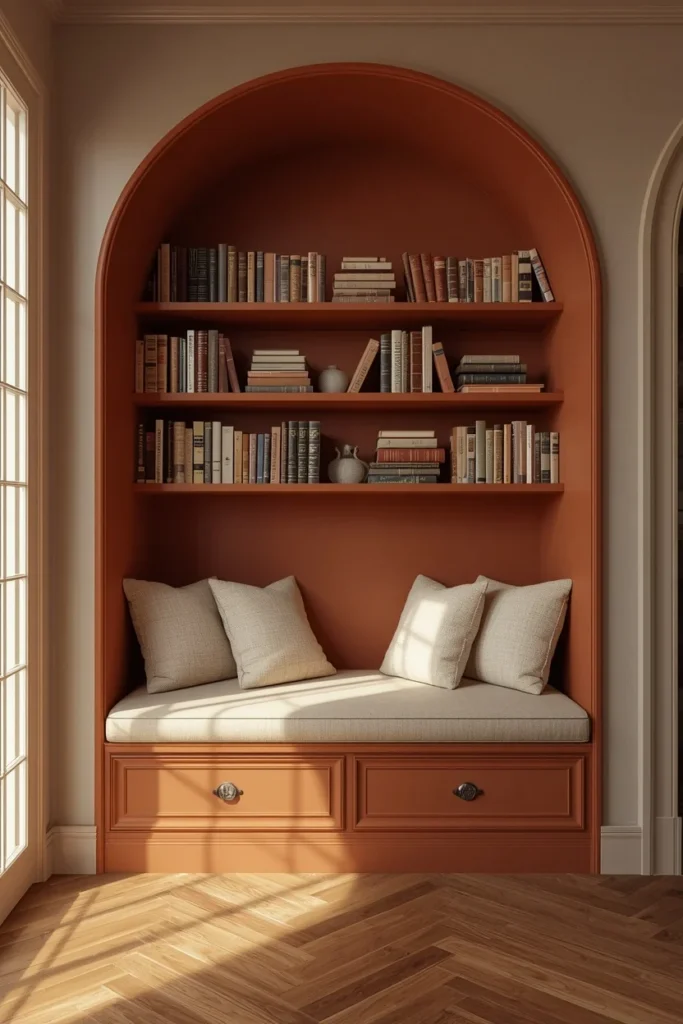
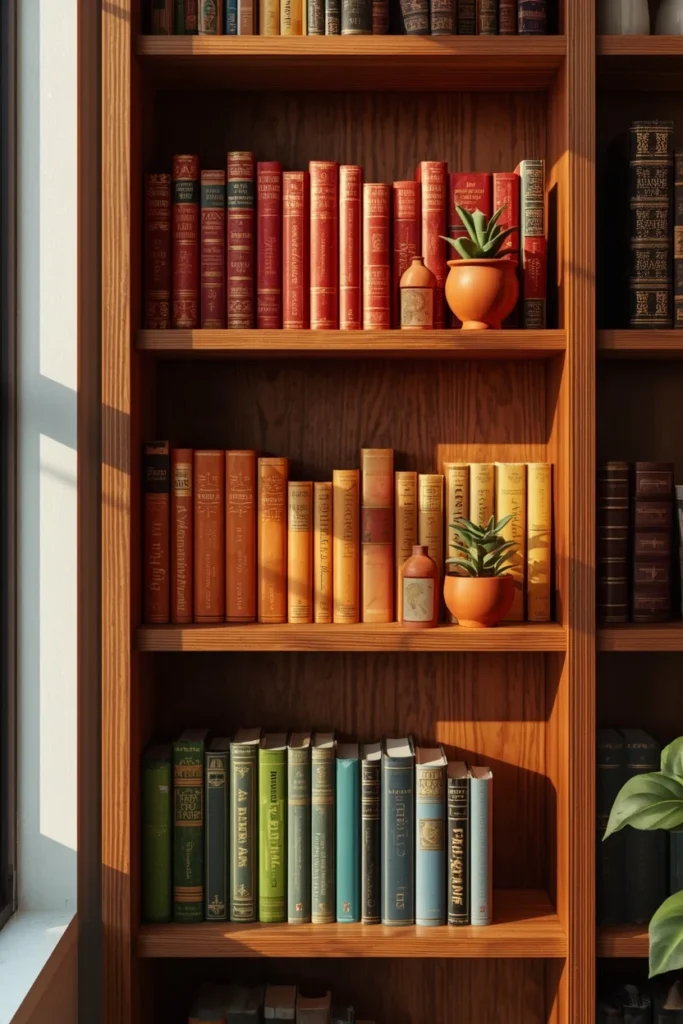
Color-coding a bookshelf turns your book collection into wall art without spending a cent on new decor. Start by pulling every book off the shelf and sorting by spine color, then arrange them in a gradient, from warm reds and oranges through greens and blues, ending in neutrals. This works especially well on open shelving where the spines are the main visual event, since a busy cabinet with doors would hide the effect entirely. Leave small gaps every few feet for a plant, a framed photo, or a ceramic bookend so the rainbow doesn’t feel like a party store display. It’s an easy weekend project that photographs beautifully and genuinely changes how a room feels.
3. Window Seat with Hidden Storage
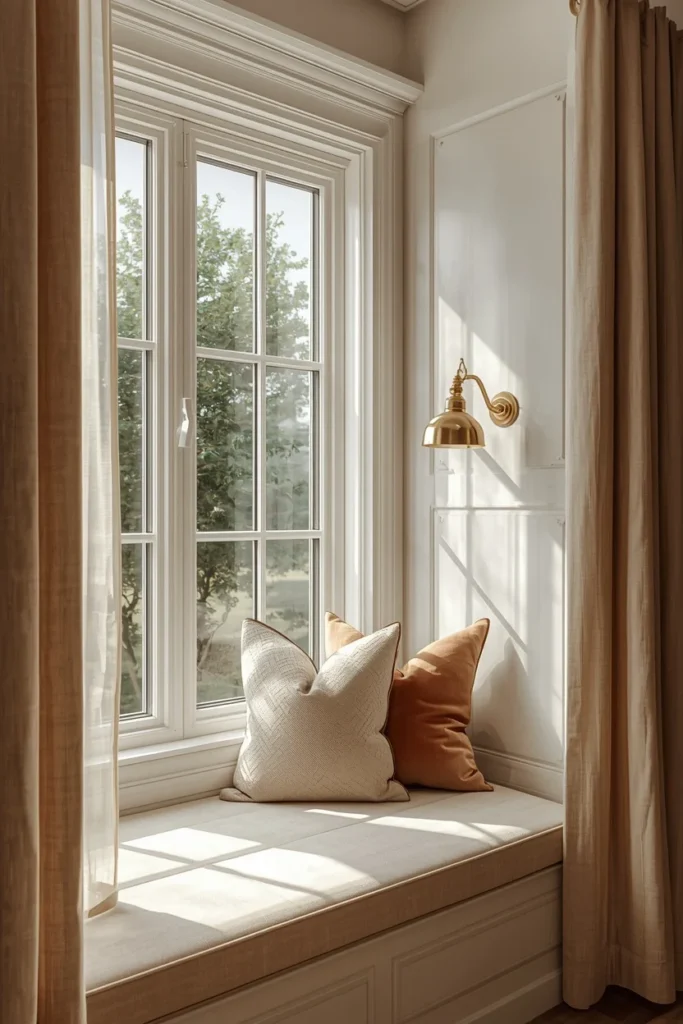
A window seat solves two problems at once: it gives you a reading spot bathed in natural light, and the bench base can hide an entire book collection underneath a hinged lid or pull-out drawers. Build or buy a bench sized to the window width, then layer a thick foam cushion in a durable fabric like linen or cotton canvas so it holds up to daily use. Stack three or four throw pillows in varying sizes against the side wall to create a lounging angle, not just a perch. A narrow shelf running along the top of the window frame gives you a spot for a small reading lamp and a rotating stack of current reads. This idea works in almost any home because most houses already have at least one underused window worth claiming.
4. Dark Academia Velvet Reading Chair
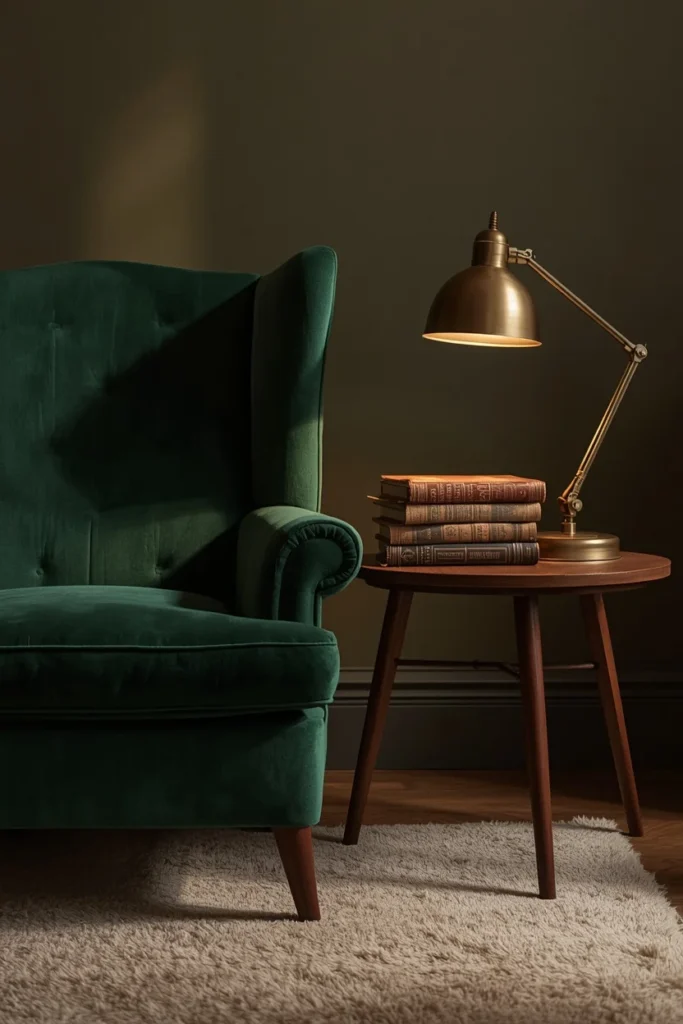
Dark academia leans into contrast: rich wood tones, deep jewel-colored upholstery, and warm brass accents against a muted wall color. A single wingback or barrel chair in emerald or burgundy velvet becomes the anchor of the whole corner, so keep the surrounding pieces simpler to let the chair do the visual work. Pair it with a low side table in dark walnut and a stack of hardcovers with worn, textured spines rather than glossy new dust jackets. Layer a wool throw over the arm and add a single sculptural task lamp with a fabric shade for warm, low light rather than a bright overhead fixture. The trick to keeping this look grounded instead of heavy is pairing the dark chair with one lighter textile, like a cream rug, so the whole corner doesn’t read as one dense block of color.
5. Deep Green Fireside Library
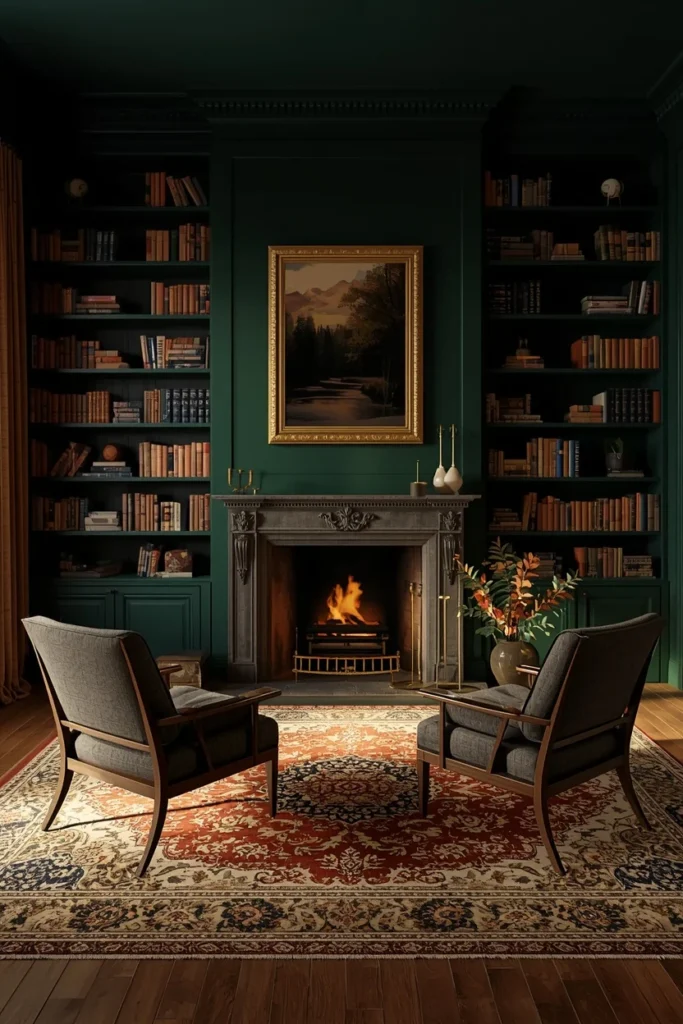
Pairing deep green walls with a working fireplace and floor-to-ceiling bookshelves creates a corner that feels grand even in a modest room, because the color and the flicker of firelight do most of the emotional heavy lifting. Choose a forest or hunter green in a matte or eggshell finish so it absorbs light softly instead of reflecting it, then flank the fireplace with symmetrical shelving to keep the layout balanced. Layer an antique-style rug in warm rust and cream tones underfoot, and choose a low, deep sofa or two accent chairs rather than anything with a high, boxy silhouette. Brass fireplace tools and a single oversized botanical print above the mantel round out the traditional feel without tipping into clutter. This aesthetic rewards patience since the layered, collected look comes from adding pieces slowly over time, not buying a whole room at once.
6. Curved Chair Reading Moment
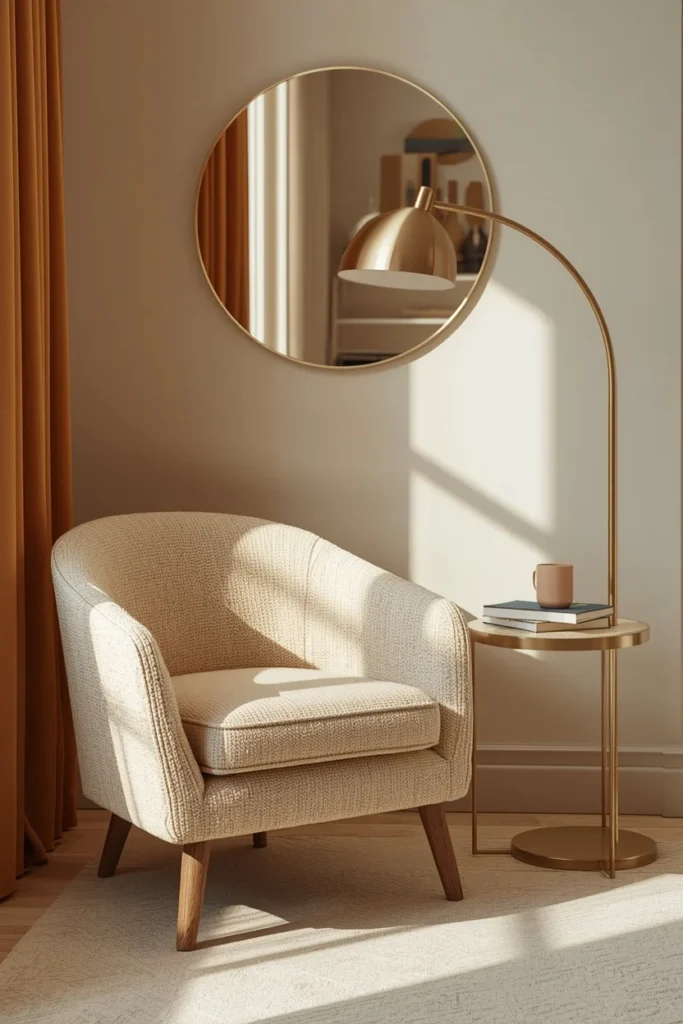
Curved furniture has become one of the defining shapes of current interior design, and a single rounded, sculptural reading chair can soften an entire corner that would otherwise feel sharp and boxy. Look for a chair with a barrel back or a boucle-upholstered curved silhouette, and place it at a slight angle to the wall rather than flush against it, which makes the corner feel more intentional and less like leftover space. A round side table with a pedestal base echoes the curve of the chair, while a single arched floor lamp continues the theme without repeating the exact same shape. Keep the surrounding wall mostly bare, or add one round mirror, so the curved silhouette of the chair stays the clear focal point. This aesthetic works especially well in smaller rooms because rounded furniture takes up less visual space than anything with hard, straight edges.
7. Floor-to-Ceiling Ladder Library Wall
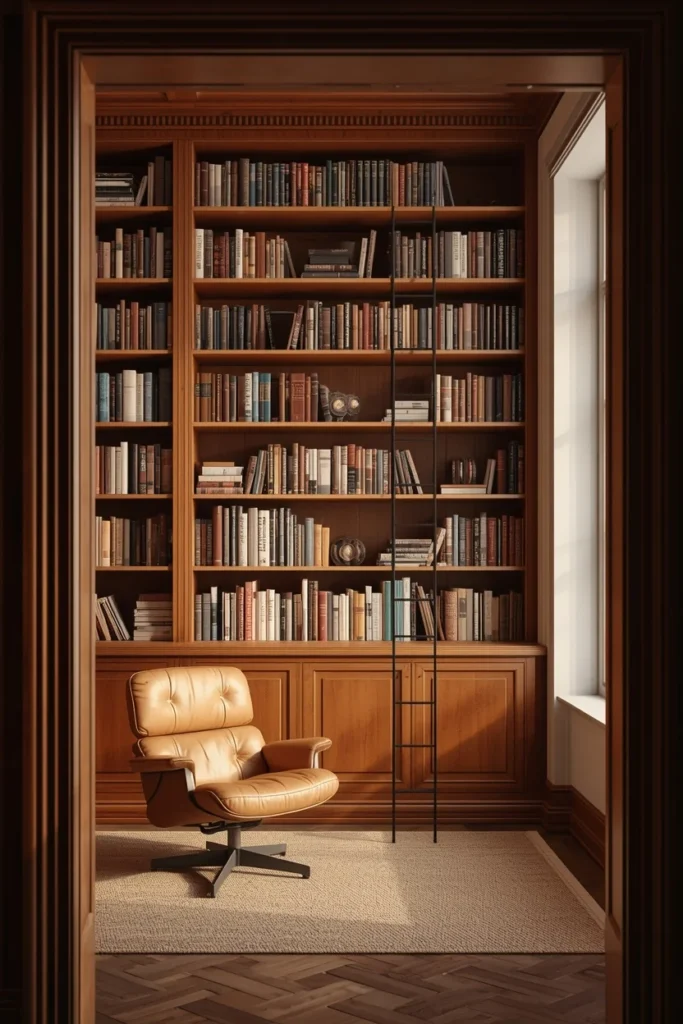
A rolling ladder against a floor-to-ceiling bookshelf is the single most requested “dream home library” feature, and it works because it signals a serious book collection while also being genuinely functional for reaching the top shelves. Install shelving from floor to ceiling on one full wall, using adjustable brackets so you can reconfigure shelf heights as your collection grows. Mount a sliding or rolling ladder on a rail track, choosing a matte black or brass finish depending on whether your shelving leans modern or traditional. Group books by height within each shelf rather than by color alone, since uneven stacking is what makes floor-to-ceiling shelving look curated instead of chaotic. Add a single reading chair and a small rug at the base of the wall so the space still functions as a place to sit, not just a wall of storage.
8. Painted Arch Accent Shelving
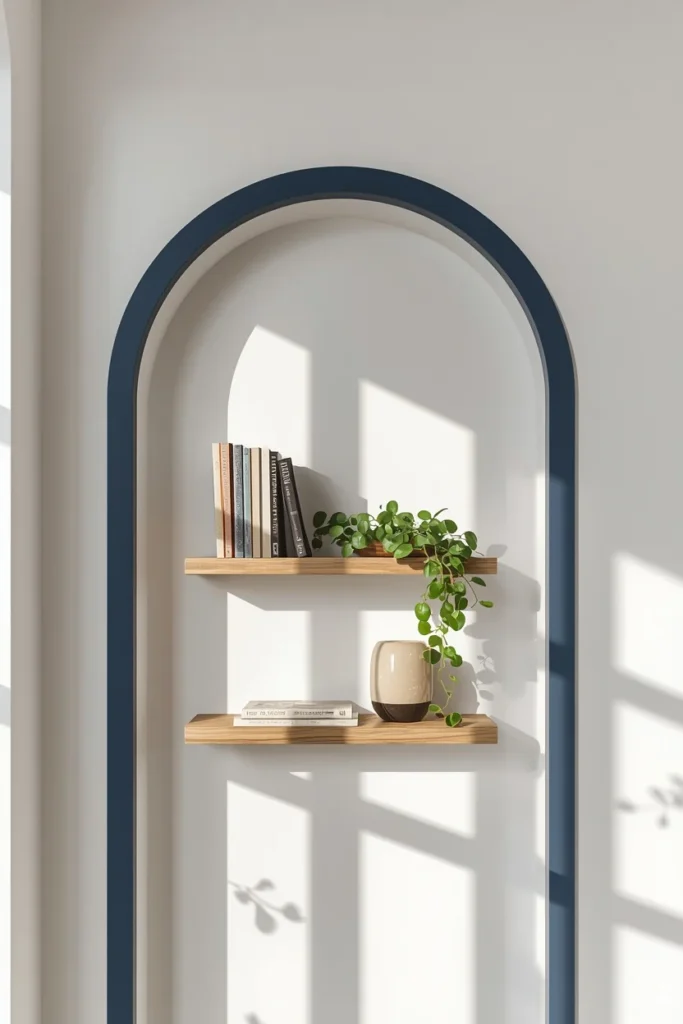
If a full built-in isn’t possible, painting an arch shape directly onto the wall behind open shelving gives you the same visual impact for the cost of a can of paint. Choose a saturated color like navy, terracotta, or forest green that contrasts clearly with your wall, and use painter’s tape and a string-and-pencil compass to get a clean, symmetrical curve. Mount two or three floating shelves inside the painted arch, keeping the styling light, a few books, a small plant, one object, so the bold color stays the star of the corner. This idea is renter-friendly if you use removable wall decals shaped like an arch instead of paint, which peel away cleanly when you move. The high contrast between the bold arch and simple shelving is what makes this trick photograph so well for a small investment of time.
9. Vintage Brass Lamp Reading Vignette
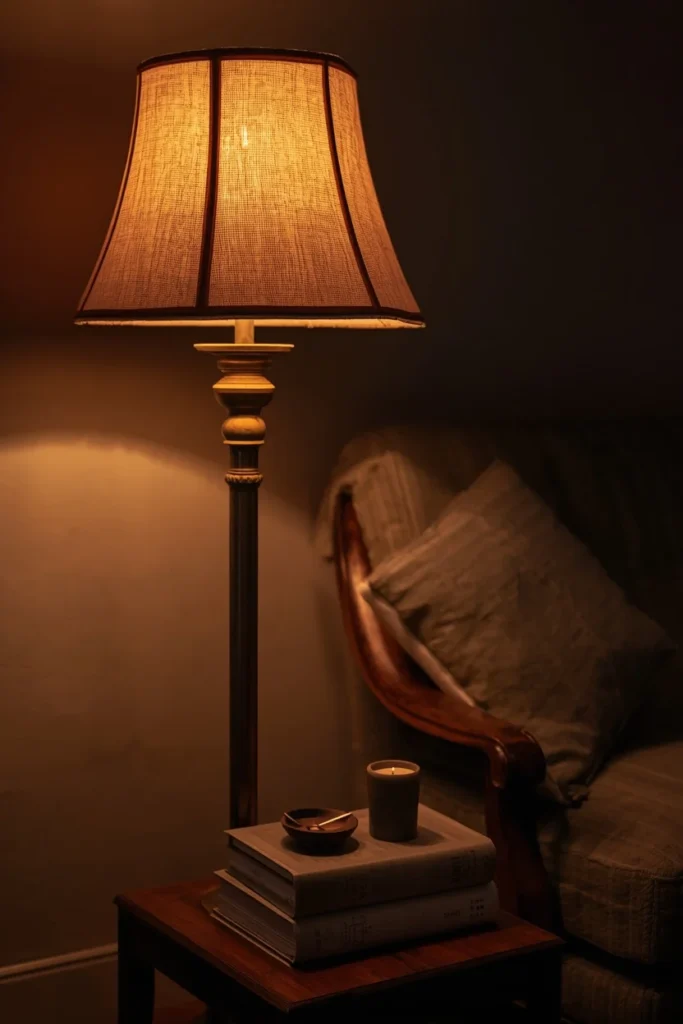
Sometimes the smallest details make a reading corner feel finished, and nothing does that faster than an aged brass floor lamp with a warm fabric shade. Position the lamp just behind and to the side of your reading chair so the light falls over your shoulder onto the page, which is both more flattering in photos and easier on your eyes than overhead lighting. Pair it with a small side table holding a stack of two or three books, a ceramic dish for glasses, and a single taper candle for evening ambiance. Choose a warm bulb in the 2700K range rather than a cool white bulb, since warm light is what gives these corners their signature cozy glow in photos and in person. This vignette works as a finishing layer on top of nearly any other aesthetic on this list, from dark academia to Scandinavian minimalism.
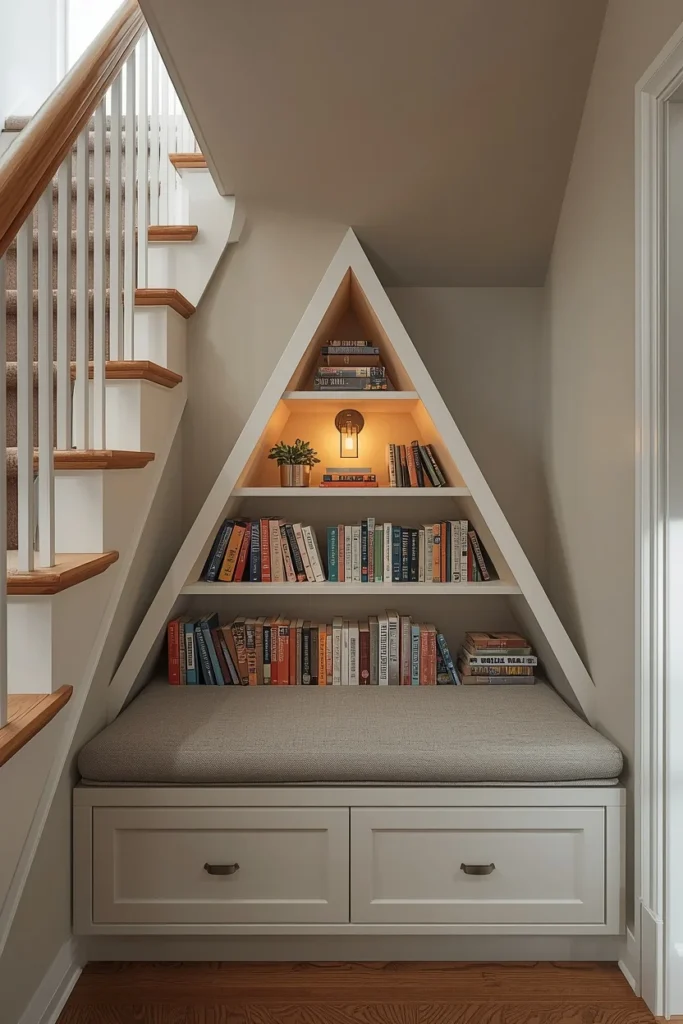
10. Under-Stairs Micro Library
The triangular space under a staircase is one of the most overlooked corners in a home, and it happens to be the perfect shape for a compact library. Build in shelving that follows the slope of the stairs above, using the tallest section for standard books and the lowest, shortest section for oversized art books or baskets. Add a small built-in bench or a floor cushion at the deepest point of the triangle, since this becomes the coziest, most enclosed seat in the entire house. A single low-hanging pendant light or a plug-in wall sconce solves the lighting problem that under-stair spaces almost always have. This idea turns genuinely wasted square footage into one of the most-photographed corners in the home, especially when the shelving is painted a color that contrasts with the surrounding stairwell.
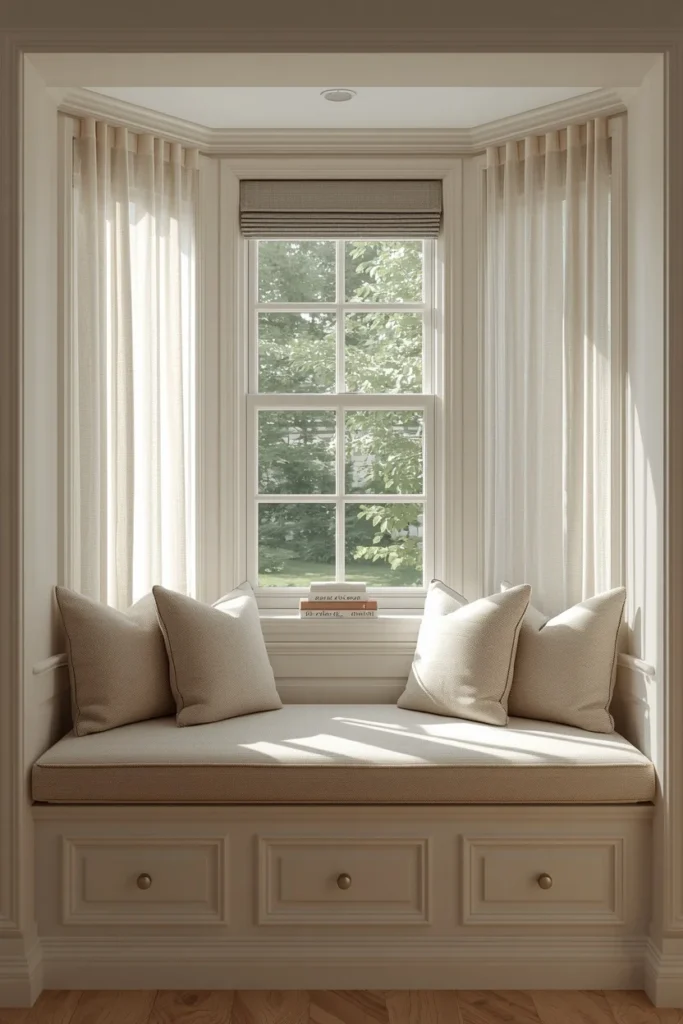
11. Bay Window Linen Book Nook
A bay window already does half the design work for you, since the angled glass creates a natural seating alcove that feels separate from the rest of the room. Build or place a bench along the full width of the bay, upholstered in a durable linen blend in a soft neutral like oatmeal or dove gray so it doesn’t compete with the view outside. Add a row of lumbar and square pillows in a mix of textures, boucle, linen, and a single patterned throw pillow, to keep the look layered instead of flat. A slim shelf mounted just above the window trim holds a small rotating stack of books within arm’s reach. Sheer curtains on either side soften the light throughout the day without blocking the view, which is really the whole point of choosing this spot in the first place.
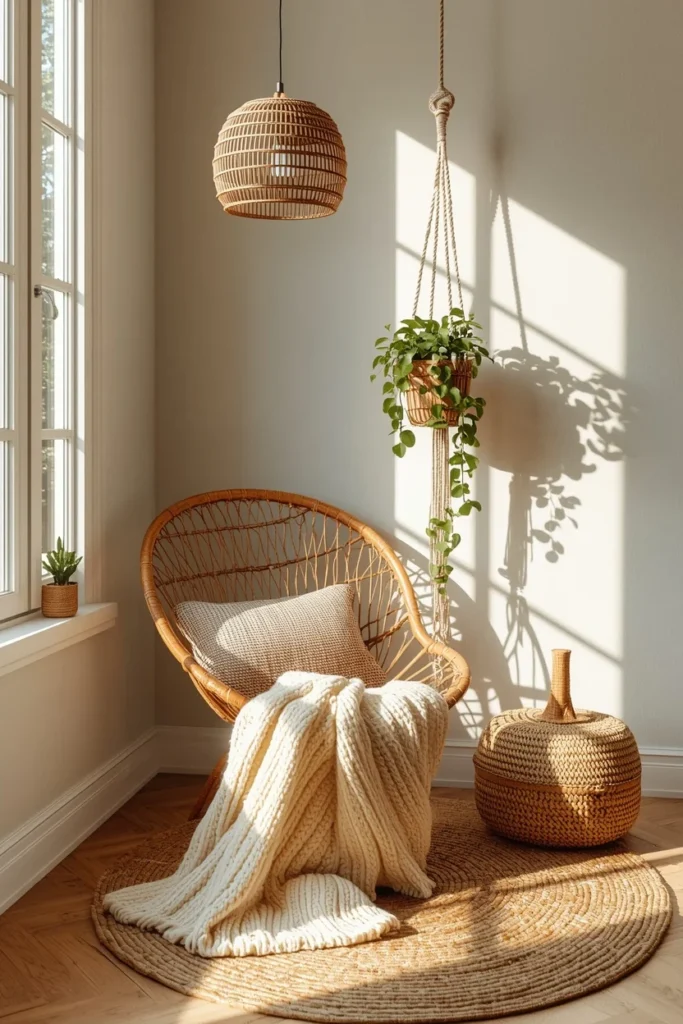
12. Boho Rattan Reading Corner
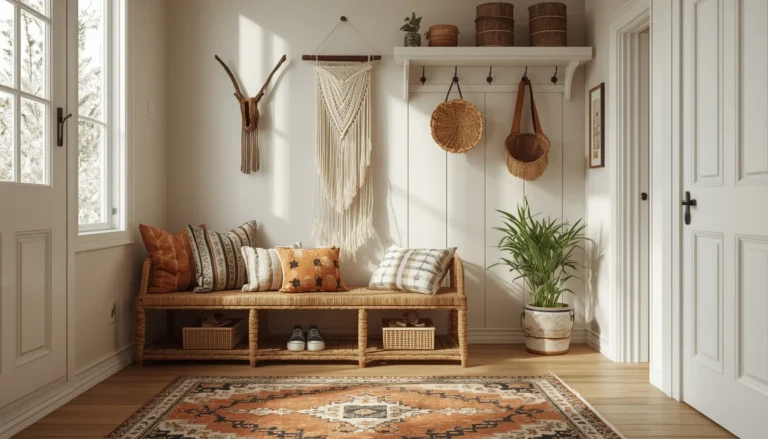
A boho reading corner leans on natural texture instead of bold color, layering rattan, jute, and woven cotton so the whole space feels warm and lived-in. Choose a rattan peacock or papasan-style chair as the anchor piece, then add a chunky knit cream throw and a woven floor basket to hold extra blankets or reading material. A macrame plant hanger in the corner and a low-hanging pendant with a rattan shade complete the texture layering without adding visual clutter. Ground the whole look with a jute or flatweave rug, since bare hard flooring can make a boho corner feel unfinished. This aesthetic photographs especially well in natural daylight, which brings out the texture of the woven materials in a way that artificial light tends to flatten.
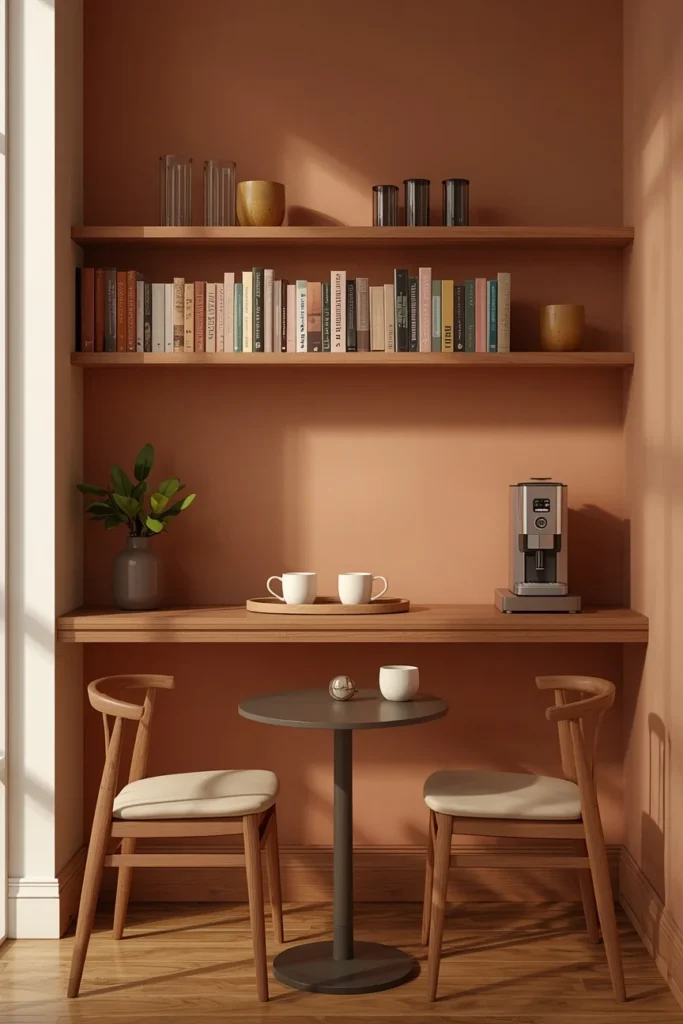
13. Café-Style Coffee Station Library
Adding a small coffee or tea station next to a bookshelf turns a reading corner into a genuine daily ritual spot instead of a once-in-a-while feature. A narrow console table works well here, topped with a coffee maker or kettle, two mugs on a small tray, and a shallow bowl for sugar or tea bags, positioned close enough to the reading chair that you never have to leave the corner mid-chapter. Open shelving above the console can hold both books and glassware, mixing the two collections so the corner reads as one cohesive vignette rather than two separate zones. A small round bistro table between two chairs gives this idea a shared, conversational feel, which works well for couples or roommates who both read. Keeping the color palette warm, think terracotta, cream, and brass, ties the café feel and the library feel together instead of letting them clash.
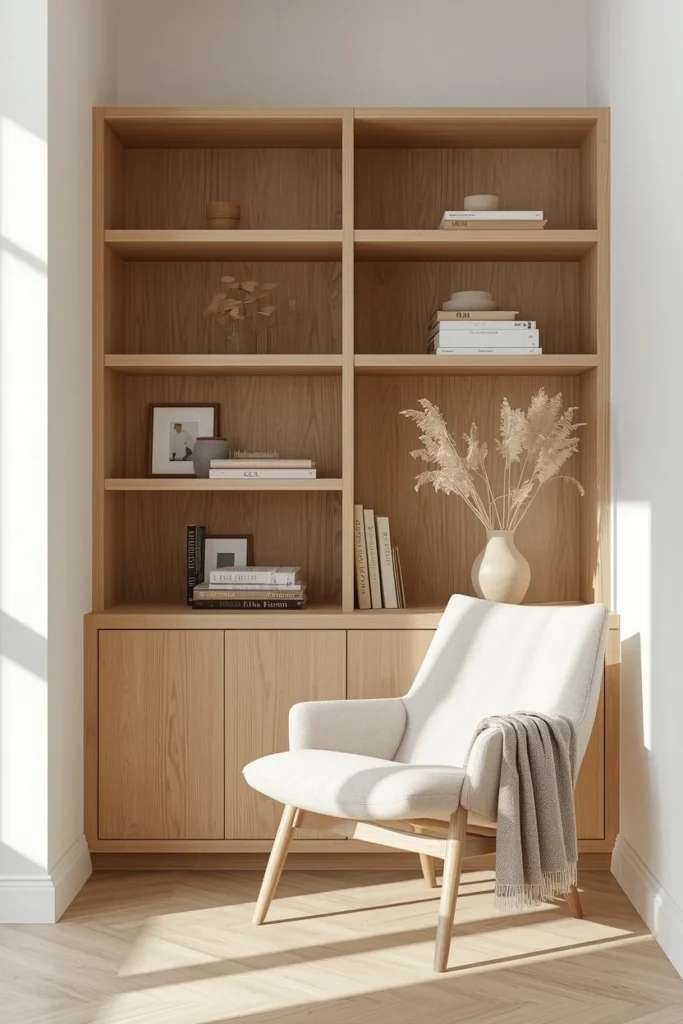
14. Scandinavian Light Wood Library
Scandinavian-inspired reading corners rely on light, natural materials and a tightly edited color palette to feel calm rather than busy. Choose light oak or ash shelving with visible wood grain, paired with a low-profile chair in cream or oatmeal boucle and minimal hardware throughout. Limit decor on the shelves to a handful of meaningful objects, three to five pieces per shelf is a good rule of thumb, so negative space does some of the styling work instead of every inch being filled. A simple wool throw folded at the end of the seat and a single ceramic vase with dried grasses add warmth without breaking the restrained palette. This aesthetic photographs beautifully in bright, even daylight, which is part of why it reads as so calm and uncluttered compared to darker, moodier styles.
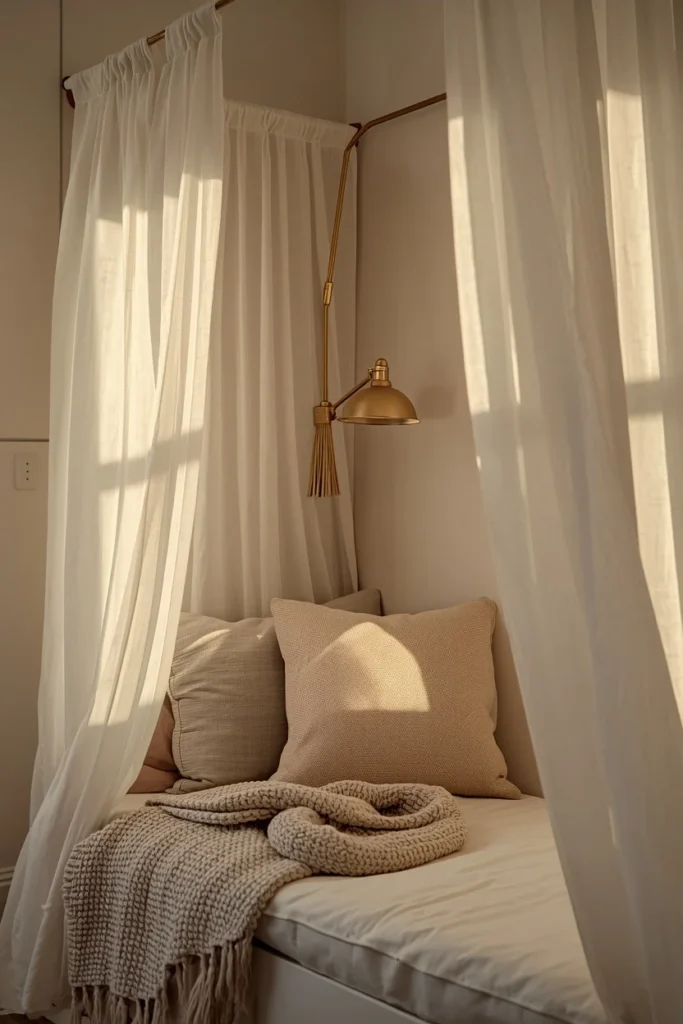
15. Draped Canopy Cocoon Nook
Bedrooms are increasingly doing double duty as reading spaces, and a draped canopy over a corner chair or daybed creates an enclosed, cocoon-like feeling without any construction at all. Mount a curved curtain rod or a simple ceiling hook above the seating spot, then hang lightweight linen or cotton drapery in a color that matches or softly contrasts your walls. A daybed or oversized armchair underneath, layered with pillows and a substantial throw blanket, becomes the kind of spot you genuinely don’t want to leave once you’re settled in. A small clip-on or plug-in lamp attached to the headboard or wall means you don’t need an overhead fixture that would compete with the soft, private feeling of the drapery. This idea is one of the most beginner-friendly on the list since it requires no built-ins and can be completely removed if you move or change your mind.
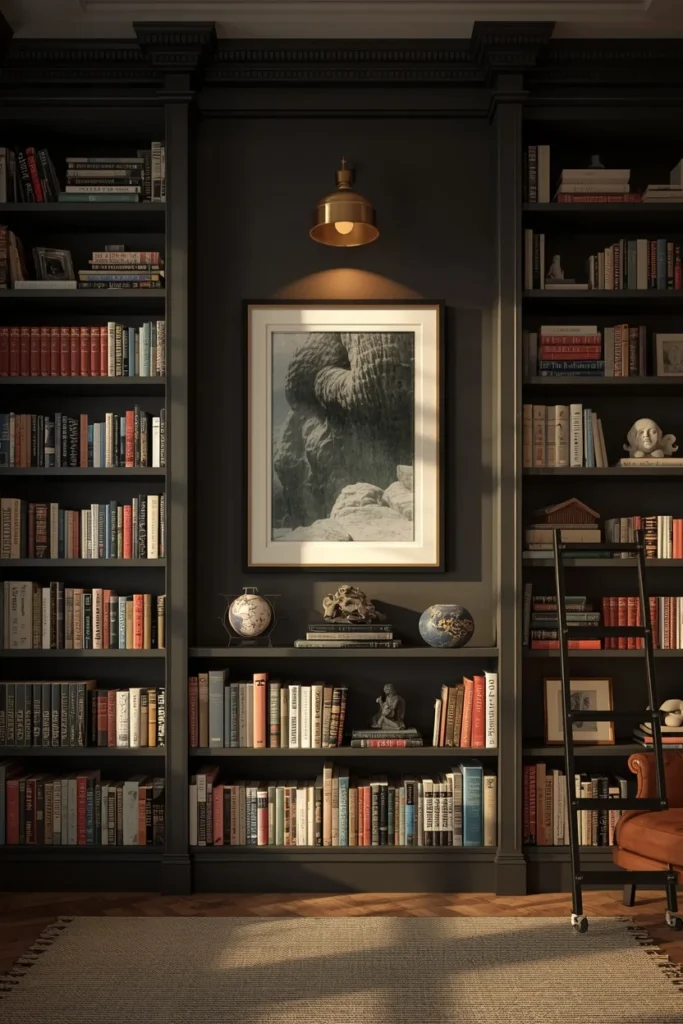
16. Gallery Wall Ladder Library
Combining a rolling ladder wall with a curated gallery of art and objects, rather than books alone, gives a home library a more personal, collected feeling than shelving books by themselves ever could. Reserve the lower two-thirds of the shelving for books and the top sections for framed art, small sculptures, and travel finds, using the ladder to make the upper display easily accessible for dusting and rearranging. Group frames in odd numbers and vary the sizes so the gallery section reads as intentional rather than randomly placed. A picture light mounted above the most prominent piece draws the eye upward and adds a warm accent light source in the evening. This version of a home library works especially well for people who see their book collection as part of a larger personal story, not a separate category of decor.
Styling Tips
- Group books by height before you group them by color. Uneven spines are what make a shelf look accidentally messy, not the color mix itself.
- Leave breathing room. A shelf styled at 80% capacity photographs better and feels calmer than one packed edge to edge.
- Light your reading spot from the side or behind the shoulder, not from directly overhead, to avoid glare on the page and harsh shadows in photos.
- Repeat one material, brass, walnut, or rattan, at least twice in the same corner so the space feels curated instead of collected at random.
- Angle your reading chair slightly instead of squaring it to the wall. It reads as more intentional and less like leftover furniture placement.
Practical Implementation Ideas
Start with the seat, not the shelf. Choose the chair or bench first, since comfort determines whether the corner actually gets used, and build the shelving and lighting around it. Measure your available wall space before shopping for shelving units, and account for at least 24 to 30 inches of clear floor space so the area doesn’t feel cramped when you sit down. If you’re working with a rental, prioritize ideas that don’t require drilling, like a freestanding ladder shelf, a floor lamp, or removable wall decals shaped like an arch. Add your lighting last, once furniture is in place, so you can see exactly where shadows fall and adjust accordingly.
Common Mistakes to Avoid
- Overhead lighting only. A single ceiling fixture flattens the cozy mood these corners depend on. Add at least one warm, low-level light source.
- Styling shelves at 100% capacity. No visual rest for the eye makes even a beautiful collection look cluttered.
- Choosing a chair for looks over comfort. If it’s not comfortable for 30 minutes of reading, it won’t get used, no matter how good it looks in photos.
- Ignoring the floor. A bare hard floor under a reading chair makes the whole corner feel unfinished. Even a small rug changes the mood significantly.
- Ignoring color temperature. Cool white bulbs work against the cozy, warm feeling most of these aesthetics are going for. Stick to warm white in the 2700K to 3000K range.
Small-Space Alternatives
A single floating shelf and one folding chair can create a reading spot in a hallway or bedroom corner that’s only a few feet wide. A tension rod with a curtain, hung across an unused closet, turns that closet into a tiny enclosed reading nook. A tall, narrow ladder shelf takes up less than a foot of floor space and still holds a meaningful book collection. Even a wide windowsill with a slim cushion and a small pillow can function as a perch for shorter reading sessions in an apartment with no extra square footage to spare.
Budget-Friendly Alternatives
Painted arches and removable wall decals recreate the look of an expensive built-in for the cost of paint or a single decal roll. Secondhand and resale platforms are genuinely good sources for vintage brass lamps and velvet chairs, since these pieces are often priced far below new retail. A basic floor lamp with a fabric shade swap can mimic a designer lighting fixture for a fraction of the price. Thrifted books, arranged by color or height, add instant visual weight to open shelving without buying anything new to fill the space.
Pro Styling Recommendations
Choose one dominant aesthetic from this list and let the other elements support it, rather than mixing five different styles in one small corner. Photograph your finished nook in natural daylight before adding artificial lighting to check how the colors and textures actually read. Rotate a few books to the front cover instead of spine-out on one shelf to break up the visual rhythm and highlight a favorite title. Revisit the styling every season, swapping a throw blanket or a single decor object, so the corner keeps feeling fresh without a full redesign.
FAQs
Conclusion
A reading corner works when it invites you to sit down without thinking about it, not when it just photographs well. The best version of any of these 16 ideas is the one that matches how you actually read, whether that’s a fast chapter before bed in a draped nook or a slow Sunday afternoon in a fireside chair. Pick one aesthetic, start with the seat, and let the shelving and lighting build around it over time. The corner doesn’t need to be finished all at once to already feel like yours.