24 Dream Home Library Ideas That Are So Beautiful They’ll Take Your Breath Away
A home library says something a bookshelf in the corner of the living room never quite manages. It says the books actually matter here, that this room was built around them instead of around a television.
The best home libraries aren’t about matching leather-bound sets arranged by color for a photo. They’re personal, a little worn at the edges, and built to actually be used, whether that means one wall of built-ins or a full two-story room with a rolling ladder.
Below are 24 dream home library ideas, each with the styling logic behind it, so you can figure out which direction fits your space, your collection, and how you actually want to spend an evening at home.
Table of Contents
1. Floor-to-Ceiling Library Wrap
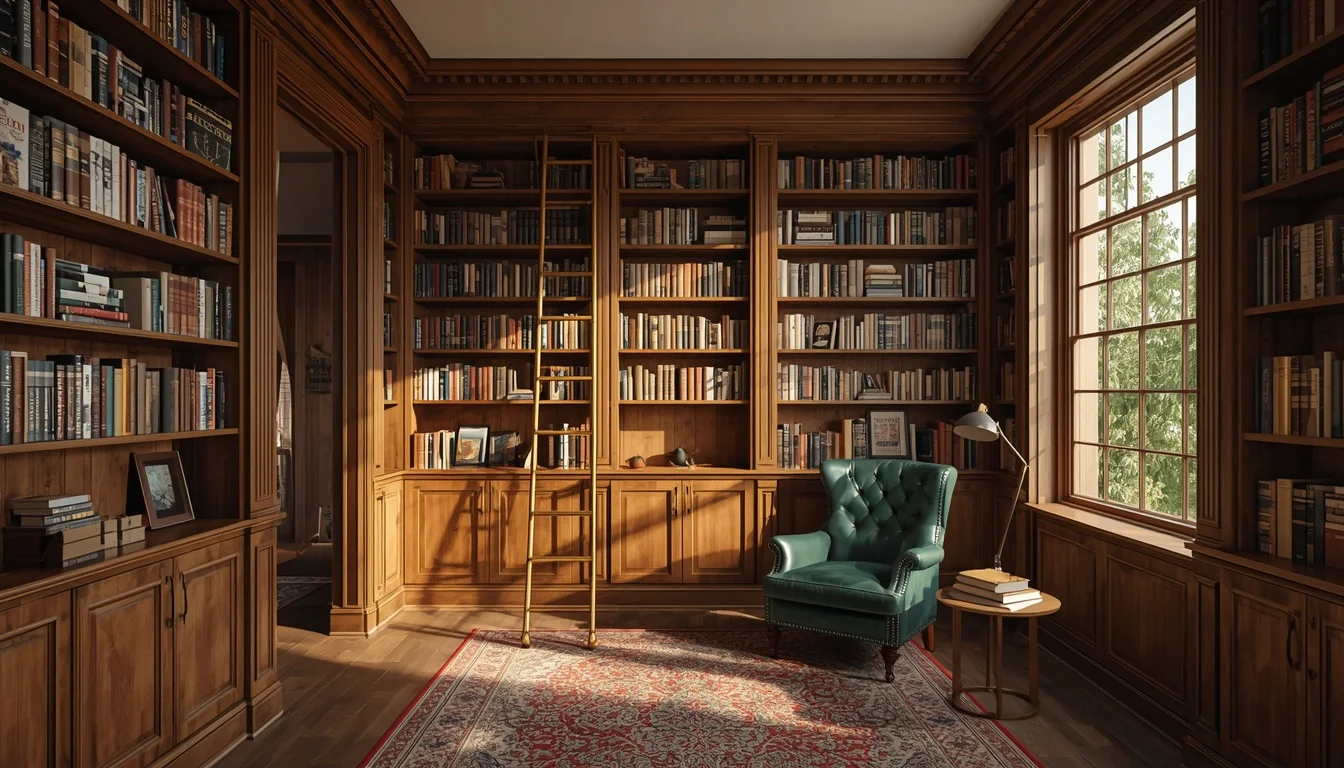
Wrapping an entire room in built-in shelving, from the floor to the ceiling and around every available wall, turns even a modest room into something that feels genuinely grand. This approach, often called a library wrap or book drenching, works because the repetition of shelving and spines creates a cocooning effect rather than a chaotic one. Solid wood millwork in walnut or oak holds up to the weight of a real collection far better than lightweight veneer, and it develops a richer patina over years of use. Leaving a small section of open wall for a window or a piece of art keeps the wrap from feeling like a solid block of shelving with no visual break. This is one of the most talked-about approaches in current design coverage precisely because it makes books the room’s main architecture instead of an accessory.
2. Rolling Ladder Library
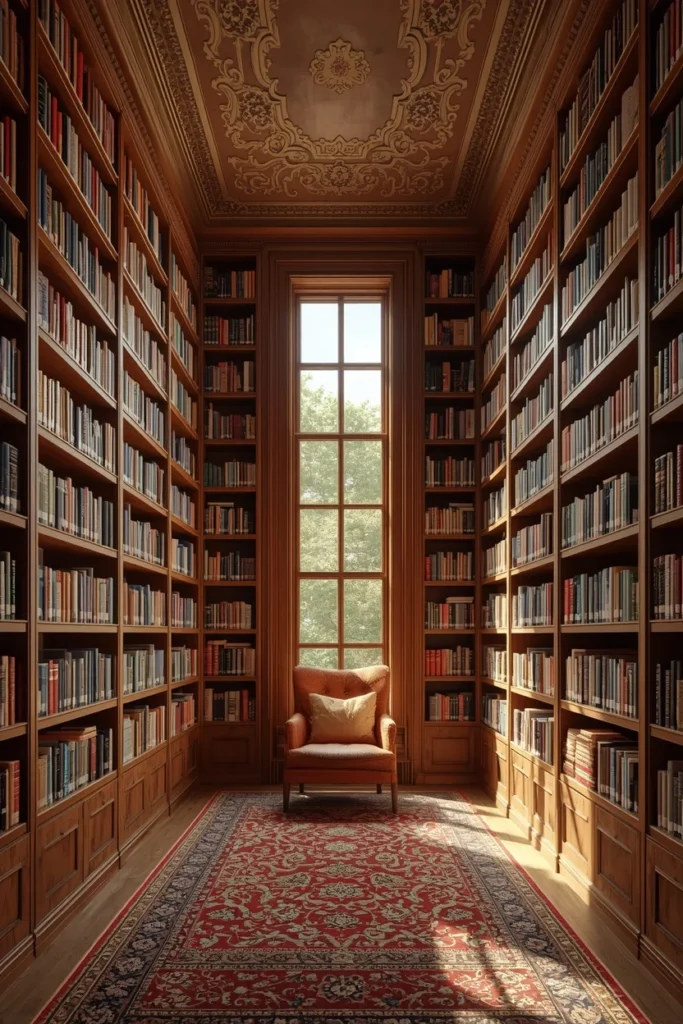
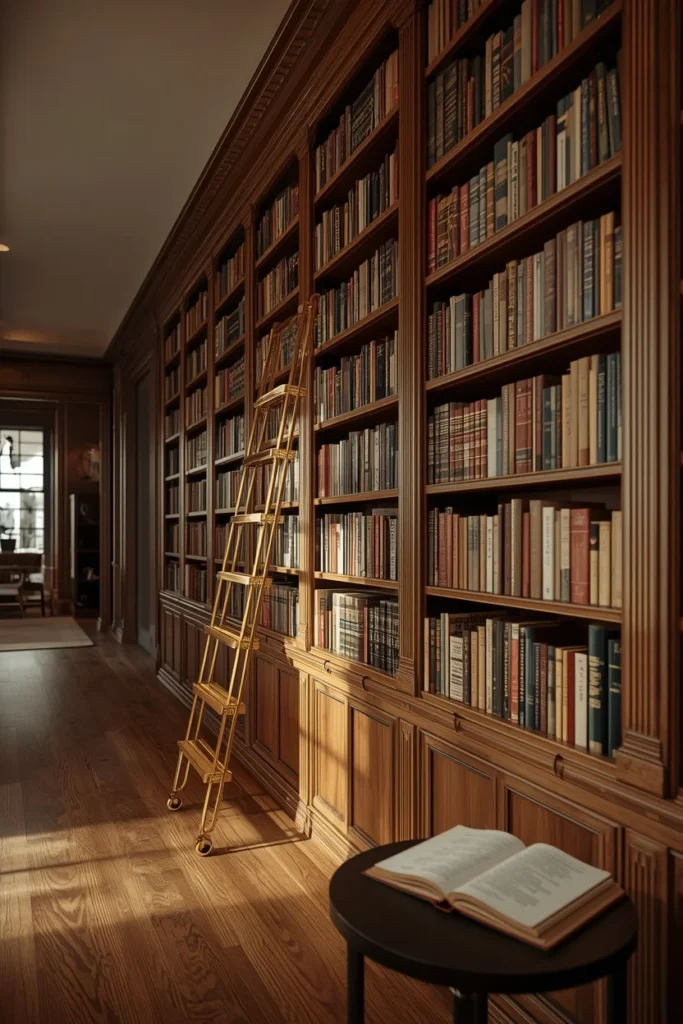
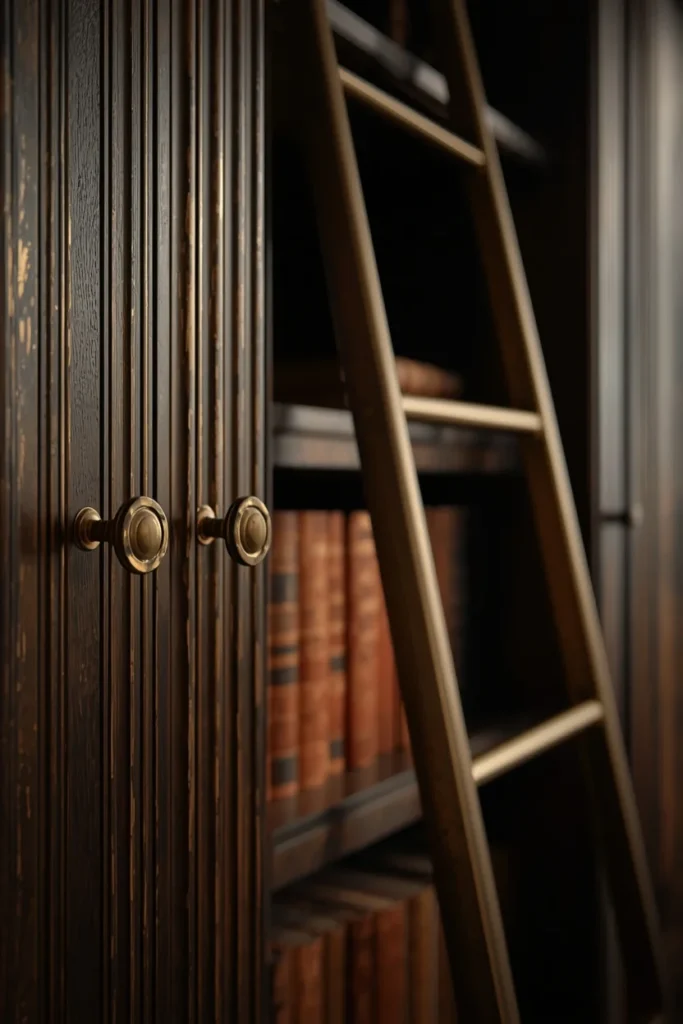
A rolling library ladder does more than solve the practical problem of reaching a top shelf. It signals, the moment you walk in, that this room was built with real intention around a real collection. Mounted on a brass or blackened steel rail that runs the length of the shelving, the ladder becomes a piece of moving architecture rather than just a tool. Choosing a ladder with solid wood rungs and a matching finish to the shelving keeps it from looking like an afterthought bolted on after the fact. This detail matters most in rooms with genuinely tall shelving, twelve feet or higher, where reaching the top rows by hand simply isn’t realistic. It’s a feature that photographs beautifully and earns its keep functionally at the same time.
3. Jewel-Tone Lacquered Reading Room
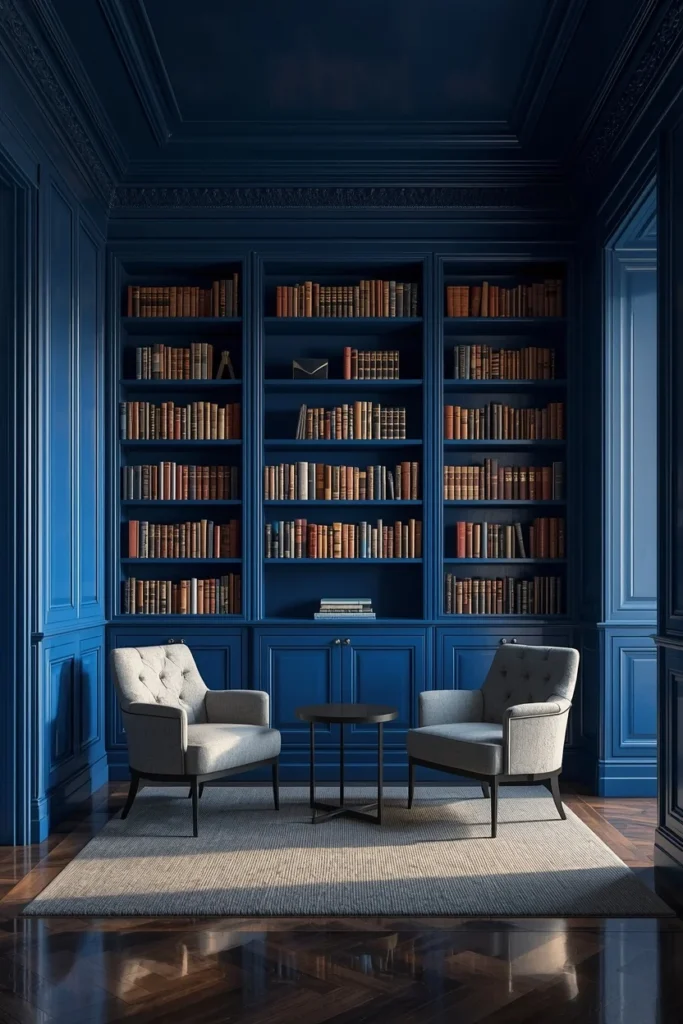
High-gloss lacquer in a saturated jewel tone, like lapis blue or deep emerald, gives a home library a sense of drama that a matte neutral wall simply can’t provide. The glossy finish catches and reflects light throughout the day, which keeps a small, book-filled room from feeling heavy or closed in despite the bold color choice. This treatment works best on walls rather than the shelving itself, so the books stay the visual focus while the color sets the room’s mood. A pair of chairs positioned to face each other, rather than both facing a screen or window, encourages the room to be used for conversation as much as solitary reading. This bold color approach suits a smaller room especially well, since the saturation reads as intentional rather than overwhelming once it wraps a contained space.
4. Fireside Reading Library
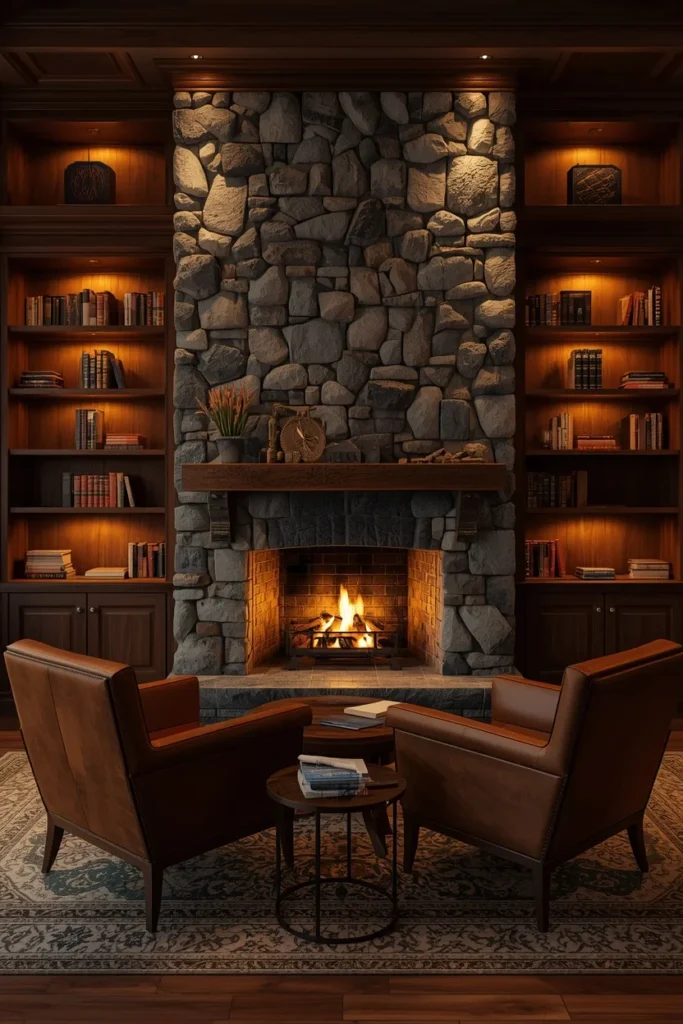
Positioning the main seating around a fireplace rather than a window turns a home library into a room built for evening hours as much as daytime reading. A stone or brick fireplace surround adds texture that contrasts nicely against the flatter surfaces of built-in shelving on the surrounding walls. Two chairs angled toward both the fire and each other, with a small table between them for a lamp and a stack of books, creates a natural gathering point even in a room otherwise built for solitary use. Wool or leather upholstery holds up well to the warmth and occasional stray ember better than delicate fabrics. This layout suits a library used as a genuine living space through colder months, not just a room visited to grab a book and leave.
5. Secret Passage Bookcase Door
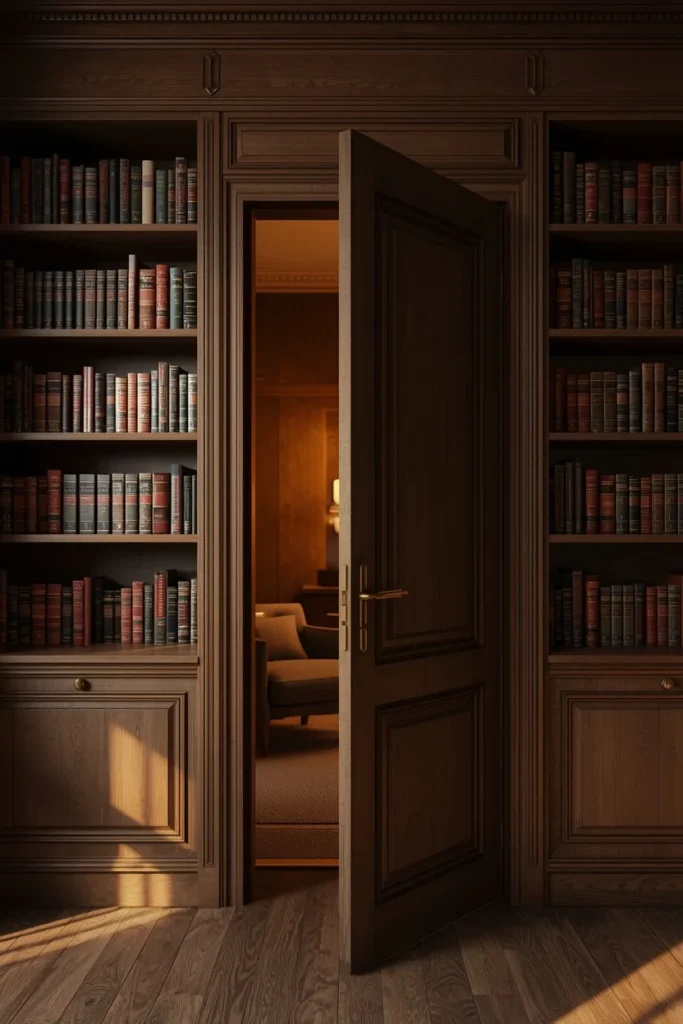
A bookcase built to swing open on hidden hinges, revealing a passage to a private office or reading nook behind it, adds a genuine sense of discovery to a home library. The bookcase itself needs to be styled with real books and objects, not left sparse, so the door doesn’t read as obviously mechanical before it’s opened. A simple push-latch or discreet lever mechanism keeps the door functional without needing an obvious handle that would give the secret away. This detail suits a home with children or a household that values a quiet, semi-private space away from the main living areas. It’s a feature that turns a functional need, extra privacy or sound control, into one of the most memorable parts of the whole house.
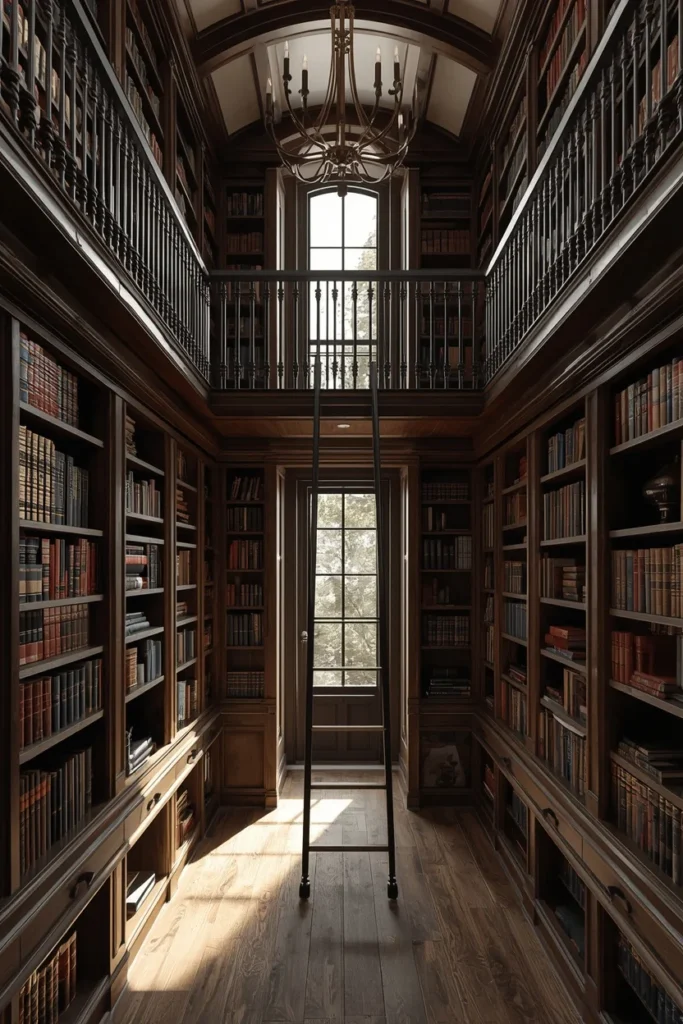
6. Two-Story Library With a Catwalk
In a home with the ceiling height to support it, a two-story library with a narrow catwalk or balcony running along the upper shelves turns the room into a genuine architectural statement. The catwalk needs a sturdy rail, in blackened steel or matching wood, both for safety and to keep the upper level from feeling like an afterthought. Natural light from a tall window or skylight becomes especially important in a room this size, since the extra height means more wall space to fill with shelving and less obvious wall space for windows at eye level. A rolling ladder or a small spiral stair connecting the two levels keeps the upper shelves genuinely accessible rather than purely decorative. This design suits a dedicated library room in a larger home, since the scale needed to make a two-story room feel intentional rather than cavernous is significant.
7. Freestanding Shelving Room Divider
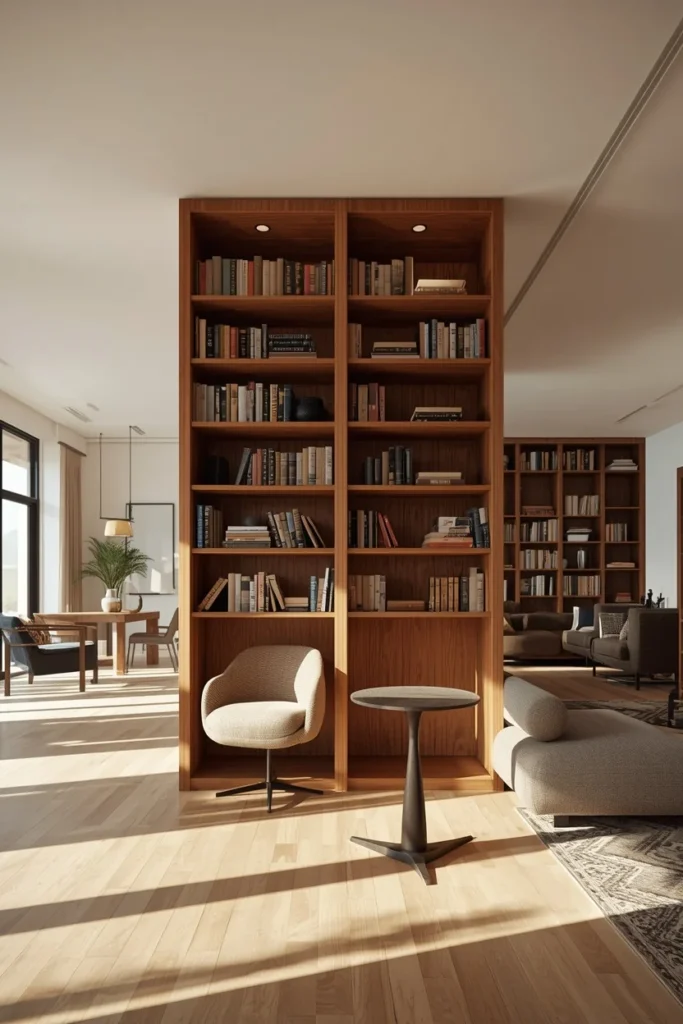
In an open-concept home, freestanding double-sided shelving units can define a library zone without closing the room off completely. Positioning the units perpendicular to the main sightline keeps circulation open while still giving the reading area a sense of enclosure on at least two sides. Because the shelving is freestanding rather than built-in, it offers more flexibility to reconfigure the space later if the room’s use changes. Lower units, around chest height, maintain some visual connection across the room, while taller units create a more defined, separate feeling library zone. This approach suits anyone who wants a library’s coziness within a larger open floor plan rather than a fully enclosed room.
8. Window Seat Reading Nook
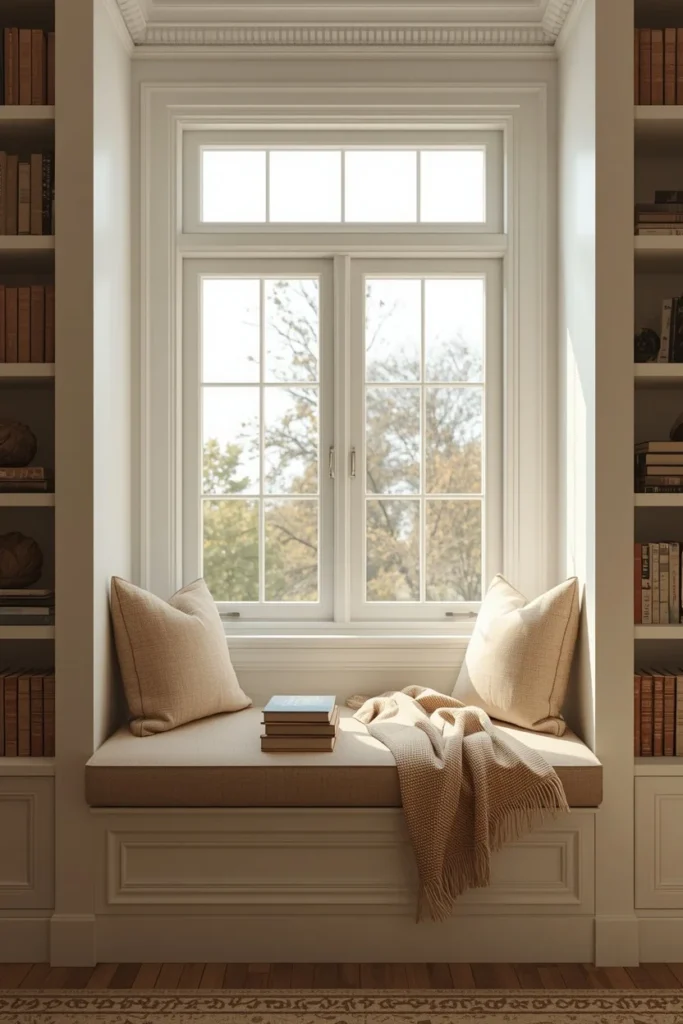
Built directly into a window bay, a cushioned window seat surrounded by low shelving turns an architectural feature into the most-used spot in the room. Deep cushions in a durable performance fabric hold up to daily use better than delicate upholstery, especially in a spot that gets direct sunlight for part of the day. Shelving built into the sides of the window bay keeps books within arm’s reach without needing to get up, which matters more than it sounds like for how often the spot actually gets used. A row of small pillows and a folded throw finish the space and signal that it’s meant for lingering, not just sitting briefly. This is one of the more space-efficient ideas on this list, since it makes use of a window bay that might otherwise sit empty.
9. Sky-Lit Library Courtyard
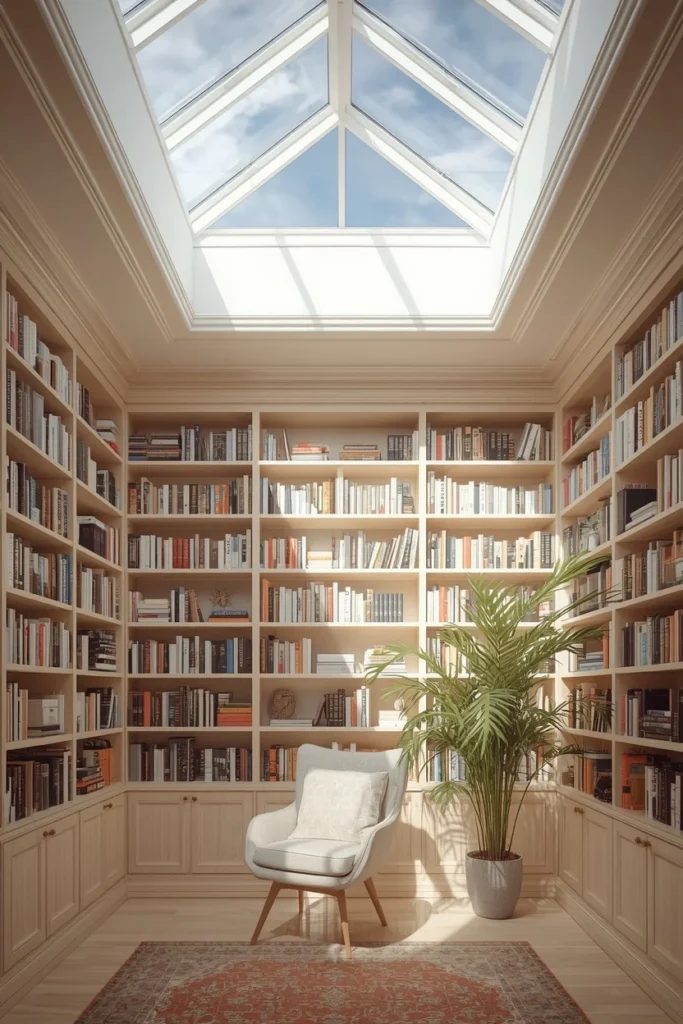
Positioning a library beneath a skylight or within a sun-filled courtyard extension brings natural light into a room that might otherwise depend entirely on lamps. This layout works especially well in additions or renovated spaces, where a new skylight can be planned specifically around where the reading chairs and shelving will sit. Light-colored shelving, in whitewashed or pale oak finishes, bounces the daylight further into the room than a darker wood would. A few tall plants positioned near the light source take advantage of the same sun the books benefit from, adding a layer of greenery to the room. This design suits a library meant to be used heavily during the day, since the abundance of natural light makes the space genuinely different to sit in at 10 a.m. versus after dark.
10. Antique Leather Chesterfield Library
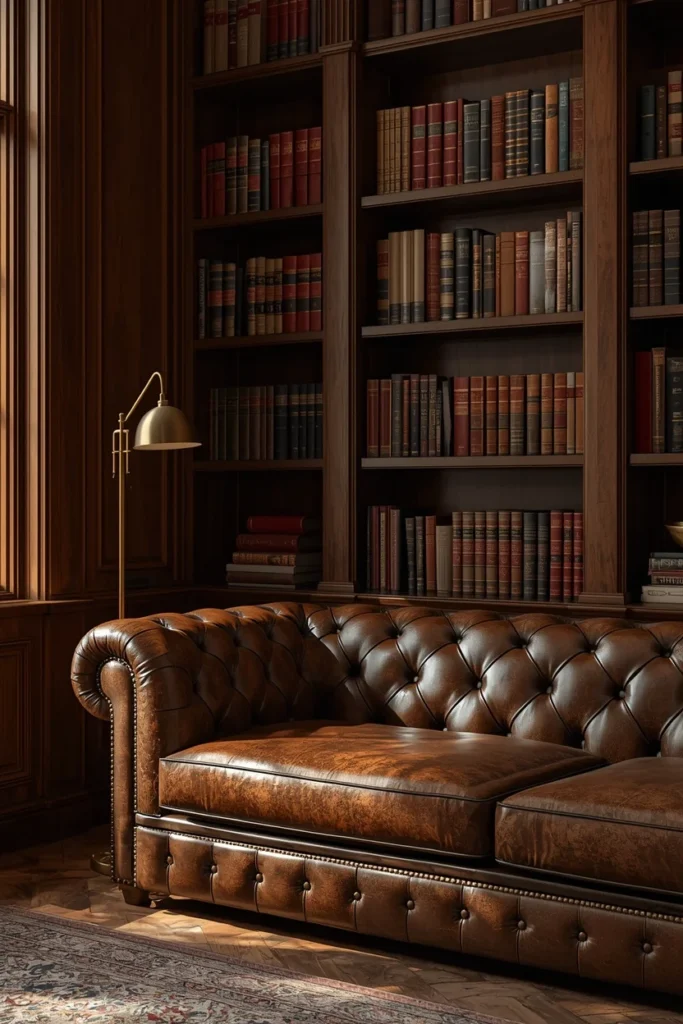
A worn leather chesterfield sofa or a pair of tufted leather chairs bring an immediate sense of history into a home library, even in a newly built room. The leather’s natural patina, developed over years of real use, does more to make a room feel established than any new furniture piece could manage on day one. Pairing the leather seating with a traditional wood-paneled or built-in shelving wall keeps the whole room feeling cohesive rather than like a single statement piece dropped into a plain space. Brass nailhead trim along the leather’s edges adds a small detail that catches the light from a nearby lamp. This design suits a library meant to evoke a more traditional, old-world feeling, and it tends to age into the room rather than out of style.
11. Glass Partition Library in an Open Plan
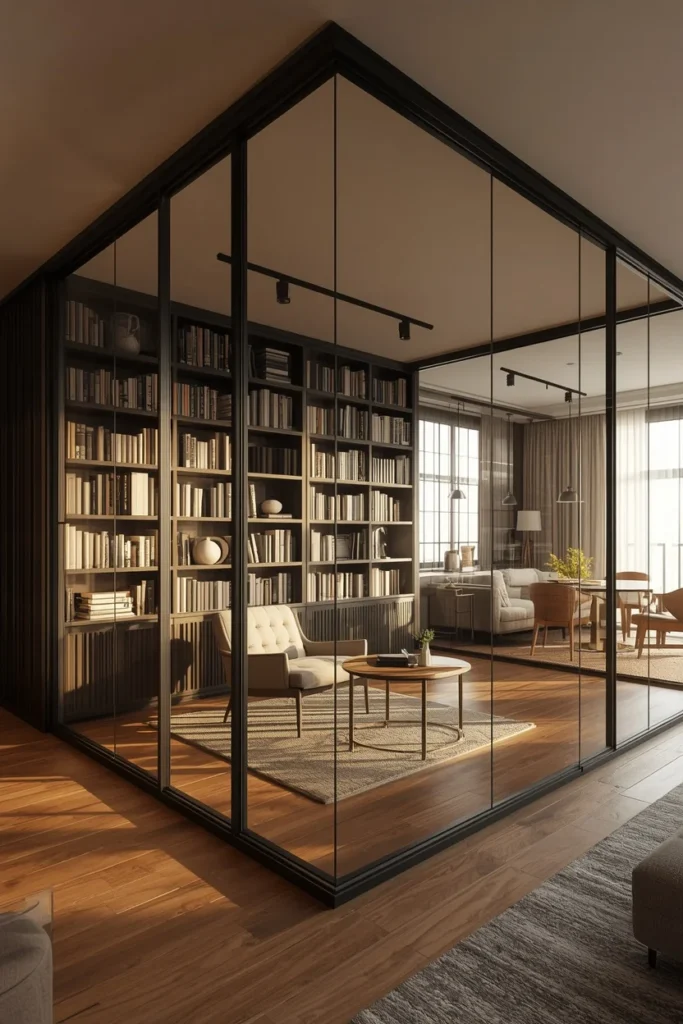
A glass partition wall lets a library stay visually connected to the rest of an open-plan home while still creating a defined, quieter zone. Frameless or thin black-framed glass keeps the partition from feeling heavy, so the shelving beyond it remains the visual focus even from across the room. This approach suits a household that wants some acoustic separation, since a glass wall with a proper seal cuts down on sound transfer far more than an open shelving divider would. Sliding glass doors along the partition add the option to fully close the space off when focus or quiet matters more than connection to the rest of the home. It’s a strong middle-ground option between a fully open shelving divider and a completely enclosed, traditional library room.
12. Mid-Century Modern Library
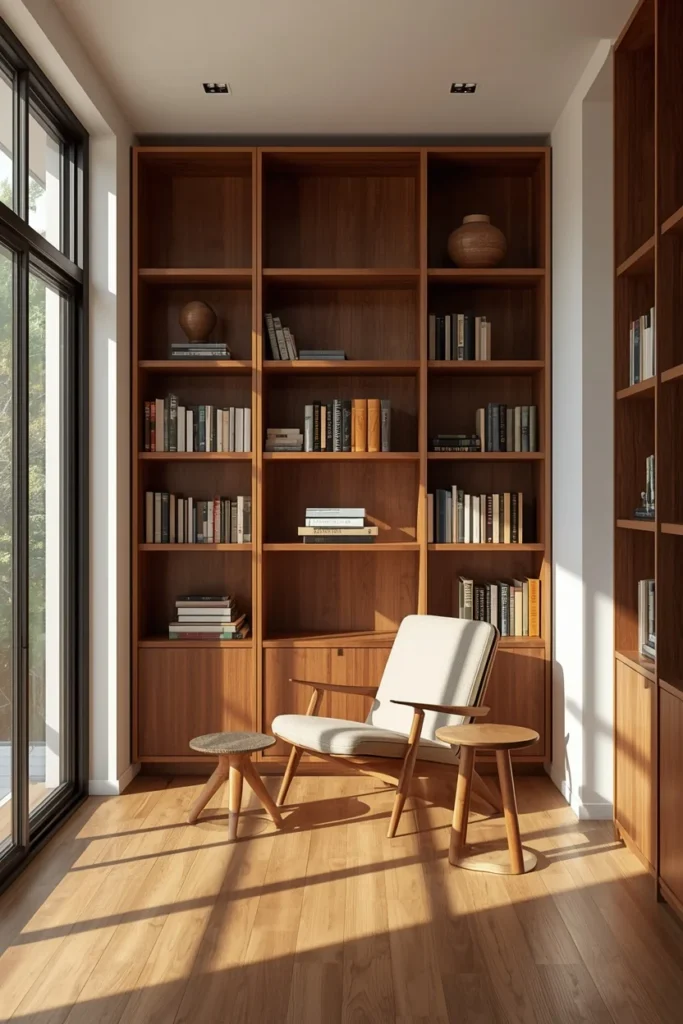
Clean lines, warm walnut tones, and low-profile furniture give a home library a mid-century modern character that feels calm rather than heavy. Open shelving with thin, exposed shelf edges reads as lighter than a fully enclosed cabinet system, which suits the era’s preference for visible structure over concealed storage. A single low-slung lounge chair, paired with a simple round side table, keeps the seating area from overwhelming the room’s clean lines. Large windows, often a hallmark of mid-century architecture, pair naturally with this style and reduce the need for heavy overhead lighting during the day. This direction suits a home that already leans toward mid-century architecture elsewhere, so the library feels like a continuation of the house’s existing character rather than a separate style statement.
13. Cozy Small Alcove Library
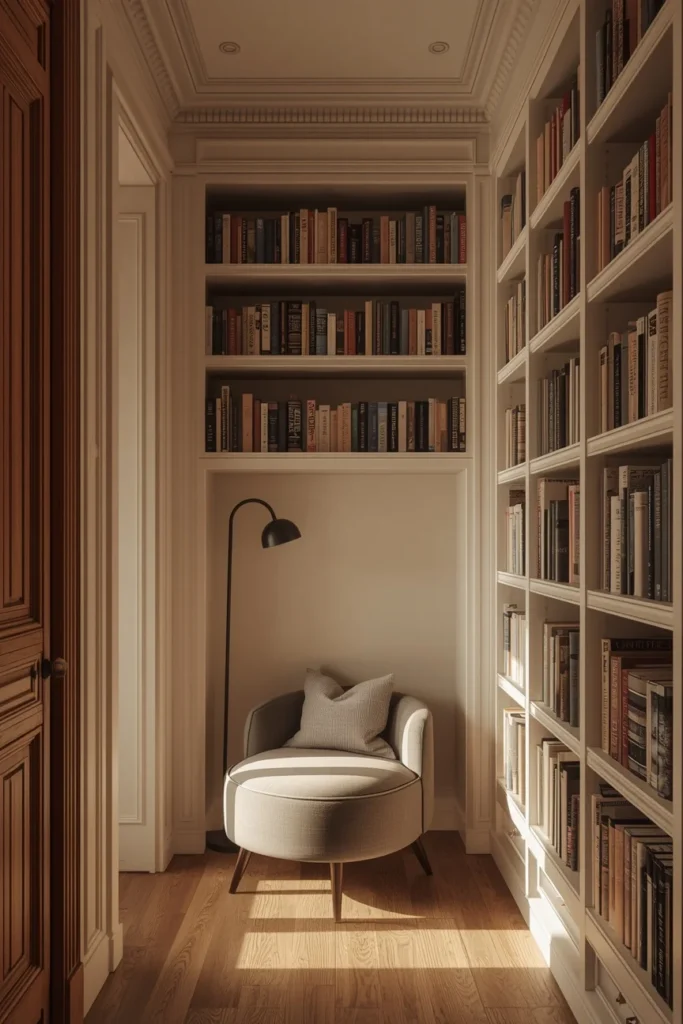
Not every home has room for a dedicated library, and a single alcove, even one as narrow as three feet deep, can hold enough shelving and a single chair to function as a real reading spot. Built-in shelving that follows the exact dimensions of the alcove makes the most of every inch without wasted space at the edges. A single chair, sized to the room rather than an oversized piece meant for a larger space, keeps the alcove from feeling cramped. A small clip-on or wall-mounted light solves the lighting problem without needing floor space for a lamp. This is one of the most accessible ideas on this list, since it works in almost any home with a spare wall nook, a landing, or an unused corner.
14. Library and Home Office Combination
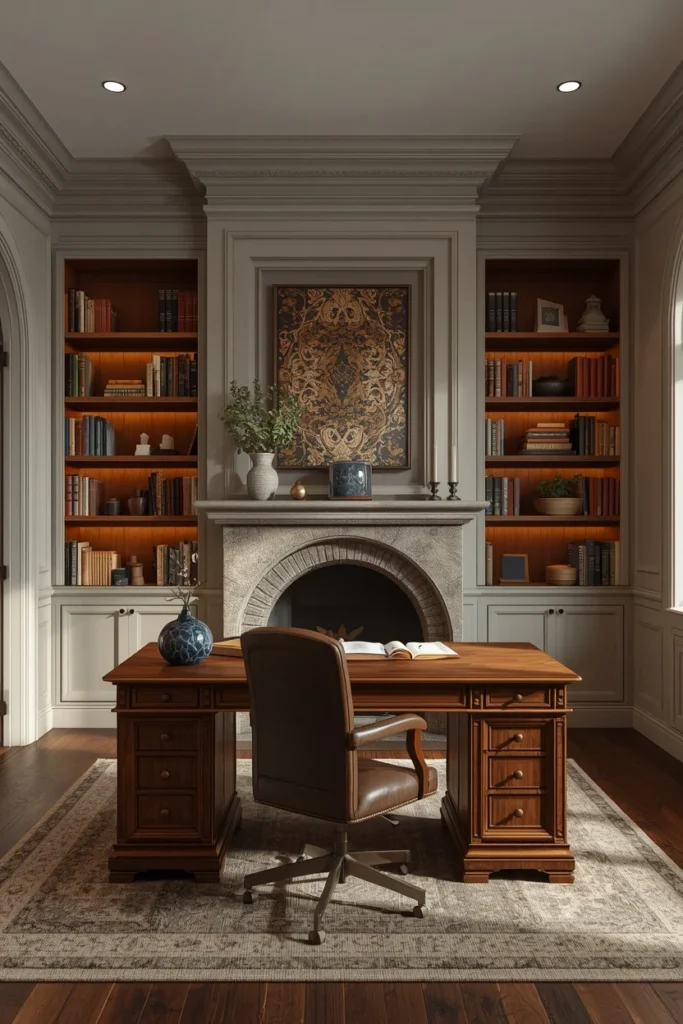
Combining a library with a working desk gives a room double duty, especially in a home where a fully dedicated library isn’t realistic. Positioning the desk to face into the room, rather than against the shelving wall, keeps the eye moving across the books during work breaks instead of staring at a blank wall. A standard fireplace or a simple stone surround, when the room allows for it, adds warmth that keeps the space from feeling purely functional despite the desk’s presence. Built-in cabinets below the open shelving hide office supplies and files, so the room reads as a library first and a workspace second. This combination suits a household without the square footage for two separate rooms, since it delivers both functions without asking either one to feel like an afterthought.
15. Curved Bookcase Library
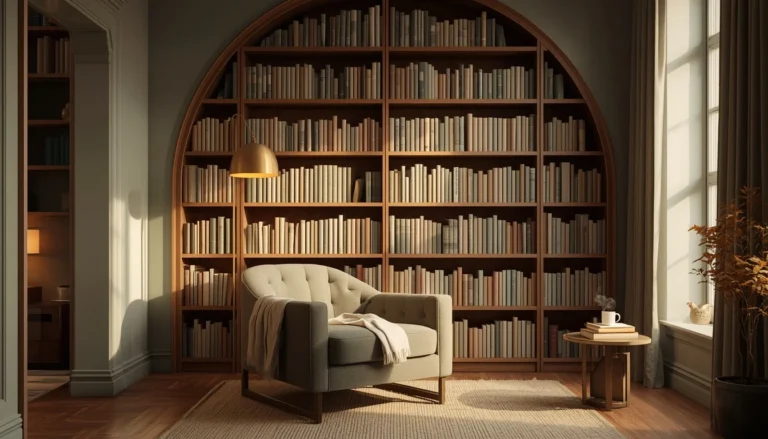
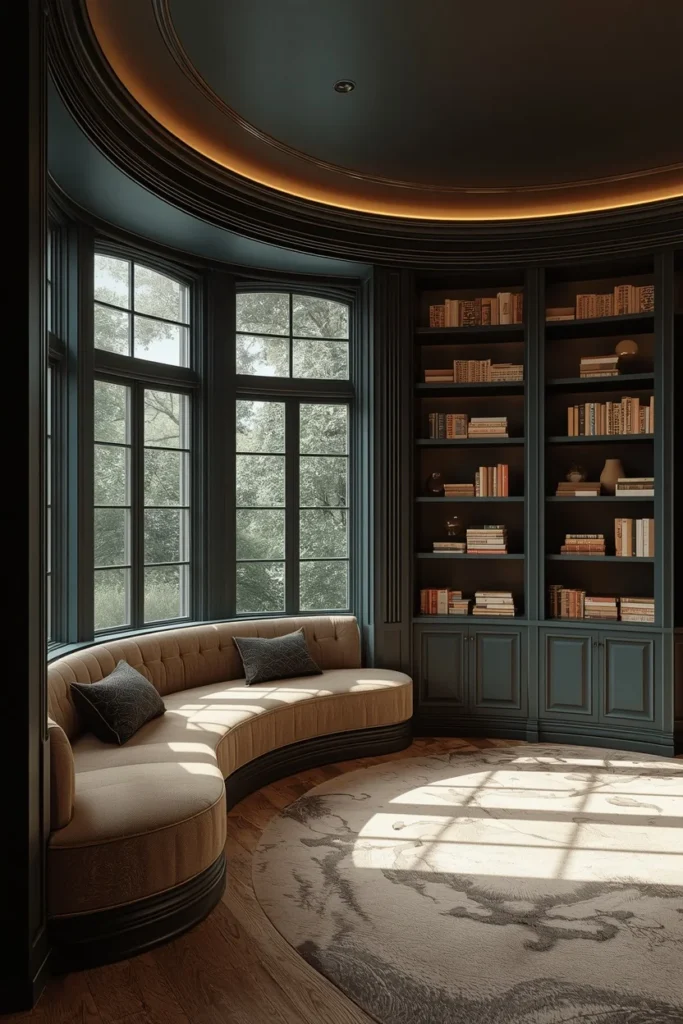
Rounded, curved shelving softens a room’s overall geometry and gives a library a more sculptural, less boxy feel than standard straight built-ins. Custom-curved millwork, often built around a bay window or a rounded architectural feature, follows the exact contour of the wall rather than forcing straight shelving into a curved space. This detail pairs especially well with jewel-toned paint or lacquer, since curved surfaces reflect light differently than flat ones and add extra depth to a saturated color. Zoning the room with a curved sofa or a rounded ottoman echoes the shelving’s shape and keeps the whole space feeling intentional rather than mismatched. This approach costs more than standard straight shelving due to the custom millwork involved, but it delivers one of the more distinctive, memorable library layouts available.
16. Library Wrap in a Dining Nook
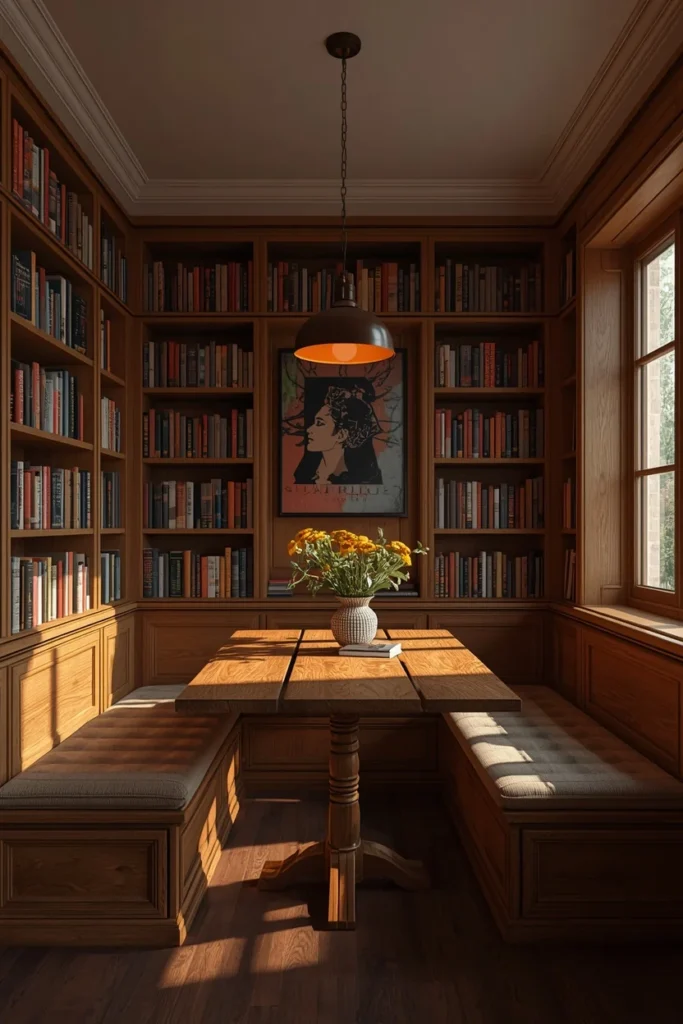
Extending built-in shelving into a dining nook turns mealtime into something that happens surrounded by books rather than blank walls. This layout works especially well in a smaller home where a separate dedicated library room isn’t in the floor plan, since it borrows the function without needing extra square footage. Shelving built to a slightly shallower depth than a standard library wall keeps the dining table from feeling crowded against the books. A mix of well-loved, visibly read books rather than a curated, color-sorted display gives the space a genuine, lived-in character that suits a room used daily. This idea reflects a broader shift toward filling ordinary rooms with real book collections rather than treating a library as a separate, special-occasion space.
17. Soundproofed Quiet Luxury Library
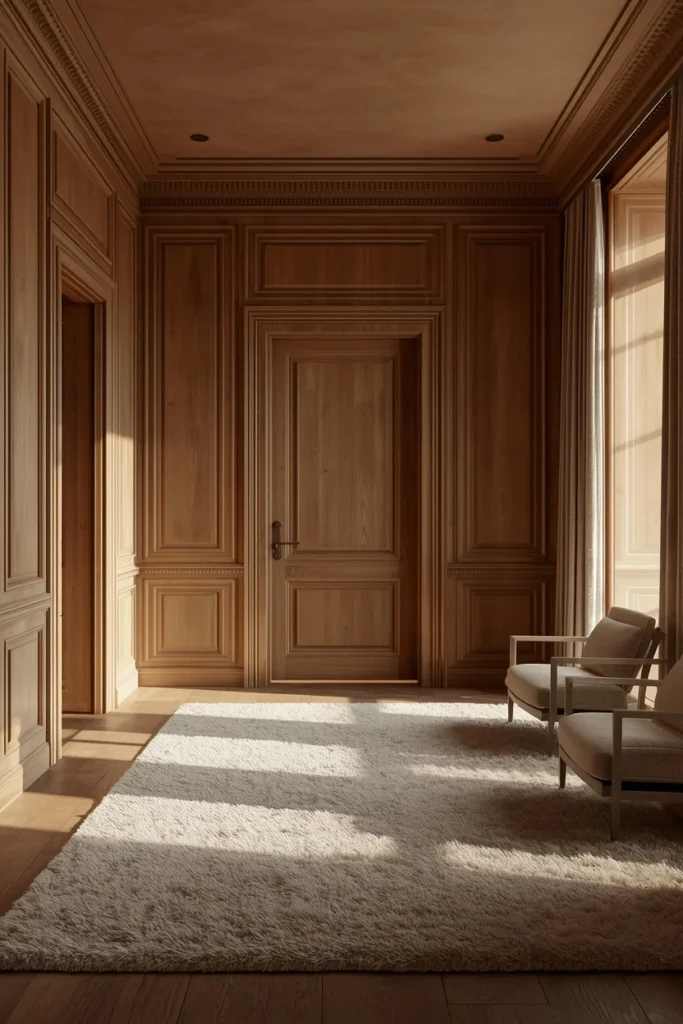
Behind a simple, understated design, this library relies on acoustic insulation built into the walls and a solid-core door to create genuine separation from the rest of a busy household. Thick wool rugs and upholstered furniture absorb sound within the room itself, reducing echo and making the space feel calmer even before the walls’ insulation does its work. Natural materials, wood paneling, stone accents, and heavy linen curtains, dominate the palette, since the quiet luxury approach favors understated quality over visible statement pieces. This design suits a household with a genuine need for a private, distraction-free space, whether for remote work, focused reading, or simply time away from a busy home. The investment sits mostly in construction rather than visible finishes, which is part of what keeps this approach feeling subtle rather than showy.
18. Brass Hardware and Bronze Detailing
Small hardware choices carry real weight in a home library, and swapping standard finishes for aged brass or bronze on ladder rails, cabinet pulls, and light fixtures adds a layer of warmth and craft to the room. These metals develop a soft patina over time rather than staying static, which means the room’s details actually improve with age instead of needing to be replaced. Pairing brass hardware with dark wood shelving creates a classic, traditional combination, while bronze tends to read slightly more modern and understated. This is a lower-cost way to elevate an existing library’s finish level without touching the shelving or layout at all. Over a few years of natural wear, brass and bronze hardware tends to look better rather than dated, unlike a plated finish that can chip or fade.
19. Powder Blue Painted Built-In Library
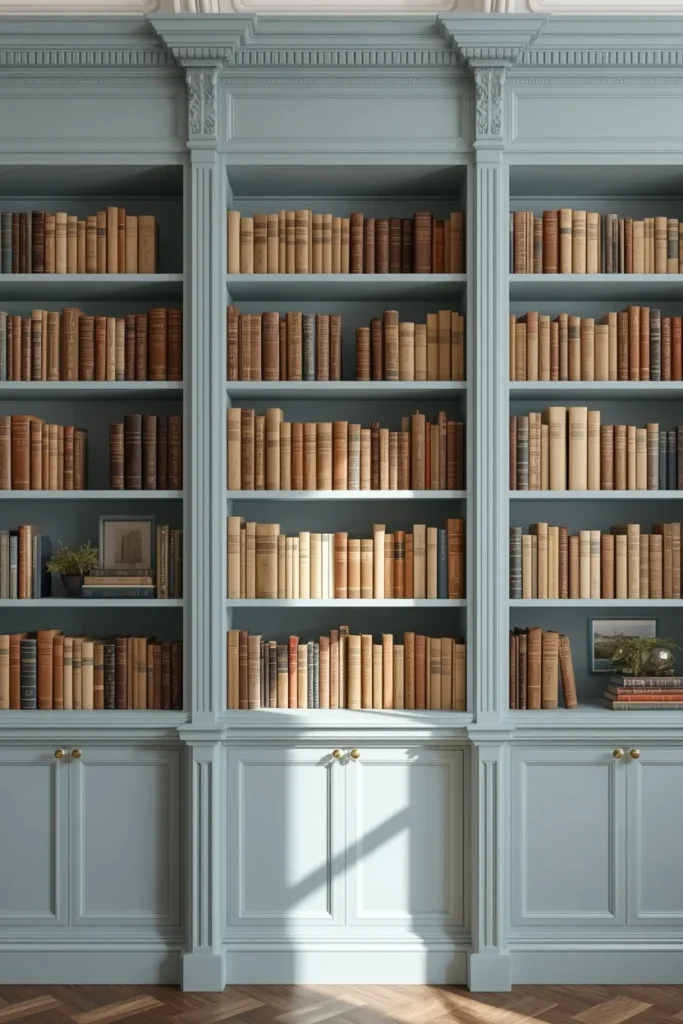
A soft powder blue on built-in shelving brings a lighter, more heritage-inspired feel into a home library without losing warmth the way a stark white might. This color works especially well in a room with existing traditional details, like crown molding or paneled doors, since the soft tone complements rather than competes with the architecture. Filling the shelves with a natural mix of book spine colors against the pale blue background keeps the room from feeling overly precious or staged. A single warm metal accent, in brass or aged gold, on the shelving’s hardware balances the cooler undertone of the blue paint. This approach suits a library in a more traditional or heritage-style home, giving the room a fresh, updated feel while still respecting the existing character.
20. Velvet and Vintage Brass Lighting Library
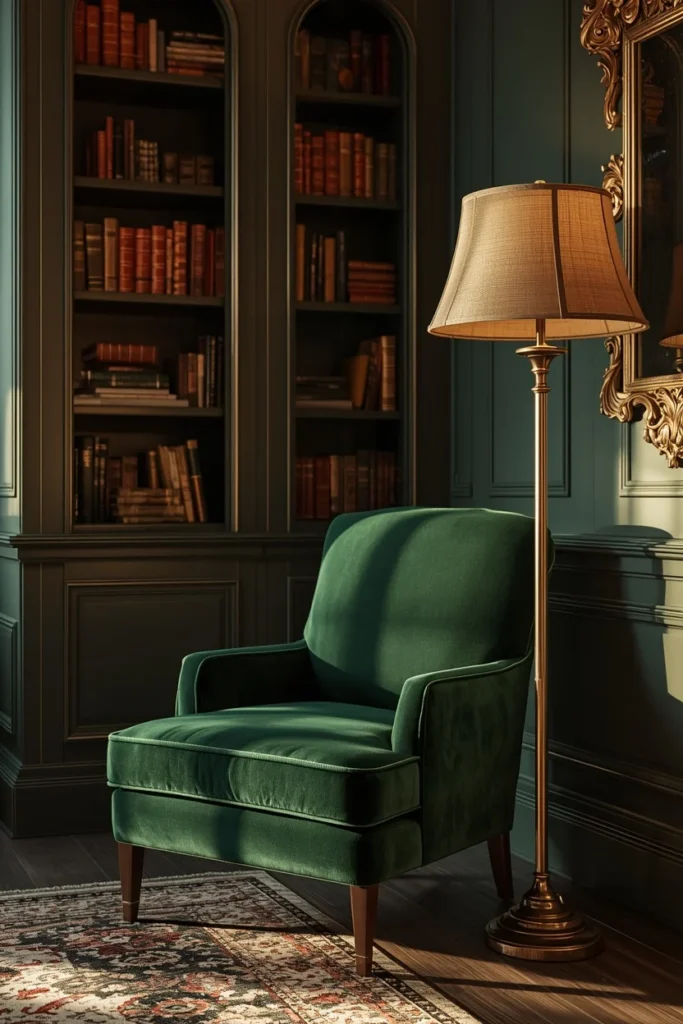
Deep jewel-toned velvet upholstery paired with vintage-style brass floor lamps gives a home library a layered, collected feel rather than a matched showroom set. The velvet’s texture catches light differently than a flatter fabric, adding visual depth even in a room with a fairly simple color palette otherwise. A vintage brass floor lamp with a fabric shade casts a warmer, more diffused glow than a modern fixture, which suits a room meant for long, relaxed reading sessions. Mixing in a few smaller vintage touches, a carved mirror or a hand-thrown ceramic vase, adds detail that rewards a closer look without overwhelming the room. This approach reflects a broader move in current interior design toward rooms that feel personal and layered rather than perfectly matched.
21. Lived-In, Well-Loved Book Display
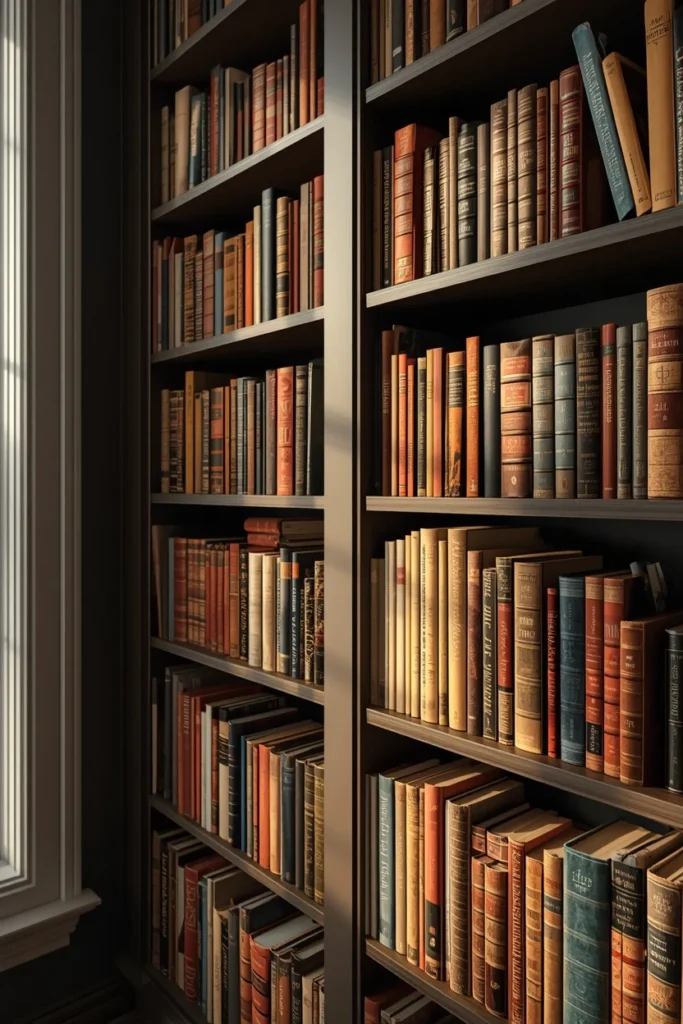
Not every home library needs to look styled for a magazine spread. Shelving filled with genuinely well-loved books, spines creased and covers worn from actual reading, gives a room a personality that a color-coordinated, spine-in display simply can’t replicate. Mixing paperbacks and hardcovers, rather than sorting strictly by size or color, keeps the shelves looking like an evolving collection rather than a static display. A few personal objects tucked between books, a photo, a small souvenir, a pressed flower, add the kind of detail that rewards a second look. This approach costs nothing beyond the books already owned, and it tends to be the direction most book lovers actually gravitate toward once the pressure to keep shelves perfectly curated falls away.
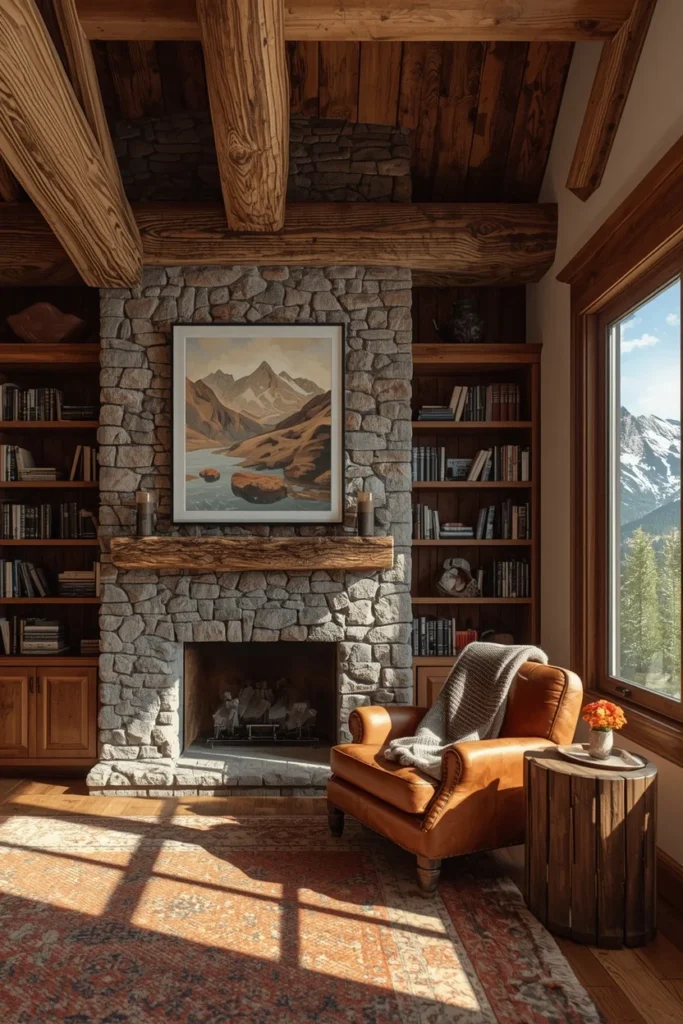
22. Stone and Timber Mountain Library
Exposed timber beams and a rough stone accent wall bring a rustic, mountain-lodge character into a home library, especially in homes already built with natural materials elsewhere. Heavy wood shelving, left with a visible grain rather than a smooth painted finish, matches the weight and texture of the surrounding stone and timber. A large window facing a natural view keeps the room connected to its setting, and pairs especially well with this style in homes located near mountains, forests, or other dramatic landscapes. A wool throw and a simple leather chair complete the palette without adding anything that would compete with the room’s natural materials. This design suits a home built around its landscape, where the library becomes one more way of bringing the outside in.
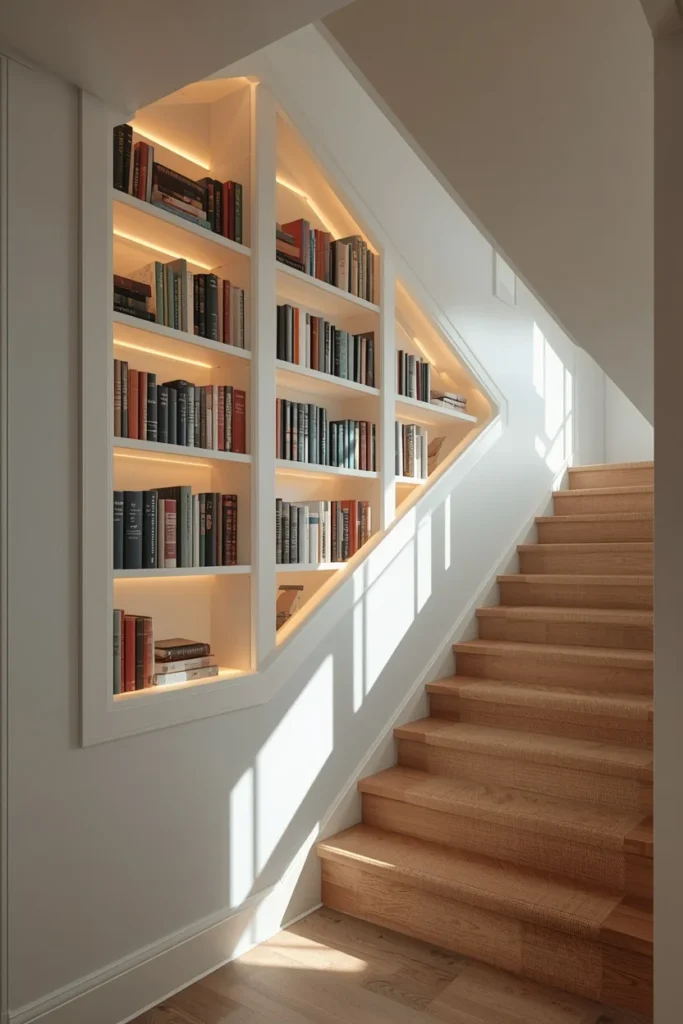
23. Library Nook Off a Stairwell
The landing or wall space along a staircase often sits unused, and built-in shelving following the slope of the stairs turns that transition space into a working library. Shelving depth typically needs to shrink as it follows the stair’s angle, so this layout suits a mix of paperbacks and smaller objects better than oversized art books. Lighting recessed into the underside of each shelf or run along the stair’s edge keeps the space well-lit without adding a fixture that would interrupt the sightline up the stairs. This approach turns a purely functional passage into a small moment of discovery on the way between floors. It’s a strong option for a home without the square footage for a dedicated library room, since it uses space that would otherwise go entirely to waste.
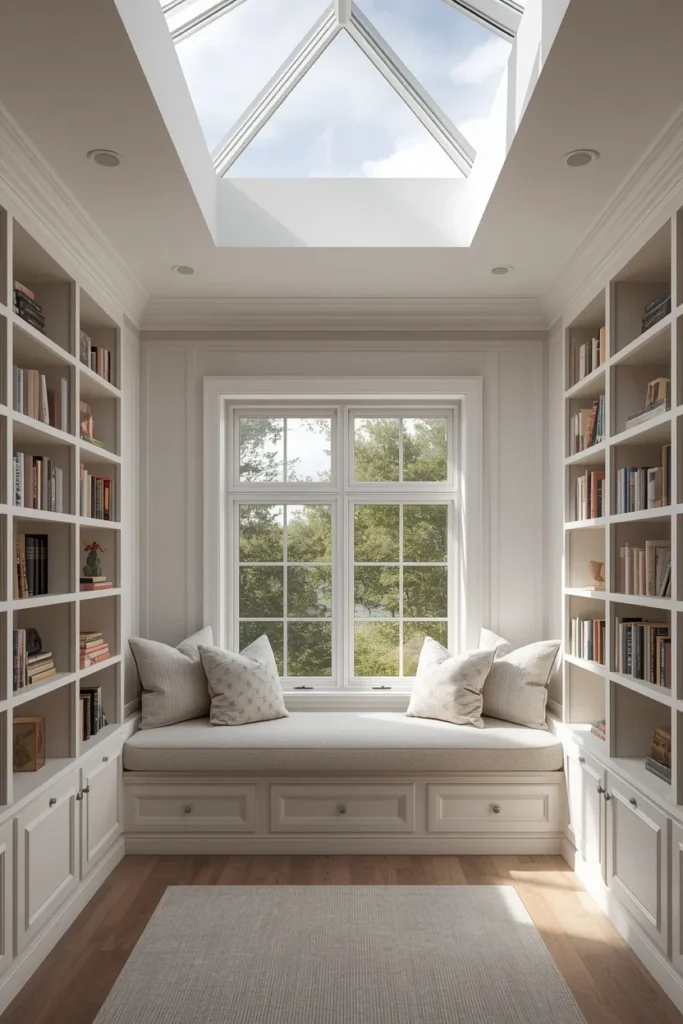
24. Library With a Reading Window Seat and Skylight Combination
Combining a window seat with an overhead skylight doubles the natural light source in a reading spot, making it one of the brightest, most inviting corners in the entire home. The window seat handles horizontal light through the day, while the skylight adds vertical light that shifts more dramatically from morning to evening, giving the spot a different character depending on when it’s used. Built-in shelving flanking both sides of the seat keeps books within reach without requiring a separate section of the room. Light, breathable fabrics on the cushions suit the amount of direct sun this layout typically receives better than heavier, darker textiles would. This combination works best in a room with the ceiling height and roof access to support a skylight, making it more of a renovation-stage decision than an easy retrofit.
Styling Tips
Let real books, not decorative or color-sorted ones, fill most of the shelving, since a genuine collection reads as far more inviting than a staged display. Mix shelf heights and depths where possible, since a completely uniform grid can feel more like storage than a library. Warm, low-temperature lighting layered from multiple sources suits a reading room far better than a single bright overhead fixture.
Practical Implementation Ideas
Plan shelving depth around the actual size of the books being stored, since oversized art books and standard paperbacks need different shelf depths to sit properly without wasted space. Reinforce wall framing before installing heavy built-in shelving, since a fully loaded bookcase carries significant weight over time. If working in phases, install the core shelving structure first and add finishing details like ladders, lighting, and hardware once the bones of the room are settled.
Common Mistakes to Avoid
Sorting books strictly by color for visual effect often makes a collection harder to actually use, since finding a specific title becomes a guessing game. Skipping proper lighting planning leaves many home libraries feeling dim and uninviting once the sun goes down, no matter how nice the shelving looks in daylight photos. Overcrowding a small room with oversized furniture, rather than scaling seating to the space, makes even a well-designed library nook feel cramped.
Small-Space Alternatives
A single alcove, a stairwell landing, or the space beside a dining table can all hold enough shelving to function as a real library without needing a dedicated room. A window seat with built-in shelving on either side makes efficient use of an existing architectural feature rather than adding new square footage. Freestanding shelving units, rather than full built-ins, offer a lower-commitment way to test a library layout before investing in permanent millwork.
Budget-Friendly Alternatives
Freestanding bookcases cost significantly less than custom built-in millwork and can be repositioned or added to as a collection grows. Painting existing shelving in a fresh color, rather than replacing it entirely, updates a library’s look for a fraction of the cost of new construction. Swapping hardware finishes, from standard chrome to aged brass, refreshes a room’s details without touching the shelving structure at all.
Pro Styling Recommendations
Leave a small amount of breathing room on shelves rather than packing every inch, since a completely full shelf reads as cluttered even with beautiful books. Choose warm-toned bulbs in the 2700K to 3000K range for reading lamps, since cooler light tends to feel clinical in a room meant for relaxation. Add at least one comfortable seat sized appropriately for the room, since a library without a real place to sit and read ultimately functions as storage rather than a living space.
FAQs
Conclusion
A dream home library isn’t defined by square footage or a single showstopping detail. It comes from a handful of consistent choices, real books, warm layered light, and a seat worth sitting in, repeated with intention throughout the room. The 24 ideas above range from a single stairwell nook to a full two-story wraparound room, so there’s a starting point here no matter the space available. Choose the direction that matches how the room will actually be used, and let the rest of the design build outward from there.