19 Garage Storage Ideas That Finally Tame the Chaos & Look Great Doing It
Every garage starts organized. Then a bike gets leaned against the wall instead of hung up, a box of holiday decorations never makes it back to its shelf, and within a few months the car is parked in the driveway because there’s no room for it inside anymore.
The garages that stay organized aren’t the ones with the most expensive cabinets. They’re the ones built around a system, walls doing the heavy lifting instead of the floor, zones instead of one big pile, and storage that’s easy enough to put back that nobody skips the step.
This list covers 19 garage storage ideas that go past “just buy some shelves.” You’ll find wall systems, ceiling storage, tool organization, zoning strategy, and budget-friendly swaps pulled from how professional organizers and garage designers are actually approaching these spaces. Pick a few that match your garage size and how you actually use it, and start there.
Table of Contents
1. Full Slatwall Storage System
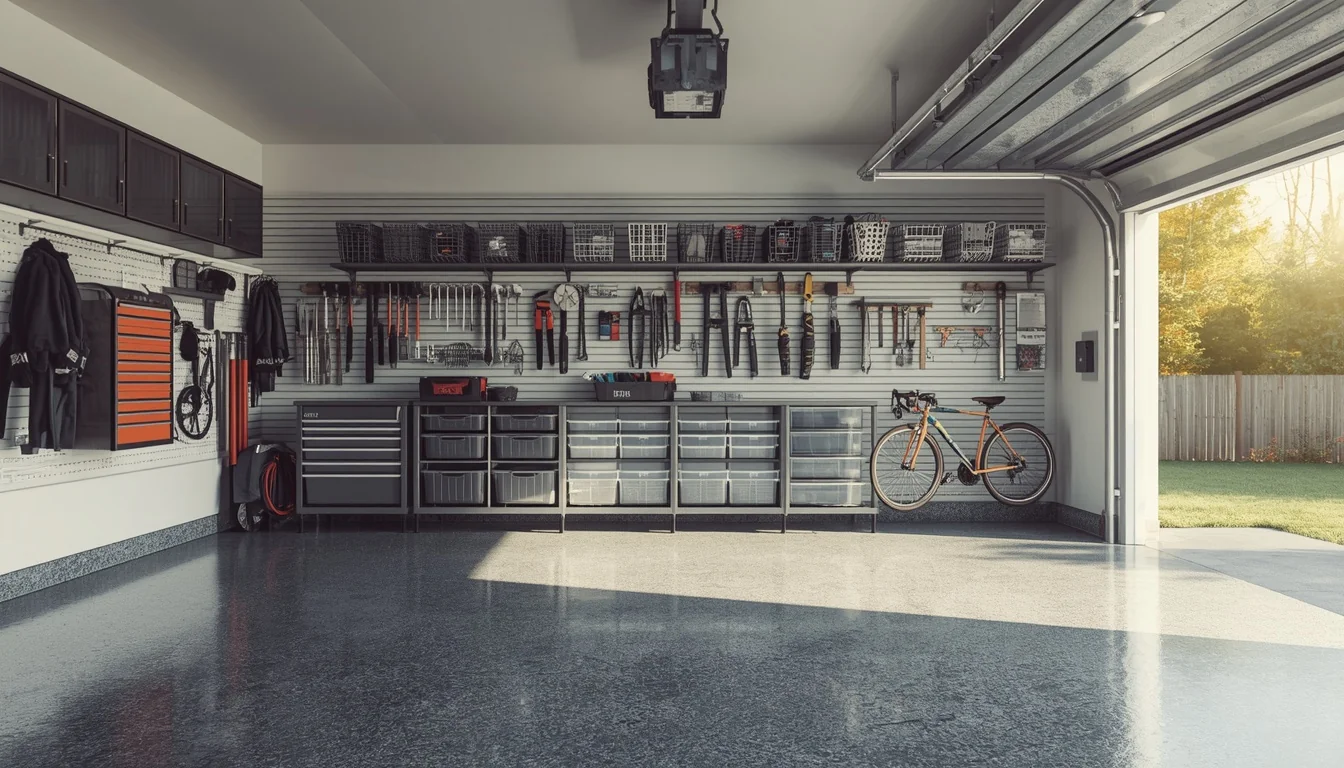
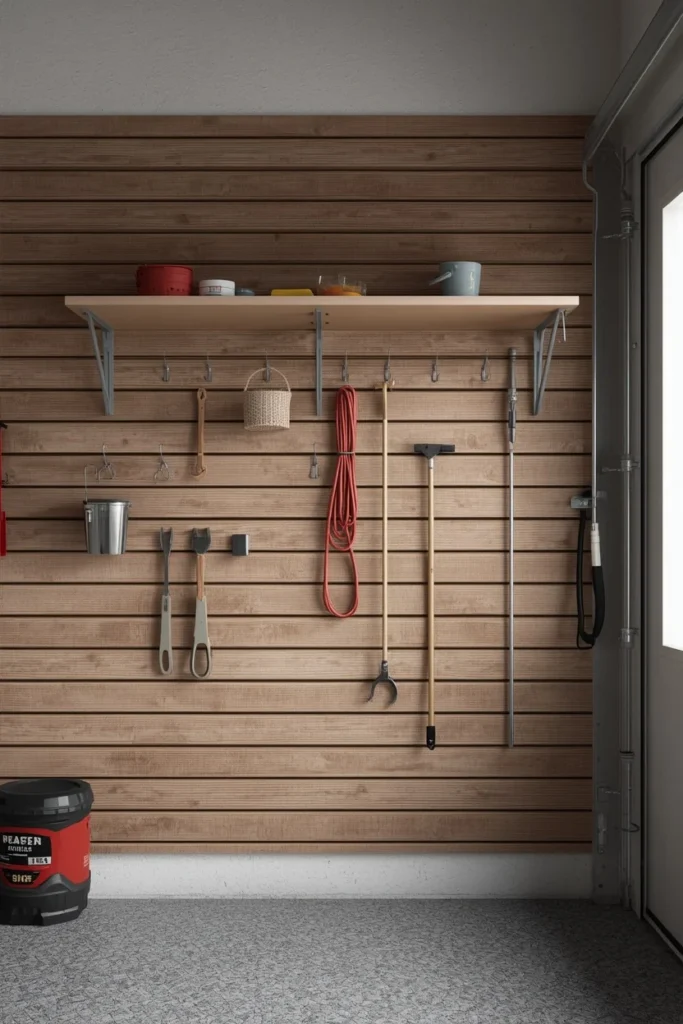
Slatwall panels cover an entire wall section with a grooved surface that accepts hooks, baskets, and shelves anywhere along the track, which means the layout can shift as your storage needs change instead of staying locked into fixed shelf positions. This matters most in garages used for more than one purpose, since a family that swaps from bike season to holiday decoration storage can rearrange the same wall without drilling new holes. Panels typically come in wood-look, white, or black finishes now, so the system reads as a designed wall rather than a warehouse fixture. Installing slatwall over bare studs or drywall with a layer of plywood backing gives the panels a more secure, continuous mounting surface. It’s a higher upfront cost than basic shelving, but the flexibility usually pays off within the first year of actually using the space.
2. Overhead Ceiling Storage Racks
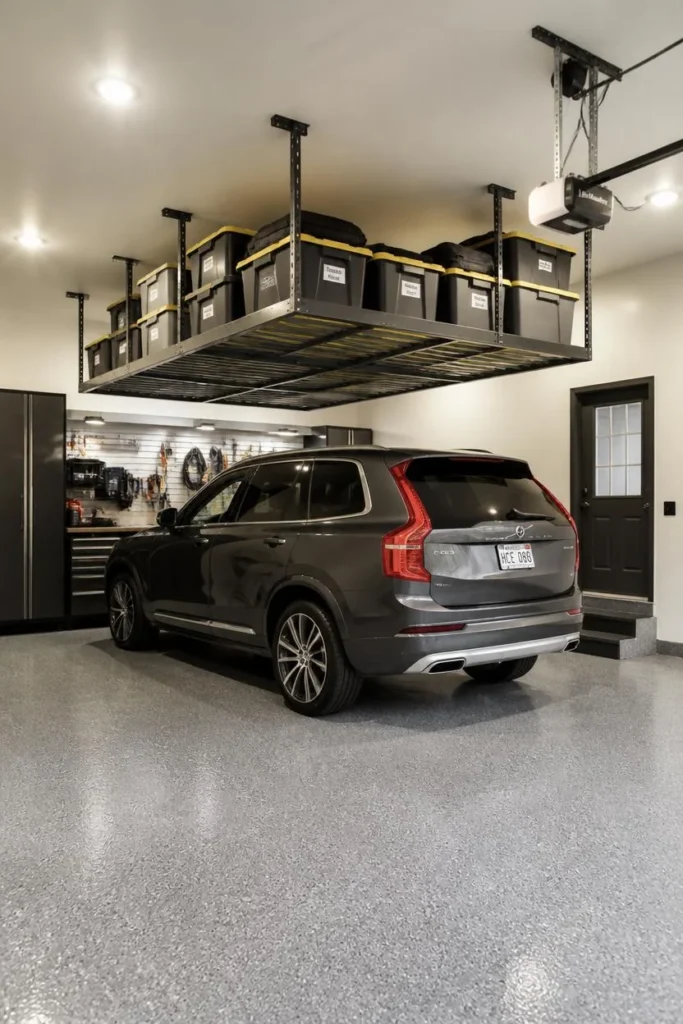
Ceiling-mounted racks turn the space above a parked car into storage for items you only touch once or twice a year, holiday decorations, camping gear, off-season sports equipment, without taking up a single inch of wall or floor space. The key detail people miss is load capacity: standard ceiling joists are built for distributed loads like drywall, not concentrated weight at one or two points, so racks need to span multiple joists or mount into engineered support. A platform-style rack rather than single hooks keeps bins from shifting or tipping when the garage door opens and closes. Leaving enough clearance for the tallest vehicle that parks underneath is worth measuring twice before installing anything overhead. This is one of the highest-value moves for garages that feel cluttered despite having decent wall storage already, since most garages waste the entire ceiling plane.
3. Pegboard Tool Wall
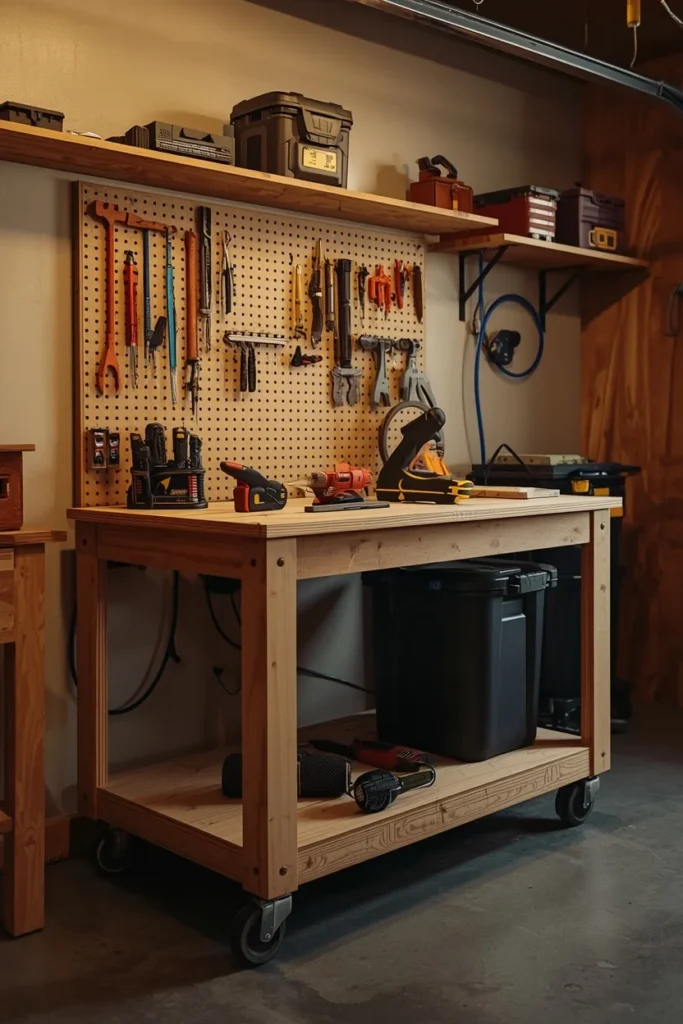
A pegboard panel above a workbench gives every hand tool a fixed, visible spot, which cuts down on the time spent digging through drawers mid-project. Tracing an outline around each tool’s resting spot (sometimes called a shadow board) makes it immediately obvious when something hasn’t been put back, which keeps the system self-maintaining instead of relying on willpower alone. Pegboard is inexpensive and easy to install, though it’s better suited to lighter tools since the hooks aren’t rated for heavy loads the way a slatwall or rail system is. Painting the board a contrasting color, black or navy against white pegs, adds definition and makes the tool silhouettes easier to read at a glance. This is one of the most classic garage storage upgrades because it solves a real, everyday annoyance for almost no money.

4. Zone-Based Garage Layout
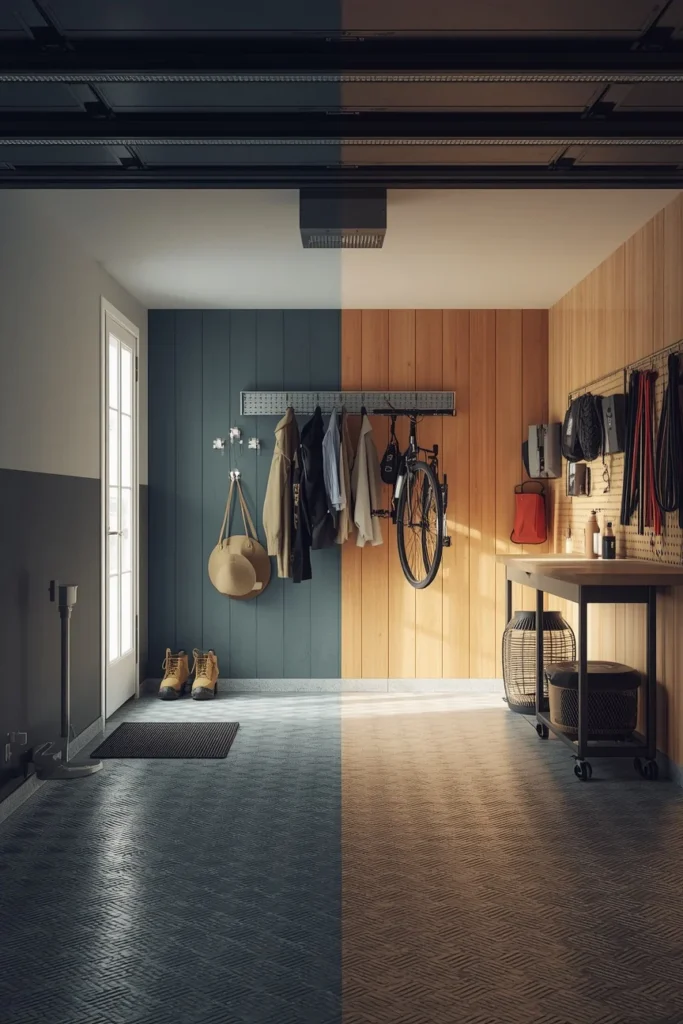
Treating the garage as a series of small rooms instead of one big storage pile is the single biggest shift behind garages that actually stay organized. A transition zone near the door to the house handles shoes and coats, an active zone holds daily-use items like bikes and sports gear, a storage zone up high or in back corners holds seasonal items, and a workshop zone anchors around a workbench. Assigning a physical boundary, a rug, a section of slatwall, a painted floor line, to each zone helps everyone in the household remember where things belong without needing a label on every single item. This approach also prevents the most common failure mode in garage organization, where a clean garage slowly turns back into a single undefined pile because nothing has a home. Mapping out zones before buying any storage products keeps you from purchasing shelving that doesn’t match how the space actually gets used.
5. Clear Labeled Stackable Bins
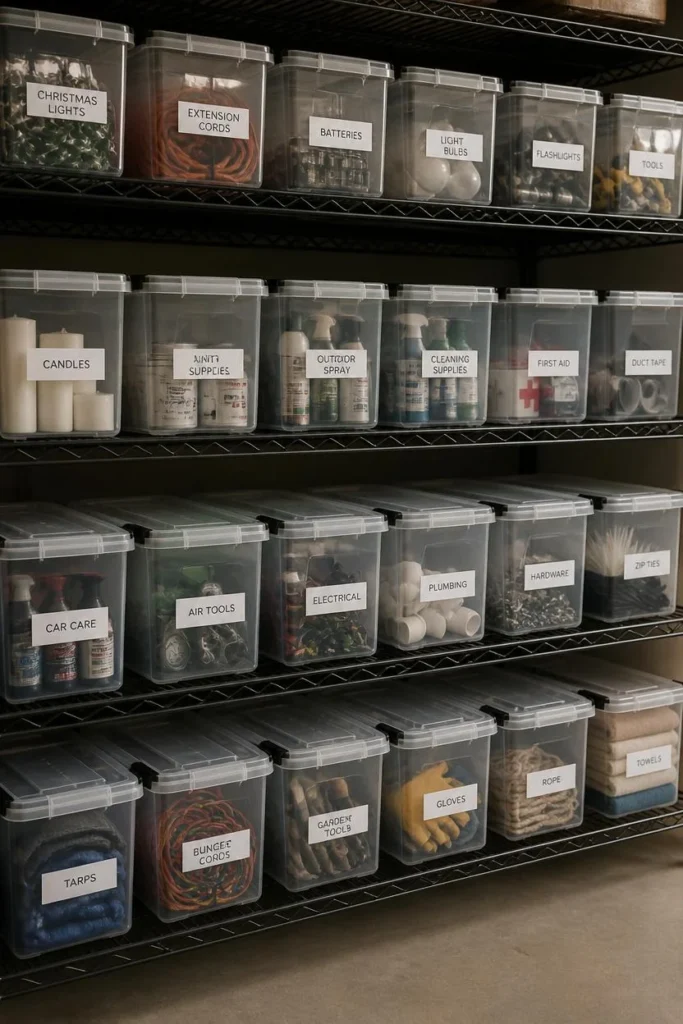
Clear bins let you see what’s inside at a glance, which prevents the common problem of forgotten items pushed to the back of an opaque tote and never used again. Matching bin sizes across the whole garage let you stack them evenly without wasted gaps, and choosing a stackable design with reinforced corners keeps a full stack stable even several bins high. Labeling each bin on the short end rather than just the lid makes contents visible even when bins are stacked, not just when they’re sitting on a shelf at eye level. Grouping bins by category, holiday decor, camping gear, car supplies, rather than by whoever last used the bin keeps the system logical for every member of the household. This is one of the lowest-cost, most immediately satisfying garage upgrades, since the visual order alone makes a cluttered space feel calmer within a single afternoon.
6. Vertical Bike Storage Racks
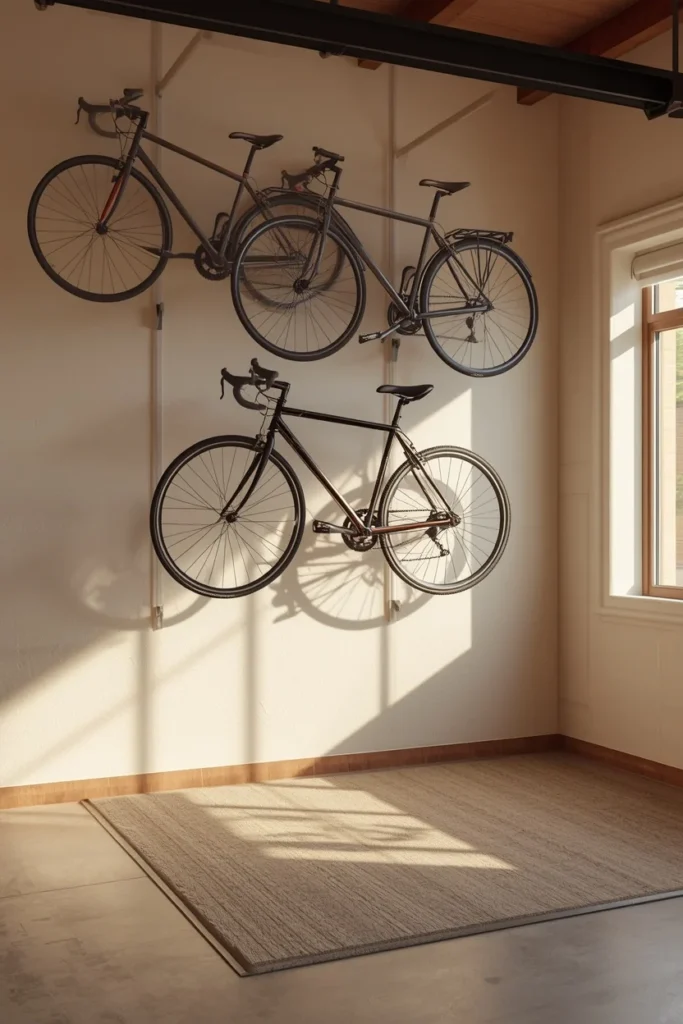
Hanging bikes vertically on a wall mount or ceiling hook frees up several square feet of floor space per bike, which adds up fast in a household with more than one rider. Wall mounts that hold the bike by the front wheel or frame work better for households that ride often, since the bike can be lifted on and off in seconds, while ceiling hoists suit bikes that are stored for longer stretches between uses. Spacing multiple bike mounts at slightly staggered heights keeps handlebars from colliding when several bikes share the same wall section. Padded hooks or cradles protect the frame finish better than a bare steel hook, which matters for higher-end bikes especially. This idea consistently ranks as one of the most requested garage upgrades for active families, since bikes are notoriously awkward to store any other way.
7. Closed Wall-Mounted Cabinets
Cabinets with solid doors hide visually busy items, paint cans, cleaning chemicals, spare parts, behind a clean, uniform front, which matters most in garages that double as an entry point to the house or a space guests actually see. Wall-mounting cabinets rather than resting them on the floor keeps the area beneath sweepable and protects the cabinet base from standing water or road salt tracked in on tires. A single matte or wood-look finish across every cabinet door reads as a considered system rather than a mismatched collection of secondhand pieces. Adding interior shelving or a small drawer bank inside each cabinet keeps loose items from sliding into a pile the moment the door closes. This is a higher-cost option compared to open shelving, but it’s the closest a garage gets to feeling like a finished room instead of a utility space.
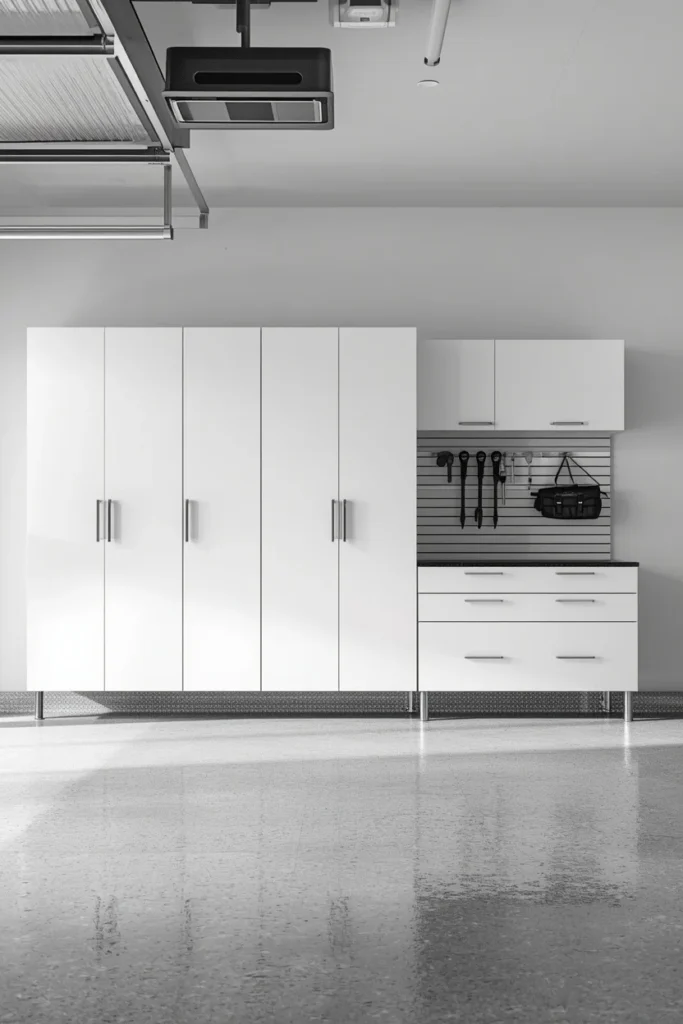
8. Epoxy or Polyaspartic Floor Coating
A coated floor does more than look finished, it seals bare concrete against oil stains, road salt, and moisture that would otherwise soak in and become permanent. Polyaspartic coatings cure faster than traditional epoxy and tend to hold up better against UV yellowing near garage doors that get direct sunlight. A lighter floor color reflects more overhead light back into the room, which makes the whole garage feel brighter and safer to move through, especially in garages without much natural light. Adding a texture additive to the coating improves slip resistance in wet conditions, which matters in climates with regular rain or snow tracked in on tires and boots. This upgrade also reinforces the zone strategy visually, since a clean, uniform floor makes painted or taped zone boundaries far easier to see and maintain.

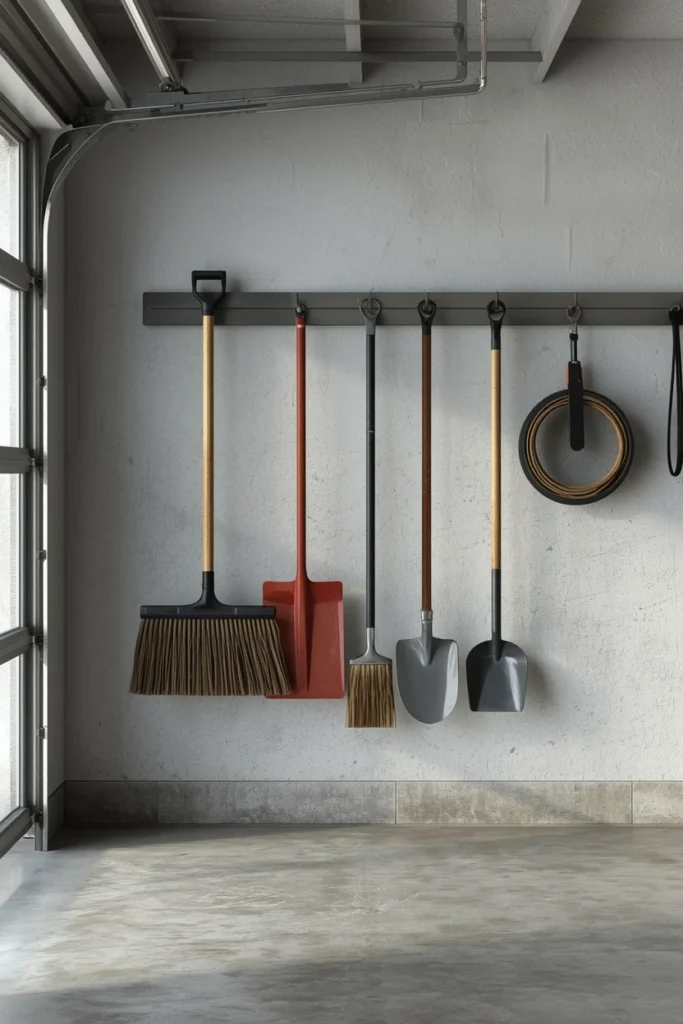
9. Horizontal Tool Rail with Hooks
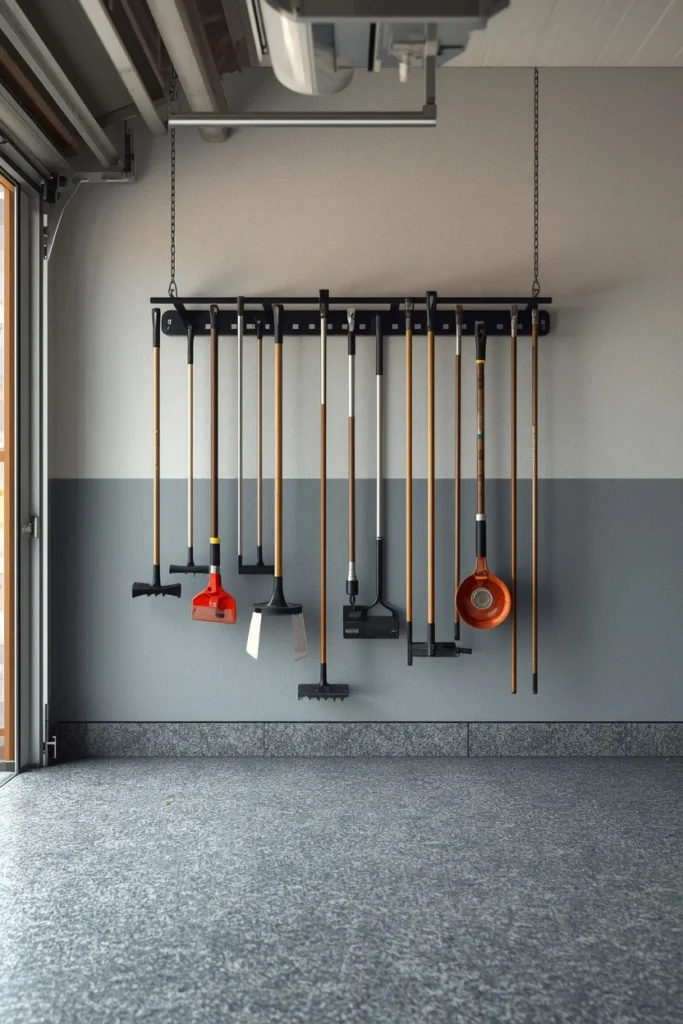
A single horizontal rail mounted at a consistent height turns a jumble of long-handled tools, rakes, shovels, brooms, into a clean visual line instead of a leaning pile in the corner. Spacing hooks evenly along the rail keeps tool handles from overlapping or knocking into each other when one is lifted off. This system uses wall height rather than floor depth, which makes it a strong option for narrow garages where a bulky cabinet or shelving unit would eat into parking clearance. Rail systems also accept swappable hook and hanger styles, so the same rail can hold a ladder one season and folding chairs the next without remounting anything. It’s a simple, low-cost system that solves one of the most common garage clutter points, the corner where every long tool ends up leaning against the wall.
10. Rolling Workbench & Mobile Workstation
A workbench on locking casters gives you a full work surface for projects while keeping the option to roll it against the wall and reclaim floor space when the car needs to come back in. Building the top from plywood with a hardwood edge keeps the surface durable against dropped tools and spilled liquids, while a lower shelf underneath holds bins or a rolling tool chest within reach. Locking casters matter more than people expect, since an unlocked mobile bench can drift or tip under pressure from a clamp or heavy tool. This setup works especially well in single-car garages where a fixed built-in workbench would permanently sacrifice parking space. It gives you the function of a dedicated workshop zone without the commitment of a fixed structure.
11. Mudroom-Style Entry Lockers
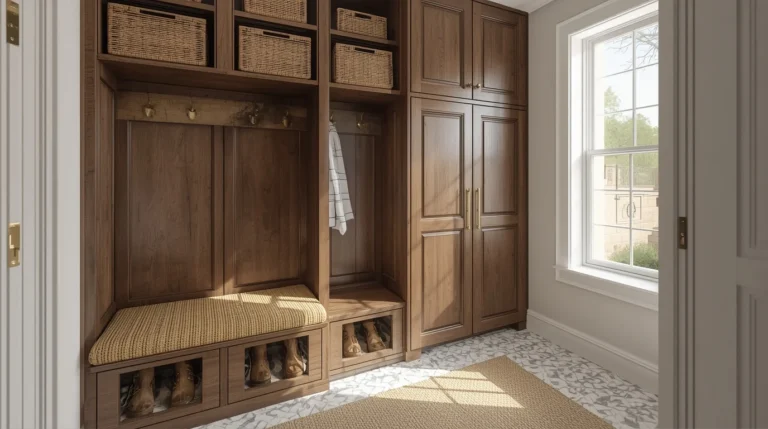
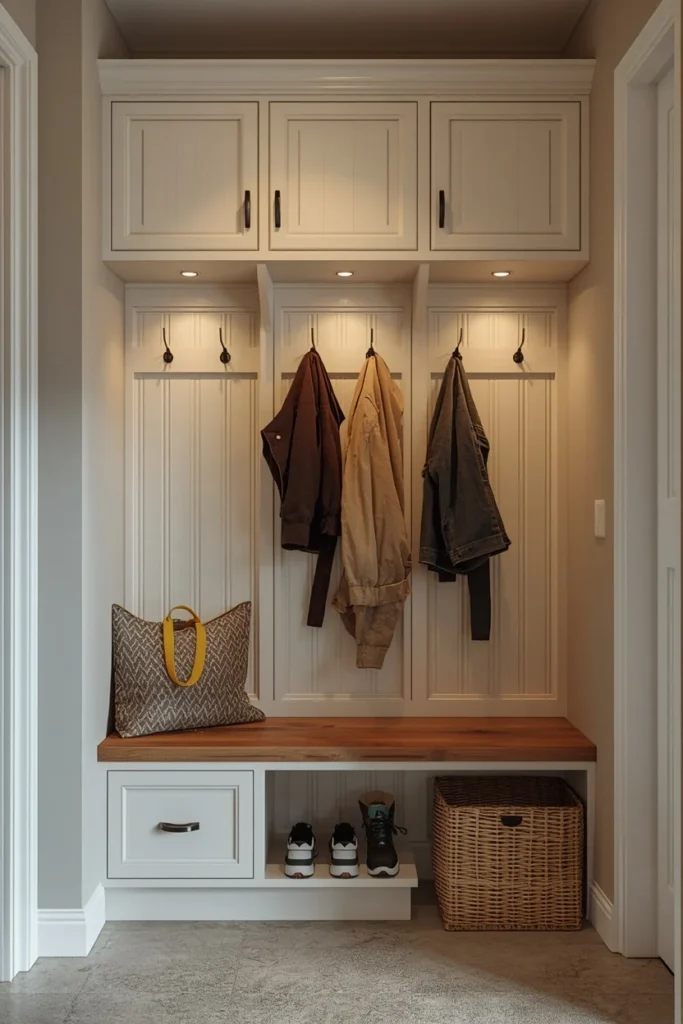
For garages that double as the main entry point into the house, a small locker system just inside the door handles shoes, coats, and backpacks before they ever make it into the kitchen or hallway. Ventilated cubbies let dirt and moisture fall through rather than trapping it against shoe soles, which matters most in households with kids or pets tracking mess in daily. A built-in bench that clips directly into the wall track gives a spot to sit while changing shoes, without needing a separate piece of furniture taking up floor space. Assigning one cubby per household member, rather than one shared bin, cuts down on the daily “whose shoes are these” pileup significantly. This zone works because it intercepts clutter at the door instead of letting it spread further into the house.
12. Magnetic & Small-Parts Organizers
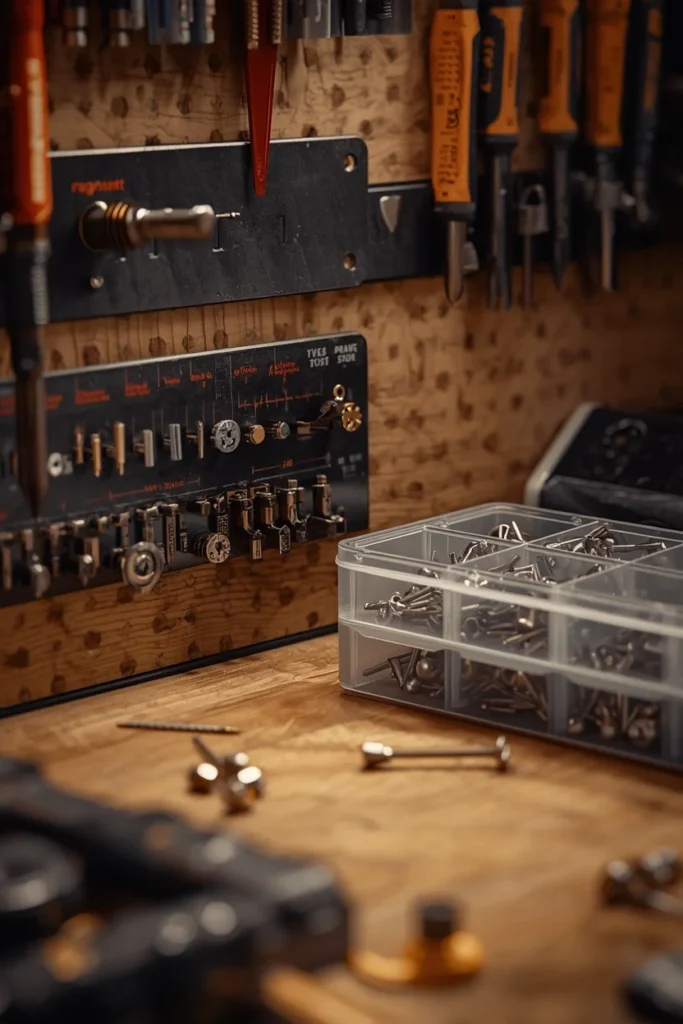
Nails, screws, washers, and small hardware are some of the easiest things to lose track of in a garage, and a dedicated small-parts system solves this far better than tossing everything into one junk drawer. Magnetic strips mounted near a workbench hold loose metal parts and small tools in plain sight, which is faster than digging through a drawer every time. Repurposed items, a muffin tin, a small parts cabinet, or a clear tackle box with dividers, work just as well as purpose-built organizers and cost far less. Labeling each compartment, even with simple masking tape and a marker, keeps the system usable months later instead of turning back into a mixed pile. This is a small, low-cost detail, but it’s the kind of organization that gets used every single time a project comes up.
13. Wire Shelving Units
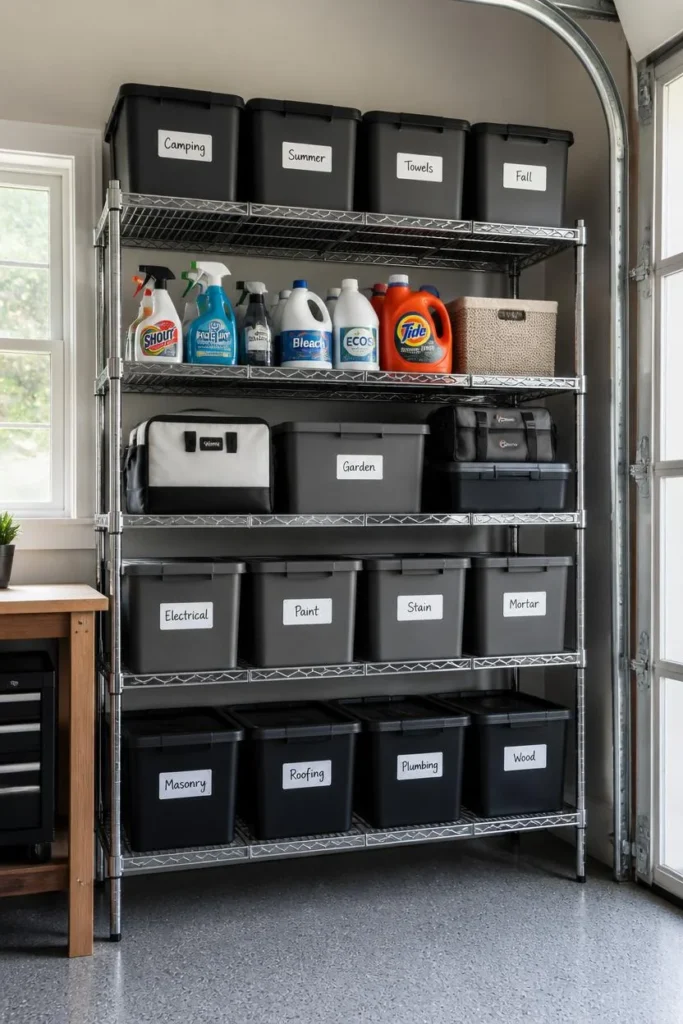
Wire shelving gives you the storage capacity of solid metal shelving at a lower cost and lighter overall weight, which makes it easier to install and reposition than bulkier cabinet-style units. The open wire design lets dust fall through instead of collecting on a solid shelf surface, and it makes contents visible from multiple angles instead of just from directly in front. Leaving clearance underneath the bottom shelf makes sweeping the floor faster, which matters in a space that collects dirt and debris as often as a garage does. Adjustable shelf heights let you customize the unit for oddly shaped items, tall storage bins on one level, shorter supplies stacked closer together on another. This is a strong budget alternative to built-in cabinetry for garages where the priority is capacity over polish.
14. Tension Racks for Long-Handled Tools
Instead of leaning a string trimmer or edger in the corner where it inevitably falls over, a horizontal tension rack holds long-handled tools flat against the wall in a stacked row. This setup uses vertical wall space efficiently, freeing up several feet of perimeter floor space that a leaning pile of tools would otherwise occupy. The tension mechanism grips the tool handle securely without requiring a perfectly matched hook size, so one rack can hold several differently shaped tools. Mounting the rack at a height that clears vehicle mirrors and doors keeps it from becoming an obstacle when pulling in or backing out. This detail is easy to overlook, but it solves one of the most persistent, low-grade clutter problems in almost every garage.
15. Under-Shelf & Corner Dead Space Storage
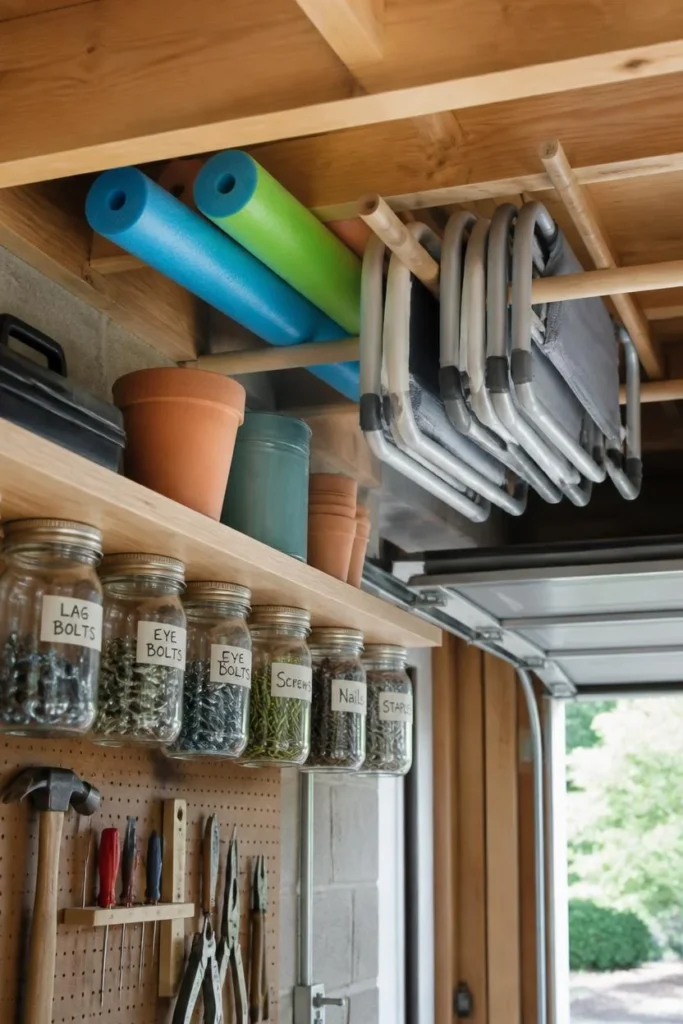
The space directly under an existing shelf, and awkward corners between exposed ceiling joists, are two of the most commonly wasted areas in a typical garage. Screwing jar lids to the underside of a shelf lets you twist small containers of nails, washers, or fasteners into place without using any additional floor or shelf footprint. Closet dowels or hanging straps installed between unfinished ceiling joists give you a spot for lightweight items, pool noodles, folding chairs, tarps, that would otherwise clutter a corner. Corner shelving units, triangular rather than rectangular, make use of the dead space where two walls meet, an area most garages leave completely empty. These small additions rarely cost much, but they consistently reclaim usable storage from space that would otherwise sit unused.
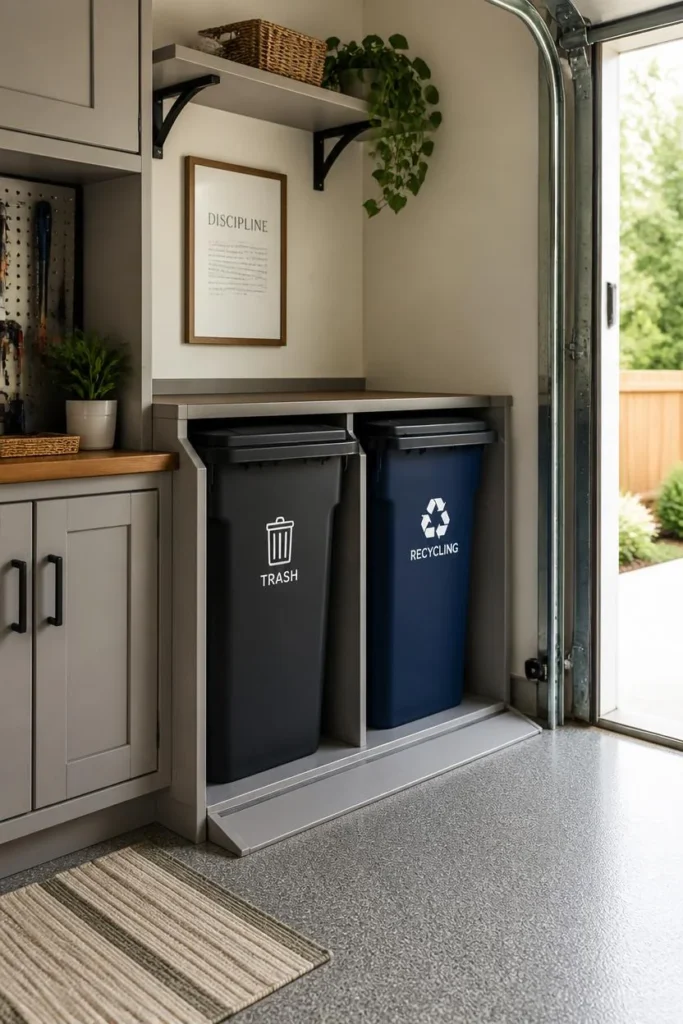
16. Recycling & Garbage Bin Station
Recycling and trash bins are easy to forget when planning a garage layout, and they tend to end up shoved wherever there’s leftover space, usually right in the main walking path. A dedicated station near the garage door, sized to fit your actual bin count and lidded to control odor, keeps this daily-use item from disrupting the rest of the layout. Wheeled bins with a shallow ramp or lip at the station entrance make rolling them out to the curb on trash day faster and less awkward. Keeping this station near the exit path rather than buried in the back of the garage means it actually gets used correctly instead of becoming a dumping ground for anything that doesn’t have another home. This is a small planning detail, but it prevents one of the most common sources of everyday garage clutter.
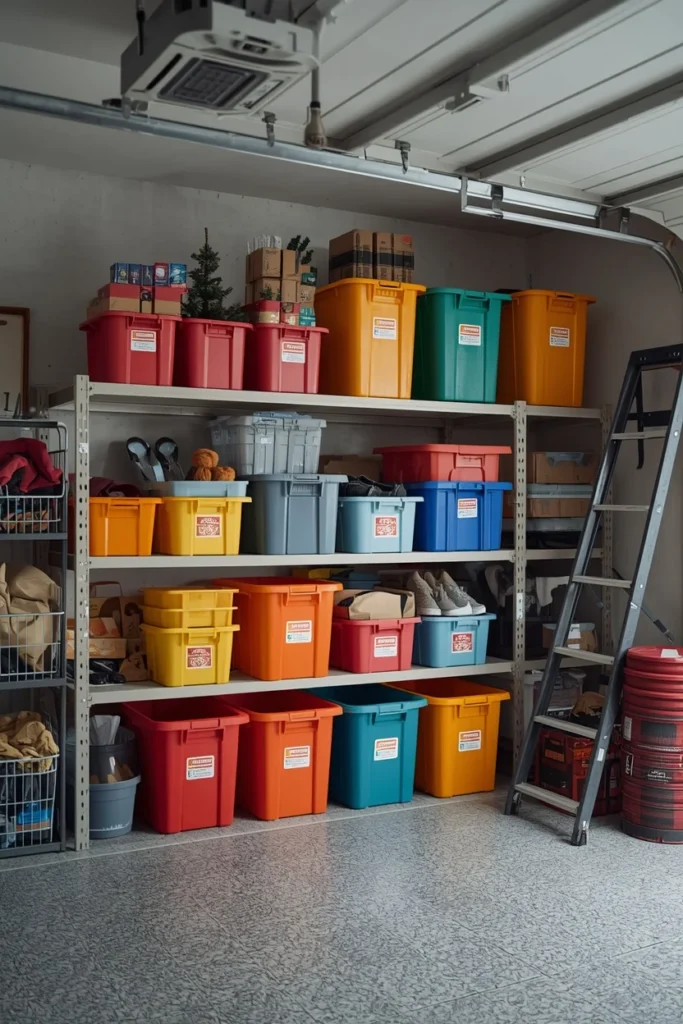
17. Seasonal Rotation Bin System
A seasonal system groups items by time of year, holiday decorations, summer camping gear, winter sports equipment, so only the current season’s bins sit in easy-access spots while everything else moves to overhead or back-corner storage. Color-coding bins by season (or by holiday) speeds up finding the right box without reading every label individually. Rotating bins twice a year, swapping summer gear out as winter gear comes down, keeps the system from becoming stagnant, since it forces a regular review of what’s actually still needed versus what can be donated or discarded. This system works especially well paired with overhead ceiling racks, since off-season bins are exactly the kind of item that belongs up and out of the way rather than taking up prime wall or floor space. It turns a seasonal chore into a quick, predictable swap instead of an all-day excavation project.
18. Repurposed Furniture Storage
An old dresser, bookshelf, or filing cabinet moved into the garage can solve a storage need without the cost of new built-ins, especially for smaller items that don’t need heavy-duty industrial shelving. Sanding and repainting the piece in a garage-appropriate finish, something durable and easy to wipe down, keeps it from looking like leftover furniture rather than an intentional storage choice. Drawer units work particularly well for small hardware, tape, and miscellaneous items that don’t have an obvious home on open shelving. Combining two mismatched pieces, an old dresser topped with a salvaged tabletop, can even create a full workbench for a fraction of the cost of a built or purchased one. This approach is one of the most budget-friendly ways to add real storage capacity to a garage, especially for anyone willing to spend a weekend on a small refinishing project.

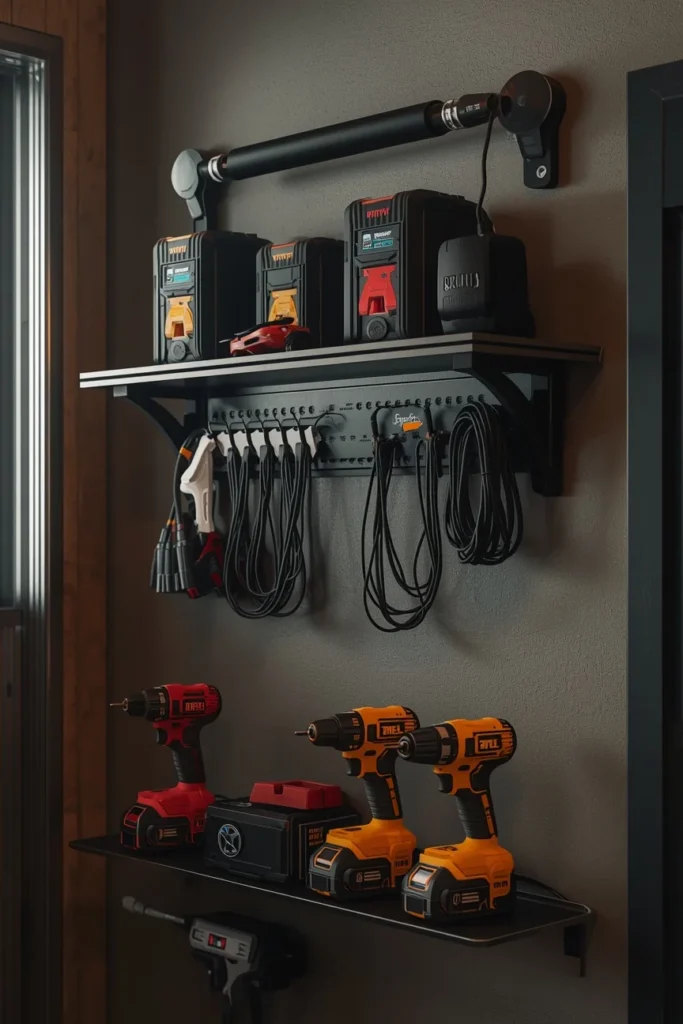
19. Charging & Battery Tool Station
As more households collect battery-powered tools, e-bikes, and rechargeable yard equipment, a dedicated charging zone keeps cords and chargers from turning into a tangled mess spread across the workbench. A wall-mounted power strip or dedicated outlet bank, paired with battery-safe storage shelving, keeps charging equipment contained and away from flammable materials stored elsewhere in the garage. Labeling each charging slot by tool brand or type speeds up finding the right charger during a project instead of testing cords one by one. Planning this zone near an existing outlet, or having an electrician add a dedicated circuit, avoids the overloaded power strip problem that’s common in garages with growing battery tool collections. This is a newer addition to garage planning, but it’s becoming one of the more requested zones as more households shift from corded to battery-powered equipment.
Styling Tips
Stick to two or three finishes across the whole garage, one wall system material, one cabinet color, one bin style, so the space reads as a designed system instead of a mismatched collection of storage products. Keep labels consistent in font and placement across every bin and cubby, since visual repetition is part of what makes an organized garage look calm rather than cluttered. Light, reflective floor and wall colors make a garage feel larger and brighter, which matters most in spaces without much natural light. Leave a small amount of visible open space on every wall and shelf rather than filling every inch, since a completely packed system starts to look cluttered again no matter how organized it technically is.
Practical Implementation Ideas
Start with a full declutter and three-pile sort, keep, donate, discard, before buying any storage products, since it’s common to purchase shelving sized for items that should have been thrown out. Map your zones on paper first, based on how the household actually uses the space, rather than copying a layout from a photo that doesn’t match your routines. Install the highest-impact, lowest-cost systems first, pegboard, hooks, wire shelving, before committing to a full slatwall or cabinet overhaul, so you can test what your household actually uses before spending more. Revisit the system every few months and adjust zones as needs change, since a garage that worked perfectly last year can fall out of sync with a new hobby, a growing kid, or a new vehicle.
Common Mistakes to Avoid
Buying storage products before decluttering is one of the most common and expensive garage organization mistakes, since it’s easy to build an expensive system around items that should have been donated. Mounting heavy overhead storage without checking joist load capacity is a genuine safety issue, not just an organizational one, and it’s worth confirming before loading up any ceiling rack. Mixing too many bin sizes, colors, and labeling styles undoes the visual calm that a well-organized garage is supposed to create, even if the actual storage logic is sound. Skipping a maintenance routine, a quick ten-minute reset every week or two, is what allows a freshly organized garage to slowly slide back into a single undefined pile within a few months.
Small-Space Alternatives
In a single-car or narrow garage, prioritize wall and ceiling storage over any floor-standing cabinet or shelving unit, since floor space is the scarcest resource in a small footprint. A rolling workbench that can be pushed against the wall when not in use gives you workshop function without permanently sacrificing parking space. Slim vertical bike mounts and a single horizontal tool rail cover two of the biggest small-garage clutter points, bikes and long-handled tools, without eating into usable width. Choosing one multi-purpose storage wall instead of separate systems for tools, sports gear, and seasonal items keeps a small garage from feeling visually chopped up into too many competing zones.
Budget-Friendly Alternatives
Pegboard and wire shelving deliver most of the organizational benefit of a full slatwall or cabinet system at a fraction of the material cost, making them the strongest starting point for a tight budget. Repurposed furniture, an old dresser, a bookshelf, a filing cabinet, can cover small-item storage needs without buying anything new. Clear bins from a general retailer work just as well as branded organization products, as long as sizes stay consistent across the garage. A DIY tension rod or dowel system between exposed ceiling joists costs very little and solves the awkward corner and overhead storage problem that more expensive built-in systems are also designed to fix.
Pro Organization Recommendations
Measure your tallest vehicle and any roof rack or cargo box before installing any overhead storage, since clearance issues are one of the most common regrets after a ceiling rack goes in. Walk the garage at the time of day you use it most, early morning or evening, to check how much natural and artificial light each zone actually gets before finalizing a layout. If you’re hiring a professional installer for slatwall, cabinetry, or a floor coating, ask specifically about weight ratings and mounting methods rather than assuming a system is rated for your heaviest stored items. Keep a small paper or digital inventory of what’s stored in less-visible zones, overhead racks or the back of deep cabinets, so nothing gets forgotten and repurchased unnecessarily.
FAQs
Conclusion
A garage stays organized when the system matches how the space actually gets used, not when it’s simply packed with more bins and shelves. Start with the zones that solve your household’s biggest daily frustration, whether that’s bikes blocking the walkway, tools you can never find, or seasonal boxes taking over the one shelf you actually need. Add wall and ceiling storage before floor storage, since floor space is what makes a garage feel functional again. The garages that hold their organization long term are the ones built around a system simple enough that putting things away is just as easy as pulling them out.