23 Rental Apartment Decor Ideas That Look Like You Actually Own the Place
There’s a particular kind of apartment that gives itself away the second you walk in. Bare walls. A couch pushed against the biggest wall because nobody thought about the layout. One overhead light doing all the work in a room that deserves three.
Renting used to mean waiting. Waiting until you owned a place to actually decorate it, as if a lease agreement meant your home had to look unfinished in the meantime.
That’s not really true anymore. The best rental decor right now isn’t about disguising the fact that you rent. It’s reversible, high-impact, and genuinely personal, built from rugs, lighting, textiles, and freestanding pieces that move with you instead of staying behind.
Here are 23 rental apartment decor ideas, from bold peel-and-stick walls to quiet lighting swaps, built to make any rental feel like the place you actually chose, not just the place you’re allowed to live.
Table of Contents
1. Curated Maximalism Layering
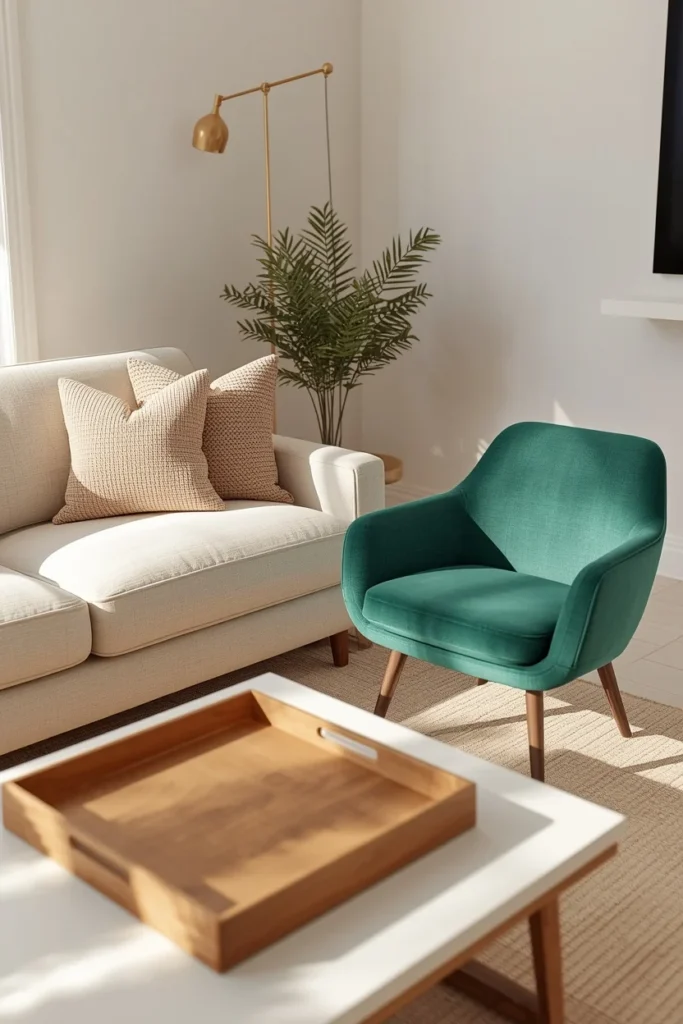
Curated maximalism swaps the old advice to keep everything neutral for a more layered approach built around one calm base and one confident statement piece. Start with a neutral foundation, a cream throw, simple pillows, a plain tray on the coffee table, then add a single bold object, an oversized art print, a sculptural vase, or a richly colored accent chair, so the room has a clear focal point instead of scattered clutter. The trick to keeping this from tipping into visual noise is limiting yourself to one loud element per zone rather than three competing for attention. This approach photographs especially well because the contrast between the quiet base and the one bold piece gives the eye somewhere specific to land. It also happens to be genuinely renter-friendly, since almost everything involved is freestanding furniture and textiles that travel easily to your next place.
2. Handcrafted Artisan Accents
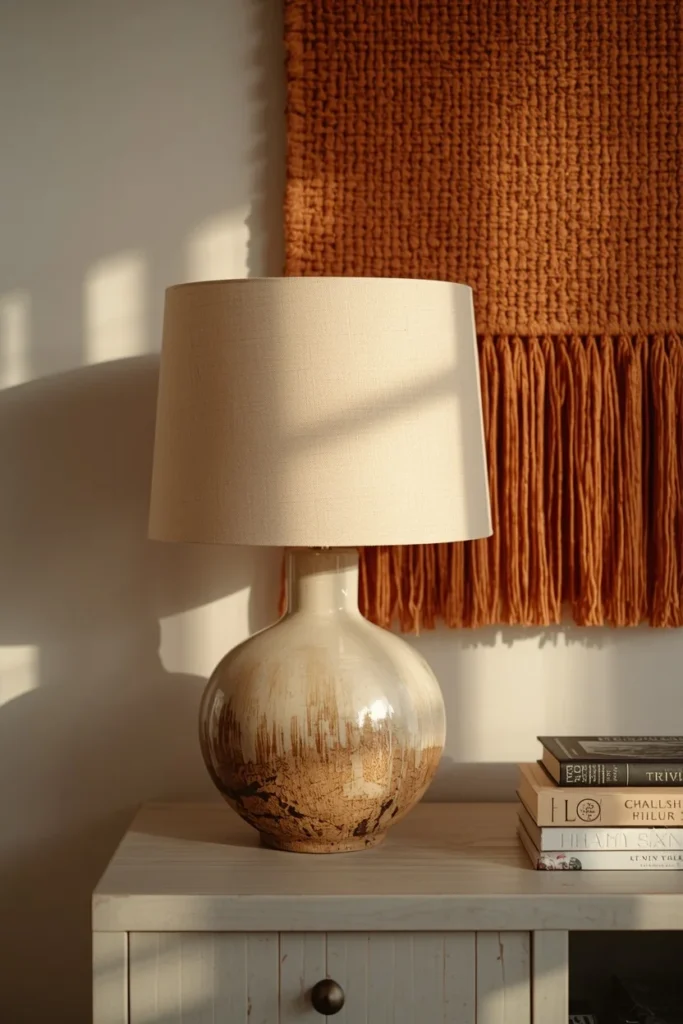
A single handcrafted piece, a ceramic table lamp, a hand-thrown vase, or a woven wall hanging, adds more warmth to a rental than a dozen mass-produced accessories ever could, because the slight imperfections in handmade objects read as intentional rather than generic. Choose one or two pieces with visible texture or natural variation, an uneven glaze, a slightly irregular weave, and place them somewhere they’ll actually be seen daily, like a console table or open shelf. These pieces are genuinely timeless rather than trend-based, which means they work in whatever apartment you move into next, unlike decor tied to a specific seasonal color story. Pairing a handcrafted lamp with a simple linen shade keeps the warm, tactile feeling going even after the sun goes down. This trend rewards buying fewer, better pieces rather than filling every surface, which also happens to make moving day considerably easier.
3. Layered Patterned Textiles
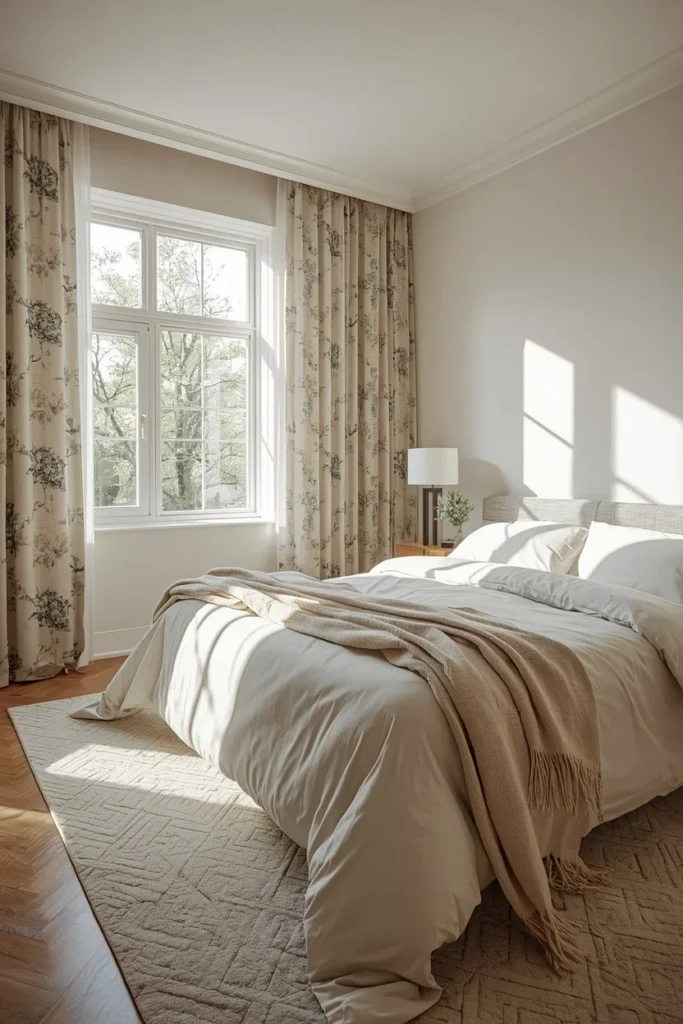
Textiles are the fastest way to bring pattern into a rental without touching a single wall or fixture, since rugs, curtains, throw pillows, and bedding can all be swapped, layered, or removed entirely without landlord approval. Choose two or three coordinating patterns, a stripe, a small floral, and a solid, rather than matching everything exactly, since the slightly imperfect mix reads as more intentional than a matched set. Layer a patterned throw over a solid sofa, add curtains in a complementary print, and let the rug tie the palette together underfoot. This approach also does real functional work in a rental, since fabric absorbs sound and softens the hard surfaces, tile floors, bare walls, that most apartments come with by default. Rotating textiles seasonally is an easy way to refresh the whole room without buying new furniture.
4. Peel-and-Stick Wallpaper Accent Wall
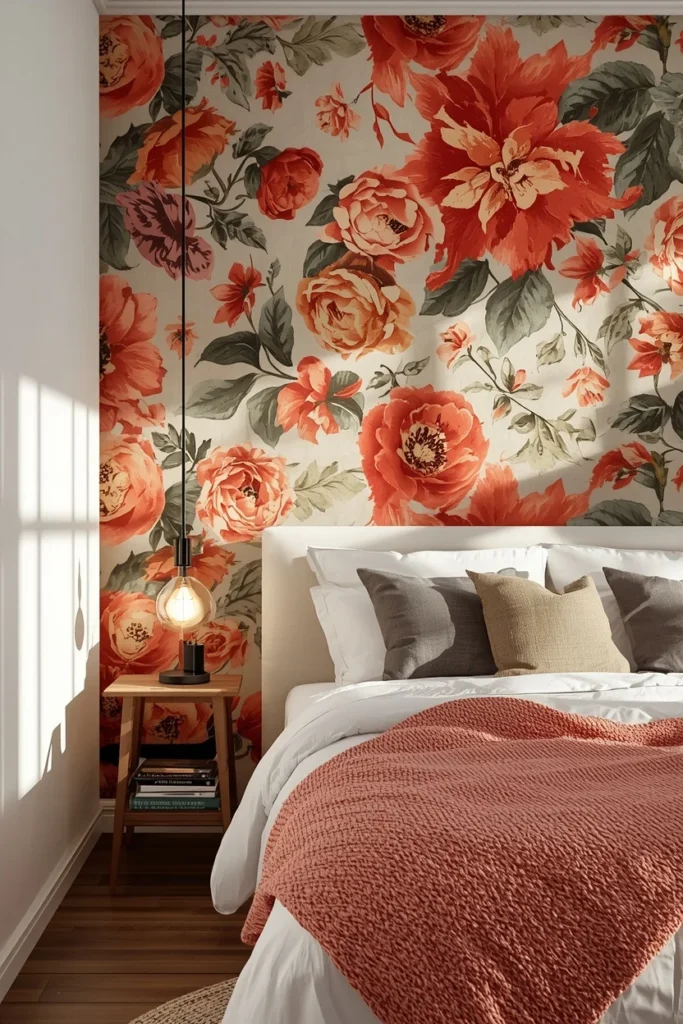
Peel-and-stick wallpaper remains one of the single highest-impact, lowest-risk changes a renter can make, since a single accent wall can completely shift the mood of a room and removes cleanly at move-out. Choose one wall, usually the one visible from the main seating area or the headboard wall in a bedroom, and pick a pattern with enough personality to justify covering an entire surface, a bold floral, a soft arch print, or a subtle textured grasscloth look. Clean and smooth the wall thoroughly before application, and work in narrow vertical strips with a smoothing tool to avoid trapped air bubbles. Keep the surrounding walls a simple neutral so the accent wall has room to be the star instead of competing with more pattern nearby. This idea genuinely transforms a rental’s most generic feature, the standard white wall, into the most personal one in the apartment.
5. Contact Paper Furniture Refresh
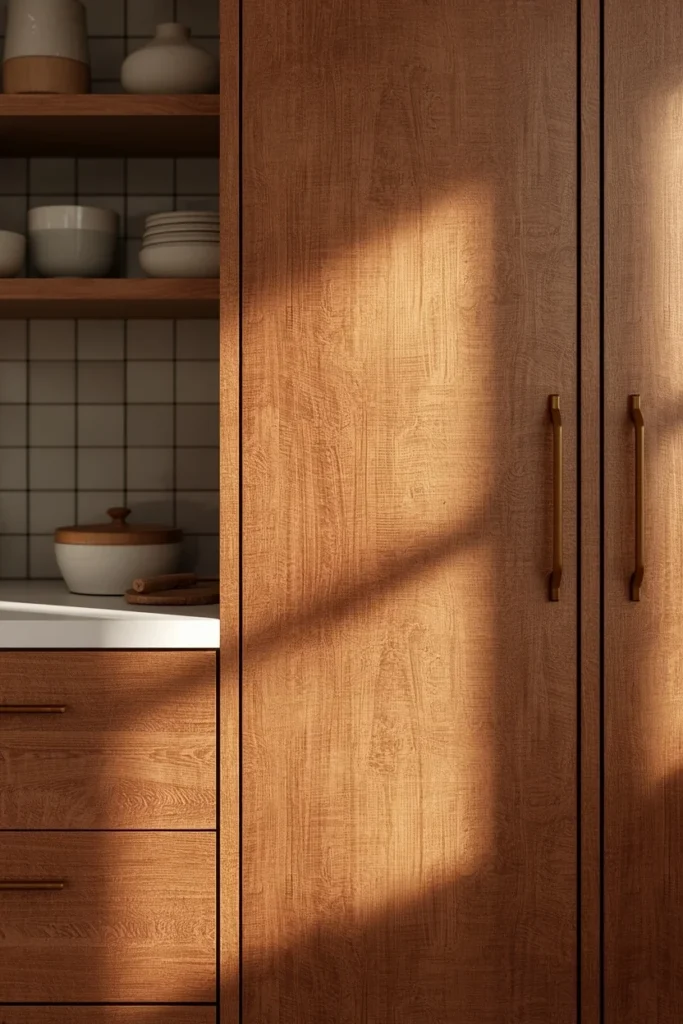
Contact paper is one of the most underrated renter tools available, since it can update an ugly builder-grade cabinet, a dated dresser, or a laminate countertop without a single dollar spent on replacement furniture. Choose a wood-grain or marble-look contact paper for surfaces you want to visually upgrade, or a bold color or pattern for smaller accent pieces like a nightstand or bookshelf back panel. Apply it to a clean, dry, smooth surface, working slowly with a squeegee or credit card to push out air bubbles from the center outward. Always test a small hidden section first, especially on cabinetry provided by the landlord, to confirm the adhesive won’t damage the underlying finish when it’s eventually removed. This trick is especially popular for refreshing kitchen cabinets and closet doors, two of the most dated-looking surfaces in most rental units.
6. Spanish-Inspired Arch and Iron Accents
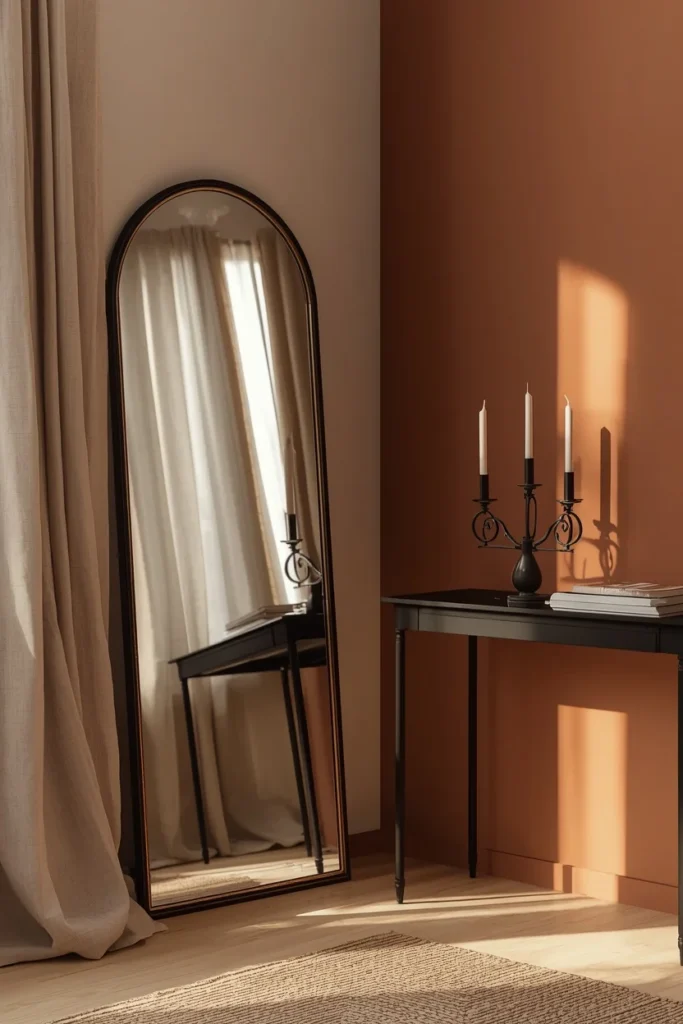
Spanish-inspired decor blends rustic, handcrafted texture with a warm, earthy palette, and renters can borrow the look through wrought iron accents and removable arch details rather than any actual architectural change. Add a rod iron candle holder, a black iron wall sconce with a plug-in cord, or a set of iron curtain rods to bring in the material’s dark, sculptural presence. A large arched mirror or an arch-shaped removable wall decal mimics the architectural arches associated with this style without any construction involved. Pair these pieces with natural materials, linen curtains, a jute rug, weathered wood furniture, to round out the earthy, sun-warmed feeling this aesthetic is known for. This combination photographs beautifully in warm, late-day light, which happens to be when the iron accents catch the most visual interest.
7. Hung Plate Gallery Wall
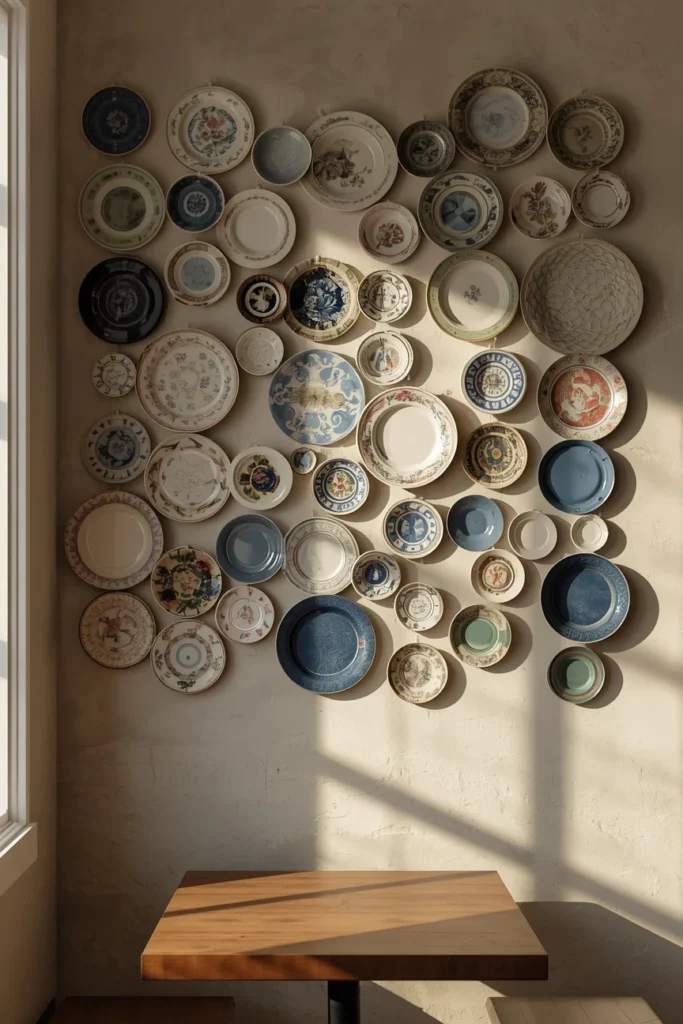
Hanging a curated collection of ceramic plates directly on the wall has replaced the traditional framed-print gallery wall as one of the most personal, collected-feeling wall treatments a renter can create. Use small adhesive plate hangers rather than nails, which hold securely without damaging the wall and remove cleanly at move-out. Mix plate sizes and patterns, vintage floral, hand-painted, solid glazed, arranged in a loose grid or organic cluster rather than a rigid symmetrical layout, so the wall feels gathered over time rather than bought all at once. Leave uneven spacing between pieces rather than measuring for perfect symmetry, since the slightly imperfect arrangement is part of what makes this look feel authentic. This idea works especially well above a console table, a bed, or a dining nook, anywhere you’d normally default to framed art.
8. Textile Wall Hanging as Art
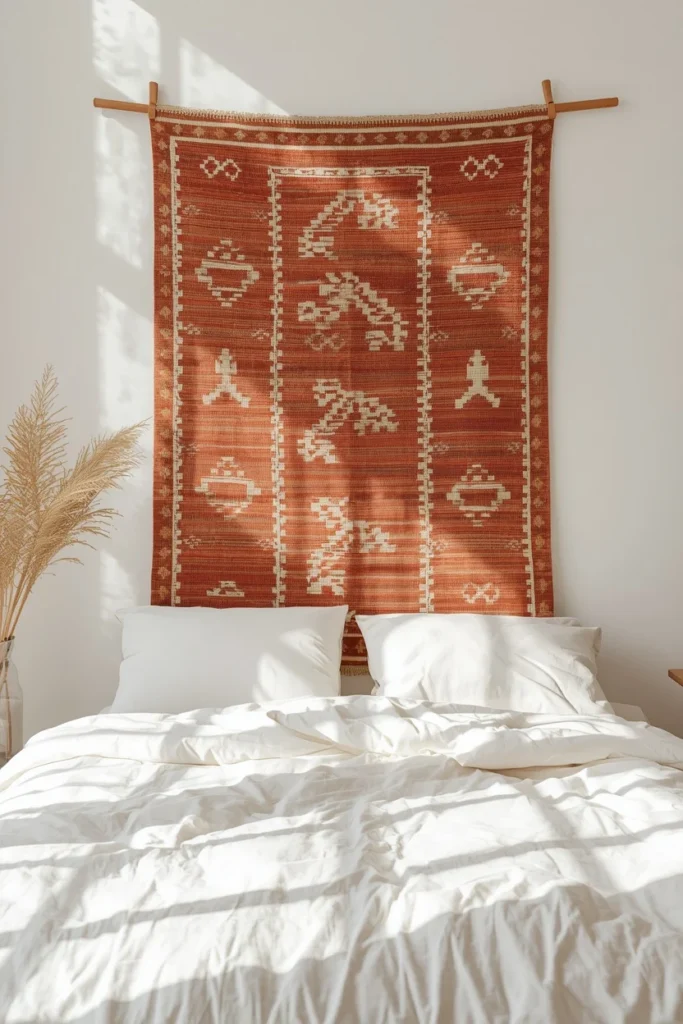
Hanging a rug, quilt, or woven textile on the wall instead of the floor brings texture, color, and visual height into a rental without a single nail hole, since most fabric wall hangings can be mounted with a tension rod, adhesive hooks, or a simple wooden dowel and string. Choose a piece with a rich pattern or texture, a vintage kilim, a macrame weave, an embroidered textile, and let it act as the room’s main art moment rather than adding several smaller framed pieces around it. This treatment also softens a room acoustically, which matters in apartments with hard flooring and thin walls. Keep the textile away from direct heat sources like radiators or space heaters for basic fire safety. This idea works particularly well above a bed or sofa, where a large piece of fabric fills visual space that would otherwise need several smaller items to balance.
9. Curved Statement Furniture
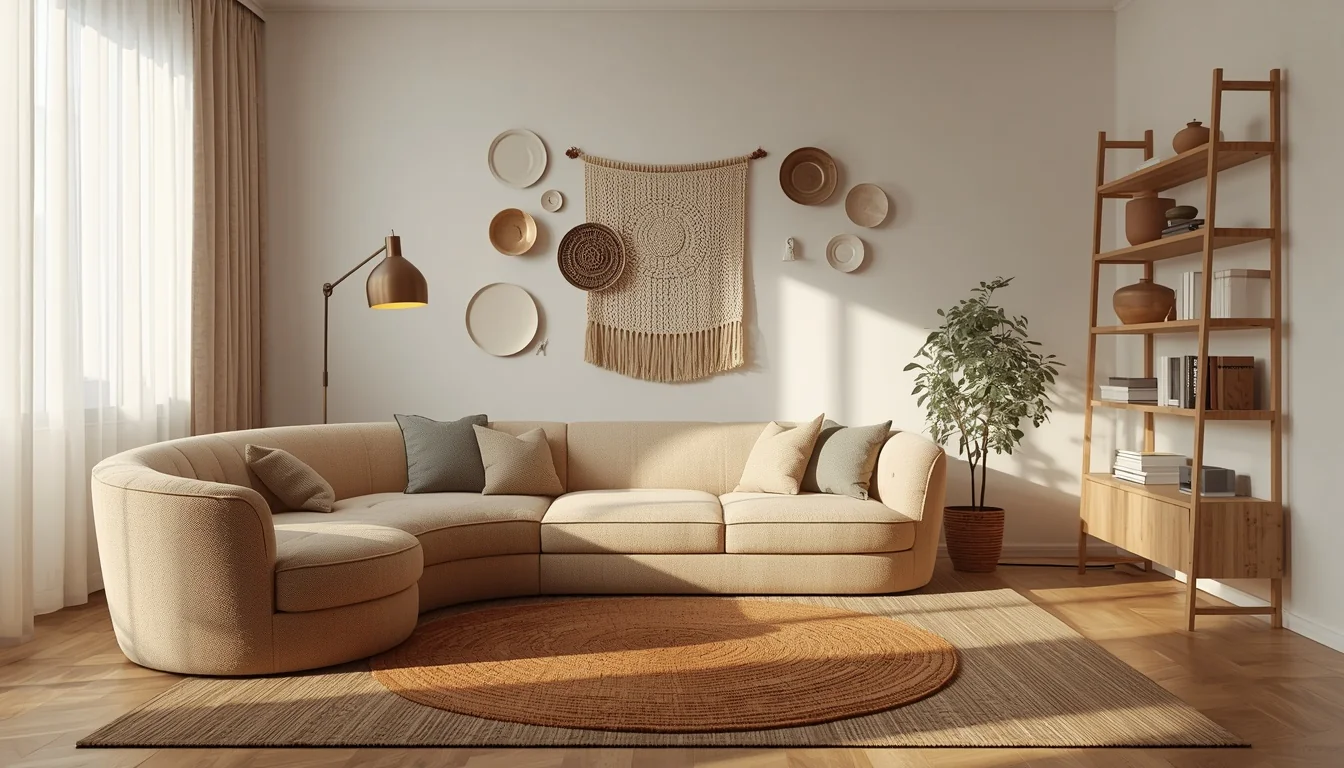
A single piece of curved furniture, a rounded sofa, a barrel chair, a pedestal-base side table, softens a small apartment’s sharp corners and improves how the eye and body move through a tight layout. Choose one curved anchor piece rather than trying to round out every item in the room, since a single sculptural silhouette reads as a deliberate focal point while too many curves at once can start to feel busy. A low-back curved sofa also works well as a soft room divider in a studio, defining a living zone without blocking sightlines or light the way a tall, straight-edged piece would. Because curved furniture is freestanding, it moves with you exactly like any other piece, with none of the risk of a built-in. This trend suits smaller apartments especially well, since rounded silhouettes visually take up less space than furniture with hard right angles.
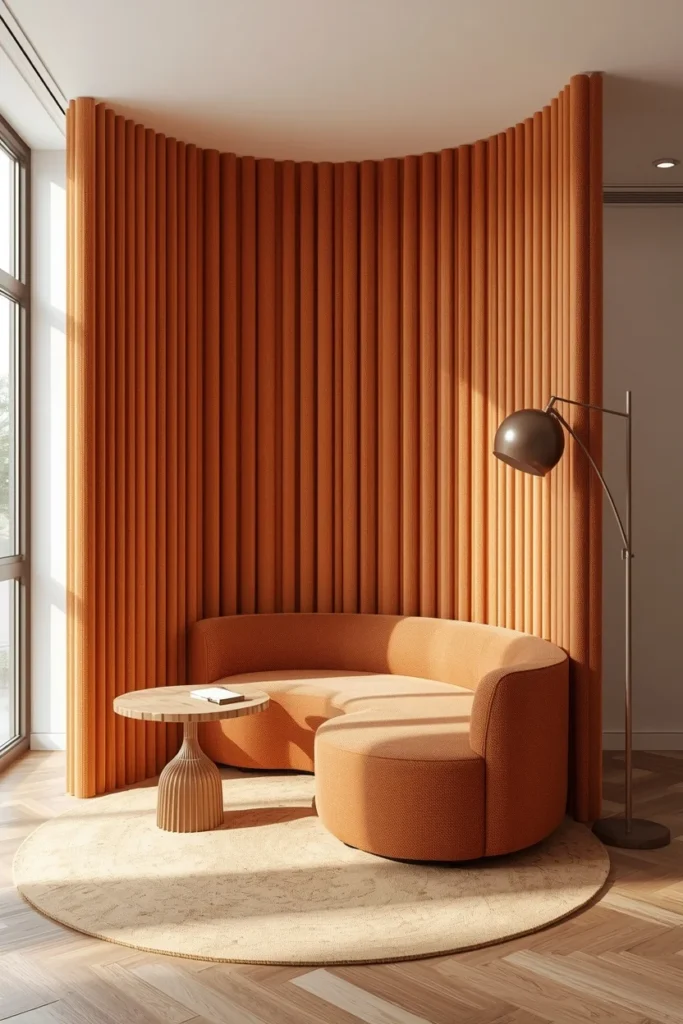
10. New Neutrals Earthy Palette
The old default rental palette of stark white and cool gray is giving way to warmer, richer neutrals, think clay, mushroom, olive, and warm sand, that add depth to a small space without needing a single wall painted. Bring this palette in through textiles, furniture upholstery, and accessories rather than paint, since most leases restrict wall color changes. A warm clay-toned throw, an olive velvet accent pillow, and a sand-colored rug work together to create the depth this trend is known for, even against builder-grade white walls. Keep one consistent wood tone across your furniture, warm walnut or honey oak, so the earthy textile palette feels grounded rather than scattered. This approach makes a rental feel considerably warmer and more finished than the standard white-on-white starting point most apartments come with.
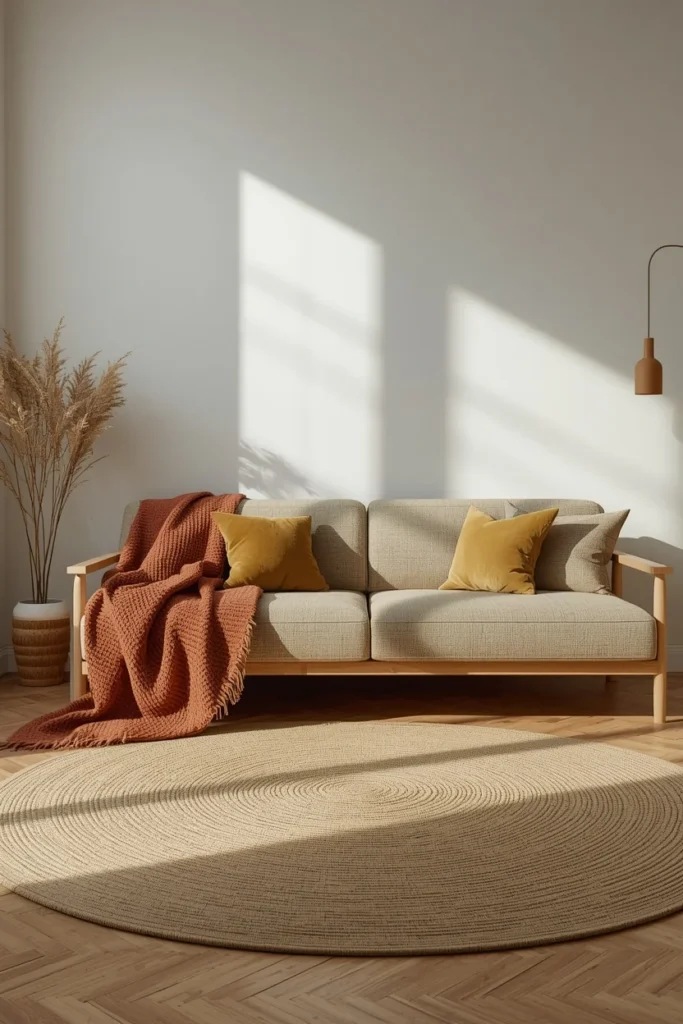
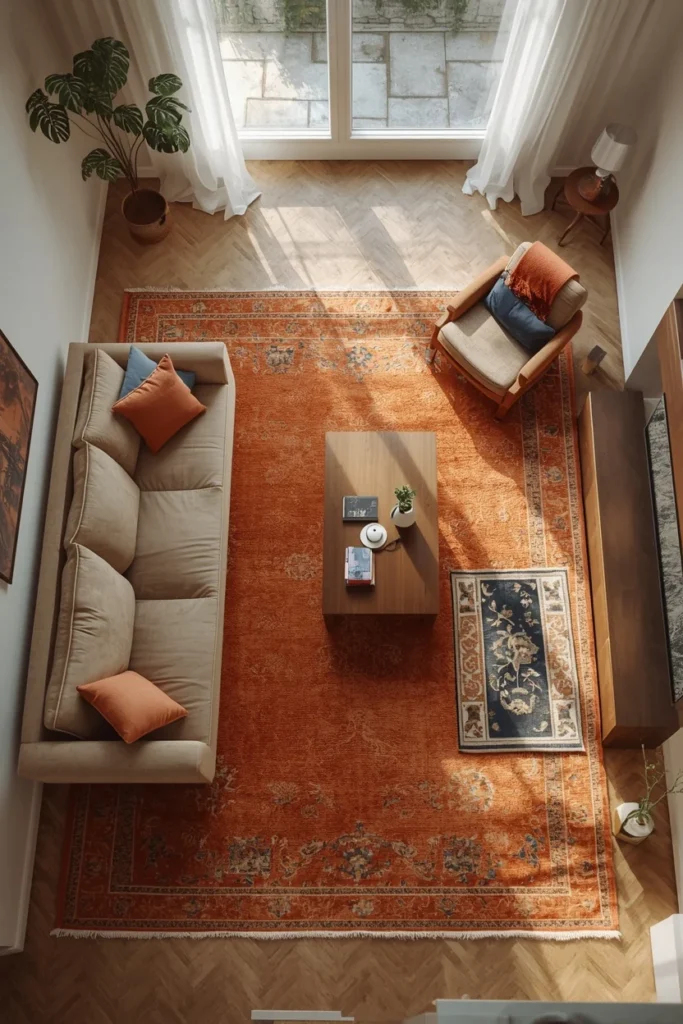
11. Oversized Zone-Defining Rug
In an open-plan or studio apartment, an oversized area rug is one of the most effective ways to visually separate a living zone from a dining or sleeping zone without adding a single wall. Choose a rug large enough that the front legs of your sofa and any nearby chairs sit on it, since a rug that’s too small makes furniture look like it’s floating disconnected from the rest of the room. A rug in a rich color or pattern also does double duty covering worn or stained rental carpet and flooring that you have no control over replacing. Layering a smaller printed rug over a larger neutral one adds texture and helps ground a specific zone, like a reading corner, within the larger open room. This is consistently one of the highest-impact, lowest-effort purchases a renter can make, since a well-placed rug changes how the entire room reads within minutes of unrolling it.
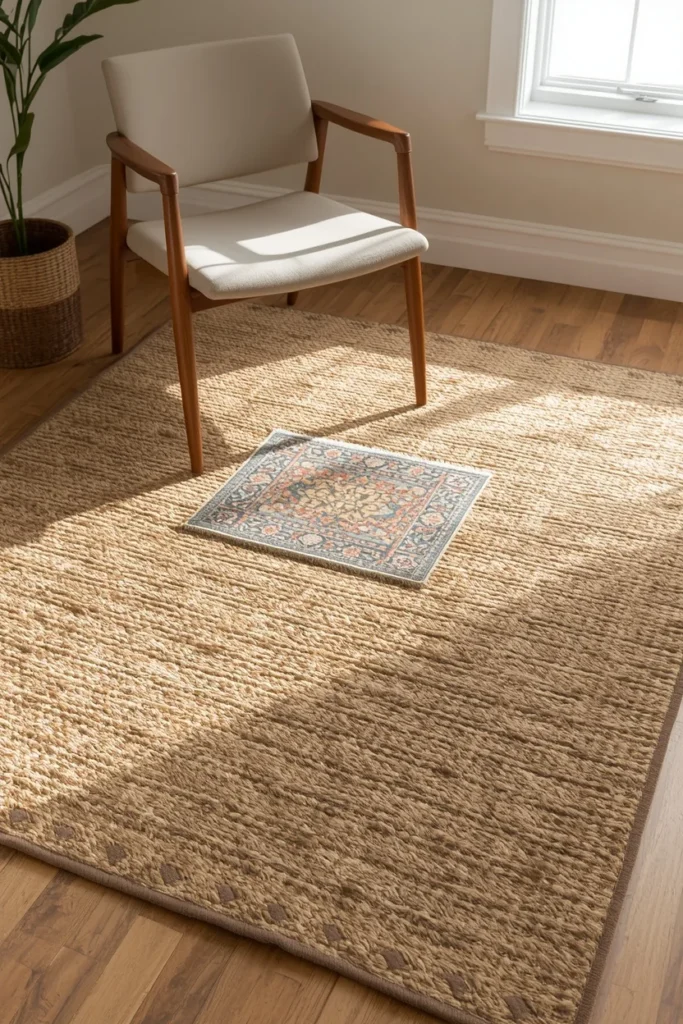
12. Layered Rug Texture
Layering two rugs, typically a larger flatweave or jute base topped with a smaller patterned or textured rug, adds visual depth and warmth in a way a single rug can’t achieve on its own. Choose a neutral, texture-forward base rug, sisal, jute, or a simple flatweave, and layer a smaller vintage-style or patterned rug slightly off-center on top for visual interest. This trick works especially well over the flat, low-pile carpet many rentals come with, since the texture contrast between the two rugs distracts from the base flooring underneath. Keep the top rug’s color palette connected to at least one other element in the room, a pillow, a curtain, so the layered look feels tied together rather than randomly stacked. This is also a genuinely practical trick for renters dealing with worn or stained carpet, since two layered rugs cover more visual ground than one.
13. Plug-In Pendant Lighting Swap
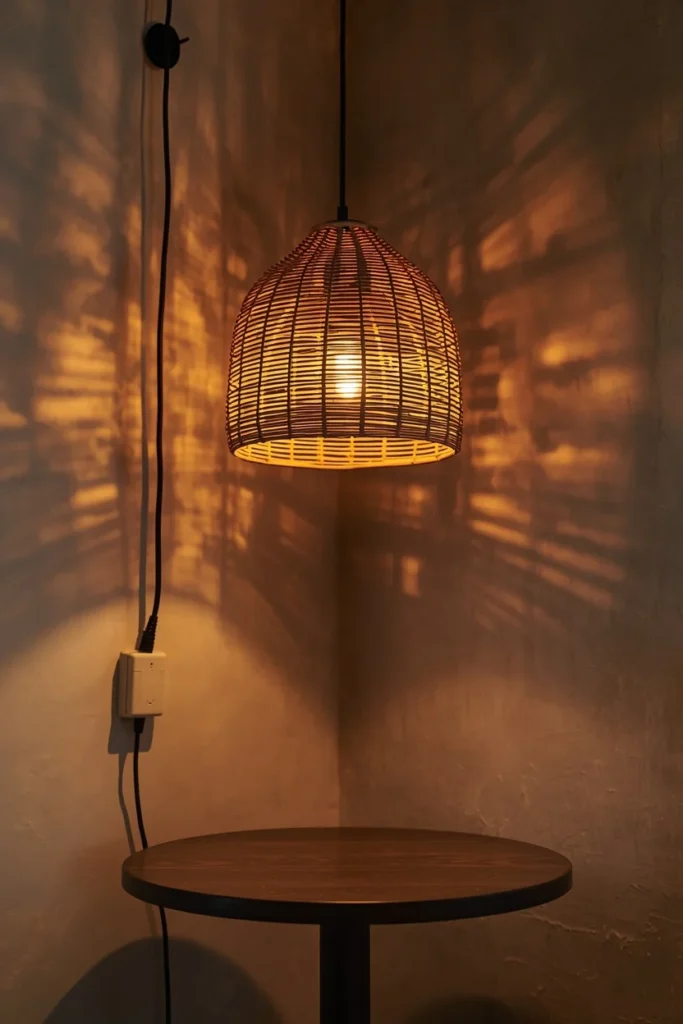
Swapping a builder-grade overhead fixture for a plug-in pendant light is one of the most transformative renter-friendly upgrades available, since it changes the entire character of a room’s lighting without any electrical work. Choose a pendant with a fabric or woven shade in a warm tone, and run the cord along the ceiling and down the wall using small adhesive cord clips, tucking it into a corner or along a doorframe so it reads as intentional rather than makeshift. This swap is particularly effective over a dining table or reading nook, where the existing fixture is often the most dated, most obviously rental-grade element in the whole room. Because the original fixture stays in place behind or above the plug-in version, reverting the room to its original state at move-out takes only a few minutes. Warm-toned bulbs in the 2700K range make the biggest visible difference, softening the harsh, flat light most rental fixtures are known for.
14. LED Strip Under-Shelf Lighting
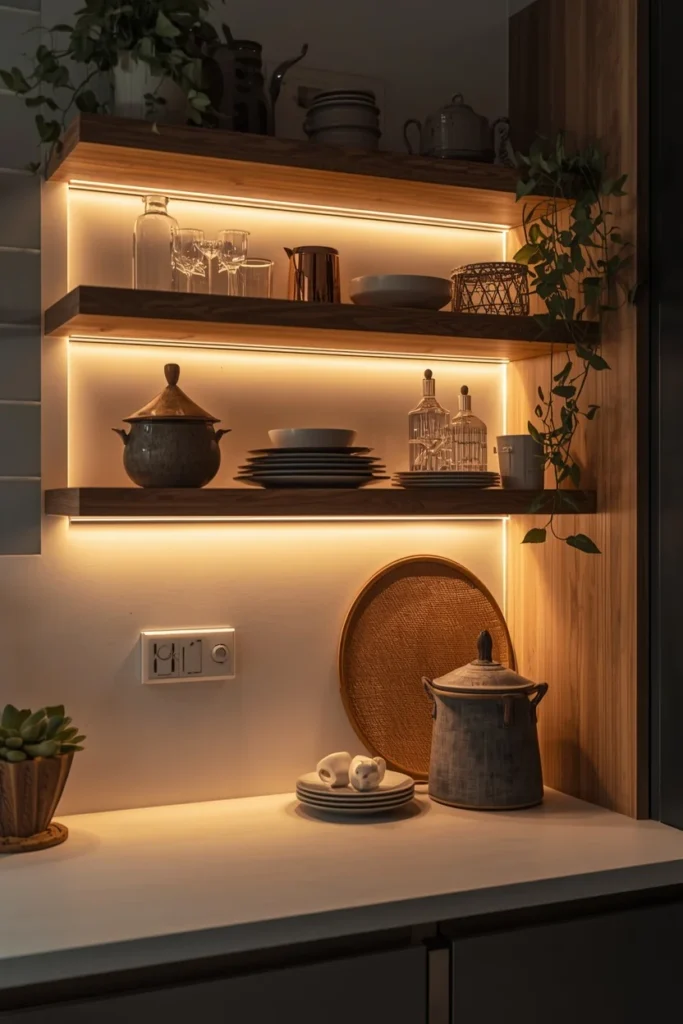
Battery-powered or plug-in LED strip lighting tucked under open shelving or along the back of a bookcase adds a soft, layered glow that makes a rental feel considerably more finished after dark. Choose a warm white strip rather than a cool or color-changing option for everyday use, and run it along the front lip of each shelf so the light washes downward over the objects displayed below. This works especially well behind a headboard, under kitchen cabinets, or along a hallway, spots where most rentals rely on a single harsh overhead light or no light at all. Because these strips are typically adhesive-backed and battery or USB powered, there’s no electrical work involved and they remove cleanly at move-out. Layering this kind of ambient light alongside a floor or table lamp gives a small apartment the same multi-source lighting depth that more expensive, permanent renovations are built around.
15. Large Mirror for Light and Space
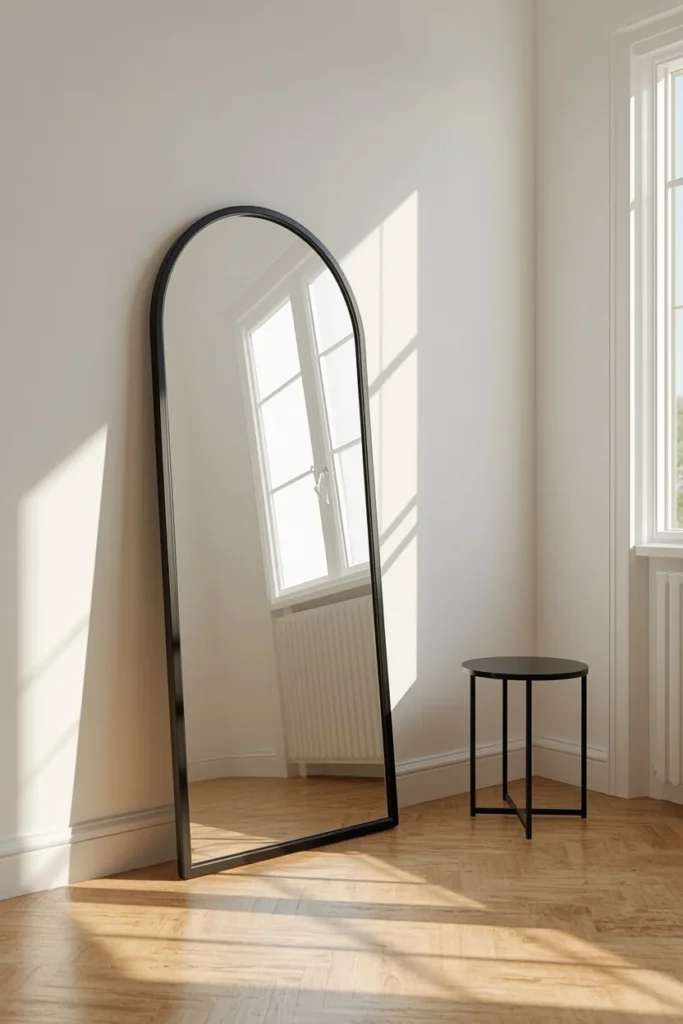
A single oversized mirror does more to make a small rental feel larger than almost any other single purchase, since it doubles the visible light in a room and creates the illusion of depth where there isn’t any. Lean a large framed mirror against the wall rather than mounting it, positioned opposite a window so it reflects natural light back into the room throughout the day. Choose a frame finish, brass, black, or natural wood, that complements your existing hardware and lighting so the mirror reads as a considered piece rather than an afterthought. In a studio or one-bedroom with limited natural light, this single change often has more visible impact than any other item on this list. Leaning rather than mounting also means the mirror can move with you and be repositioned instantly if you rearrange the room.
16. Freestanding Shelf Room Divider
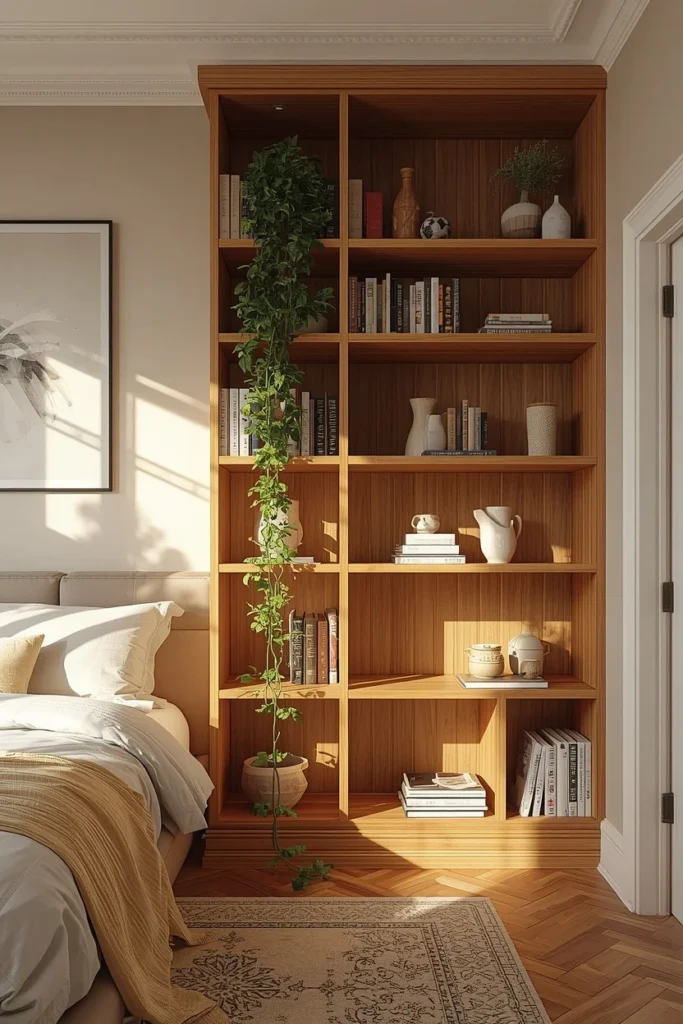
A tall, open freestanding shelving unit does the work of a wall in a studio apartment, dividing a sleeping zone from a living zone while still letting light and sightlines pass through the open shelves. Position the unit perpendicular to the main wall, and style it with a mix of books, plants, and a few decorative objects, keeping one section intentionally open so the divider doesn’t feel like a solid visual block. Choose a unit with a slim profile and simple silhouette, wood or black metal, so it reads as furniture rather than a makeshift wall. Because it’s entirely freestanding, this divider requires no installation and moves easily to a completely different layout in a future apartment. This is one of the most practical entries on this list for anyone renting a studio, since it solves both a storage problem and a privacy problem at the same time.
17. DIY Bracket Wall Shelves
Simple wood plank and bracket shelves, installed with just a few screws, give a rental the look of custom built-ins without any of the commitment, since the resulting holes are small enough to fill and touch up in minutes at move-out. Choose a wood tone that matches your existing furniture, and mount two or three floating shelves at staggered heights rather than one long single shelf, which creates a more dynamic, gallery-like display. Style each shelf with a mix of books stacked both vertically and horizontally, a small plant, and one or two decorative objects, leaving some negative space so the shelf doesn’t feel overloaded. Always confirm with your landlord or lease terms before drilling, and keep a small tube of spackle on hand for an easy patch job when it’s time to move. This idea gives you the visual payoff of a much larger renovation for the cost of a few brackets and an afternoon.
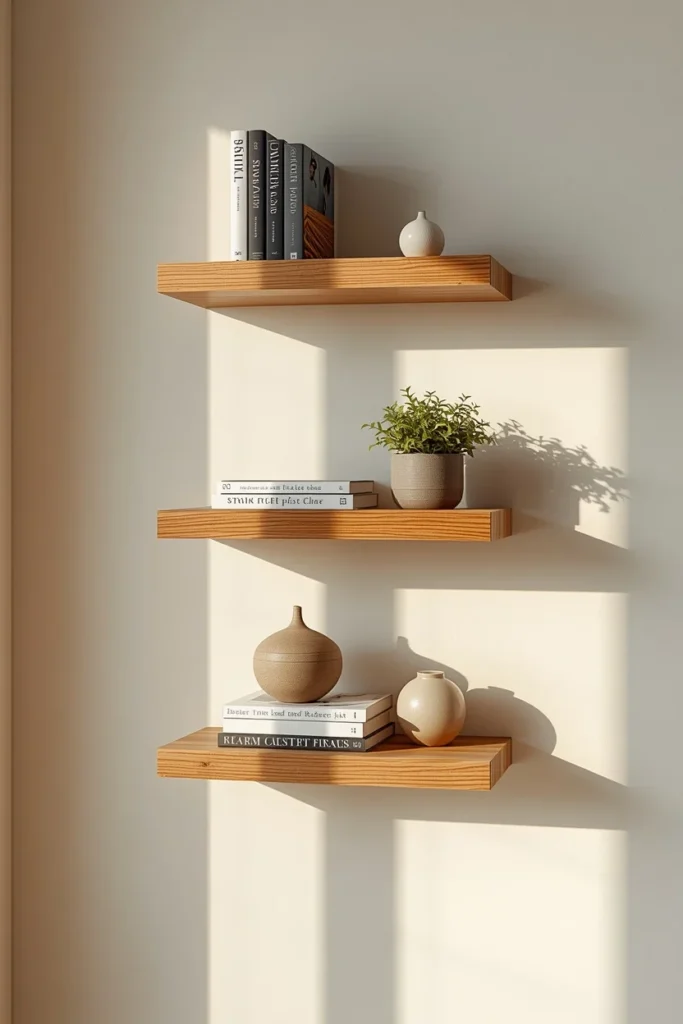
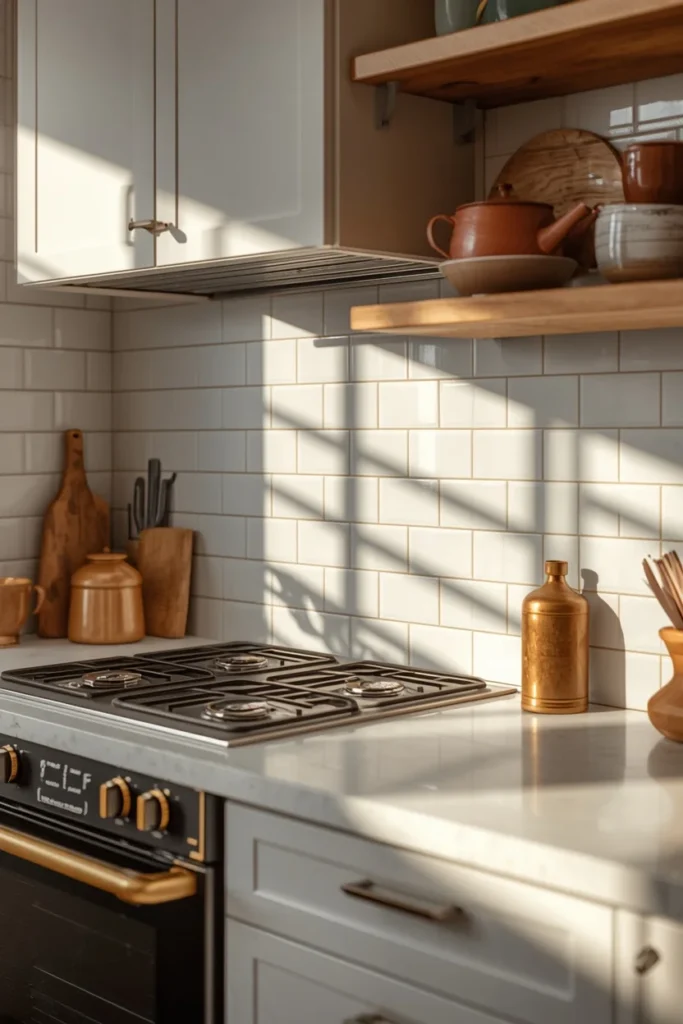
18. Peel-and-Stick Kitchen Backsplash
A peel-and-stick tile backsplash gives a rental kitchen a custom, finished feeling in an afternoon, covering up a plain or dated wall without any renovation, grout, or landlord approval required in most cases. Choose a vinyl tile sheet in a subway, hexagon, or classic checkerboard pattern, and apply it directly over a clean, dry wall or over existing tile if the surface is smooth and free of texture. Cut sheets carefully around outlets and switches with a utility knife and a straightedge for the cleanest finish. Because these products are specifically designed to be removed without damaging the wall underneath, this is one of the lower-risk kitchen updates on this list, though it’s always worth testing a small section first. This single change often has the biggest visible impact of any kitchen update available to a renter, short of new cabinetry.
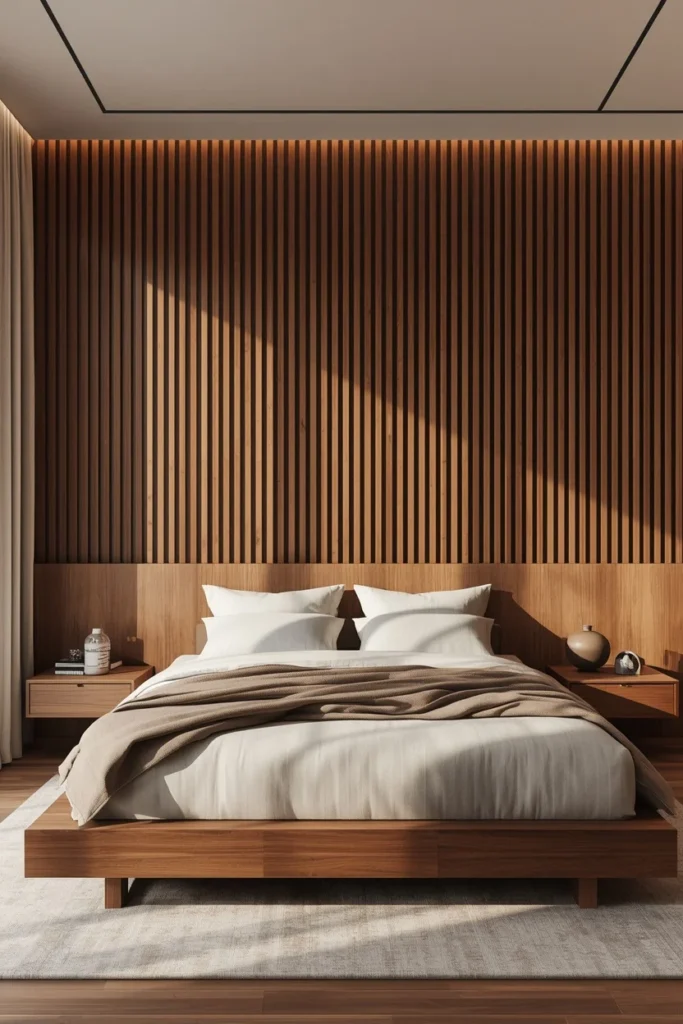
19. Removable Wood Slat Accent Wall
Vertical wood slats, either nailed into removable strips or attached with strong adhesive mounting strips, bring warmth and architectural texture to a plain rental wall in a way that reads as intentional and expensive. Choose a warm wood tone, natural pine or a stained walnut finish, and space the slats evenly across one accent wall, typically behind a bed, sofa, or television. Adhesive mounting strips rated for the weight of the wood are the lowest-risk installation method, though thin finish nails into a removable backing strip also patch easily at move-out. This treatment adds genuine texture and shadow play throughout the day as natural light shifts across the vertical lines, something flat paint simply can’t replicate. This idea consistently reads as one of the more high-end updates on this list, despite being fully reversible and relatively affordable to execute.
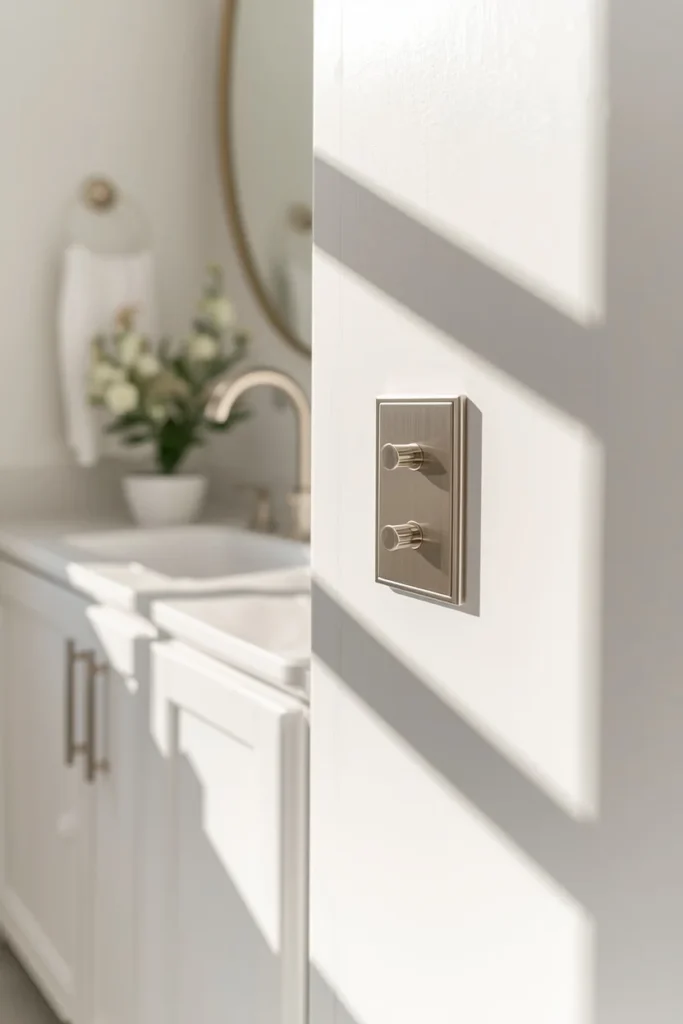
20. Silver Hardware Swap
Swapping out small hardware details, cabinet pulls, light switch plates, curtain rod finials, for a coordinated silver or brushed nickel finish is a low-cost, high-polish way to make a rental’s smallest details feel considered rather than default. Choose one metal finish and apply it consistently across visible hardware in a room, since mixing gold, silver, and black hardware within the same space tends to look accidental rather than intentional. Store every original piece, screws included, in a labeled bag so the swap back to landlord-provided hardware at move-out takes only a few minutes. This update works especially well in kitchens and bathrooms, where hardware tends to be the most visible, most outdated detail in an otherwise neutral space. It’s one of the smallest projects on this list in terms of time and cost, but consistently one of the most noticeable once it’s done.
21. Animal Print Grandma-Core Accents
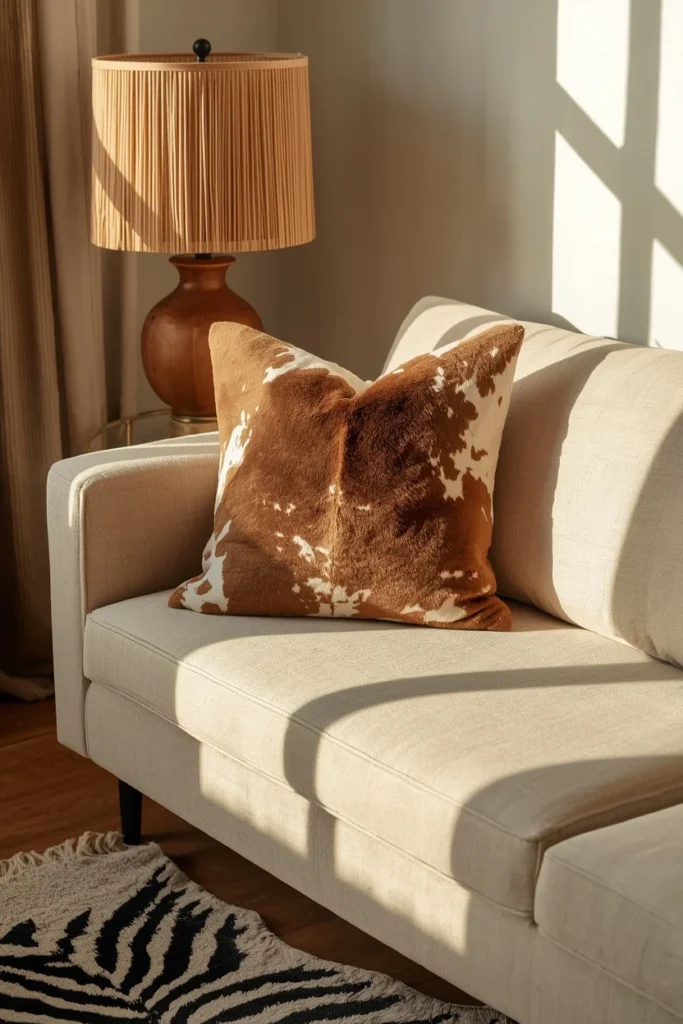
Animal prints, zebra, cowhide, and cheetah, are having a genuine resurgence as a maximalist, personality-driven accent rather than a full room theme, and a single piece keeps the look feeling curated instead of costume-like. Choose one statement item, a cowhide-print accent pillow, a zebra-pattern runner rug, or a small cheetah-print ottoman, and let it sit against an otherwise calm, neutral backdrop. Pairing an animal print with vintage or grandma-core elements, a fringed lampshade, a carved wood frame, a crocheted throw, gives the pattern a warmer, more collected context rather than a purely trend-driven one. Keep the rest of the room’s patterns simple if you’re using a bold animal print, since layering multiple loud prints at once can start to compete rather than complement. This idea suits renters who want a genuinely personal, slightly maximalist space without redoing an entire room to get there.
22. Blackout Curtain Bedroom Retreat
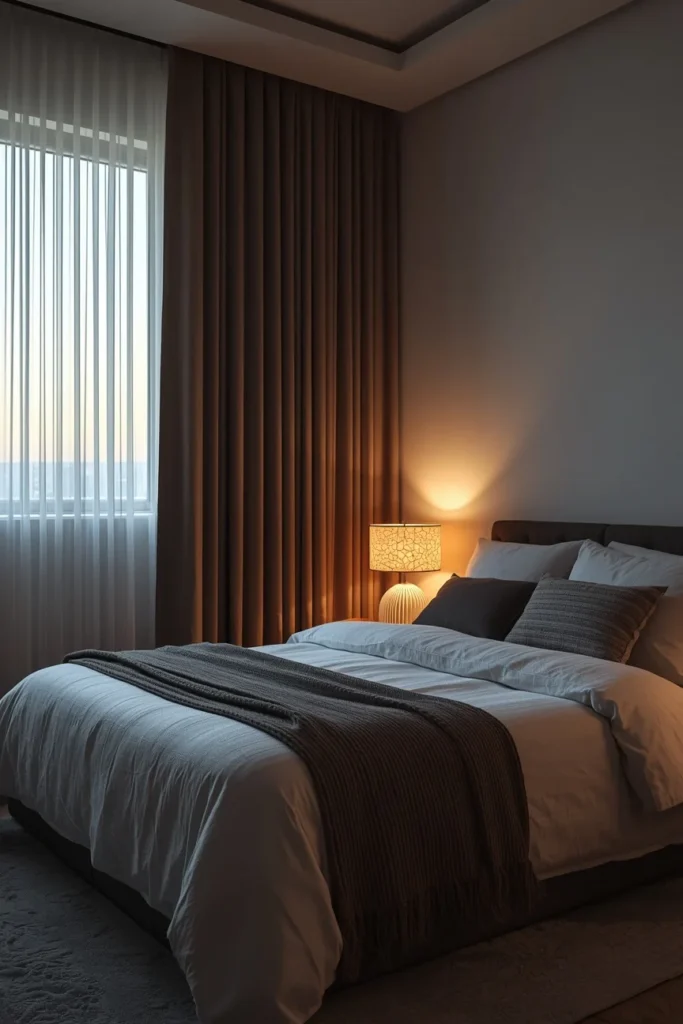
A rental bedroom feels most like a retreat when the lighting supports rest first and style second, which starts with layering blackout curtains over whatever basic blinds the apartment already has. Mount a curtain rod using a tension rod or a removable adhesive bracket rather than drilling directly into the wall, and choose a curtain wide enough to fully cover the window and block light from the sides, not just the front. Add a bedside lamp with a warm bulb positioned so the light doesn’t glare directly at eye level while reading in bed, and layer the bedding with breathable sheets, a textured throw, and a mix of sleeping and decorative pillows in colors that repeat the room’s rug or art. This combination genuinely improves sleep quality, not just the room’s appearance, which matters more in a bedroom than almost any other space on this list. Keeping the palette calm and consistent, rather than trend-chasing, is what makes a rented bedroom feel restorative instead of just photogenic.
23. Command Hook Gallery Wall
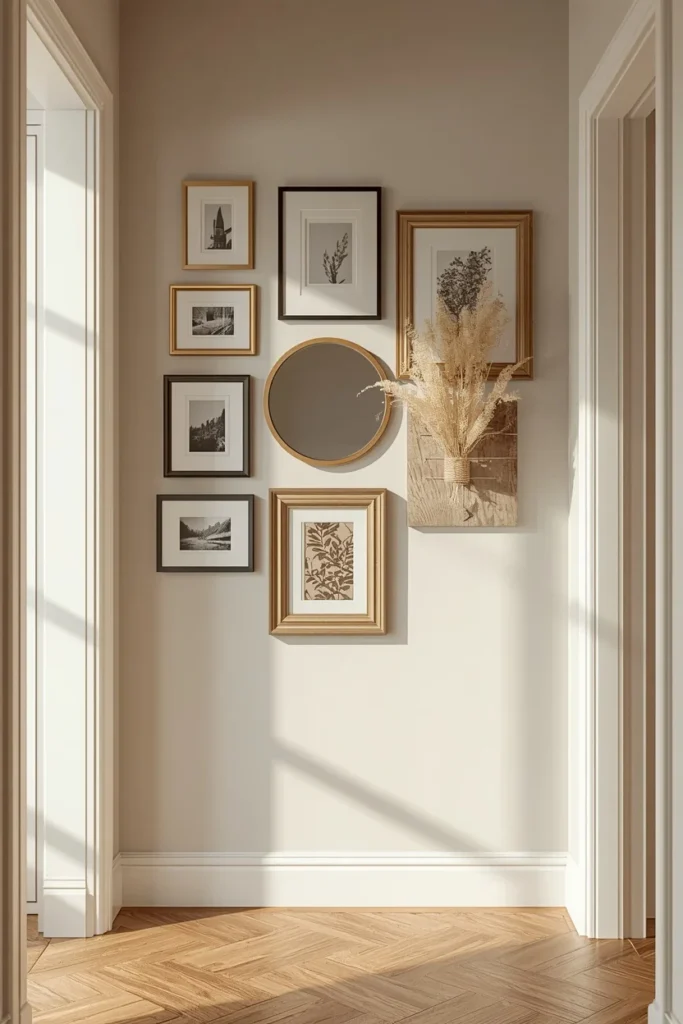
A gallery wall built entirely with adhesive picture-hanging strips instead of nails lets renters create a full, layered art wall with zero permanent damage to the walls. Mix frame sizes and finishes, wood, black metal, thin brass, rather than matching every frame exactly, and include a few non-traditional pieces, a small mirror, a woven object, a dried floral arrangement, alongside framed prints and photos. Lay the full arrangement out on the floor first to plan the spacing and balance before committing any adhesive strips to the wall, since rearranging afterward means removing and repositioning each strip. Most adhesive hanging strips are rated for specific weight limits, so check the packaging against your heaviest frame before hanging it. This idea delivers the same emotionally layered, collected-over-years look as a permanent gallery wall, with the added benefit of taking the whole thing down cleanly in under twenty minutes when you move.
Styling Tips
- Choose one dominant color palette and repeat it across at least three items in a room, a pillow, a rug, and a piece of art, so the space feels tied together instead of randomly assembled.
- Prioritize freestanding and reversible changes first, rugs, lighting, and furniture, before moving on to lower-risk surface treatments like peel-and-stick wallpaper or contact paper.
- Keep one consistent metal finish across visible hardware in each room to avoid an accidental, mismatched look.
- Always test adhesive products, contact paper, peel-and-stick tile, wallpaper, on a small hidden section first to confirm they won’t damage the surface underneath.
- Photograph or note the original condition of any fixture or hardware you swap out, and store the originals somewhere safe for an easy reversal at move-out.
Practical Implementation Ideas
Start with the biggest, most reversible items first: a properly sized rug, updated lighting, and freestanding furniture, since these three categories tend to change how a rental feels more than any small decor purchase. Read your lease carefully before drilling, painting, or applying anything semi-permanent, and when in doubt, ask your landlord directly, since many are more flexible than renters expect, especially for small, easily reversible updates. Budget your decorating in phases rather than trying to finish an entire apartment at once, tackling one room fully before spreading attention thin across the whole space. Keep a small toolkit, spackle, a putty knife, extra screws, and a stud finder, on hand for quick fixes and reversals throughout your lease.
Common Mistakes to Avoid
- Skipping a rug because the space feels temporary. An underfurnished floor is one of the fastest ways to make a room feel unfinished, regardless of how nice the furniture is.
- Mixing too many metal finishes at once. Gold, silver, and black hardware in the same room tends to read as accidental rather than intentional.
- Using adhesive products without testing first. Some paints and finishes react poorly to certain adhesives, so always test a hidden section before committing to a full wall or piece of furniture.
- Buying furniture sized for a much larger home. Oversized pieces make a small rental feel more cramped, not more finished.
- Relying on a single overhead light for the whole room. Layer in a floor lamp, a table lamp, or plug-in pendant lighting for a warmer, more finished feeling after dark.
Small-Space Alternatives
In a studio or a single room doing multiple jobs, a curved sofa or a tall freestanding shelf can divide zones without blocking light or making the space feel smaller. A large mirror leaned against the smallest wall in the room does more to open up a tight layout than almost any other single item. Vertical storage, tall narrow bookcases, wall-mounted hooks, and over-the-door organizers, keeps floor space clear in apartments where every square foot counts. A single well-chosen rug that defines a “living” corner within one larger room gives even a small studio a sense of distinct, intentional zones.
Budget-Friendly Alternatives
Thrifting, swap events with friends or neighbors, and reupholstering existing furniture all deliver a collected, personal look without the cost of buying everything new. Contact paper and peel-and-stick tile cost a fraction of what actual renovation materials would, while delivering a similar visual upgrade to cabinets, countertops, and backsplashes. A single splurge item, a great lamp, a well-made rug, paired with mostly thrifted or budget accessories usually reads as more considered than an apartment furnished entirely from one budget retailer. Watch for discontinued or remnant peel-and-stick wallpaper and tile, which are often sold at a steep discount and are usually more than enough for a single accent wall or backsplash.
Pro Styling Recommendations
Live in a room for a week or two before finalizing where large furniture goes, since the way light and traffic actually move through the space often differs from how it looks on move-in day. Choose furniture you genuinely love over pieces you assume are “temporary,” since well-made investment pieces, a good sofa, a solid wood dresser, tend to find a place in whatever apartment comes next. Use your building or listing photos as a starting reference for the warm or cool undertones already in your flooring and trim, so new furniture and rugs don’t clash once they’re actually in the room. Revisit your space seasonally, swapping a throw, a rug, or a few accessories, rather than treating decorating as a one-time move-in task.
FAQs
Conclusion
A rental starts to feel like home the moment it stops looking like a placeholder, and that shift usually comes down to a handful of genuinely reversible choices rather than any big renovation. Pick the rug first, then the lighting, then let the smaller layers, textiles, art, hardware, build in over time. None of it needs to be permanent to feel like it belongs to you. The lease has an end date. The way the space makes you feel while you’re in it doesn’t have to wait for one.