23 Laundry Room Design Ideas That Turn a Chore Space Into a Design Feature
Nobody dreams about doing laundry. But the room where it happens doesn’t have to look like an afterthought, either. For years, laundry rooms got whatever was left over: a wire shelf, a bare bulb, a folding pile on top of the dryer that never actually got folded. That’s changing, and fast.
Homeowners are finally treating the laundry room the way they treat the kitchen: worth planning, worth styling, worth a real countertop. Whether you’ve got a full dedicated room, a closet with a stacked washer and dryer, or a laundry-mudroom combo that handles muddy boots and dirty towels in the same ten square feet, there’s a version of this that looks good and works even better.
Below are 23 laundry room design ideas covering layout, cabinetry, tile, color, and the small details that make the difference between a room you tolerate and one you don’t mind walking into every day. Grab the ones that fit your space and skip the rest.
Table of Contents
1. Countertop Folding Station
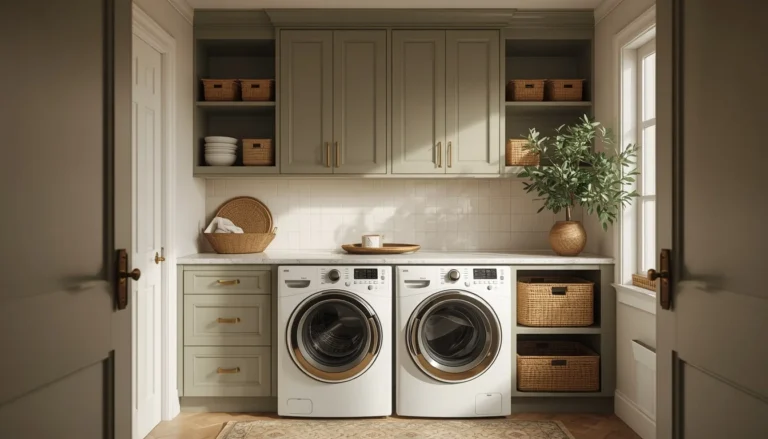
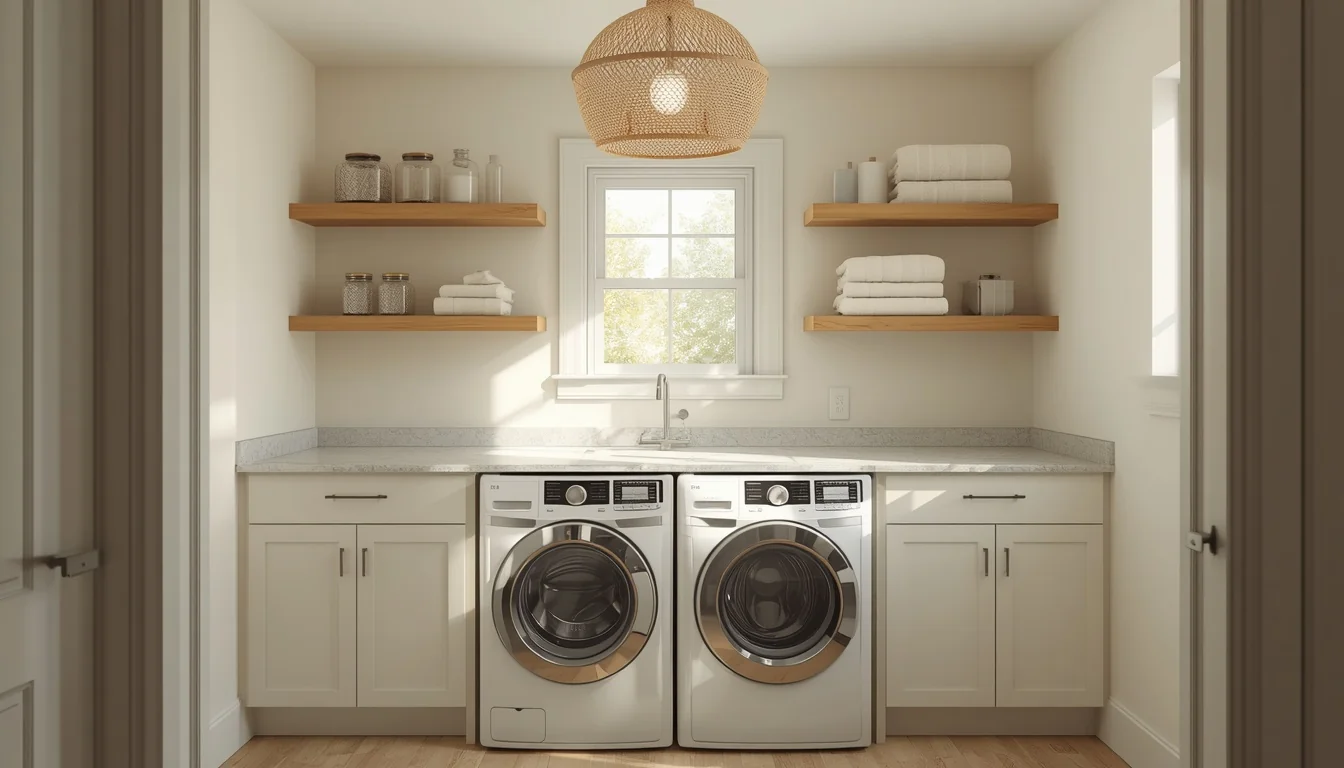
A continuous countertop installed above front-loading washer and dryer units is the single most requested laundry room upgrade for a reason: it turns folding from a floor-level chore into a standing task, which changes how the whole room feels to use. Quartz or laminate both hold up well here, since the surface needs to handle heat from the dryer vent and the occasional detergent drip without warping or staining. Leave at least a few inches of clearance above the machines for venting, and extend the counter past the edge of the appliances if you have the wall space, since that little bit of extra surface is where sorting piles actually get contained. Add a shallow lip or a small raised edge at the back of the counter to stop stray socks and buttons from sliding behind the machines. This single change is often what makes a laundry room start to feel like a real workspace instead of a hallway with appliances in it.
2. Closed Cabinetry Over Wire Shelving
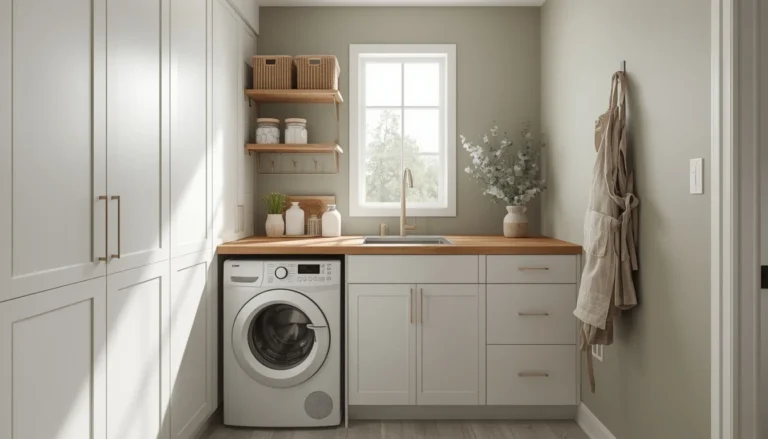
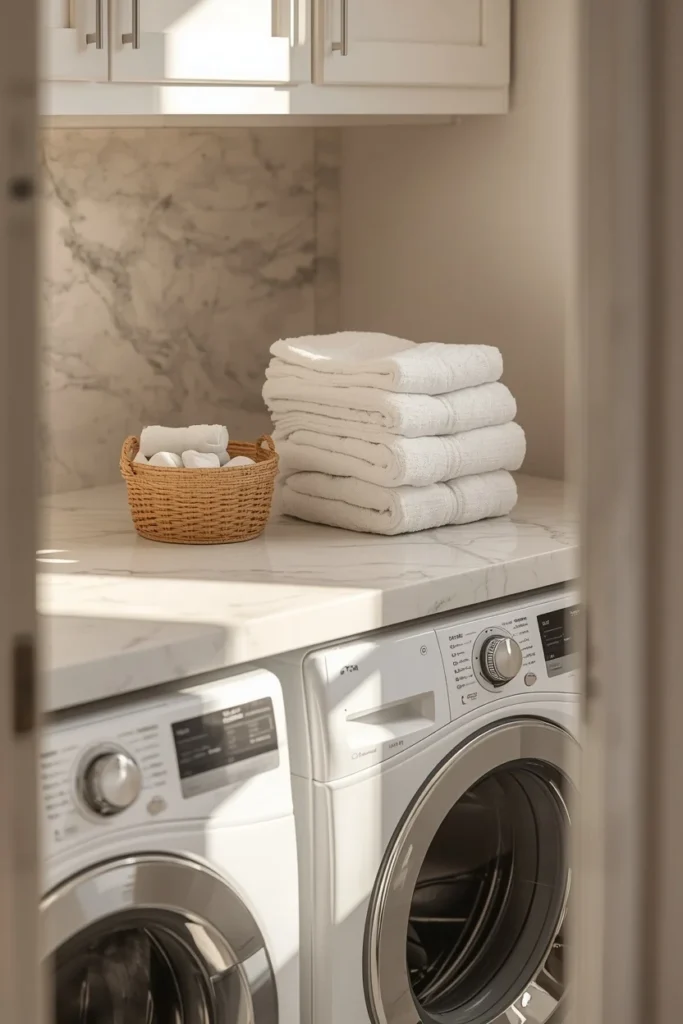
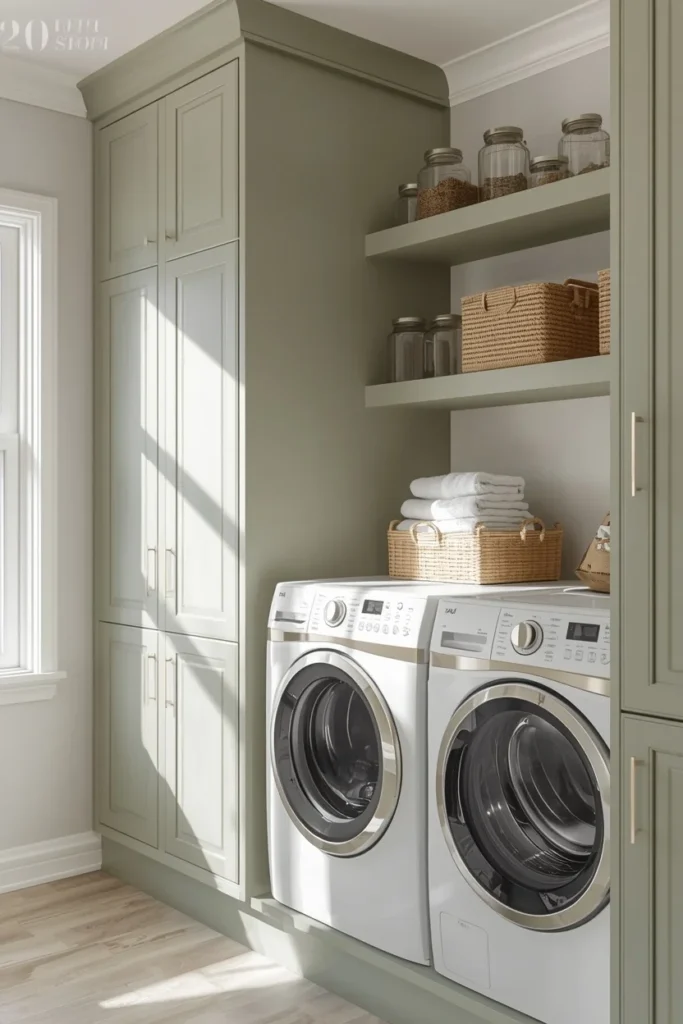
Wire shelving was the default laundry storage choice for decades mainly because it was cheap and fast to install, but swapping it for proper cabinetry is what makes a laundry room read as a finished space instead of a utility closet. Shaker-style doors in white, sage green, or warm grey are the easiest to match to the rest of the house, and closed uppers hide detergent bottles, dryer sheets, and half-used cleaning supplies that never look tidy no matter how you arrange them. Keep a narrow open shelf or two mixed into the cabinetry run for baskets and jars you actually want visible, since an all-closed wall can feel a little cold without at least one styled moment. Choose hardware that matches or complements the rest of your home’s cabinet pulls, matte black and brushed brass are both strong choices this year, so the laundry room doesn’t feel disconnected from everything around it. This upgrade alone tends to have the biggest visual impact of anything on this list relative to its cost.
3. Hidden Laundry Behind Pocket Doors
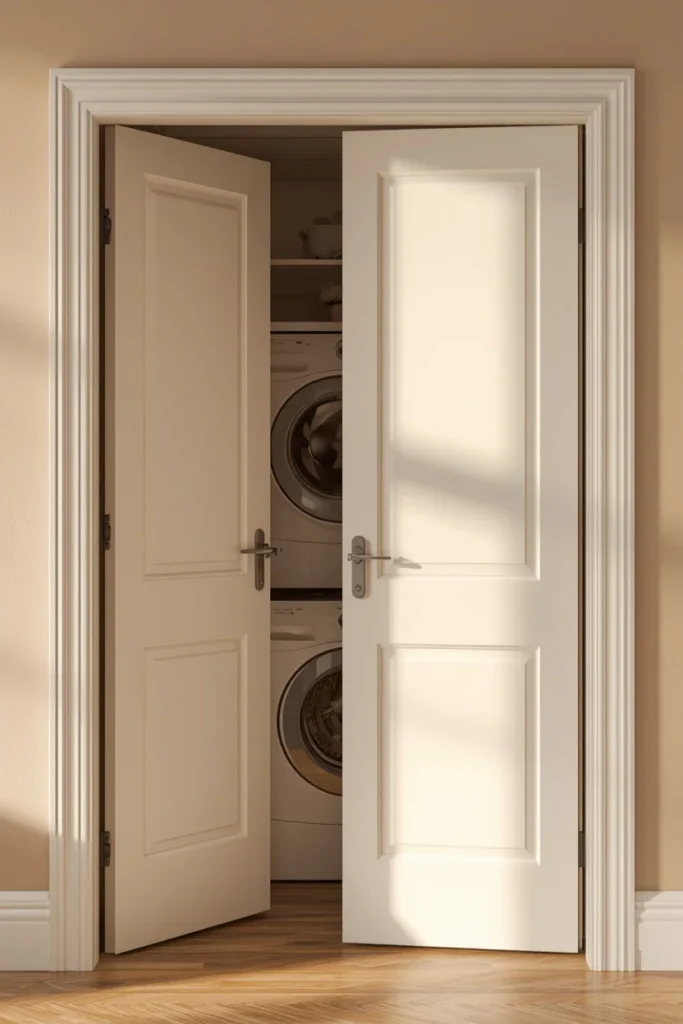
In open floor plans, a laundry area near the kitchen or living space needs a way to disappear when it’s not in use, and pocket doors or bi-fold “bus doors” that lay flat against the wall are the cleanest way to do that. The doors slide back into the cabinetry or wall cavity when you need full access to the machines, then close completely to hide the mess before guests arrive. Solid-core doors do double duty here, since they also dampen the sound of the spin cycle, which matters a lot when the laundry area sits just a few feet from your living room. Match the door finish to the surrounding cabinetry or wall color so the closed doors read as part of the room’s architecture rather than an obvious hiding spot. This idea works especially well in open-concept homes, hallway laundry nooks, and combined kitchen-laundry layouts where a separate room simply isn’t available.
4. Mudroom-Laundry Hybrid
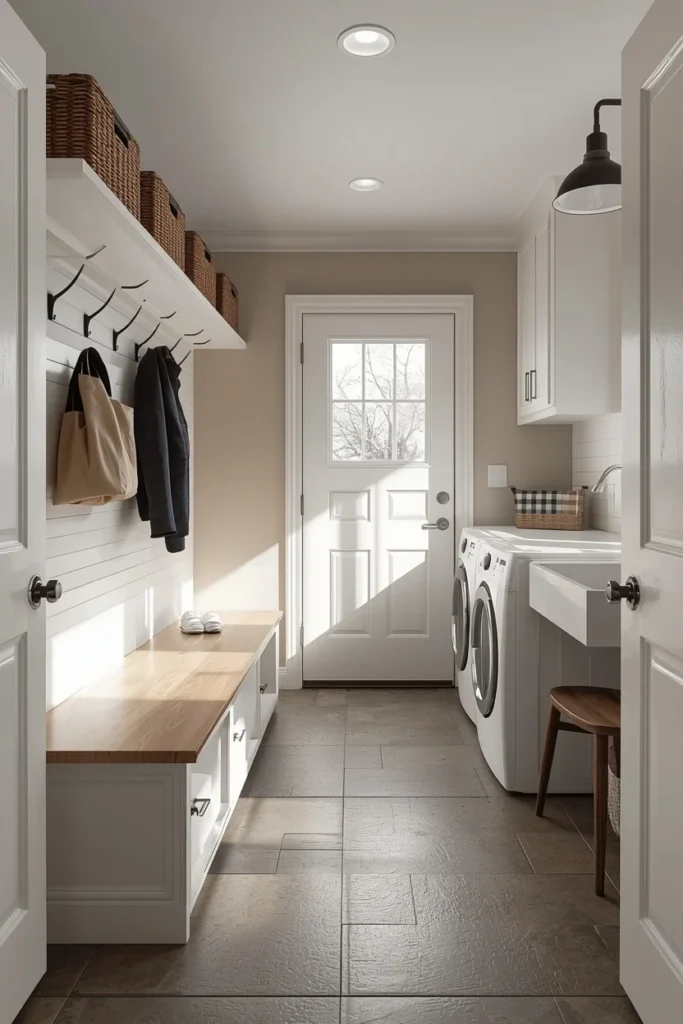
Combining the laundry room with a mudroom makes sense in almost any busy household, since both spaces already handle mess, and grouping them means muddy boots and dirty towels get contained in one durable zone instead of two. Dedicate one wall to hooks, cubbies, and a bench for coats, bags, and shoes, and the opposite wall to the washer, dryer, and folding counter, so the two functions don’t visually compete. Choose flooring that can handle both wet boots and detergent spills, textured porcelain tile or luxury vinyl plank both hold up well and clean easily. A deep utility sink placed near the entry side of the room lets you rinse muddy paws or gardening tools before anything tracks further into the house. This layout has become one of the most requested combinations for growing families and homes with pets, since it turns two chore zones into one efficient one.
5. Dog Washing Station
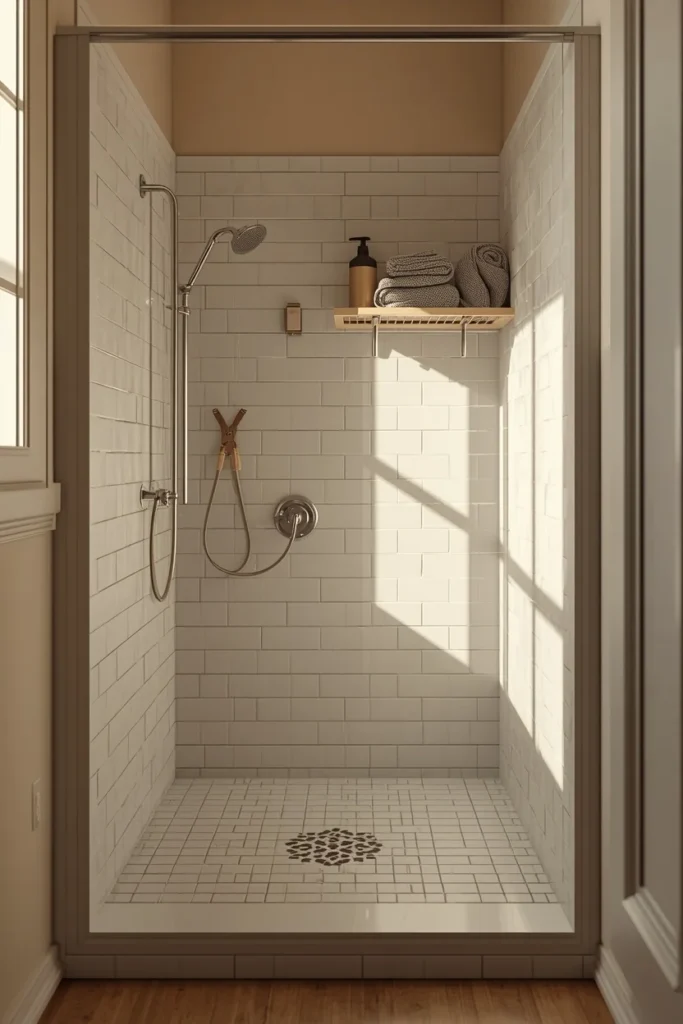
A dedicated dog washing station built into the laundry room has become one of the most popular additions for pet owners, since it keeps muddy paws and wet fur out of the main bathroom entirely. A low walk-in shower base or a raised tub with a handheld sprayer works best, positioned at a height that doesn’t require bending all the way to the floor. Tile the surrounding walls in a durable, water-resistant material and extend it a foot or two beyond the wash area itself, since water splashes further than people expect during an actual dog bath. Add a hook for the leash and a small shelf for shampoo and towels within arm’s reach of the tub, so the whole process stays contained to one corner. This upgrade shows up constantly in laundry room searches now, and it’s one of the features that adds real resale value in homes with dogs.
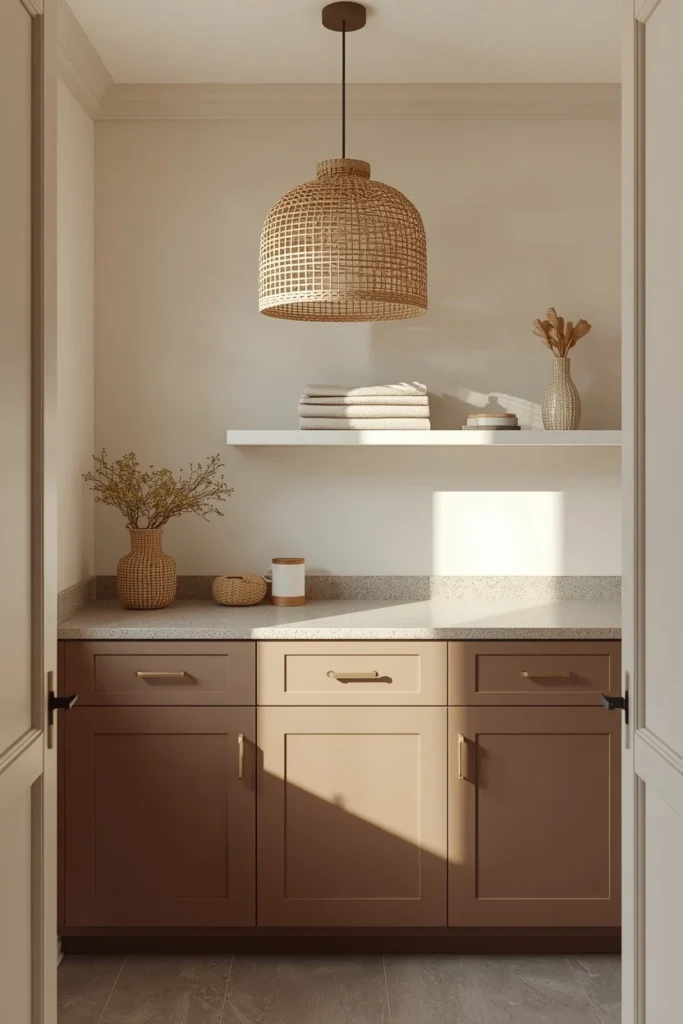
6. Warm Minimalist Palette
Clinical white laundry rooms are giving way to a warmer, softer neutral palette built around tones like mushroom, putty, and flax, paired with matte finishes instead of anything glossy. This warm minimalism keeps the room feeling calm and adult rather than sterile, and it pairs especially well with raw wood accents like a white oak shelf or a walnut folding surface. Balance the smooth quartz or laminate countertop with something textured nearby, a woven rattan pendant light or a rough-hewn wood shelf, so the room doesn’t read as flat or cold despite the neutral colors. Keep hardware and fixtures in warm metal tones, brushed brass or warm bronze, rather than cool chrome, since warm metals reinforce the softer mood the palette is going for. This look is one of the easiest to keep looking fresh over time, since warm neutrals hide minor wear better than stark white.
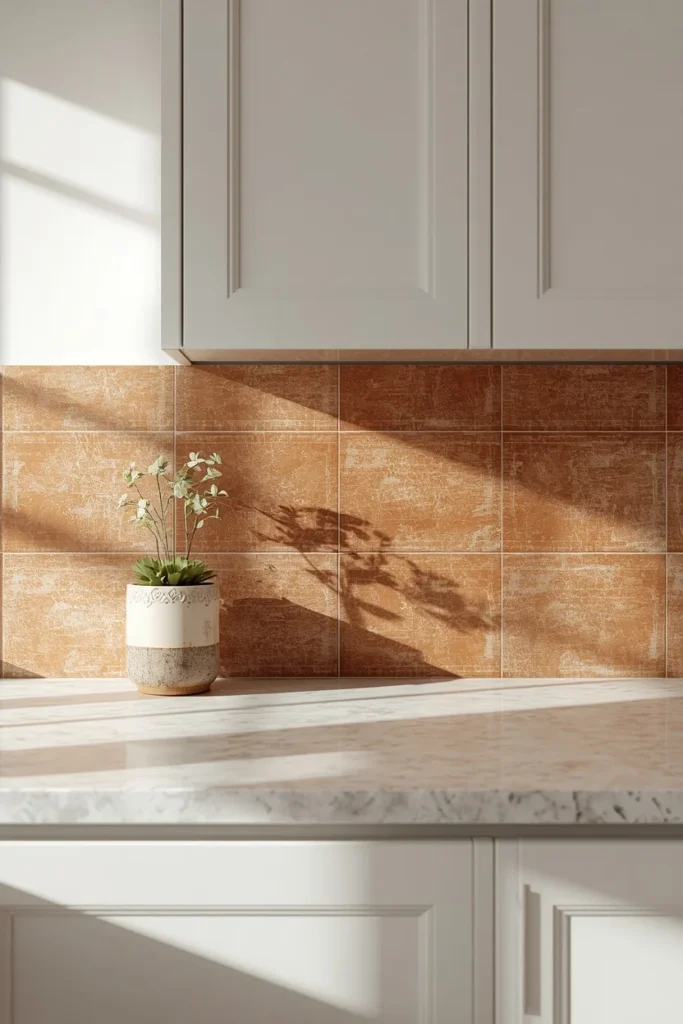
7. Zellige Tile Backsplash
Hand-glazed zellige tile brings a slightly uneven, organic texture to a laundry room backsplash that perfectly-uniform subway tile can’t match, and that imperfection is exactly what makes it feel handmade instead of mass-produced. Choose a single soft color, a warm ivory, a pale blue, or a muted terracotta, and let the natural variation in each tile do the visual work instead of adding a busy pattern on top of it. Run the tile from the countertop to just above the height of the machines or up to a floating shelf, rather than covering the entire wall, so the texture reads as an intentional feature rather than an overwhelming surface. Pair it with simple, unfussy cabinetry underneath, since a busy zellige backsplash needs a plain backdrop to really stand out. This detail alone is one of the fastest ways to make a laundry room feel custom rather than builder-grade.
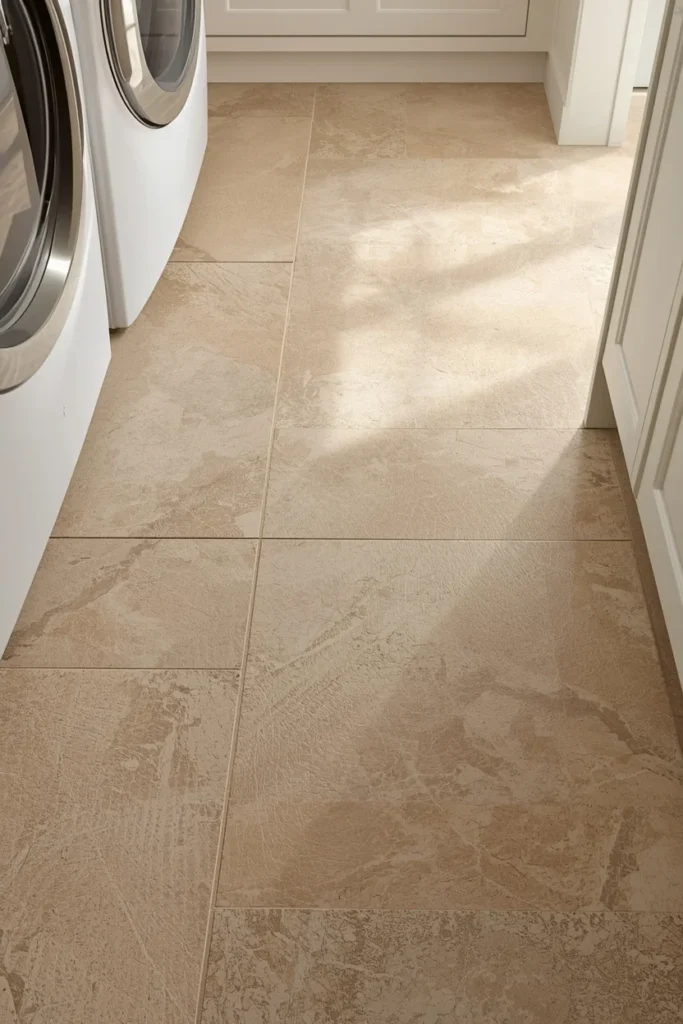
8. Stone-Look Large Format Flooring
Large-format tile that mimics tumbled limestone or travertine gives a laundry room the warmth of natural stone without the maintenance concerns real stone brings into a room that deals with constant moisture and detergent spills. Fewer, larger tiles also mean fewer grout lines, which matters in a room where spills happen often and grout is the first thing to show wear. Choose a matte or lightly textured finish rather than polished stone-look tile, since a matte surface hides water spots and footprints far better and won’t turn slippery when the floor gets wet. Pair the flooring with warm cabinetry, white oak or a soft neutral tone, so the stone-look floor doesn’t end up feeling cold or overly formal against the rest of the room. This flooring choice works in laundry rooms of every size, from a full dedicated room to a small closet conversion.
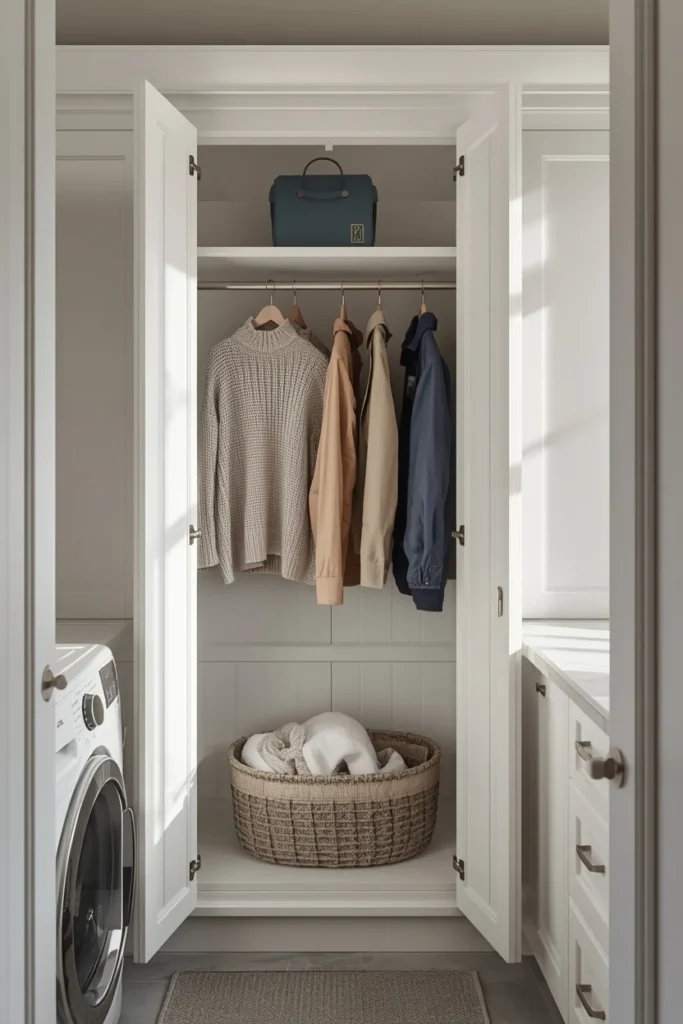
9. Built-In Drying Cabinet
Popular in Scandinavia for years, the drying cabinet is quickly becoming the appliance more laundry rooms are being designed around, since it gently dries delicates, wool, and muddy outerwear using air circulation instead of tumbling heat. Built into a tall cabinet run alongside the washer and dryer, it looks like just another piece of cabinetry until the doors open to reveal drying racks and hanging rods inside. This is especially useful for households with kids’ sports gear, rain jackets, or wool sweaters that can’t handle a standard dryer cycle without shrinking or losing shape. Position it near the folding counter so damp items go straight from the wash into the drying cabinet without an extra trip across the room. As more homeowners look for garment-care upgrades beyond the basic wash-and-dry cycle, this is one of the features showing up most often in newer laundry room remodels.
10. Bold Accent Wall
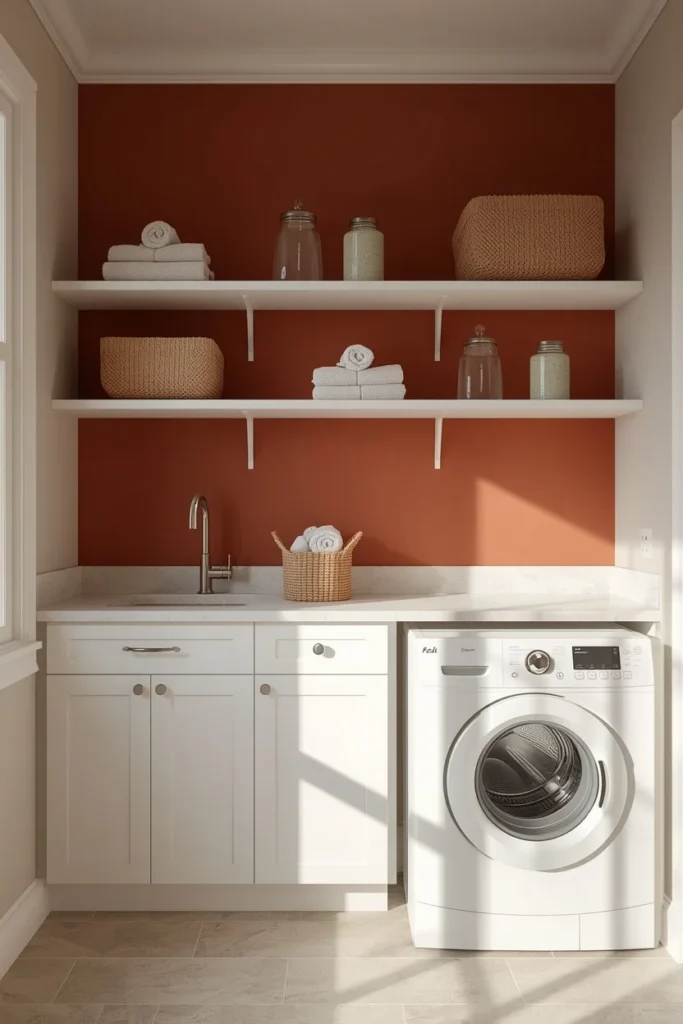
A single bold accent wall in teal, sage, or terracotta gives a small laundry room personality without overwhelming the space, especially when it’s balanced against neutral cabinetry and flooring. Paint just one wall, usually the one behind open shelving or facing the entry, rather than committing to the color on all four walls, so the room still feels grounded instead of saturated. Choose a washable, semi-gloss or eggshell paint finish rather than flat matte, since laundry rooms deal with humidity and the occasional splash, and a washable finish holds up far better over time. Keep everything else in the room, cabinetry, hardware, baskets, in a simple neutral tone so the accent wall stays the clear focal point. This is one of the most budget-friendly upgrades on this entire list, often costing less than a single gallon of paint and an afternoon.
11. Dark Moody Cabinetry
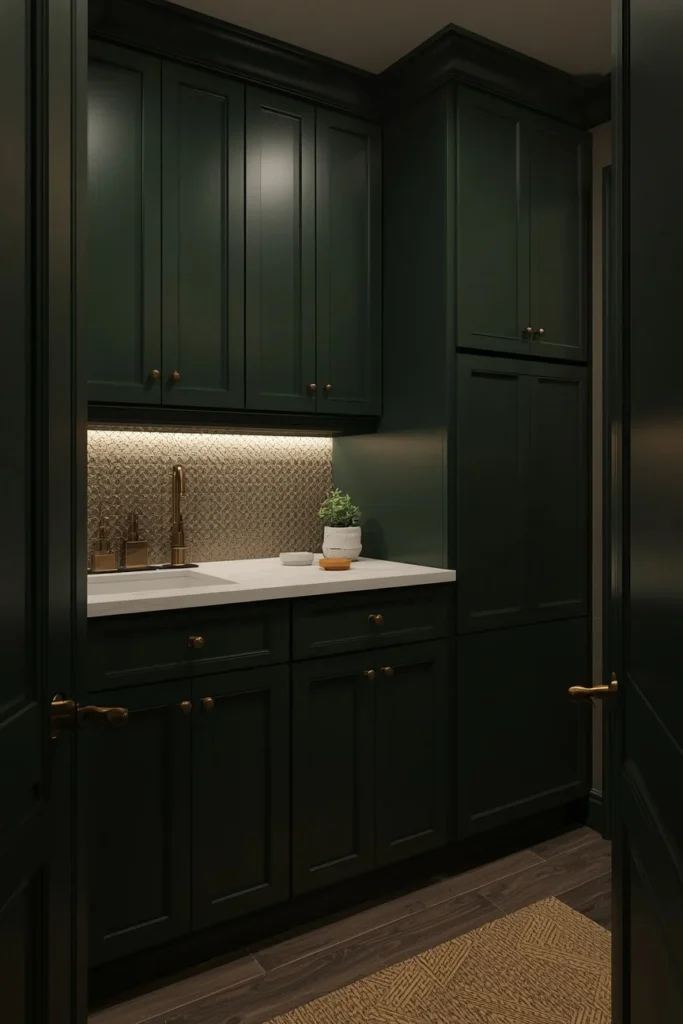
Deep cabinet colors like navy, charcoal, and forest green bring an unexpected sense of luxury to a room most people default to painting all white. This look works best in laundry rooms with good natural light or strong overhead and under-cabinet lighting, since dark cabinetry in a dim room can start to feel heavy rather than sophisticated. Pair the dark cabinets with a light stone or quartz countertop to keep the room balanced, and add brass or gold hardware for warm contrast against the deep base color. A patterned tile backsplash or a woven rug on the floor softens the drama and keeps the space from feeling too serious for a room that still handles socks and stain remover. This idea works especially well in larger, dedicated laundry rooms where there’s enough square footage for the darker tone to read as intentional rather than closed-in.
12. Industrial Style Laundry Room
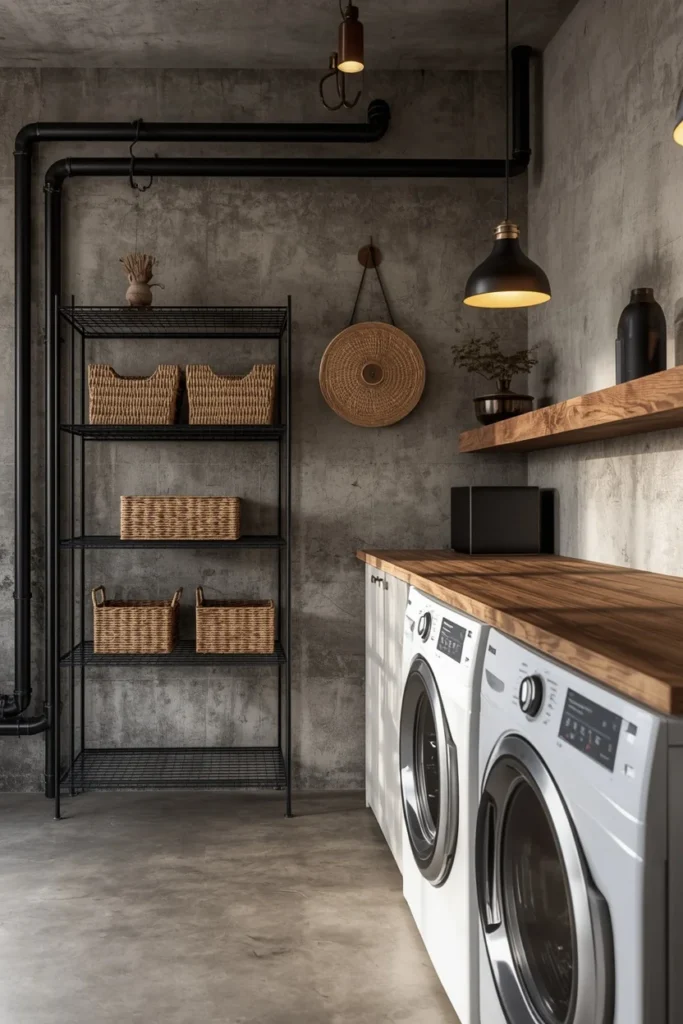
An industrial-style laundry room leans into exposed pipes, concrete-look walls, and black metal shelving rather than hiding the room’s utilitarian bones, which makes it a strong fit for basements, converted garages, or urban homes with an existing raw aesthetic. Black matte fixtures and wire baskets reinforce the look while still keeping things organized, and wood accents, a butcher block counter or a reclaimed wood shelf, keep the space from feeling cold or overly clinical. Warm lighting is essential here, since industrial finishes can read as harsh under cool white bulbs but feel intentional and grounded under warmer tones. This style tends to hide wear and grime better than lighter finishes, which makes it a practical choice for a heavily used laundry space in addition to being a distinct look. It suits homes that already lean modern industrial elsewhere, so the laundry room feels like a continuation of the house rather than a jarring shift in style.
13. Laundry Island With Storage
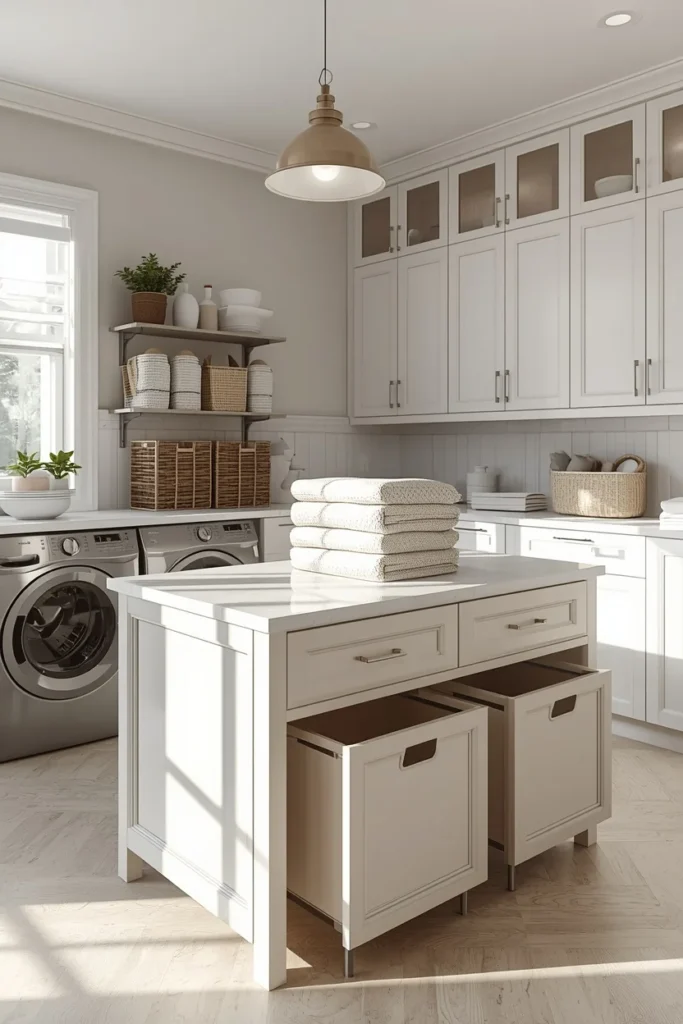
For larger laundry rooms, a central island adds workspace that a wall-mounted counter alone can’t provide, giving you a spot to sort, fold, and stage baskets without everything piling onto a single narrow surface. Build in drawers or pull-out hampers beneath the island so sorting bins for whites, darks, and delicates stay out of sight until wash day, then slide open right where you need them. A durable surface like quartz or a sealed butcher block holds up well to the daily wear of stacking baskets and folding warm laundry straight off the dryer. Leave enough clearance on all sides, at least 42 inches, so the island doesn’t turn into a bottleneck in a room that already has machines, cabinetry, and foot traffic competing for space. This upgrade is really only practical in a dedicated laundry room with generous square footage, but for the homes that have the space, it becomes the most-used surface in the entire room.
14. High-Humidity Wallpaper
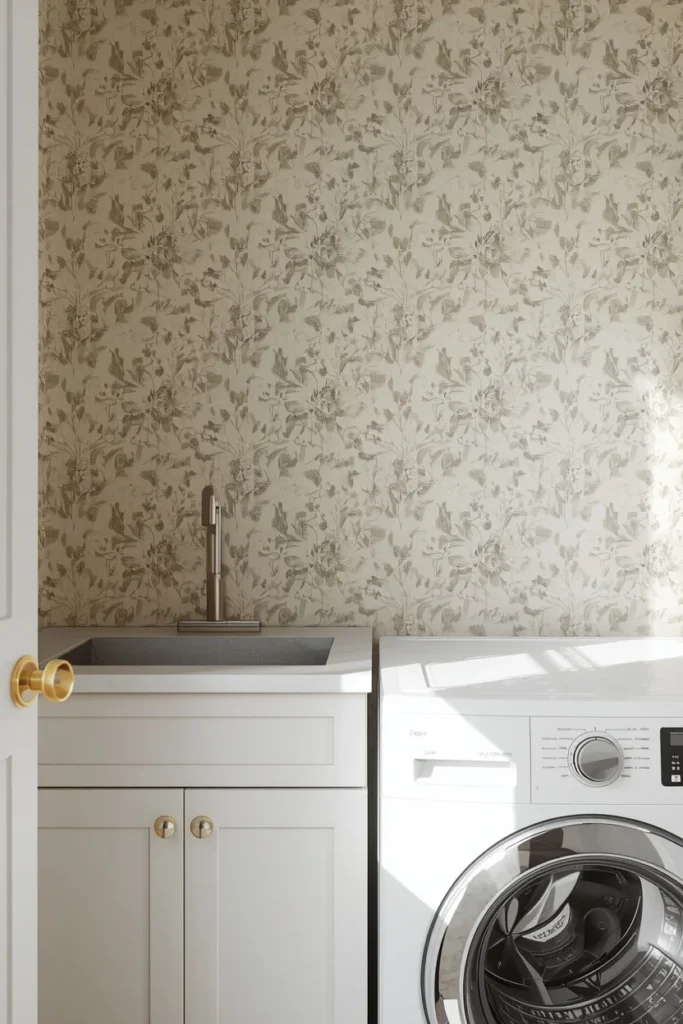
Wallpaper rated for high-humidity spaces lets you bring real pattern into a laundry room without worrying about peeling or bubbling from the moisture a washer and dryer naturally produce. A botanical print, a soft stripe, or a small-scale geometric pattern all work well, and going bold here makes sense precisely because a laundry room is usually a smaller, contained space where a striking pattern won’t overwhelm the rest of the home. Keep the surrounding cabinetry and trim simple and light-colored so the wallpaper stays the clear star of the room instead of competing with busy hardware or bold cabinet colors. Peel-and-stick humidity-rated options make this one of the more approachable upgrades on this list, since most can go up in an afternoon without professional installation. This idea works especially well in a small laundry closet or nook, where a single patterned wall can completely change the mood of the space.
15. Under-Stair Laundry Nook
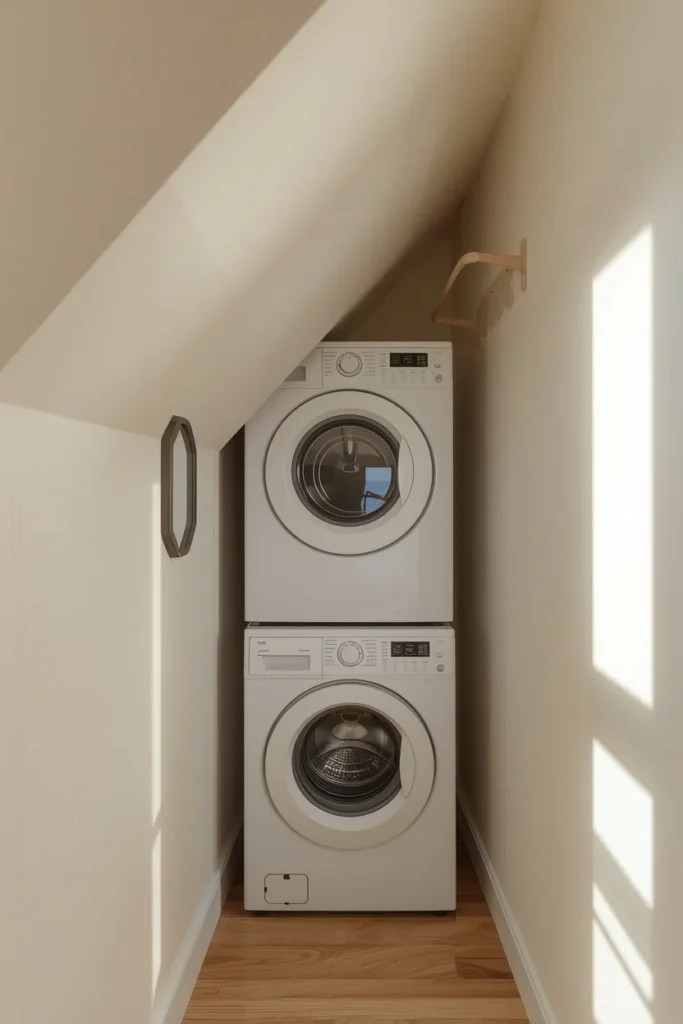
An under-stair space is one of the most overlooked spots in a home for a laundry nook, especially in smaller houses where a dedicated room isn’t in the floor plan. Light colors and a well-placed mirror help the angled ceiling feel less cramped, and a slim stacked washer-dryer tower fits the sloped space far better than a side-by-side pair would. Sound-absorbing panels behind the appliances help manage noise, since under-stair nooks often sit close to living areas and the spin cycle can carry more than expected in a small enclosed space. Add a slim rod or hooks along the taller end of the slope for hanging items, since that’s usually the only part of the nook with enough headroom to be useful for anything beyond the machines themselves. This idea turns genuinely wasted square footage into a fully functional laundry spot without expanding the home’s footprint at all.
16. Stacked Closet Laundry Tower
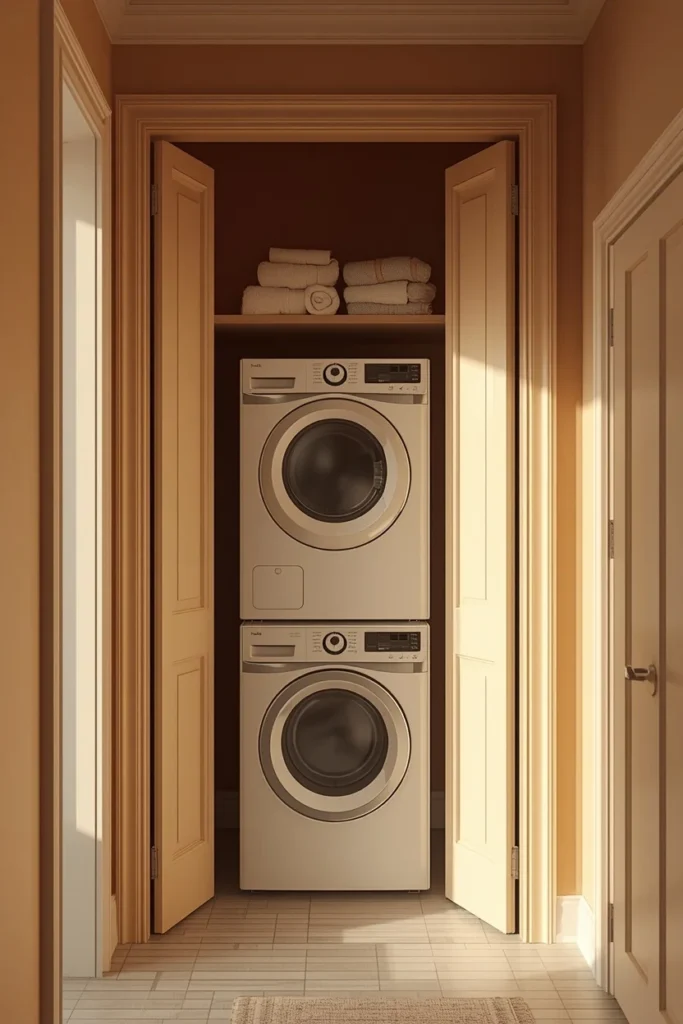
A stacked washer-dryer tower tucked into a hall closet remains one of the most space-efficient laundry setups for apartments and smaller homes, and a few small upgrades keep it from feeling like a leftover appliance closet. Build a shallow cabinet front around the tower, or add simple bifold doors, so the machines close away behind a finished surface instead of standing exposed in the hallway. A narrow shelf above the unit and a hook or two on the inside of the closet door make use of every inch without adding bulk to the small footprint. Choose a paint color for the interior that echoes a nearby room, the kitchen or hallway, so the closet ties into the rest of the home rather than reading as a random utility gap. This setup proves that even the smallest laundry footprint can look intentional with just a coat of paint and the right doors.
17. Open Shelving With Woven Baskets
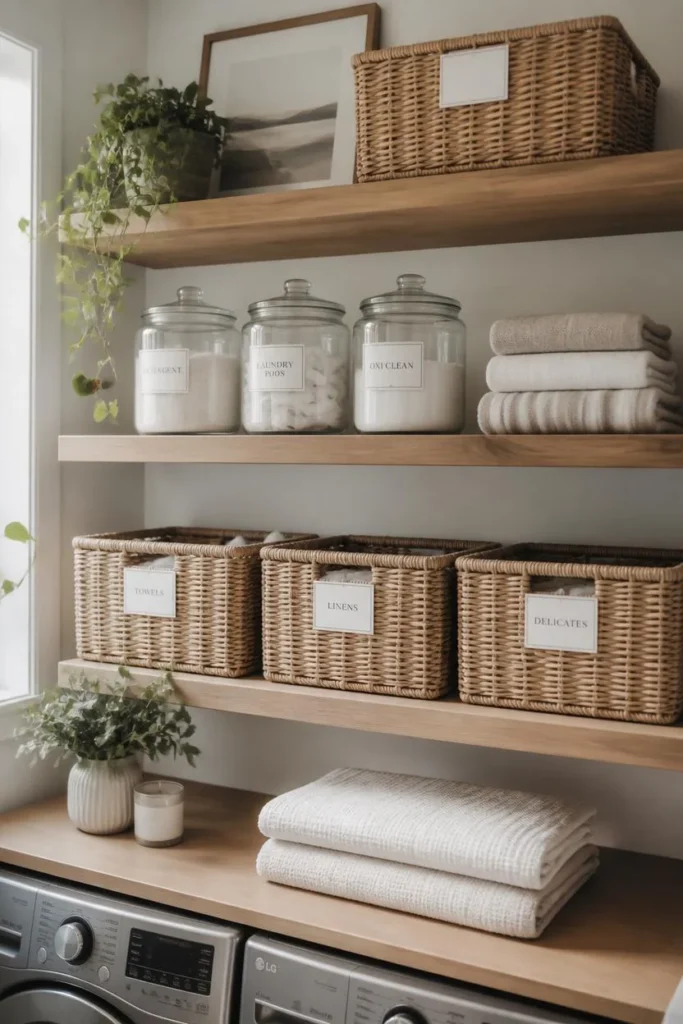
Open shelving keeps a laundry room feeling warm and lived-in rather than purely clinical, especially when it’s styled with woven baskets, glass jars, and folded linens instead of loose detergent bottles. Use matching or coordinating baskets across every shelf, since uniform baskets read as one cohesive design while mismatched bins tend to look cluttered no matter how organized the contents actually are. Decant powder detergent and pods into labeled glass jars, which both looks better and makes it easier to see at a glance when supplies are running low. Leave one shelf a little looser than the others, a small plant, a framed print, a stack of folded towels, so the wall doesn’t feel like a display of storage containers and instead feels like a styled part of the home. This idea pairs especially well with a warm accent wall or wallpaper behind it, since the open shelving gives the pattern room to show through.
18. Built-In Pull-Out Ironing Board
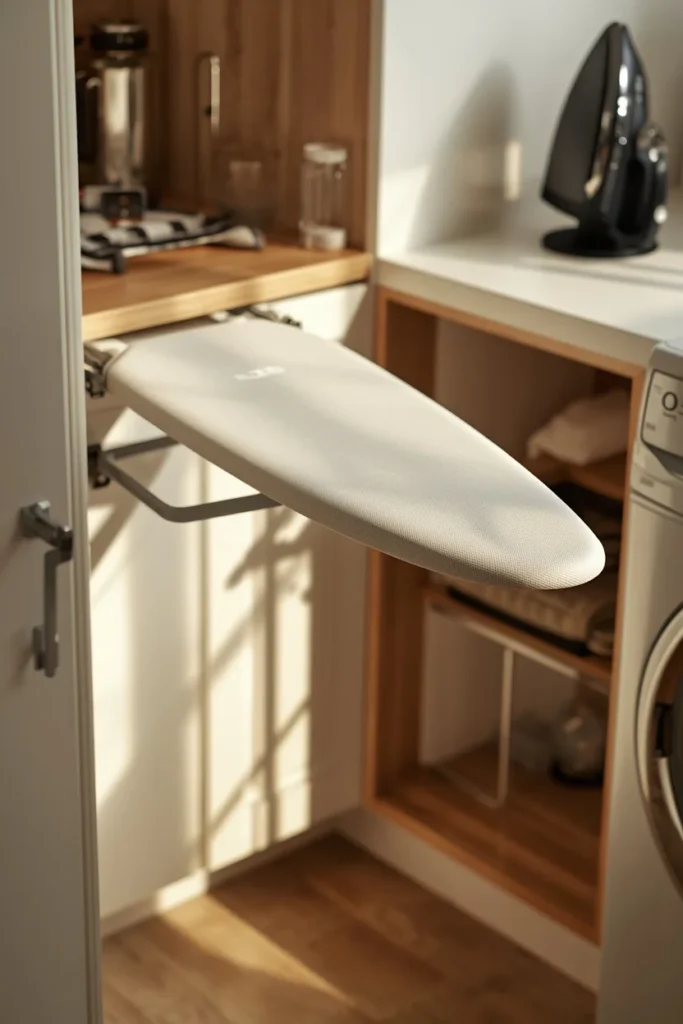
A pull-out ironing board built into a drawer or cabinet front solves one of the most persistent laundry room clutter problems, since the board disappears completely when it’s not in use instead of leaning awkwardly in a corner or behind a door. Install it at counter height beside the folding station so ironing and folding happen in the same zone without extra steps between tasks. Choose a model with a fold-down bracket rated for the weight of the board plus light pressing pressure, since a flimsy hinge is the most common failure point on this feature. Add a small outlet inside or directly above the cabinet for the iron itself, so the cord doesn’t have to stretch across the room every time it’s used. This is a small detail, but it’s consistently one of the most appreciated once it’s installed, mostly because it removes an entire piece of visible clutter from the room permanently.
19. Garment Steam Cabinet Zone
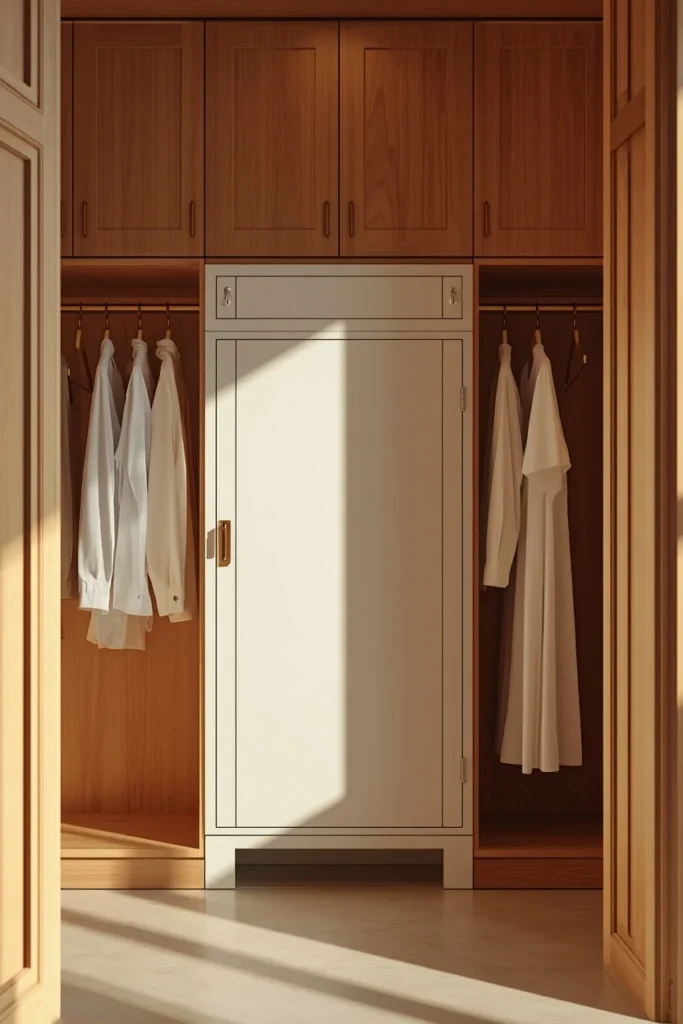
A dedicated garment care zone built around a steam cabinet takes the laundry room a step beyond wash and dry, refreshing and lightly sanitizing clothes without a trip to the dry cleaner or a full ironing session. Position the steam cabinet near the drying area so items move logically from wash, to dry, to a quick steam refresh before they’re hung or folded. Add hanging rods on either side of the cabinet for garments waiting their turn or freshly steamed pieces cooling before they’re put away, since steamed clothing needs a few minutes before it’s handled. This upgrade tends to appeal most to households managing a lot of workwear, delicate fabrics, or families without easy access to a dry cleaner nearby. It’s a bigger investment than most ideas on this list, but it consistently shows up in newer builds marketed as full garment-care suites rather than basic laundry rooms.
20. Statement Pendant Lighting
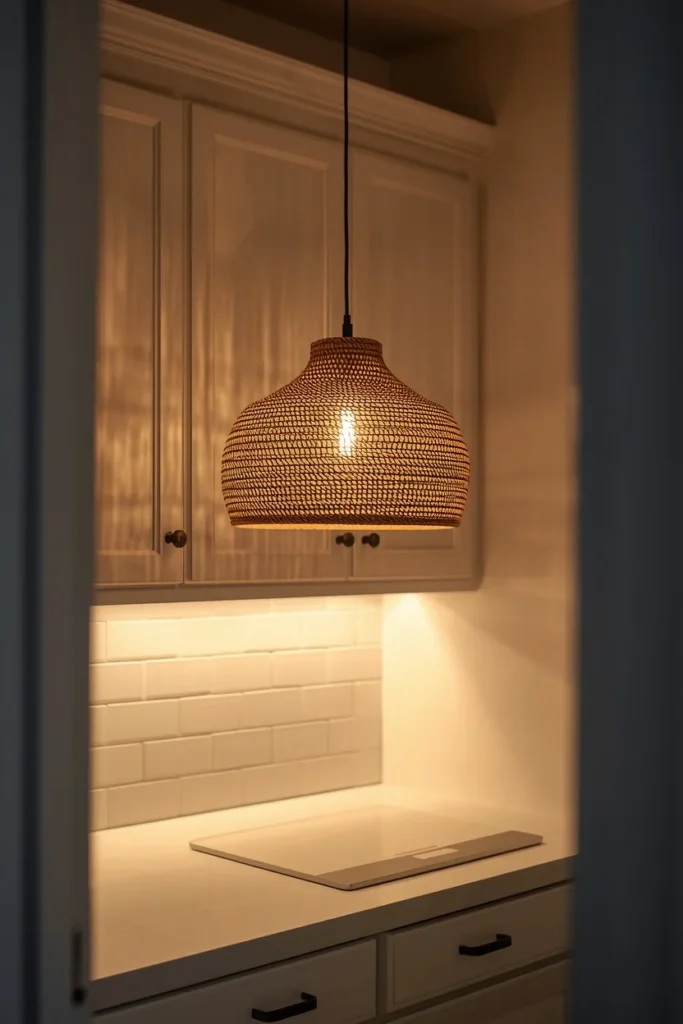
A single overhead bulb is the fastest way to make any laundry room feel like an afterthought, while a statement pendant light instantly signals that the room was actually designed rather than just wired for function. A woven rattan or fabric-shaded pendant softens the space and adds texture, while a simple black or brass fixture leans more modern depending on the rest of your cabinetry. Hang it centered over the folding counter or island rather than dead center in the room, since that’s the zone that benefits most from focused, warmer light. Layer in under-cabinet lighting as well, so the countertop stays well lit for sorting and folding even when the overhead fixture is providing more ambiance than task light. This is one of the lowest-cost upgrades on the entire list relative to how much it changes the feel of the room in photos and in person.
21. Farmhouse Utility Sink
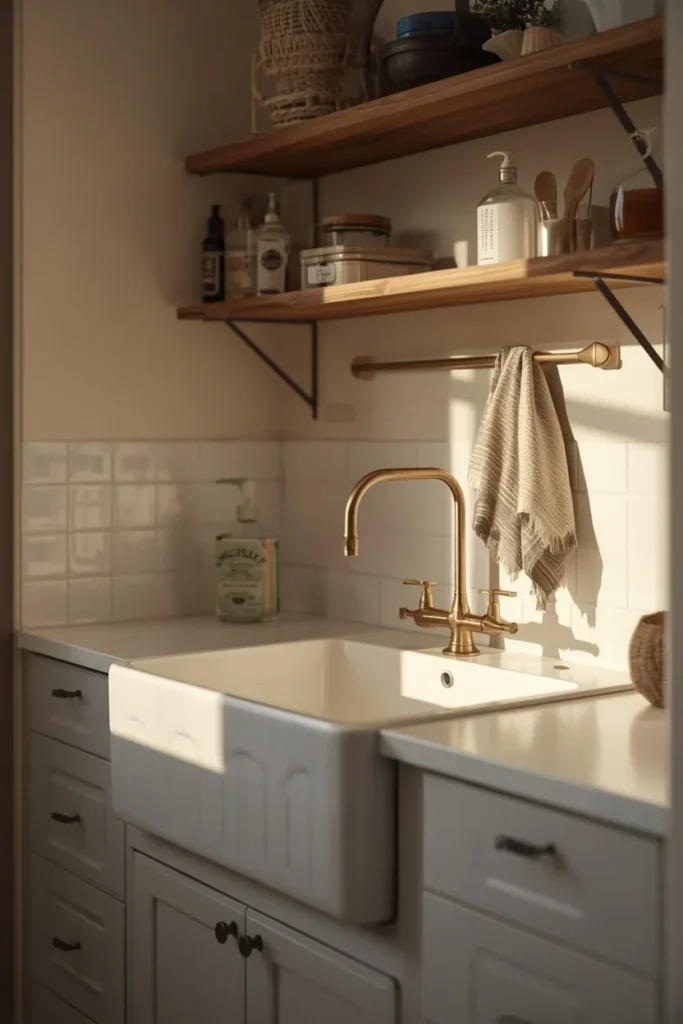
A deep farmhouse-style utility sink brings both function and character to a laundry room, handling everything from hand-washing delicates to rinsing muddy boots and garden tools without straining a standard sink. Choose a fireclay or cast iron apron-front sink in white to match classic farmhouse styling, or a stainless version for a slightly more modern, industrial edge. Pair it with a simple gooseneck faucet and open shelving above for soap and scrub brushes, keeping the whole station practical and easy to wipe down. A small drying rack or a bar mounted above the sink gives hand-washed items somewhere to drip dry without dripping onto the floor. This feature works especially well in mudroom-laundry hybrids and larger dedicated laundry rooms where the sink earns its keep well beyond laundry day.
22. Small Bathroom-Laundry Combo
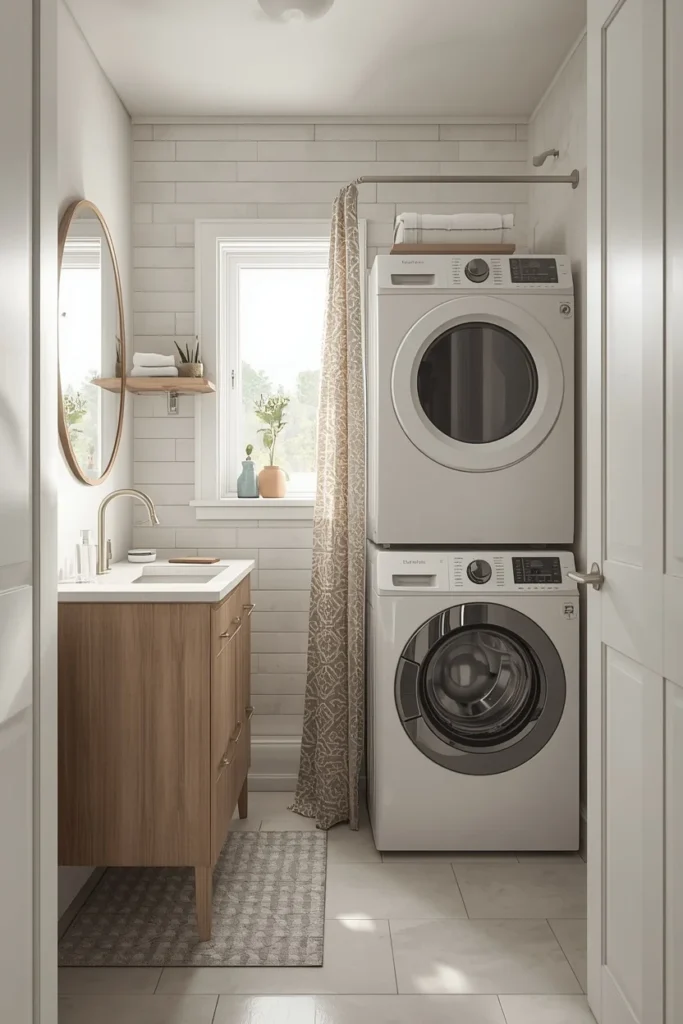
When square footage is at its tightest, combining a small bathroom with a laundry zone can be the most realistic way to carve out space at all, using one wall for a slim sink and vanity and the opposite wall for a stacked washer-dryer tower with a floating shelf above. Keep the tile simple and the paint light so the combined space feels calm rather than crowded, since two functions sharing one small room can quickly start to feel busy if the finishes compete. A shower curtain or simple pattern adds a little personality without overwhelming the room, and it can be swapped out easily if your style changes down the road. Treat the room like a tiny kitchen, giving every task its own small station, so detergent, hand towels, and bathroom essentials each have a designated spot instead of piling onto one shared surface. This combo works especially well in apartments, guest bathrooms, and older homes where adding a fully separate laundry room simply isn’t possible.
23. Coastal Color Palette
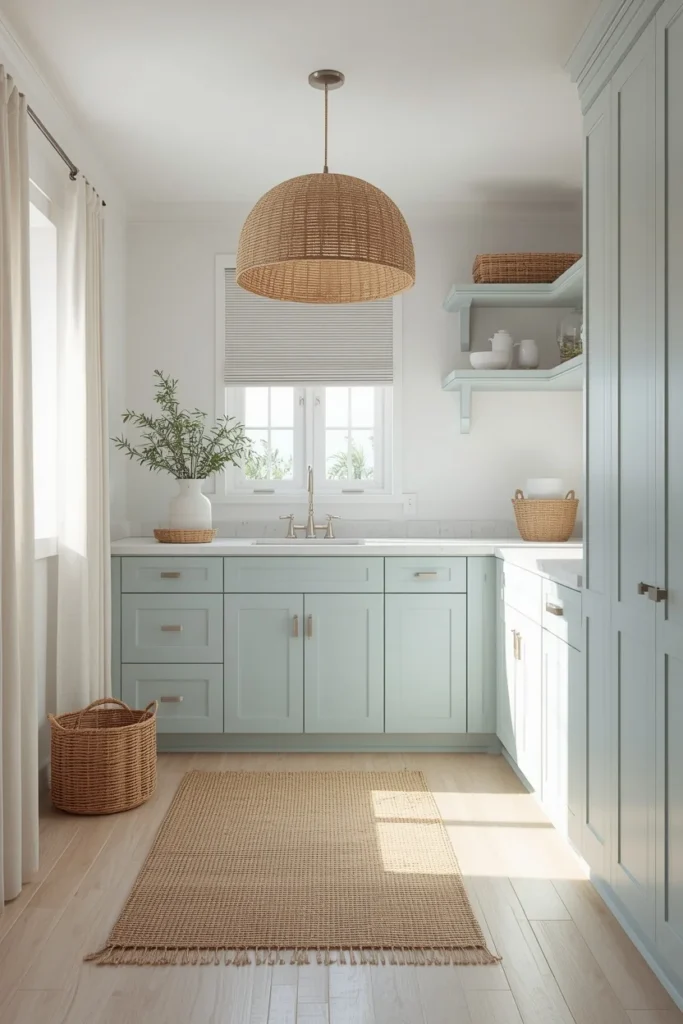
A coastal-inspired laundry room leans on soft blues, sandy neutrals, and plenty of natural light to create a fresh, breezy feel that works well in any climate, not just near the water. Pair a pale blue or seafoam cabinet color with warm white walls and natural wood or rattan accents, keeping the overall palette light so the room feels open even without a lot of square footage. A woven light fixture, a jute rug, and linen curtains reinforce the relaxed coastal mood without adding any heavy or dark elements into the mix. Glass jars and light wicker baskets on open shelving keep the storage feeling airy rather than boxy, which matters in a palette built around lightness. This look works particularly well in laundry rooms with a window or door leading outside, since the natural light does as much for the coastal feel as the color choices themselves.
Styling Tips
Choose one accent color and repeat it at least three times across the room, in a basket, a piece of art, and a stack of folded towels, so the space feels pulled together instead of randomly decorated. Decant detergent, pods, and powders into matching glass or ceramic containers rather than leaving branded plastic bottles out on open shelves. Add one soft texture, a woven basket, a small rug, a linen curtain, to counterbalance the hard surfaces that tile, countertops, and appliances bring into the room. Keep hardware finishes consistent throughout the space, since mixing three or four different metal tones tends to read as unplanned rather than eclectic.
Practical Implementation Ideas
Measure your washer and dryer dimensions, including the door swing and any venting clearance, before finalizing cabinetry or countertop plans, since appliance depth varies more than people expect. Choose moisture-resistant materials for anything near the machines, polyester, thermofoil, or melamine cabinet finishes hold up far better than painted MDF in a humid environment. Install a countertop with at least a small lip or raised back edge to catch spills and stray items before they slide behind the machines. If you’re adding a folding island or countertop, leave a minimum of 42 inches of clearance on all sides so the room doesn’t become a bottleneck during a full laundry day.
Common Mistakes to Avoid
Skipping proper ventilation clearance behind and above the dryer is a common and genuinely risky mistake, since restricted airflow affects both appliance performance and safety over time. Choosing glossy paint or delicate wallpaper not rated for humidity often leads to peeling, bubbling, or staining within a year or two in a room that deals with constant moisture. Overcrowding open shelves with mismatched containers and loose products creates visual clutter even in an otherwise well-organized room. Relying on a single overhead light source leaves the folding counter and machine controls poorly lit, which makes the whole space feel dimmer and less finished than it actually is.
Small-Space Alternatives
A slim rolling cart tucked beside the washer and dryer can hold detergent, dryer sheets, and a small hamper without requiring any built-in cabinetry at all. A single floating shelf above a stacked tower, styled with one basket and one plant, delivers a finished look in even the tightest closet laundry setup. Over-the-door organizers on the inside of a closet door make use of otherwise wasted space for smaller items like stain remover and lint rollers. A fold-down wall-mounted table can serve as a temporary folding surface in a laundry nook too narrow for a permanent countertop.
Budget-Friendly Alternatives
Painting existing wire shelving or an old cabinet a fresh color is often the cheapest way to update a tired laundry space without replacing a single piece of storage. Peel-and-stick tile or humidity-rated wallpaper delivers the visual impact of a full tile or wallpaper install for a fraction of the material and labor cost. Swapping cabinet hardware for new pulls in an updated finish is a low-cost change that makes even builder-grade cabinets look more intentional. A single new light fixture, especially a pendant to replace a bare bulb or flush mount, tends to deliver the most visible transformation for the smallest cost on this entire list.
Pro Styling Recommendations
Keep everyday detergent and supplies within easy reach on lower shelves or in cabinets closest to the machines, and reserve higher or harder-to-reach spots for seasonal items used less often. Choose one dominant cabinet color and let tile, hardware, and lighting provide the contrast, rather than introducing multiple bold colors that compete with each other in a small room. Add at least one plant or a small piece of art to the room, since laundry spaces are so function-focused that even one decorative touch makes a noticeable difference. Let baskets and containers sit at consistent heights and styles across open shelving, since uniformity reads as considerably more polished than a mismatched collection, even if every individual piece is nice on its own.
FAQs
Conclusion
A laundry room doesn’t need a full renovation budget to feel like part of the house instead of an afterthought behind a closed door. Sometimes it’s one countertop, one paint color, or one pendant light that changes how the whole room feels to walk into. Start with whichever idea from this list solves your biggest daily annoyance, whether that’s a folding surface, hidden appliances, or just better lighting, and build from there. The best laundry rooms end up being the ones that quietly make an unavoidable chore just a little easier, one small upgrade at a time.