25 Red Brick House Exterior Ideas That Make Traditional Look Incredibly Chic
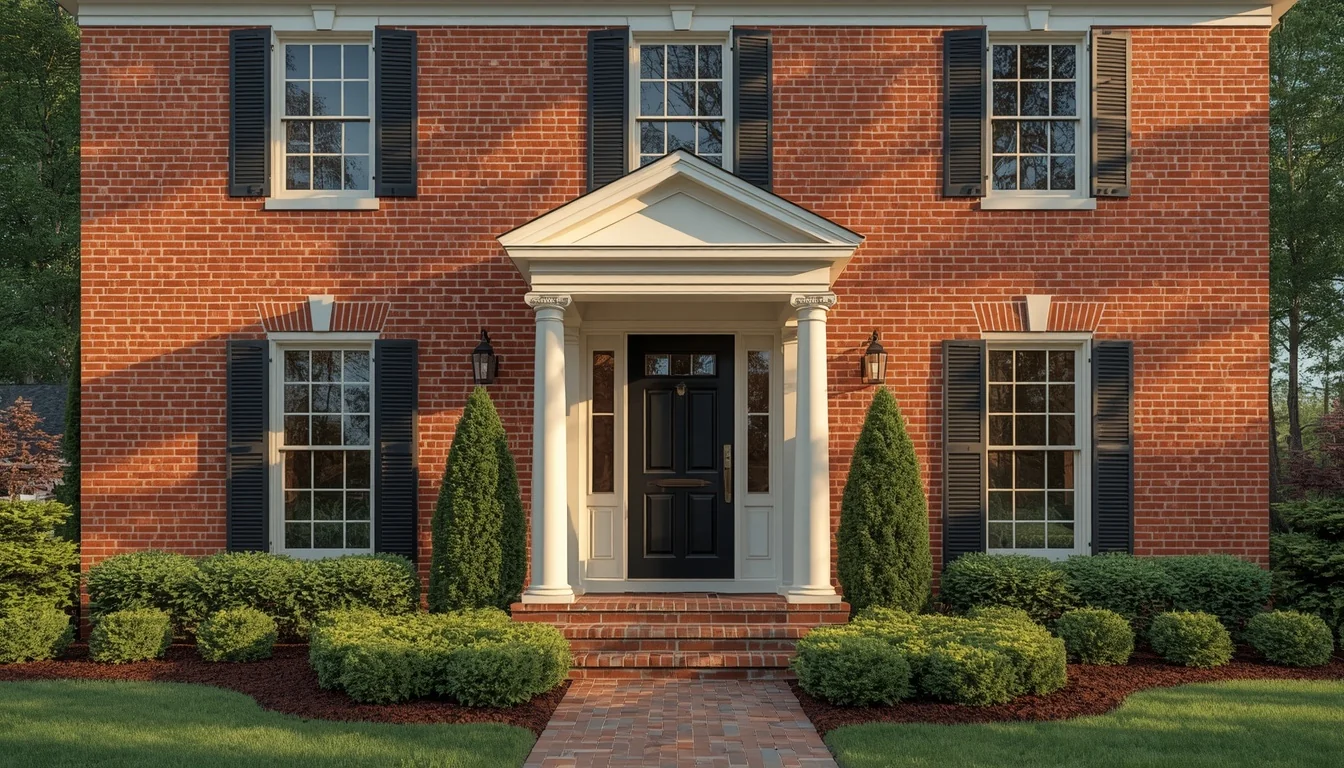
Red brick has a reputation problem it doesn’t deserve.
For years, it’s been treated as the exterior you settle for — the material you inherit when you buy an older home, the thing you paint over the moment your budget allows. But step back and look closer, and red brick is quietly one of the most versatile, durable, and genuinely beautiful exterior materials available. It just needed the right styling to prove it.
That’s exactly what’s happening in 2026. Designers report that classic red brick is experiencing a quiet resurgence, with homeowners increasingly drawn to authentic brick tones and finishes that highlight character rather than covering it up. The shift away from painted-white-everything and toward natural materials, layered colors, and architectural confidence has put red brick back at the center of the most compelling exterior transformations on Pinterest.
The secret isn’t replacing the brick. It’s everything around it: the trim color, the front door, the windows, the landscaping, the lighting. Get those right, and red brick stops looking dated — it starts looking deliberate.
This guide gives you 25 specific, achievable ways to make that happen, whether you’re working with a Georgian colonial, a 1970s ranch, a craftsman bungalow, or a modern new build. Every idea here comes with the design reasoning behind it, so you understand not just what to do, but why it works.
Let’s transform your curb appeal.
TABLE OF CONTENTS
- Why Red Brick Is Having a Major Comeback in 2026
- The Red Brick Color Pairing Formula
- Ideas 1–8: The Color & Trim Designs
- The Front Door Guide: Choosing the Right Color
- Ideas 9–16: The Material & Architecture Designs
- Landscaping & Lighting: The Two Most Underrated Upgrades
- Ideas 17–25: The Statement & Style-Specific Designs
- Designer Tips
- Budget Alternatives
- Common Mistakes
- FAQs
- Conclusion + Continue Reading
Why Red Brick Is Having a Major Comeback in 2026?
For most of the last decade, the dominant exterior trend was paint it white. Red brick, brown brick, anything with visible mortar lines and natural variation got covered in flat, uniform color.
In 2026, that’s reversing. Tumbled and handmade-look bricks with softened edges and subtly irregular faces are increasingly popular, because they catch light differently throughout the day and give a home a more handcrafted, bespoke feel. For homeowners who already have that texture sitting on their existing red brick facade, this is genuinely good news: the material everyone’s now chasing, you already own.
Why Red Brick Works Especially Well Right Now?
Red brick offers more than just durability and low maintenance — it provides a versatile canvas for customization that works for colonial, craftsman, modern farmhouse, and contemporary architecture alike. And in an era when homeowners are increasingly asking “will this still look good in 10, 20, or 30 years?” rather than chasing short-lived trends, brick’s multi-decade lifespan and minimal upkeep make it a genuinely smart long-term material — not just an aesthetic one.
The other major shift: trim and accent colors are getting richer and more confident, but still grounded. Deep navy and charcoal remain favorites for front doors and metal accents, while more adventurous homeowners are exploring emerald, wine red, and mustard in small, strategic doses. This layered, considered palette approach is precisely what makes red brick — itself a naturally rich, textured material — look current rather than dated.
Designer Note: The biggest difference between a red brick house that looks “stuck in the past” and one that looks “intentionally traditional” almost never comes down to the brick itself. It comes down to whether the trim, door, windows, and landscaping look like they were chosen together, or simply inherited and left alone.
The Red Brick Color Pairing Formula
Before touching paint, hardware, or landscaping, understand the foundational rule: your brick’s undertone determines what works.
Step 1: Identify Your Brick’s Undertone
Not all red brick looks the same. Some bricks lean more orange, while others are darker or slightly muted. Warmer, more orange-toned brick pairs well with earthy or deep neutral tones, while darker, more muted brick can handle cooler colors like navy or charcoal more comfortably.
Take a brick sample (or a clear photo in natural daylight) and compare it against trim and door color swatches before committing to anything. This single step prevents the most common and most expensive red brick color mistakes.
Step 2: Apply the Three-Color Rule
Every successful red brick exterior uses exactly three color zones:
- Body (the brick itself): Stays as-is, or — if painting — choose a true white, warm white, or limewash for the most timeless results.
- Trim: Window frames, fascia, and corner boards. Typically white, black, or deep charcoal — the color that frames and defines the brick’s edges.
- Accent: Front door, shutters, and hardware. One confident, intentional color — black, navy, deep green, or (for the bold) a curated red.
The Roof Connection
Don’t forget the fixed element overhead. Deep charcoal, black, or dark brown roof shingles help balance out the warmth of red brick and give the exterior a cohesive, intentional look — while a warm-toned roof calls for warm-toned trim and accent choices to avoid visual conflict.
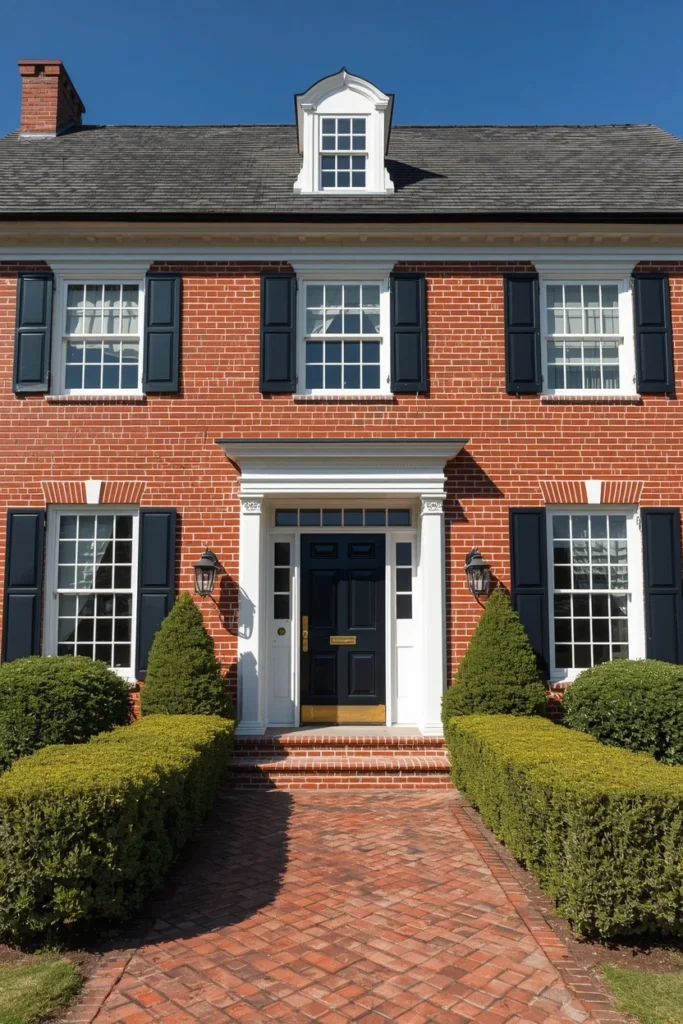
IDEA 1: The Black Trim & Windows Transformation
Black trim and windows are one of the easiest ways to give a red brick exterior a contemporary twist — the contrast is striking and instantly gives the home a clean, modern edge without taking away from the brick’s natural charm.
This update works because it doesn’t fight the brick — it frames it. Black window frames, black fascia, and black gutters create crisp, confident lines around the brick’s natural texture, turning what might read as a dated material into a deliberate architectural choice.
Where to start: If a full window replacement isn’t in the budget, exterior window film or trim-only repainting (where the frame material allows) can achieve a similar visual effect at a fraction of the cost.
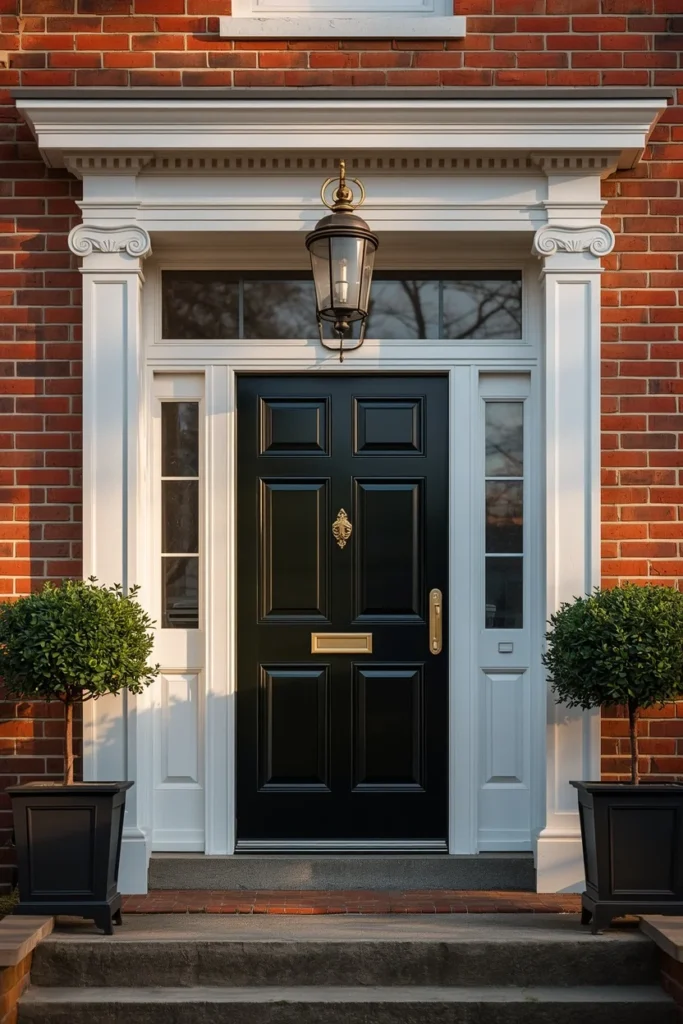
IDEA 2: The Classic Black Front Door
A black front door is one of the easiest ways to create a strong, confident contrast against red brick. It gives the entry a clear focal point and has a grounding effect — instead of competing with the warmth of the brick, a black door balances it.
If you’re unsure where to start with any red brick color update, this is the safest and most universally successful choice. It works on Georgian townhouses just as beautifully as on contemporary builds, and pairs seamlessly with both white and black trim.
Pro pairing: Black door + brass or polished nickel hardware + white trim is the single most reliable formula in red brick exterior design.
IDEA 3: The Navy Blue Door & Shutters
Navy blue is one of the most beloved exterior colors to use with red brick — it’s bold but still refined, adding just the right amount of contrast. What makes navy work so well is the balance it strikes: introducing a cool tone that offsets the warmth of the brick, creating a more refined, layered exterior.
Pair navy shutters with a matching navy door for a cohesive, elevated look, or use navy on the door alone against crisp white trim for a slightly softer contrast. Both approaches photograph beautifully and read as timeless rather than trend-driven.
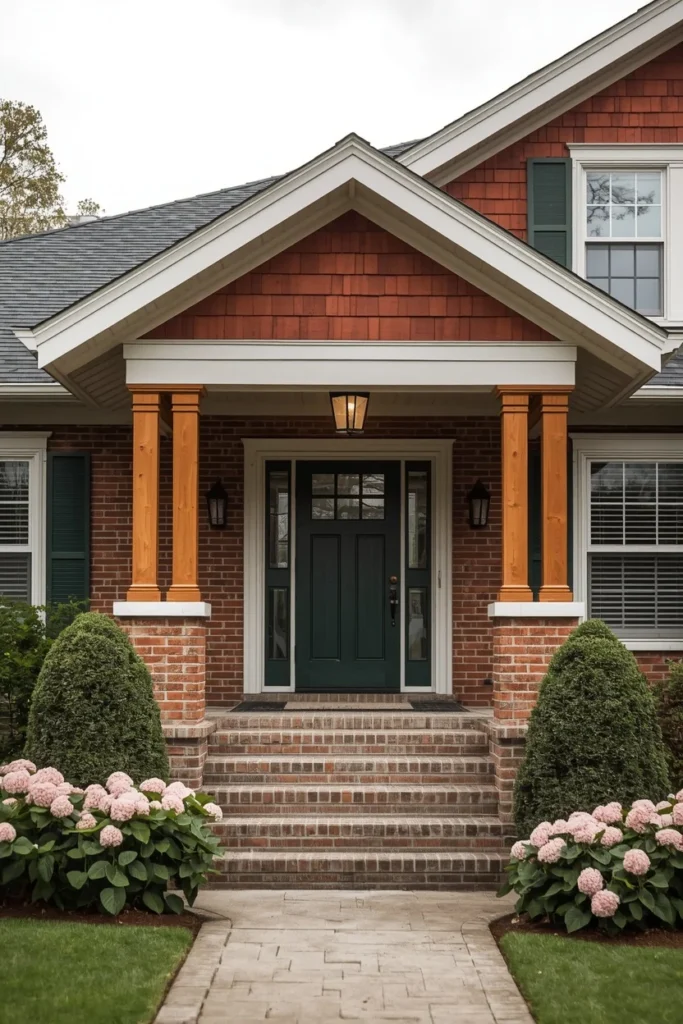
IDEA 4: The Deep Green Accent
Green front doors and shutters tend to feel right at home next to red brick, especially in deeper shades — a green door creates a connection with natural surroundings and gives the exterior a grounded, cohesive look.
Designers specifically recommend an earthy, deep mid-century modern green like a classic olive or muddied sage — deep, earthy greens introduce an organic depth that coordinates beautifully with the warm terracotta hues of red brick. This pairing works especially well for homes with established landscaping, since the green door echoes the surrounding garden.
IDEA 5: The Warm White Trim Refresh
White and off-white remain two of the most enduringly popular colors for red brick trim, and for good reason — crisp white windows and trim brighten the red brick beautifully, making everything feel fresh and classic, almost like a charming historic home that’s been impeccably maintained.
In 2026, the preferred white has shifted: warm white trim with creamy undertones instantly looks more inviting than the crisp, almost blue-tinted whites that were popular a few years ago. When repainting trim, choose a white with a warm undertone — it will read as more cohesive against red brick’s inherently warm tones.
Recommended shades: Benjamin Moore “Simply White” or Sherwin-Williams “Alabaster” in the USA; Farrow & Ball “Wimborne White” in the UK.
IDEA 6: The Charcoal & Gray Modern Update
Gray works beautifully with nearly every shade of red brick, making it one of the most versatile color schemes for homeowners wanting something modern but not too trendy. Gray cools down the brick’s natural warmth and gives the whole exterior a fresh, transitional feel.
Use charcoal gray for the front door, shutters, and trim together for a fully unified, moody-modern look, or apply it more selectively — charcoal door only, with the trim staying white — for a softer transitional effect. Pair with charcoal gray exterior light fixtures and house numbers to complete the cohesive palette.
IDEA 7: The Yellow Statement Door
For homeowners wanting to fully commit to a bold look, a yellow front door brings genuine personality and warmth to a red brick exterior — a striking shade that stops passers-by in their tracks, even on a cloudy day.
This pairing works specifically because yellow and red brick share the same warm color family — rather than creating contrast through opposition (like black or navy), yellow creates harmony through complementary warmth. It’s a confident, joyful choice best suited to cottage-style, craftsman, or bungalow architecture.
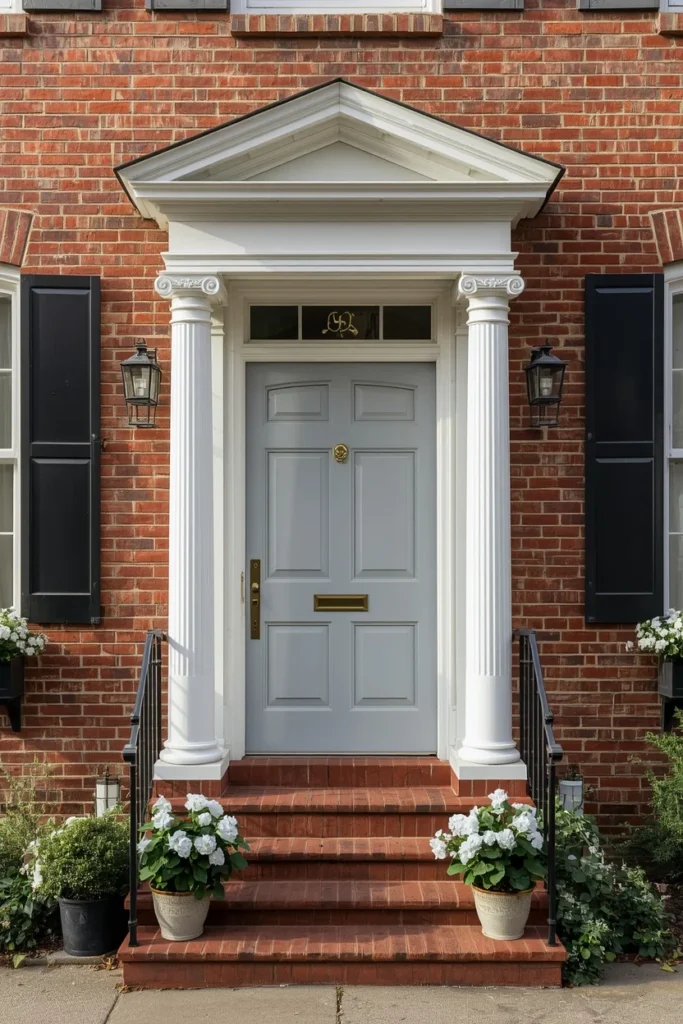
IDEA 8: The Soft Blue Pastel Door
Red brick and pastel blue is a classic combination that really highlights the natural terracotta shades within the brick. Blue is a particularly safe option for doors, window frames, or shutters, since dark and light shades of blue both look good against red brick exteriors.
For the lightest, most classic version: choose a blue with gray undertones rather than a pure sky blue — this keeps the color from feeling overly saturated or competing with the brick’s intensity. This pairing is especially well-suited to colonial and traditional New England-style red brick homes.
The Front Door Guide — Choosing the Right Color
The front door is the single highest-leverage color decision on a red brick exterior — and one of the cheapest to change.
The Contrast Principle
A front door for a red brick house should contrast with the brick rather than match it, to create a more defined and visually appealing entry point. This is the foundational rule behind every successful red brick door color: black, navy, deep green, and charcoal all work because they contrast with — rather than blend into — the brick’s warm red-orange tones.
The Testing Process
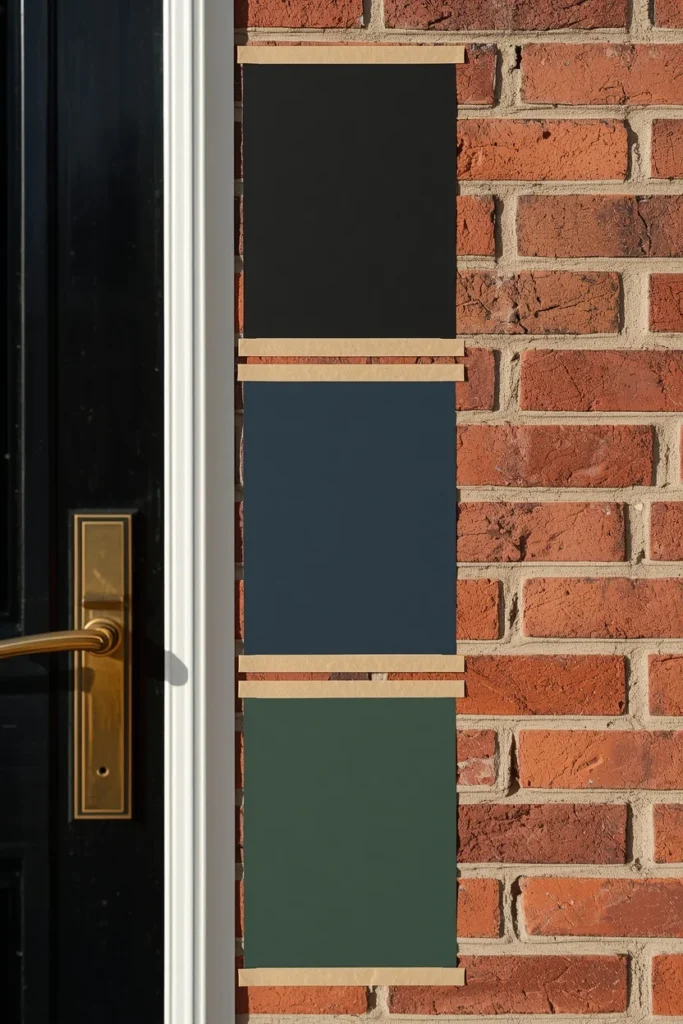
Before committing to any door color, paint swatches directly on the door (or a poster-board sample taped over it) and observe them throughout the day in different lighting conditions — morning, midday, and evening light all shift how a color reads against brick.
Quick Reference: Best Door Colors by Brick Tone
- Warm/orange-toned brick: Black, deep green, mustard, warm red
- Darker/more muted brick: Navy, charcoal, blue-purple undertoned blues
- Multi-toned or variegated brick: Stick to black or white — safest universal choices
Quick Tip: A door color that looks perfect on a paint sample can feel completely different once exposed to real sunlight or shade. Always test in situ, not just on the swatch card.
IDEA 9: The Stone & Brick Mix
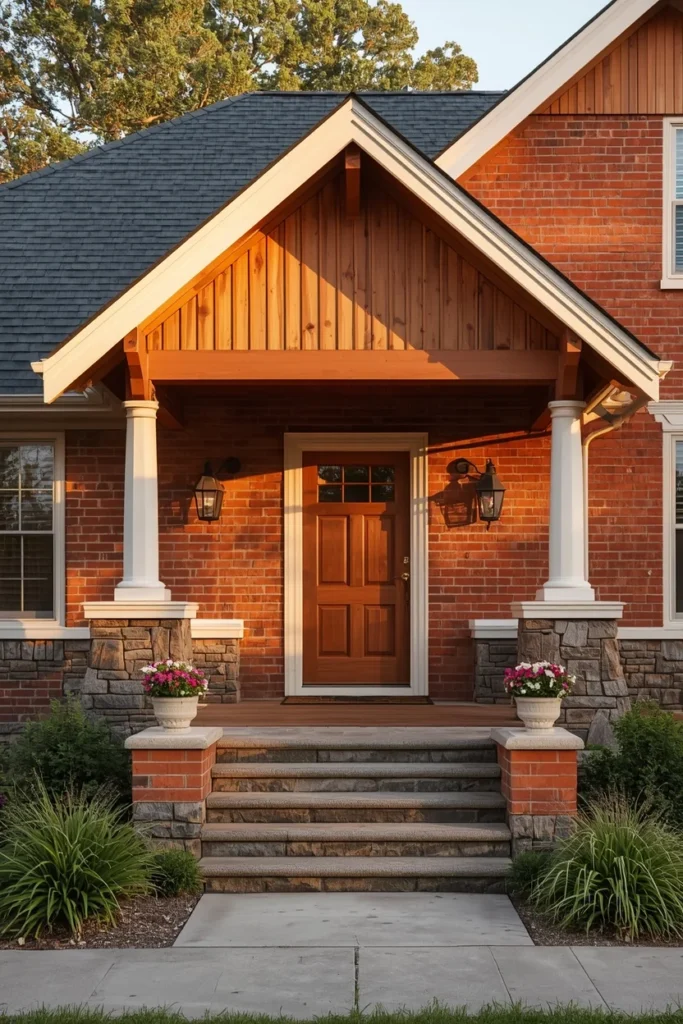
Mixing stone with red brick adds beautiful richness — whether used around the entryway, on porch bases, or in accent walls, it gives the exterior an upscale, layered look that feels custom and intentional.
This is one of the most effective updates for homeowners wanting to elevate a red brick exterior without painting anything. A stone-clad entry surround, stone porch columns, or a stone chimney accent introduces texture variation and visual hierarchy, drawing the eye toward the entrance.
Material pairing tip: Choose a stone in a warm gray or buff tone rather than a stark white stone — this keeps the material transition feeling cohesive rather than jarring against the brick’s warmth.
IDEA 10: The Mixed Brick & Siding Facade
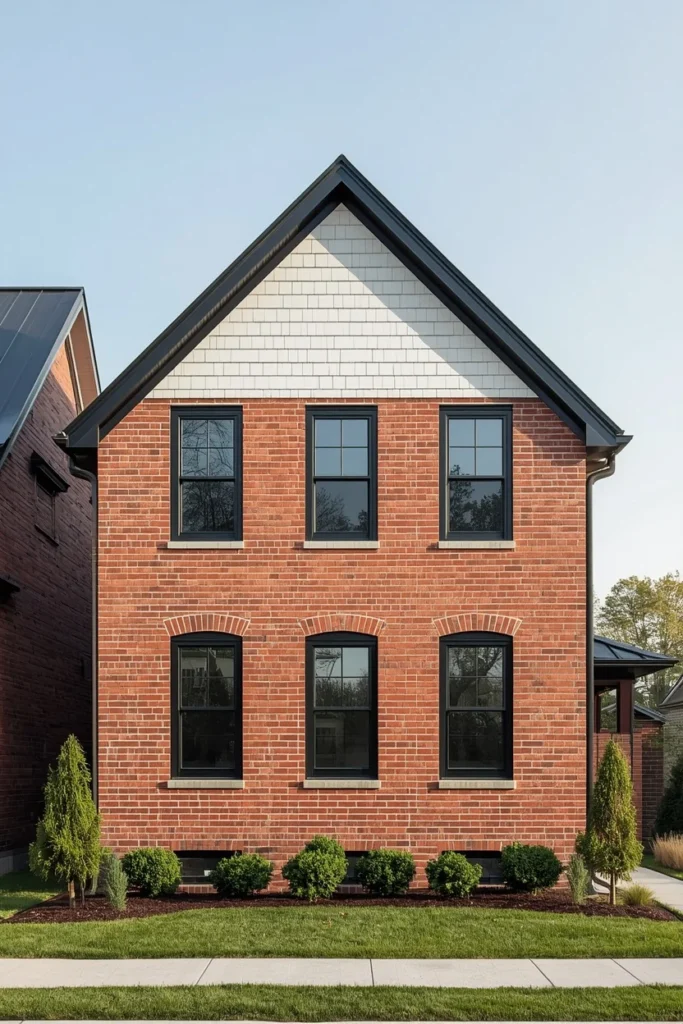
If a red brick exterior feels heavy or dated across its full surface, mixing in siding is a genuine game-changer — adding board-and-batten or horizontal lap siding to upper levels or gables creates movement and modern curb appeal.
This approach is especially effective for two-story homes where the ground floor remains brick and the upper level or a gable section is reclad in siding, painted in a coordinating warm white, charcoal, or sage. The visual break prevents a large, flat brick surface from feeling monotonous and adds the kind of architectural layering most associated with current modern farmhouse and transitional exterior trends.
IDEA 11: The Limewash Brick Treatment
For homeowners wanting to soften red brick without fully painting it, limewash offers a textured, semi-transparent finish that allows the brick’s natural variation to show through a chalky, muted layer of color.
Unlike flat paint, limewash creates a mottled, aged-in-place look — perfect for homeowners chasing the “European farmhouse” or “French country” aesthetic currently trending alongside red brick’s broader comeback. It’s also more breathable than standard masonry paint, an important consideration for the long-term health of brick and mortar.
Best for: Homes with heavily varied or patchy original brick tone, where a uniform color isn’t desired but some visual softening is.
IDEA 12: The Black Garage Door Statement
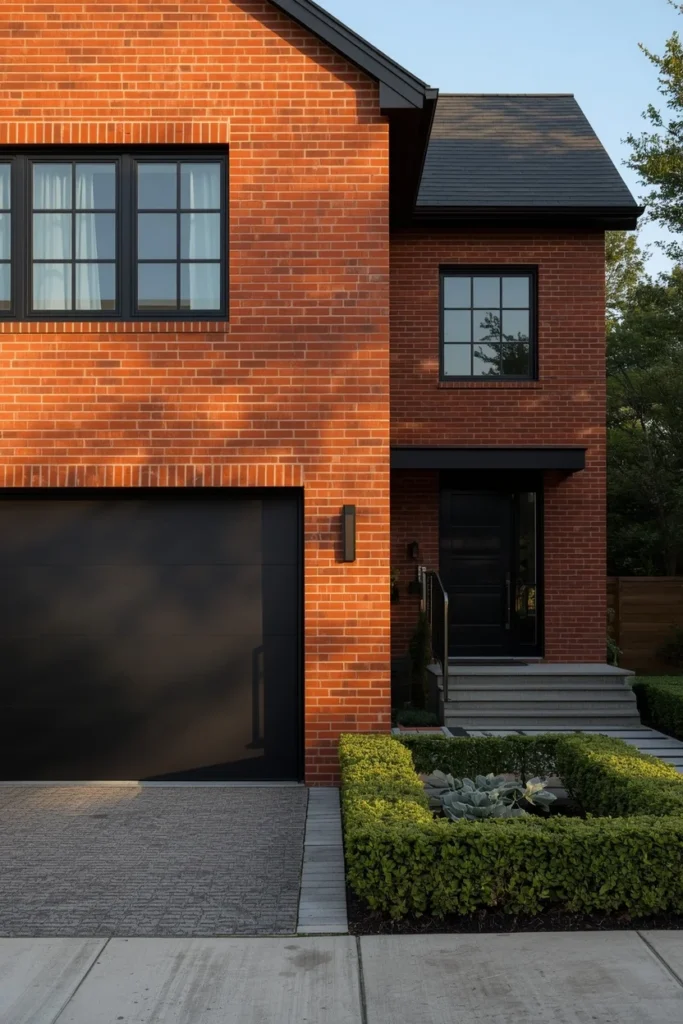
A black garage door is bold in the best way — it ties in beautifully with black windows, lighting, or shutters and instantly gives a red brick home a more modern edge.
Because the garage door often occupies a significant portion of a home’s street-facing facade, this single update can have an outsized visual impact relative to its cost. Choose a matte or low-sheen black finish (rather than glossy) for a more architectural, contemporary read, and coordinate with black house numbers and light fixtures for full cohesion.
IDEA 13: The Red & White Brick Blend
For homeowners who love the texture of brick but want something lighter and more contemporary, mixing red and white brick is a stunning solution — it creates dimension and a custom look without losing the material’s original character.
This can be achieved during new construction or major renovation by alternating brick courses or sections, or by partially limewashing or painting select areas of an existing red brick facade white while leaving other sections natural. The result reads as intentional and architecturally considered rather than simply “half-finished.”
IDEA 14: The Wood Accent Layer
Wood and red brick were genuinely meant to be together — cedar beams, natural wood shutters, or a wood-tone garage door add warmth, balance, and a hint of rustic charm that pure paint-and-brick combinations can’t achieve alone.
A cedar-clad gable, natural wood porch posts, or a stained wood front door (rather than painted) introduces an organic material layer that bridges the gap between traditional red brick and more contemporary or farmhouse-adjacent exterior styles. Choose a warm, honey-toned cedar stain rather than a gray-washed finish for the best harmony with red brick’s warmth.
IDEA 15: The Symmetrical Colonial Refresh
A Georgian or colonial red brick home already carries stately charm, so leaning fully into a grand, symmetrical entrance only enhances it. Think oversized lanterns, a glossy front door, polished brass hardware, and matching symmetrical planters on either side of the entry.
Symmetry is the operative principle here: matching shutters at every window, identical planters, evenly spaced exterior lighting. This formality is precisely what colonial red brick architecture calls for, and deviating from it (mismatched fixtures, off-center elements) is one of the more common ways these homes lose their visual coherence over time.
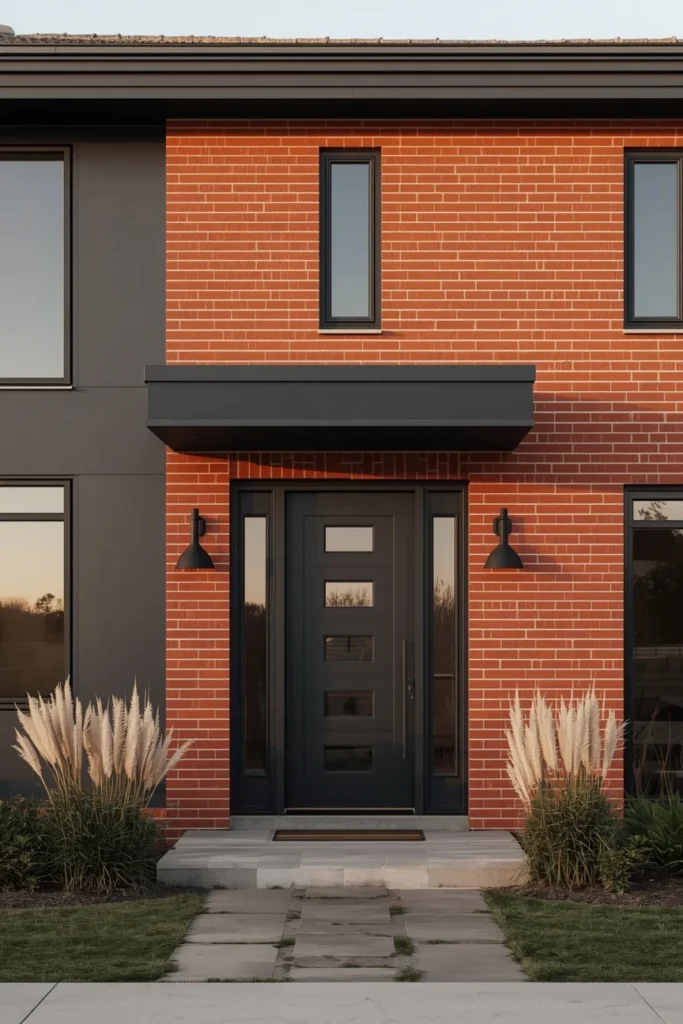
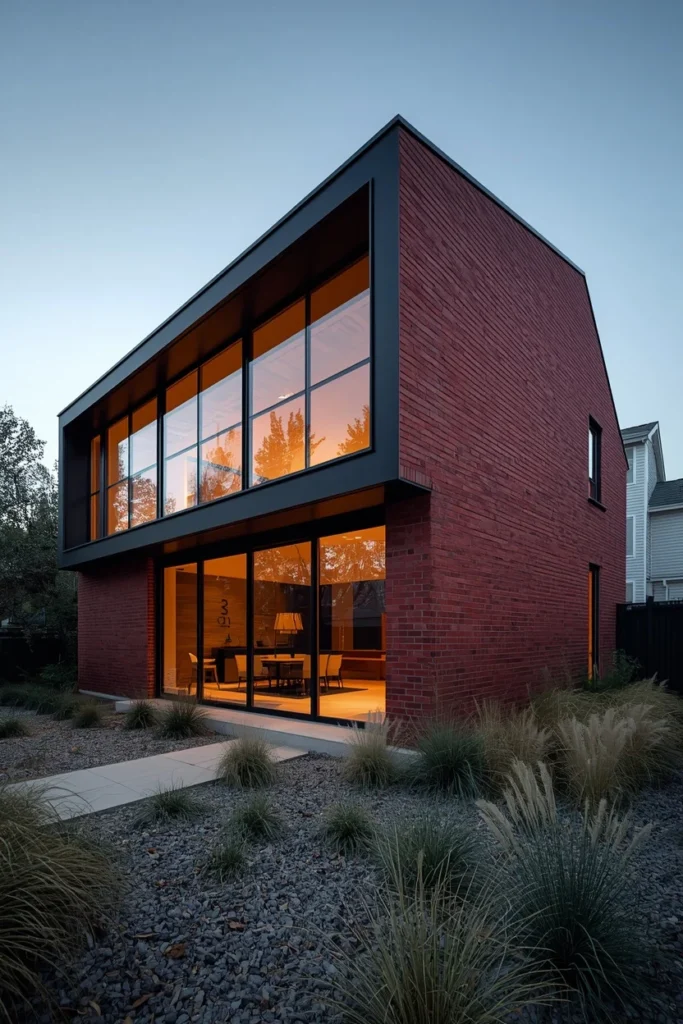
IDEA 16: The Modern Black & Glass Update
Forget what you know about traditional brick homes — bold modern red brick exteriors combine contemporary architectural lines with timeless brick veneer, often pairing the brick with black-framed glass windows and doors and minimal architectural lighting for commanding curb appeal.
This is the most architecturally ambitious update on this list, typically involving larger window replacements or an addition, but it demonstrates just how far red brick’s versatility extends — from colonial formality to fully contemporary minimalism, using the same base material throughout.
Landscaping & Lighting — The Two Most Underrated Upgrades
If a red brick exterior feels like it’s missing something, the answer is almost always landscaping or lighting — not the brick itself.
The Landscaping Formula
Layered shrubs, soft lighting, stone borders, and lush greenery add texture and charm that ties beautifully into brick’s warm tones. The key word is layered: rather than a single row of identical shrubs, combine varying heights — low groundcover at the front, mid-height shrubs in the middle, and one or two taller anchor plants near the entrance or corners of the house.
The Lighting Formula
Strategic exterior lighting does double duty: practical safety after dark, and dramatic architectural definition. A warm wrought iron lantern at the entrance casts elegant shadows across red brick while antique brass finishes and beveled glass create an inviting entrance. For a more contemporary approach, soft uplighting directed at brick texture or architectural details creates the kind of nighttime curb appeal most homeowners overlook entirely.
Quick Landscaping & Lighting Wins:
- Edit overgrown foundation shrubs that obscure windows — instant visual relief
- Add a fresh layer of dark mulch for contrast against brick
- Install warm-toned (not cool blue-white) pathway and entry lighting
- Add symmetrical planters at the entrance for instant formality
- Define garden bed edges with a stone or brick border to add structure
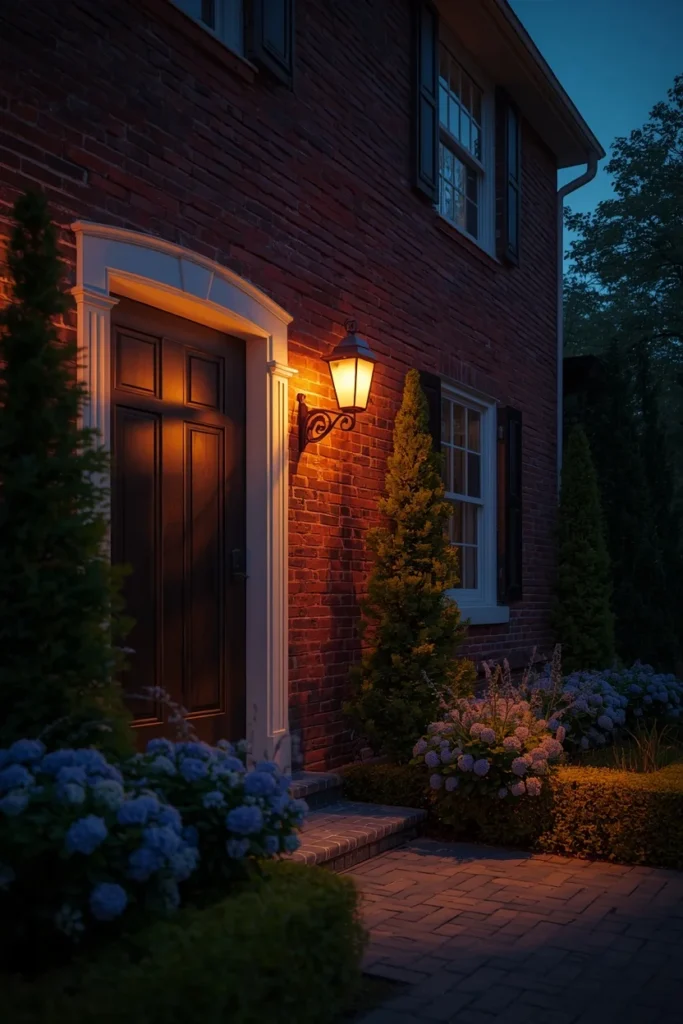
IDEA 17: The Layered Foundation Garden
Replace a single row of identical shrubs with a genuinely layered planting scheme: low evergreen groundcover along the front edge, mid-height flowering shrubs (hydrangea, boxwood) in the middle layer, and one or two taller ornamental trees or columnar shrubs flanking the entrance or corners.
This layering does more to elevate red brick curb appeal than almost any single paint decision — it softens the brick’s hard edges, adds seasonal color and texture variation, and creates the kind of established, lived-in look that buyers and visitors respond to immediately.
IDEA 18: The Architectural Uplighting
Soft, warm uplighting directed at brick texture, columns, or architectural details transforms a red brick exterior after dark — illuminating the home’s best features rather than leaving it as a flat silhouette once the sun sets.
Position low-voltage landscape lights at the base of the facade, angled upward toward texture-rich areas: exposed brick corners, stone accents, or porch columns. Choose warm-temperature bulbs (2700K–3000K) exclusively — cool white landscape lighting clashes badly with red brick’s warm tones and reads as harsh rather than elegant.
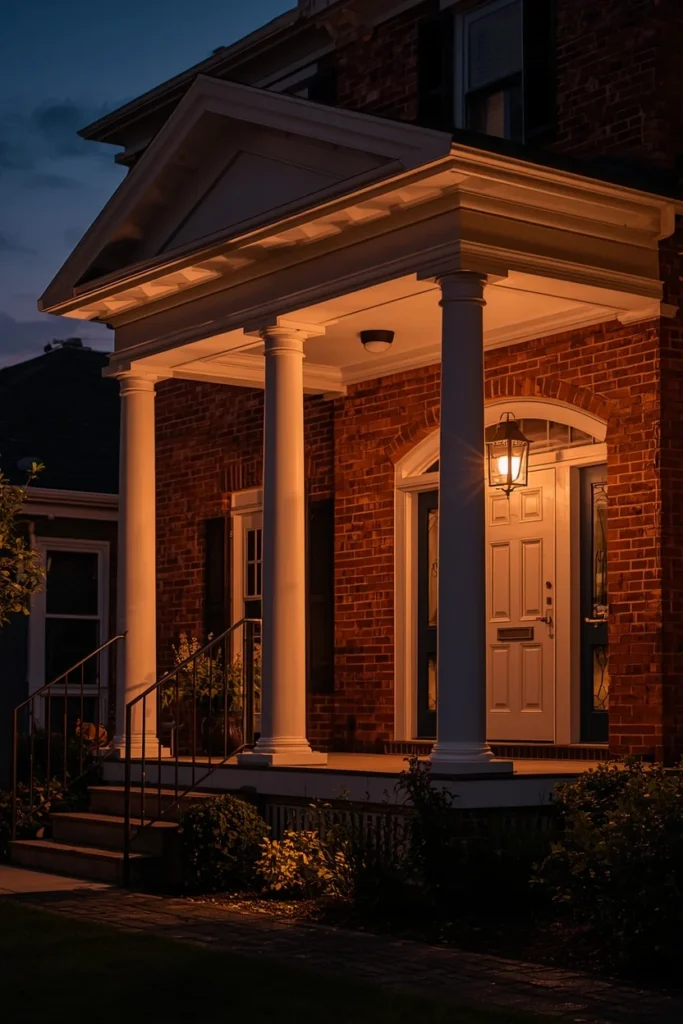
IDEA 19: The Brick Herringbone Walkway
A herringbone-pattern brick walkway leading to the front door extends the home’s material story from the facade into the landscape, creating a cohesive, custom-feeling approach rather than a disconnected concrete path.
This is a higher-investment update, but one with significant visual payoff — the geometric pattern adds texture and craftsmanship that pairs beautifully with an arched front door pediment or a traditional portico. For a lower-cost version, a simple soldier-course brick border around an existing concrete or paver path achieves a similar tie-in effect.
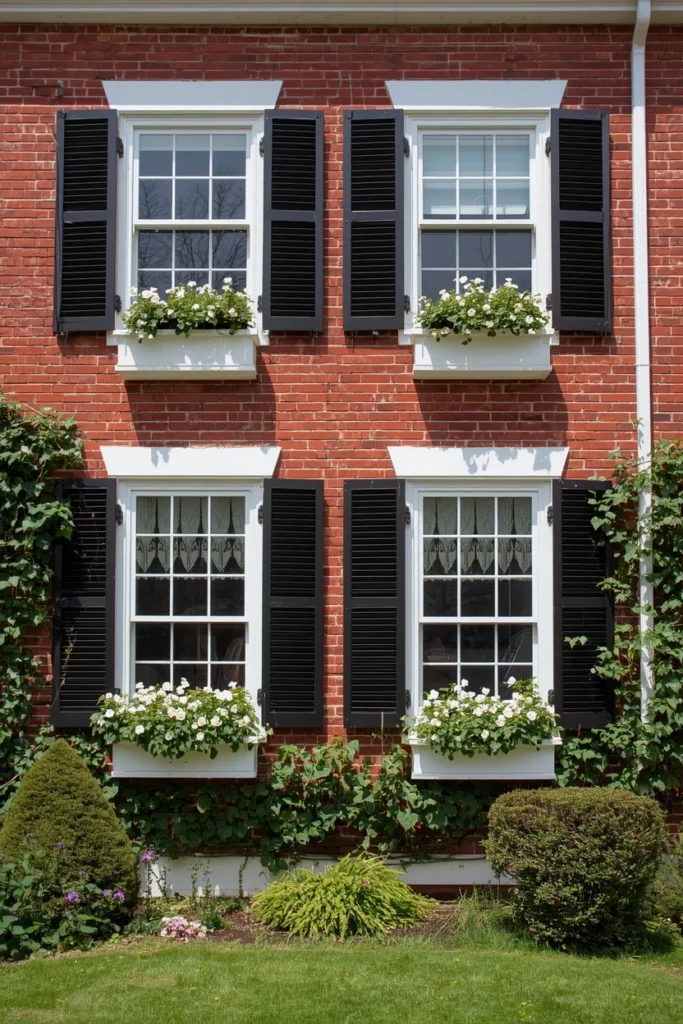
IDEA 20: The Symmetrical Window Box Update
Window boxes filled with seasonal flowers or trailing greenery soften red brick’s hard lines and add an immediate sense of care and intention to a home’s facade.
Choose boxes in a material and color that coordinates with the trim (black, white, or natural wood) and plant in a restrained palette — two to three colors maximum, repeated across all boxes for visual cohesion. White and pale blue flowers against red brick echo the colonial aesthetic; deep burgundy and gold tones lean more autumnal and rich.
IDEA 21: The Modernized Ranch Update
Red brick ranch homes — common across post-war American neighborhoods — have enormous untapped potential. Modernizing the front porch with new materials is typically the single highest-impact update, alongside removing improperly sized or purely decorative shutters and updating windows and the front door.
The formula: a refreshed entry portico, properly proportioned trim, a confident door color, and updated exterior lighting. Wood accents and copper or black gutters, paired with a tonal trim color like a deep bronze or charcoal, tone down excess contrast and make the curb appeal feel understated and current rather than busy.
IDEA 22: The Split-Level Refresh
Split-level red brick homes get an unfairly bad reputation, but the brick gives them a genuinely solid starting point. Updating railings, adding vertical siding to a non-brick section, or changing the trim and door paint colors can make the exterior feel intentional rather than stuck in a previous decade.
Focus updates on the elements that read as most dated first: aluminum railings (replace with simple black metal), mismatched trim colors across different sections of the facade (unify into one cohesive palette), and any non-brick siding that hasn’t been updated in 20+ years.
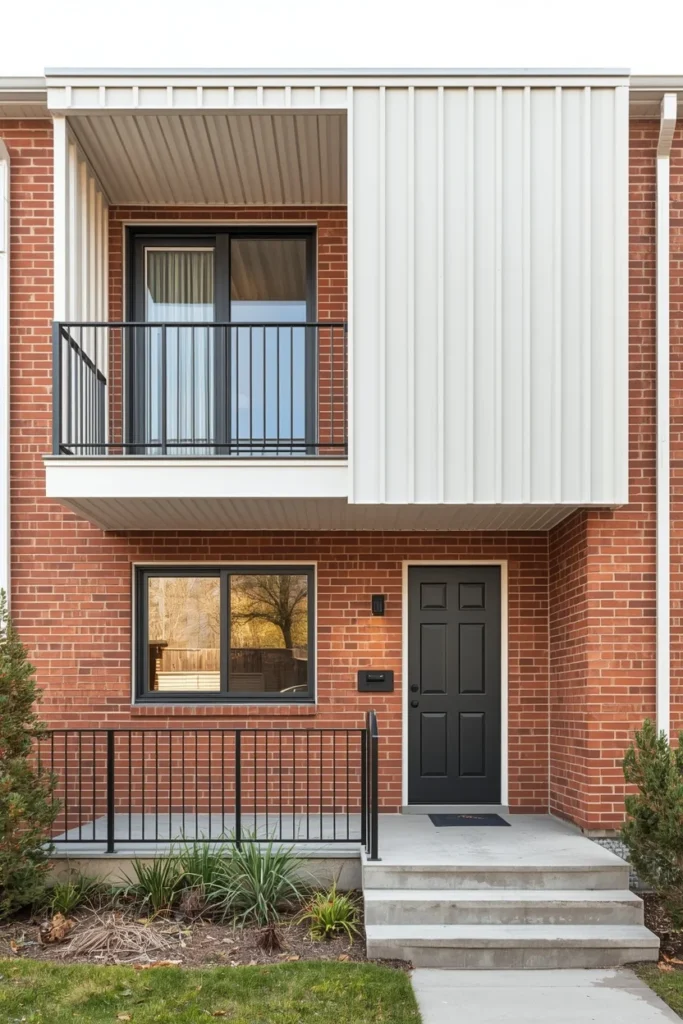
IDEA 23: The Tudor-Influenced Facade Refresh
Traditional two-story red brick homes with a Tudor-influenced second-story pop-out — common in many older suburban developments — often feel both dated and visually unfinished. New vertical siding in a deep, color-blocked tone on the upper pop-out, paired with a lighter, highlighting trim color on the roofline and a refreshed entry portico, brings clarity and intention to a facade that previously felt disjointed.
This update treats the brick ground floor and the upper facade as two coordinated but distinct visual zones — color-blocking rather than trying to unify everything into a single tone — which tends to suit this particular architectural quirk better than a uniform approach.
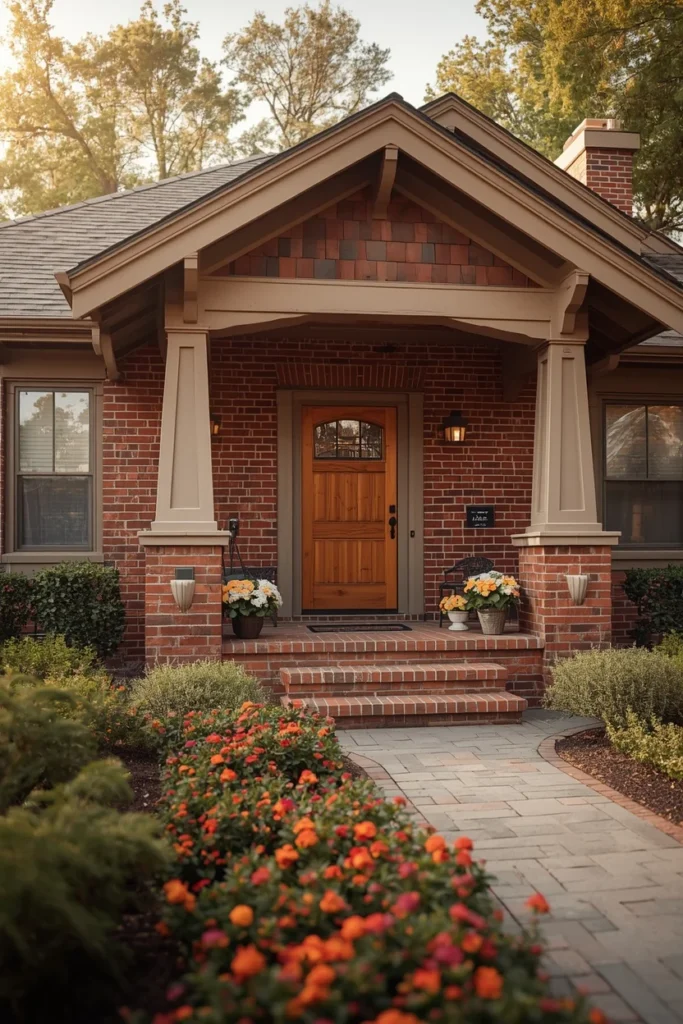
IDEA 24: The Craftsman Bungalow Warm-Up
Cozy red brick bungalows benefit enormously from leaning into their inherent warmth rather than fighting it with cool, contrasting colors. Pair the red brick with warm taupes, soft beiges, or gentle warm grays for trim, and choose a wood-tone or deep warm green front door rather than stark black or navy.
This approach creates a calm, welcoming, understated exterior that suits the relaxed, low-rise architecture of bungalow and craftsman-style red brick homes — letting the brick’s natural warmth set the tone for the entire palette rather than introducing competing cool contrast.
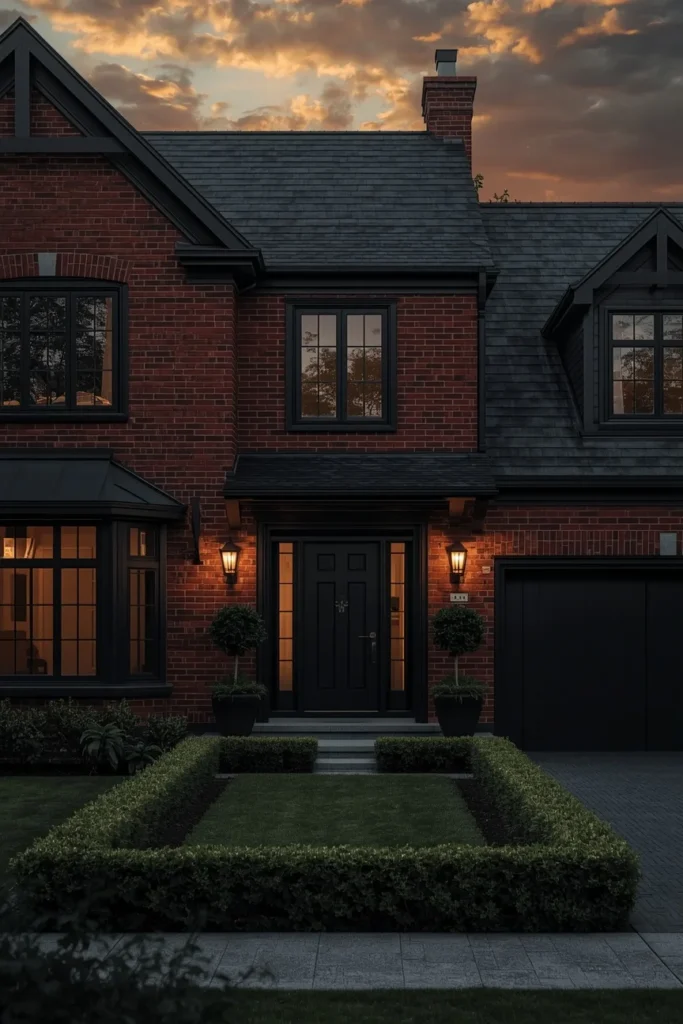
IDEA 25: The Full Moody Transformation
For homeowners wanting the most dramatic possible red brick update: combine charcoal or black trim throughout, a matching black or deep charcoal front door and garage door, black exterior lighting and house numbers, dark roof shingles, and minimal, structured landscaping in deep greens.
If the brick is naturally deep or dark in tone, lean fully into this look — charcoal, dark green, and deep gray accents make the brick feel even richer, and moody color schemes add genuine sophistication while keeping the overall look unmistakably classic. This is the red brick exterior most likely to stop scrolling on Pinterest, and the one most homeowners reach for when chasing a true architectural transformation.
DESIGNER TIPS
Tip 1 — Always Start With the Fixed Elements Your roof, brick, and driveway material set the palette constraints before you ever open a paint deck. Warm-toned roofing calls for warm trim and accent colors; cool gray roofing tolerates both cool and warm choices but clashes with strongly orange-toned brick. Identify your fixed elements first, every time.
Tip 2 — Check Undertones, Not Just Color Names A “gray” trim color with blue undertones will fight warm red brick; a “white” with yellow undertones will read as cream rather than crisp. Ask your paint supplier to identify the undertone of any color under consideration, and verify it harmonizes with your brick before purchasing.
Tip 3 — Use the 10 AM vs. 10 PM Test View any exterior paint sample at multiple times of day — full morning sun, midday, and evening shade all shift how a color reads. A color that looks perfect at 10 AM can look completely different by evening; testing across the full day prevents expensive repainting later.
Tip 4 — Repeat Your Metal Finish Choose one metal finish — brass, matte black, or polished nickel — and repeat it across door hardware, light fixtures, house numbers, and mailbox. This single repetition is what separates a coordinated, designer-looking exterior from one that simply has nice individual pieces.
Tip 5 — Let Landscaping Do What Paint Can’t If a budget genuinely doesn’t allow for a paint or trim project this year, landscaping alone — layered shrubs, fresh mulch, defined garden edges, and warm lighting — can transform a red brick exterior’s perceived age and care level dramatically, often for a few hundred dollars.
BUDGET ALTERNATIVES
| Upgrade | Splurge Version | Budget Alternative |
| Front door repaint | Professional painter ($300–500) | DIY weekend project ($40–80 in paint) |
| Exterior light fixtures | Designer brass lanterns ($200+/fixture) | Wayfair/Home Depot coordinated set ($60–120/fixture) |
| Window trim update | Full window replacement ($8,000+) | Trim-only repaint where possible ($300–800) |
| Stone entry accent | Full stone veneer install ($3,000+) | Stone planters + stone-look pavers at entry ($200–500) |
| Landscaping refresh | Professional landscape design ($2,000+) | DIY layered planting + mulch ($200–400) |
| Garage door update | New insulated black garage door ($1,500+) | Garage door paint kit ($60–150) |
| House numbers & mailbox | Custom brass numbers ($150+) | Amazon/Home Depot matte black set ($25–50) |
| Pathway upgrade | Full herringbone brick walkway ($3,000+) | Soldier-course brick border on existing path ($300–600) |
Budget Priority Order:
- Pressure wash the entire exterior — driveway, walkway, siding, brick (often under $150 to DIY or hire)
- Repaint the front door in an intentional color
- Update house numbers and entry light fixture to a coordinated finish
- Edit overgrown foundation shrubs and refresh mulch
- Then move to trim, windows, or larger material updates as budget allows
These four entry-level steps — pressure washing, door paint, lighting, and landscaping editing — can collectively transform a home’s street presence for under $500.
COMMON MISTAKES
Mistake 1: Choosing a Door Color That Clashes With the Brick’s Undertone A cool-toned blue or purple-leaning color against warm orange-toned brick creates visual tension rather than harmony. Always identify your brick’s undertone first, then select a complementary or intentionally contrasting (but not clashing) door color.
Mistake 2: Ignoring the Roof Color The roof is a fixed, large-surface-area element that constrains every other color decision. A warm brown roof calls for warm trim; choosing cool charcoal trim against a warm brown roof and warm red brick creates an unresolved, fighting palette.
Mistake 3: Going Too Dark Without Daylight Testing Dark colors that look sophisticated on a paint chip can look harsh or overwhelming at full exterior scale, especially if the home lacks other dark architectural features to balance them. Always test large samples in real daylight conditions before committing to a full repaint.
Mistake 4: Mismatched or Improperly Sized Shutters Shutters that are too small for their windows, or that don’t match in style and color across the facade, read as an oversight rather than a design choice. Either remove improperly sized shutters entirely or replace them with correctly proportioned, matching pairs.
Mistake 5: Skipping Landscaping Entirely A red brick exterior with no landscaping investment, no matter how well the paint and trim are chosen, will always feel incomplete. Landscaping is not optional — it’s the soft layer that ties hard architectural elements together.
Mistake 6: Cool White Trim on Warm Brick A trim white with blue undertones clashes with red brick’s inherent warmth, creating a slightly “off” feeling that’s hard to pinpoint but easy to see in photos. Always choose a warm white with cream or yellow undertones for trim against red brick.
Mistake 7: Forgetting Hardware and Lighting Coordination Mismatched metal finishes across door hardware, light fixtures, house numbers, and mailbox create visual noise. Choose one finish and apply it consistently across every exterior metal element.
Mistake 8: Overcommitting to Trends Without Testing A bold, trend-driven color (a particular shade of teal or mustard, for instance) chosen purely because it’s popular on Pinterest, without testing it against your specific brick’s undertone and your home’s fixed elements, risks looking dated or simply wrong within a few years. Balance trend-awareness with timelessness — bold tones work best as small, sparing accents rather than dominant choices.
FAQs
CONCLUSION
Red brick was never the problem. The surrounding choices — an unconsidered trim color, a door that’s been the same shade for twenty years, landscaping left to grow wild or worse, neglected entirely — were doing the damage.
The 25 ideas in this guide all point toward the same underlying truth: red brick is one of the most adaptable, enduring exterior materials available, and the smallest, most affordable updates — a new door color, coordinated lighting, layered landscaping — often deliver the most dramatic transformation.
You don’t need to tackle all 25 ideas at once. Start with your front door. Test a few colors against your brick’s actual undertone. Add one layer of landscaping. Update your light fixtures to match. Then step back, and watch your traditional red brick home start looking incredibly chic.