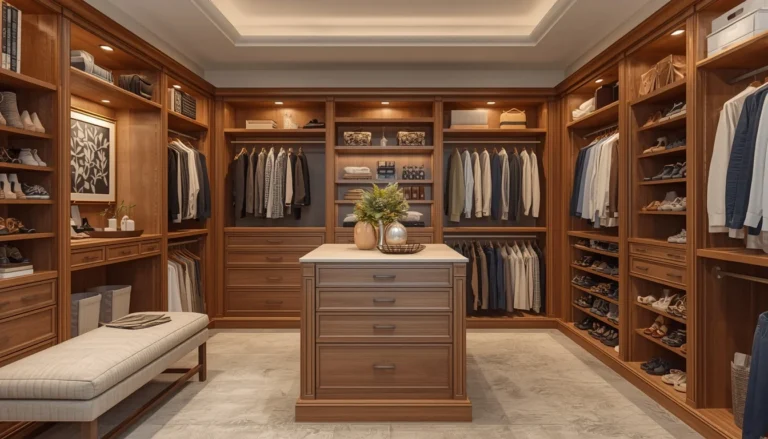
17 Cozy Study Space Ideas That Make Focusing Feel Effortless & Enjoyable
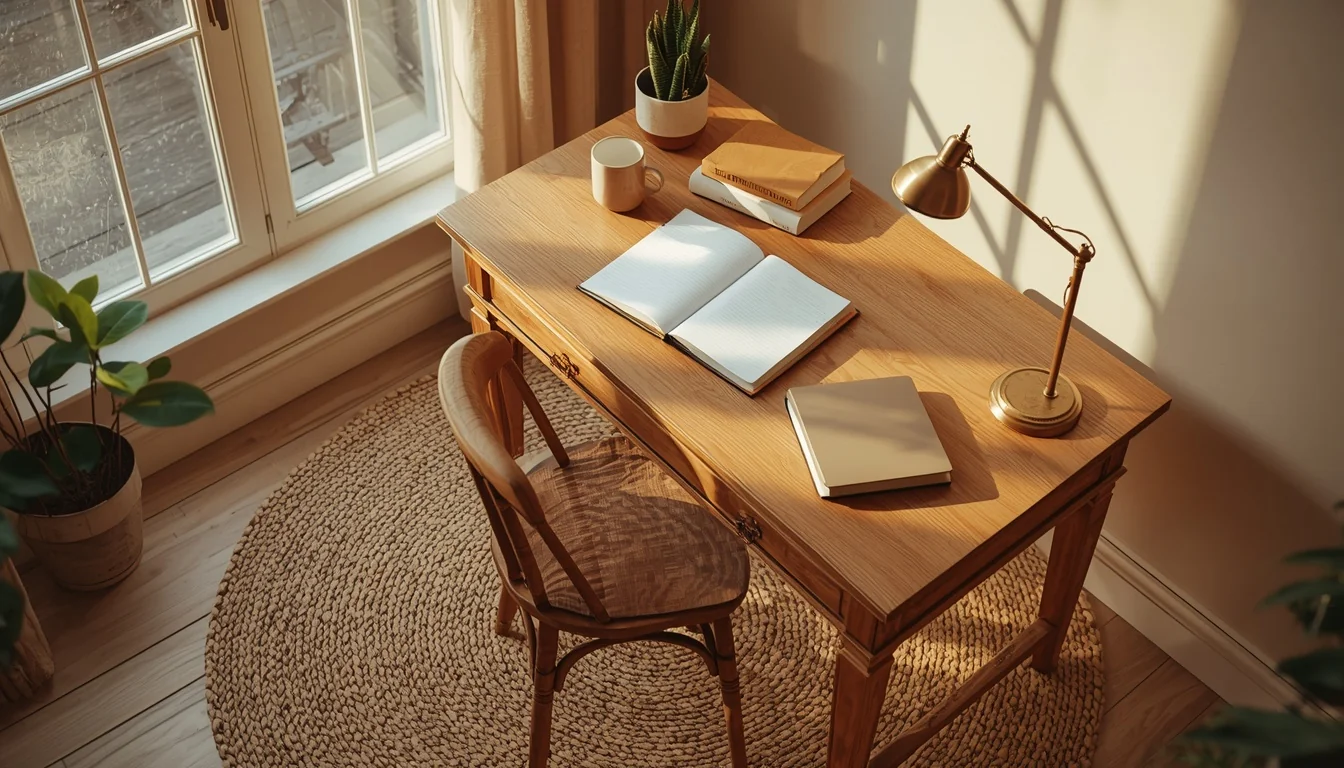
Most study spaces fail for one reason: they’re built to look good in a photo, not to actually hold someone’s attention for two hours straight.
A cold desk under a bare bulb might photograph fine, but it doesn’t make anyone want to sit down and stay there. The spaces that actually work for focus tend to share a few quiet details, warm light, a soft texture nearby, a spot for a mug, something to look at that isn’t a screen.
This list walks through 17 ways to build that kind of space, whether it’s a full room, a bedroom corner, or a shared desk that needs to earn its keep every single day.
Table of Contents
- Warm Wood Desk Near a Window
- Bay Window Study Nook
- Reading Corner with a Lounge Chair
- Biophilic Desk Zone with Layered Plants
- Built-In Bookshelf Study Wall
- Moody Desk with Velvet Drapery
- Sage Green Wellness Corner
- Layered Rug and Textile Zone Under the Desk
- Acoustic Panel Wall as Art
- Bedroom Corner Study Nook
- Vintage Banker’s Lamp Study Style
- Multi-Zone Desk and Lounge Layout
- Exposed Brick Industrial Cozy Study
- Floating Desk for Small Spaces
- Curtain-Enclosed Study Nook
- String Light Ambient Study Corner
- Coffee and Tea Station Corner
1. Warm Wood Desk Near a Window
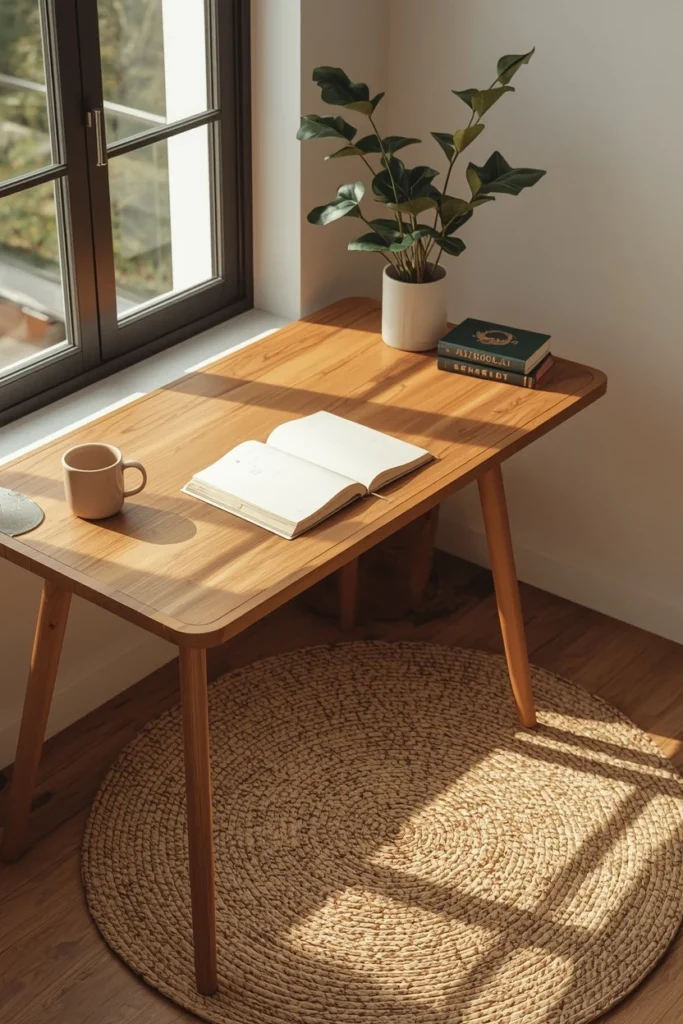
Placing the desk against or near a window does two things at once: it brings in daylight that reduces eye strain, and it gives the mind somewhere to rest during breaks instead of staring at a blank wall. A solid wood desk, rather than laminate or glass, adds warmth and grounds the space in a way that cold materials can’t. A woven rug underfoot and a small stack of books on the corner keep the surface from feeling sterile. This setup works because natural light genuinely affects focus and mood throughout the day, not just the way the room looks in photos. It’s one of the simplest upgrades and often the highest-impact one.
2. Bay Window Study Nook
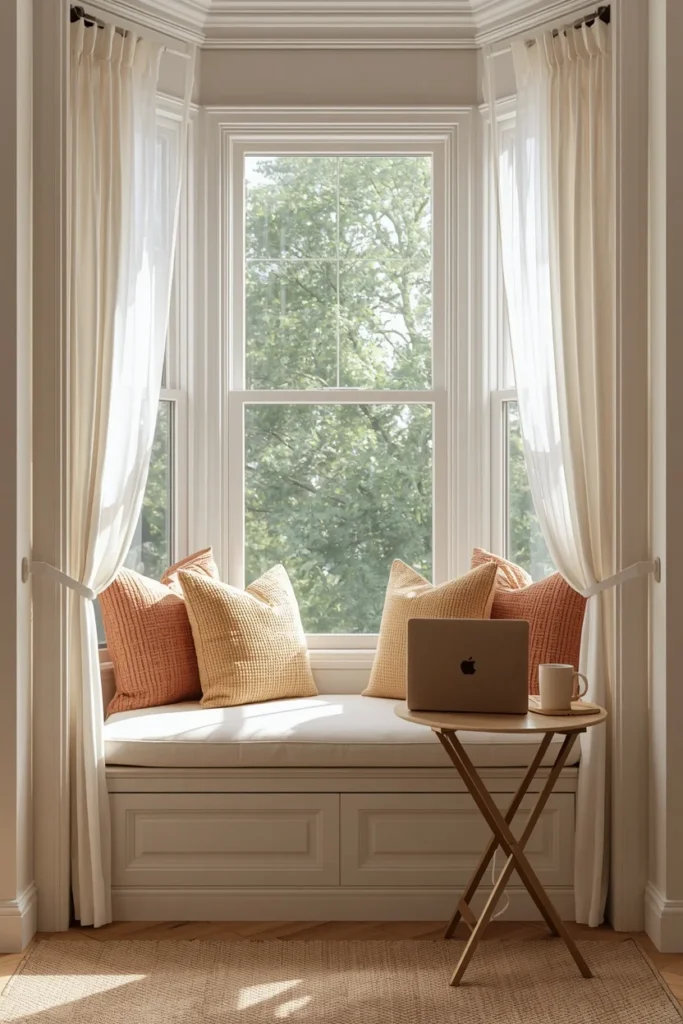
A bay window turns unused floor space into one of the coziest spots in the house, especially with a built-in bench seat topped with a thick cushion. Add a slim fold-down or side table for a laptop, plus a stack of pillows in mixed warm tones for back support during long sessions. Sheer curtains soften the light without blocking the view, which matters since daylight exposure is one of the most reliable focus boosters. This setup works especially well for reading-heavy study sessions, since the bench seating encourages a more relaxed, sustainable posture than a hard desk chair. It turns a normally wasted architectural feature into the best seat in the house.
3. Reading Corner with a Lounge Chair
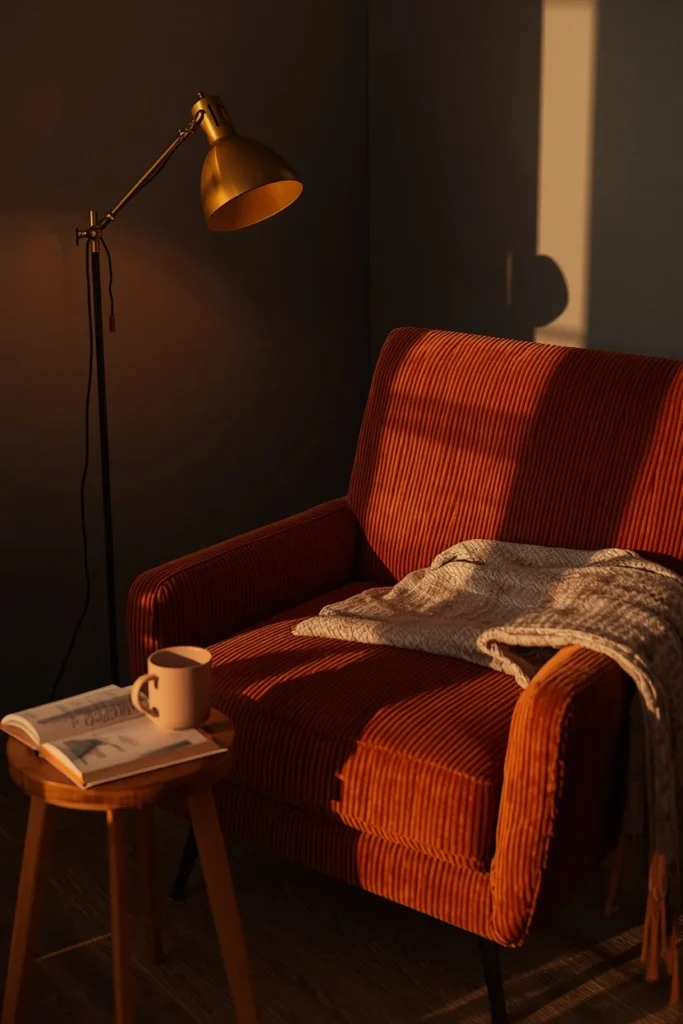
Not every study session needs a desk. A lounge chair with a side table and a floor lamp creates a second zone in the room for reading, planning, or thinking through a problem away from the keyboard. Choose a chair with a slightly worn or textured upholstery, boucle or corduroy both work well, since flawless materials tend to feel less inviting for long sits. A small side table holds a mug and a notebook within easy reach. This dual-zone approach matters because switching physical positions during a long study session genuinely helps sustain focus longer than staying in one spot for hours.
4. Biophilic Desk Zone with Layered Plants
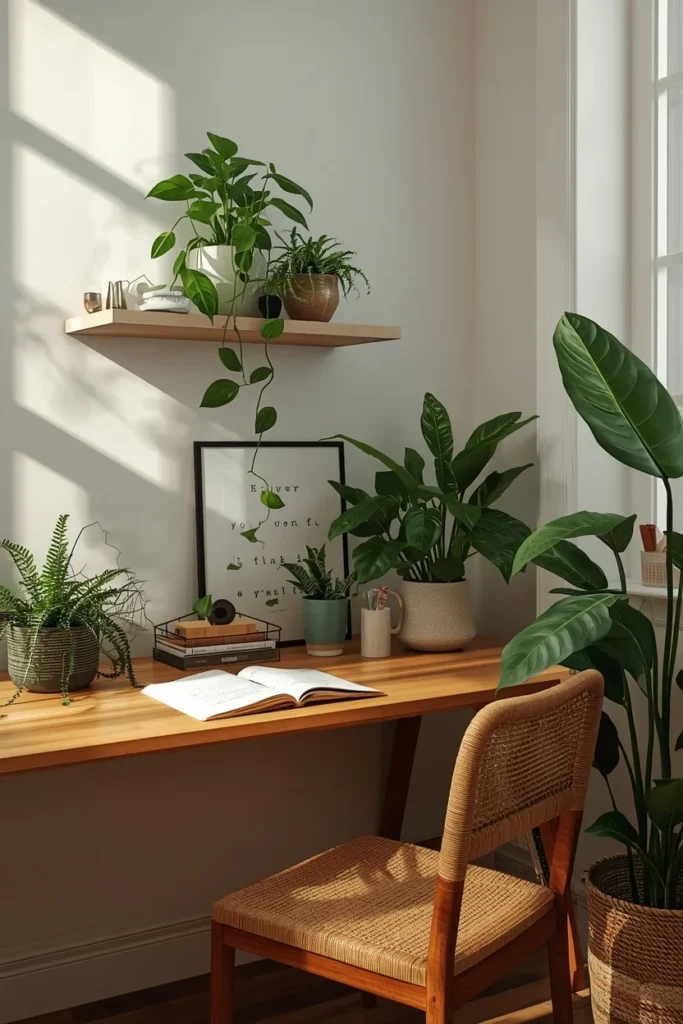
Bringing greenery into a study space does more than decorate it. Research on biophilic design consistently links plants and natural materials in workspaces to lower stress and better sustained attention. Layer plant sizes around the desk, a trailing pothos on a shelf, a small snake plant on the desk corner, and one larger floor plant nearby, so the greenery feels layered rather than like a single token pot. Pair the plants with a wood or rattan desk to keep the natural materials consistent throughout the zone. This setup works especially well for people who spend long hours at a screen, since the greenery gives the eyes somewhere restful to land.
5. Built-In Bookshelf Study Wall
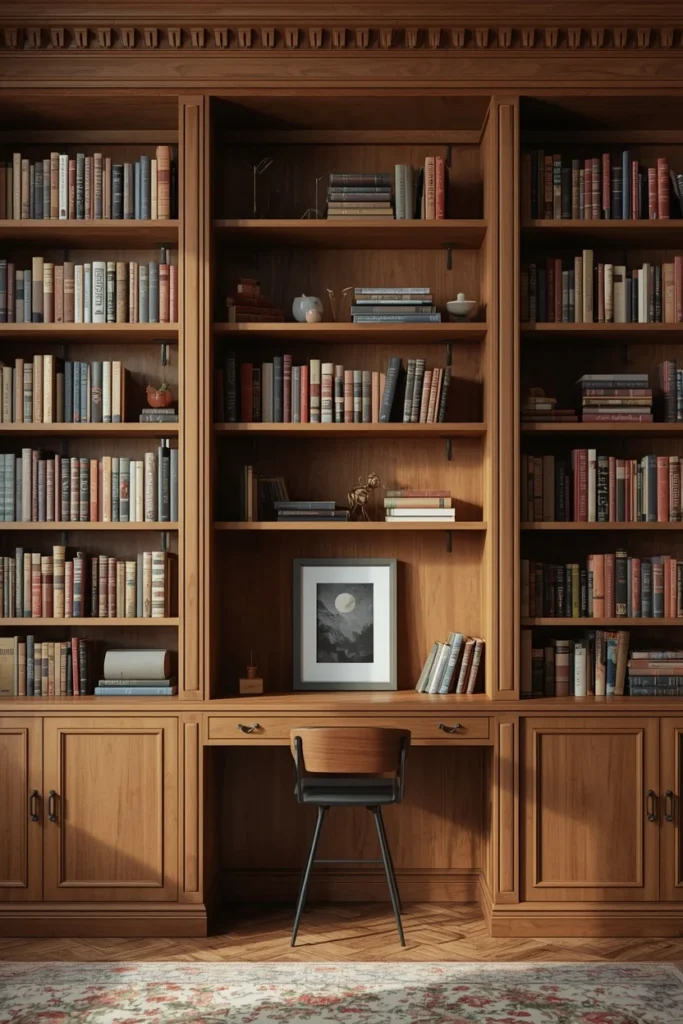
A wall of built-in shelving behind or beside the desk turns a plain study area into something that feels intentional and permanent, even in a rented space using freestanding units instead of true built-ins. Arrange books both vertically and stacked horizontally with small objects, a candle, a small framed print, tucked between sections to avoid a too-uniform look. Warm-toned wood shelving with black or brass hardware ties the metal finishes together across the room. This works because a well-organized shelf wall gives the eye a break from the screen while still feeling productive and studious, unlike a blank wall or a distracting window view.
6. Moody Desk with Velvet Drapery
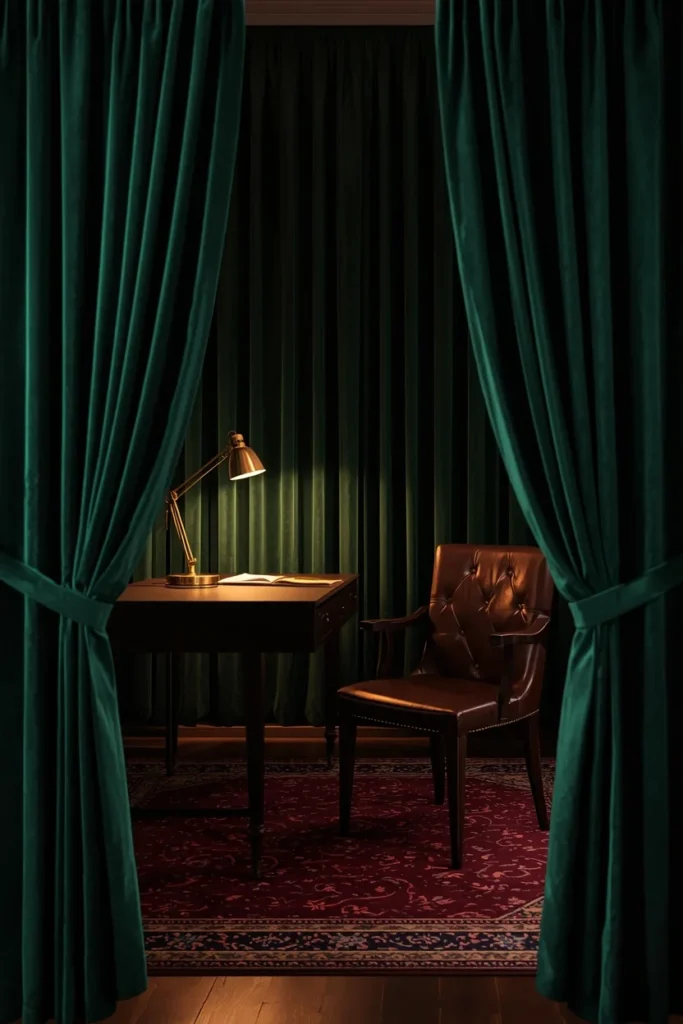
For a study space with more drama, velvet drapery in a deep jewel tone framing the desk area adds richness that plain blinds can’t. Pair the drapery with a dark wood or black desk and a warm brass desk lamp so the metals stay consistent with the moody palette. A patterned rug underfoot grounds the space further. This look borrows from the “whisky-bar” style of home offices that designers have leaned into recently, spaces meant to feel serious and focused rather than bright and airy. It works particularly well for evening study sessions, since the deep tones look their richest under warm lamp light rather than daylight.
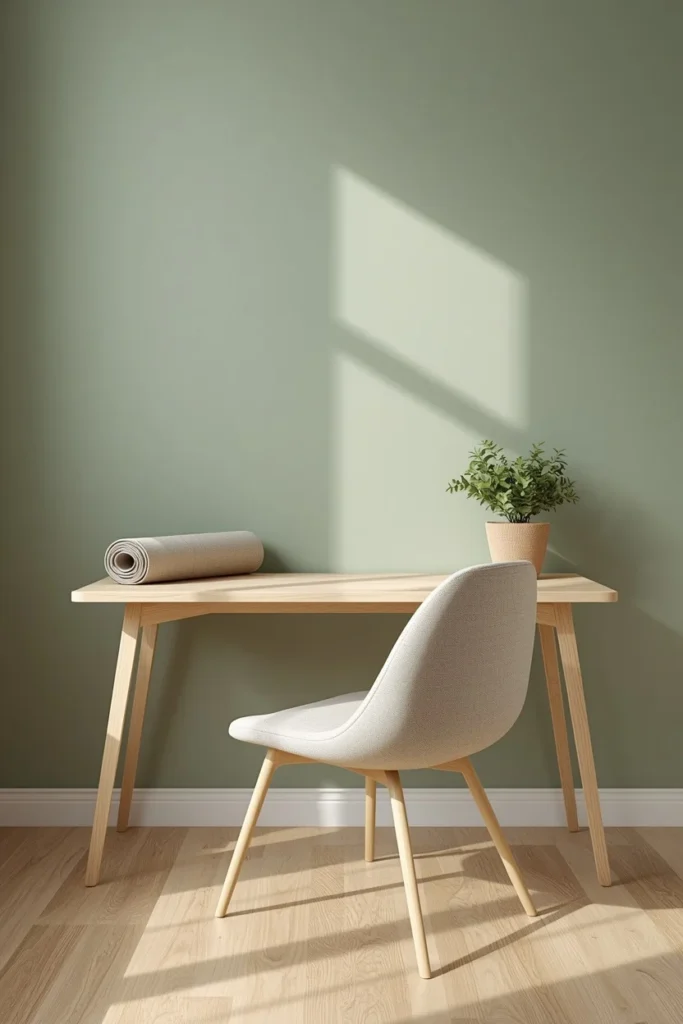
7. Sage Green Wellness Corner
Sage green has become one of the go-to colors for home offices because of its muted, calming intensity, unlike brighter greens that can feel more energizing than settling. Paint just the wall behind the desk in sage, keeping the rest of the room neutral, and add natural wood furniture to keep the palette from feeling cold. A small meditation cushion or yoga mat rolled in the corner supports the short movement breaks that genuinely help sustain focus over a long study session. This setup works because the color choice actively supports calm, sustained attention rather than just looking pleasant.
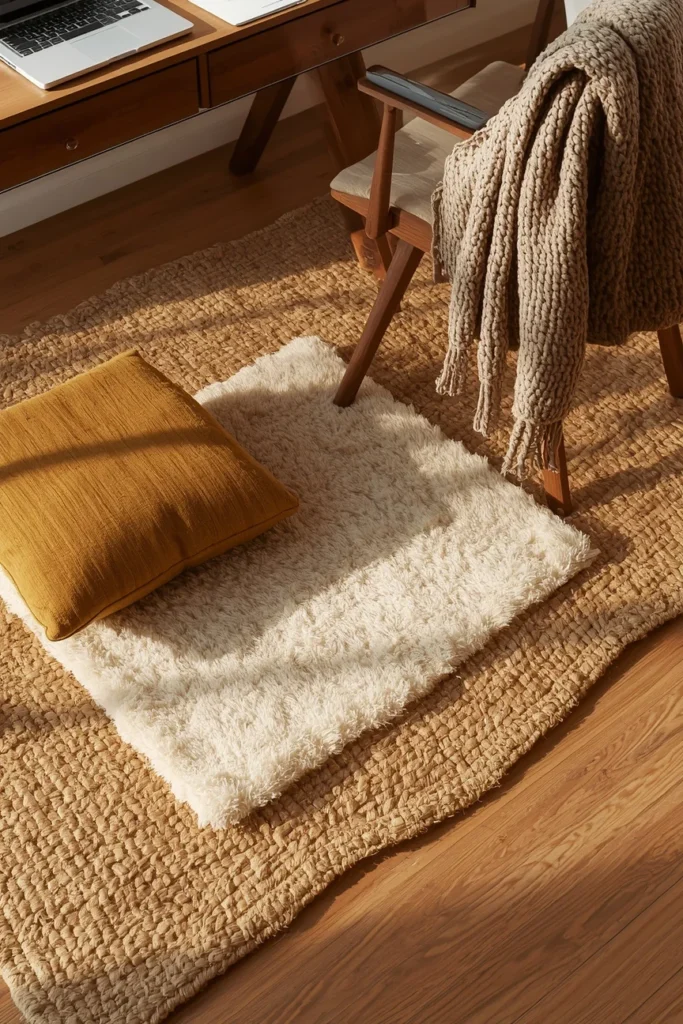
8. Layered Rug and Textile Zone Under the Desk
The floor under a desk is one of the most overlooked areas in study space design, even though bare feet on cold hardwood or tile is a small but real distraction during long sessions. Layer a jute or sisal rug as a base with a smaller, softer wool rug on top for texture and warmth underfoot. A floor cushion nearby gives an alternate seated position for reading or thinking away from the desk chair. This detail matters because comfort at the ground level of a room affects how long someone naturally stays settled in the space, even if it’s rarely the first thing anyone notices in a photo.
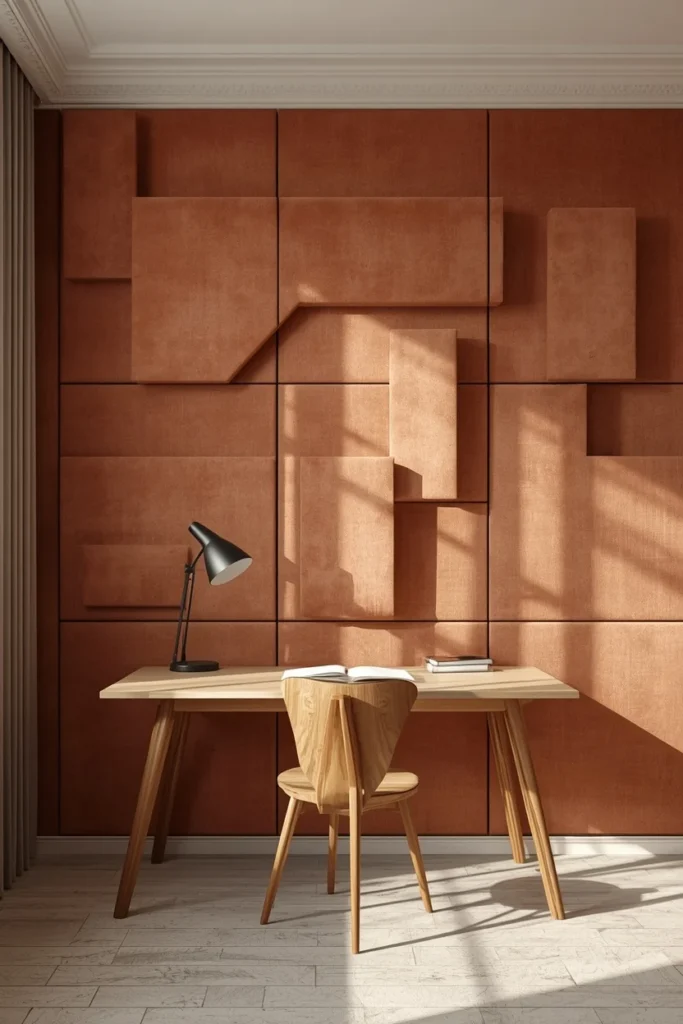
9. Acoustic Panel Wall as Art
Sound genuinely affects focus, and acoustic wall panels have moved from purely functional to decorative in recent home office design, since geometric fabric panels now double as wall art. Choose panels in a muted color that matches the room’s palette, sage, terracotta, or charcoal all work, and arrange them in a simple geometric pattern behind the desk. This works especially well in shared homes or apartments with thin walls, where reducing echo and outside noise makes a measurable difference in how long someone can concentrate. It’s a practical upgrade that also happens to look intentional rather than purely utilitarian.
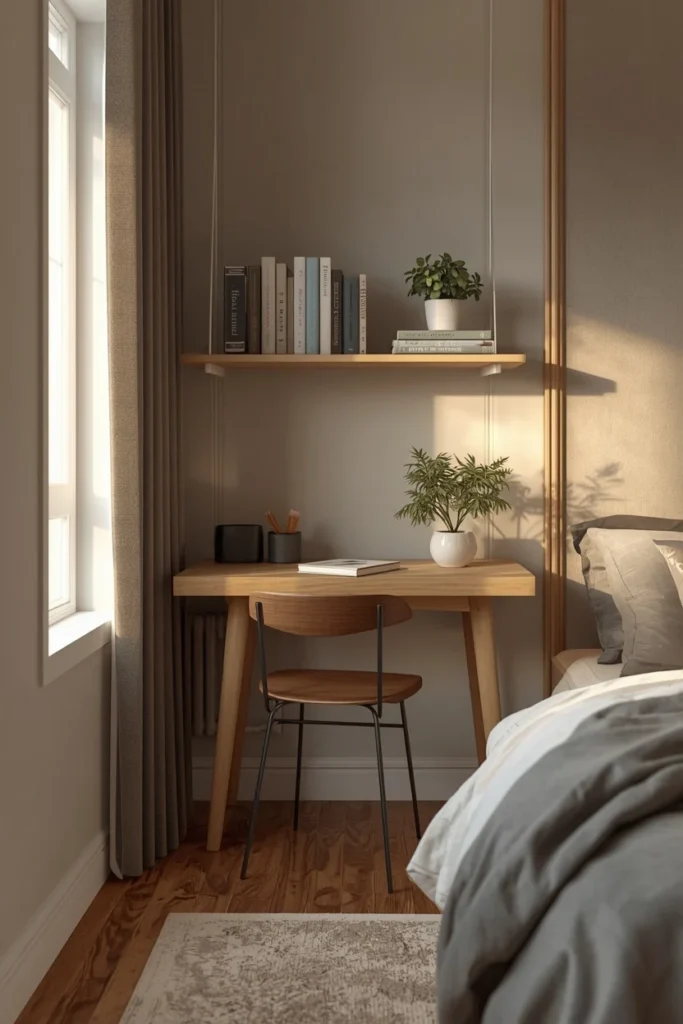
10. Bedroom Corner Study Nook
Not everyone has a spare room, and a bedroom corner can work well if it’s treated as its own zone rather than an afterthought. A small desk facing the wall, rather than the bed, helps signal “focus mode” and avoids the visual distraction of an unmade bed during video calls or study sessions. A slim floating shelf above the desk holds books and a small plant without taking up floor space. A rug placed just under the desk chair visually separates the zone from the rest of the bedroom. This works because a defined boundary, even a small rug, helps the brain shift into study mode faster than an undefined corner.
11. Vintage Banker’s Lamp Study Style
A green-shaded banker’s lamp brings an old-library feeling to a study space that overhead lighting alone can’t replicate. Pair it with a wood desk, leather-bound notebooks, and a brass pen cup for a classic, scholarly look. Keep the rest of the lighting warm and layered, a small additional lamp or dimmable overhead fixture, so the banker’s lamp isn’t the only light source in the room. This style works particularly well for evening study sessions or late-night reading, since the green glass shade filters light into a warm, focused pool rather than harsh overhead brightness.

12. Multi-Zone Desk and Lounge Layout
Dividing a larger room into a desk zone and a separate lounge or seating zone gives a study space more flexibility than a single desk can offer. The desk handles focused computer work, while a small armchair or loveseat nearby works for reading, phone calls, or a mental break between tasks. A rug under each zone visually separates the two areas without needing a physical wall. This layout works because switching between zones during a study session, rather than sitting in one spot for hours, has been shown to support better sustained focus and reduce fatigue.
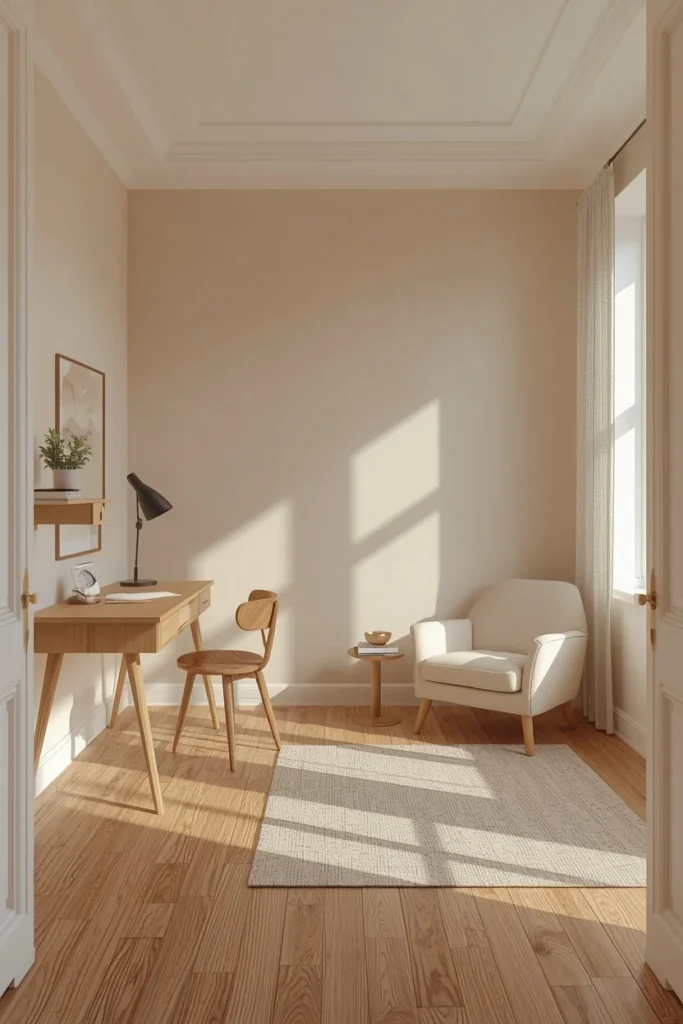
13. Exposed Brick Industrial Cozy Study
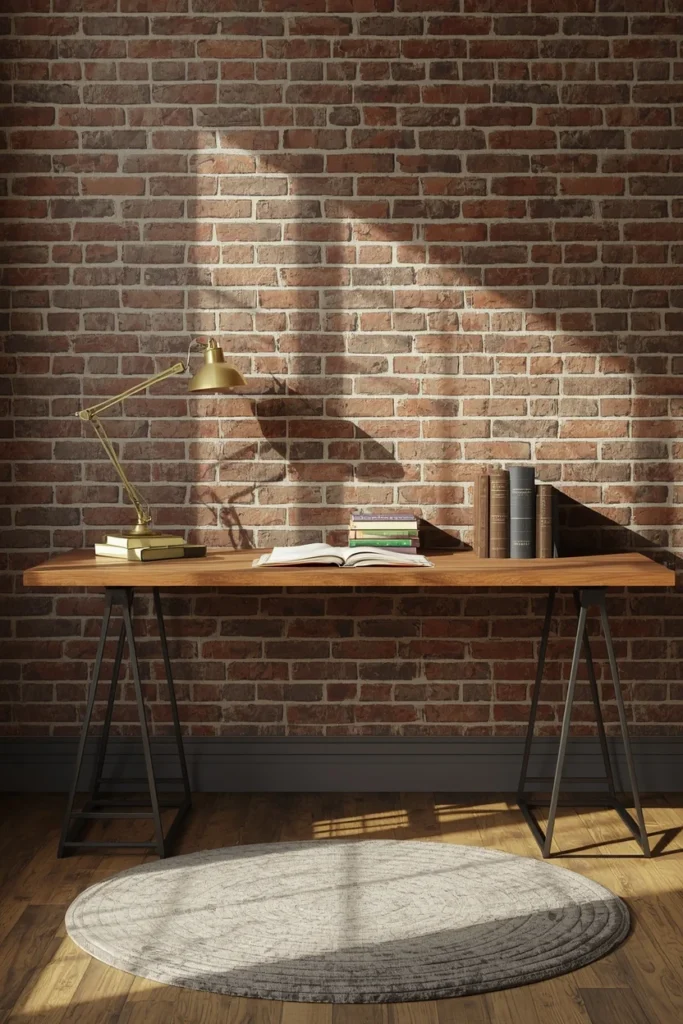
Exposed brick adds texture and warmth to a study space in a way that flat drywall can’t, especially when paired with soft, warm furnishings that balance the rougher material. A sturdy wood desk with iron brackets keeps the industrial theme consistent, while a brass desk lamp and a soft area rug soften the overall feel. Books stacked neatly on the desk add an intellectual, lived-in quality. This combination works because the contrast between the rough brick and the warm, soft furnishings keeps the space from feeling cold or overly utilitarian, which is the risk with most industrial-style rooms.
14. Floating Desk for Small Spaces
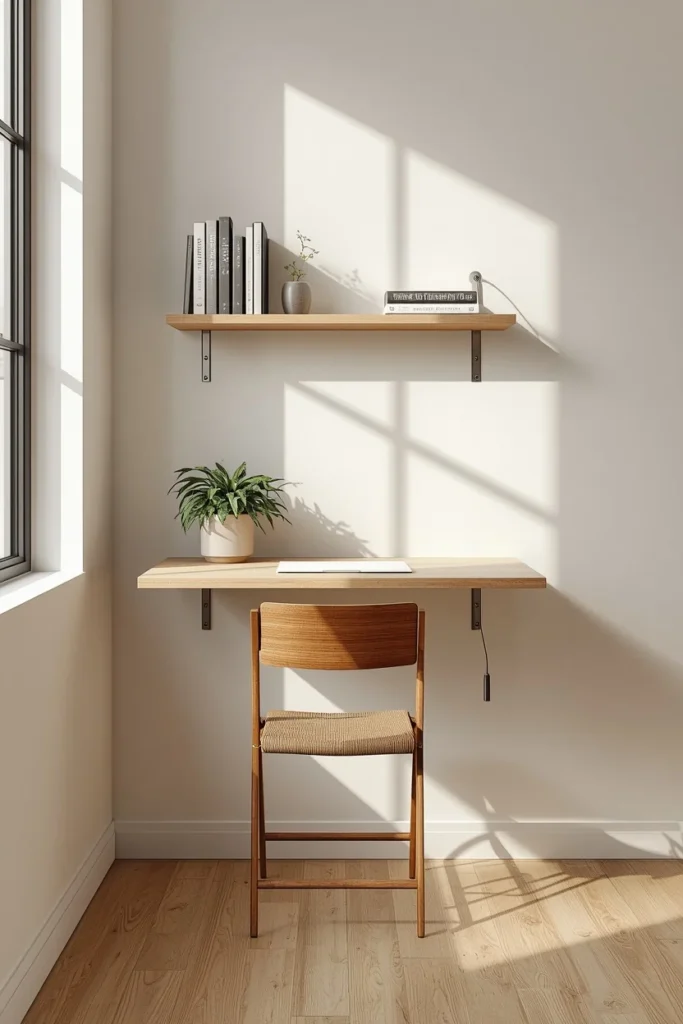
A floating wall-mounted desk is one of the most practical options for small apartments or shared rooms, since it frees up floor space without sacrificing a real work surface. Choose a wood floating desk rather than a metal or glass one to keep the small space feeling warm instead of clinical. A slim wall-mounted shelf above holds a small plant and a few books within reach. This setup works especially well in studio apartments, where a study space needs to visually disappear or blend into the room when not in use, rather than dominate a small floor plan the way a full desk would.
15. Curtain-Enclosed Study Nook
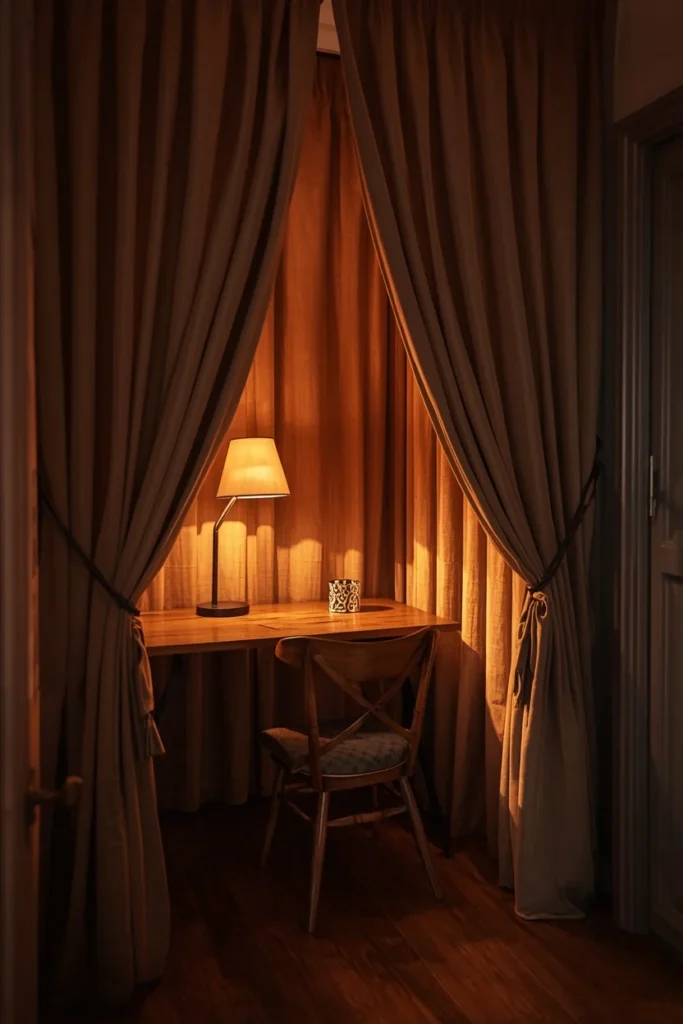
Hanging a simple curtain rod and drapery around a desk nook creates a sense of enclosure in an open room, which can genuinely help with focus in shared or open-plan spaces. Choose a linen or cotton curtain in a warm neutral tone, and keep it tied back during work hours, closed only when full separation is needed. A small desk lamp and a compact chair keep the enclosed footprint efficient. This idea works particularly well for anyone sharing a bedroom or living room with a partner or roommate, since the curtain offers a visual and psychological boundary without needing to build an actual wall.
16. String Light Ambient Study Corner
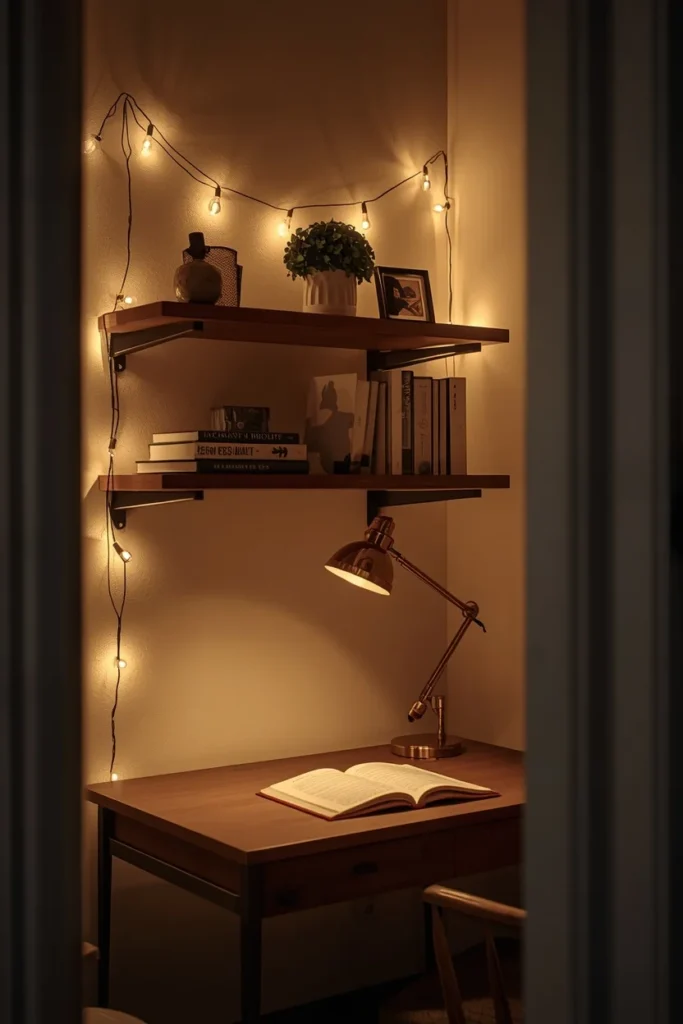
Warm string lights draped along a shelf or wall add a soft secondary light source that keeps a study corner from relying only on a single overhead bulb or desk lamp. Combined with a warm-toned desk lamp for actual task lighting, the string lights function more as mood lighting for the space around the work zone. Keep them tucked along a shelf edge or window frame rather than draped loosely, so the effect reads as intentional rather than dorm-room casual. This works particularly well in the evening, since layered light sources at different heights make a small study corner feel considerably larger and warmer than a single harsh overhead light.
17. Coffee and Tea Station Corner
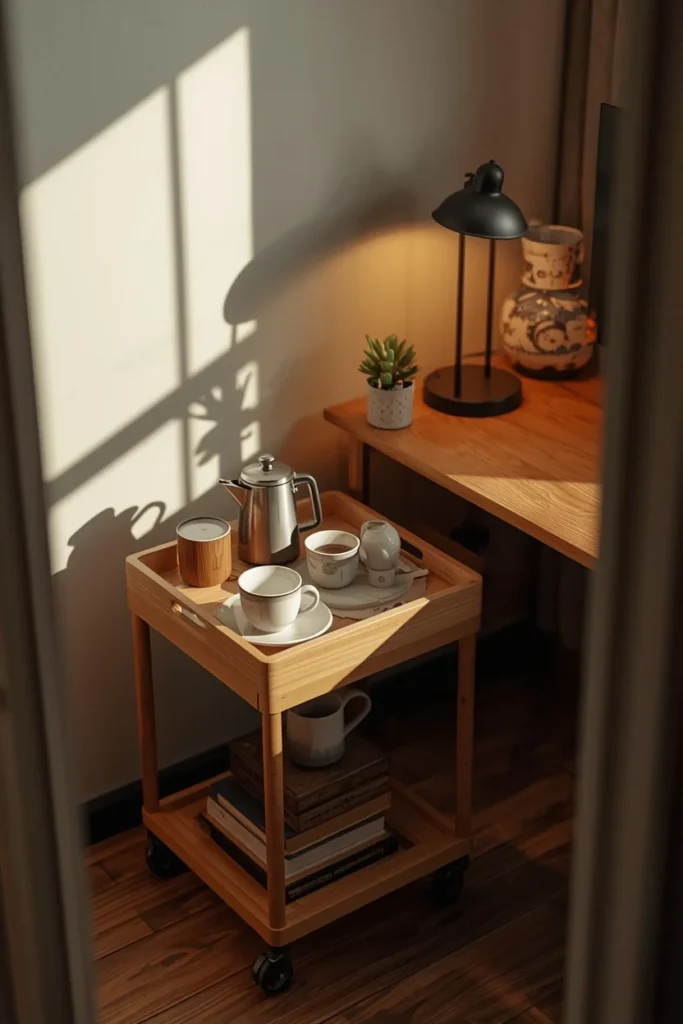
A small dedicated spot for a kettle, a few mugs, and tea or coffee supplies right next to the study area removes one of the most common reasons people leave their desk mid-session. A slim cart or small shelf holds the essentials without needing a full kitchen trip. Keep the station styled simply, a wood tray, a small collection of mugs, and one plant, so it doesn’t visually compete with the desk itself. This idea works because reducing small interruptions, like walking to another room for a drink, helps preserve the momentum of a longer study or work session.
Styling Tips
Layer at least two light sources in every study space, one for actual task lighting and one for ambient warmth, since a single overhead bulb tends to make any room feel more clinical than focused. Keep one dominant wood tone throughout the desk, shelving, and any chairs so the materials feel connected rather than mismatched. A rug under the desk chair, even a small one, does more to define a study zone than most people expect.
Practical Implementation Ideas
Test your desk placement relative to windows before committing to a full setup, since screen glare from a poorly placed window can undo an otherwise well-designed space. Keep cables managed with a simple under-desk tray or clips so the visual clutter doesn’t compete with the cozy styling. If sharing a room, define the study zone with a rug or curtain before adding decor, since the boundary itself does more for focus than any single decorative object.
Common Mistakes to Avoid
The most common mistake is prioritizing how a desk looks in photos over how the chair actually feels after two hours of sitting in it. Another frequent issue is relying on a single harsh overhead light, which tends to create the same flat, uninviting feeling in a study space that it does in a black bedroom. Skipping any kind of visual boundary in a shared or open-plan room also makes it harder to mentally shift into focus mode.
Small-Space Alternatives
A floating wall-mounted desk or a slim console table against a wall works well in apartments or shared rooms where floor space is limited. A curtain or a single rug can define a study zone in an otherwise open room without needing any construction. Vertical storage, floating shelves instead of a full bookcase, keeps a small study corner from feeling cramped.
Budget-Friendly Alternatives
A secondhand wood desk, refinished or left as-is, often costs less than a new laminate one and brings more warmth to the space. String lights and a thrifted lamp can substitute for a more expensive lighting setup while still delivering the layered warmth this list keeps coming back to. A single rug and a few plants are often enough to transform a plain corner without needing to buy new furniture at all.
Pro Styling Recommendations
Choose one focal material, warm wood, exposed brick, or a colored accent wall, and let everything else in the space stay simple around it. Keep the desk surface itself relatively clear, with only the items in active use, since visual clutter competes with focus more than most people realize. Reassess the space every few months, since study needs shift with new projects, seasons, and routines, and a space that felt right in one season might need small adjustments in the next.
FAQs
Conclusion
A cozy study space isn’t about filling a corner with pretty objects and hoping focus follows. It’s about lighting that actually supports long sessions, materials that feel warm instead of clinical, and a boundary, physical or visual, that tells your brain it’s time to settle in. Any of these 17 ideas can work in a full room, a shared bedroom, or a single unused corner, no renovation required. The goal isn’t a space that photographs well. It’s one that makes sitting down to focus feel like the easy part of the day instead of the hard part.