17 Wood Privacy Fence Ideas That Are Beautiful, Functional & Totally Chic
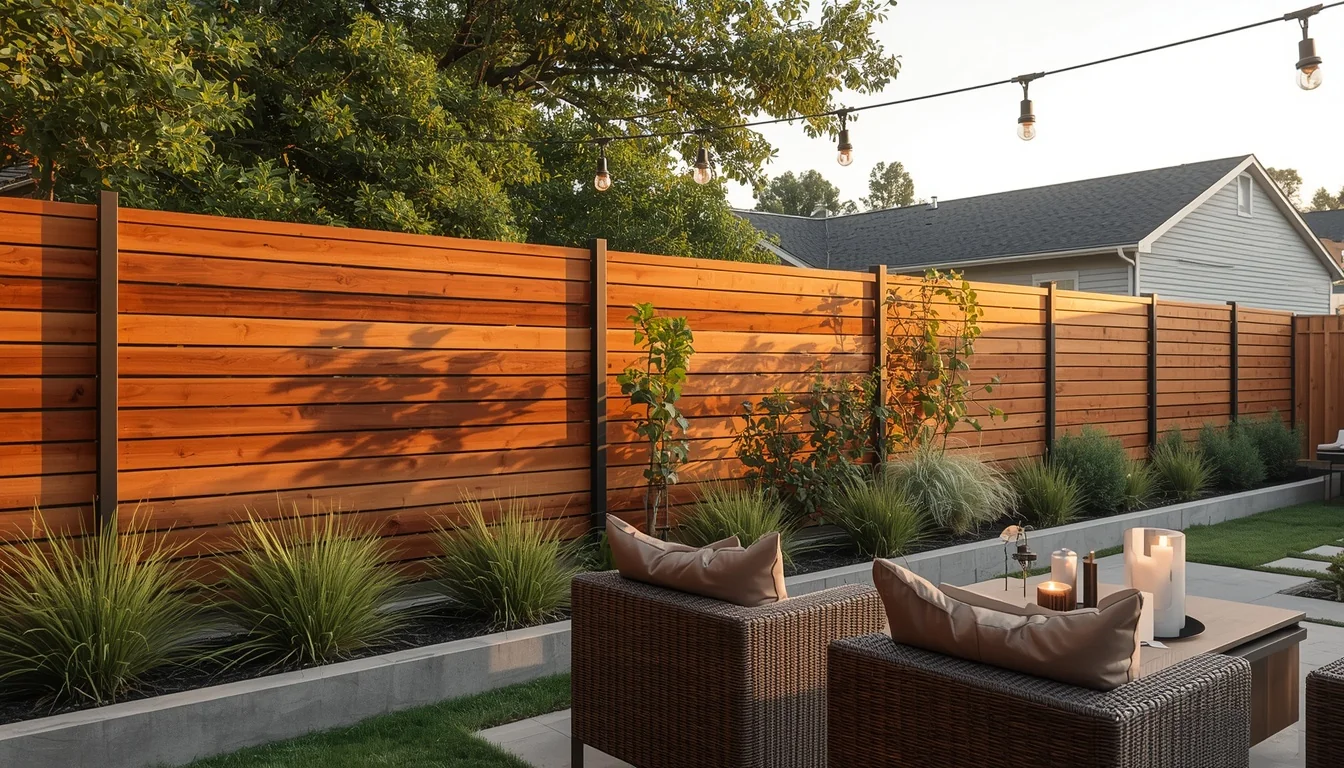
A privacy fence has one job on paper: block the view. But step into any backyard with a genuinely well-designed fence, and it’s doing a lot more than that.
It’s setting the tone for the whole outdoor space, framing the patio, giving climbing plants something to hold onto, and turning a plain backyard boundary into a backdrop worth looking at.
Too many privacy fences get treated as a purely functional afterthought, a flat wall of boards that goes up and gets forgotten. That’s a missed opportunity, since the fence line is often the largest visual surface in the entire backyard.
Below are 17 wood privacy fence ideas organized by style, finish, and landscaping pairing, so you can find the direction that actually elevates your outdoor space instead of just closing it off.
Table of Contents
- Horizontal Cedar Slat Fence
- Board-on-Board Privacy Fence
- Shadowbox Semi-Privacy Fence
- Vertical Board Fence with Black Metal Frame
- Stepped, Graduated-Height Privacy Fence
- Lattice-Top Privacy Fence
- Louvered Angled-Slat Fence
- Dog-Eared Picket Privacy Fence
- Board-and-Batten Privacy Fence
- Charred Shou Sugi Ban Fence
- Whitewashed Wood Privacy Fence
- Fence with Built-In Planter Boxes
- Fence with a Living Wall Insert
- Semi-Private Spaced Picket Fence
- Vertical Bamboo-Style Fence
- Herringbone-Pattern Fence Panel
- Fence with a Trellis Topper for Climbing Vines
- Styling Tips
- Practical Implementation Ideas
- Common Mistakes to Avoid
- Small-Space Alternatives
- Budget-Friendly Alternatives
- Pro Styling Recommendations
- FAQs
- Conclusion
1. Horizontal Cedar Slat Fence
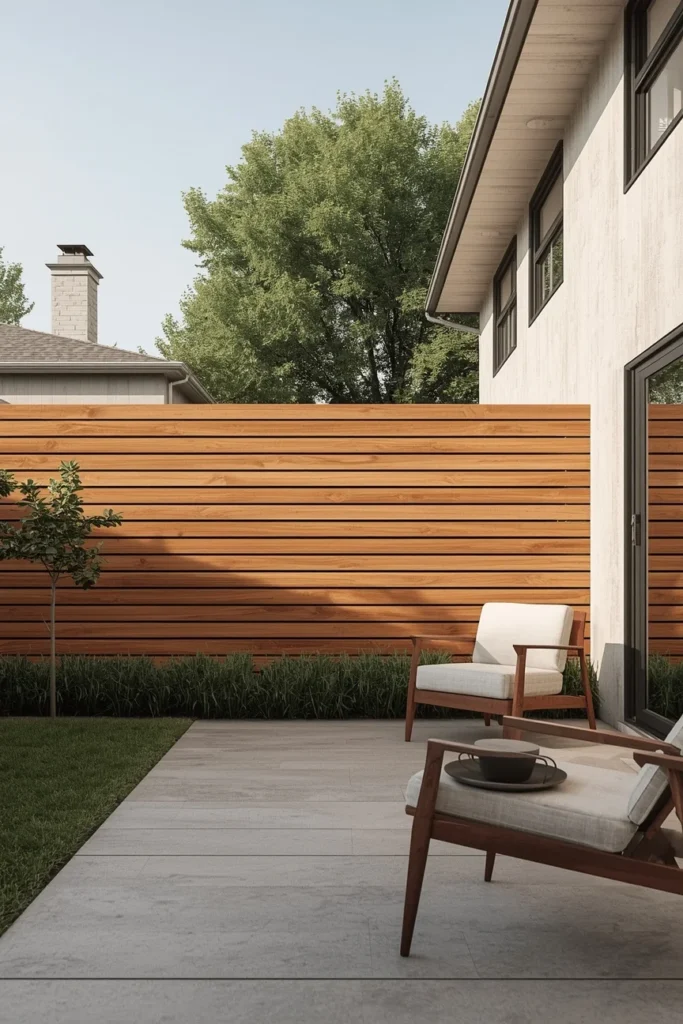
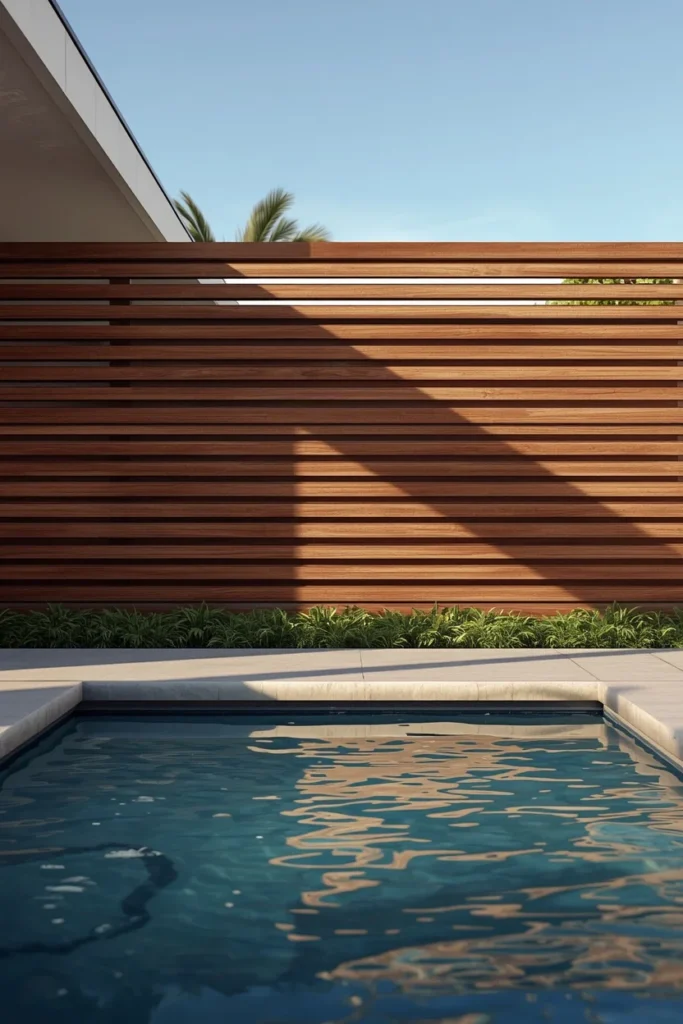
A horizontal slat fence turns the fence line into a genuine design feature instead of a backdrop, since the long, uninterrupted lines running parallel to the ground draw the eye across the yard and make even a narrow space feel wider. Cedar’s natural warmth reads as considerably more current than a traditional vertical picket layout, especially when the boards are left to weather naturally or finished with a clear sealant that protects the wood without hiding its grain. Spacing between the horizontal boards can be tightened for full privacy or opened slightly for airflow and a softer, more layered look at the top and bottom edges. This style pairs especially well with modern, transitional, and mid-century homes, where clean architectural lines already define the rest of the property. Because horizontal fences are typically built board by board on site rather than shipped as pre-assembled panels, they cost somewhat more to install, but the custom, architectural payoff is part of why this remains one of the most requested fence styles going into 2026.
2. Board-on-Board Privacy Fence
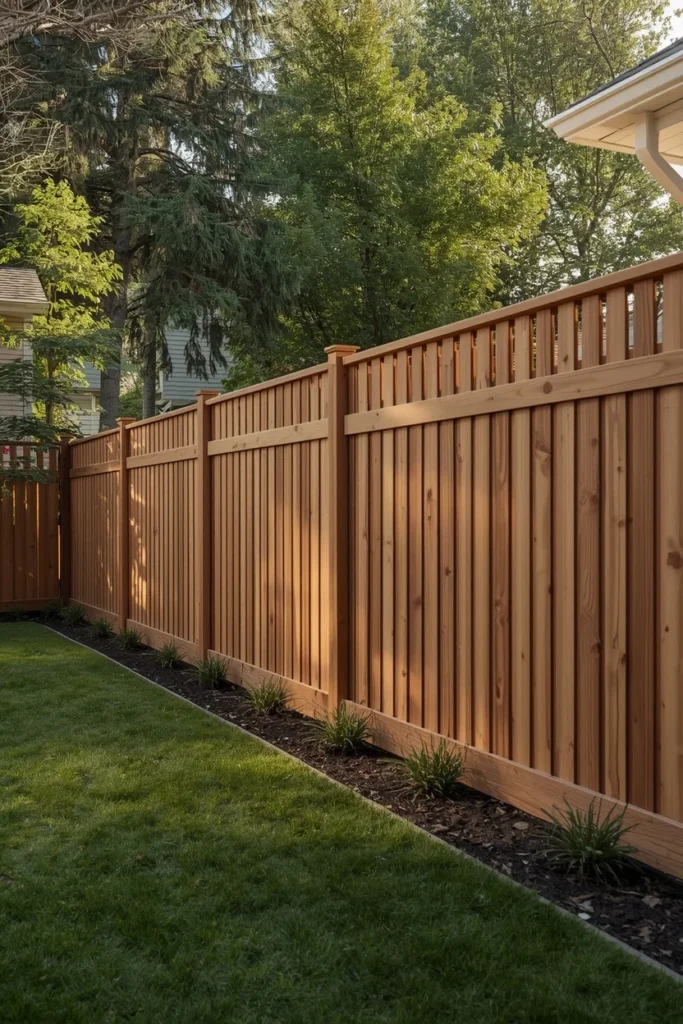
Board-on-board construction overlaps vertical boards on a single side of the horizontal rails, eliminating gaps entirely and delivering the most complete privacy of any wood fence style on this list. Because the boards overlap rather than sitting flush edge to edge, the fence also handles the natural shrinking and swelling of wood far better than a side-by-side layout, since small gaps that would otherwise open up as the lumber dries are already covered by the adjacent board. This style is the clear choice for yards with close neighbors, pool areas, or hot tubs, where blocking every possible sightline matters more than airflow or a decorative pattern. A finished front side facing the street or the neighbor’s yard, paired with visible rails on the homeowner’s own side, is the standard trade-off, though adding a simple trim cap along the top helps dress up the interior-facing view. Staining the boards in a warm tone rather than leaving them to gray naturally keeps a board-on-board fence from reading as purely utilitarian.
3. Shadowbox Semi-Privacy Fence
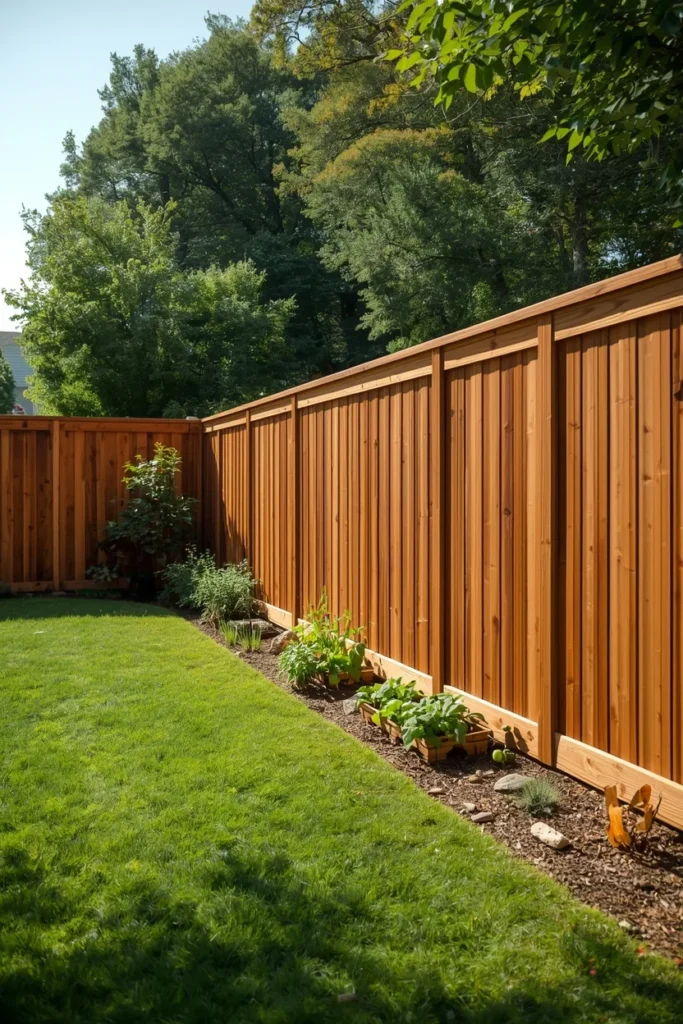
A shadowbox fence, sometimes called a good-neighbor fence, alternates pickets on both sides of the horizontal rails, so the finished, textured look shows equally to both the homeowner and whoever lives on the other side. The staggered boards create narrow gaps that block a direct line of sight while still letting air and dappled light move through, which reduces the wind load a solid fence would otherwise carry during storms. This design tends to age better in exposed or windy yards, since the built-in airflow helps the wood dry faster after rain and lowers the risk of the warping that trapped moisture can cause. The alternating pattern also adds genuine visual texture, since the fence looks slightly different depending on the angle it’s viewed from, shifting between solid and softly striped. This is a strong middle-ground choice for anyone who wants real privacy without the flat, wall-like appearance a fully solid fence can have.
4. Vertical Board Fence with Black Metal Frame
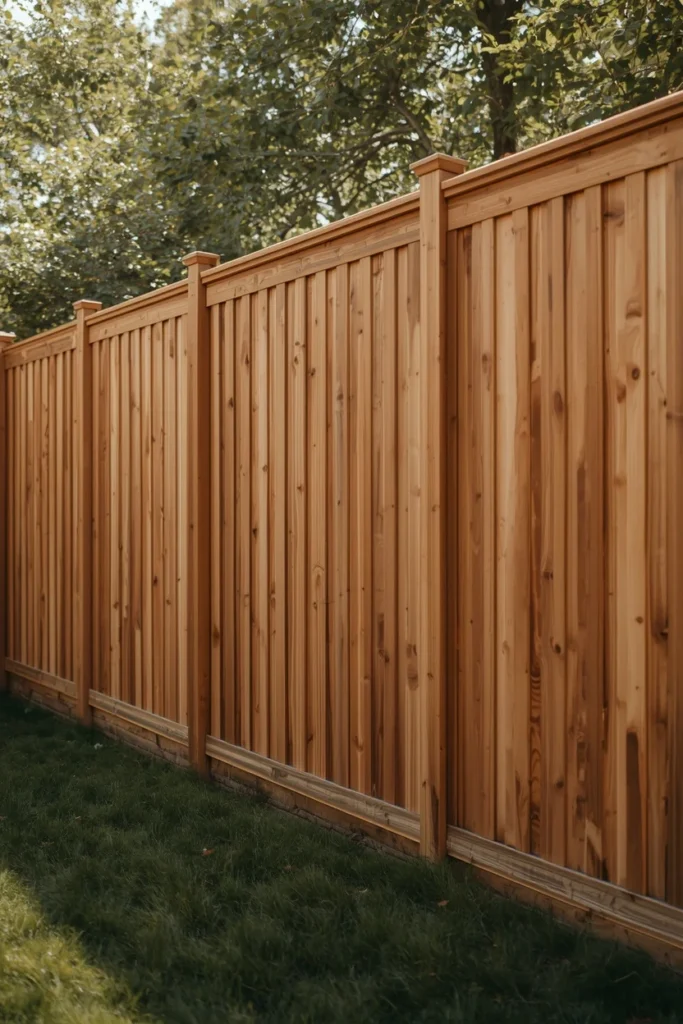
Pairing warm wood infill panels with a matte black steel or aluminum frame gives a privacy fence the durability and clean geometry of metal fencing while keeping the natural texture that only real wood provides. The dark frame reads as a deliberate design choice rather than simple structural necessity, especially when the same black finish is echoed in nearby light fixtures, planters, or furniture. This mixed-material approach also solves a real durability problem, since the metal posts and top rail resist the rot, insect damage, and ground contact issues that all-wood posts eventually face, while the wood panels themselves can be replaced individually if a section ever needs attention. The contrast between the cool black frame and the warm wood tone creates genuine visual depth along the fence line, which flat, single-material fencing can’t replicate. This style has become one of the standout combinations in current fence design, particularly for homes that already use black window frames or black hardware elsewhere on the exterior.
5. Stepped, Graduated-Height Privacy Fence
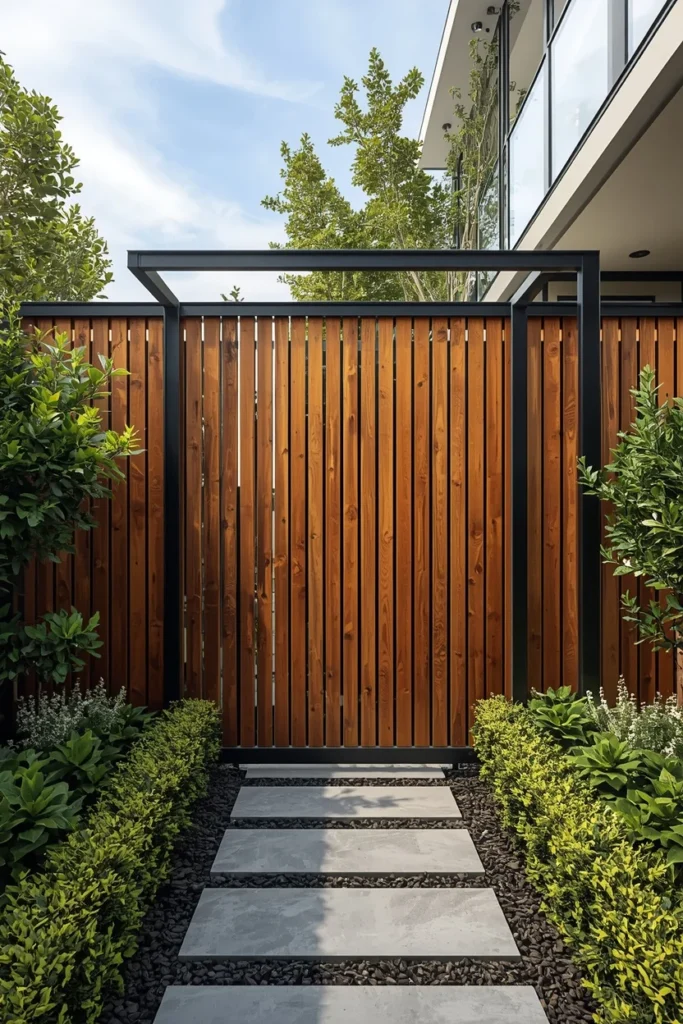
Rather than running one uniform height across the entire property line, a stepped fence combines taller solid sections, often six feet, with shorter four-foot sections in between, creating a rhythm of light and shadow instead of one flat wall. This layout works particularly well on corner lots or properties with changing grade, where a single fixed height would either feel too imposing in some spots or fail to provide enough coverage in others. The shorter sections can double as a place to let sunlight into planting beds that would otherwise sit in constant shade behind a tall, solid run. Graduated height also gives a fence more architectural interest from the street, avoiding the monotony of a long, unbroken privacy wall running the full length of a yard. This approach requires more planning during the design phase than a single-height fence, but it delivers a genuinely custom, tailored result that a uniform fence line can’t match.
6. Lattice-Top Privacy Fence
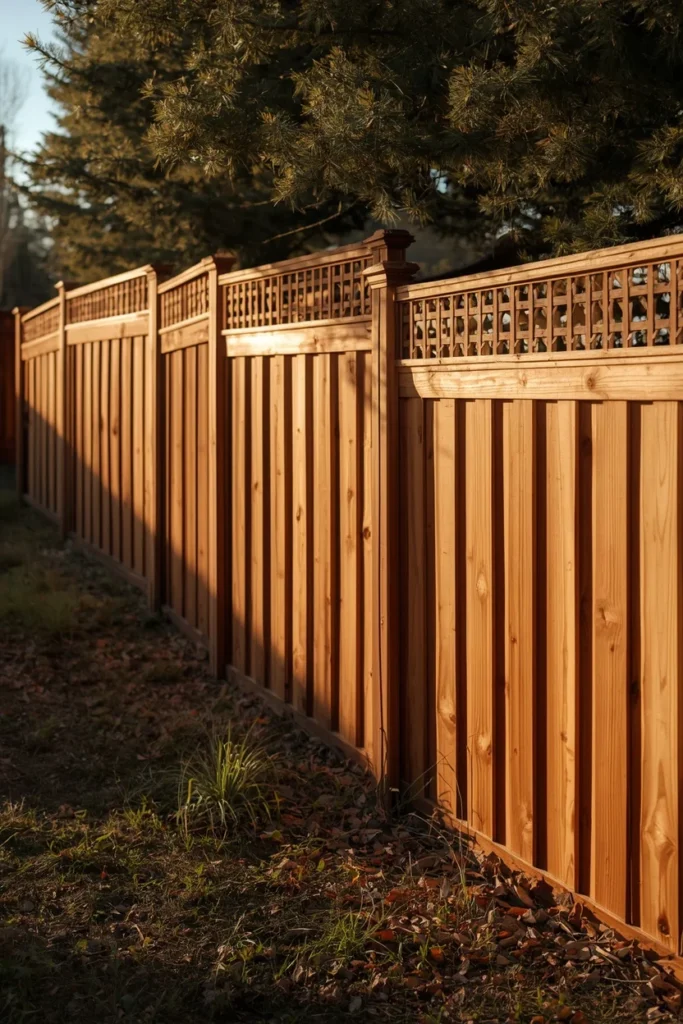
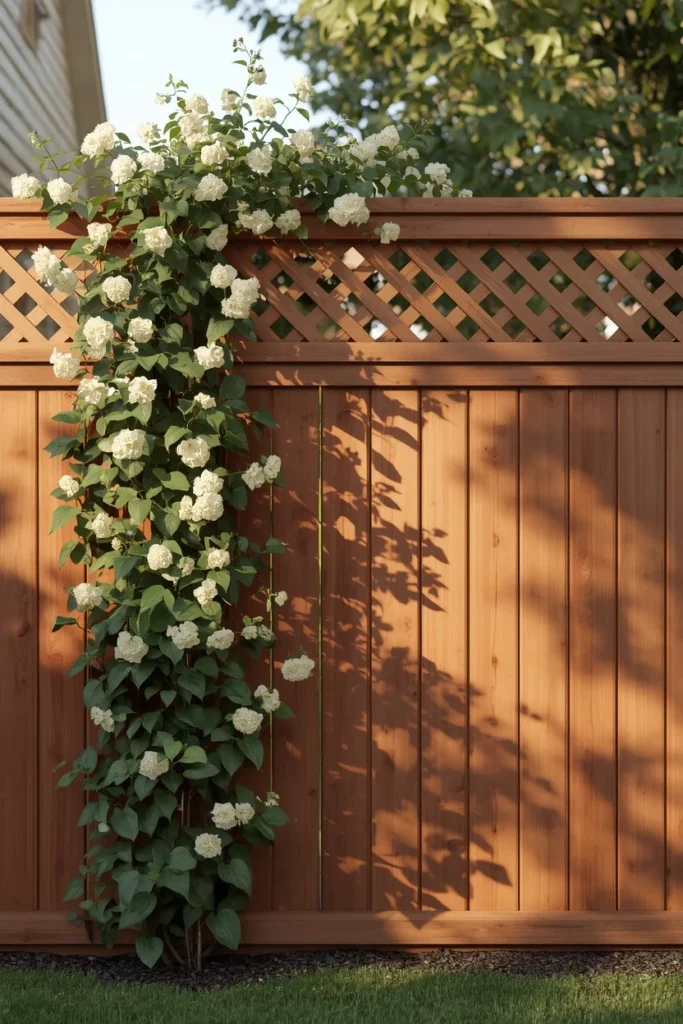
Adding a lattice panel above a solid privacy fence section extends the overall height without adding the visual weight of more solid boards, which keeps a tall fence from feeling like a fortress wall. The woven pattern also breaks strong wind into a gentler breeze as it passes through, reducing the pressure a fully solid fence would otherwise take on during storms. Diagonal lattice reads as more traditional and cottage-inspired, while a horizontal or vertical grid pattern leans more modern and architectural, so the lattice style itself becomes part of the overall design decision. This detail is especially useful where local fence height ordinances cap solid privacy sections at a certain measurement, since an open lattice topper often falls outside those restrictions while still adding real screening height. Training a climbing vine like clematis or a climbing hydrangea up through the lattice adds a layer of greenery that a plain solid fence top can’t offer.
7. Louvered Angled-Slat Fence
A louvered fence angles individual slats at roughly forty-five degrees rather than mounting them flat, which blocks a direct line of sight from the side while still allowing airflow and a partial view straight through the gaps. This detail gives the fence a genuinely architectural, almost shutter-like quality that reads as more custom than a standard flat-board layout. The angled slats also catch and cast shadows differently throughout the day, so the fence’s appearance shifts subtly from morning to evening as the sun moves. Because louvered construction requires more precise cutting and installation than a standard vertical or horizontal fence, it tends to sit at a higher price point, but the result is one of the more distinctive privacy fence styles available. This design works particularly well for pool enclosures and side-yard applications where airflow matters as much as blocking a direct view.
8. Dog-Eared Picket Privacy Fence
The dog-eared picket, with its top corners clipped at an angle instead of left square, remains one of the most recognizable and budget-friendly wood fence profiles, softening what would otherwise be a hard, flat top edge. Because dog-eared boards are widely available as a standard stock item at most lumberyards, this style typically costs less and installs faster than custom-cut profiles like gothic or French gothic tops. The subtle angled cut reads as traditional and approachable, making it a strong fit for classic ranch, colonial, and traditional-style homes where an ornate or heavily modern fence profile would feel out of place. This picket style works equally well in a solid side-by-side layout for full privacy or in a board-on-board configuration for added durability, so the dog-ear detail can be layered onto nearly any of the construction methods on this list. Staining rather than leaving the boards to weather naturally keeps the classic profile from reading as plain or dated.
9. Board-and-Batten Privacy Fence
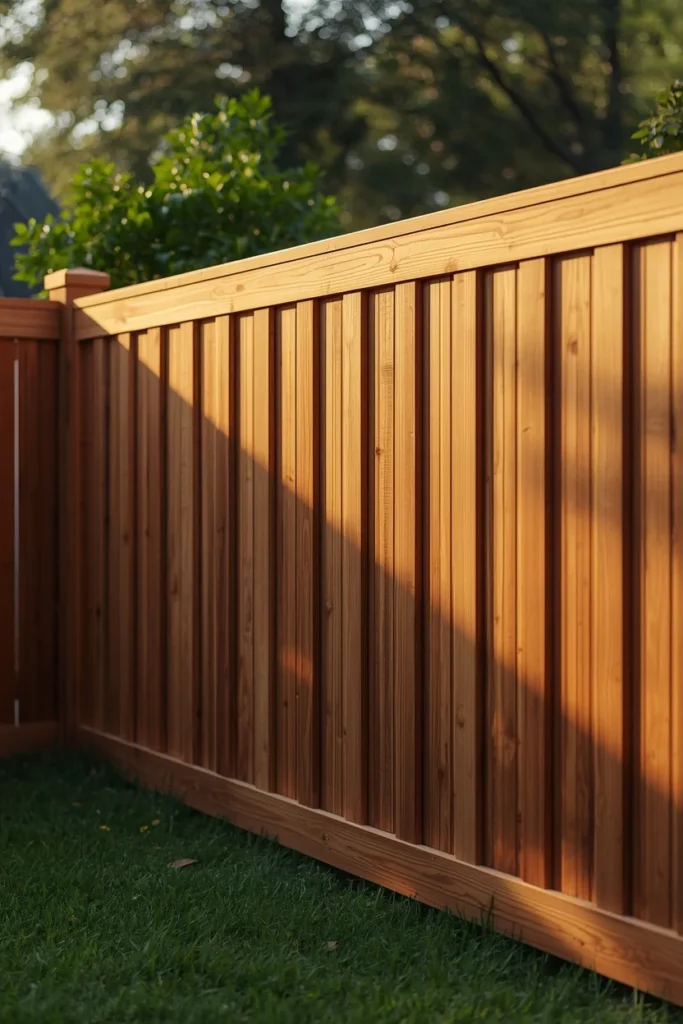
Board-and-batten fencing places narrow vertical battens over the seams between wider boards, fully concealing every gap while adding a distinct textural rhythm that a flat privacy fence lacks. This construction method borrows its detailing from farmhouse and barn siding, which makes it a natural fit for modern farmhouse and rustic-style backyards that already lean into that material language elsewhere on the property. The layered battens also add real structural reinforcement, since the extra wood spanning each seam helps prevent the boards beneath from bowing or twisting over time. A wide board paired with a narrower batten in a slightly different stain tone creates gentle visual contrast without requiring paint or an applied color treatment. This style photographs especially well in early morning or late afternoon light, when the raised battens cast crisp, defined shadow lines across the flatter boards beneath them.
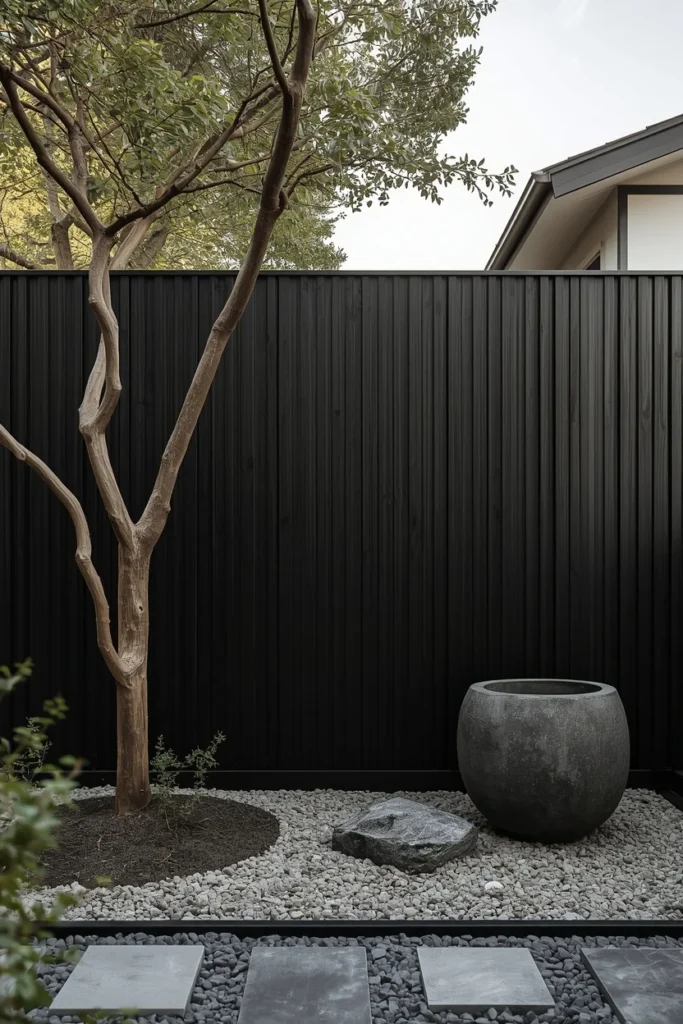
10. Charred Shou Sugi Ban Fence
Shou Sugi Ban is a traditional Japanese wood-charring technique that darkens the surface of the boards while actually improving their resistance to rot, insects, and fire, giving the fence both a striking visual finish and genuine long-term durability. The charred surface ranges from a deep matte black to a lighter, brushed finish that reveals more of the underlying wood grain, depending on how much of the charred layer is brushed away after burning. This treatment suits modern, minimalist, and Japandi-inspired backyards especially well, where the deep, matte black tone provides dramatic contrast against green landscaping without introducing an applied paint or stain color. Because the charring process itself protects the wood, a well-executed Shou Sugi Ban fence often requires less frequent resealing than a traditionally stained fence exposed to the same weather conditions. This is a higher-investment, more specialized installation than standard staining, but the resulting texture and depth are difficult to replicate with any other wood finishing method.
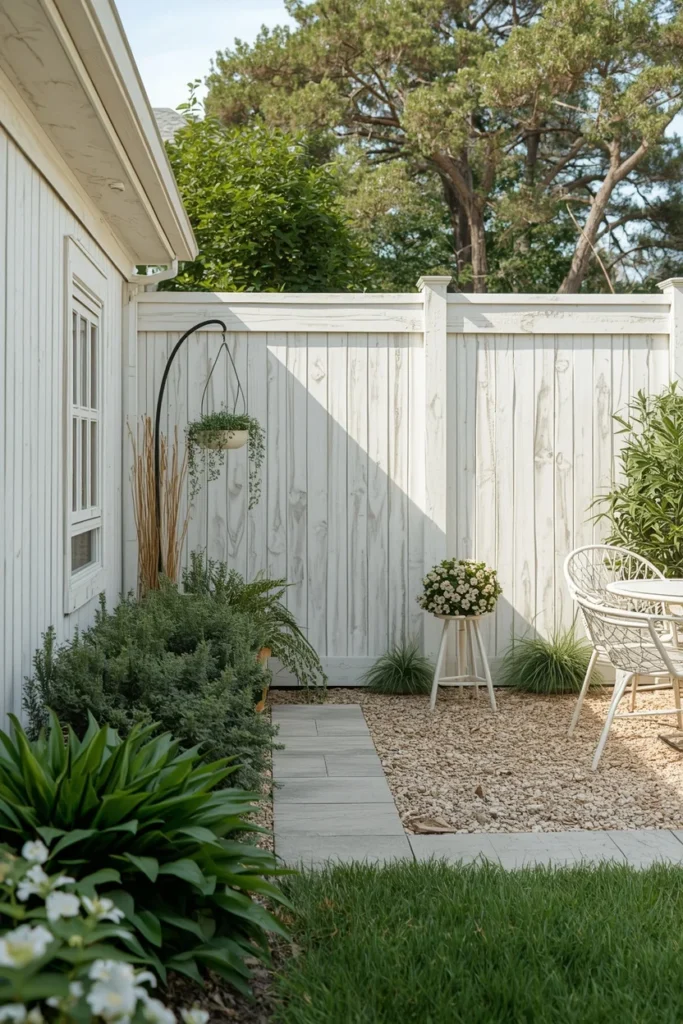
11. Whitewashed Wood Privacy Fence
A whitewash treatment allows the natural wood grain to show through a translucent white or soft gray finish, delivering a light, airy look without the heavier, more opaque coverage of solid paint. This finish keeps a backyard feeling open and bright even when the fence itself provides full privacy, which matters on smaller lots where a dark or heavily saturated fence color can make the space feel more enclosed. Whitewashing pairs naturally with coastal, cottage, and modern farmhouse landscaping styles, especially alongside soft green plantings, white outdoor furniture, and natural fiber textiles. Because the finish is translucent rather than a solid coat, it also tends to show wear more gracefully over time, aging into a soft, weathered patina rather than peeling in the way solid paint eventually does. Reapplying a fresh coat every few years keeps the tone consistent, though many homeowners embrace the slightly uneven, lived-in look that develops naturally between applications.
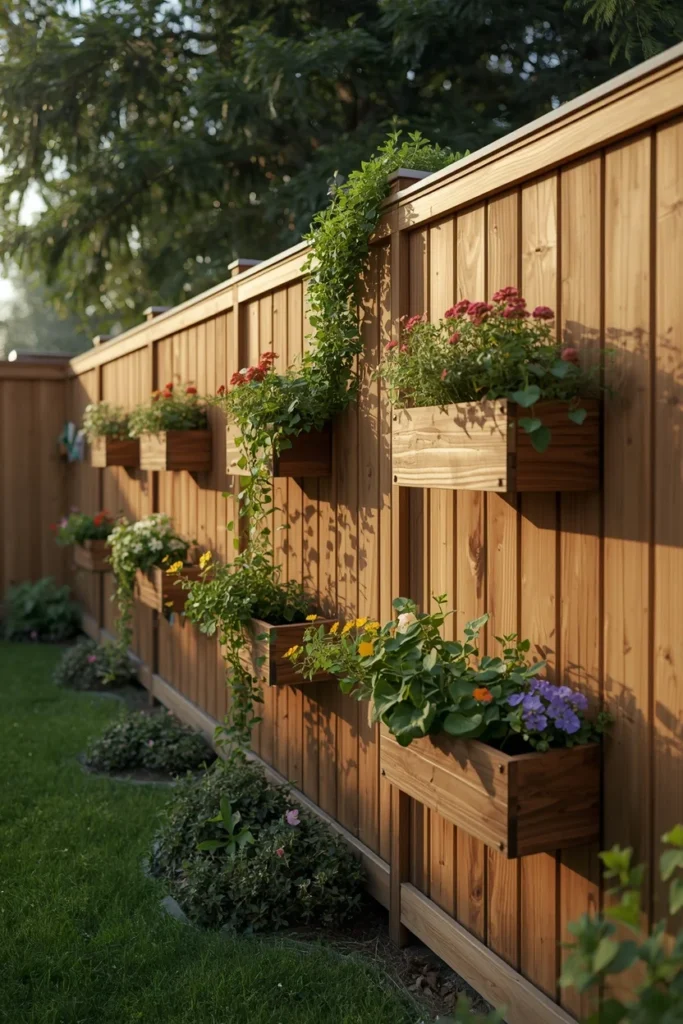
12. Fence with Built-In Planter Boxes
Attaching planter boxes directly to the face of a privacy fence turns an otherwise flat, functional surface into a vertical garden feature, adding color and texture at eye level without requiring any additional yard space. Cedar or pressure-treated planter boxes built to match the fence’s existing wood tone read as a fully integrated design element rather than an afterthought bolted on later. This approach works especially well for narrow side yards or small backyards where ground-level garden beds would compete with limited patio or lawn space. Drip irrigation lines run discreetly along the back of the boxes keep the plantings healthy with minimal daily maintenance, which matters since fence-mounted planters dry out faster than in-ground beds due to increased sun and wind exposure. Rotating seasonal plantings, herbs in summer, and evergreen boxwood or trailing ivy in winter keeps the display looking intentional throughout the year rather than bare during the colder months.
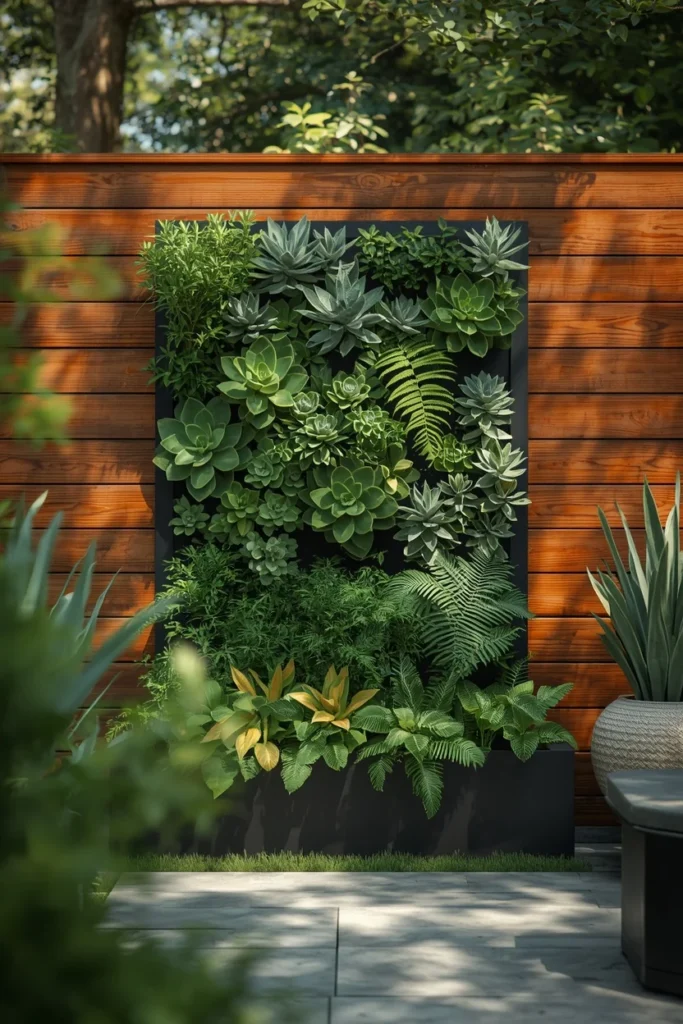
13. Fence with a Living Wall Insert
A living wall insert embeds a modular planting system directly into a section of the privacy fence, allowing a dense patch of greenery, herbs, or succulents to grow vertically against the wood without requiring dedicated garden bed space. This treatment works as a focal-point feature rather than a full-fence treatment, typically applied to one panel or a defined section near a patio or outdoor dining area where it will be seen and enjoyed up close. The contrast between the structured wood grain of the surrounding fence and the organic, layered texture of the living plants creates genuine visual depth that a purely flat fence surface can’t achieve on its own. Selecting drought-tolerant succulents or shade-loving ferns based on the fence’s actual sun exposure prevents the frustration of plants that struggle in a mismatched microclimate. Because these systems require regular watering and occasional plant replacement, they suit homeowners who enjoy hands-on garden maintenance more than those looking for a fully passive landscaping feature.
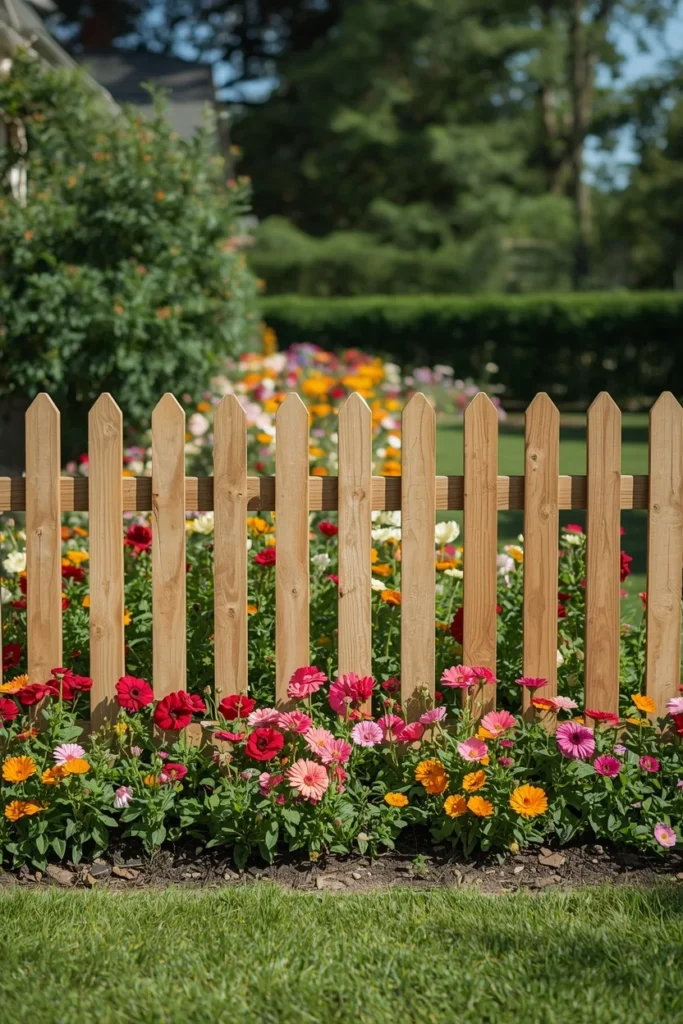
14. Semi-Private Spaced Picket Fence
Widening the gaps between vertical pickets to an inch or two creates a semi-private fence that still clearly defines the property line while allowing far more light, air, and greenery to show through than a fully solid design. This style suits front yards especially well, where complete enclosure can feel unwelcoming to visitors and neighbors, while a fully open fence provides too little separation from the street. The consistent rhythm of evenly spaced pickets reads as tidy and intentional, particularly when paired with a straight, flat top rather than an ornate or arched profile. Because fewer boards are needed to cover the same linear footage compared to a solid fence, this style also tends to reduce material costs, even when using a higher grade of lumber. This design pairs naturally with cottage garden landscaping, where the fence becomes a soft backdrop for perennial borders rather than the main visual feature itself.
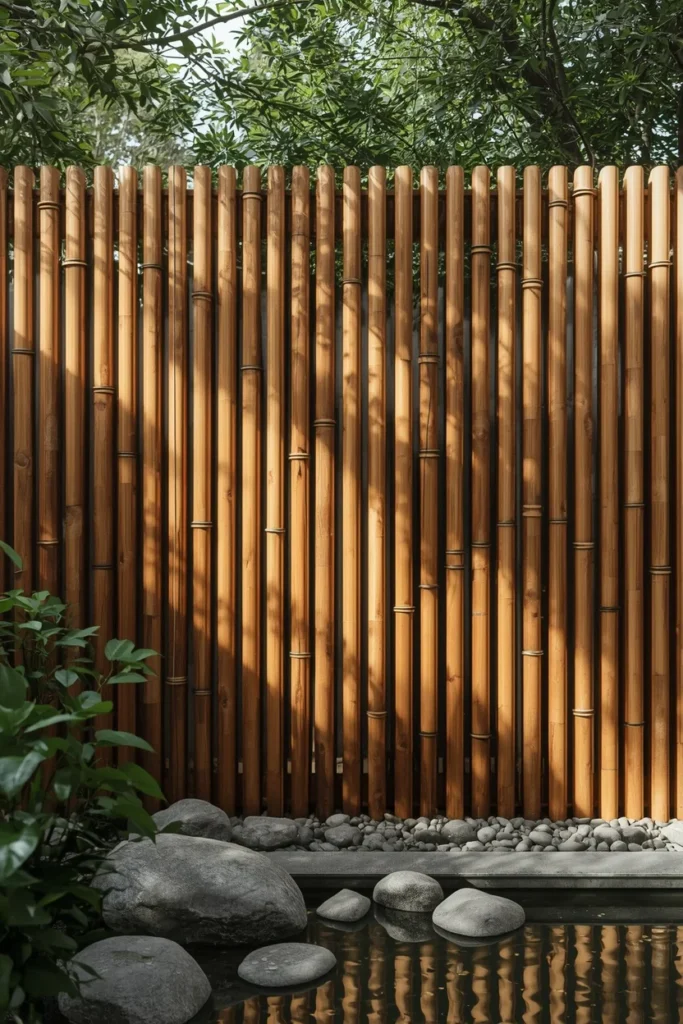
15. Vertical Bamboo-Style Fence
A vertical bamboo-style wood fence uses thin, tightly spaced round or half-round wood poles to mimic the look of a traditional bamboo screen, bringing a distinctly tropical or zen-inspired texture that flat boards can’t replicate. The rounded profile of each individual pole catches light differently than a flat plank, creating a subtle rippling shadow pattern across the fence face throughout the day. This style pairs naturally with backyard spa areas, meditation gardens, and tropical or Asian-inspired landscaping, where the organic, slightly irregular texture reinforces the intended mood better than a rigid, uniform board layout. Because true bamboo poles can be more susceptible to moisture damage than milled lumber, many installations use a bamboo-textured composite or a rot-resistant hardwood shaped to mimic the same profile for better long-term durability. This is one of the more distinctive, conversation-starting fence styles on this list, best suited to a defined accent section rather than an entire property perimeter.
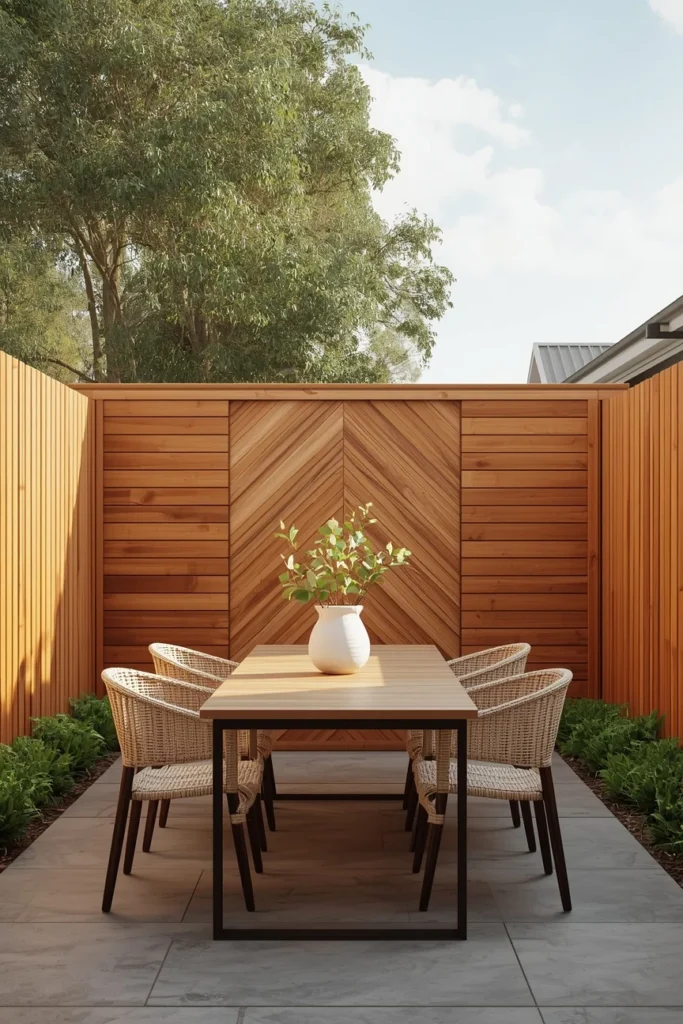
16. Herringbone-Pattern Fence Panel
Arranging fence boards at interlocking angles in a herringbone pattern, rather than running them straight up and down or side to side, turns a single fence panel into a genuine focal point without needing any applied color or additional decoration. The angled joinery requires more precise cutting and a steadier hand during installation than a standard vertical layout, which is part of why this treatment is typically reserved for accent sections rather than an entire fence line. Used as a feature panel behind an outdoor dining area, fire pit, or built-in bench, the pattern adds visual interest exactly where people spend the most time looking at it. Keeping the surrounding fence sections in a simple vertical or horizontal layout lets the herringbone panel stand out as an intentional highlight rather than getting lost among a series of competing patterns. This detail works particularly well in modern and transitional backyards where a single well-executed accent does more visual work than pattern repeated across the whole property.
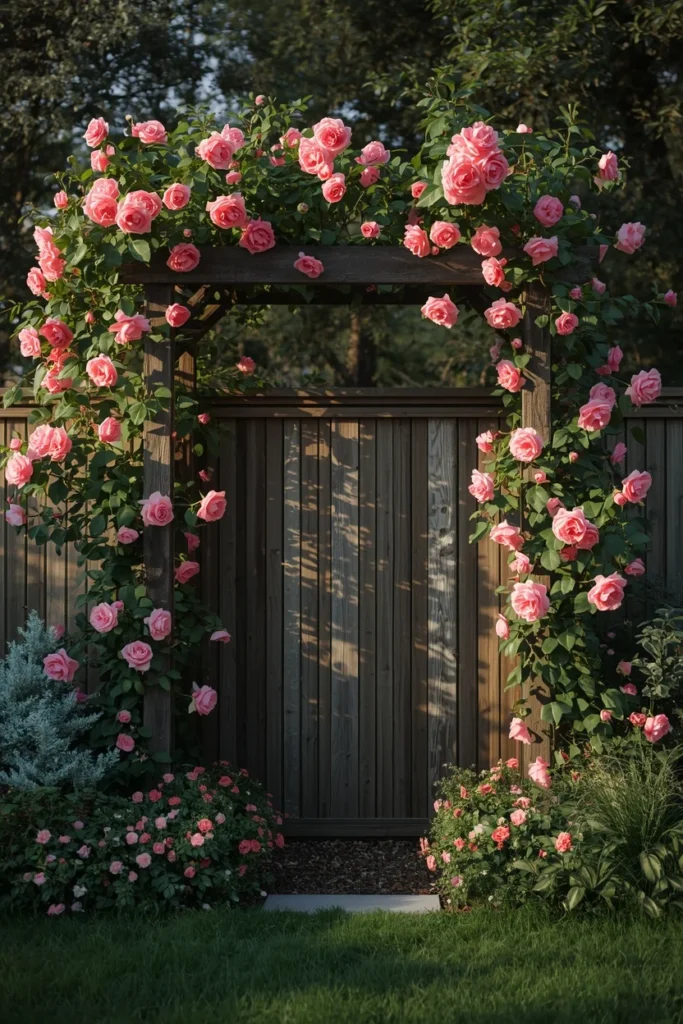
17. Fence with a Trellis Topper for Climbing Vines
Adding a simple open trellis structure along the top of a solid privacy fence gives climbing plants like clematis, jasmine, or climbing roses a place to grow upward, softening the fence’s hard top edge with seasonal greenery and blooms. This detail extends the effective height and privacy of the fence during the growing season without requiring a taller, more expensive solid structure, since a well-established vine can fill in considerably more coverage than the trellis frame alone provides. The contrast between the structured wood grid and the loose, organic growth of a flowering vine keeps the fence line from feeling static throughout the seasons, shifting in appearance from bare wood in winter to a full green and flowering wall by midsummer. This treatment pairs beautifully with cottage, English garden, and traditional backyard styles, where a slightly relaxed, layered look is the intended aesthetic rather than a crisp, minimalist edge. Choosing a vine appropriate to the fence’s sun exposure and climate zone prevents the frustration of a trellis that never quite fills in as expected.
Styling Tips
Match your fence’s wood tone or stain color to at least one other element already present in your backyard, such as a deck, pergola, or outdoor furniture, so the fence feels connected to the rest of the space instead of like a separate decision.
Consider how the fence looks from indoors as well as from the yard. Kitchen and living room windows often face the backyard directly, so a style, finish, or planting pairing that only looks good up close outside misses the view you’ll actually see every day.
Keep hardware finish, gate hinges, latches, and post caps, consistent with other exterior metal finishes on the property, like light fixtures or house numbers, for a more cohesive overall look.
Practical Implementation Ideas
Check local fence height and setback ordinances before finalizing a design, since requirements for solid privacy sections, lattice toppers, and front-yard fencing can vary significantly between municipalities and even between neighborhoods within the same city.
If a full fence replacement isn’t in the budget yet, adding a lattice topper, a trellis, or a fresh coat of stain to an existing fence can meaningfully refresh the look without the cost of starting over.
Plan gate placement and width around how the space will actually be used, factoring in lawn equipment, trash bins, or furniture delivery, since a gate that’s too narrow becomes a daily frustration no matter how good the rest of the fence looks.
Common Mistakes to Avoid
Choosing a wood species that isn’t well suited to local climate conditions is one of the most common and costly missteps, since a fence that looks great during installation can warp, crack, or rot within just a few seasons in the wrong environment.
Skipping proper post-setting depth below the frost line in colder climates often leads to leaning or heaving posts within the first few winters, undermining even the most beautifully designed fence panel.
Neglecting regular sealing or staining shortens the lifespan of any wood fence considerably, since unprotected wood absorbs moisture unevenly, which accelerates warping, splitting, and premature graying.
Small-Space Alternatives
Narrow side yards and compact backyards can still use nearly every style on this list at a smaller scale. A single herringbone accent panel or a fence-mounted planter box often delivers more visual impact in a tight space than an elaborate structure would.
For yards without room for a full trellis topper, a smaller trellis panel installed on just one section near a patio or window can bring the same layered, green effect without committing the entire fence line to the treatment.
Homes with limited backyard depth can lean on lighter finishes like whitewashing or natural cedar tones rather than dark charred or black-framed styles, since lighter fences tend to make a small enclosed space feel less confined.
Budget-Friendly Alternatives
A fresh stain or whitewash treatment on an existing dog-eared or board-on-board fence can deliver much of the visual impact of a full rebuild at a fraction of the price.
Adding a simple, inexpensive lattice topper kit to an existing solid fence extends both privacy and visual interest without the cost of replacing the entire structure.
Installing planter boxes or a trellis section on a single fence panel, rather than the full property line, gives a budget-conscious backyard a focal point without requiring an investment across the whole perimeter.
Pro Styling Recommendations
Choose a fence style and finish that appears in at least one other spot on the property, whether that’s a matching pergola, shed, or raised garden bed, so the whole backyard palette feels planned rather than like separate decisions made over time.
When in doubt on privacy level, prioritize airflow-friendly styles like shadowbox or louvered slats over fully solid designs in windy or storm-prone regions, since the reduced wind load meaningfully extends the fence’s structural lifespan.
Test stain or paint color on a small section before committing to the full fence, since wood tone can shift noticeably once a finish dries and interacts with natural light throughout the day.
FAQs
Conclusion
A privacy fence rarely gets the design attention it deserves, yet it’s often the largest single surface in the entire backyard. Whether the right fit turns out to be a clean horizontal cedar slat design, a textured shadowbox style, or something as simple as a lattice topper and a climbing vine, the details that matter most are matching the style to your climate, your privacy needs, and the rest of your outdoor space. Choose the direction that fits how you actually use your yard, not just the one that photographed best on someone else’s feed, and the backyard transformation takes care of itself.