20 Mudroom Entryway Ideas That Are Beautiful Enough to Be a Design Feature
You know that feeling when you walk into someone’s home and the entryway just stops you?
Not because it’s huge. Not because it cost a fortune. Because it feels intentional.
That’s the quiet power of a mudroom done right. It’s not just a coat-dropping, shoe-kicking zone. It’s the first real room that greets you — and your guests — every single day. And the homes that get this space right? They feel put-together from the very first step inside.
The problem is most mudrooms are designed for function and nothing else. White beadboard. Pine bench. Basic black hooks. Done. Which, fine — but also, what a missed opportunity.
Your entryway can hold coats and be visually stunning. It can house 17 pairs of shoes and have a color story. Storage doesn’t cancel out beauty. In fact, some of the most gorgeous rooms in the world happen to also be incredibly organized.
These 20 mudroom entryway ideas prove exactly that. Some are moody and dramatic. Some are soft and cottagecore-coded. Some are built for small spaces, some are full room renovations. All of them are beautiful enough to be a genuine design feature in your home.
Table of Contents
- The Dark & Dramatic Mudroom: Navy Built-Ins with Brass Hardware
- Sage Green Cubbies with Hexagon Tile
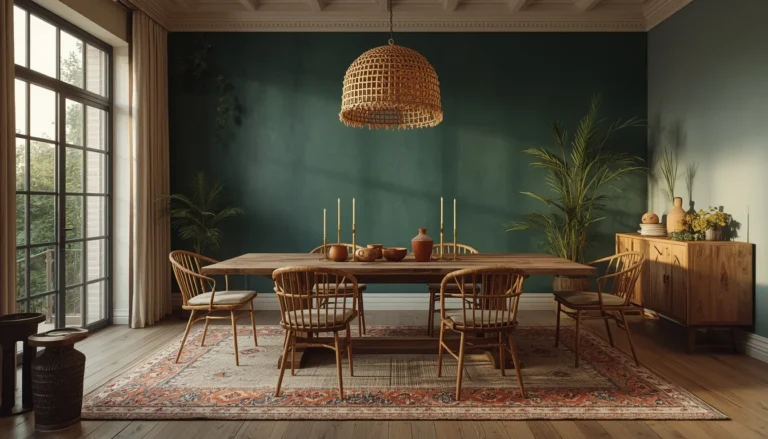
- Moody Forest Green Shiplap with Rattan Accents
- Terracotta Tile Floor + Warm Wood Bench
- The Bold Wallpaper Mudroom
- Japandi-Inspired Entryway with Vertical Wood Slats
- Checkered Floor Mudroom with Black Built-Ins
- Cottagecore Corner Mudroom
- Rustic Stone Floor with Reclaimed Wood Ceiling
- The Boho Mudroom with Patterned Baskets
- Mini Mudroom: Narrow Entryway Nook Ideas
- Warm Brick Wall Mudroom with Lantern Lighting
- Deep Burgundy Mudroom with Aged Brass Details
- Open Shelf Mudroom with Woven Texture Storage
- Soft Blue Beadboard Mudroom with White Trim
- The Garage-to-Mudroom Conversion
- Mudroom + Laundry Room Combo Ideas
- The High-Contrast Gallery Wall Mudroom
- Farmhouse Mudroom with Shiplap and Vintage Hooks
- Budget-Friendly Mudroom Entryway: Big Style, Small Spend
The Ideas
Idea 1: The Dark & Dramatic Mudroom — Navy Built-Ins with Brass Hardware
The moment you go dark in a mudroom, everything shifts.
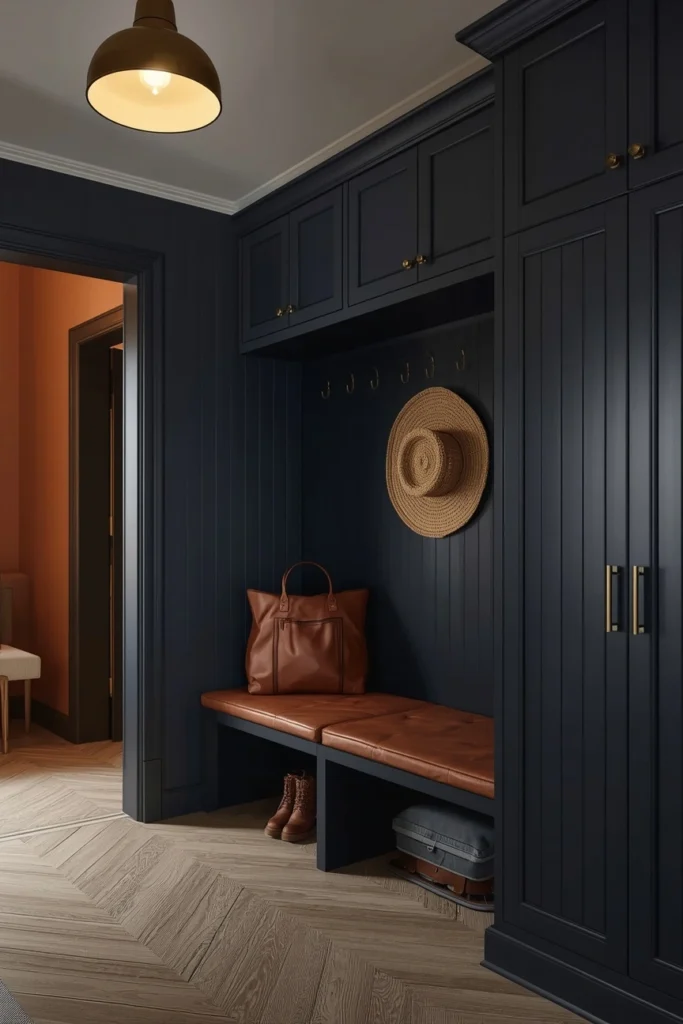
Navy blue cabinetry — floor to ceiling, matte finish — turns a pass-through space into something that feels like a statement. Pair those with aged brass hooks and pulls, and the whole entryway takes on this warm, collected quality that reads expensive without trying.
What makes this work isn’t just the color. It’s the contrast. Dark cabinetry against a lighter floor — think natural oak plank flooring or cream-colored encaustic tile — creates visual depth that makes the space feel bigger, not heavier.
What to steal from this look:
- Paint built-ins in Benjamin Moore Hale Navy or Farrow & Ball Hague Blue
- Choose unlacquered brass hooks — they age beautifully over time
- Add a cushioned bench in a warm cognac or caramel leather
- Install a slim brass mirror above the bench for both style and function
This is not a look for beige lovers. But if you want your mudroom to feel like a proper room — not just an afterthought — this is it.
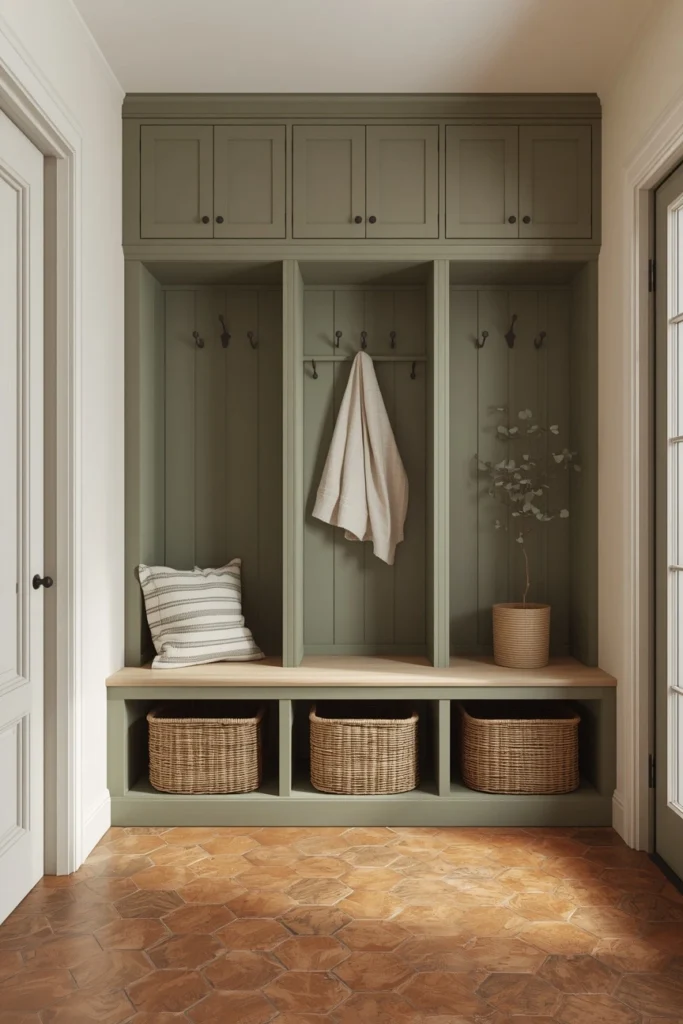
Idea 2: Sage Green Cubbies with Hexagon Tile Floor
Sage green is having its moment — and nowhere does it feel more at home than in a mudroom.
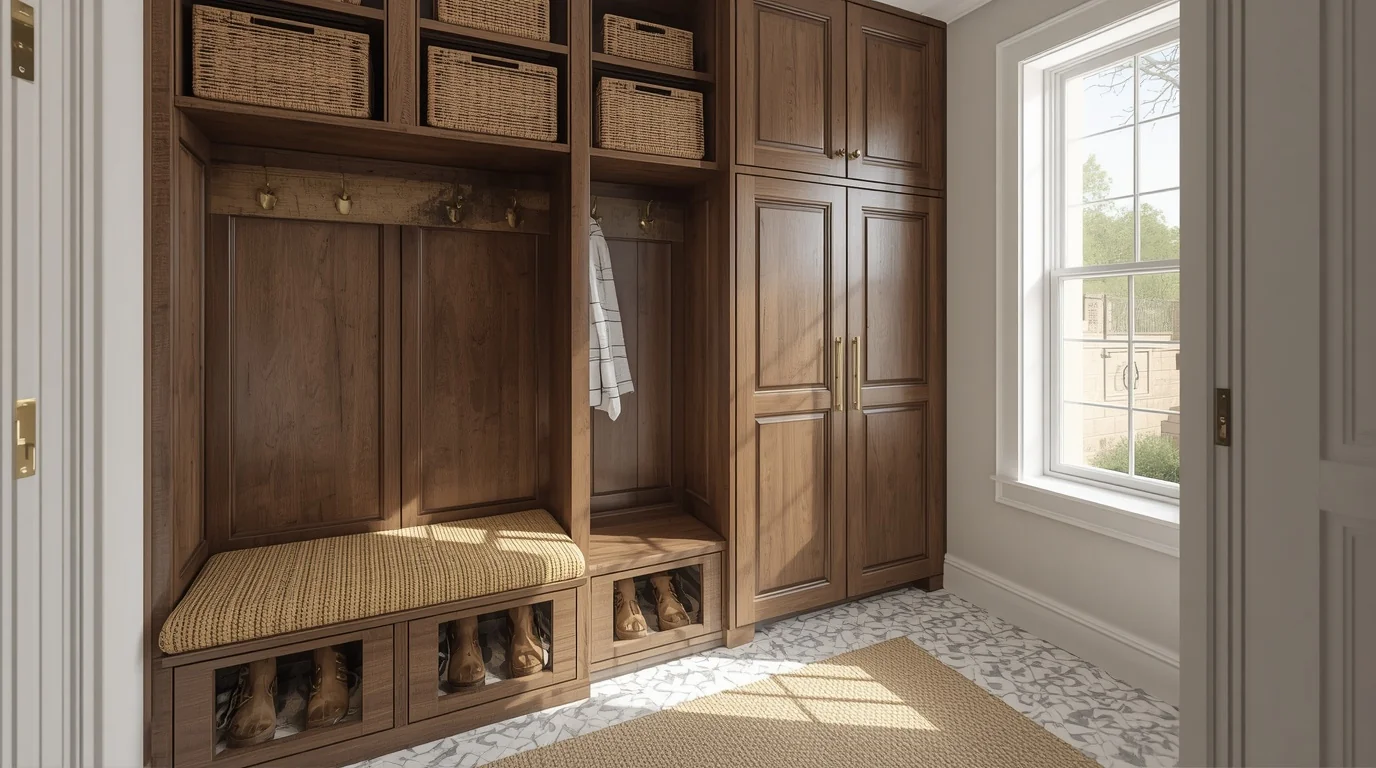
The key here is pairing sage green cubby storage with a hexagon tile floor. Not the typical white subway tile, not plain hardwood. Something with visual rhythm and geometric personality — dusty terracotta hexagons, or warm gray penny tiles with dark grout.
The sage green absorbs natural light beautifully, giving the space that soft, herbal, almost-botanical energy. It reads fresh without being loud. Calming without being forgettable.
Style this with woven seagrass baskets in the cubbies, matte black hooks, and a linen bench cushion in a faded natural check.
Designer tip: The best sage tones for mudrooms have warm undertones, not cool ones. Look at Sherwin-Williams Evergreen Fog or Clare Paint’s Sprig — they won’t read gray or cold under artificial light.
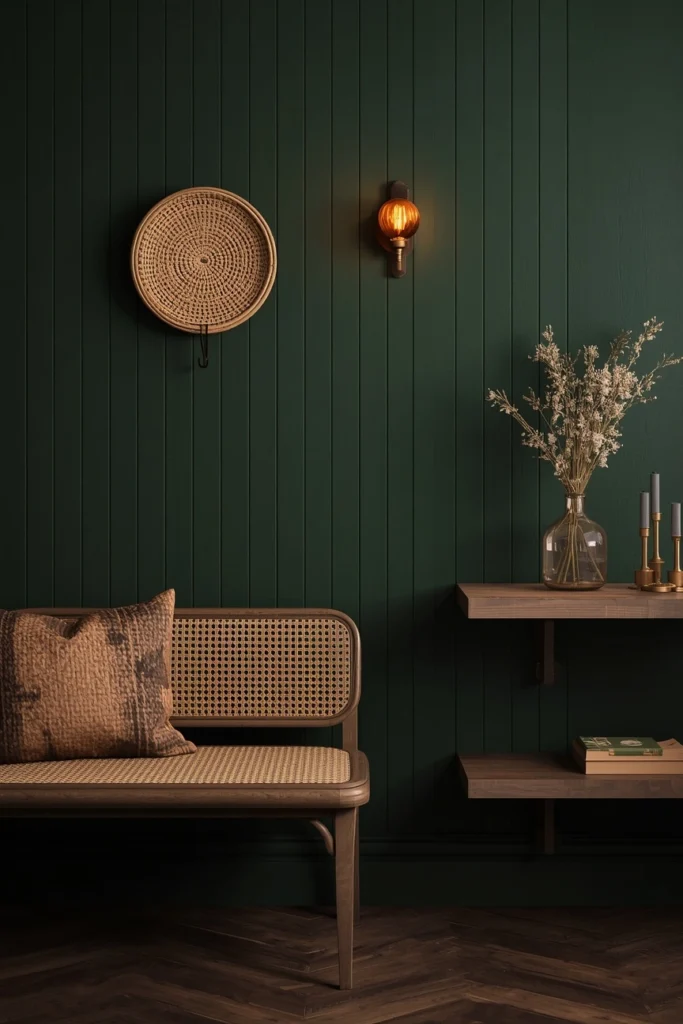
Idea 3: Moody Forest Green Shiplap with Rattan Accents
If cottagecore and moody maximalism had a baby — it would look exactly like this.
Paint your mudroom walls in deep forest green — shiplap paneling is even better. That horizontal texture catches light differently throughout the day, creating a sense of warmth and movement even in a small space.
Hang oversized rattan hooks. Add a vintage-style cane bench with a jute cushion. Pull in a brass wall sconce or two for that amber glow at dusk.
This look layers warmth on warmth. It’s dark, yes — but in the way a cozy cabin library is dark. The kind of space you want to linger in.
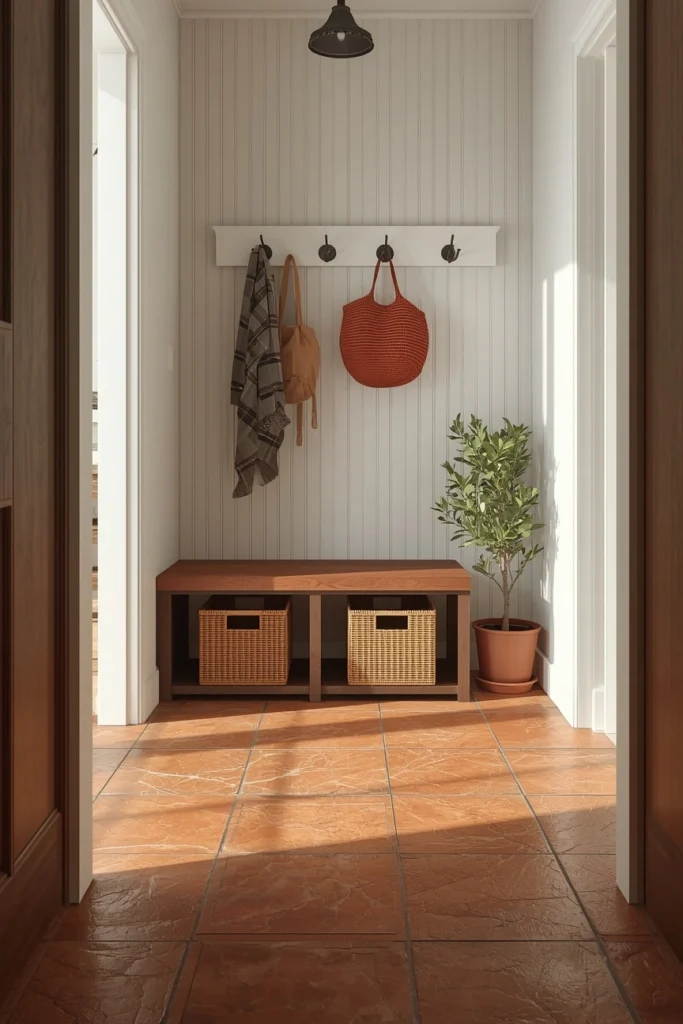
Idea 4: Terracotta Tile Floor + Warm Wood Bench
Here’s the thing about terracotta: it makes every other material look better.
A terracotta tile floor — whether classic square pavers, zellige-style tiles, or small hexagons — grounds the whole mudroom in warmth. Suddenly, white walls read warmer. Wood tones feel richer. Even simple black hooks look more considered.
Pair this floor with a warm walnut or oak bench. Add white beadboard above it, simple wrought iron hooks, and a small potted olive tree in the corner. The result feels less “utilitarian entryway” and more “Italian countryside home.”
Flooring tip: For a mudroom, choose terracotta tiles that are sealed — either factory-sealed or apply a penetrating sealer yourself. It protects from moisture and makes cleaning genuinely easy.
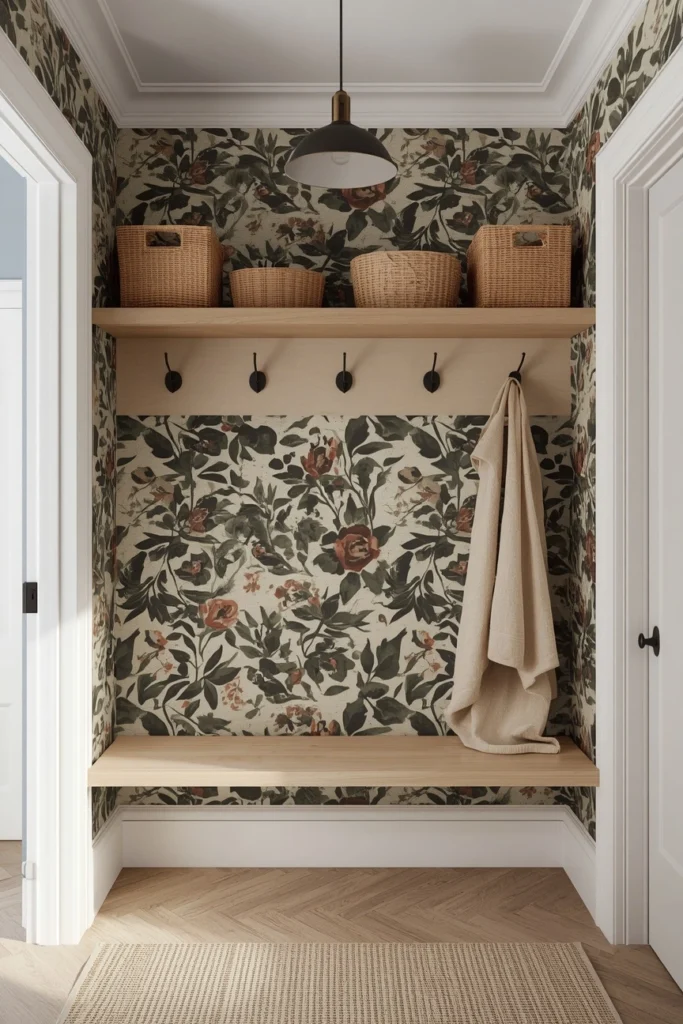
Idea 5: The Bold Wallpaper Mudroom
Most people are too scared to put wallpaper in a mudroom. That’s exactly why you should.
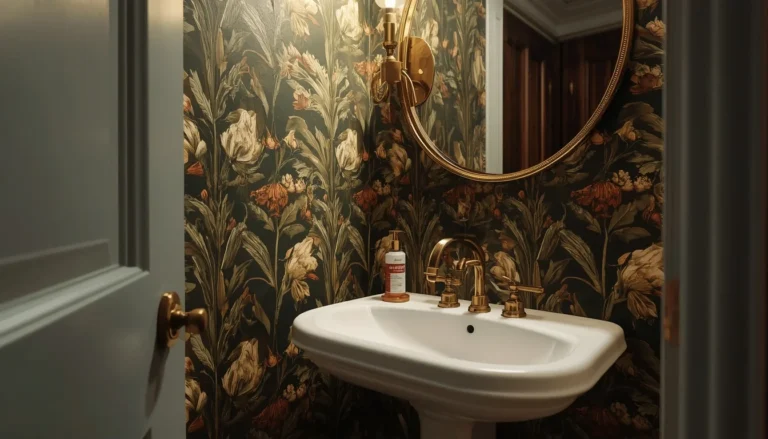
A mudroom is actually a perfect space for a bold wallpaper moment — it’s small, so the cost of papering is manageable. And because it’s a transitional space, that moment of visual surprise feels intentional and curated rather than overwhelming.
Think: a dense botanical print in olive and ink blue on cream. A graphic Art Deco pattern in terracotta and sage. A moody vintage floral in deep plum and forest green.
The wallpaper becomes the room’s personality. Everything else — white trim, a simple wood bench, matte black hooks — fades into a supporting role.
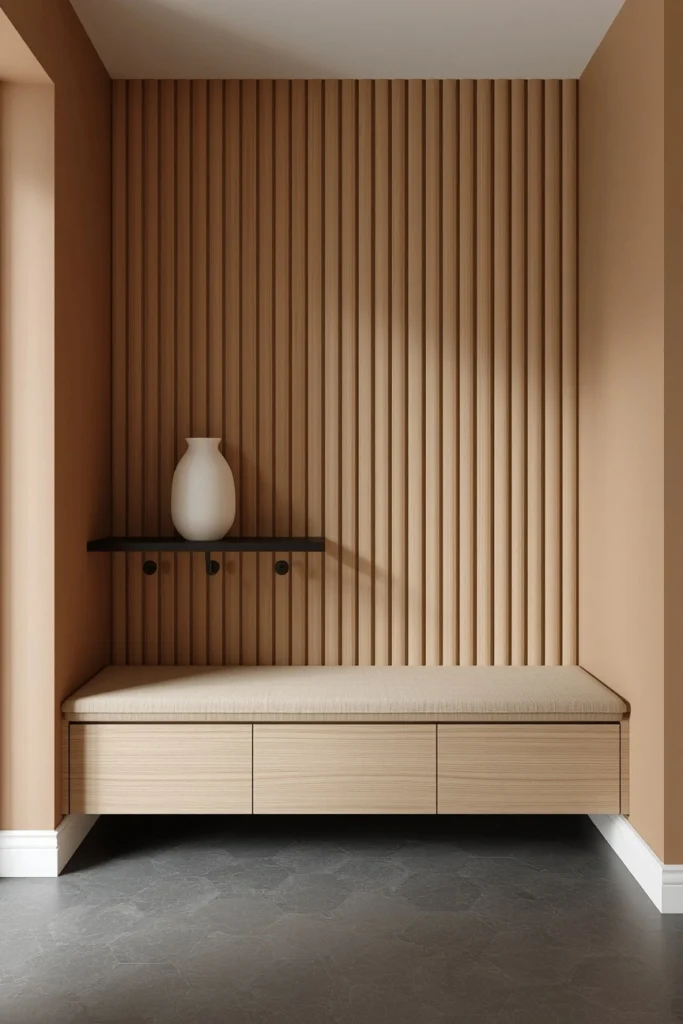
Idea 6: Japandi-Inspired Entryway with Vertical Wood Slats
Japandi mudrooms are about subtracting everything you don’t need — and making what’s left look incredibly intentional.
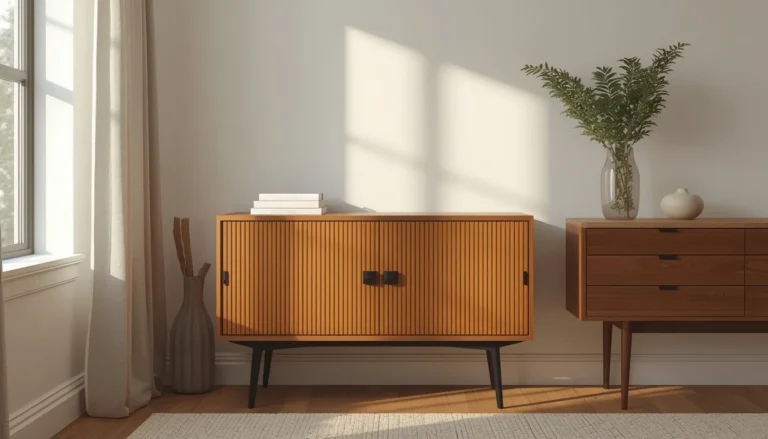
The signature move here: vertical wood slat paneling behind the bench. Those slats add visual texture without pattern or color. They’re calming, architectural, and genuinely beautiful in photographs.
Pair with a flat-front oak bench with hidden shoe storage, matte black minimal disc hooks, and a single sculptural ceramic vase on a floating shelf. No clutter. No excess. Just extremely good-looking calm.
Color palette for Japandi mudroom: Warm sand walls, light oak wood, charcoal slate floor, matte black hardware.
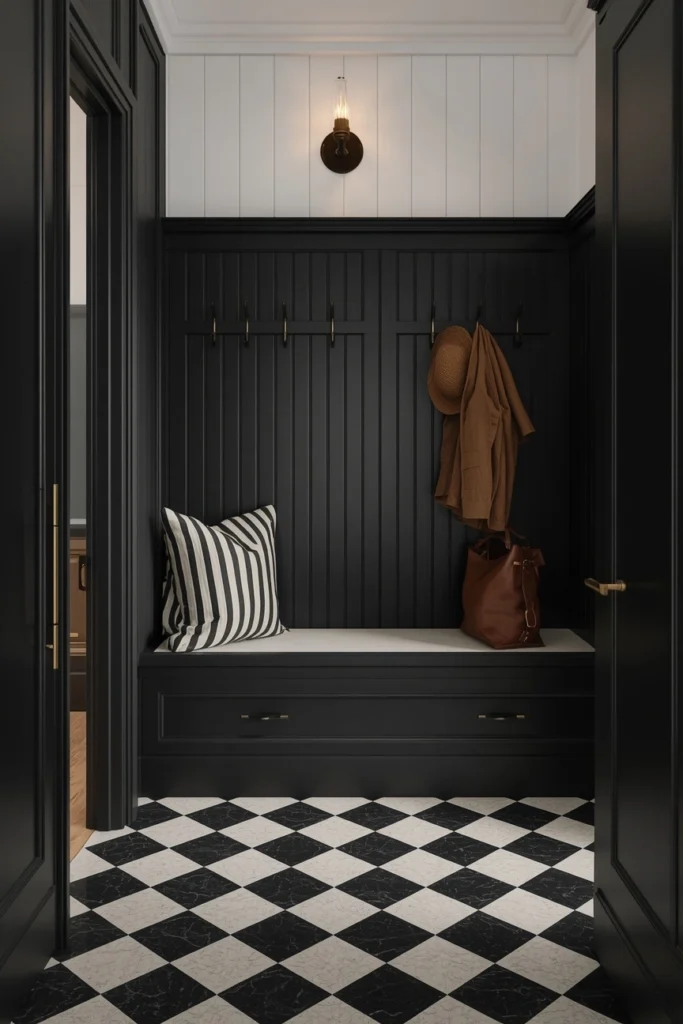
Idea 7: Checkered Floor Mudroom with Black Built-Ins
If you want your mudroom to feel like it was designed — not assembled — a checkered floor is the single fastest way to get there.
Classic black-and-white honed marble or ceramic checkered tile on the floor transforms even the most ordinary entryway into something that reads as thoughtfully designed. Pair it with deep black built-ins, brass hardware, and a striped seat cushion in warm ivory.
This isn’t a trendy look. It’s a classic with staying power. The checkered floor works in modern homes, Victorian row houses, and country farmhouses equally well.
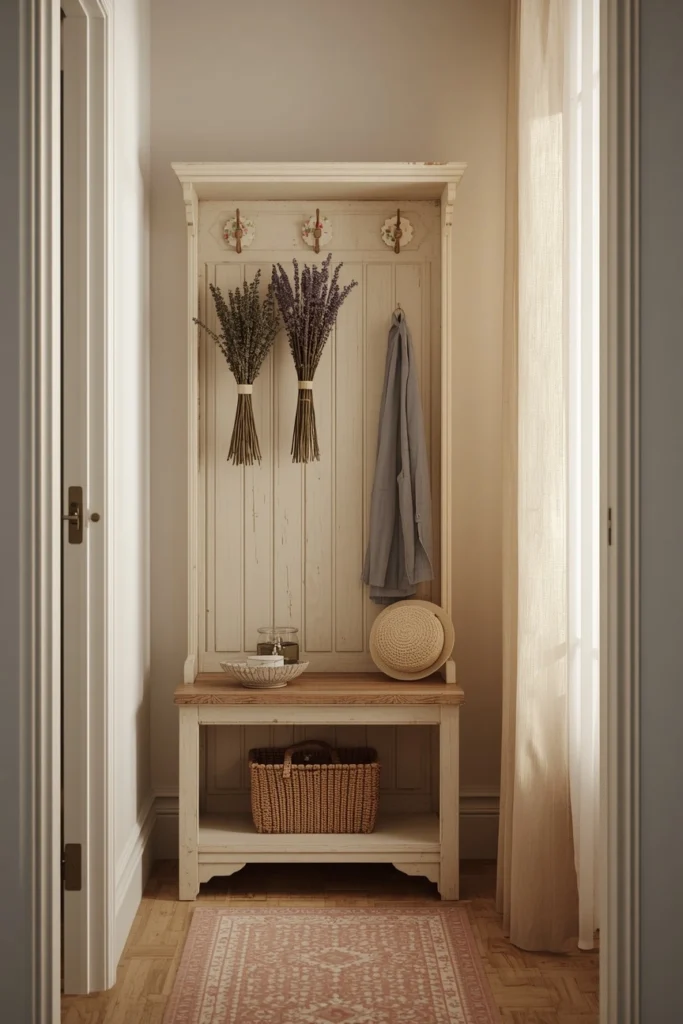
Idea 8: Cottagecore Corner Mudroom
Not everyone has a dedicated mudroom. And that’s actually fine — because a styled corner can do more than you’d expect.
The cottagecore corner mudroom is built around a slim hall tree or freestanding painted hutch tucked into a corner or hallway nook. Add a vintage runner rug in dusty rose and sage. Hang dried lavender or eucalyptus from the hooks. Place a small ceramic dish for keys on a shelf.
It feels lived-in, warm, and personal. Like something from a French countryside farmhouse that happened to end up in your hallway.
Best for: Renters, small apartments, hallway spaces, and anyone who can’t do built-ins.
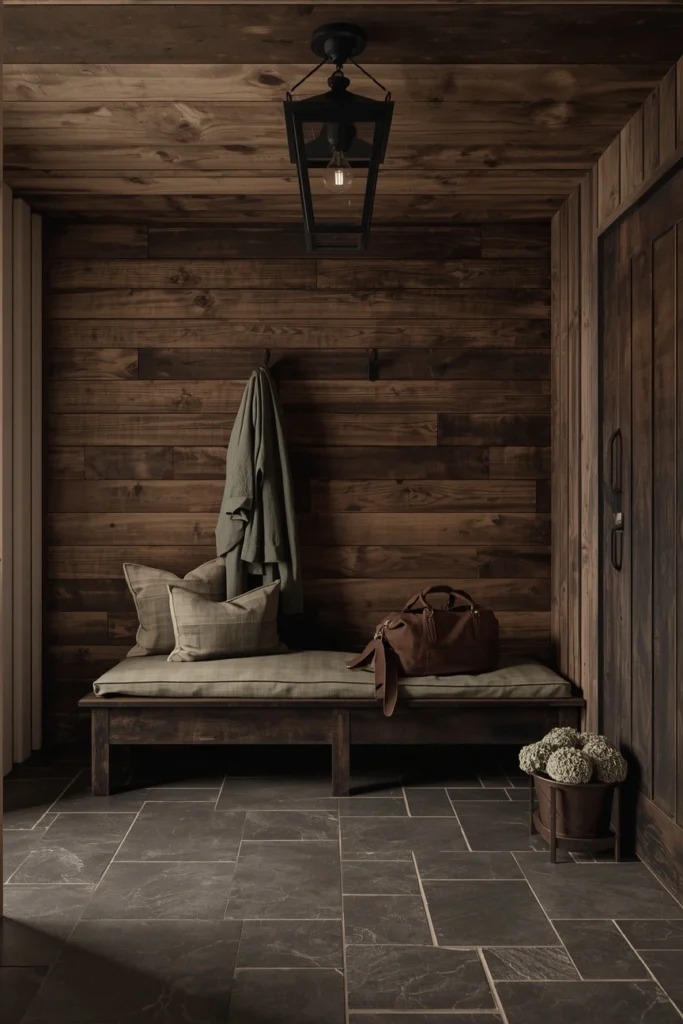
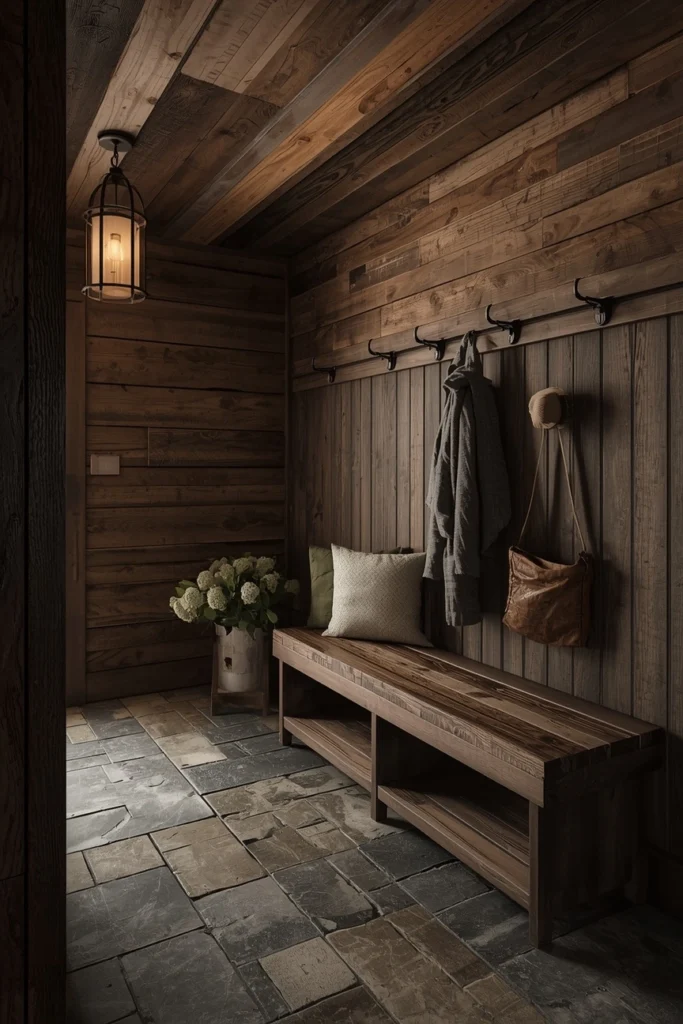
Idea 9: Rustic Stone Floor with Reclaimed Wood Ceiling
This one is for the homes that have history — or want to look like they do.
Irregular stone tile or slate flooring in a mudroom does something no other material can. It makes the space feel rooted. Like the house was built with that floor on purpose, long before “mudroom” was even a word people used.
Layer in a reclaimed wood ceiling — planks with knots and natural variation — and aged wrought-iron hooks. The result feels like a centuries-old farmhouse entry, even if your house was built last decade.
Styling details that make it: A rough-hewn wood bench. A vintage iron lantern pendant. A basket of firewood or dried hydrangeas in the corner.
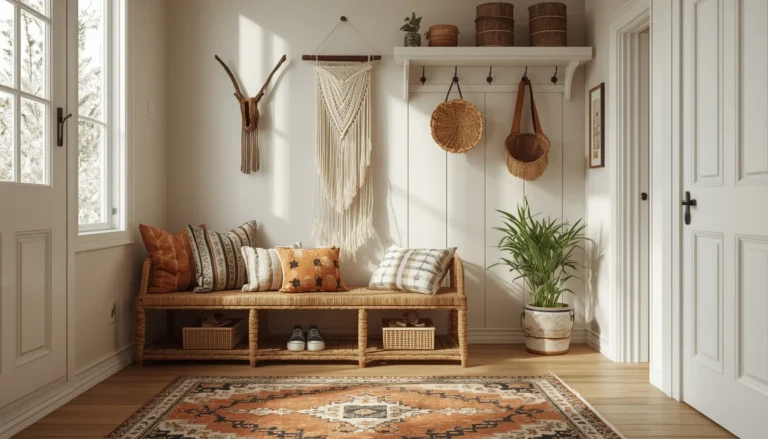
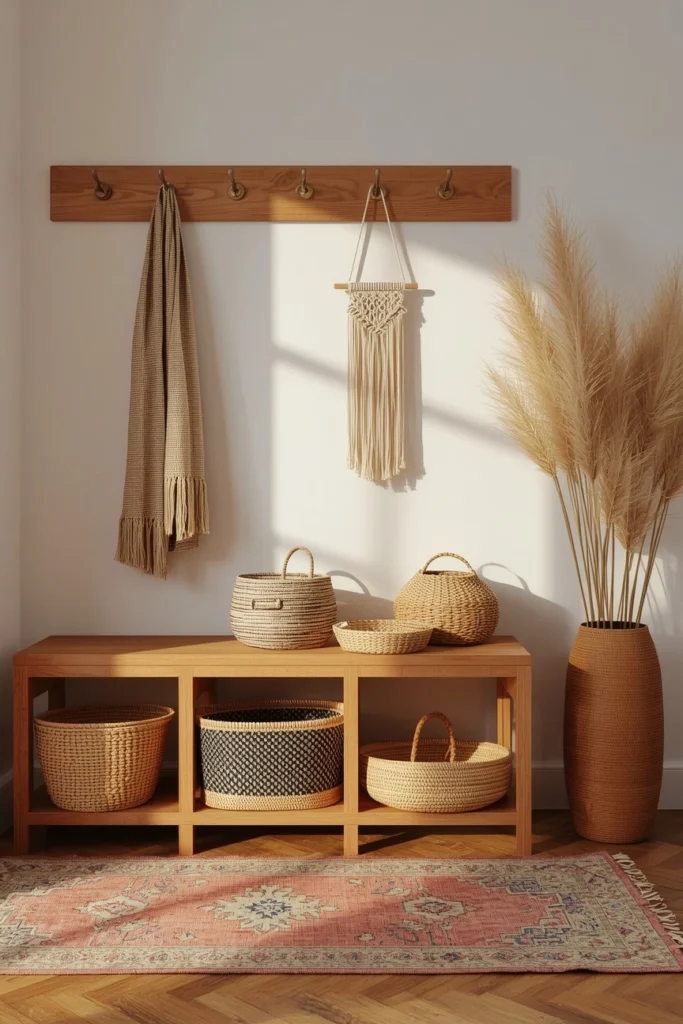
Idea 10: The Boho Mudroom with Patterned Baskets and Macramé
Boho mudrooms are the most personal-feeling of all the styles. And also the most forgiving.
The whole approach is about layering things you love: a mix of woven baskets in different sizes and textures, a macramé wall hanging above the bench, a vintage Moroccan-style runner rug underfoot. Hooks in mixed metals — brass, matte black, maybe even a rustic wood peg rail.
The beauty of this style is that it’s endlessly adaptable. Your existing entryway hooks? Add baskets and a rug, and they’re suddenly part of a curated look.
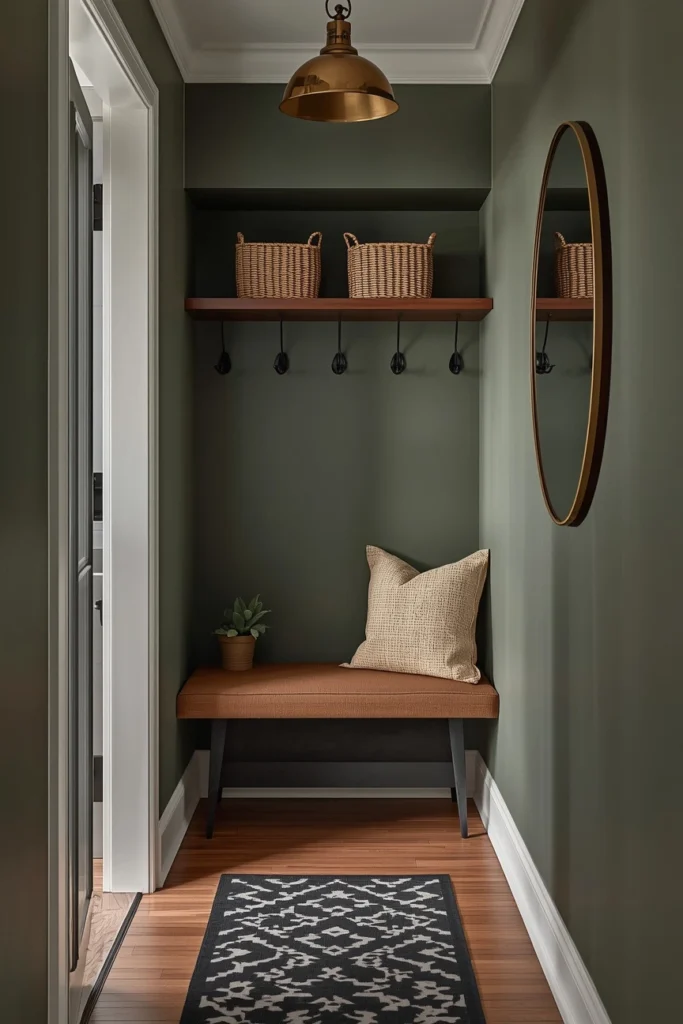
Idea 11: Mini Mudroom — Narrow Entryway Nook Ideas
A narrow hallway of 18–24 inches can still function as a real mudroom. You just have to think vertically.
The approach: mount a row of sturdy wall hooks at coat height. Add a shallow floating shelf above for baskets or hats. Below, slide in a narrow bench — look for styles under 12 inches deep. A slim mirror on the opposite wall opens the space visually.
The visual key in a tiny entryway is choosing one bold design detail — a patterned wallpaper, a gorgeous floor tile, or a painted niche — and letting it carry the whole space.
Narrow entryway must-haves:
- Hooks at two heights (adult and kid level)
- Mirror to borrow light and visual space
- A slim runner rug to define the zone
- One small potted plant to soften all that vertical storage
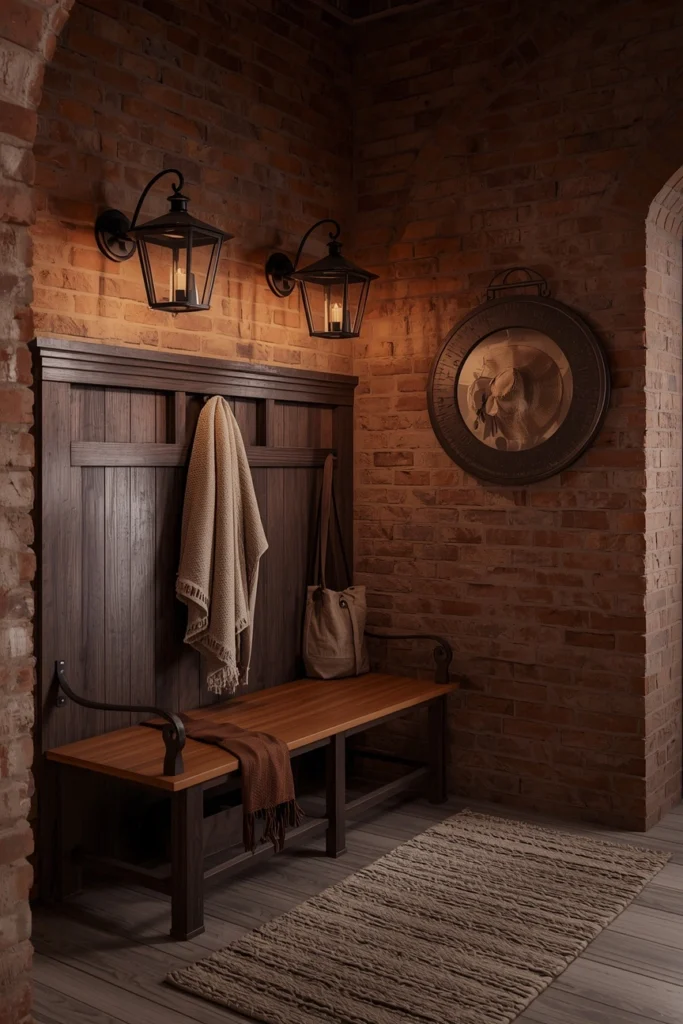
Idea 12: Warm Brick Wall Mudroom with Lantern Lighting
If your home has exposed brick anywhere near the entry — please, please use it.
A brick wall mudroom has a warmth and authenticity that no painted surface can replicate. The texture catches the light, the tones shift from amber to terracotta to clay depending on the time of day, and it makes every other material in the space look richer.
Hang oversized black iron lantern sconces on either side of a simple wood bench. Add leather-strap hooks, a dark woven rug, and a vintage wooden mirror. Resist the urge to paint the brick — it only works if it’s left alone.
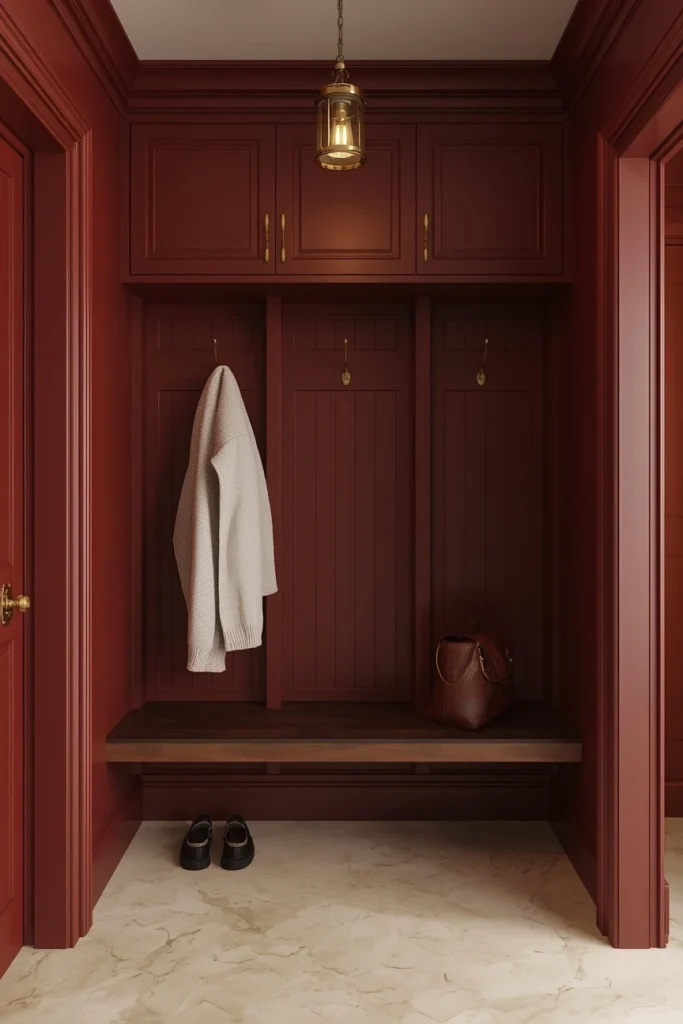
Idea 13: Deep Burgundy Mudroom with Aged Brass Details
Burgundy is one of the most underused colors in home decor — especially in entryways.
It’s rich without being aggressive. It’s warm without being predictable. And in a mudroom — a space that gets hit with the visual noise of coats, bags, and shoes — burgundy acts as an anchor. It makes everything hanging on those hooks look intentional.
Paint your built-ins or accent wall in a deep burgundy-brown (think Farrow & Ball Preference Red or Benjamin Moore’s Merlot). Pair with aged brass hooks and a warm cream-colored marble or stone tile floor. Add a dark walnut bench.
This is a mudroom that makes you feel something walking in.
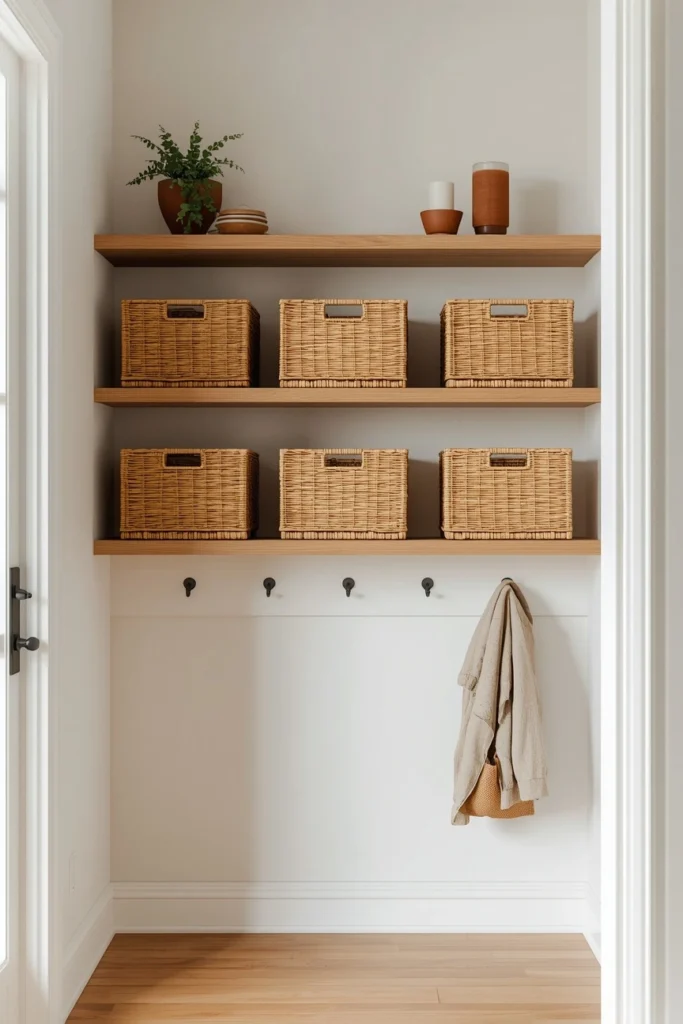
Idea 14: Open Shelf Mudroom with Woven Texture Storage
Open shelving in a mudroom sounds terrifying — but designers are moving toward it fast.
The reason: when you can’t hide things behind closed doors, you’re forced to make your storage beautiful. And beautiful storage is incredibly satisfying to look at.
This means investing in a good set of woven baskets — the same style, in a few sizes — and committing to a system. Each family member gets a basket. Shoes stay below. Hooks keep coats off shelves. The result looks curated, not chaotic.
Style the top shelf with a small plant, a ceramic jar for keys, and one beautiful object. Everything else is functional. That single styled shelf is what makes it feel designed.
Idea 15: Soft Blue Beadboard Mudroom with White Trim
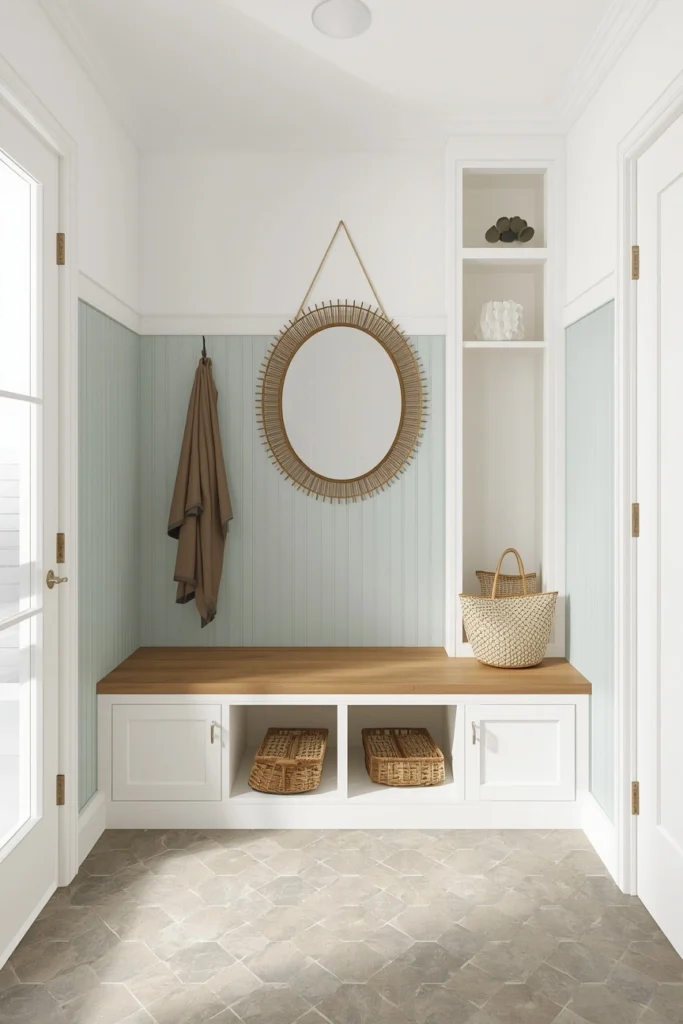
Soft blue beadboard is the mudroom version of a classic — and it keeps coming back because it just works.
The specific shade matters enormously here. Not a bright cornflower blue. Not a gray-blue that reads cold under artificial light. Look for a dusty, muted blue with slight green undertones — like Sherwin-Williams Watery or Benjamin Moore’s Buxton Blue. Something that feels like faded denim or sea glass.
White painted trim above the beadboard. A white ceiling. Natural rattan or wood furniture. Brass or bronze hardware. This combination photographs beautifully, reads as welcoming and cheerful, and works in almost any home style.
Idea 16: The Garage-to-Mudroom Conversion
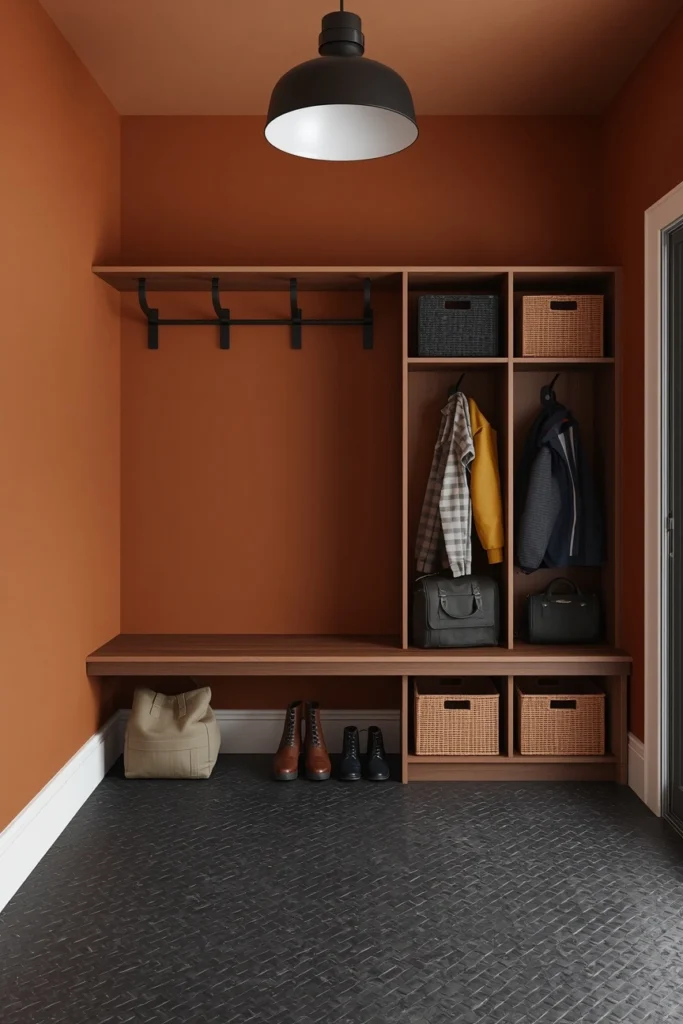
The garage entrance is the most used door in most homes — and the most neglected.
Converting a garage doorway into a proper mudroom landing doesn’t require a full renovation. Start with a floating bench against the wall, mounted above the utility lines. Add a coat rail at adult height, a second lower peg rail for kids. Install a simple overhead light where there’s likely nothing but a bare bulb.
For the floor: rubber-backed interlocking tiles work beautifully here — they’re comfortable, durable, easy to clean, and come in handsome dark patterns that hide dirt naturally.
The goal isn’t perfection. It’s creating a clear system where everything lands when you walk in — before anything makes it further into the house.
Idea 17: Mudroom + Laundry Room Combo
The laundry-mudroom combo is one of the most functional floor plan decisions a home can have — and one of the most visually underrated.
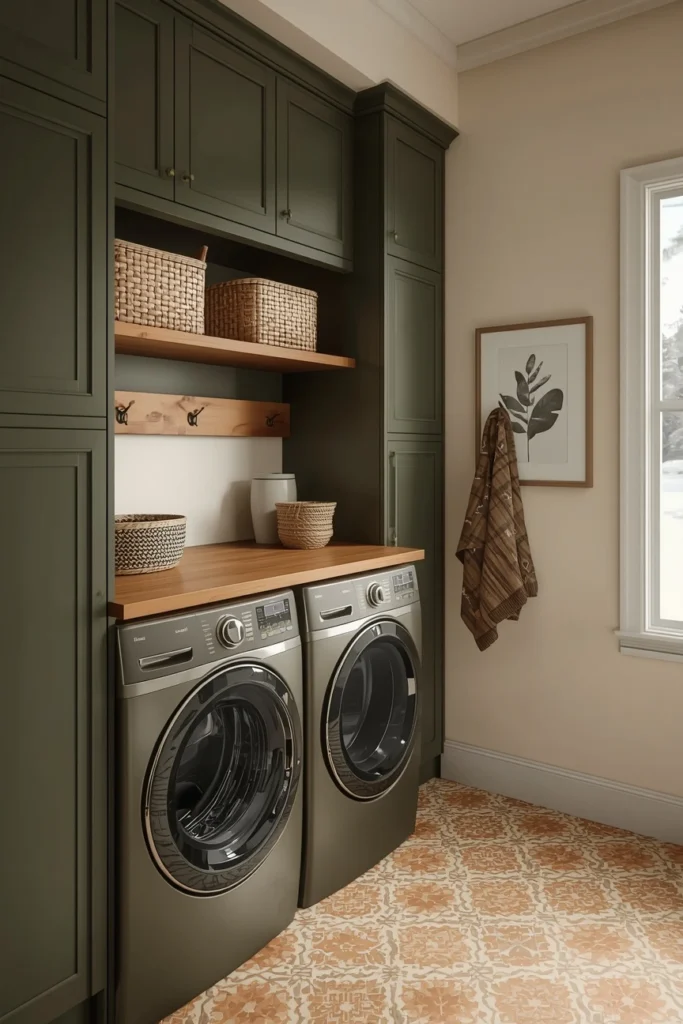
The key to making this dual space feel designed rather than chaotic is visual consistency. Pick one cabinet color for both zones — a deep navy, a warm olive, or an unexpected terracotta. Use the same hardware throughout. Let the functional zones flow into each other naturally.
A full-length curtain can hide the laundry zone if needed. Or lean into it — open laundry with beautiful baskets, a vintage folding table, and a gallery of framed botanical prints makes even a washer and dryer feel intentional.
Idea 18: The High-Contrast Gallery Wall Mudroom
Nobody said you can’t have art in a mudroom.
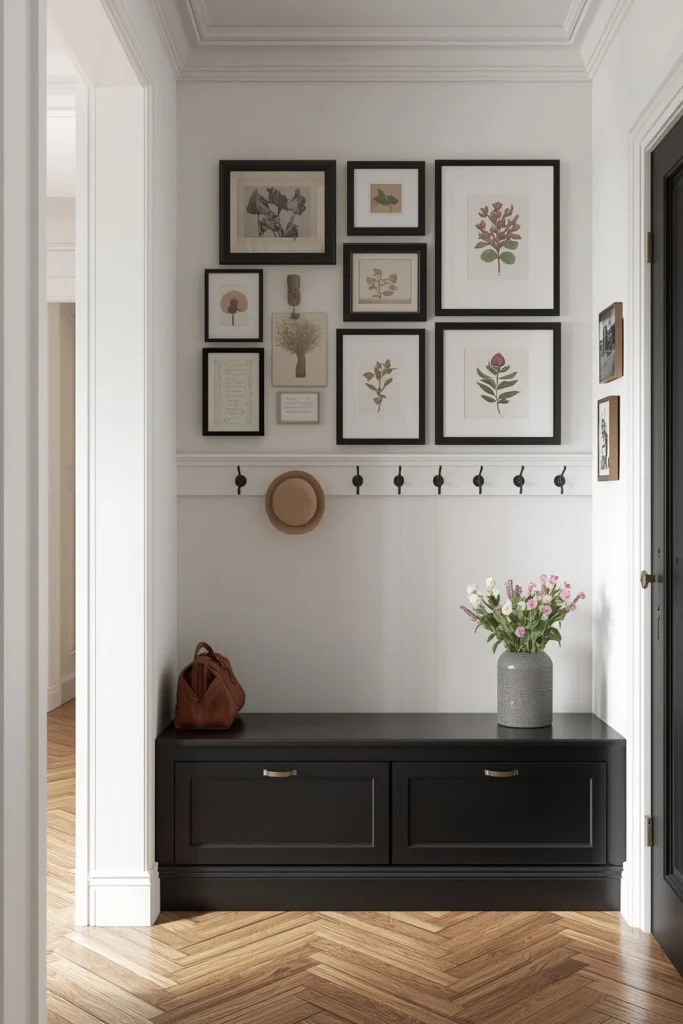
This idea is for the homes that already have great architecture — or the ones trying to add it visually. Gallery walls in entryways give the eye something interesting to land on while you’re doing the mundane act of taking off your shoes.
The contrast comes from pairing black-framed artwork on crisp white walls with dramatically dark cabinetry below. The hooks are built into the cabinetry, not cluttering the gallery wall. The art stays art.
Choose prints that mean something — a vintage botanical, a hand-drawn map of a meaningful city, your kids’ framed drawings. Not matchy-matchy. Actually personal.
Idea 19: Farmhouse Mudroom with Shiplap and Vintage Hooks
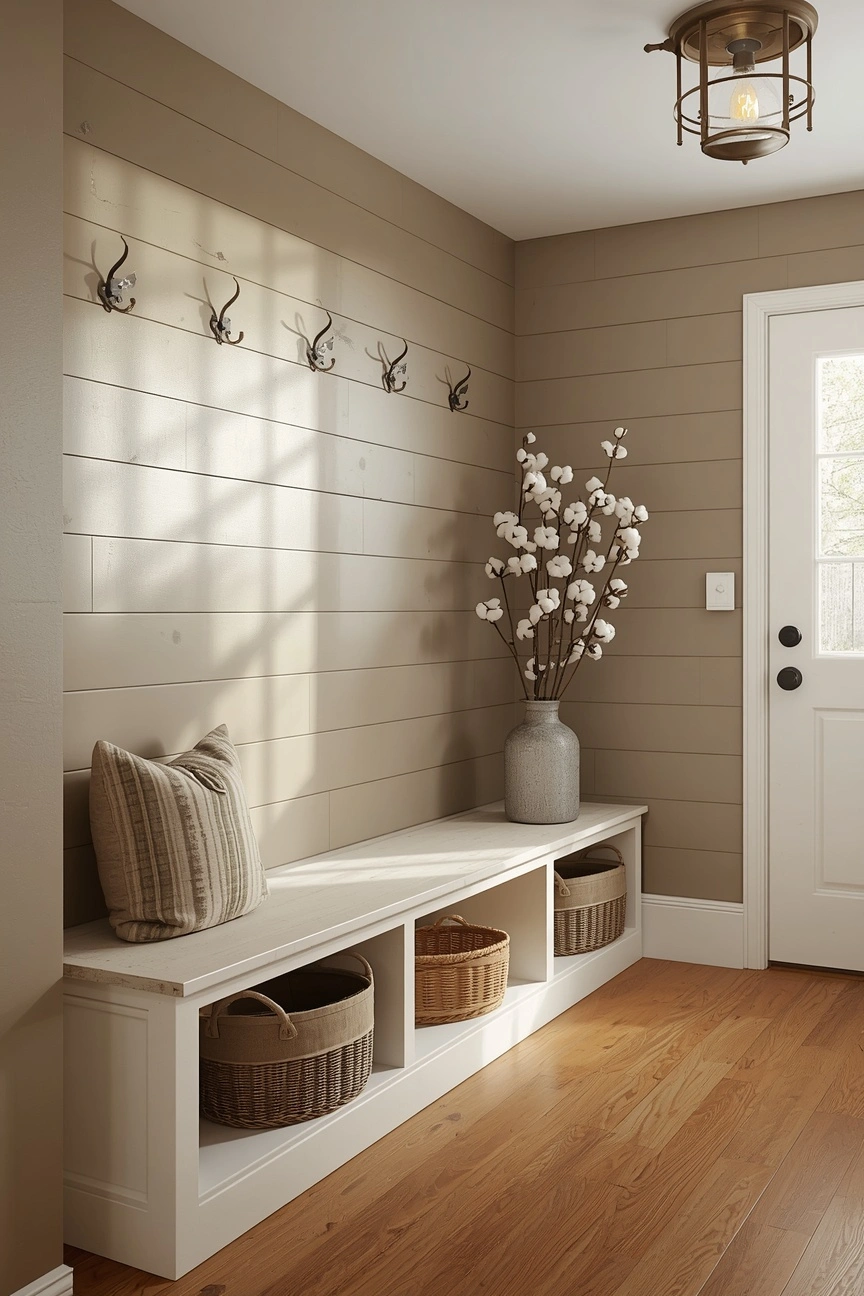
The farmhouse mudroom is a classic for a reason — it never feels dated when done with restraint.
The key is getting the details right. Shiplap paneling, yes — but painted in something other than white. Try a warm greige, a muted sage, or even a deep charcoal shiplap that makes the space feel completely different.
Vintage hardware matters hugely here. Skip the generic brushed nickel and look for antique iron hooks, old school brass cup pulls, or salvaged cast-iron hooks from architectural salvage shops. That genuine aged quality is what separates a farmhouse mudroom from a catalog farmhouse mudroom.
Idea 20: Budget-Friendly Mudroom Entryway — Big Style, Small Spend
You don’t need built-ins to have a beautiful mudroom. You need a plan.
Here’s the honest version of a budget mudroom makeover:
Step 1: Paint. One wall, one color, something bold. Deep green, dusty terracotta, navy. This single move costs under $50 and does more than anything else.
Step 2: A secondhand hall tree or freestanding coat rack from Facebook Marketplace or thrift stores. Strip, sand, and repaint it. Budget: $20–$80.
Step 3: A runner rug. This defines the zone and makes the whole space feel intentional. Budget: $30–$80 from Amazon or TJ Maxx.
Step 4: Add baskets. Matching baskets make any shelf or cubby look designed. Budget: $15–$40 total.
Step 5: Swap the hooks. This is the smallest thing with the biggest visual return. New hooks in the right finish transform what’s already on the wall. Budget: $15–$30.
Total spent: under $250. Total impact: looks like you hired someone.
Styling Tips That Actually Matter
- The two-height hook rule. Always mount two rows of hooks — one at adult height (65–72 inches from floor), one at kid height (36–42 inches). One row for everyone is the reason mudrooms stop working as soon as school bags and small coats enter the picture.
- Tile speaks louder than you think. The floor is the first thing eyes go to in a mudroom. Even the plainest cabinetry looks intentional over a patterned or textured tile. If you can only do one upgrade — make it the floor.
- Lighting changes everything. Most mudrooms have a single overhead fixture — and it’s usually the worst light in the house. Swapping in a proper pendant or adding a pair of wall sconces immediately changes how the space reads. It makes it feel like a room, not a utility closet.
- Hardware is jewelry. The hooks, pulls, and knobs in your mudroom are like jewelry for the space. Spend a little more here than feels comfortable. The right hardware makes everything else look custom.
- One plant, one object. The fastest way to make a mudroom feel styled rather than just organized: add one living plant and one beautiful non-functional object. A eucalyptus branch in a vase. A vintage ceramic lamp. A framed print. Something that says this space was designed, not just assembled.
Common Mistakes to Avoid
Too many hooks, not enough space. Packing a wall with hooks looks like the back of a locker room. Stick to the number of hooks you genuinely use — quality over quantity.
Ignoring the floor. Bare hardwood or plain vinyl in a mudroom is a missed opportunity. Even a $35 runner rug transforms the space.
Matching everything perfectly. A mudroom with perfectly matching baskets, hooks, bench, and rug looks like a showroom — not a home. Mix textures. Mix wood tones slightly. Let it breathe.
Forgetting lighting. A single recessed light overhead will make your mudroom look like a hospital. Add warmth with a pendant, a sconce, or even a plug-in light.
Choosing style over function. Beautiful is the goal — but if the system doesn’t work, nobody uses it. Make sure there are enough hooks, enough basket space, and enough floor room to actually take off shoes.
Small-Space Alternatives
For the homes that have 4 feet of hallway and a dream:
- Floating bench instead of freestanding: Frees up floor space visually and physically. Install at 18 inches from floor.
- Peg rail instead of big hooks: A simple Shaker-style peg rail takes almost no wall depth but holds coats, bags, hats, and even baskets hung from them.
- Mirror, always: In a small entryway, a mirror is not optional. It doubles the visual space instantly.
- Baskets under the bench: The space beneath a bench holds 4–6 pairs of shoes when you slide in a few flat baskets.
- Wallpaper in a tiny entry: Counterintuitively, a bold wallpaper in a tiny mudroom makes it feel intentional and complete — not small and sad.
FAQs
Conclusion
Your mudroom is not an afterthought.
It’s the first room you see when you come home. It holds the worn boots and the winter coats and the bookbags your kids dump the second they walk in. It quietly takes the chaos of daily life and keeps it from spreading through your whole home.
That kind of room deserves real design attention.
Whether you go dark and dramatic with navy built-ins and brass hooks, or keep it cottagecore and soft with a thrifted hall tree and dried lavender — the right mudroom becomes one of those spaces people notice. Not because it’s flashy. Because it feels like someone actually thought about it.
And now you have 20 ways to do exactly that.