16 Boho Dining Room Ideas That Are Colorful, Layered & Totally Stunning
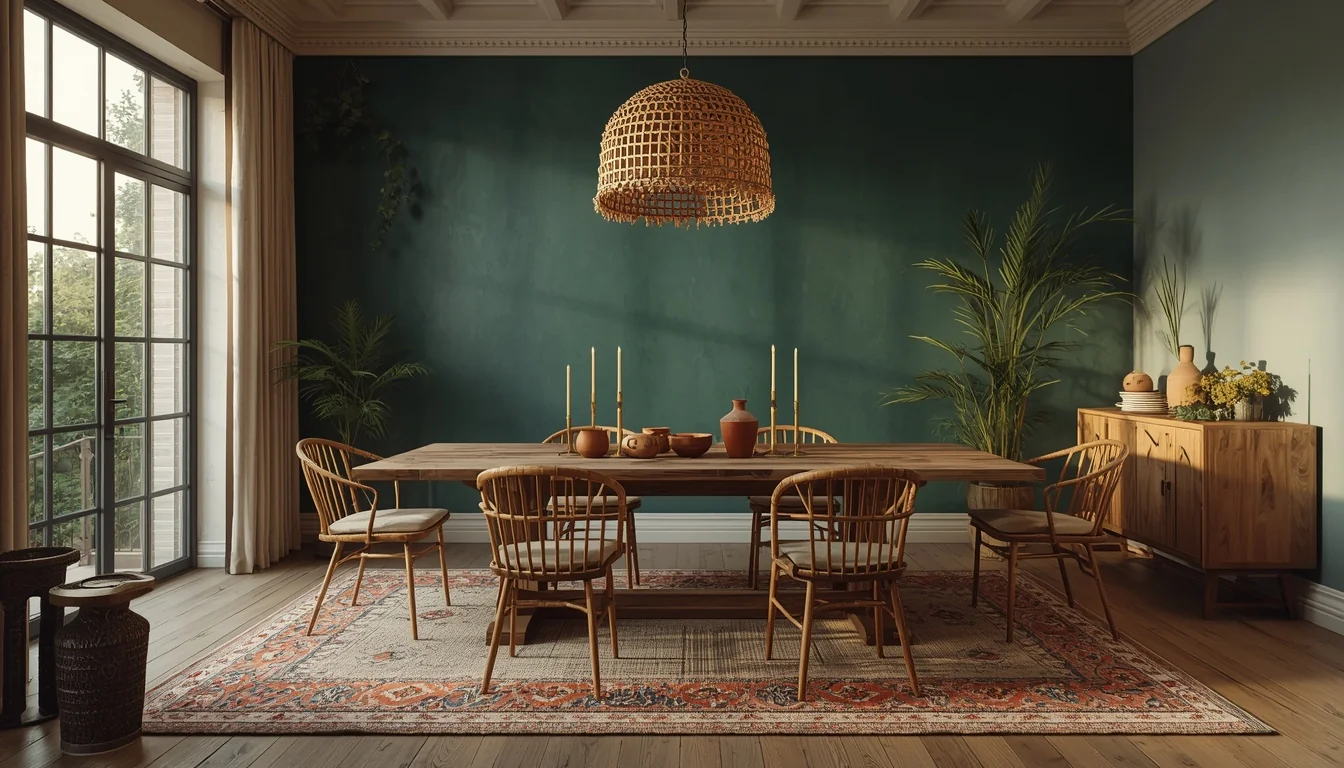
Some dining rooms look like they were bought in a single afternoon. Others look like they were gathered slowly, piece by piece, over years of travel and thrifting and falling in love with one too many rugs. That second kind is what boho dining rooms do best. They’re warm instead of stark, layered instead of matched, and full of color that feels earned rather than forced. If your dining room currently feels flat, beige, or a little too polite, these 16 boho ideas will show you exactly how to build a room with real depth, texture, and personality, without it ever tipping into cluttered.
Table of Contents
- Color & Wall Ideas
- Lighting Ideas That Set the Mood
- Furniture & Seating Ideas
- Textiles, Layers & Tablescape Ideas
- Styling Tips
- Practical Implementation Ideas
- Common Mistakes to Avoid
- Small-Space Alternatives
- Budget-Friendly Alternatives
- Pro Styling Recommendations
- FAQs
- Conclusion
Boho Dining Room Ideas
1. Jewel-Tone Accent Wall
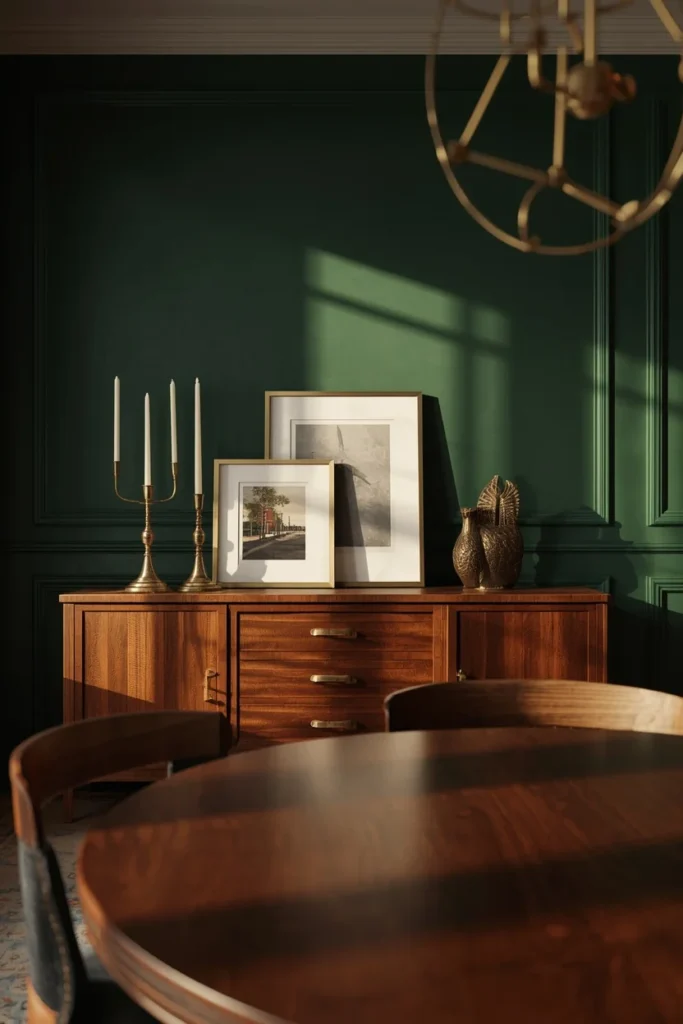
A boho dining room finds its foundation in color, and jewel tones like deep emerald, sapphire, and amethyst do more work than any neutral ever could. Painting one wall in a saturated jewel tone gives the room a sense of depth and drama that a full-white space simply can’t achieve, especially once evening lighting hits it and the color deepens into something almost glowing. This works particularly well behind a sideboard or gallery wall, since the color becomes a backdrop for layered art and objects rather than competing with them. Pairing the wall with warm wood furniture and brass accents keeps the jewel tone from feeling cold or overly saturated. Because dining rooms are typically used in the evening, this is one of the few rooms in the house where a bold, dark color reads as intentional and cozy rather than heavy. The effect is a room that feels like it’s holding onto its own light long after the sun goes down.
2. Layered Bold Wallpaper
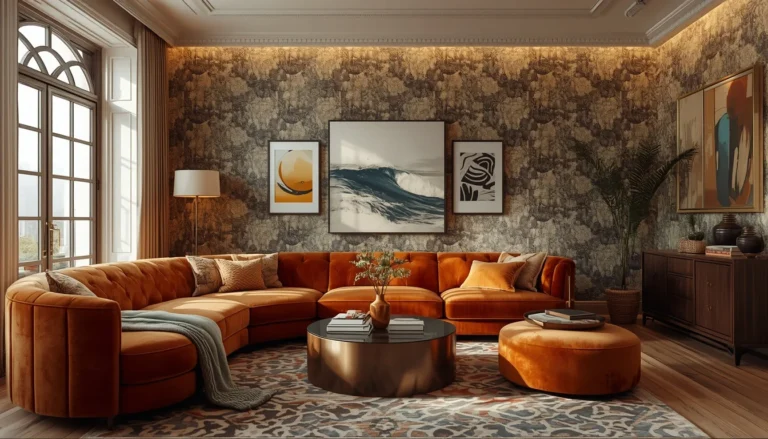
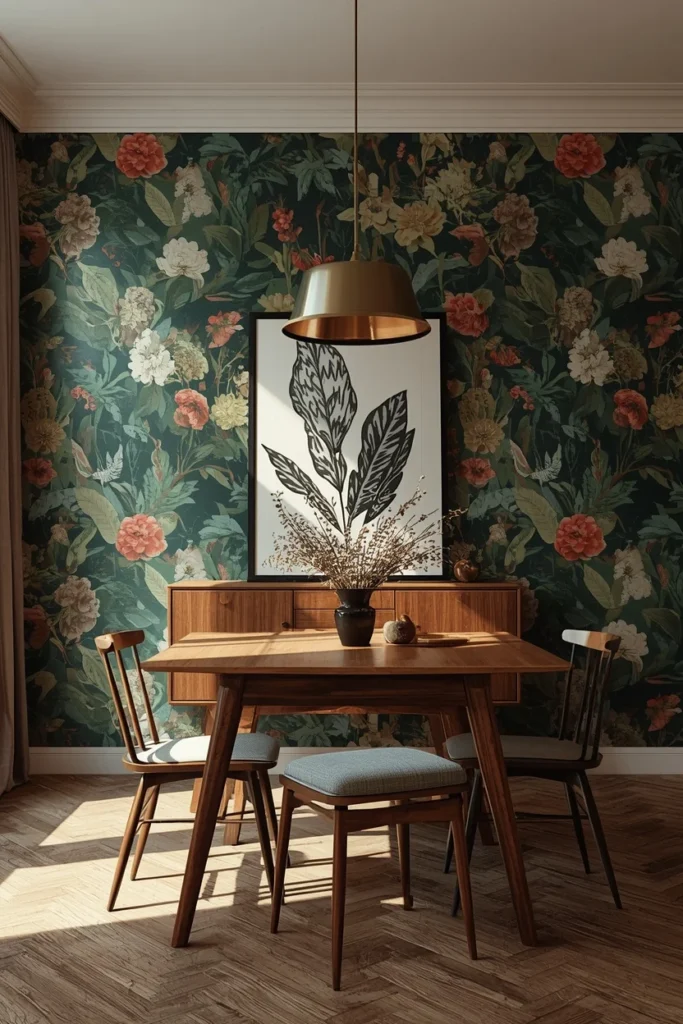
Where a jewel-tone wall gives color, a bold wallpaper pattern gives movement, especially large-scale botanical prints, paisleys, or vintage-inspired florals in saturated, contrasting colors. Wallpaper works especially well in a boho dining room because it fills the walls with the same sense of abundance that boho style brings to furniture and textiles, rather than leaving them as a quiet backdrop. Choosing a pattern with several colors already woven together makes it easier to pull accent colors for chairs, art, or table linens elsewhere in the room. This idea works well on all four walls in a smaller dining nook, wrapping the whole space in pattern, or on a single accent wall in a larger room where a full wraparound might feel overwhelming. Layering simple black-framed art directly on top of the wallpaper adds another dimension without fighting the print underneath it. The end result is a room that feels immersive the moment you walk in, rather than a space you simply pass through.
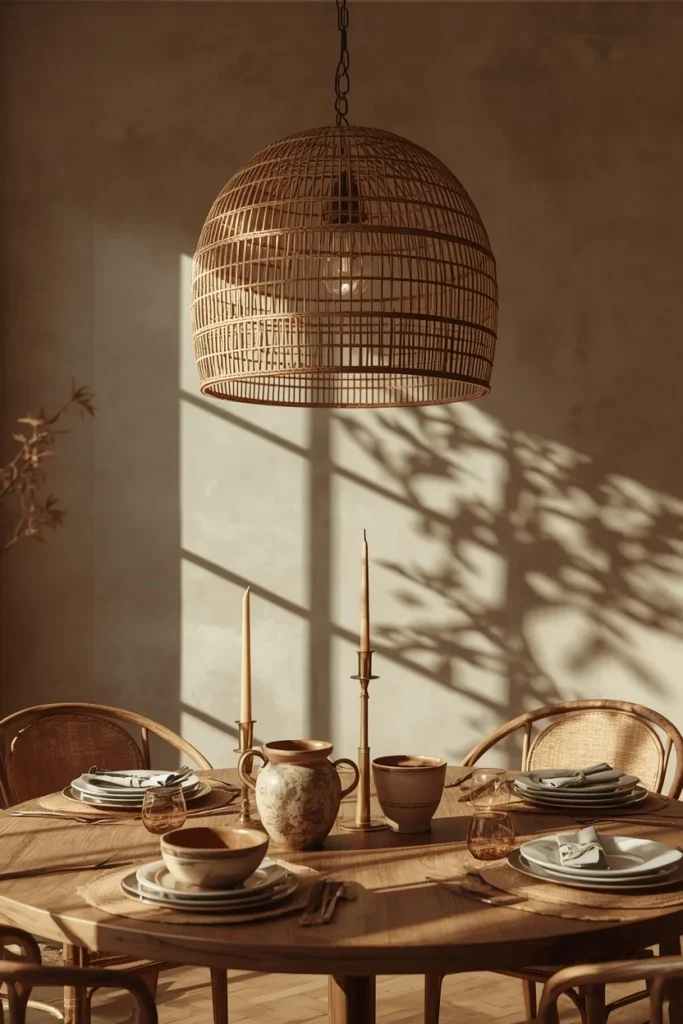
3. Woven Rattan Chandelier
Nothing signals boho dining room instantly quite like a woven rattan or wicker chandelier hanging low above the table. The natural fibers cast soft, dappled shadows across the ceiling and walls as the light moves through them, adding a quiet sense of movement to the room even when no one is sitting at the table. This fixture works especially well over round or oval tables, where its organic shape echoes the curve of the table below rather than competing with sharp angles. Rattan chandeliers also tend to be more budget-friendly than glass or crystal statement fixtures, making them an accessible way to add serious visual impact for relatively little cost. Pairing the fixture with warm, dimmable bulbs keeps the whole look glowing rather than flat and bright. Over a table set with mismatched ceramics and brass candlesticks, a rattan chandelier becomes the natural centerpiece that ties the whole layered look together.
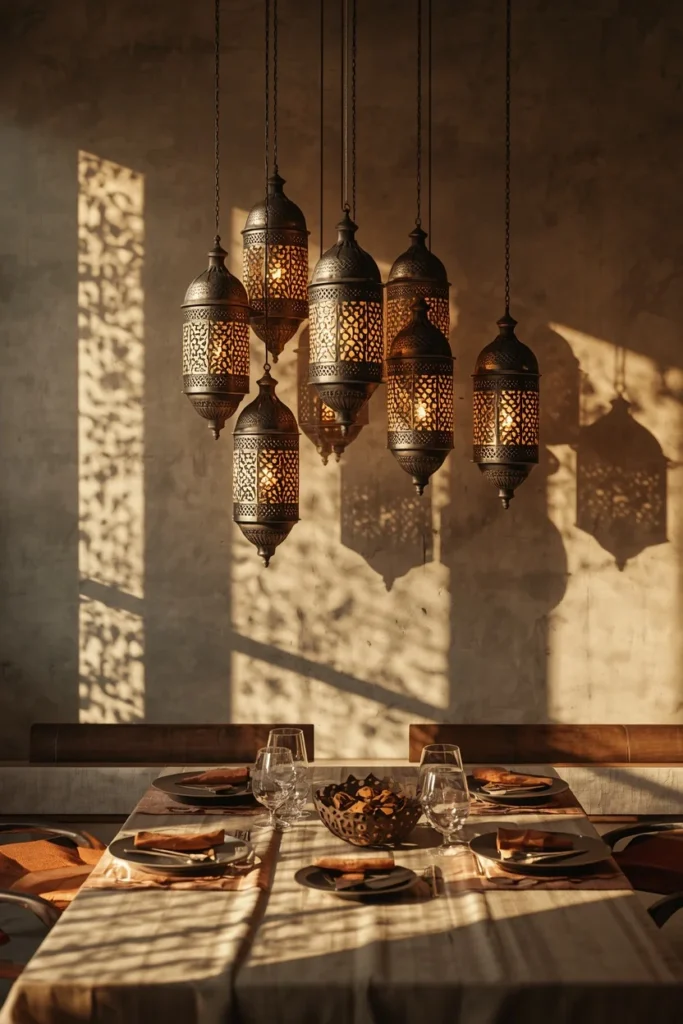
4. Moroccan-Inspired Pendant Lanterns
A cluster of Moroccan-style metal lanterns, punched with intricate cutout patterns, throws a scattering of light and shadow across the table and walls that no plain fixture can replicate. Hung at varying heights in a small grouping, these lanterns bring both function and art to the ceiling, especially when paired with warm amber or clear bulbs that emphasize the metalwork’s detail. This idea works particularly well in a dining room already leaning into global influence, since the lanterns pair naturally with layered textiles, brass tableware, and warm wood furniture. Choosing lanterns in slightly different finishes, aged brass, matte black, and antique gold, adds to the collected, gathered-over-time feeling that defines boho style. The scattered shadow pattern created by the cutout metal also adds texture to the room without requiring any additional wall decor. It’s a lighting choice that turns dinner into something closer to an occasion every single night.
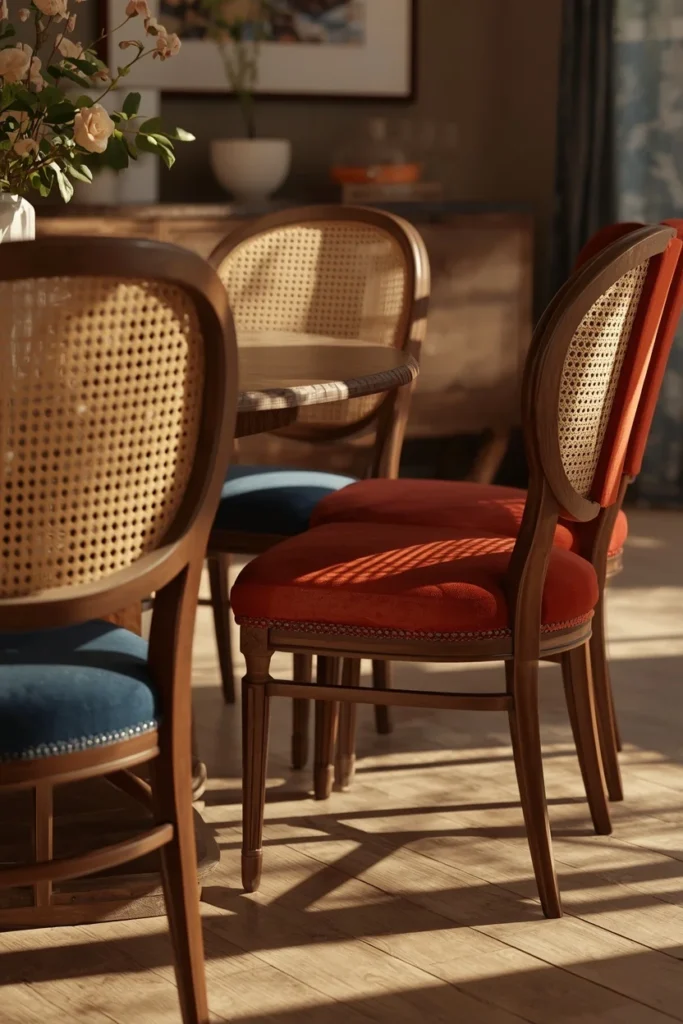
5. Mismatched Vintage Dining Chairs
A set of matching dining chairs is the fastest way to make a boho room feel like a showroom, so swapping them for a mix of vintage finds instantly brings the collected, lived-in feeling boho style depends on. Pairing a few cane-back chairs with a velvet-upholstered pair and one or two solid wood chairs at the ends creates variety without looking accidental, especially when a consistent color thread, like warm wood tones or a shared jewel-tone velvet, runs through the mix. Thrifted or vintage chairs also bring in the kind of wear and character that new furniture takes years to develop naturally. This approach is also considerably more budget-friendly than buying a full new dining set, since chairs can be sourced one or two at a time as they’re found. Reupholstering a few of the chairs in a bold pattern or solid jewel tone ties the mismatched set together visually. The overall effect reads as a room built slowly and intentionally, rather than one ordered in a single afternoon.
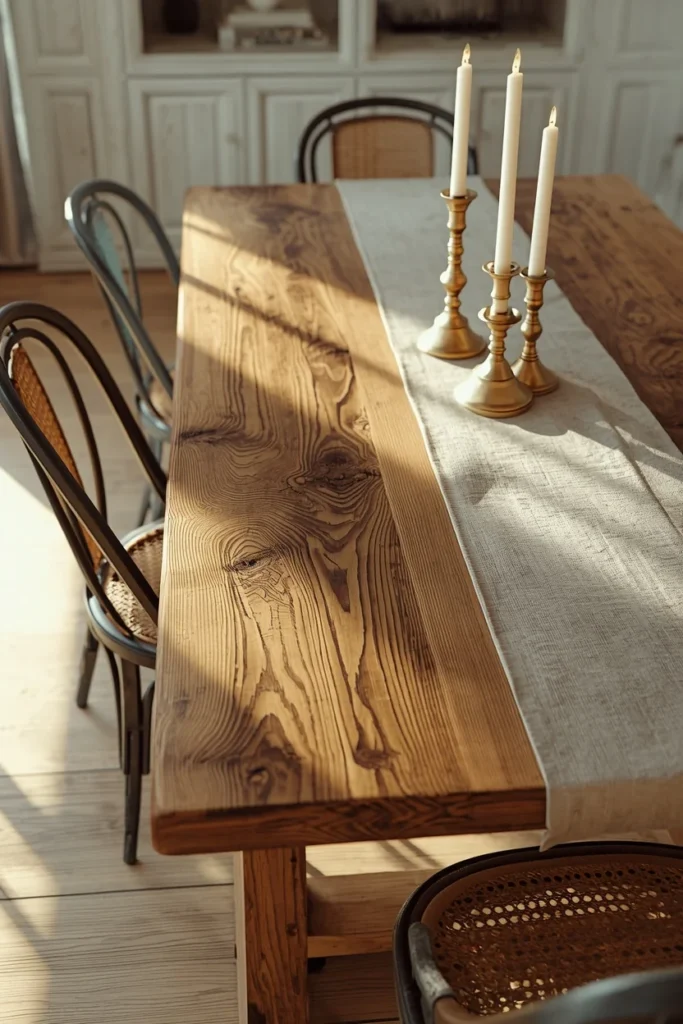
6. Reclaimed Wood Table with Mixed Materials
A reclaimed wood table anchors a boho dining room with the kind of texture and history that a factory-finished table can’t replicate, its knots, saw marks, and uneven grain reading as a record of the wood’s past life. Pairing this table with chairs in an entirely different material, iron, cane, or upholstered velvet, follows the broader boho instinct toward mixing materials and eras rather than matching a single style throughout. This combination also gives the room practical durability, since a reclaimed wood surface tends to hide daily wear, water rings, and scratches far better than a glossy modern finish. Leaving the table’s surface with a simple low-VOC oil finish, rather than a heavy lacquer, keeps its texture and character visible under the hand. Styled with a table runner, mismatched candlesticks, and a low bowl of citrus or greenery, the table becomes the visual and emotional center of the whole room. It’s the piece everything else in a boho dining room is built around.
7. Layered Rugs
Layering a smaller vintage or kilim-style rug over a larger natural jute or sisal base rug is one of the clearest signatures of boho styling, and it works especially well underneath a dining table where both texture and pattern get seen every day. The jute base grounds the room in something neutral and durable, forgiving of crumbs and daily spills, while the patterned rug on top introduces color, history, and a sense of the unexpected underfoot. This layering technique also solves a common sizing problem, since a smaller vintage rug that wouldn’t otherwise cover enough floor space still reads as intentional once layered rather than lost in an empty room. Choosing a kilim or vintage rug with colors that echo the room’s chairs, art, or wall color ties the whole space together without requiring an exact match. This idea is also a relatively low-cost way to add serious visual interest, since vintage-style rugs are widely available at a range of price points. The layered look underfoot mirrors the same collected, gathered-over-time feeling that runs through every other choice in a boho dining room.
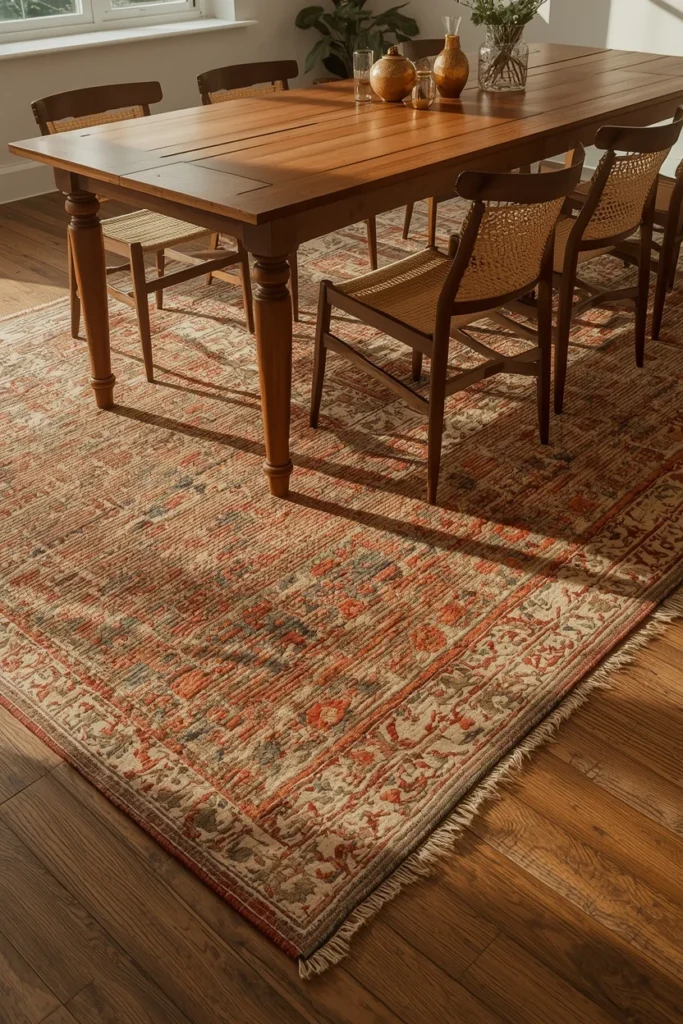
8. Macrame Wall Hanging or Plant Hangers
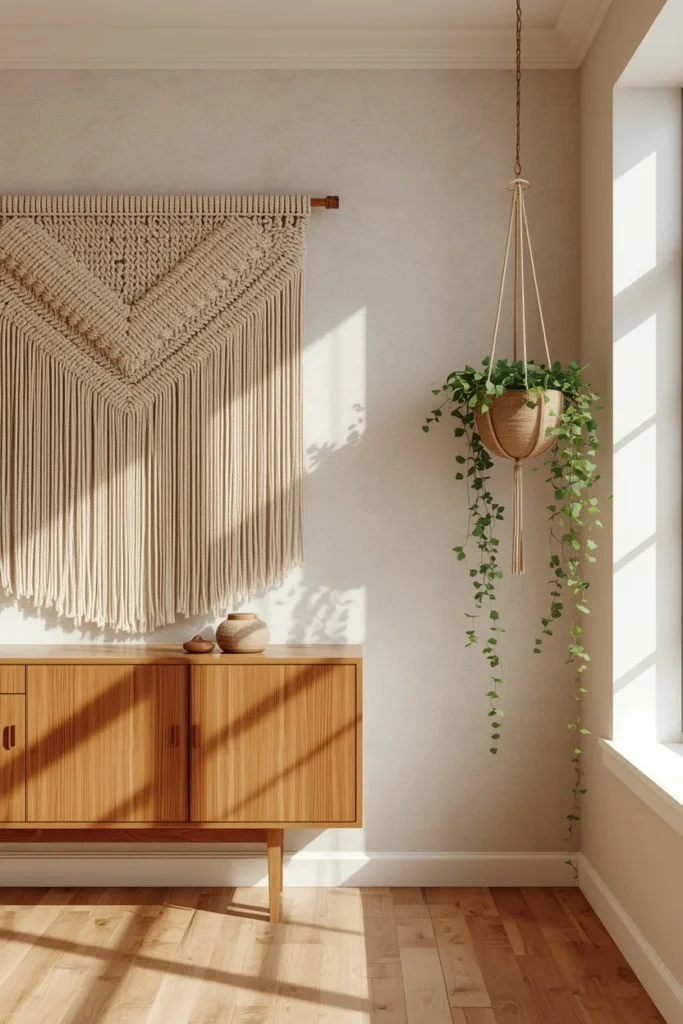
A large macrame wall hanging brings texture and softness to a boho dining room without adding any color at all, letting the intricate knotwork and natural fiber do the visual work on its own. Hung on a blank wall behind the table or sideboard, a macrame piece fills space in a way that feels handmade and personal rather than store-bought, especially when paired with a vintage or thrifted frame nearby. Smaller macrame plant hangers serve a similar purpose scattered near a window, letting trailing greenery cascade down at different heights throughout the room. This idea is particularly well suited to renters, since a macrame piece requires only a single hook or nail rather than committing to paint or wallpaper. The natural, undyed fiber typically used in macrame also pairs beautifully with the warm woods and woven textures found throughout the rest of a boho dining room. It’s a quiet, textural layer that softens a room otherwise full of bold color and pattern elsewhere.
9. Global Textile Table Runners and Cushions
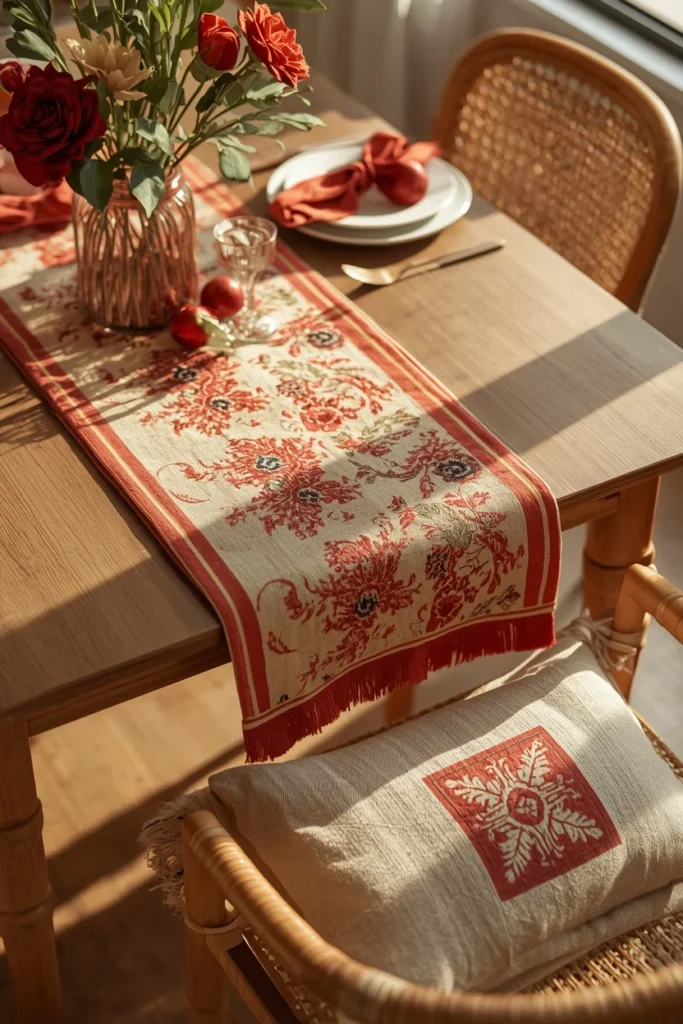
Bringing in textiles sourced from different regions and traditions, block-print cotton, ikat weaves, embroidered linen, gives a boho dining table the same layered, well-traveled feeling that defines the style at its best. A table runner in a bold block print, layered with mismatched napkins in a complementary but not identical pattern, adds color and texture directly at eye level where guests spend the most time looking. Cushions tied onto wood or cane chair seats using coordinating fabric soften the seating while tying the whole table setting together visually. This idea is one of the easiest and least expensive ways to shift a dining room’s whole mood seasonally, since swapping textiles costs far less than replacing furniture. Choosing textiles that share a color family, even if the patterns themselves vary widely, keeps the look feeling curated rather than random. The table becomes a place where pattern and color are allowed to layer freely, which is exactly the point.
10. Abundant Trailing Greenery
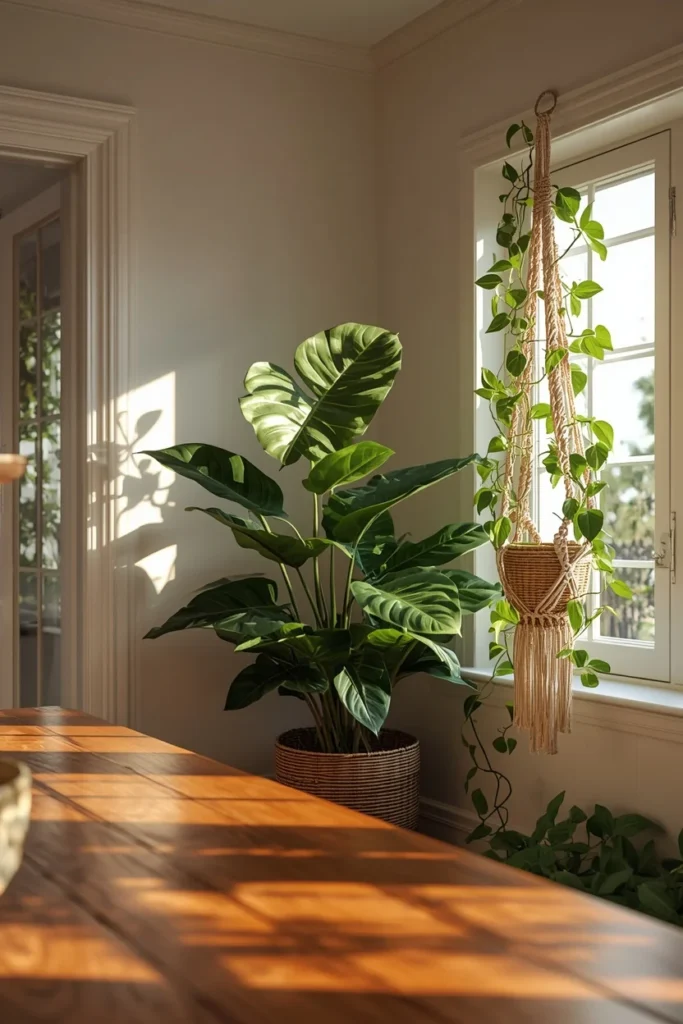
Boho style leans heavily on plants, not as a single potted accent but as an abundant, almost jungle-like presence throughout the room. Large floor plants like a fiddle leaf fig or areca palm anchor a corner near the table, while trailing pothos or string of pearls cascades from a high shelf or macrame hanger near a window. This layered approach to greenery brings life and softness into a room otherwise built from hard surfaces like wood, ceramic, and glass. Grouping plants in varying heights and pot styles, terracotta, woven basket planters, ceramic, mirrors the same mixed, collected feeling running through the room’s furniture and textiles. Plants also help soften the acoustics of a dining room full of hard surfaces, making conversation feel warmer and less echoey. A dining room without at least a few plants tends to feel unfinished in boho style, since greenery is treated less as decor and more as a foundational element.
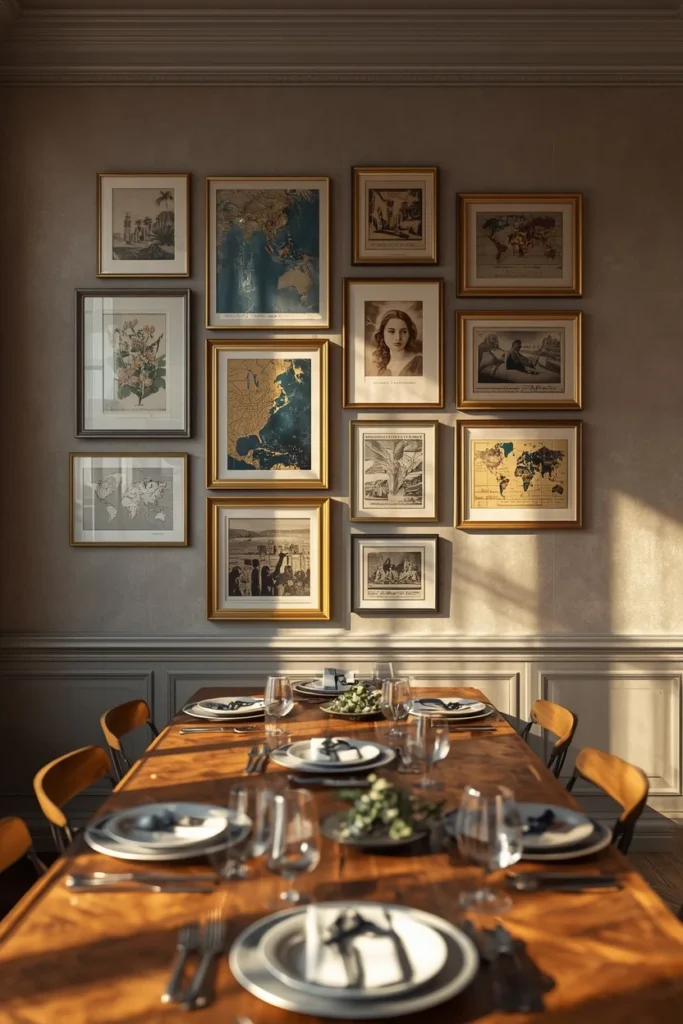
11. Gallery Wall of Vintage and Global Art
A gallery wall built from vintage prints, travel photography, and global art pieces gives a boho dining room the same collected, story-driven quality found in its furniture and textiles. Mixing frame finishes, gold, black, natural wood, keeps the wall from feeling like a matched set, while varying the art itself between botanical prints, abstract pieces, and portraiture adds genuine visual interest rather than a repetitive theme. This wall works particularly well positioned directly behind the head of the table, giving guests something rich to look at throughout a meal rather than a blank space. Leaving slightly inconsistent spacing between frames, rather than a rigid grid, reinforces the sense that the collection was gathered slowly over time. This idea is also an excellent way to display travel souvenirs, thrifted finds, or pieces passed down from family, giving the wall real personal meaning beyond its visual impact. A gallery wall like this becomes the wall people remember most after leaving the room.
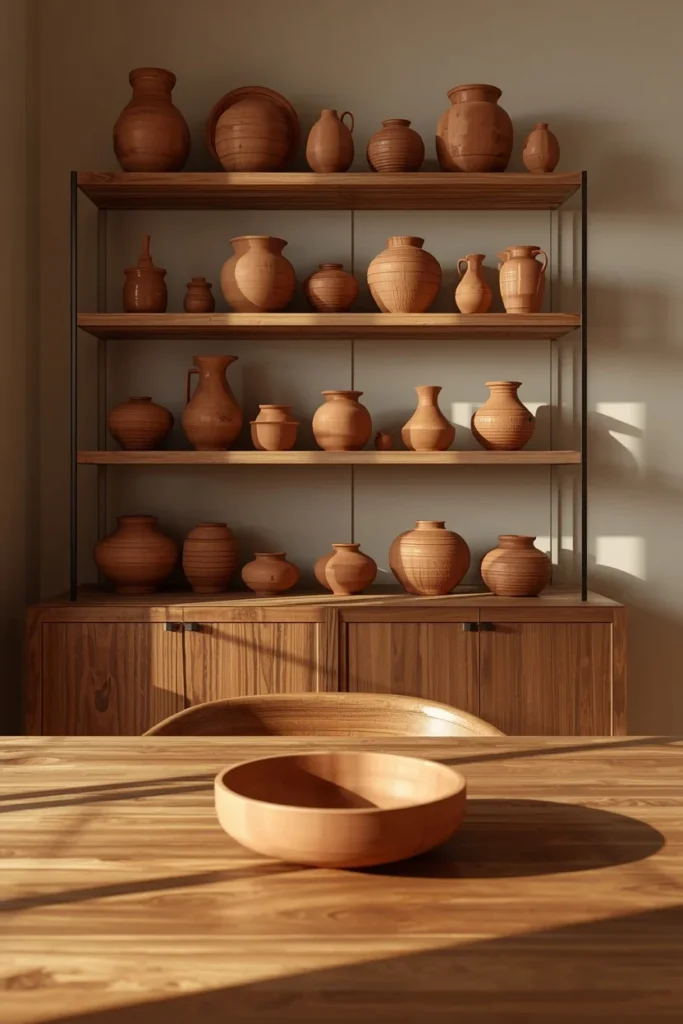
12. Terracotta and Clay Pottery Display
Displaying a collection of terracotta and hand-thrown clay pottery, on open shelving, a sideboard, or clustered along the table itself, brings an earthy, handmade quality to a boho dining room. The warm, sun-baked tone of terracotta pairs naturally with jewel-tone walls and warm wood furniture, acting as a kind of visual bridge between the two. Grouping pieces of varying heights and shapes, vases, bowls, small planters, creates a still-life quality on open shelves that feels curated rather than cluttered. This idea also works beautifully as a rotating centerpiece, with a low terracotta bowl holding citrus, dried florals, or seasonal greenery depending on the time of year. Because handmade pottery often carries slight imperfections in shape and glaze, it reinforces the same one-of-a-kind, gathered feeling found throughout the rest of the room. A shelf of terracotta pottery also gives a boho dining room texture and warmth even in the daytime, when candlelight and lanterns aren’t yet doing their work.
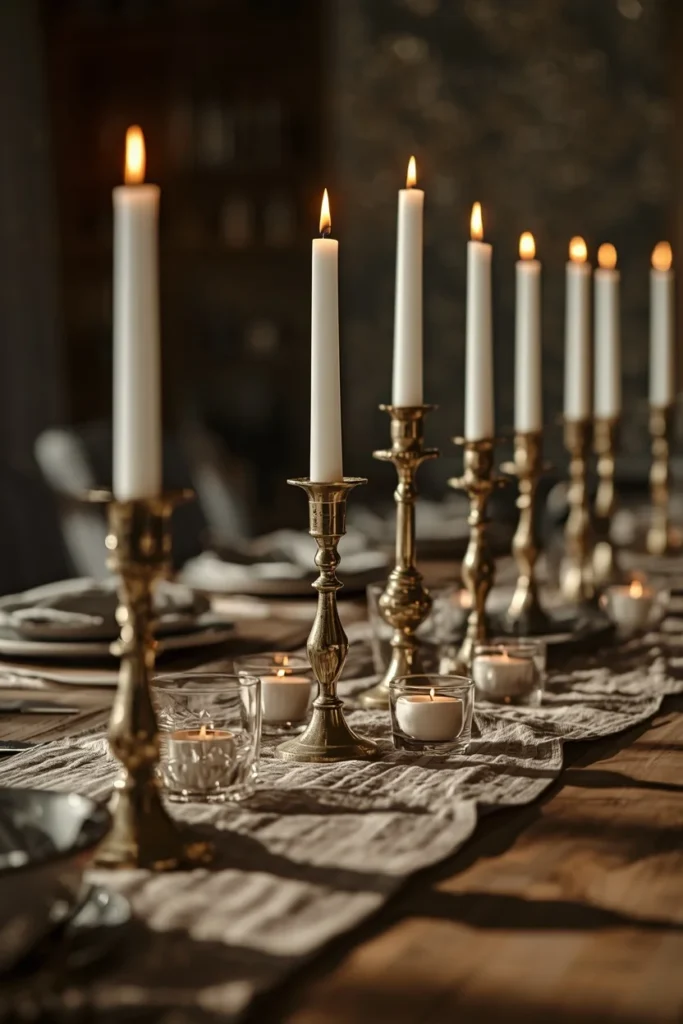
13. Brass Candlesticks and Layered Candlelight
A boho dining room comes alive after dark, and layered candlelight, mismatched brass candlesticks of varying heights, a scattering of votives, a few taper candles at the table’s center, does more to set the mood than any single overhead fixture. Choosing candlesticks in slightly different finishes and heights, rather than a matching set, echoes the same mismatched philosophy running through the room’s chairs and pottery. This layered candlelight works especially well alongside a dimmed rattan chandelier or Moroccan lanterns, letting the room shift smoothly from bright daytime use to warm, flickering evening ambiance. Beeswax or soy candles in warm amber tones keep the light glowing rather than stark, and they tend to burn cleaner than heavily fragranced options. This is one of the lowest-cost updates in the entire list, since a handful of thrifted candlesticks costs far less than new lighting fixtures. The result is a table that feels like an occasion every time it’s set, regardless of what’s actually being served.
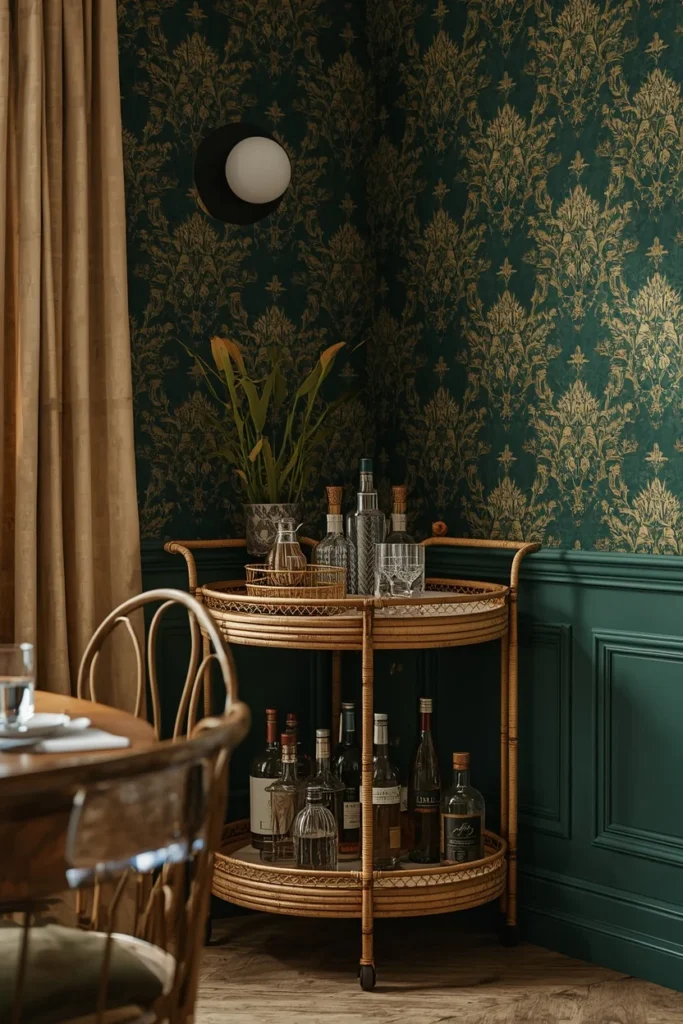
14. Boho Bar Cart or Drinks Nook
A small bar cart styled with rattan, brass, and glass brings function and personality to a boho dining room without requiring extra floor space. Stocked with a curated selection of glassware, a few bottles, and a small woven tray, the cart becomes a natural gathering point during dinner parties, saving repeated trips to the kitchen. For a more built-in option, a narrow open shelving nook backed with bold wallpaper or a jewel-tone paint color turns an unused corner into a fully styled focal point. This idea works particularly well in boho dining rooms that double as an entertaining space, since the cart or nook gives guests something to explore visually while drinks are poured. Mixing metal finishes, aged brass, matte black, on the cart itself reinforces the same collected-over-time aesthetic found throughout the room. Kept curated rather than overcrowded, this corner reads as intentional styling instead of clutter.
15. Mixed Metal and Natural Fiber Light Fixtures
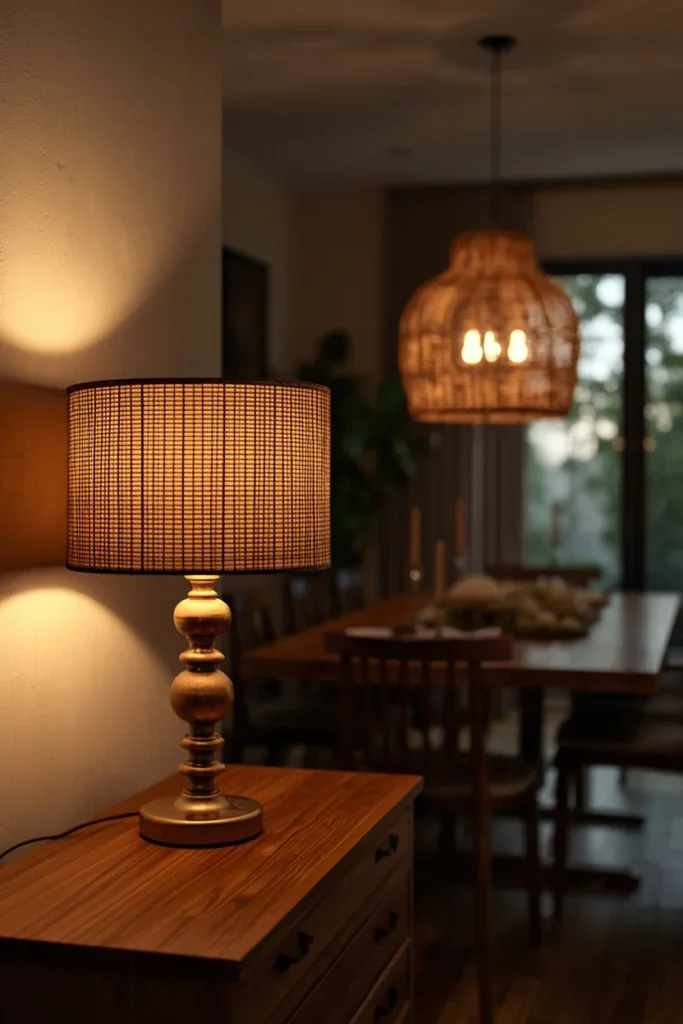
Beyond the main chandelier, layering in wall sconces or table lamps that mix natural fiber shades with warm metal bases adds a second and third layer of light that keeps a boho dining room from relying on a single overhead source. A woven rattan lamp shade paired with an aged brass base on a sideboard, for example, brings texture and warmth to a surface that might otherwise sit empty after dark. This layered lighting approach lets the room shift moods easily, bright and functional for daytime tasks, warm and low for evening meals, without needing to touch the main fixture. Choosing shades in natural, undyed fiber keeps the light itself feeling warm and diffused rather than harsh, echoing the same soft glow found in rattan chandeliers and lanterns elsewhere in the room. This is also a practical solution for dining rooms with limited overhead lighting options, since a well-placed lamp can fill in shadows a single chandelier leaves behind. Layered lighting is ultimately what makes a boho dining room feel finished, rather than just well decorated.
16. Curated, Not Cluttered Tablescape Styling
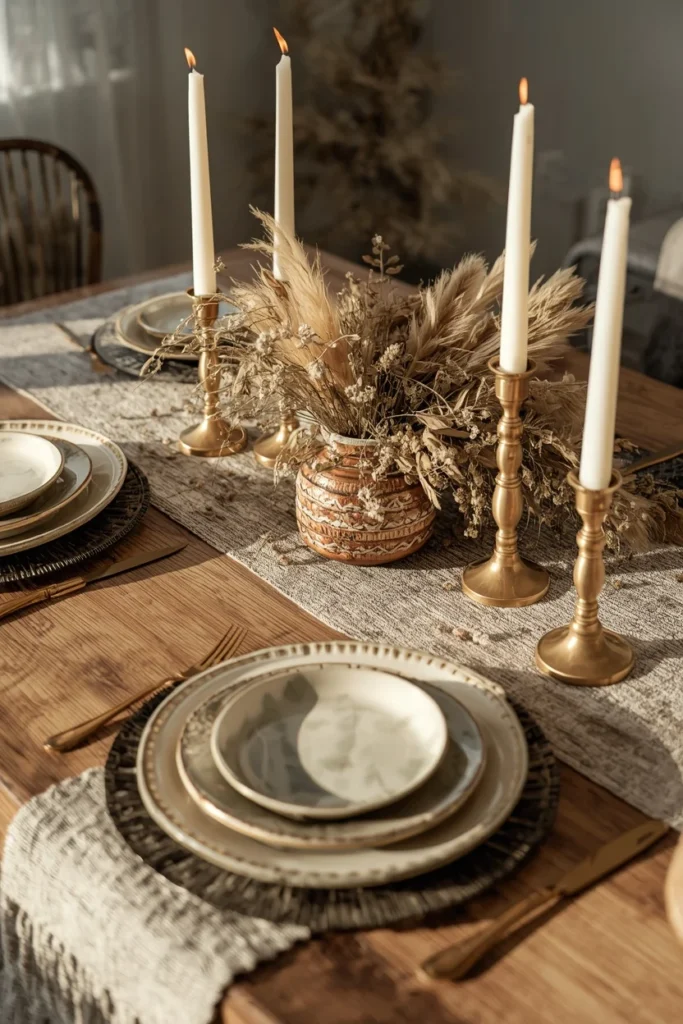
The line between a rich, layered boho table and a cluttered one comes down to intentional editing, choosing pieces that share a color story or material thread even as their shapes and origins vary widely. A finished boho tablescape typically layers a textured runner, mismatched but complementary plates, a few varying candlesticks, and one low centerpiece, rather than piling on every decorative object available. Leaving small pockets of open table space between elements keeps the eye moving naturally instead of overwhelmed, even in a fully layered setting. This idea is less about acquiring more objects and more about learning to edit what’s already been gathered, removing one piece at a time until the table feels abundant but still breathable. Rotating a few key pieces seasonally, swapping dried florals for fresh ones, or one runner for another, keeps a curated table feeling current without starting over each time. Mastering this kind of restraint within abundance is really what separates a boho dining room that feels stunning from one that feels like too much.
Styling Tips
- Choose one or two dominant colors, like emerald and terracotta, and let every other color in the room support that pairing rather than introducing a third or fourth competing tone.
- Layer at least three textures in every dining room, wood, woven fiber, metal, so the room reads as rich rather than flat.
- Mix at least two eras or origins of furniture and decor rather than buying a single matched collection.
- Keep one layer of the room quiet, usually the walls or floor, if the furniture and textiles are already carrying a lot of pattern and color.
Practical Implementation Ideas
- Start with the rug and lighting before shopping for new furniture, since these two elements set the tone the rest of the room builds from.
- Buy vintage or mismatched chairs gradually over time rather than all at once, which also spreads out the cost of a full seating overhaul.
- Test a bold wall color or wallpaper sample in the room at different times of day before committing to the full wall.
- Add dimmers to any hardwired fixture so the room can move between bright daytime use and warm, layered evening lighting.
Common Mistakes to Avoid
- Adding too many patterns without a shared color thread, which can tip a layered room into visual chaos.
- Buying an entirely matched dining set, which undercuts the collected, gathered-over-time feeling boho style depends on.
- Skipping plants entirely, leaving the room feeling incomplete no matter how much furniture or textile layering is present.
- Overcrowding the table itself, leaving no breathing room between the runner, centerpiece, and place settings.
Small-Space Alternatives
- Choose a smaller-scale rattan pendant or a cluster of mini lanterns instead of an oversized chandelier.
- Layer a single small vintage rug over a larger jute mat rather than trying to fit two full-size rugs in a tight footprint.
- Use a narrow console or floating shelf styled with pottery instead of a full sideboard to save floor space.
- Lean on wall-mounted macrame and gallery art instead of large floor plants if square footage near the table is limited.
Budget-Friendly Alternatives
- Thrift mismatched chairs one at a time instead of buying a full new set at once.
- Use peel-and-stick wallpaper for a bold pattern accent wall instead of a full paint or wallcovering renovation.
- Swap in secondhand brass candlesticks and vintage glassware instead of buying new decor pieces.
- Style existing plants in new pots, like woven baskets or terracotta, for an instant refresh without buying new greenery.
Pro Styling Recommendations
- Anchor the whole room around one investment piece, typically the table or the main light fixture, and build the rest of the layering more affordably around it.
- Repeat brass or aged metal in at least three spots, candlesticks, hardware, light fixtures, for a cohesive thread through the room.
- Let greenery, textiles, and art all share a rough color family even as their patterns and shapes vary.
- Edit the table setting down by one piece any time it starts to feel more cluttered than curated.
FAQs
Conclusion
A boho dining room isn’t built in a single trip to the store. It’s built slowly, one vintage chair, one thrifted candlestick, one trailing plant at a time, until the room feels like it has its own history. What ties all sixteen of these ideas together isn’t any single color or material, it’s the willingness to layer texture, mix eras, and let a little imperfection into a room that’s meant to be lived in and lingered over. Start with whichever idea feels most exciting, and let the rest of the room grow around it.