17 Red Marble Bathroom Ideas That Scream Luxury From Every Angle
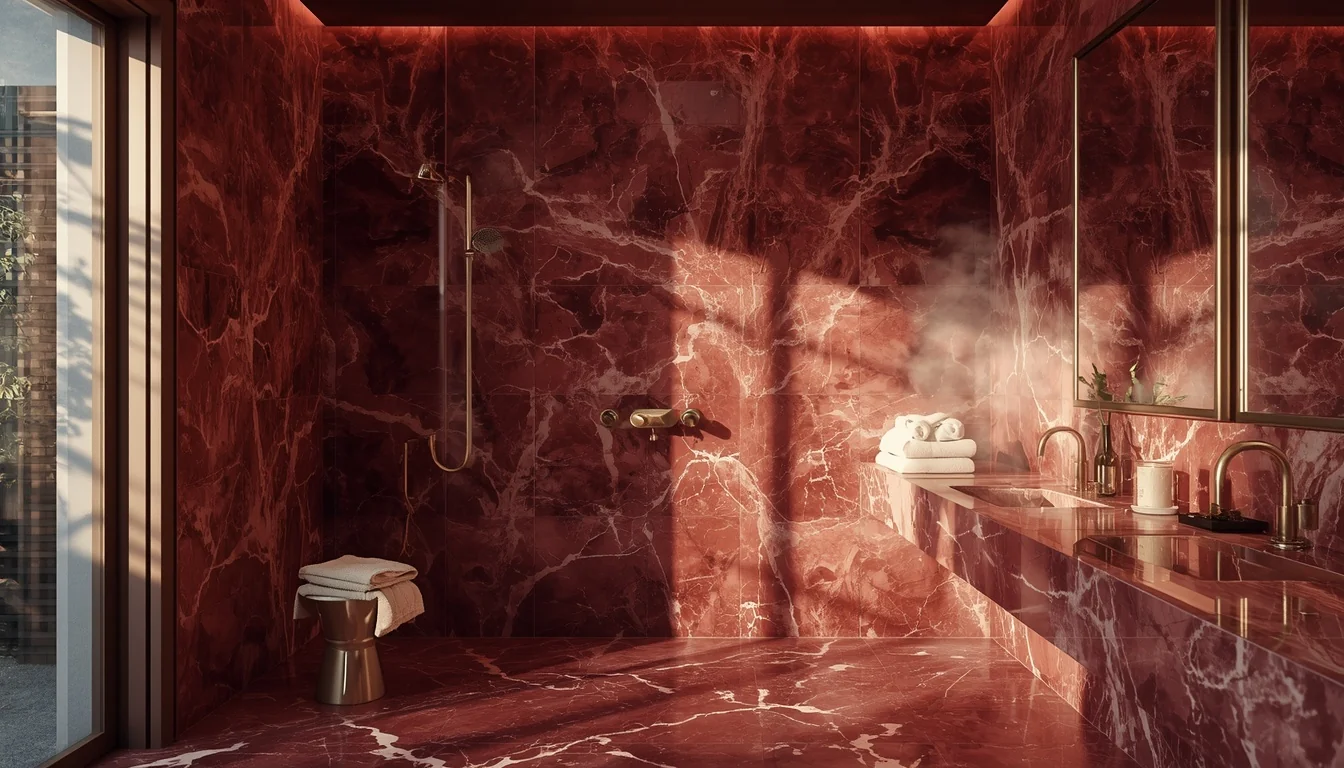
Red marble is one of those materials that photographs like nothing else. It catches light differently than white marble — warmer, deeper, almost glowing depending on the hour. Picture stepping into a shower wrapped in oxblood stone, steam curling up around veining that looks like something out of an old European hotel. That’s the appeal. But red marble also has a reputation for going wrong fast: too much of it in a small room, and a bathroom that was supposed to feel rich instead feels closed in. This roundup covers both sides — the 17 ways red marble genuinely earns its luxury reputation, and the styling logic that keeps it from tipping into “too much.”
Table of Contents
1. Full Slab Red Marble Shower Wall
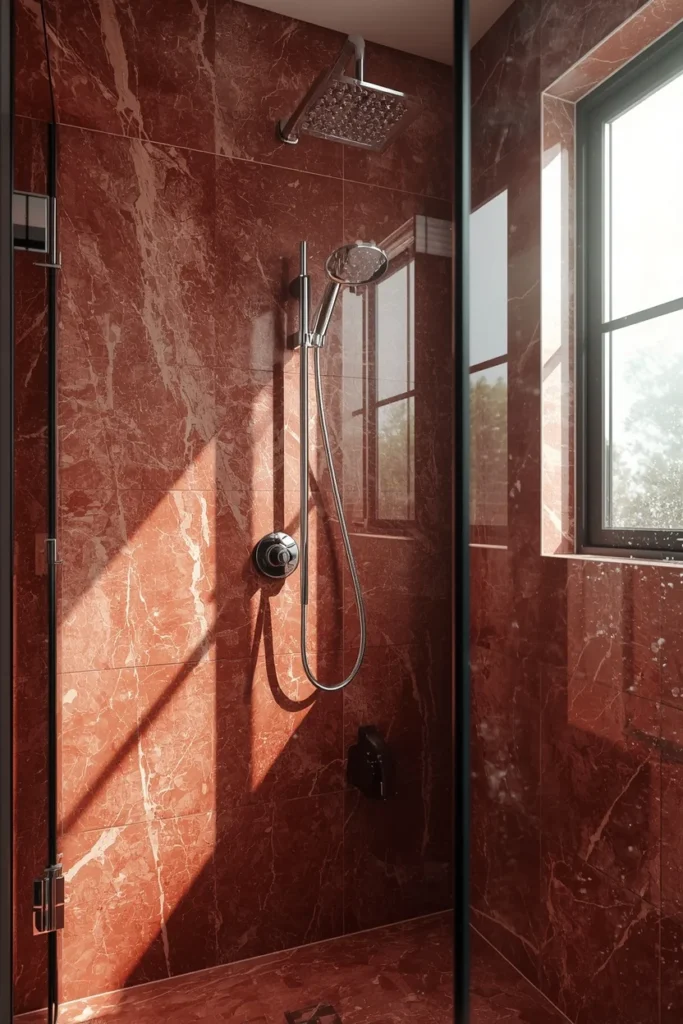
A shower wall cut from a single red marble slab is the closest thing to wearing the stone as jewelry. Because there’s no grout line breaking up the veining, the natural pattern reads as one continuous piece, almost like a painting stretched across the wall. Rosso Levanto and Rosso Verona are two varieties worth asking your fabricator about, since both carry deep veining that shows up beautifully under a honed rather than high-gloss finish. Pairing the slab with a frameless glass enclosure keeps the sightline open, which matters because a full slab is visually heavy and needs somewhere for the eye to rest. This works best in a primary bathroom with decent square footage and a window or skylight nearby, since natural light is what keeps deep red stone from reading as dark rather than rich.
2. Red Marble Vanity Countertop Over Neutral Cabinetry
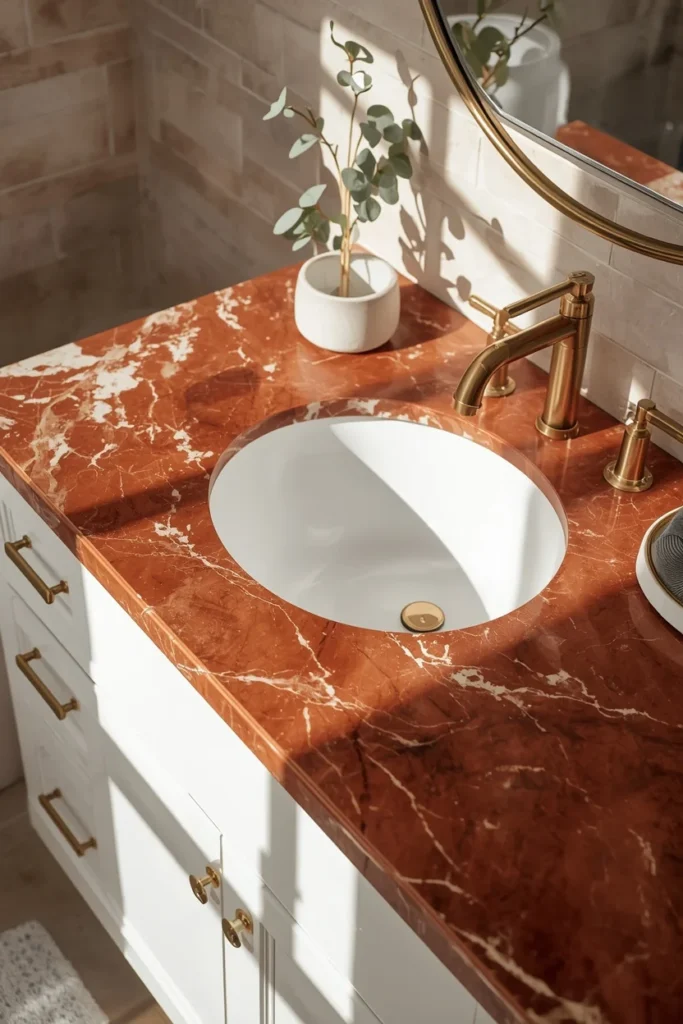
If a full red marble room feels like too big a commitment, the countertop is the easiest entry point, and designers often recommend it as the first move for exactly that reason. A red marble slab over white or warm oak cabinetry keeps the rest of the palette calm while letting the stone do the talking. The countertop catches daily light every time someone walks in, so it functions almost like a piece of art that happens to also hold your sink. Undermount sinks work better here than vessel styles, since they keep the marble’s surface visually uninterrupted. This idea is popular because it delivers the drama people want from red marble with almost none of the risk of the room feeling closed in.
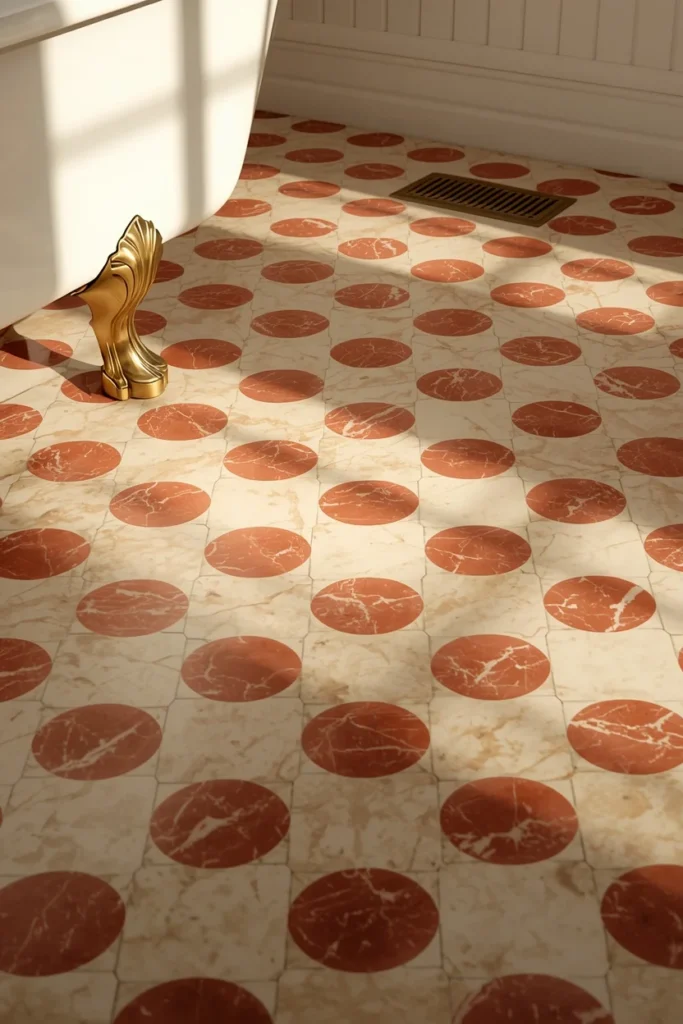
3. Red Marble Checkerboard Floor
A checkerboard floor pairing red marble squares with cream or white marble is one of the more playful, retro-leaning ways to use the stone, and it works especially well in bathrooms with a vintage or eclectic decor style. The pattern breaks the red marble into smaller visual units, which actually helps prevent the “too heavy” effect that solid red marble flooring can create in a small room. Large-format squares, roughly 12 by 12 inches, read as more grown-up and less like a diner floor than smaller tile would. This idea pairs particularly well with brass fixtures and simple white walls, since the floor is already doing enough visual work on its own. It’s also one of the more budget-friendly ways to bring red marble in, since checkerboard patterns can be achieved with tile rather than full slabs.
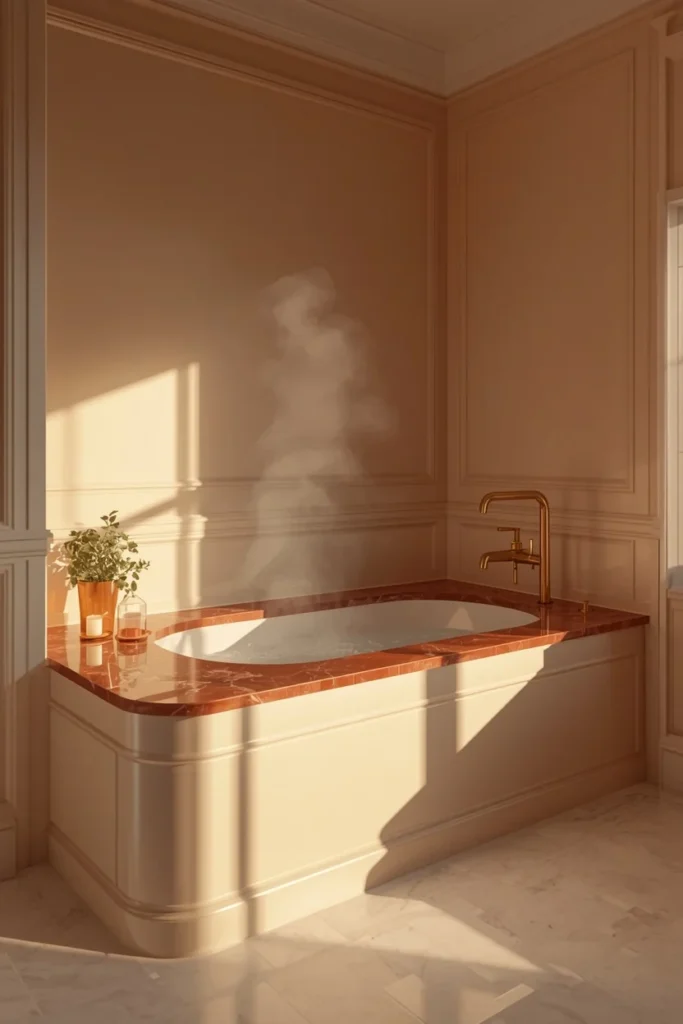
4. Red Marble Bathtub Surround
Wrapping just the bathtub in red marble, rather than the whole room, treats the tub as a sculptural centerpiece the way a freestanding piece of furniture would be treated in a living room. This idea works especially well in bathrooms with a built-in tub and surround ledge, since trend returns to built-in tubs means there’s already a flat surface for candles, a book, or a glass of wine. Cream or white walls around the surround let the red marble read as intentional and framed rather than overwhelming. A drop-in tub with a marble deck also solves a practical problem: the stone stays contained to a wipeable, water-safe zone instead of spreading across porous grout lines throughout the room. It’s a strong option for anyone who wants a soaking-tub focal point without red marble touching every surface.
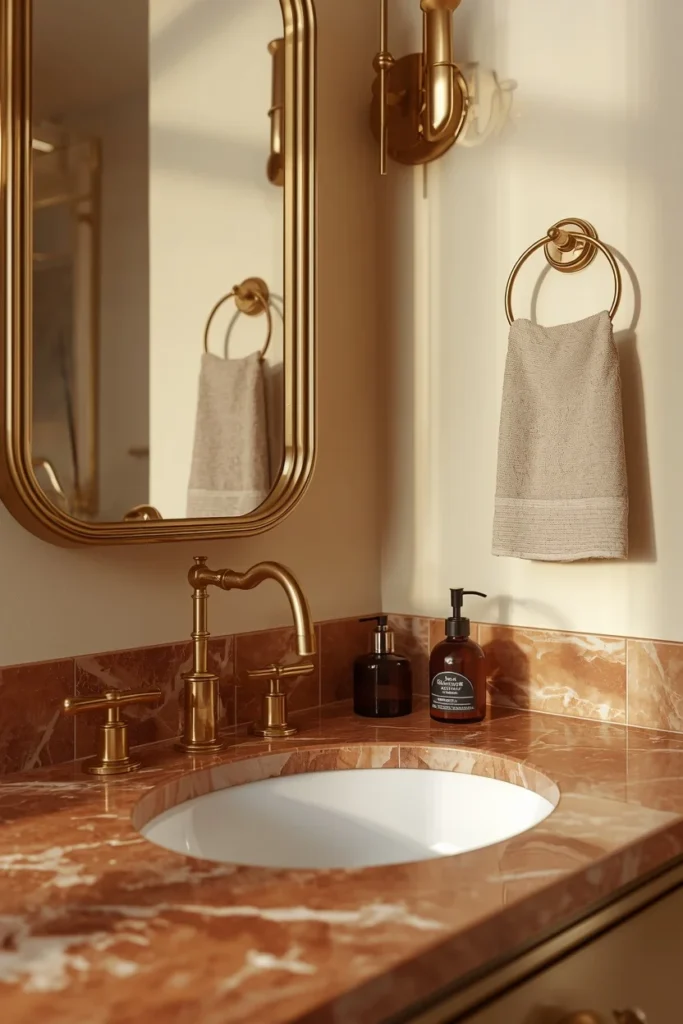
5. Oxblood Marble Paired With Brass Fixtures
Oxblood-toned marble, a slightly darker and more brown-red variety, has a natural warmth that makes brass fixtures look almost inevitable next to it rather than an obvious styling choice. The contrast works because brass carries yellow undertones that pick up the warm brown notes hiding inside oxblood veining, instead of clashing with them the way chrome or nickel can. This pairing shows up often in boutique hotel bathrooms because it reads as established and collected rather than newly renovated. A single brass mirror frame or faucet is usually enough — the goal is a metal accent that feels selected, not a full matching fixture set. This combination also ages well, since both oxblood marble and brass develop a soft patina over time instead of looking worn out.
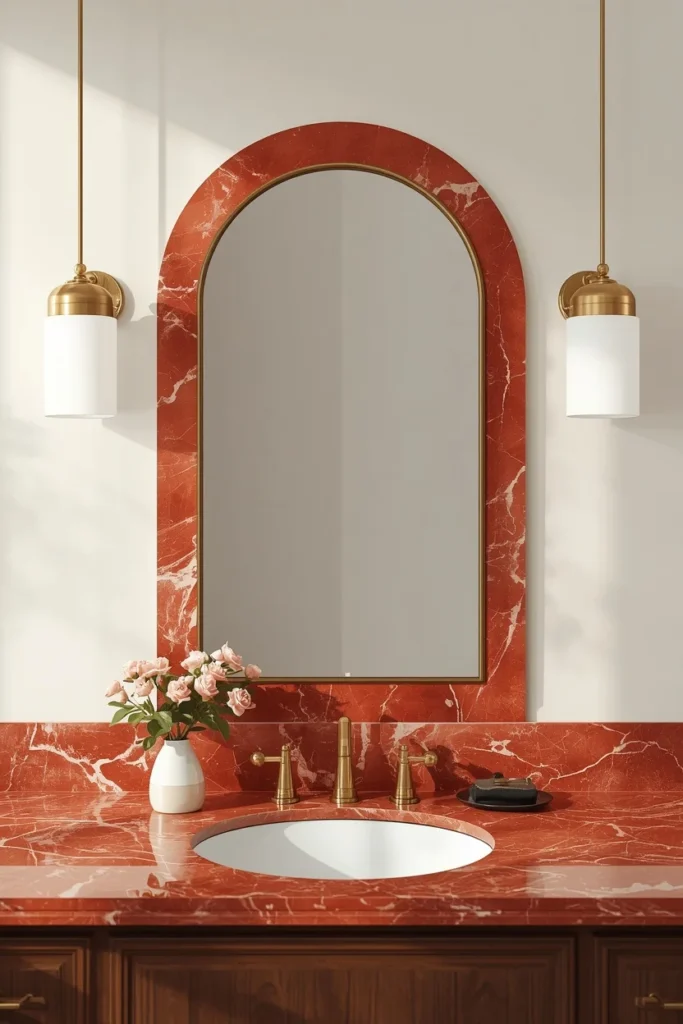
6. Red Marble Backsplash Behind the Vanity Mirror
A backsplash that climbs up behind the mirror, rather than stopping at the countertop edge, gives red marble a chance to frame the reflection itself, which photographs beautifully in bathroom mirror selfies. This idea works especially well when the backsplash marble matches the vanity marble underneath, so the whole zone reads as one cohesive stone moment instead of two separate materials competing. Keeping the surrounding wall paint a soft neutral, like warm white or pale greige, lets the red marble stand out as the clear focal point of the vanity wall. Rounded or arched mirrors soften the geometry of the stone slab behind them, which keeps the look from feeling too rigid. This is a strong choice for anyone who wants the drama of a full red marble wall without committing an entire room to it.
7. Single-Wall Red Marble Accent in a Small Bathroom
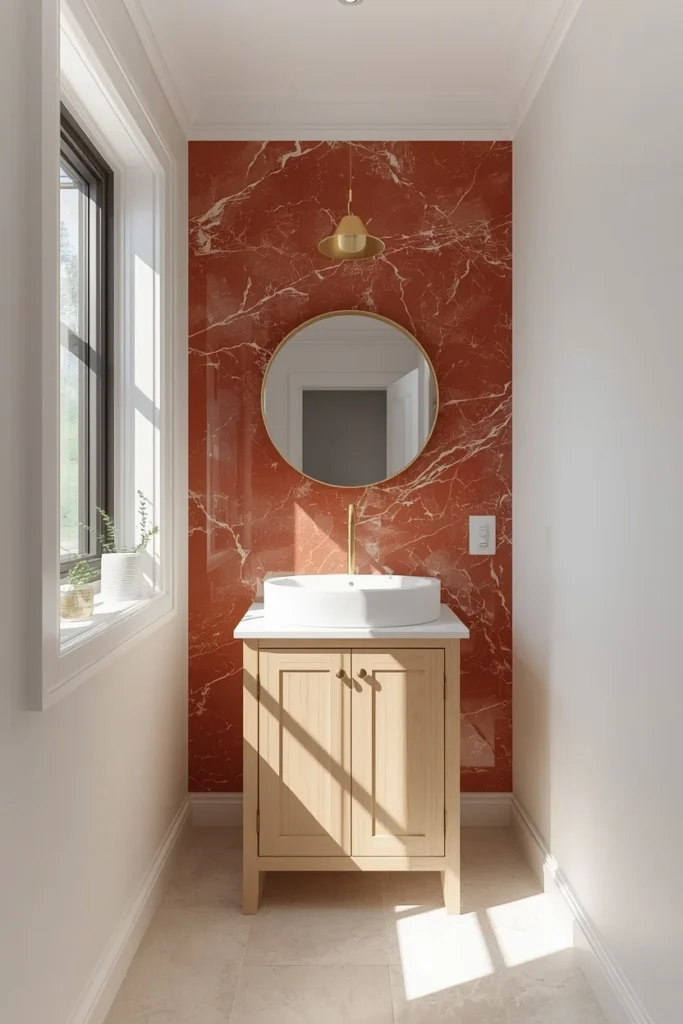
Small bathrooms genuinely can use red marble, they just need it contained to one wall rather than wrapping the whole room. A single accent wall, usually placed behind the vanity or as a shower backdrop, gives the stone room to breathe while the remaining three walls stay light and reflective. This is the layout designers point to most often when addressing the concern that red marble makes small spaces feel closed in, since the issue isn’t the color itself but the amount of surface area it covers. Keeping the ceiling and floor pale also helps the eye read the room as taller and wider than it actually is. A single well-placed red marble wall can carry as much visual impact as a fully drenched room, just without the risk of the space feeling tight.
8. Red Marble With Warm Wood Tones
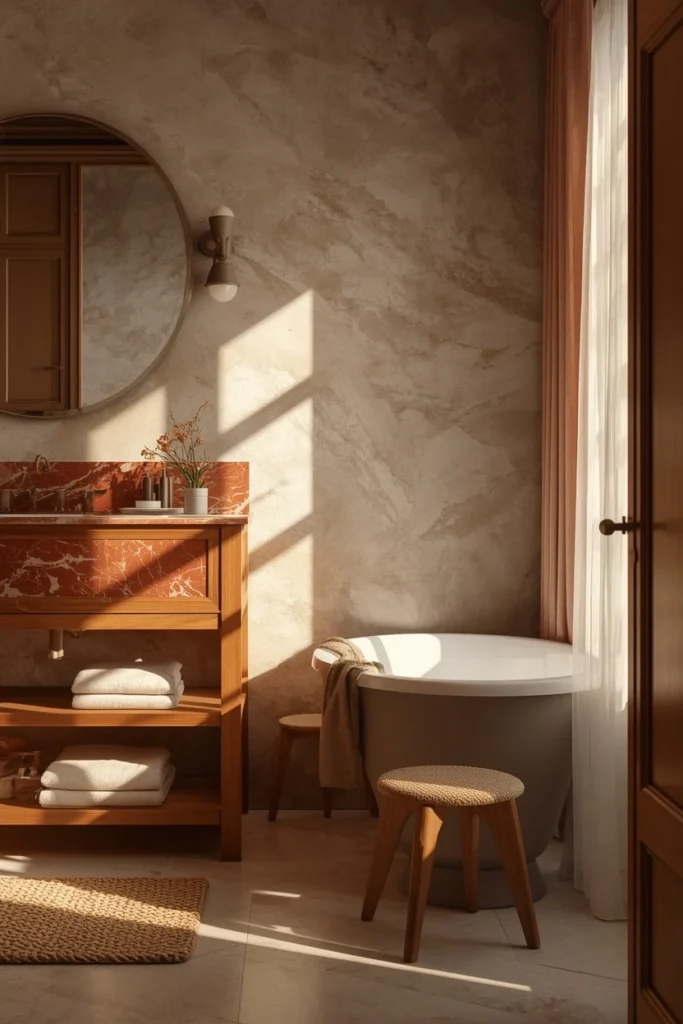
Pairing red marble with warm wood, like white oak or walnut vanity cabinetry, softens the stone’s formality and makes the whole bathroom feel more livable day to day. Wood introduces grain and texture that contrasts with marble’s smooth, cool surface, which keeps the room from feeling like a single hard material wrapped around itself. This combination also works well for anyone nervous about red marble looking too “showroom” — the wood grounds the space in something that feels natural and collected rather than staged. A wood shelf or stool placed near the tub adds a soft landing spot for towels or a book. This pairing tends to suit modern farmhouse and Scandinavian-leaning homes especially well, since both styles already lean on natural materials.
9. Red Marble Herringbone Shower Floor
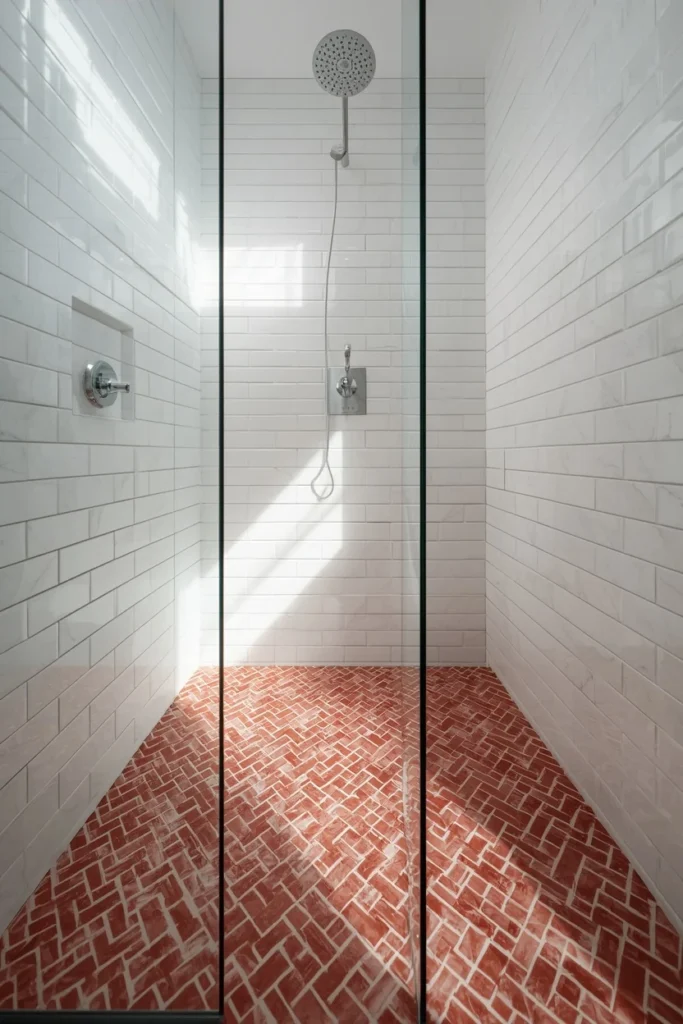
A herringbone pattern in small red marble mosaic tiles solves a real functional problem: shower floors need texture and grip, and the extra grout lines created by a herringbone layout provide exactly that, even when soapy and wet. This idea lets red marble live somewhere practical rather than purely decorative, which strengthens the whole bathroom’s design logic. Keeping the shower walls in a plain white or cream tile lets the herringbone floor act as a quiet but rich detail underfoot, discovered rather than announced. This approach is especially useful in a walk-in shower with no curb, since the mosaic pattern reads as intentional at any angle, including looking down from the doorway. It’s a smart way to add red marble’s warmth to a wet room without covering large wall surfaces in a heavy, dark material.
10. Fully Drenched Red Marble Powder Room
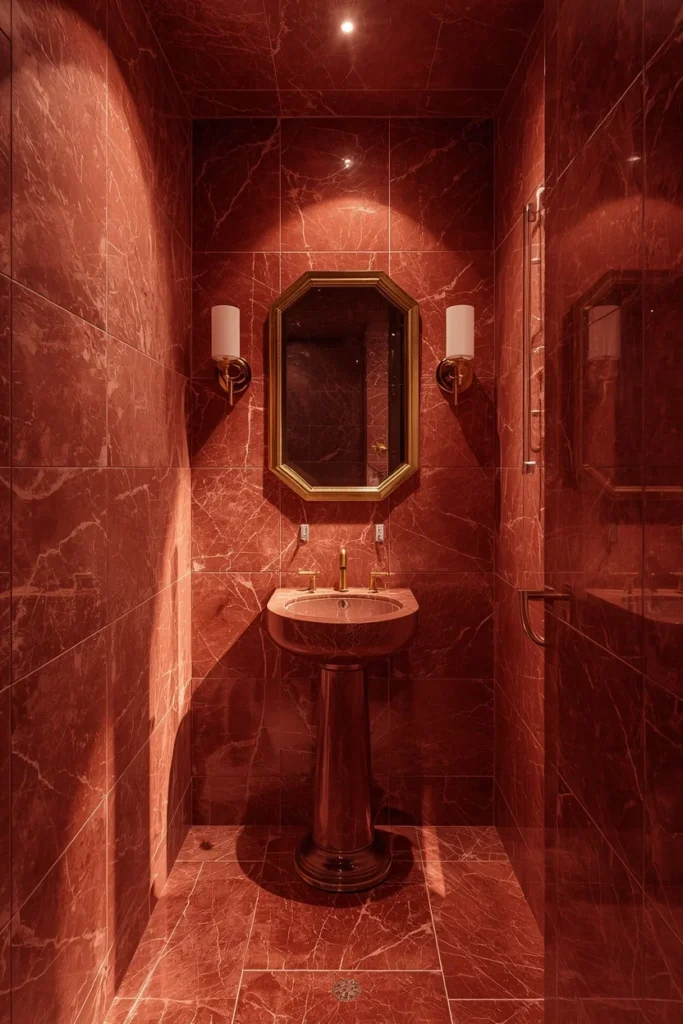
Small windowless powder rooms are actually one of the best places to go all-in on red marble, since there’s no daylight concern to manage and the room is only used briefly rather than lived in daily. Drenching walls, floor, and even the ceiling in the same red marble creates an immersive, almost jewel-box feeling that guests notice immediately. Because a powder room typically holds just a toilet and a small vanity, the marble reads as intentional drama rather than an overwhelming amount of stone. Warm, layered lighting, like a small wall sconce plus an overhead fixture, keeps the deep color from feeling like a cave instead of a boutique hotel bathroom. This is the one spot in the house where the “more red marble is more luxury” instinct genuinely holds up.
11. Afyon Violet-Red Marble With Cream Veining
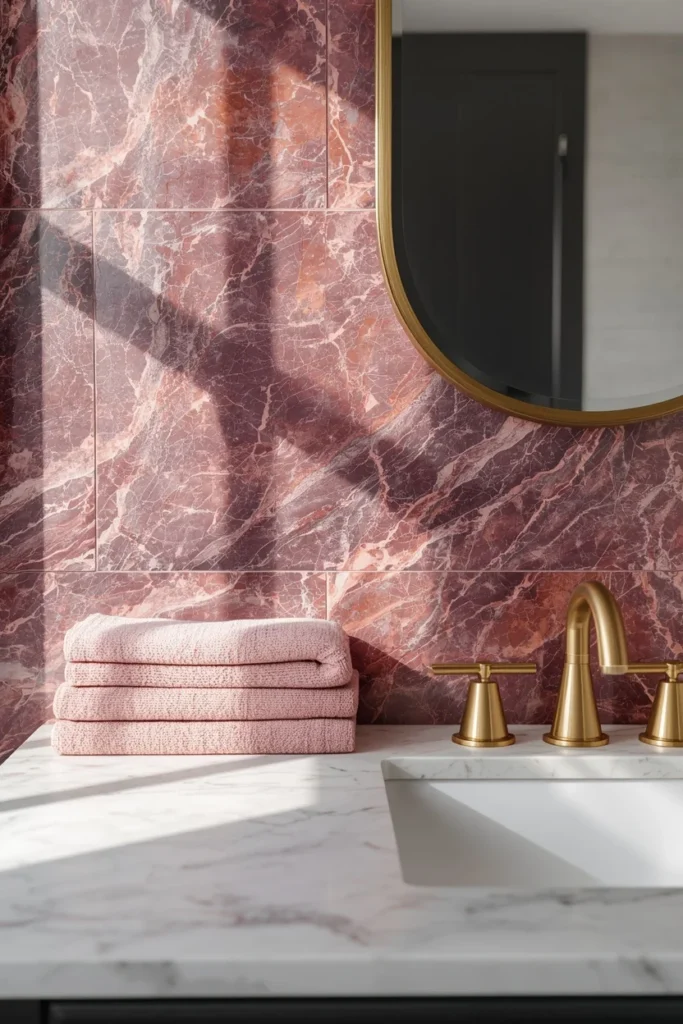
Afyon Violet marble carries a purplish-red tone threaded through with cream veining, giving it a softer, more romantic read than a straight oxblood or true red stone. It works beautifully as a backsplash or accent panel, since the cream veining naturally lightens the overall visual weight compared to darker red marbles. This variety pairs especially well with blush or dusty pink accessories, since the undertones are already close on the color wheel. Because the veining is more pronounced than in solid oxblood stone, Afyon Violet also photographs with more movement and detail, which matters for anyone building a Pinterest-worthy bathroom. It’s a strong pick for someone who wants red marble’s richness with a gentler, more feminine finish.
12. Red Marble Vessel or Pedestal Sink
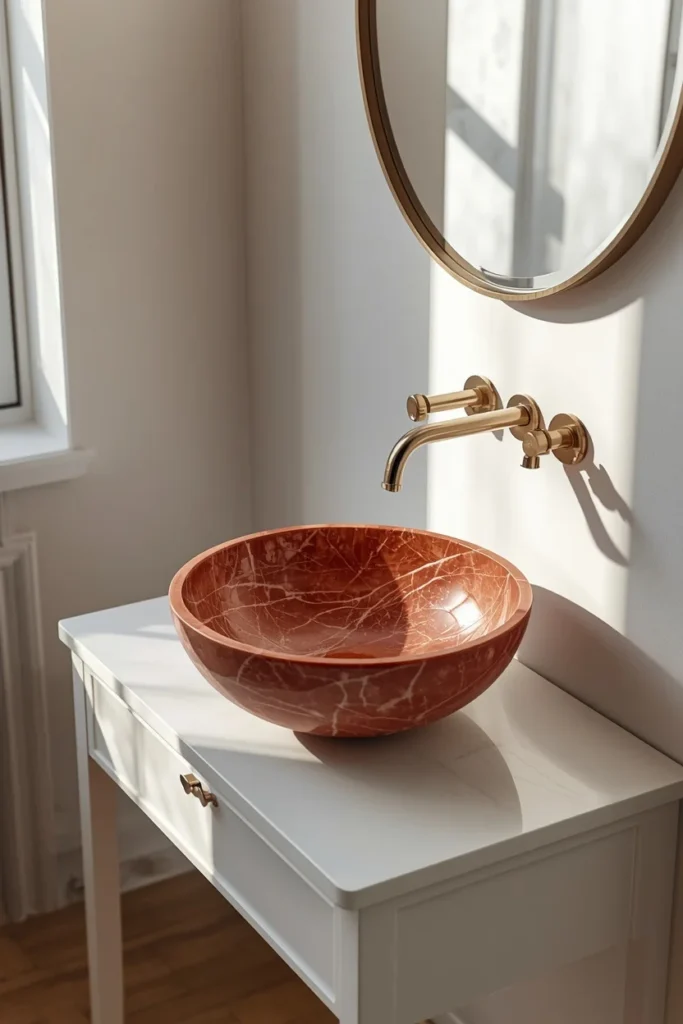
A sink carved from red marble, rather than a countertop cut from it, turns the fixture itself into the statement piece. Full stone sink basins have become especially popular because they strike a balance between clean, simple lines and a genuinely impactful visual story. A red marble vessel sink sitting on a plain wood or white console draws the eye immediately, without needing a matching countertop or backsplash to support it. This idea is a smart middle ground for anyone who loves the material but isn’t ready to commit slab-sized surfaces to it. Pairing it with a simple wall-mounted faucet keeps the focus entirely on the sculptural basin itself.
13. Red Marble With Matte Black Fixtures
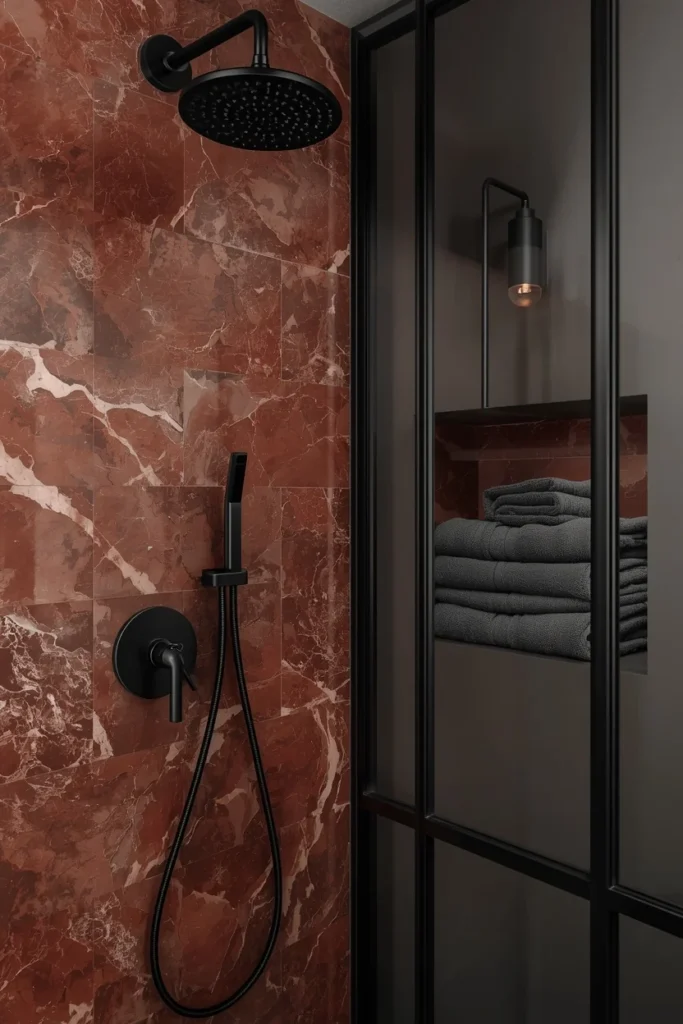
Matte black fixtures give red marble a moodier, more masculine edge than brass does, which suits bathrooms leaning into a darker, more dramatic overall palette. Black hardware absorbs light rather than reflecting it, so it recedes visually and lets the marble’s veining stay the clear focal point instead of competing with shiny metal. This pairing works especially well with a honed rather than polished marble finish, since the matte-on-matte combination feels more cohesive than mixing a glossy stone with flat black metal. Charcoal or deep green towels and accessories round out the palette without introducing a competing bright color. This is a strong option for a primary bathroom in a home that already leans contemporary and a little dramatic elsewhere.
14. Red Marble Paired With White Marble
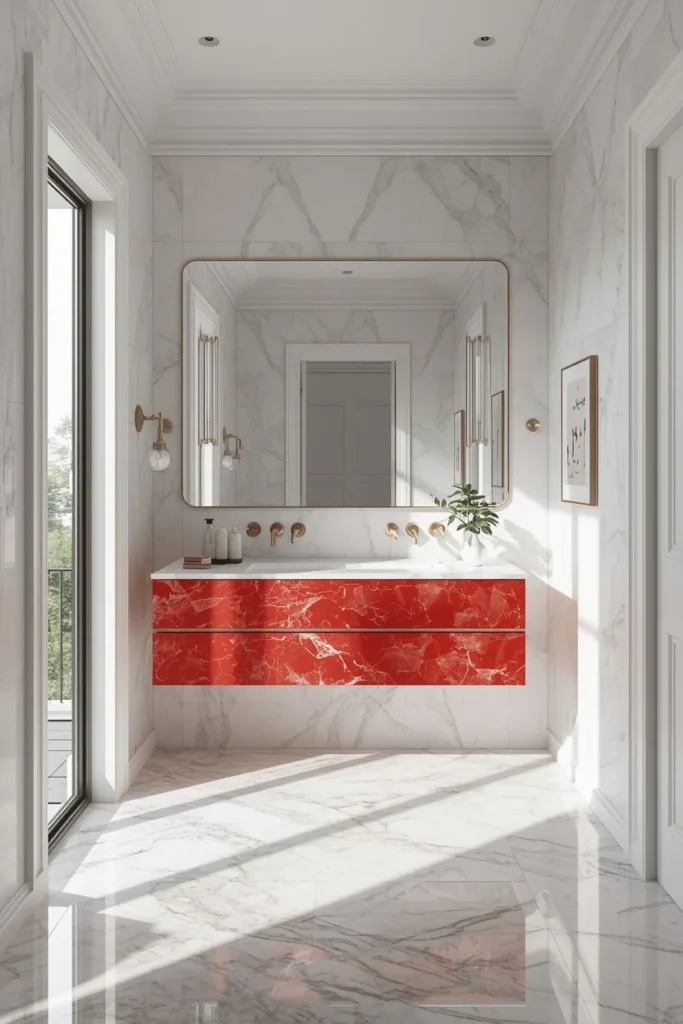
Mixing red marble with white marble, rather than using red marble alone, is one of the most reliable ways to keep a room feeling bright even with a bold stone in the mix. A common layout uses white marble for the majority of the walls and floor, then reserves red marble for a single feature, like a shower niche, a vanity top, or a border detail. This combination lets red marble act the way a piece of jewelry does with a plain outfit — noticeable, but not competing for attention with everything else in the room. It also solves the light-absorption concern directly, since white marble bounces daylight back into the space to balance out the deeper red tones. This pairing suits classic, traditional-leaning bathrooms especially well, since white marble already reads as a timeless base material.
15. Red Marble Niche or Shower Shelf Detail
A recessed shower niche lined in red marble is one of the smallest-footprint ways to bring the stone into a bathroom while still getting a genuine wow moment. Because the niche is inset rather than flush with the wall, the red marble catches shadow along its edges every time the shower light hits it, giving it more visual depth than a flat panel would. This idea is popular in otherwise all-white or all-neutral showers, since the niche becomes the one unexpected detail worth mentioning to guests. It’s also one of the most practical entries on this list, since a shower niche already needs to exist for shampoo and soap storage anyway. Lining it in red marble instead of matching tile turns a purely functional feature into a genuine design moment.
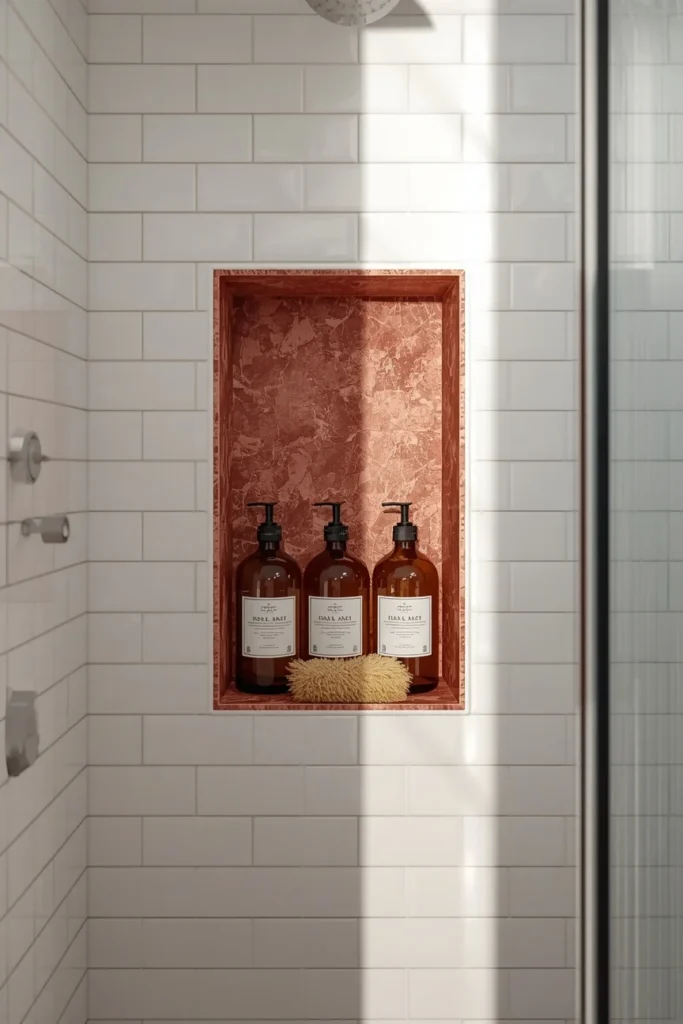
16. Continuous Red Marble Drench, Floor to Baseboard
For a primary bathroom with strong natural light and generous square footage, carrying red marble continuously from the sink basin through the tub wall, floor, and baseboard creates a genuinely glamorous, glitz-and-glam result. This layout only works because the light is already doing the heavy lifting — without a window or skylight, the same amount of red marble would read as heavy rather than rich. Keeping the ceiling white or a very pale plaster finish gives the eye somewhere to land and stops the room from feeling enclosed on all sides. This idea suits a larger household bathroom meant to feel like a personal retreat rather than a quick-use space. It’s the boldest entry on this list, and it’s best reserved for rooms that can genuinely support that much stone.
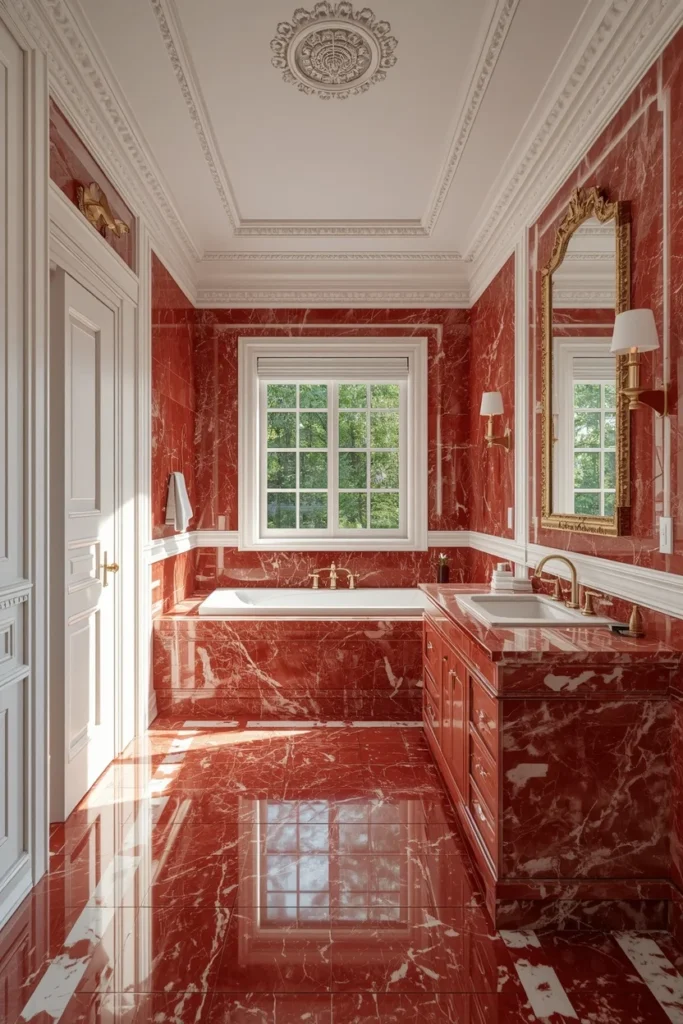
17. Red Marble With Fluted Glass Shower Doors
Fluted glass shower doors add a vertical ribbed texture that plays beautifully against red marble’s organic veining, since the two textures contrast rather than compete. The fluted glass also offers moderate privacy while still letting light diffuse through, which helps a red marble shower feel less enclosed than solid walls would. A cool metal frame, like brushed nickel or unlacquered brass, on the fluted glass keeps the overall look feeling current rather than tied to one specific trend cycle. This pairing works in both contemporary and more traditional bathrooms, since fluted glass has proven flexible enough to suit either aesthetic. It’s a strong finishing touch for anyone who wants their red marble shower to feel architectural rather than purely decorative.
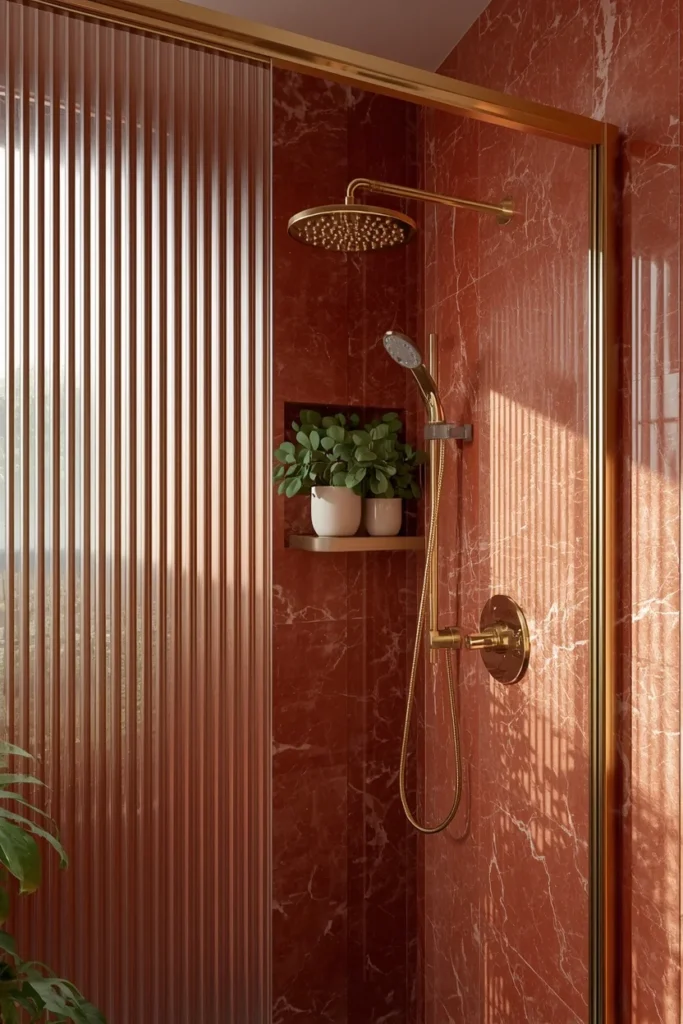
Styling Tips
- Choose a honed finish over high-gloss polish if you’re covering more than a countertop — matte surfaces absorb less visual weight and feel calmer in person.
- Keep the ceiling pale no matter how much red marble is on the walls; it’s the single easiest way to stop a room from feeling capped.
- Layer at least two light sources (overhead plus a sconce or vanity light) since red stone needs warmth from more than one direction to avoid looking flat or dark.
- Let one metal finish lead — brass for warmth, matte black for drama, chrome for a cooler contrast — rather than mixing several against the stone.
- Bring in a soft textile, like a linen towel or woven bath mat, to keep the room from feeling like a single hard surface.
Practical Implementation Ideas
- Start with a countertop or backsplash sample slab before committing to a full shower wall, since red marble varies significantly between quarries and even within the same slab.
- Ask your fabricator specifically about Rosso Levanto, Rosso Verona, or Afyon Violet if you want built-in veining variation rather than a flatter, more uniform red stone.
- If you’re renting or not ready for a stone investment, a checkerboard vinyl or peel-and-stick floor tile can test the look before a full remodel.
- Book a plumber and stone fabricator on the same timeline, since red marble slabs often need templating measured to the exact sink and faucet placement.
Common Mistakes to Avoid
Covering every surface of a small bathroom in dark red marble is the mistake that shows up most often in remodel regret stories, since the stone absorbs light rather than reflecting it, and a small windowless room can start to feel closed in fast. Skipping a lighting plan is another common issue — red marble installed under a single flat overhead light reads muddier and darker than the same stone under layered, warm lighting. Mixing too many metal finishes against red marble (chrome, brass, and black all in one room) makes the space feel busy instead of intentional. Choosing a high-gloss polish for a small, humid bathroom can also make the room feel more slippery and reflective than cozy. Finally, treating red marble as purely a floor or wall material and forgetting the niche, sink, or backsplash as options misses some of the most effective low-commitment ways to use the stone.
Small-Space Alternatives
- A single accent wall behind the vanity or shower, rather than a full room drench, keeps a small bathroom feeling open.
- A red marble countertop paired with all-white walls and ceiling delivers the color payoff without covering large surface areas.
- A recessed shower niche or a small backsplash panel brings genuine texture and richness into a tight footprint.
- Pale, large-format flooring paired with a red marble vanity top balances the room without doubling up on heavy stone.
- Mixing red marble with white marble in the same room, rather than using red alone, keeps a compact bathroom from feeling dim.
Budget-Friendly Alternatives
- Red marble tile, rather than a full slab, brings the material in at a lower cost per square foot and works especially well for a checkerboard or herringbone pattern.
- A red marble mosaic used only in a shower niche or as a floor border costs far less than covering an entire wall.
- Peel-and-stick or porcelain tile designed to mimic red marble veining is a realistic option for renters or short-term budgets, and modern versions have come a long way in realism.
- Painting an existing vanity a deep red-adjacent tone, like oxblood or brick, can echo the mood while a full stone remodel is saved for later.
Pro Styling Recommendations
Designers who work with bold natural stone consistently point to restraint everywhere else in the room as the real secret to making red marble look expensive rather than overwhelming. That means simple fixtures, uncluttered counters, and a limited accessory palette so the stone itself stays the visual story. A single striking piece, like a marble vessel sink or a fully drenched niche, tends to read as more curated than red marble spread thin and inconsistently across several small details. Bringing in warm, dimmable lighting rather than one bright overhead fixture also does a lot of quiet work toward making the room feel like a retreat instead of a showroom display.
FAQs
Conclusion
Red marble rewards a light hand more than any other bold material in bathroom design. The rooms that photograph the best, and the ones people don’t regret five years later, treat the stone as a focal point rather than a full coat of paint over every surface. Whether that means one drenched powder room, a single statement vanity, or a checkerboard floor peeking out from under a clawfoot tub, the same rule shows up in every idea on this list: give red marble room to be the loudest thing in the space, and let everything else stay quiet around it.