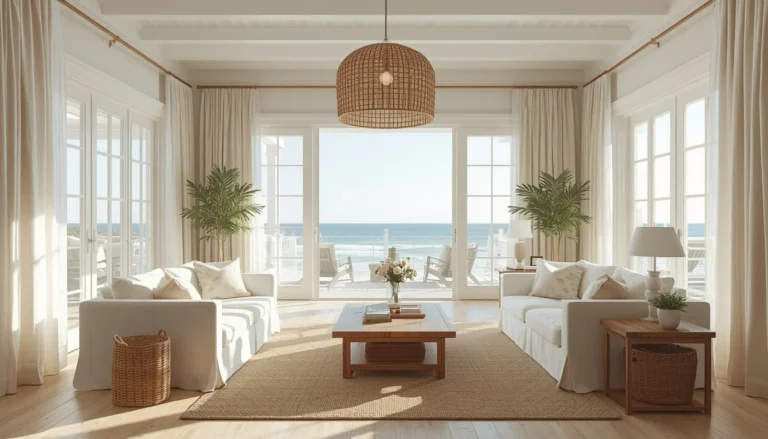
16 Classy Bedroom Ideas That Ooze Quiet Luxury Without the Price Tag
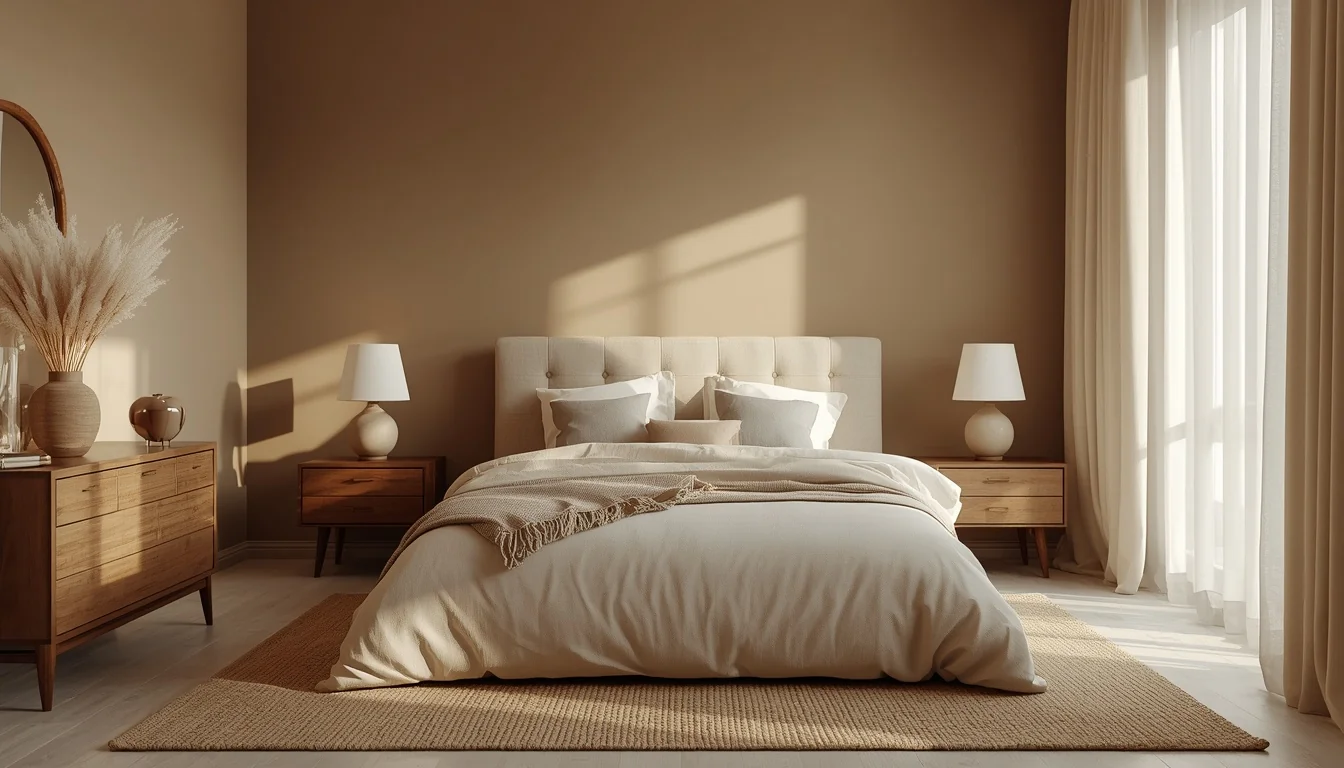
Some bedrooms look expensive. Most of the time, they aren’t.
Quiet luxury isn’t a price tag, it’s a set of choices: a tighter color palette, a little more restraint, and a few textures repeated on purpose instead of a room full of things that don’t talk to each other. A secondhand mirror leaned against the wall can do more work than a brand-new one bought to match. A can of the right paint color can do more than a headboard that costs a few hundred dollars.
This list walks through 16 ways to bring that calm, classy feeling into a bedroom without a big budget behind it. Some ideas cost a weekend and a paintbrush. Others cost nothing but a different way of arranging what’s already there. All of them lean on the same idea: less, chosen carefully, reads as more.
Table of Contents
1. Warm Neutral Color-Drenched Walls
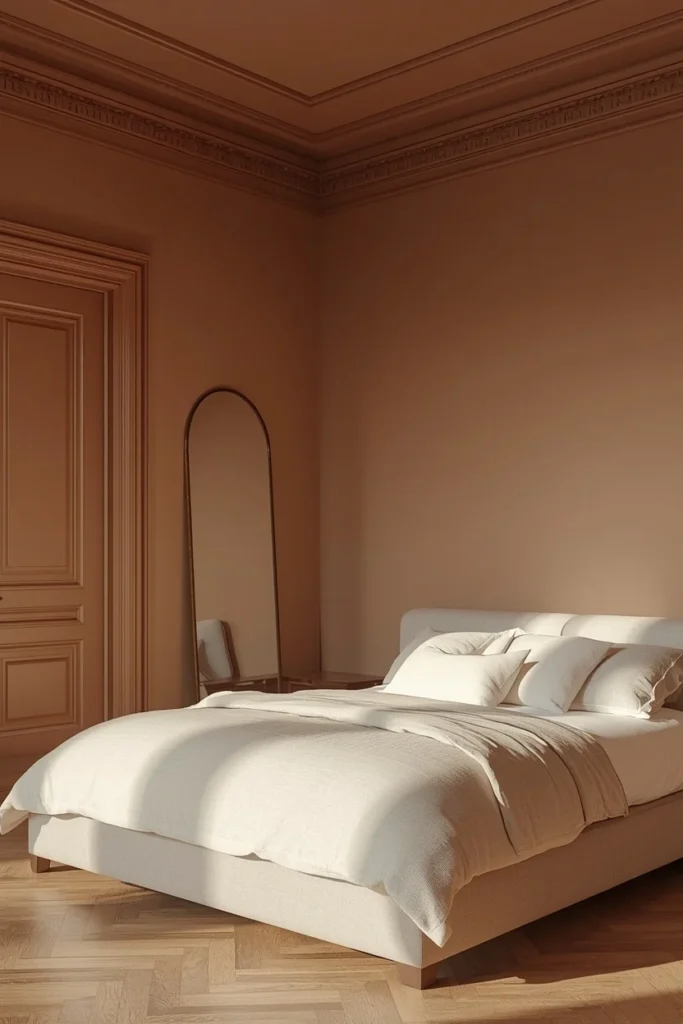
Color drenching means painting the walls, trim, and ceiling in the same shade, so the room reads as one soft, enveloping tone instead of a white box with a feature wall. A warm greige, soft taupe, or muted cream works especially well for this because it stays neutral enough to still feel calm, while removing the contrast between wall and trim gives the room a more finished, considered look. This is one of the least expensive ways to change how a bedroom feels, since it typically only requires paint and a weekend, not new furniture or a layout change. Choosing a warm undertone over a cool gray is what keeps the room from reading as sterile once every surface carries the same color.
2. DIY Vertical Wood Slat Accent Wall
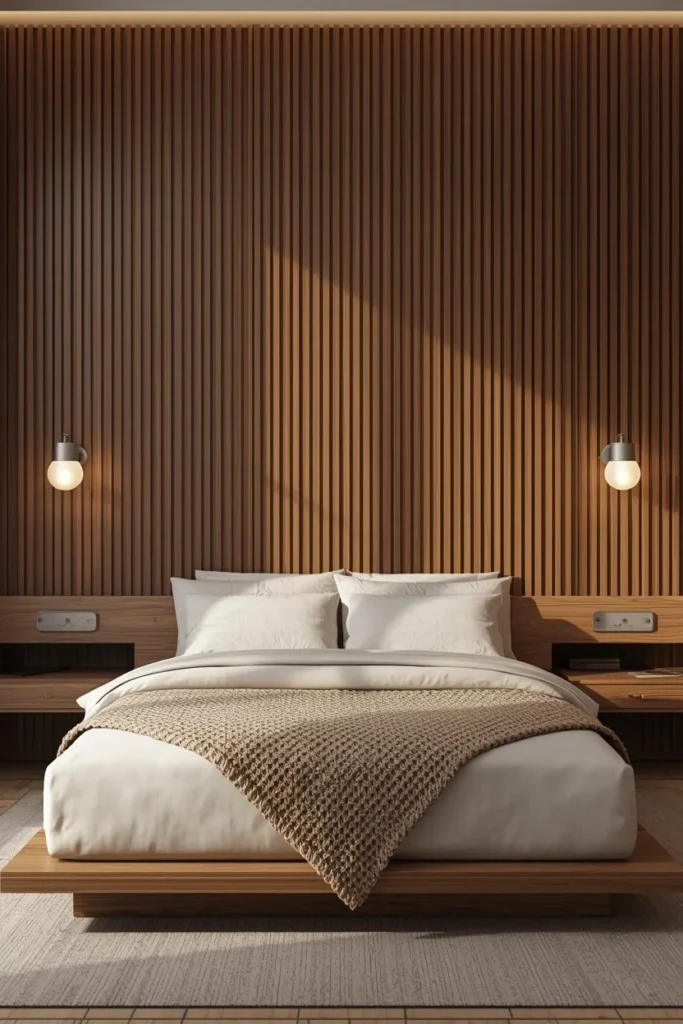
Vertical wood slats behind a headboard add architectural texture to a plain wall without requiring custom millwork or a contractor. Pine furring strips, cut to length and stained or painted to match the room’s palette, can be installed with adhesive and a level in an afternoon, which makes this one of the more approachable DIY projects on this list for anyone comfortable with basic tools. Spacing the slats evenly and running them floor to ceiling, rather than stopping partway up the wall, is what gives this detail its clean, intentional look rather than a half-finished one. This idea works particularly well behind a bed with no traditional headboard, since the slats effectively become the headboard’s backdrop.
3. Layered Bedding in Tonal Neutrals
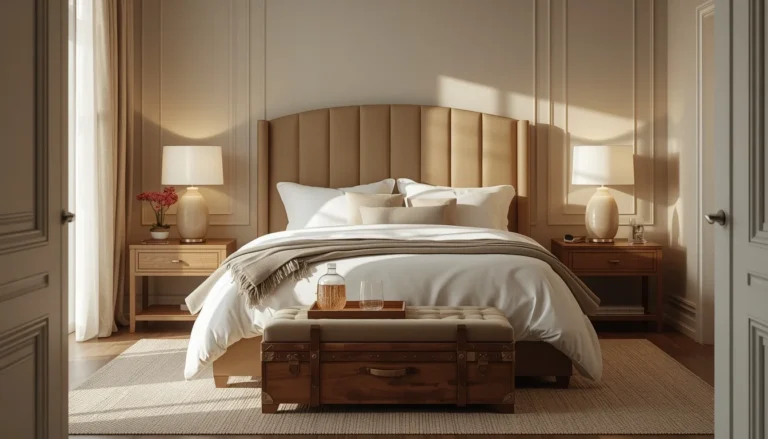
The fastest way to make a bed look considered rather than thrown-together is to layer three or four textures in the same tonal family, a linen duvet, a waffle-weave blanket, and a couple of textured pillow covers, all in shades of cream, taupe, and soft white rather than a single flat-colored comforter. This layering trick works because it adds visual depth without adding color, which keeps the overall palette calm even as the bed itself becomes more detailed. Mixing in one textured throw folded at the foot of the bed finishes the look and adds the kind of slightly imperfect, lived-in detail that makes a bed photograph well. This is one of the lowest-cost updates on the list, since most of it can be built from pieces already owned or found secondhand.
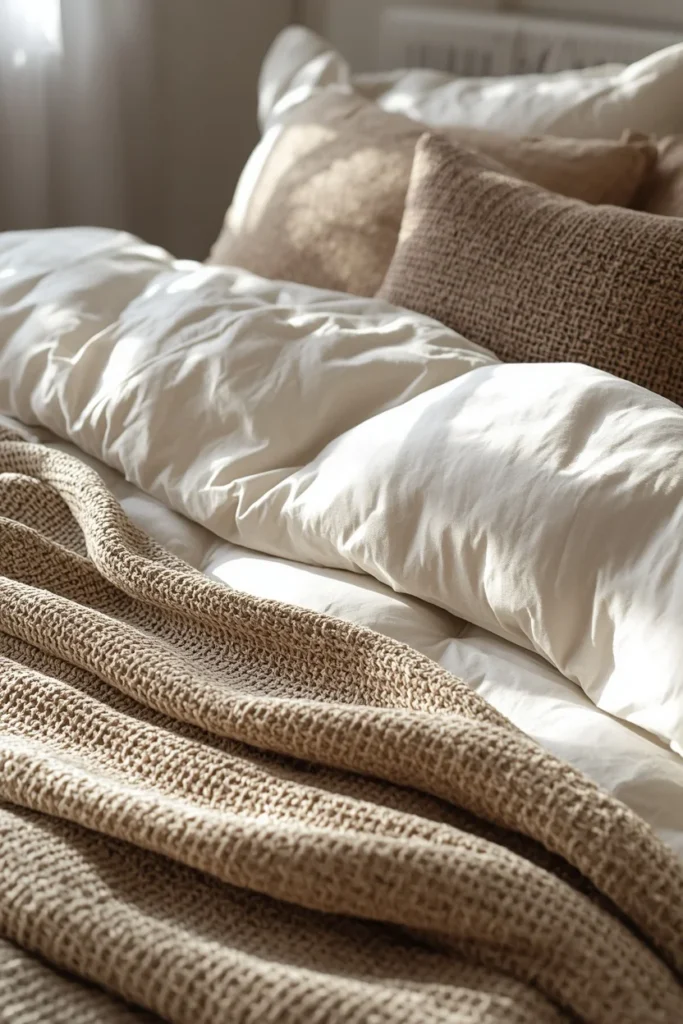
4. Arched Mirror as a Statement Piece
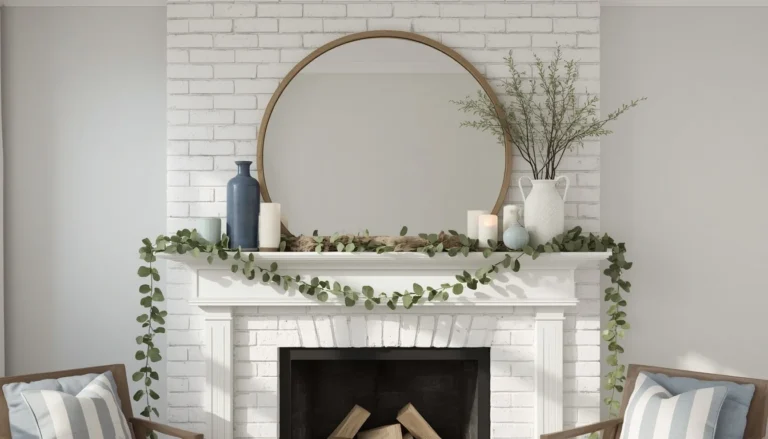
An arched mirror leaned against the wall rather than hung above furniture is one of the most repeated details in higher-end bedroom styling, largely because the soft, rounded shape contrasts with the straight lines of most furniture and bounces extra light around the room. A secondhand or budget arched mirror works just as well visually as an expensive one, since the shape and placement are doing most of the work rather than the frame material or brand. Leaning it against the wall, rather than mounting it, also makes this an easy, renter-friendly update that requires no drilling or wall anchors. Positioning it to reflect a window or a lamp adds a second light source to the room without an electrician involved.
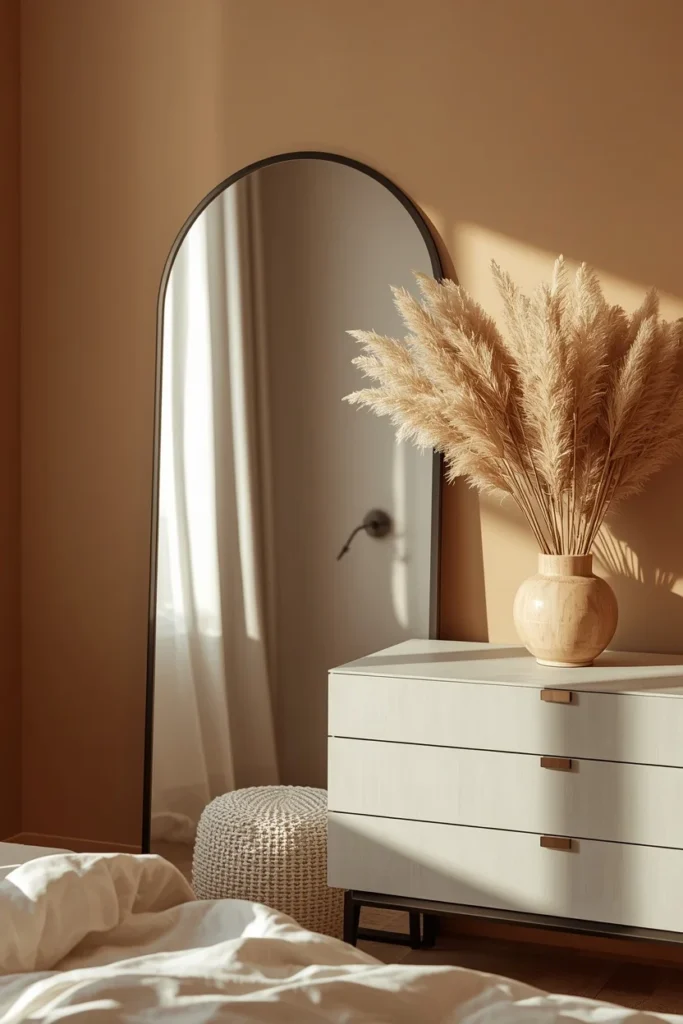
5. Swap Hardware and Curtain Rods for Warm Metal
Warm brass or aged gold hardware on dresser drawers, combined with a matching curtain rod, ties small metal details throughout the room together without touching furniture, paint, or fabric. Existing dresser pulls can often be swapped for a few dollars per piece, and a curtain rod is one of the least expensive line items in a full window treatment, which makes this one of the cheapest updates on this list relative to its visual impact. Choosing one warm metal finish and repeating it across hardware, rod, and any picture frames in the room keeps the small details feeling coordinated rather than scattered. This swap works especially well layered on top of the color-drenched wall idea, since the warm metal stands out clearly against a muted, neutral backdrop.
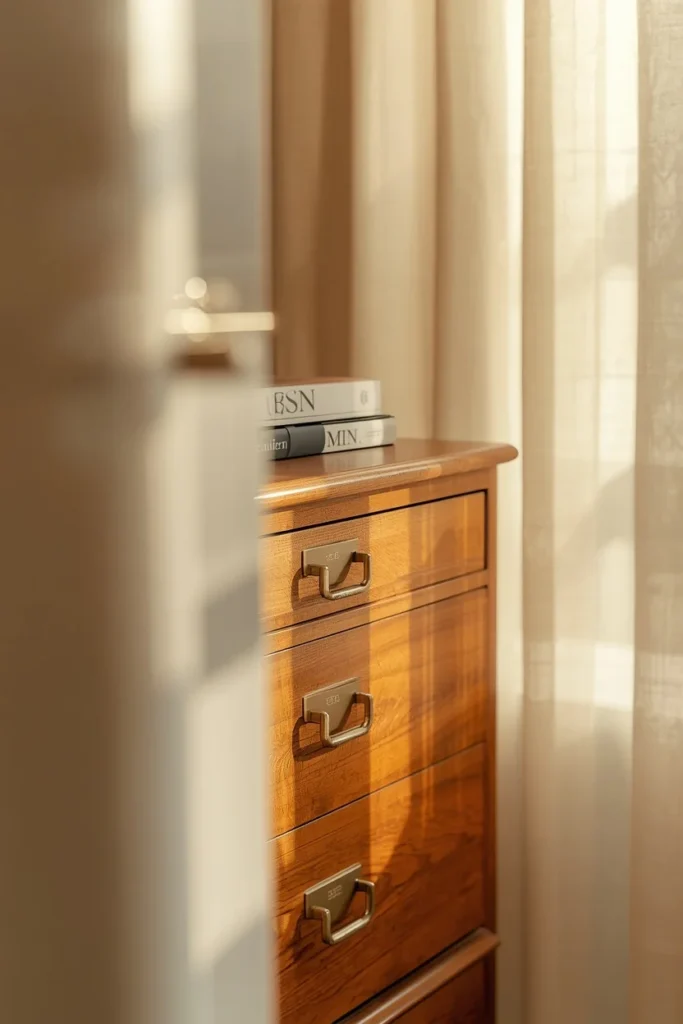
6. Oversized Art Print Above the Bed
A single large-scale piece of art above the bed does more visual work than several smaller framed pieces scattered across the wall, since one large anchor point reads as intentional while a cluster of mismatched frames often reads as unfinished. A budget-friendly framed print, an abstract piece in muted blues, gold, and warm white tones, or even a large mirror in place of art, gives the wall behind the bed a clear focal point without requiring an original painting or a custom frame job. Sizing the piece to roughly two-thirds the width of the headboard is a simple rule of thumb that keeps the proportions feeling balanced rather than too small or overwhelming. This is a one-time purchase that instantly changes how finished the whole wall looks.
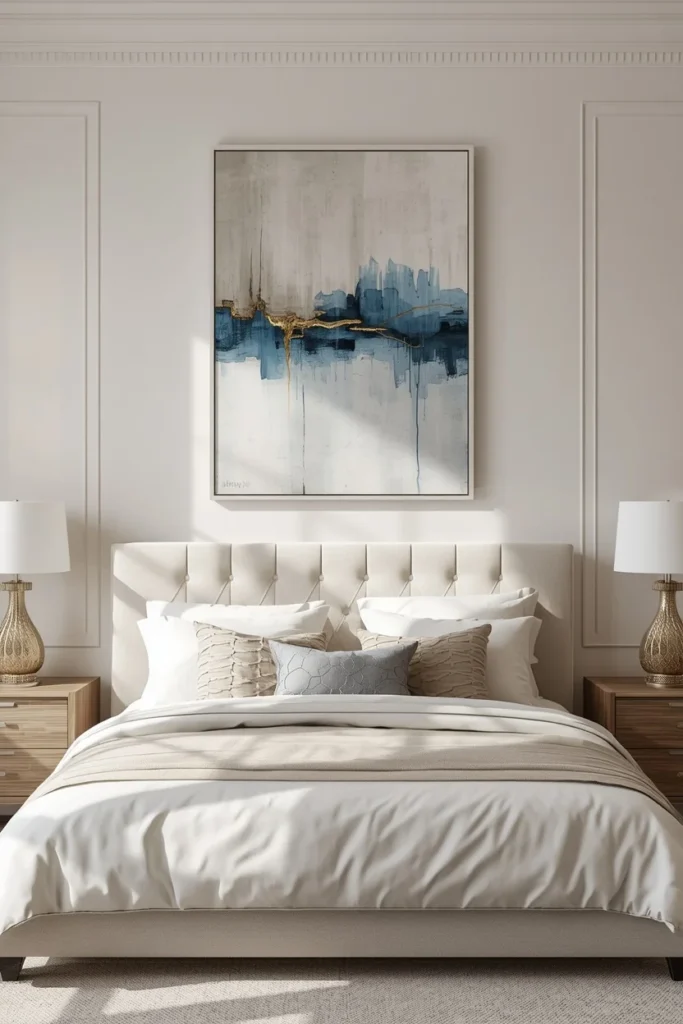
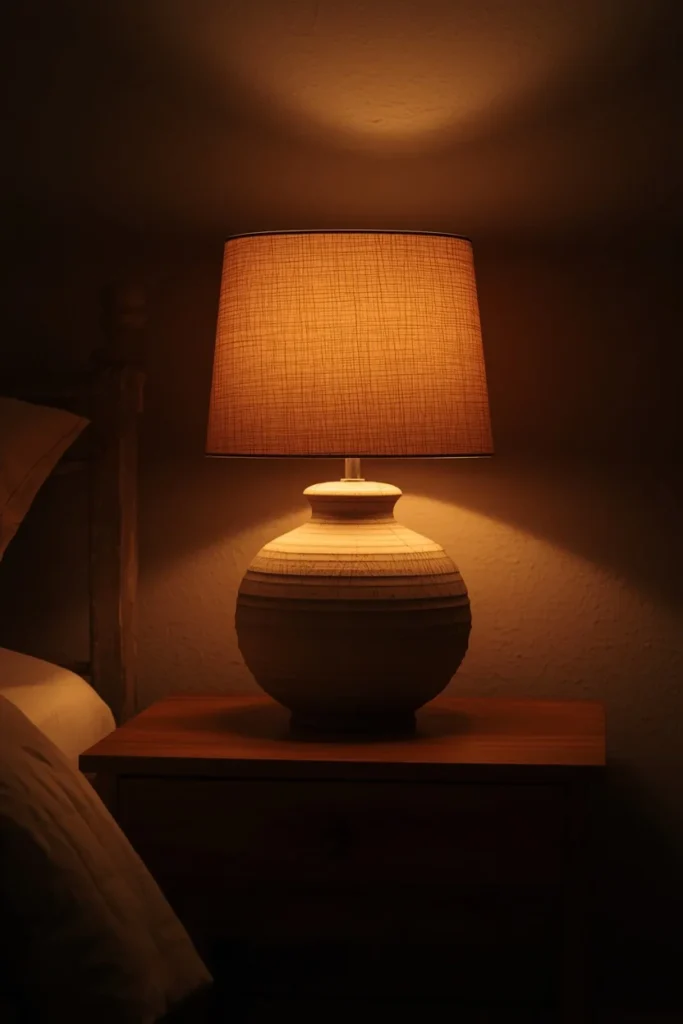
7. Sculptural Table Lamps Instead of Overhead Light
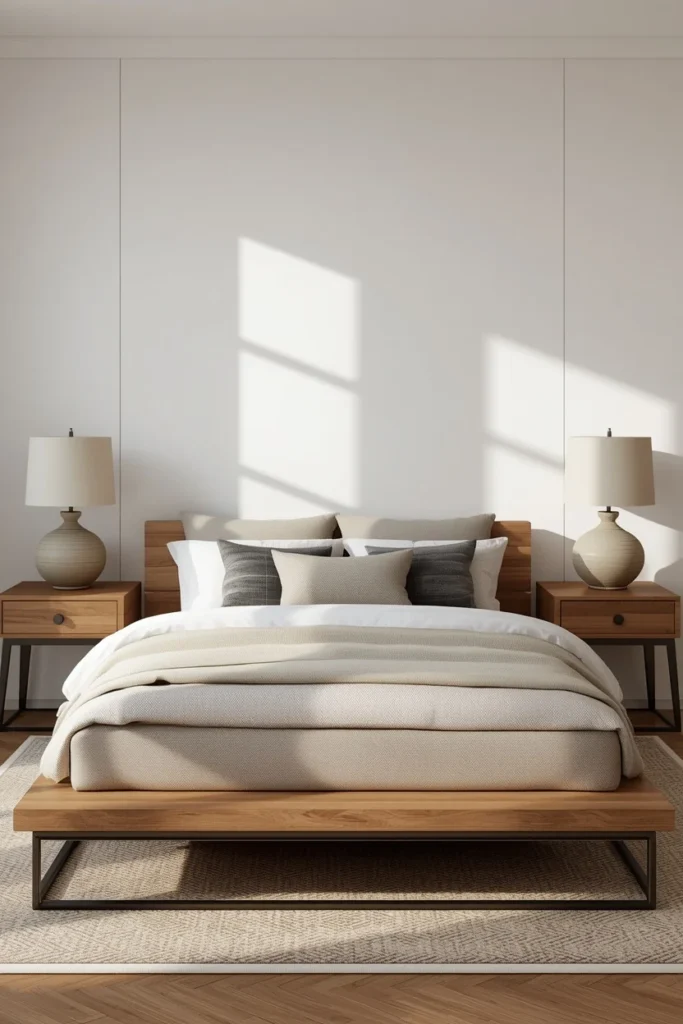
Swapping a bedroom’s main light source from a single overhead fixture to a pair of sculptural table lamps changes the entire mood of the room, since lamp light sits lower, casts softer shadows, and feels closer to candlelight than a bright ceiling fixture ever will. Matching lamps on either side of the bed also reinforce the sense of symmetry that runs through most higher-end bedroom styling, without requiring identical, expensive furniture elsewhere in the room. Ceramic or textured ceramic lamp bases in warm, neutral tones tend to photograph better and feel more considered than a plain glass or metal lamp picked without much thought. This swap costs relatively little compared to rewiring for recessed or layered ceiling lighting, and it can be done in an afternoon in any bedroom, rented or owned.
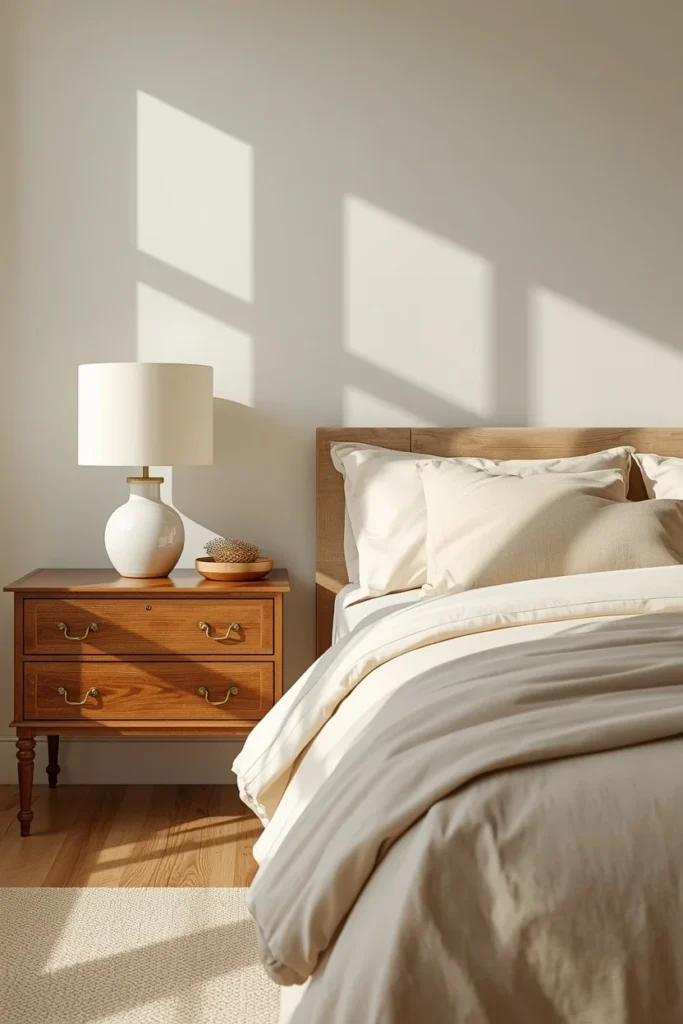
8. Vintage or Thrifted Wood Nightstands
A pair of vintage or secondhand wood nightstands, even mismatched slightly in style but matched in wood tone, brings a sense of collected-over-time character that new, mass-produced furniture rarely achieves right out of the box. Solid wood furniture found secondhand also tends to be sturdier and better made than comparably priced new furniture, which matters for a piece that will be used daily. A light sanding and a coat of wax or oil can refresh a dated finish without a full repaint, keeping the natural wood grain visible rather than covering it. This idea rewards patience, since the best finds often turn up over several visits to secondhand shops or online marketplaces rather than in a single afternoon.
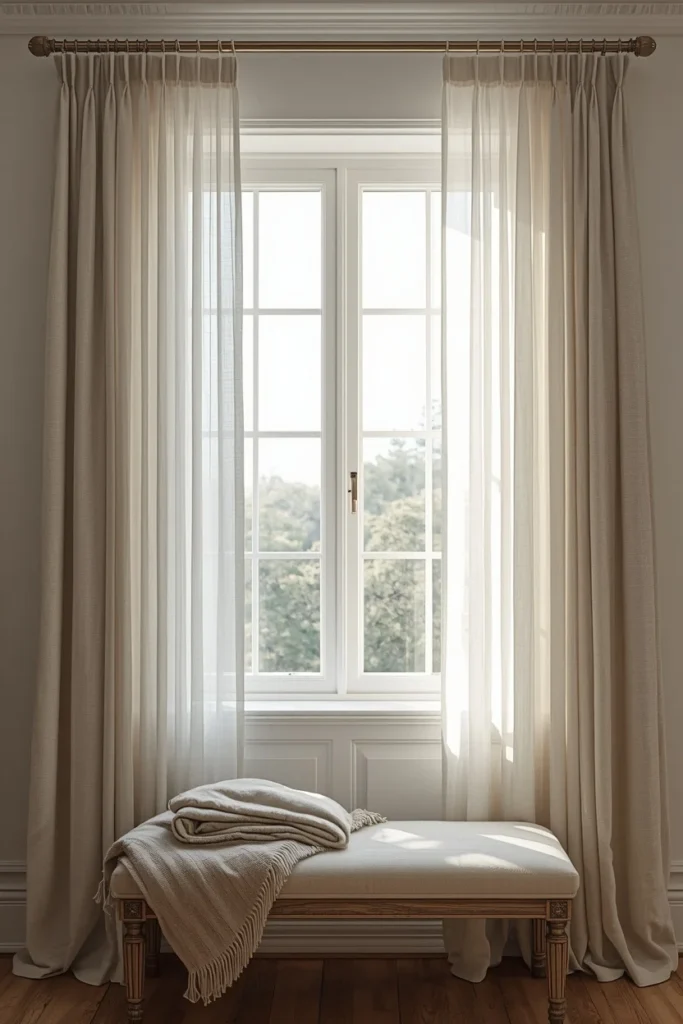
9. Sheer or Linen Curtains for Softer Light
Swapping heavy, dated drapes for sheer or lightweight linen curtains changes how daylight enters the room, replacing harsh, direct light with something softer and more diffused throughout the day. This update also makes a bedroom with limited natural light feel more open, since sheer fabric doesn’t block or darken a window the way a heavier curtain does. Hanging the rod slightly wider and higher than the window frame itself, a trick that costs nothing beyond correct placement, makes the window appear larger and the ceiling feel taller. This is a relatively low-cost swap, especially compared to replacing the window itself, and it’s one of the more noticeable changes in terms of how the light in the room actually feels.
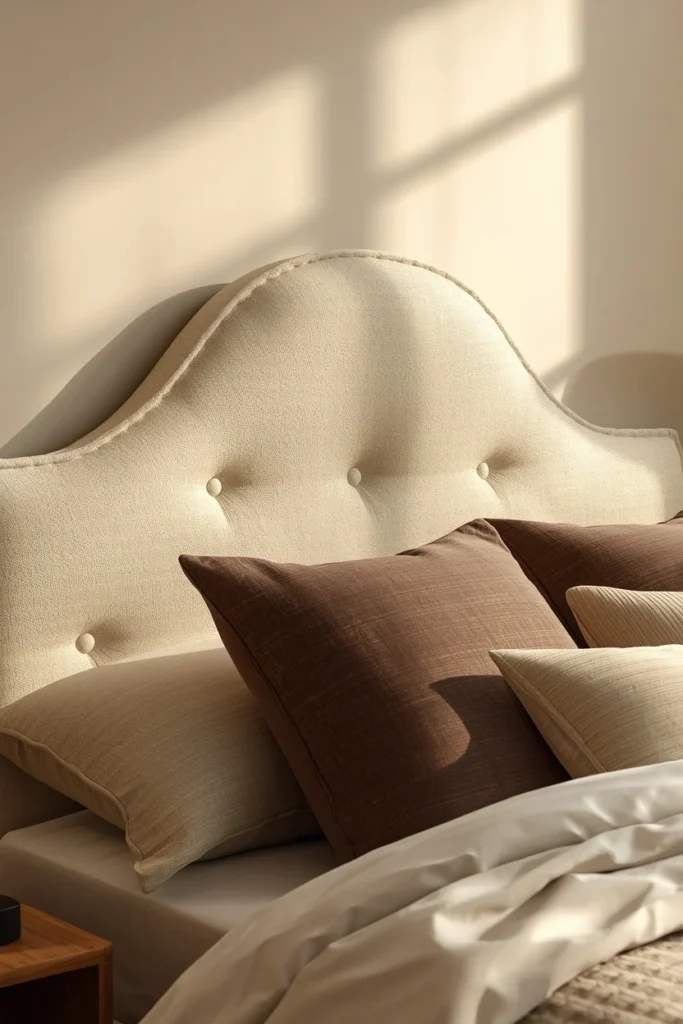
10. Upholstered or Slipcovered Headboard
An upholstered headboard, or a slipcover added to an existing plain one, introduces softness and texture to the one piece of furniture that sits closest to eye level in the room. A budget-friendly linen or boucle slipcover, made to fit an existing headboard frame, achieves much of the same visual softness as a fully custom upholstered piece at a fraction of the cost. Choosing a neutral fabric in the same tonal family as the bedding keeps the headboard from becoming a separate, competing element in the room. This update works particularly well paired with the layered bedding idea, since both lean on texture rather than color to create visual interest.
11. Woven Textures: Baskets, Throws, and Pampas Grass
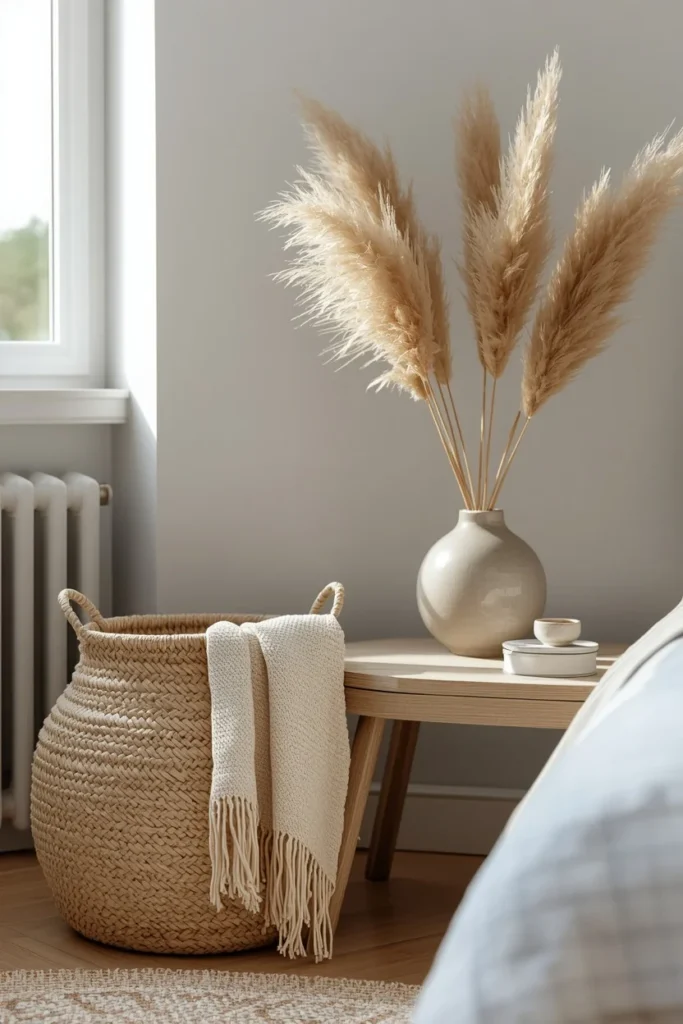
Woven materials, a seagrass basket for extra blankets, a chunky knit throw, and a bundle of dried pampas grass in a simple vase, add texture to a room without adding color, which keeps a neutral palette from feeling flat or one-dimensional. These pieces are also some of the least expensive items on this entire list, often available secondhand or from budget home goods stores, and they can be swapped seasonally without much cost. Grouping a few woven textures together, rather than scattering one item alone in each corner of the room, gives the eye a clear vignette to rest on instead of disconnected objects. This idea is especially useful for filling an empty corner or the foot of a bed that otherwise feels bare.
12. Decluttered Surfaces With One Styled Vignette
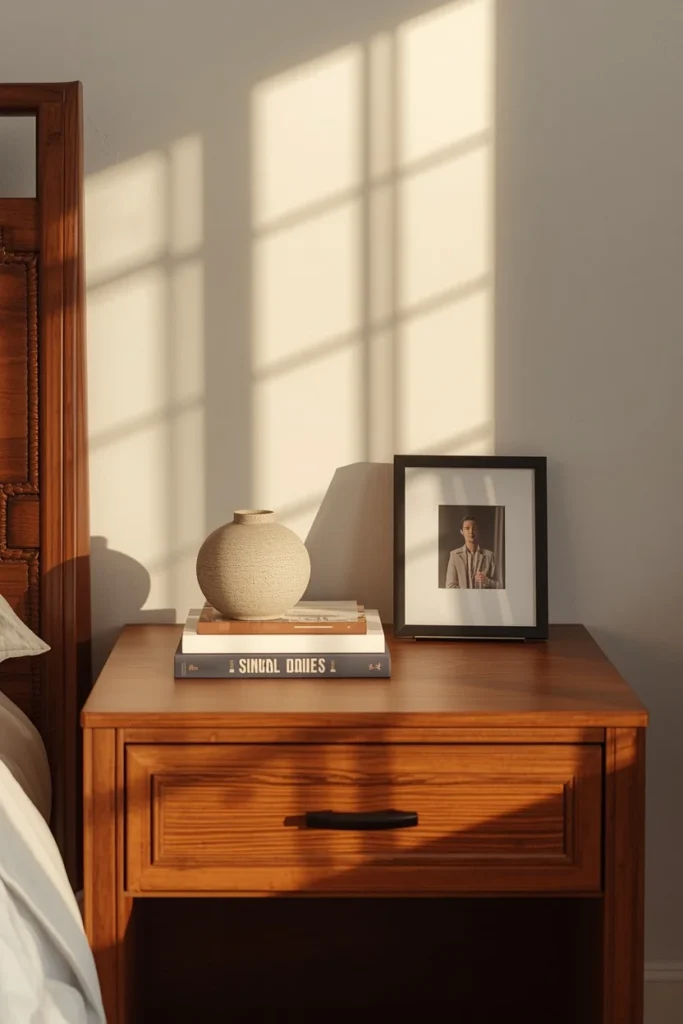
Clearing a nightstand or dresser down to just a lamp, a small stack of books, and one object, a candle, a small plant, or a framed photo, does more for a room’s overall calm than any single purchase could. This restraint is part of what separates a quiet luxury bedroom from a cluttered one; the goal isn’t an empty room, but a room where every visible object earns its place. Storing daily items like chargers, remotes, or skincare products in a drawer rather than on an open surface keeps this styled look intact day to day, not just for a single photo. This idea costs nothing and can be done in the time it takes to clear off a single nightstand.
13. A Layered, Budget-Friendly Rug
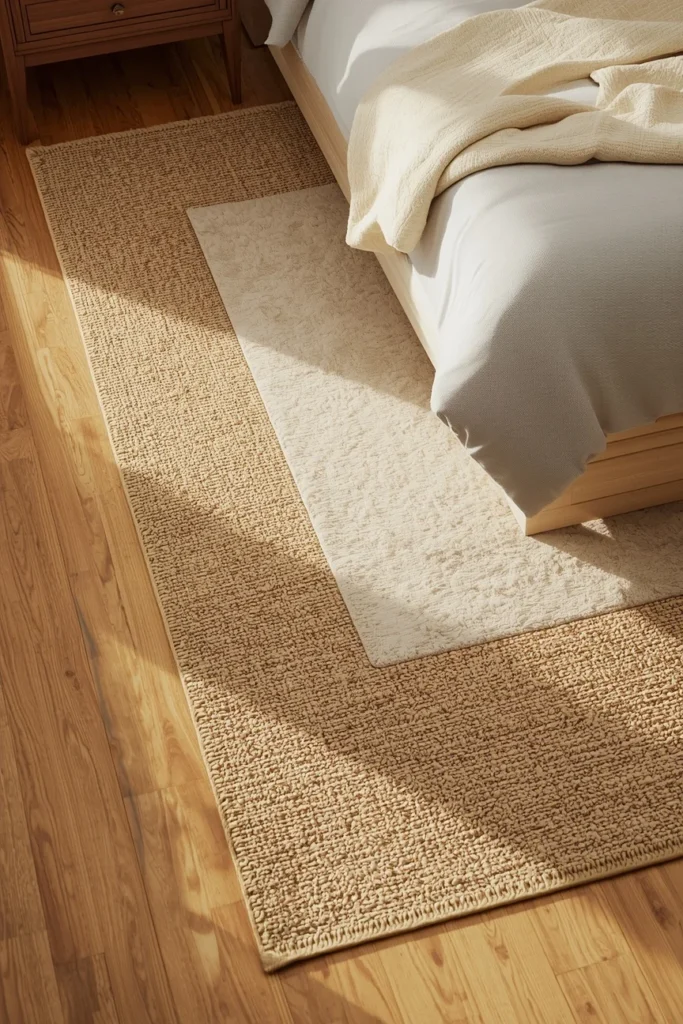
A rug placed beneath the bed, extending out on both sides rather than sitting only at the foot, grounds the whole room and adds warmth underfoot. A budget jute or flatweave rug, layered under a smaller, softer accent rug near the side of the bed, achieves a similar layered look to a more expensive wool option at a much lower price point. Choosing a rug in a warm, neutral tone that’s close to the wall color, rather than a bold pattern, keeps the floor from competing with the rest of the room’s restrained palette. This update is particularly effective in a bedroom with hard flooring, since it’s one of the few changes that affects the room’s warmth as much as its appearance.
14. Botanical Touches: Plants and Dried Florals
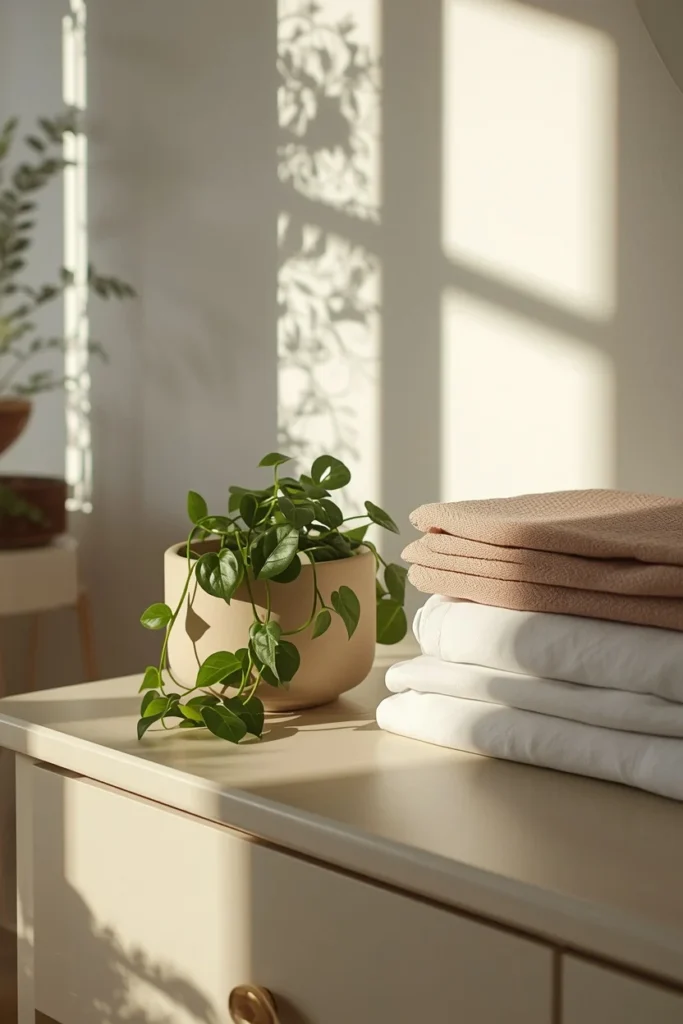
A single trailing plant on a dresser or a small potted plant on a windowsill brings a quiet, living element into a bedroom that paint and textiles alone can’t replicate. For anyone who doesn’t want to manage watering, dried florals or a bundle of dried pampas grass in a simple ceramic vase deliver a similar organic softness with no upkeep at all. Keeping the greenery to one or two spots in the room, rather than scattering several small plants throughout, maintains the same restrained, intentional feeling that defines this whole styling approach. This is one of the lowest-cost updates on the list and one of the easiest to change seasonally without any real investment.
15. Symmetry With Matching Nightstands and Lamps
Symmetry is one of the simplest design principles to apply and one of the most reliable ways to make a bedroom feel calm and organized rather than busy. Matching nightstands and lamps on either side of the bed, even if they’re budget or secondhand pieces rather than an expensive matched set, immediately give the room a sense of order that asymmetrical furniture placement doesn’t achieve as easily. This idea doesn’t require identical, brand-new furniture; two similar-sized nightstands in the same wood tone, paired with two lamps in the same finish, deliver most of the same visual effect. Extending this symmetry to curtains, artwork, or wall sconces on either side of the bed reinforces the calm, considered feeling throughout the whole room.
16. Warm, Dimmable Lighting Instead of Overhead Light
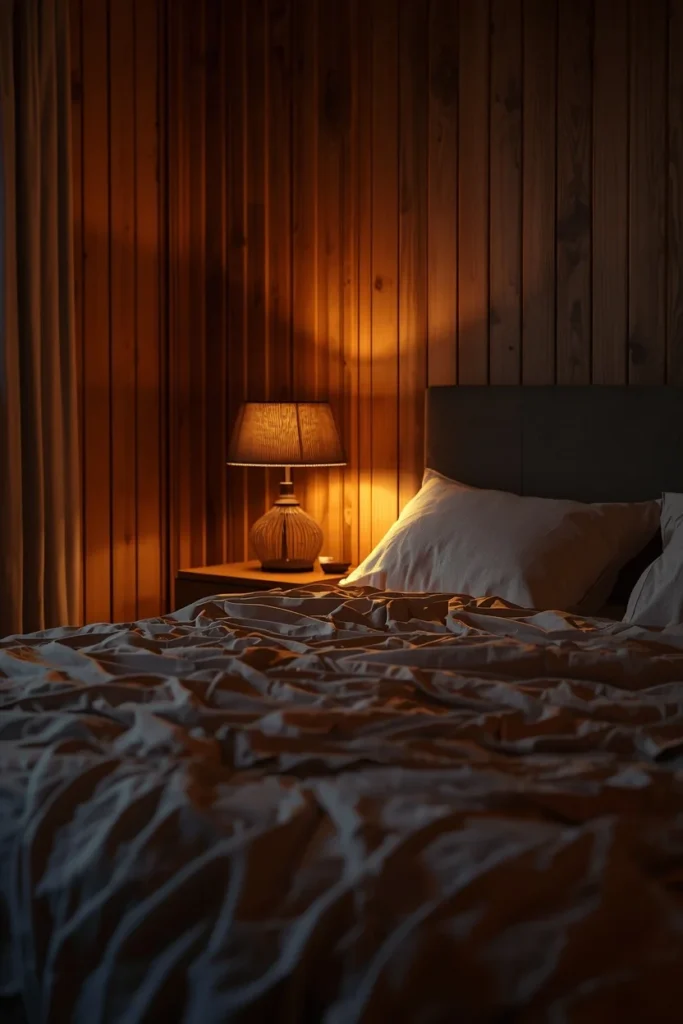
Swapping a bright white overhead bulb for a warm-toned, dimmable one is one of the least expensive changes on this entire list, and it changes how every other detail in the room reads once the sun goes down. Warm light flatters skin tones and textiles alike, while a cool white bulb tends to wash out the same warm neutrals that make a quiet luxury bedroom feel cozy in daylight. A simple plug-in dimmer switch, added to an existing lamp, lets the room shift from bright and functional during the day to soft and calming at night without replacing any fixtures. This small, inexpensive change ties together every other idea on this list, since warm layered lighting is what makes textured bedding, wood tones, and neutral walls all read as intentional rather than incidental.
Styling Tips
- Pick one warm neutral as the room’s base color and let every other choice, bedding, wood tone, metal finish, support that single palette rather than introducing new colors.
- Repeat one texture, linen, boucle, or woven rattan, across at least two or three items in the room so it reads as a deliberate material story rather than one-off pieces.
- Use symmetry wherever the layout allows it, matching nightstands, lamps, or curtain panels, since a balanced room reads as calmer even before anyone notices why.
- Favor a few larger, well-placed objects, a big mirror, one art piece, a single plant, over many smaller ones scattered throughout the room.
- Let warm, layered lighting do as much work as the furniture; a well-lit neutral room reads as more expensive than a poorly lit, more expensive one.
Practical Implementation Ideas
- Start with the wall color, since it affects how every other choice in the room, wood tones, metal finishes, bedding, reads once it’s in place.
- Shop secondhand for nightstands, mirrors, and lamps before buying new; solid wood furniture found used is often better made than a new budget equivalent.
- Add the wood slat accent wall or any other DIY project only after the wall color is finalized, since it’s easier to paint or stain slats to match a set palette than to adjust the wall around them later.
- Buy bedding in stages rather than all at once, adding one new textured layer, a throw, then a duvet cover, over a few paychecks rather than replacing everything in a single purchase.
- Test warm bulb color temperatures (around 2700K) in existing lamps before investing in new fixtures, since this alone can shift the entire mood of the room.
Common Mistakes to Avoid
- Choosing a stark white or cool gray as the base wall color, which tends to read as clinical rather than calm once the rest of the room is styled around it.
- Buying a full matching furniture set instead of building a room from similar tones and textures collected over time, which often ends up looking more generic, not more expensive.
- Overcrowding surfaces with too many small decorative objects, which undercuts the restrained, quiet luxury feeling this whole style is built around.
- Skipping curtain rod placement and hanging panels directly at the window frame’s edge, which makes the window and the room both look smaller.
- Relying entirely on one overhead light fixture, which flattens the room’s textures and prevents the warm, layered glow that defines this look at night.
Small-Space Alternatives
- Lean into the color-drenched wall idea over a large accent wall project, since a single unified color tends to make a small room feel more expansive.
- Choose a single arched mirror instead of a full gallery wall, since one large reflective piece opens up a small room more than several smaller frames.
- Use a smaller pair of table lamps rather than floor lamps, which take up less footprint on a tight nightstand or narrow dresser.
- Skip a floor rug that extends far beyond the bed frame, and choose a smaller layered rug sized to fit the available floor space instead.
- Favor one or two woven textures rather than several scattered baskets or throws, which can make a small room feel cluttered rather than styled.
Budget-Friendly Alternatives
- Choose paint over wallpaper or wood paneling for the biggest visual impact per dollar spent.
- Shop secondhand marketplaces for nightstands, mirrors, and lamps before buying new.
- Make a slipcover for an existing headboard instead of buying a new upholstered one.
- Swap only the hardware and curtain rod to a warm metal finish instead of replacing furniture or fixtures.
- Use dried florals or pampas grass instead of a live plant subscription or higher-maintenance greenery.
Pro Styling Recommendations
- Choose the wall color and bedding tone together before buying furniture, so every future purchase has a clear palette to match.
- When mixing secondhand and new pieces, match wood tones and metal finishes rather than trying to match exact styles or eras.
- Reserve one true splurge, if any, for the item touched or seen most often, such as bedding, rather than a decorative piece rarely noticed day to day.
- Step back and photograph the room periodically while styling it; a phone camera often reveals clutter or imbalance that’s harder to notice in person.
- Revisit the room seasonally and rotate one or two small elements, a throw, a vase of dried florals, rather than restyling the whole room from scratch.
FAQs
Conclusion
A classy bedroom doesn’t come from a bigger budget. It comes from fewer, better choices repeated with a little consistency, one warm wall color, one texture story, one pair of matching lamps.
Not every idea on this list needs to happen at once. Paint the walls first, or start with a thrifted mirror and a warmer light bulb, and let the room build from there. The goal was never to spend more. It was to choose with more intention.