22 Front Porch Flower Ideas That Make Your Home’s Entrance Bloom Beautifully
Some porches make you slow down before you even reach the door. Blooms spilling over the edge of a planter. A hanging basket swaying just slightly in the breeze. Color that somehow makes the whole house look cared for.
Other porches just… sit there. Bare steps. An empty corner where something should be.
The difference usually isn’t a bigger budget. It’s knowing which flowers, containers, and combinations actually earn their spot by the door.
This list covers 22 front porch flower ideas that work whether you’ve got a wide farmhouse porch with room for urns on either side, or a narrow stoop with space for exactly one really good planter.
Table of Contents
1. Hanging Baskets of Trailing Petunias
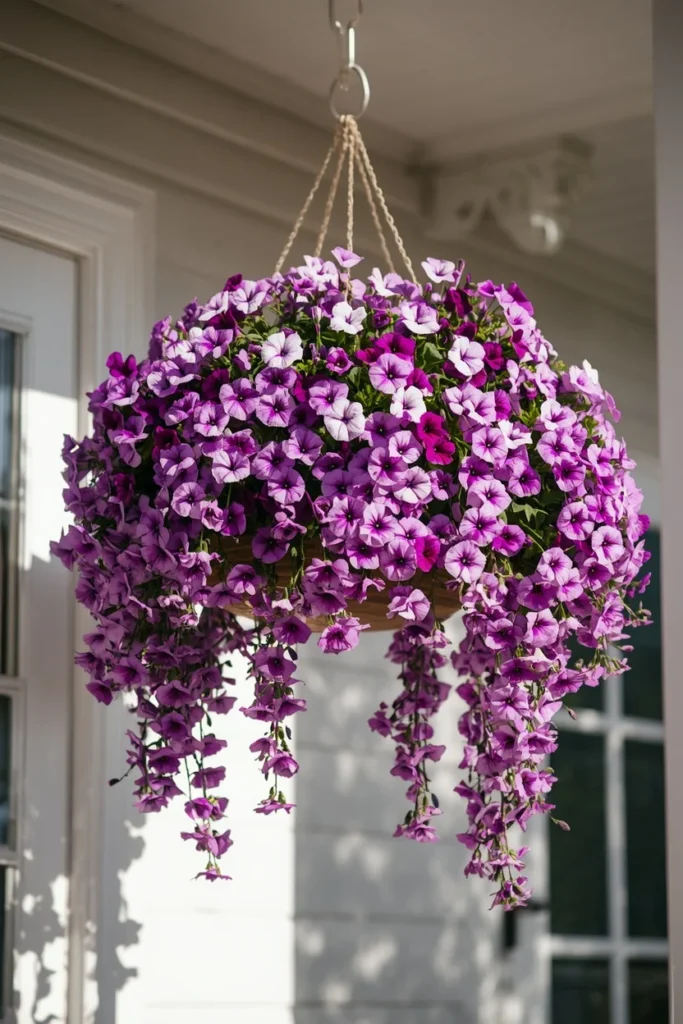
A hanging basket of trailing petunias is one of the fastest ways to bring color above eye level, softening square posts and plain soffits that would otherwise go untouched. Choose a basket larger than you think you need, since smaller baskets dry out and look stressed by midsummer, especially on porches that face west or sit exposed to wind. A loose, well-draining potting mix keeps roots from sitting in soggy soil after rain, which is one of the most common reasons hanging baskets decline early. Hang two matching baskets on either side of the porch for instant symmetry, or use a single basket to anchor an otherwise empty corner. This is a classic technique for good reason — it delivers maximum color with minimal floor space.
2. Matching Urns for Symmetry
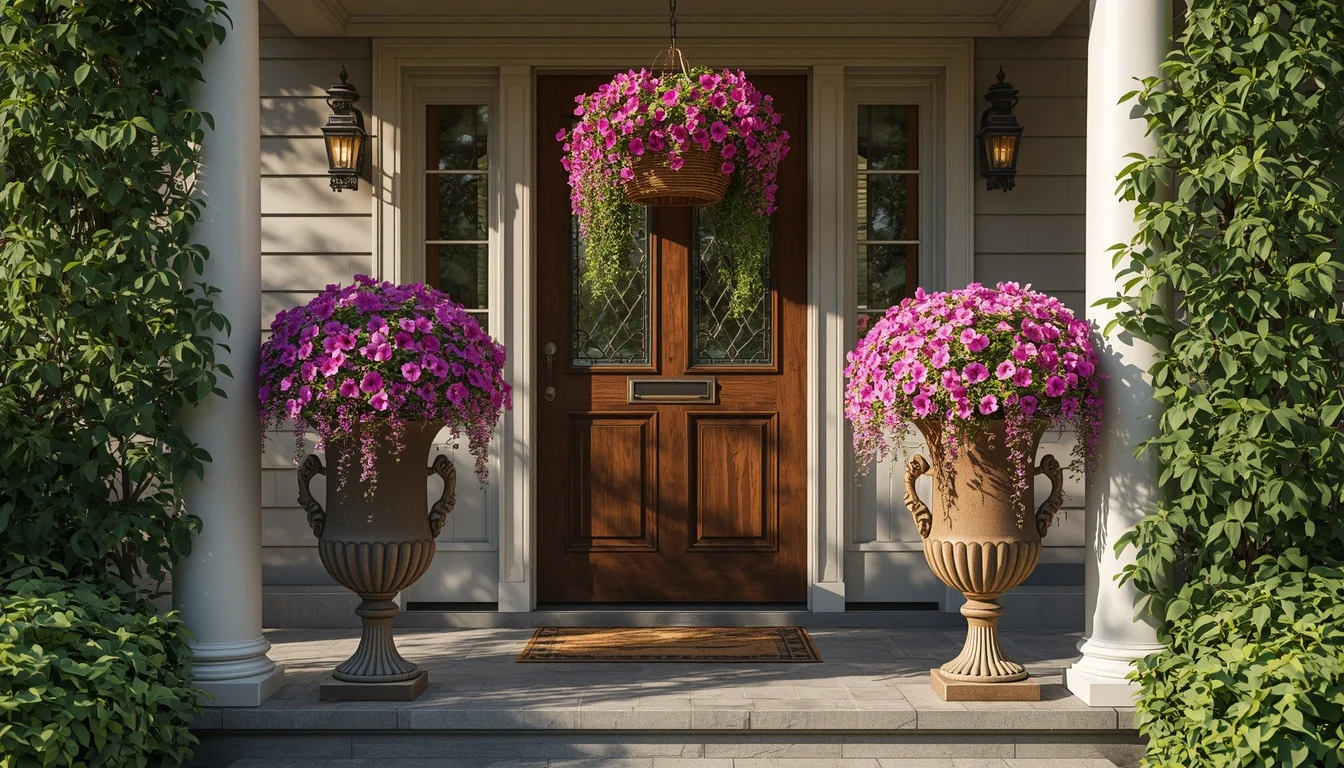
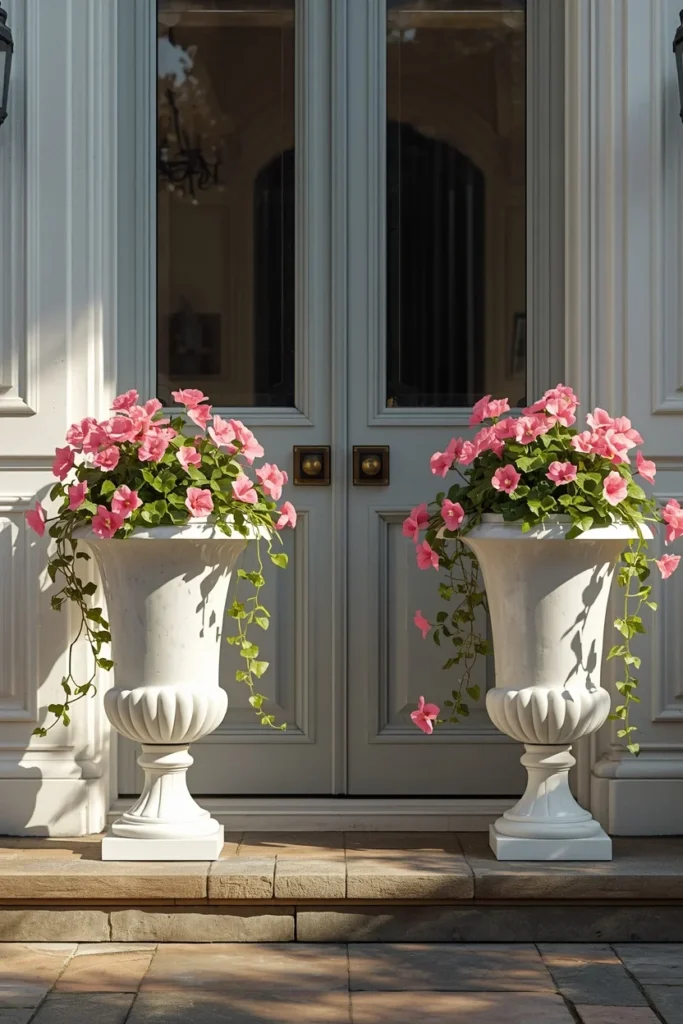
A pair of matching urns placed on either side of the front door creates instant balance and makes even a plain entrance feel architectural. Fill each urn identically — the same plant varieties in the same arrangement — so the eye reads the pair as one cohesive statement rather than two separate pots. Glazed ceramic or fiberglass urns hold up better to temperature swings than basic terracotta, which can crack after a hard freeze-thaw cycle. This approach works especially well on colonial, traditional, or classic-style homes where symmetry is already part of the architecture. Even a modest pair of urns filled with simple greenery and one bloom color reads as polished and intentional.
3. A Monochromatic Color Family
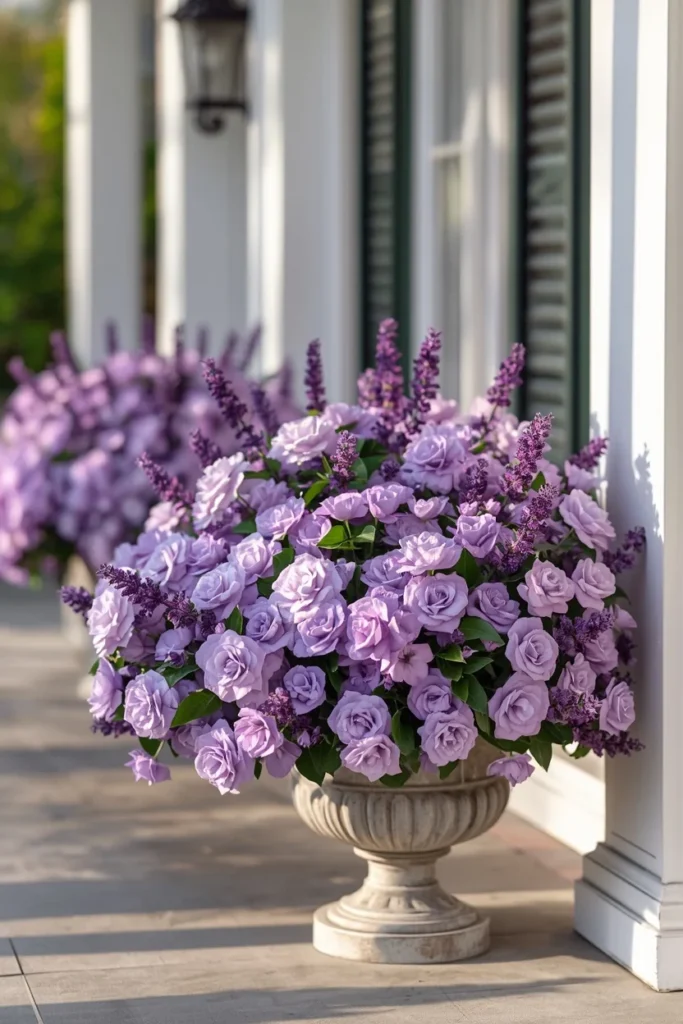
Sticking to one color family across all your porch containers makes even a small entrance read as one intentional composition instead of a scattered mix. Purple and white look crisp against cooler paint colors and white trim, while pinks and reds warm up gray siding, stained wood, or brick. This restraint is especially useful on a small porch, where too many competing colors can make the space feel busy rather than styled. Repeat the same tone in your cushions, wreath, or door mat, and the whole entrance starts to feel connected rather than just decorated. A single strong color, done consistently, almost always reads as more elevated than a rainbow of mixed blooms.
4. Thriller-Filler-Spiller Container Design
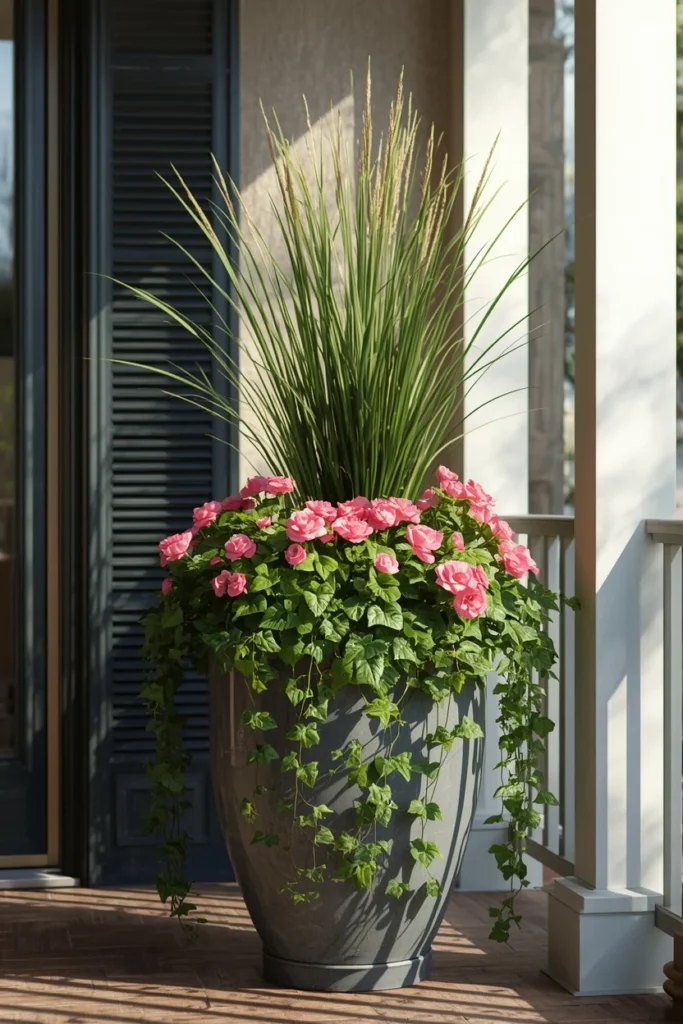
Professional container gardeners build every pot around three roles: a tall “thriller” plant for height, a “filler” plant that rounds out the middle, and a “spiller” that trails over the edge. This structure gives even a single pot real depth and movement instead of a flat, uniform mound of flowers. A dracaena or ornamental grass works well as a thriller, geraniums or begonias as filler, and trailing ivy or sweet potato vine as the spiller. Following this formula takes the guesswork out of container design and consistently produces a fuller, more professional-looking result. It’s a technique worth using for any single statement planter you want to really stand out.
5. Jewel-Toned Container Gardens
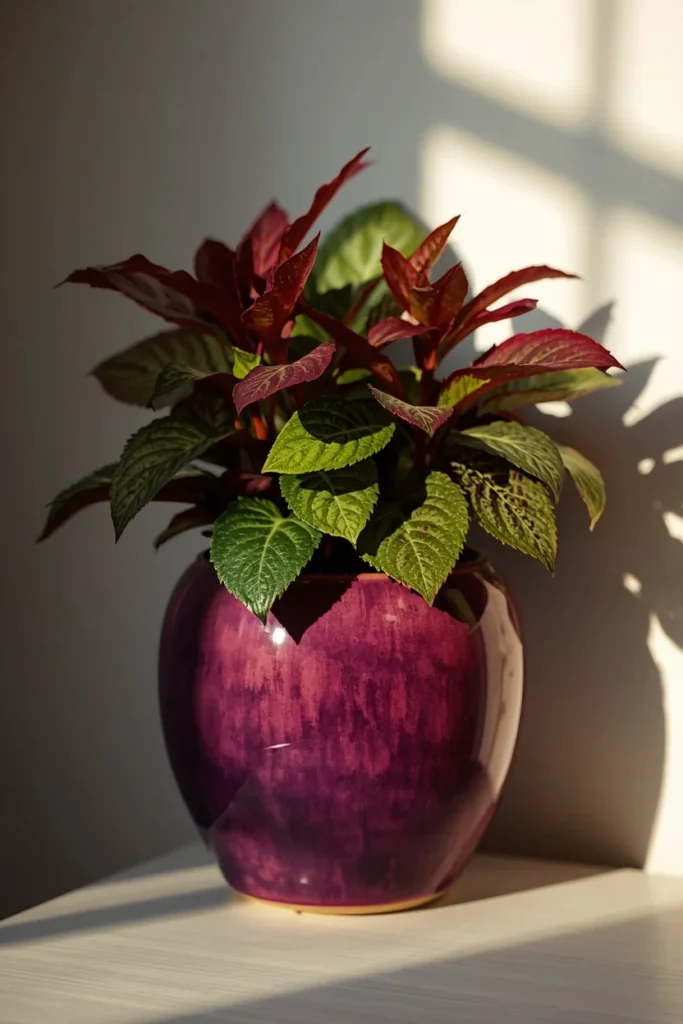
Deep burgundy, plum, eggplant, and emerald green bring real richness to a porch, especially when the colors stay within the same family rather than relying on sharp contrast. This approach lets a single richly colored plant lead the whole arrangement instead of competing with brighter, more scattered hues. Pair a jewel-toned bloom, like a deep wine-colored coleus, with rich green foliage plants such as boxwood or camellia for a backdrop that makes the color pop even more. Choosing plants whose color deepens as the season progresses adds ongoing visual interest without needing to replant. This look reads as more sophisticated and current than the brighter, more traditional annual mixes many porches default to.
6. Boxwood + Flower Combination Planters
Pairing structured boxwood with seasonal flowers gives a porch both permanent architecture and rotating color, since the boxwood holds its shape and shows evergreen structure year-round while the flowers around its base change with the season. This combination avoids the common mistake of relying on flowers alone, which can look temporary and scattered without something evergreen to anchor them. Keep the boxwood as the visual foundation and let a modest ring of flowers support it rather than compete with it — loud, busy color surrounding a boxwood often weakens its clean, tailored effect. This pairing is especially effective for homeowners who want a porch that still looks intentional in the off-season, when the flowers themselves aren’t in bloom.
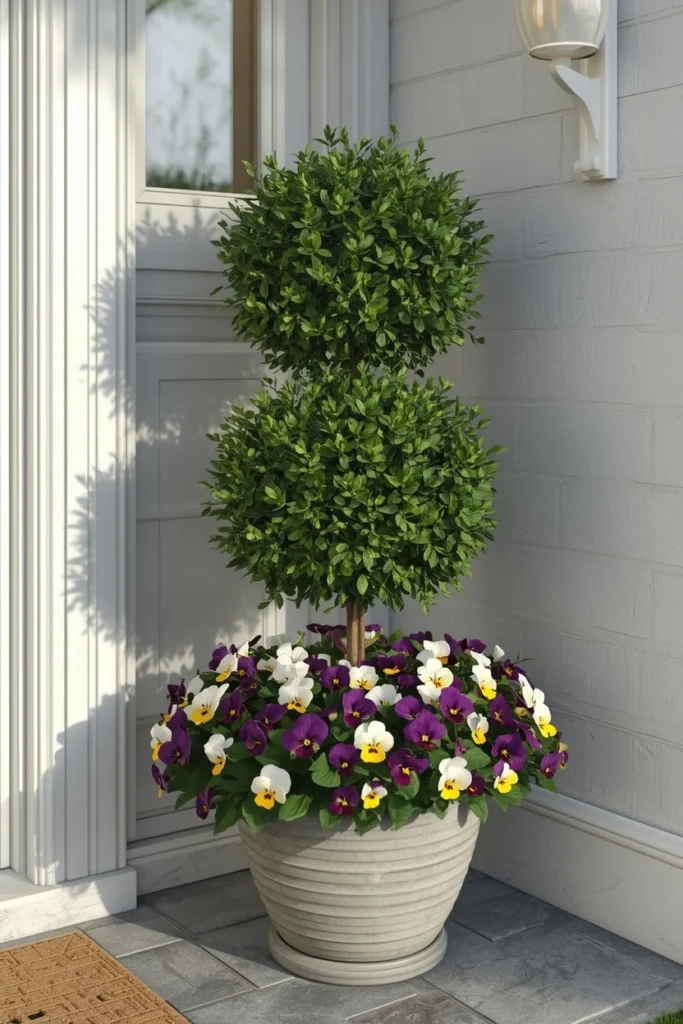
7. Tiered Plant Stands
A multi-level plant stand lets you display six to twelve plants in the footprint of a single container, which makes it one of the best solutions for a porch with limited floor space. Wrought iron, wood, or bamboo stands each complement a different architectural style, so choose the material based on your porch’s existing railings and trim. Arrange taller specimens on lower tiers and shorter, flowering plants on upper tiers so every plant gets adequate light and the whole display reads as an intentional silhouette rather than a cluttered stack. This is a particularly strong option for apartment porches, condo entries, or any space where ground planting simply isn’t possible.
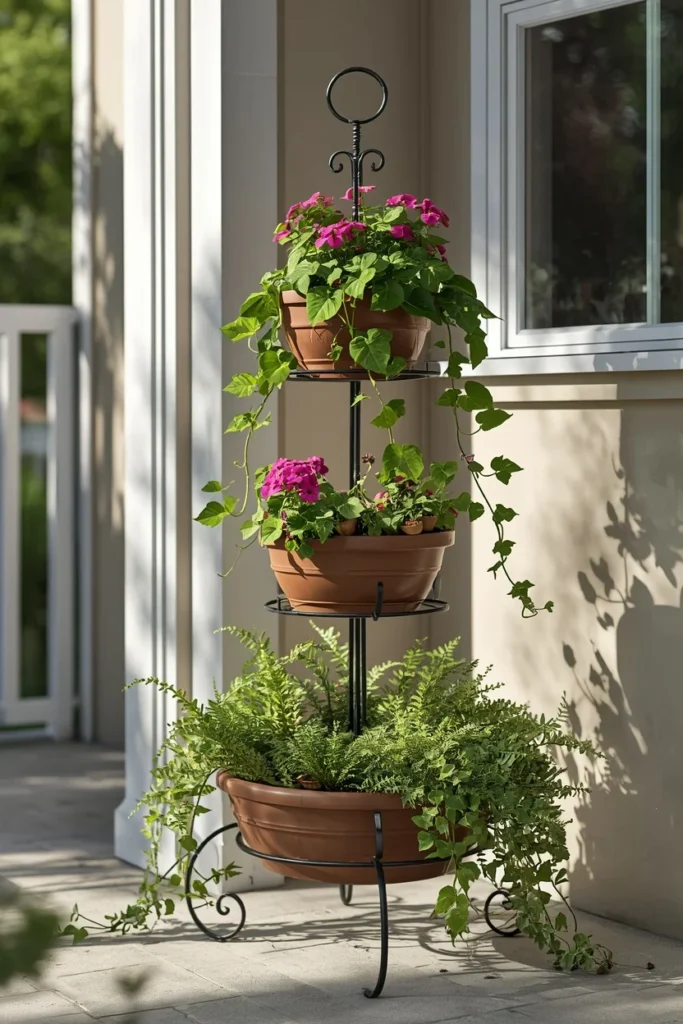
8. Mismatched Eclectic Pots
For a more collected, lived-in feel, skip matching planters entirely and group pots of different colors, sizes, and materials together near the door. Fill each one with a slightly different but color-coordinated bloom — multicolor petunias, impatiens, and gloxinias, for example — so the variety feels curated rather than random. This look works especially well for cottage, bohemian, or eclectic-style homes, where too much symmetry would actually feel out of place. Keep the pots visually connected through a shared color palette or a repeated material, like all-terracotta or all-vintage-metal, so the mismatch reads as intentional rather than accidental.
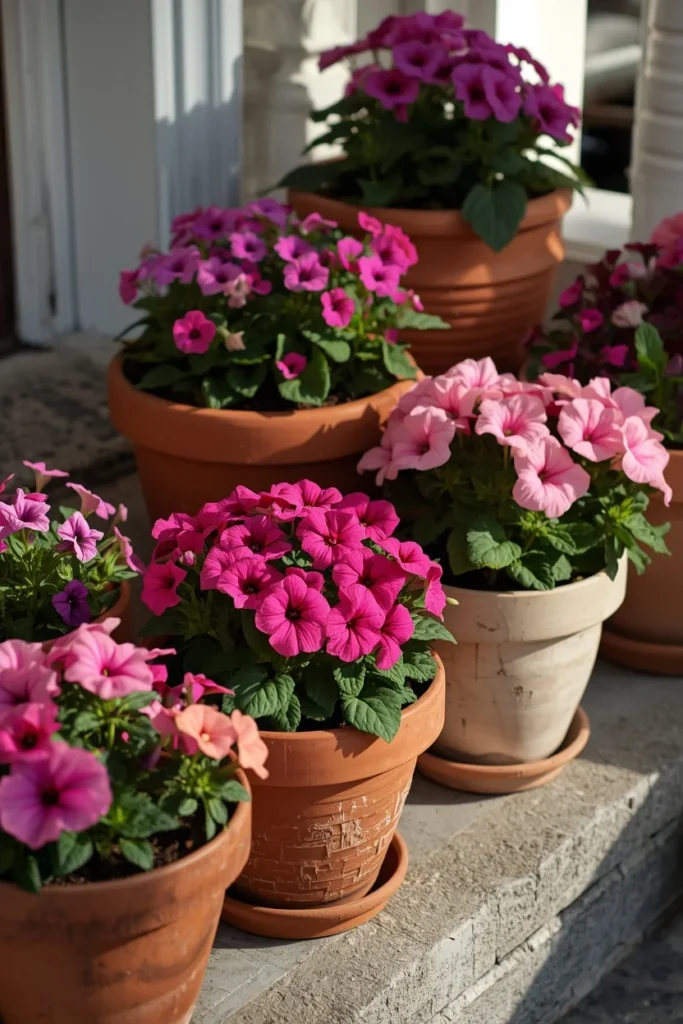
9. Window Boxes with Cascading Blooms
Window boxes bring flowers up to eye level, filling in the space between the porch floor and the roofline that ground-level pots can’t reach. Choose trailing varieties like lobelia, verbena, or sweet potato vine that spill generously over the box’s edge for a soft, full look rather than a tight, clipped one. Seal wooden window boxes before the growing season starts so repeated watering doesn’t warp or rot the material over time. This idea works particularly well on porches with limited step or floor space, since the color lives entirely on the wall rather than competing for room with furniture or walkways.
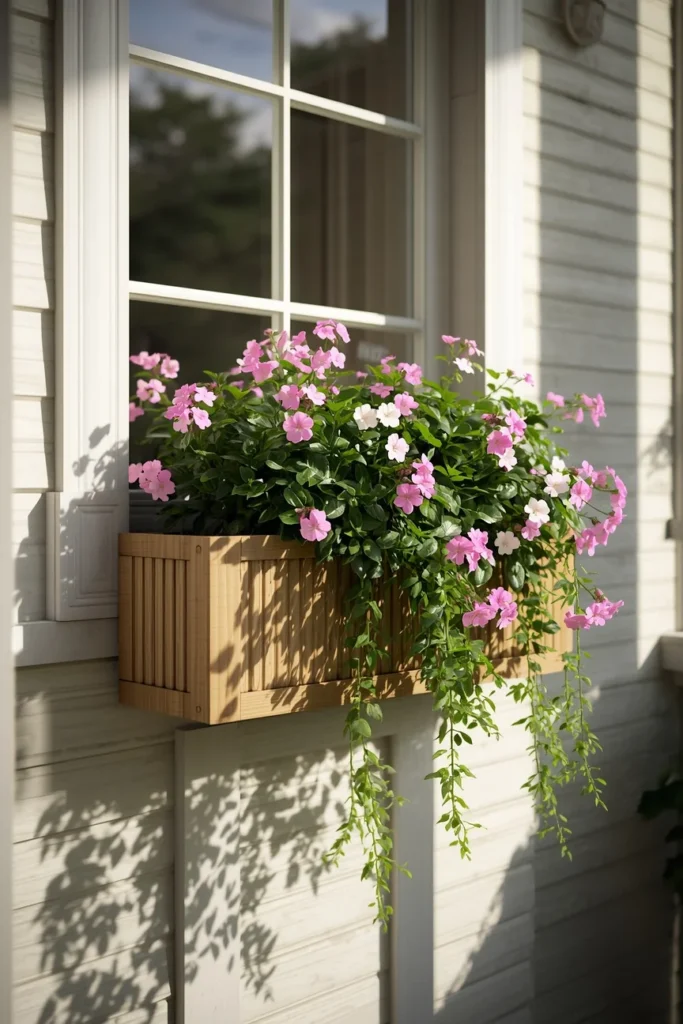
10. Vintage Buckets & Crates
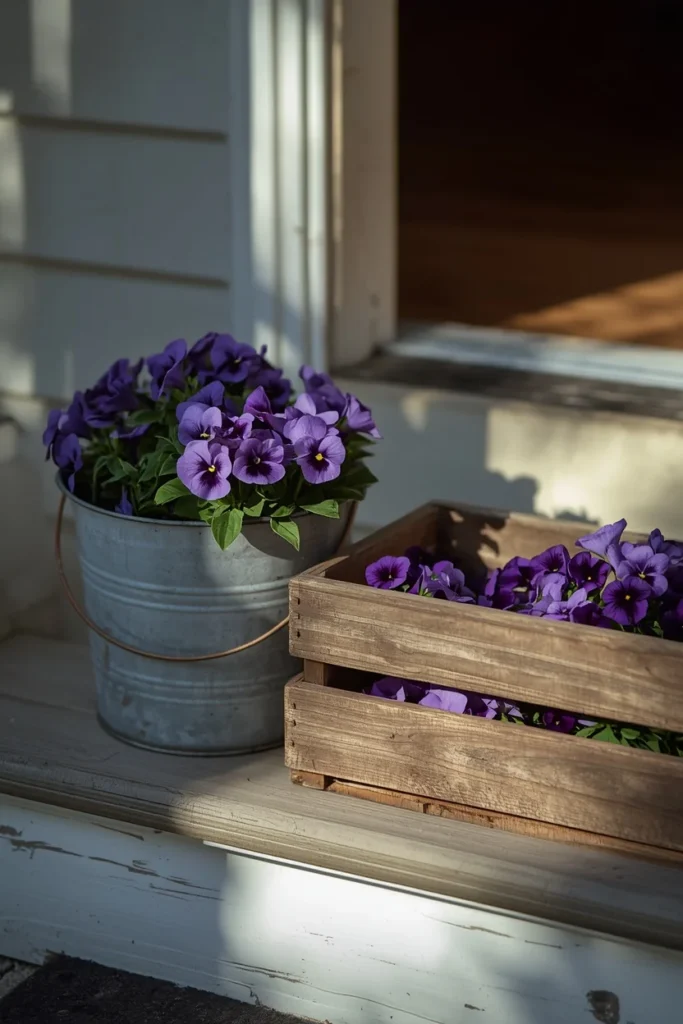
Vintage metal buckets and wooden crates bring rustic, multi-dimensional texture to a porch that a set of matching modern pots simply can’t replicate. Fill them with color-coordinated blooms like periwinkles or purple pansies, and don’t worry about matching every container — the point of this look is a slightly imperfect, collected-over-time feel. This is a strong choice for farmhouse or reclaimed-style homes, and it’s also one of the most budget-friendly ideas on this list, since vintage containers are often inexpensive at flea markets or antique stores. Pair a bucket, a crate, and a repurposed lantern together for a one-of-a-kind vignette instead of a single uniform arrangement.
11. A Wreath That Echoes the Planters
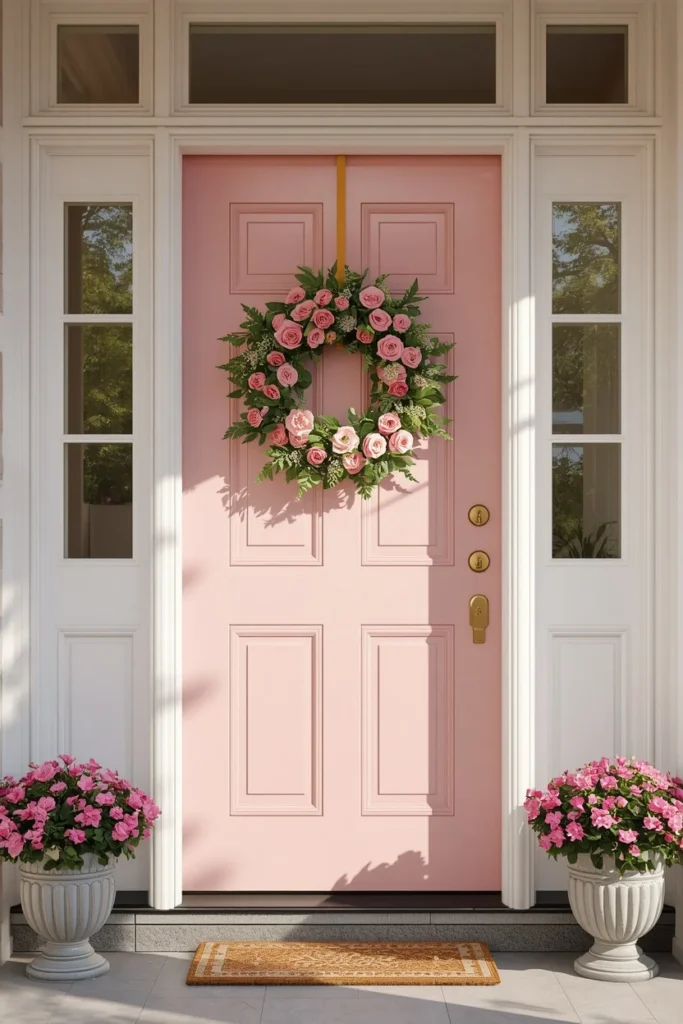
Choosing a door wreath in the same color family as your porch planters ties the whole entrance together into one cohesive composition instead of two unrelated decorations. If your urns are filled with soft pink blooms, a wreath with a few matching pink accents — even subtly — creates a visual rhythm that pulls the eye from the door down to the containers. This is a small detail, but it’s one of the easiest ways to make a porch feel deliberately styled rather than assembled piece by piece. Swap the wreath seasonally while keeping the planters consistent, or refresh both together for a full seasonal reset.
12. Tall Statement Planters with Topiary Trees
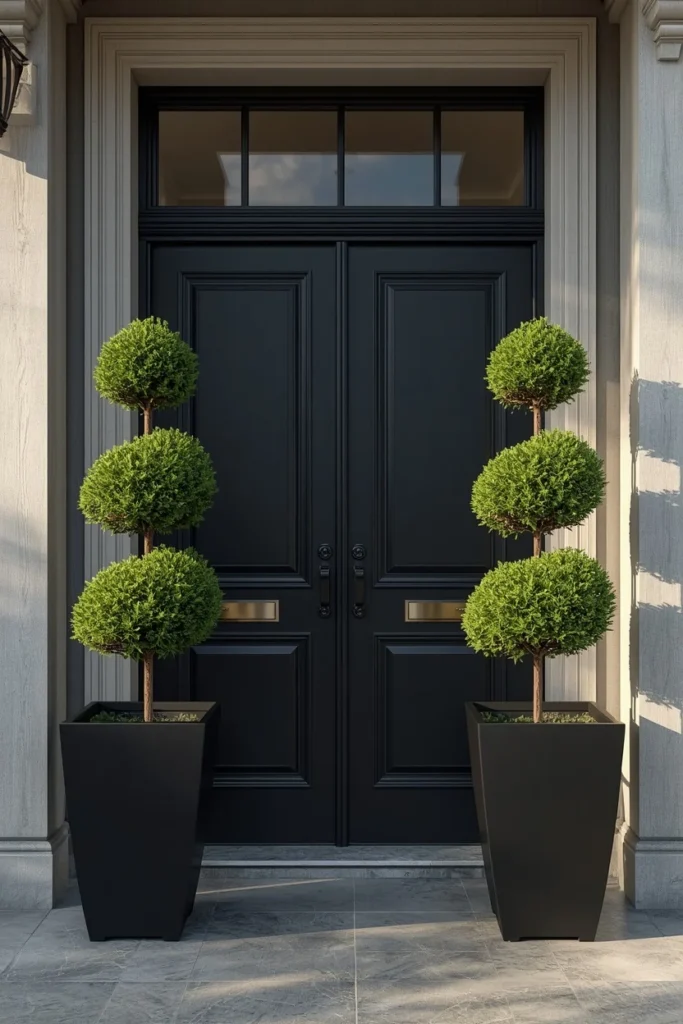
For an elegant, unfussy look, skip flowers entirely in favor of a pair of small trees or topiaries in tall statement planters. A triangular or spiral-trimmed topiary combines clean geometric shape with greenery for a fresh, contemporary feel that works especially well on modern entrances. The elongated silhouette of a tall planter draws the eye upward, giving even a low, one-story porch a greater sense of height and presence. Because these plants don’t rely on seasonal blooms, this look stays consistent nearly year-round with far less maintenance than a rotating flower display.
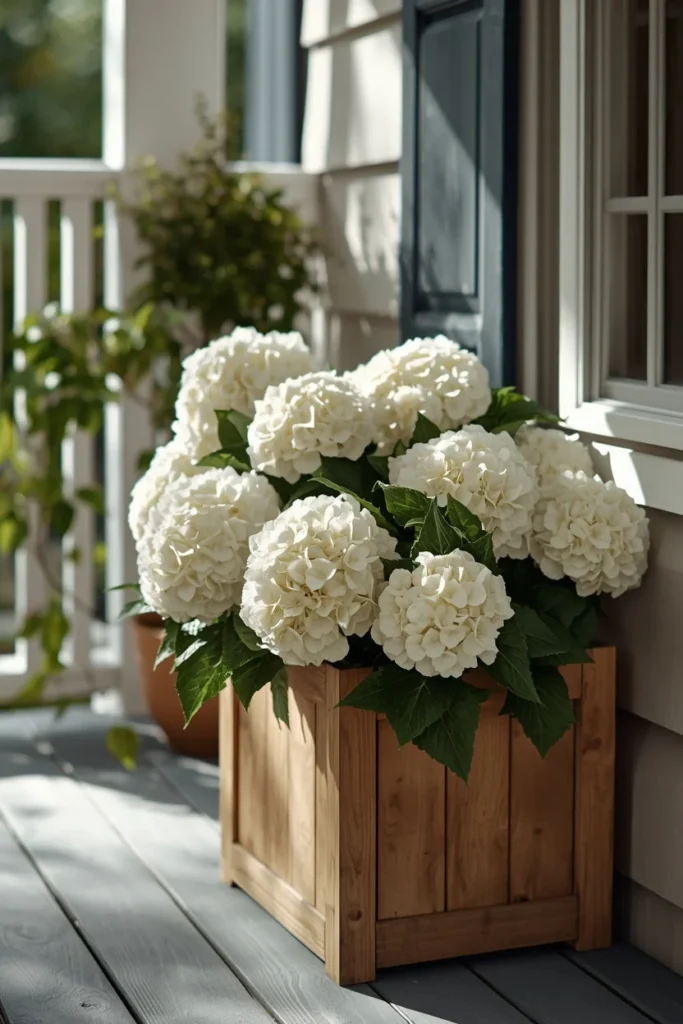
13. Potted Hydrangeas
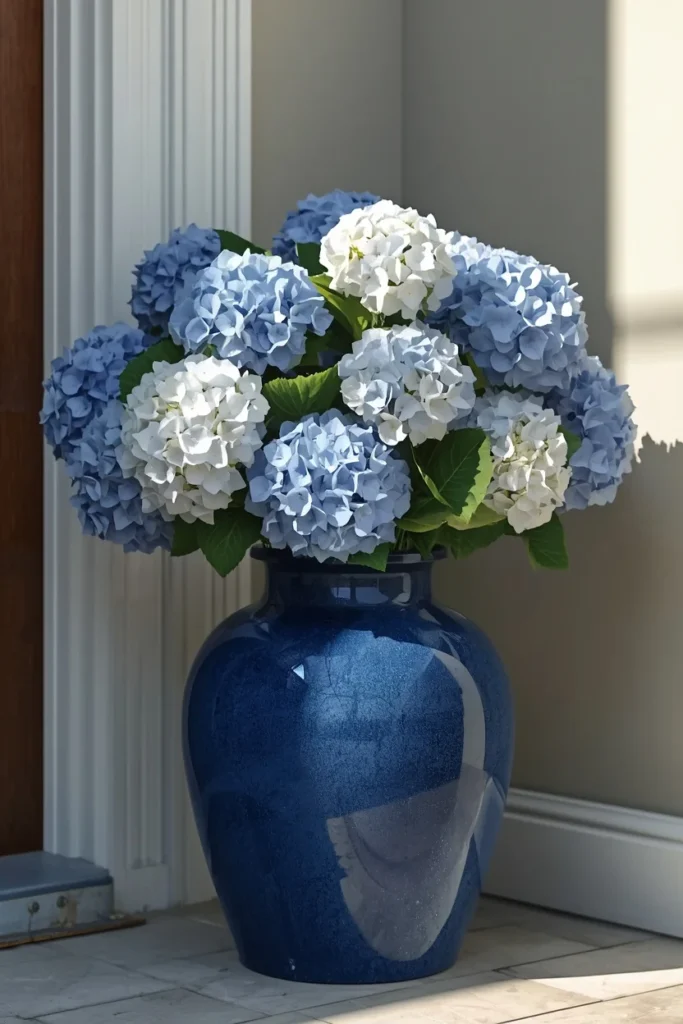
A large pot of hydrangeas brings big, full blooms and genuine impact without needing an entire garden bed. Their generous, rounded flower heads read as lush and abundant even from the street, making them one of the strongest single-plant choices for a front porch. Choose a large glazed pot with excellent drainage, since hydrangeas are thirsty plants that need consistent moisture to avoid wilting in hot afternoon sun. Blue, pink, or white varieties can be chosen to complement your home’s exterior color, and a single well-grown hydrangea pot often makes more of a visual statement than several smaller mixed containers.
14. Railing Planter Boxes
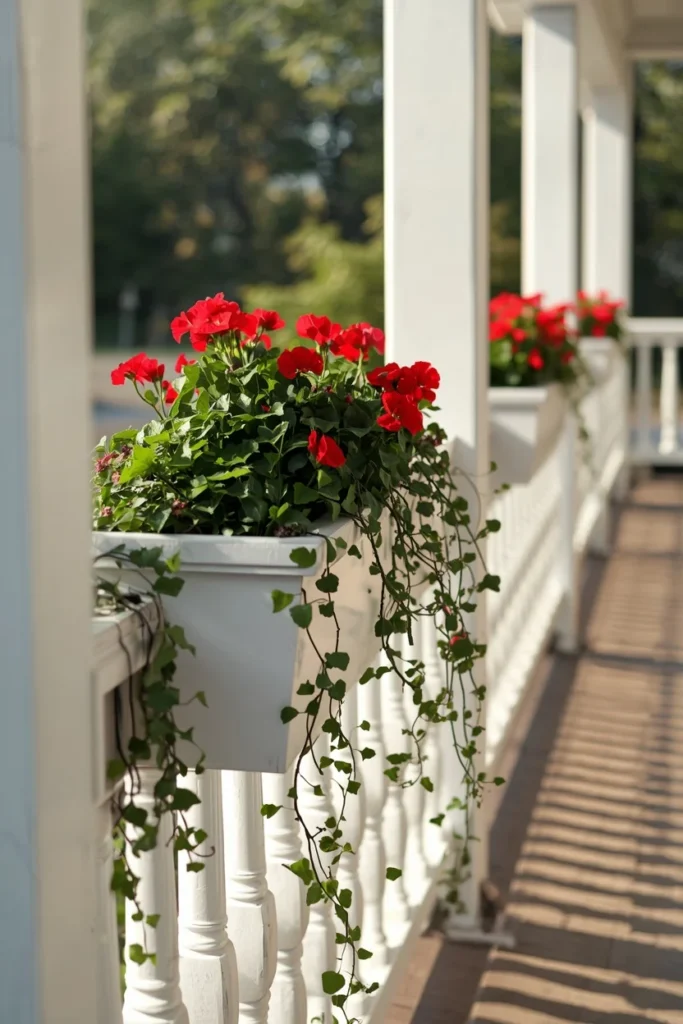
Planter boxes that clip directly onto a porch railing add color at a mid-level height without taking up any floor space at all, which makes them ideal for narrow porches or apartment balconies. Fill them with a mix of upright and trailing flowers so blooms show both above and below the railing line for fuller coverage. Choose boxes with secure, weatherproof brackets so they hold steady through wind and rain. This idea works especially well layered with floor-level planters, since the railing boxes fill the visual gap between the ground and the porch roof that would otherwise stay empty.
15. Colors Matched to Your Exterior Paint
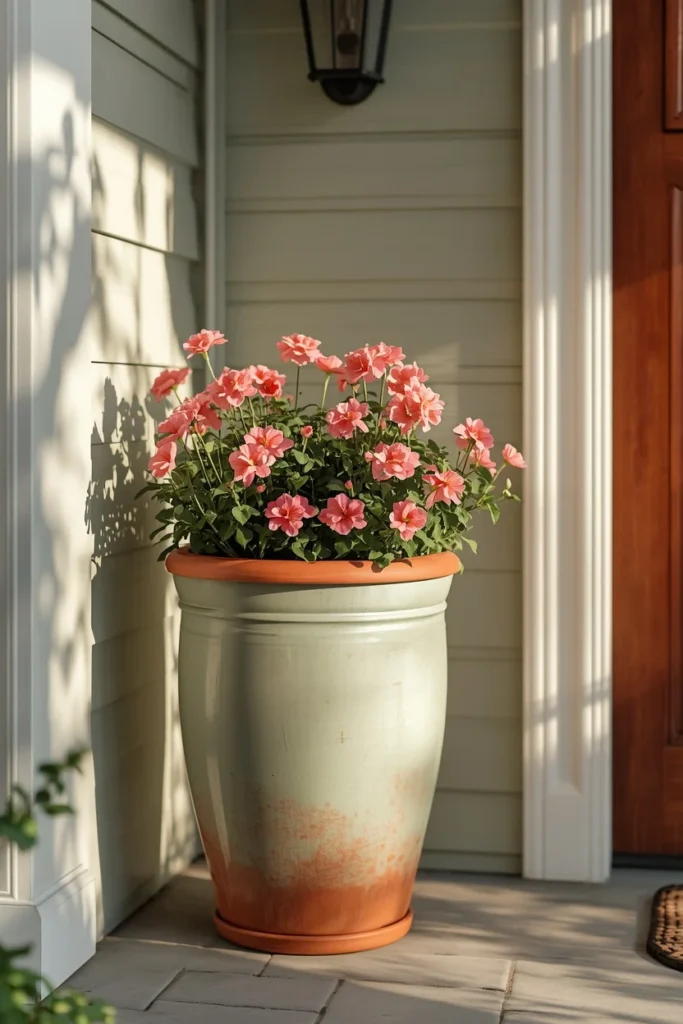
Choosing flower colors that either complement or intentionally contrast with your home’s exterior paint makes the whole facade feel considered rather than accidental. A large clay pot glazed in a shade that blends into your siding color creates a quiet, elegant base for a bold burst of flowers on top. Alternatively, a bright turquoise or black glazed pot can serve as deliberate contrast against a neutral exterior. Take a photo of your front door and porch before choosing flower colors, since it’s much easier to judge color harmony in a still image than while standing at the garden center holding a single plant.
16. Layered Heights (Reverse Pyramid Style)
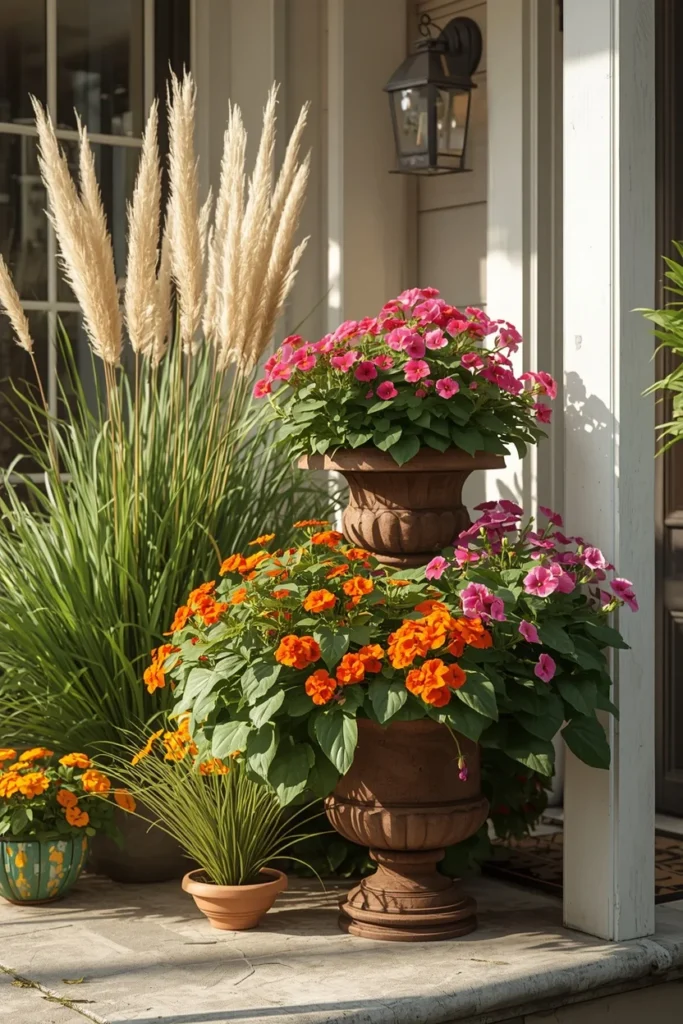
Arranging plants in a reverse pyramid — taller plants at the base, shorter and more colorful blooms higher up — ensures every plant gets adequate sunlight while creating a naturally appealing silhouette. Flowering plants like geraniums, begonias, and marigolds shine when placed on upper tiers where their blooms are most visible from the street. This layering technique also builds real depth, giving even a single porch corner a sense of abundance rather than a flat, single-level planting. Combine different pot shapes and plant types — tall grasses, blooming flowers, and leafy greens — so each level feels distinct while still reading as one connected display.
17. Potted Trees Flanking the Door
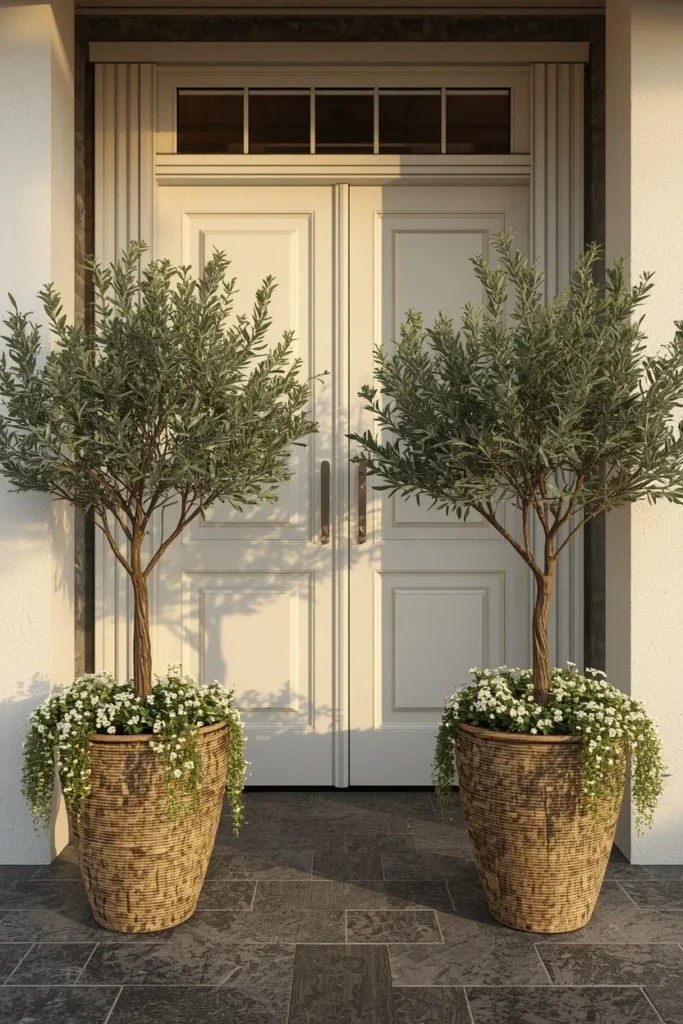
A pair of small potted trees — citrus, olive, or a compact evergreen — brings serious height and structure to an entrance without requiring in-ground planting. This works especially well for renters or anyone who might move, since the trees stay fully portable in their containers. Choose large, heavy-based planters so the trees stay stable in wind, and rotate the pots occasionally so the tree grows evenly rather than leaning toward the light. Underplanting the base of each tree with a low, trailing flower adds a finished, layered look that keeps the arrangement from feeling like a single bare trunk in a pot.
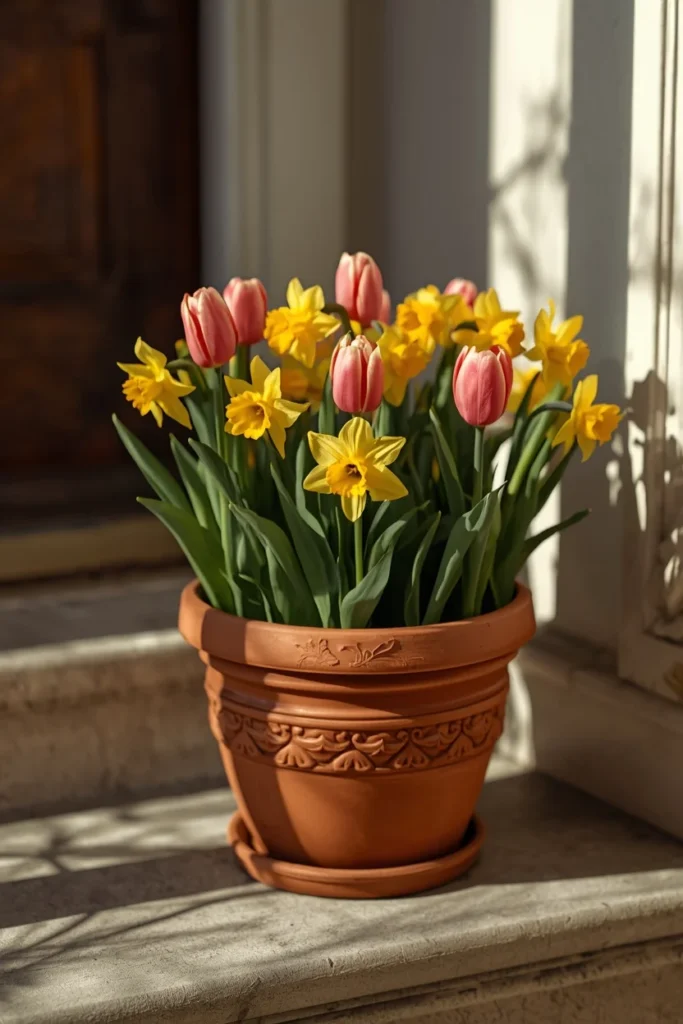
18. Seasonal Bulb Pots
Pots of tulips, daffodils, or hyacinths planted in the fall and left to emerge in early spring give a porch a genuine, unmistakable seasonal moment before summer annuals are even available. Layer bulbs at different depths within the same pot — a technique sometimes called bulb lasagna — for a longer, staggered bloom period rather than everything flowering and fading at once. Because bulbs are largely hands-off once planted, this is one of the lowest-maintenance ways to guarantee color on your porch during the earliest, coldest weeks of the growing season. Swap the pot’s contents for summer annuals once the bulb display finishes for the year.
19. Faux Flowers for Low-Maintenance Color
For anyone who struggles to keep plants alive, high-quality faux flowers and greenery nestled into a wood box or ceramic pot deliver reliable color without any watering or replanting. Choose realistic, weather-resistant faux stems specifically designed for outdoor use, since indoor silk flowers will fade and warp quickly outside. This approach is especially useful for a shaded porch where live flowers genuinely struggle to bloom, or for a vacation home that isn’t visited often enough to maintain a live display. Mixing in one or two real plants alongside the faux stems can help the arrangement read as more natural from a distance.
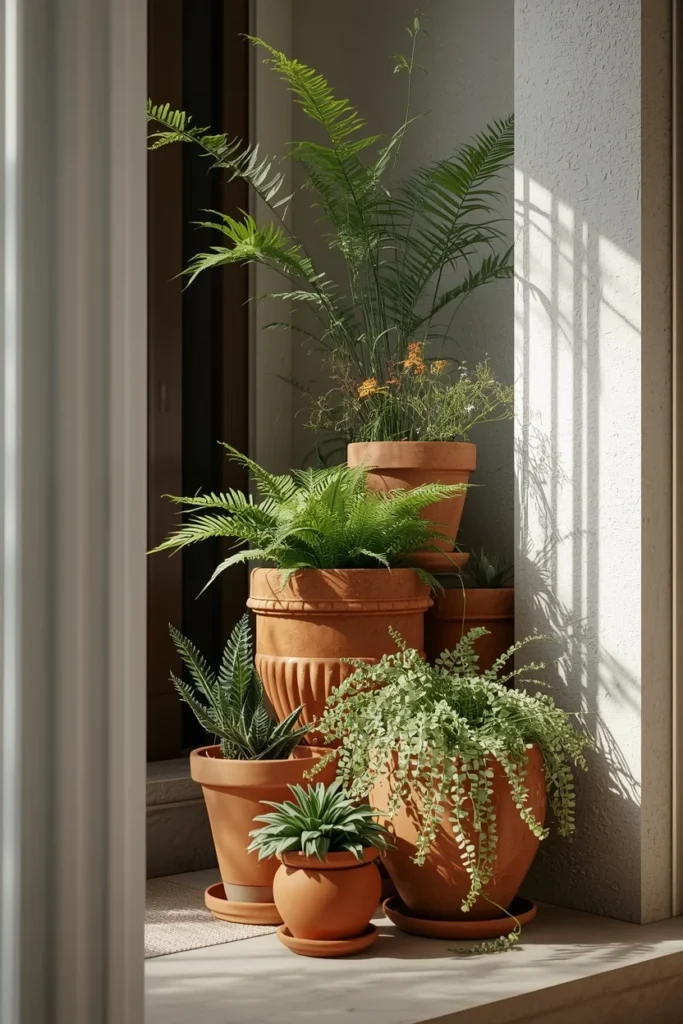
20. Grouped Clusters of Varied Pots
Instead of spacing pots evenly along a porch, try grouping several different sizes together in one corner for a layered, garden-like display that feels intentional rather than staged. Vary the sizes but keep the material and tone consistent — clay pots, soft green tones, small blooms — so the cluster reads as one connected group even with varied heights. This technique turns an unused porch corner into a genuine focal point, almost like an extension of an interior shelf styled with plants instead of books. Clustering also makes watering and maintenance easier, since everything that needs attention lives in one spot rather than scattered across the whole porch.
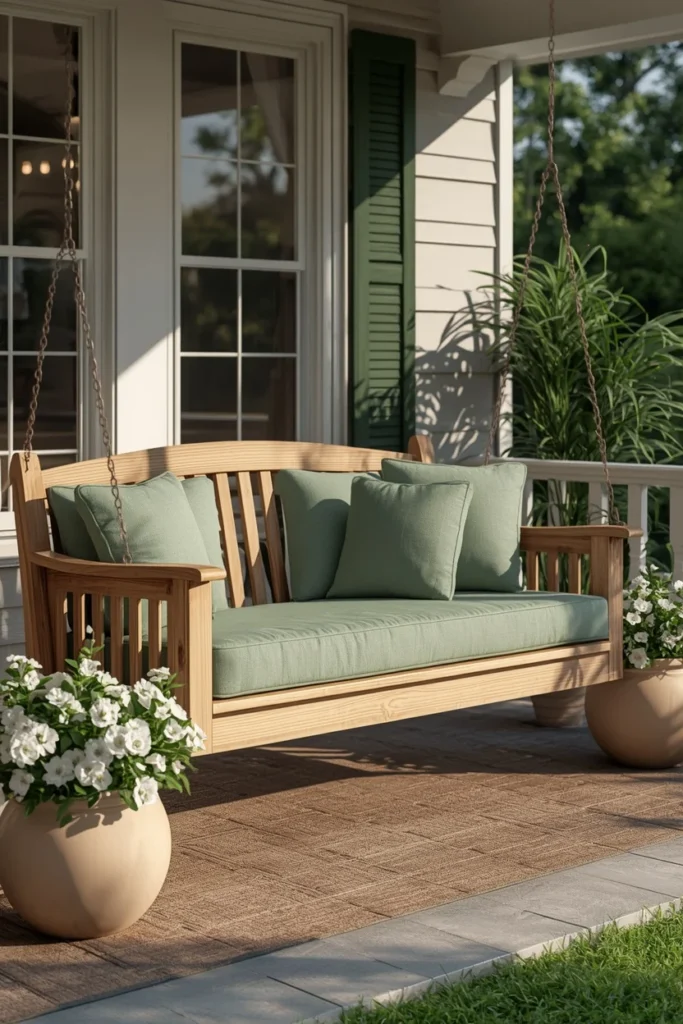
21. A Floral-Styled Porch Swing or Bench
Pairing a porch swing or bench with flowering planters positioned close by turns a simple seating spot into a defined, garden-like outdoor room. Position low, rounded planters near the seating rather than scattered across the whole porch, so the flowers visually anchor the space instead of competing with it. Choose cushion colors that echo the bloom colors in the nearby pots, tying the whole seating area together as one composition. This idea works especially well because it gives the flowers a clear purpose beyond decoration — they’re framing a space people will actually use, not just walk past.
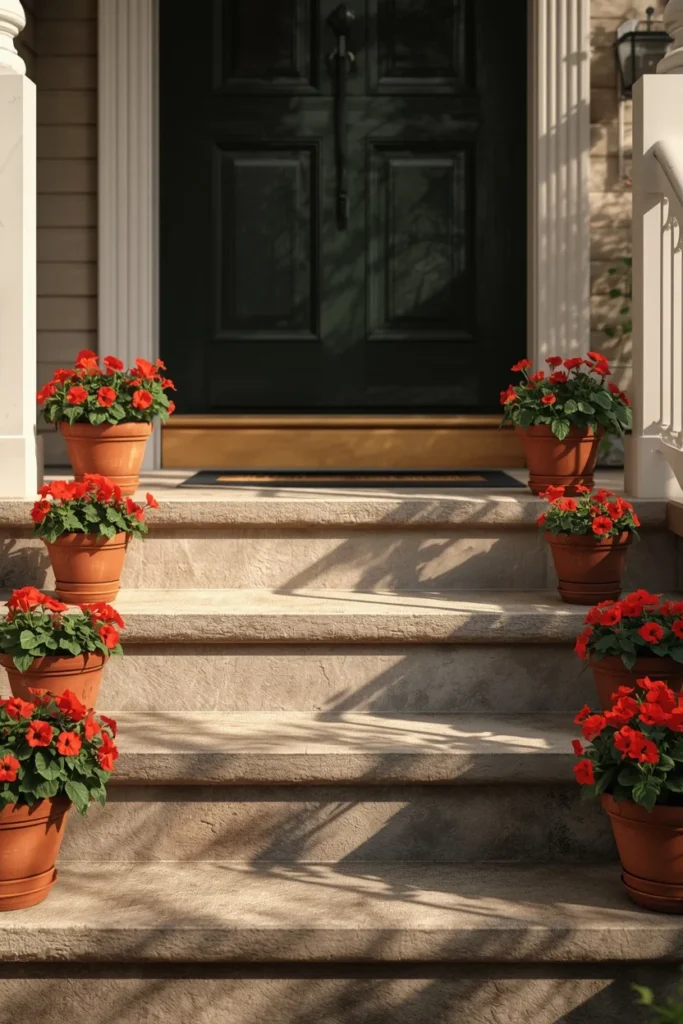
22. Flower-Lined Steps
Lining porch steps with a row of smaller potted flowers on one or both sides creates a clear, welcoming path from the walkway to the front door. Keep the pots low enough that they don’t block foot traffic or create a tripping hazard, and choose a single repeated plant variety so the line reads as one continuous gesture rather than a scattered assortment. This idea works particularly well for homes with a longer front walk or a multi-step entrance, since it gives the eye a reason to travel the full length of the approach instead of jumping straight to the door. Even three or four small matching pots along the steps make a noticeable difference in how finished the entrance feels.
Styling Tips
Stick to one or two dominant flower colors across the whole porch so the individual containers read as one composition rather than a patchwork of unrelated choices. Vary height deliberately, mixing tall statement plants with low, trailing ones, since a single flat height across every pot tends to photograph as boring even with great flowers. Let evergreen structure like boxwood carry the design through the off-season so the porch still looks intentional when nothing is in bloom.
Practical Implementation Ideas
Start with your largest, most permanent containers — urns, tall planters, or anything anchoring the main entrance — before filling in smaller accent pots and hanging baskets. Group plants with similar watering and light needs together so maintenance stays manageable rather than requiring a different routine for every single pot. Test your color and container choices with one or two pots before committing to a full symmetrical setup across the whole porch.
Common Mistakes to Avoid
Choosing containers too small for the plants inside is one of the most common mistakes, since undersized pots dry out fast and can look stressed within a few weeks. Mixing too many unrelated flower colors without any unifying element tends to read as chaotic rather than lush. Skipping evergreen structure entirely and relying on flowers alone often leaves a porch looking bare and temporary once blooms fade or between plantings.
Small-Space Alternatives
A single well-chosen hanging basket or one statement urn can deliver as much visual impact as a full row of ground-level pots on a porch with limited floor space. Railing planter boxes and window boxes add color without taking up any walking area at all. A tiered plant stand condenses several plants into the same footprint as one large pot, which is especially useful for narrow entries or apartment balconies.
Budget-Friendly Alternatives
Vintage buckets, crates, and thrifted containers cost far less than new designer planters and add more character in the process. Bulb pots planted from dry bulbs in fall are significantly cheaper than a full flat of spring annuals. A single monochromatic color scheme lets you buy fewer plant varieties in bulk rather than a small amount of many different, pricier options.
Pro Styling Recommendations
Repeat one plant variety or color across multiple containers so a mix of pot sizes and shapes still reads as a cohesive collection. Choose glazed ceramic, fiberglass, or resin containers over basic terracotta if your climate sees hard freezes, since they hold up far better to repeated temperature swings. Refresh spent blooms promptly, since a few faded flowers left in place can make an otherwise well-designed container look neglected.
FAQs
Conclusion
A blooming front porch usually comes down to a few good decisions repeated consistently — one strong color story, containers sized generously enough to actually thrive, and some evergreen structure to hold the look together between bloom cycles. Pick two or three ideas from this list that fit your porch’s light, size, and style, and build from there. The goal isn’t to fill every inch — it’s to make the first few steps toward your door feel like a genuine invitation.