17 Back Patio Ideas That Transform Any Outdoor Space Into a Cozy Retreat
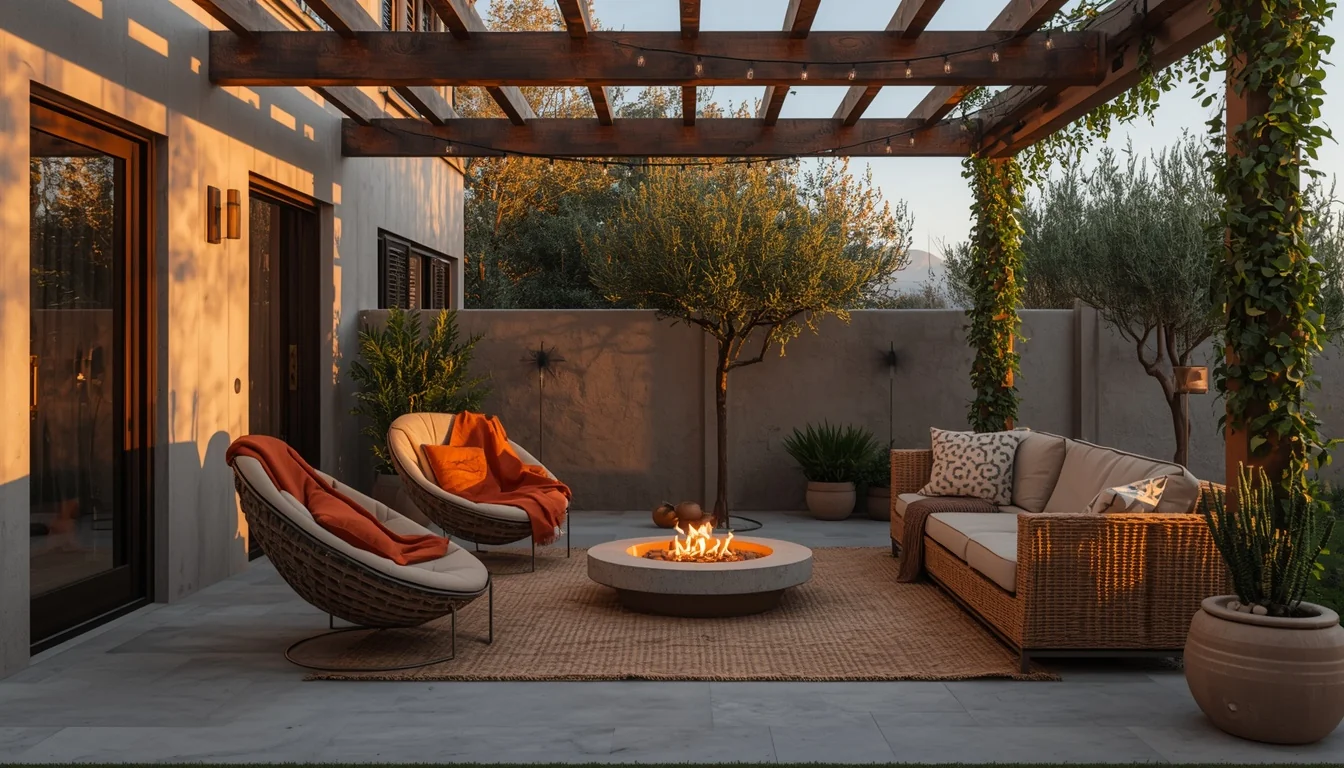
Your patio is probably the most underused square footage in your entire house. A concrete slab, one plastic chair, maybe a grill nobody moves. Meanwhile, the living room gets all the attention.
Here’s the thing — a back patio doesn’t need a big budget or a full construction crew to feel like somewhere you want to actually sit down. It needs a plan. The right chair in the right spot, a light source that isn’t a bare porch bulb, a rug that tells your feet this is a room and not just leftover concrete.
This list covers 17 back patio ideas built around real layouts, real materials, and real budgets — from a single cozy corner to a full outdoor living room with a fire pit at the center. Small yard, sprawling backyard, apartment balcony masquerading as a patio — there’s a version here that fits.
Table of Contents
1. Sculptural Cocoon Lounge Corner
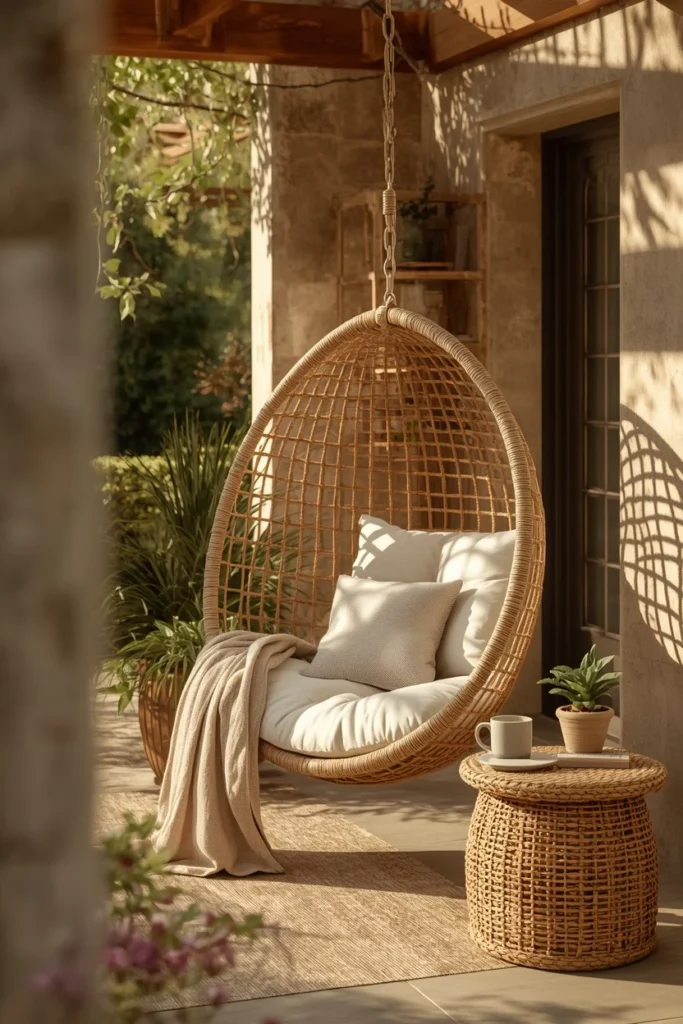
A single oversized cocoon-shaped chair does more for a patio’s mood than an entire furniture set. Look for a suspended or low-slung frame in matte white or wicker, paired with deep cushions in a warm neutral like flax or hazel instead of the cool gray that dominated outdoor furniture for the last decade. Anchor it with a small round side table and a floor lamp rated for outdoor use, so the corner has its own light source separate from the main patio lighting. This works especially well tucked against a wall or under a covered eave, where the rounded shape reads as a quiet retreat rather than another patio chair. The reason it succeeds visually is contrast — one dramatic, curved silhouette against a simpler backdrop pulls the eye more than a matched set ever could.
2. Scattered Boho Floor Cushion Lounge
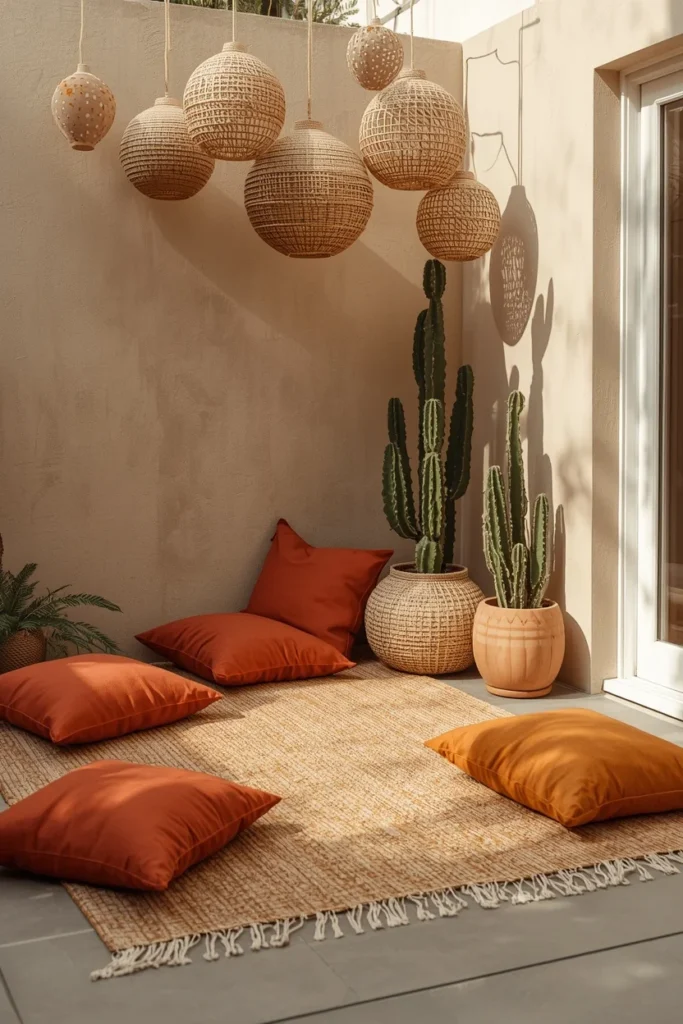
Skip the matched patio set entirely and build a lounge area out of floor cushions, low stools, and layered rugs instead. Overlap two rugs at a slight angle rather than centering one perfectly, and let the cushions sit where the shade actually falls rather than in a rigid grid. Use pots with visible hand-thrown texture, hang a cluster of small lanterns at varying heights, and mix in one low wooden stool as a drink table. The intentional imperfection is the point here — every piece should look placed by someone who actually uses the space, not staged for a single photo. This layout costs less than a furniture set and works particularly well on a small concrete pad where traditional sofas would feel oversized.
3. Spanish Revival Arched Pergola
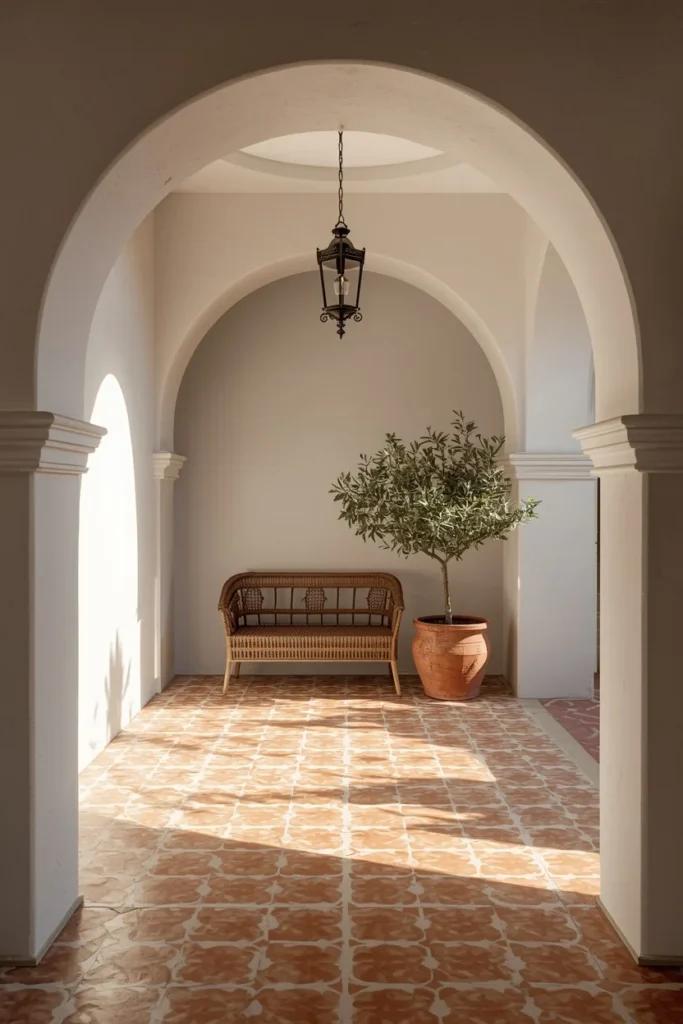
An arched pergola opening, paired with textured stucco walls and patterned cement tile flooring, brings old-world warmth to a patio that has no traditional architectural roots at all. Choose a warm white or sand-toned stucco finish for the walls, then let the tile pattern do the visual work near the seating zone while keeping furniture upholstery solid and neutral. Wrought iron accents — a lantern, a small side table, a plant stand — tie the arches together without feeling like a costume theme. This idea works best in climates with strong sun, since the arch shape casts a moving shadow pattern across the floor throughout the day that most straight-beam pergolas can’t replicate. It also photographs beautifully from underneath, looking straight up through the curve.
4. Oxblood Accent Wall Nook
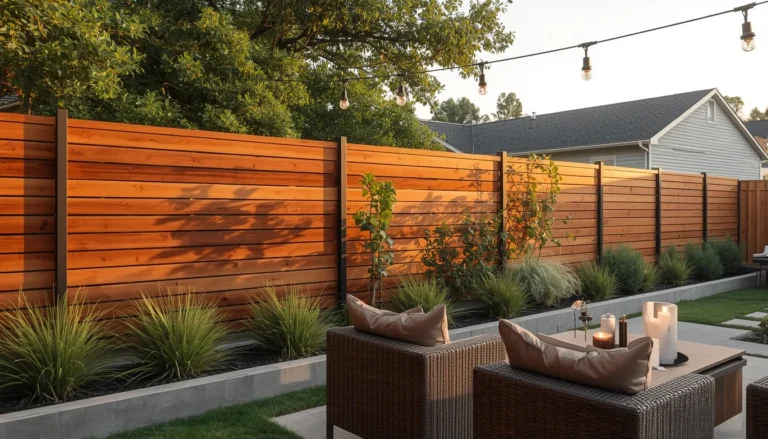
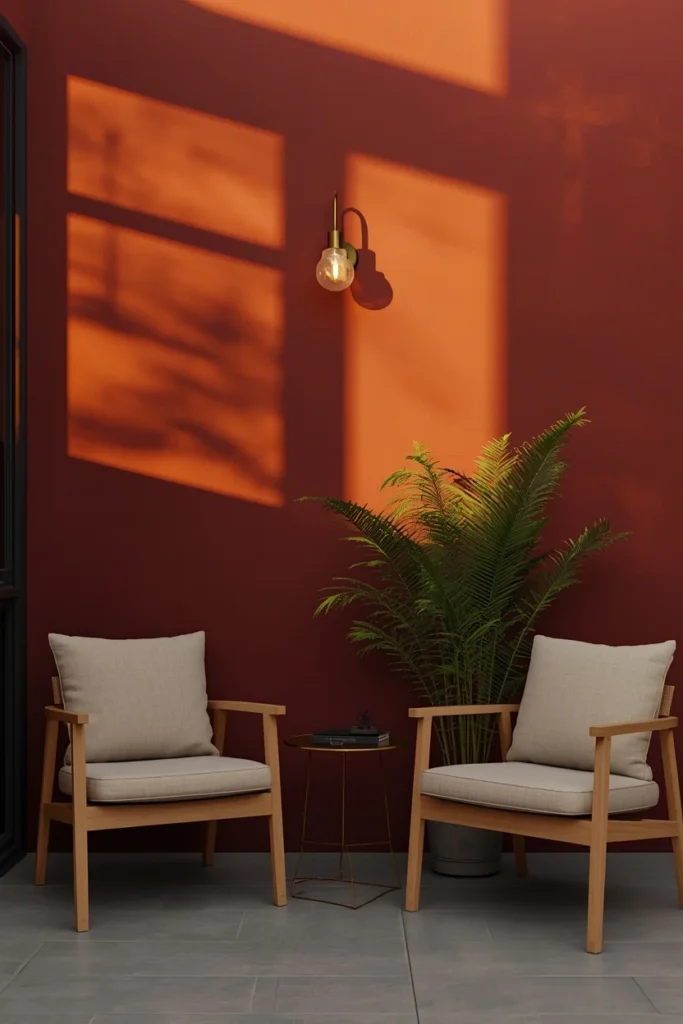
A single painted wall in a saturated tone like oxblood or deep olive turns a flat patio backdrop into a real design moment, especially behind a small seating nook. Keep the furniture simple — two chairs, a small table, natural wood or rattan tones — so the wall color carries the drama without competing textiles fighting for attention. This works on stucco, cinder block, or even a plain fence panel with exterior-grade paint, making it one of the more affordable ways to add color that doesn’t wash out in bright sun the way pastels tend to. Add one brass or aged-metal light fixture against the dark wall for contrast, since matte black hardware tends to disappear into the deep color instead of standing out. Small yards benefit the most here, since a bold wall makes a modest space feel designed rather than under-furnished.
You may also like 16 Craftsman Exterior Ideas That Are Classic, Detailed & Endlessly Beautiful
5. Circular Fire Pit With Curved Bench
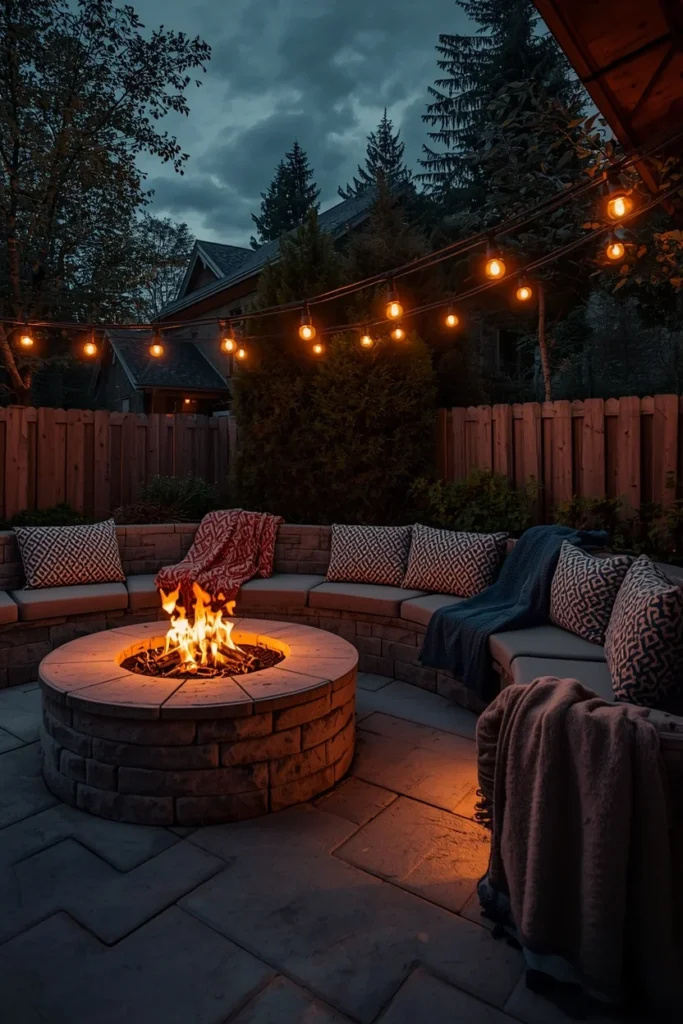
A round fire pit surrounded by a built-in curved bench turns a patio into the kind of spot people naturally gather around instead of scatter away from. The curve does real functional work — it keeps every seat facing the fire and encourages conversation in a way that straight-line furniture arrangements don’t. Use a stone or concrete pit ring that matches the patio flooring material, then soften the built-in bench with weatherproof cushions in a pattern that hides ash and soot marks better than solid pale fabric. Add a low stone or metal side table within reach of at least two seats for drinks and blankets. This layout is worth the investment for anyone who uses their patio in cooler months, since a fire pit extends outdoor season by weeks on either end.
6. Indoor-Outdoor Living Room Continuity
Matching your patio furniture scale and proportion to your actual living room, right down to seat depth and table height, makes the transition through the back door feel like walking into another room instead of stepping outside. Choose an oversized sectional or sofa upholstered in weatherproof fabric that mimics the texture of your indoor pieces, then add a stone or concrete coffee table for the same visual weight as an interior piece. Repeat a flooring material or rug pattern that echoes what’s just inside the door, and keep light fixtures at a similar warmth and height. The goal is fewer, larger furniture pieces rather than several small ones, since bulk furniture reads as intentional while scattered small pieces read as temporary. This idea suits homeowners planning a longer-term patio investment rather than a seasonal refresh.
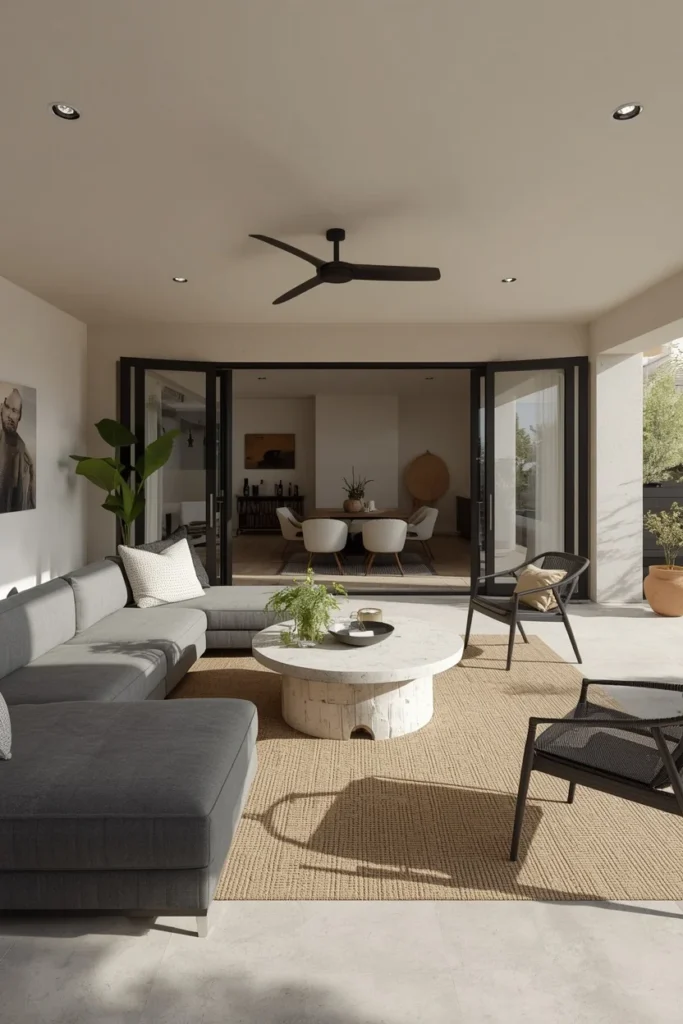
7. Rustic Farmhouse Dining Patio
A solid wood farmhouse table with deep-seated chairs and linen cushions turns a back patio into the default spot for every summer meal. Choose a table wide enough for the kind of shared serving dishes farmhouse dining calls for, then pair it with woven rattan chairs rather than a matching wood set, which keeps the look from feeling like an indoor dining room dragged outside. Stone or brick flooring underneath reinforces the natural material palette, and a row of lanterns down the table’s centerline does double duty as both light source and centerpiece. Vintage-style planters at each corner of the table soften the hard edges of the wood and stone. This layout earns its keep on nights when a proper dinner outside feels better than one more meal at the kitchen table.
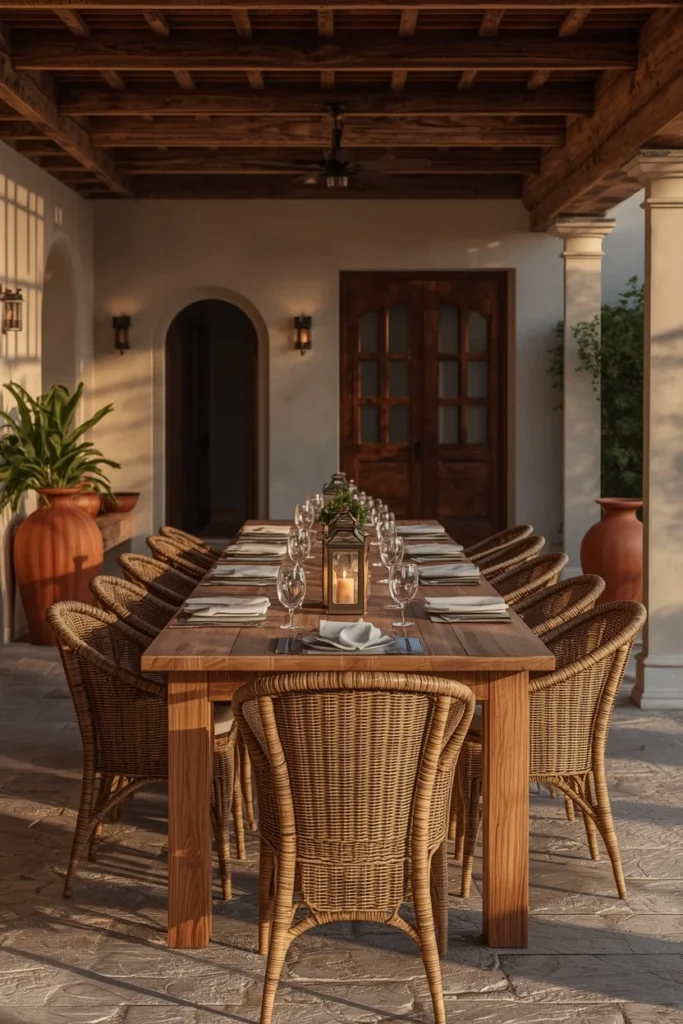
8. Coastal Blue and White Pergola Lounge
A blue and white color scheme under a pergola brings a relaxed coastal mood without requiring beach proximity of any kind. Use navy or soft ocean-blue cushions against white-painted furniture frames, then let overhead lantern-style lights and hanging wicker pendants soften the structure once evening arrives. Woven textures — a striped outdoor rug, a rattan side table, a wicker pendant light — keep the palette from feeling flat or overly crisp. Potted hydrangeas or hyacinth bean vines climbing the pergola posts complete the look with natural blue and green tones that echo the textiles. This idea works particularly well for patios that get strong afternoon sun, since the white surfaces reflect heat rather than absorbing it the way darker palettes do.
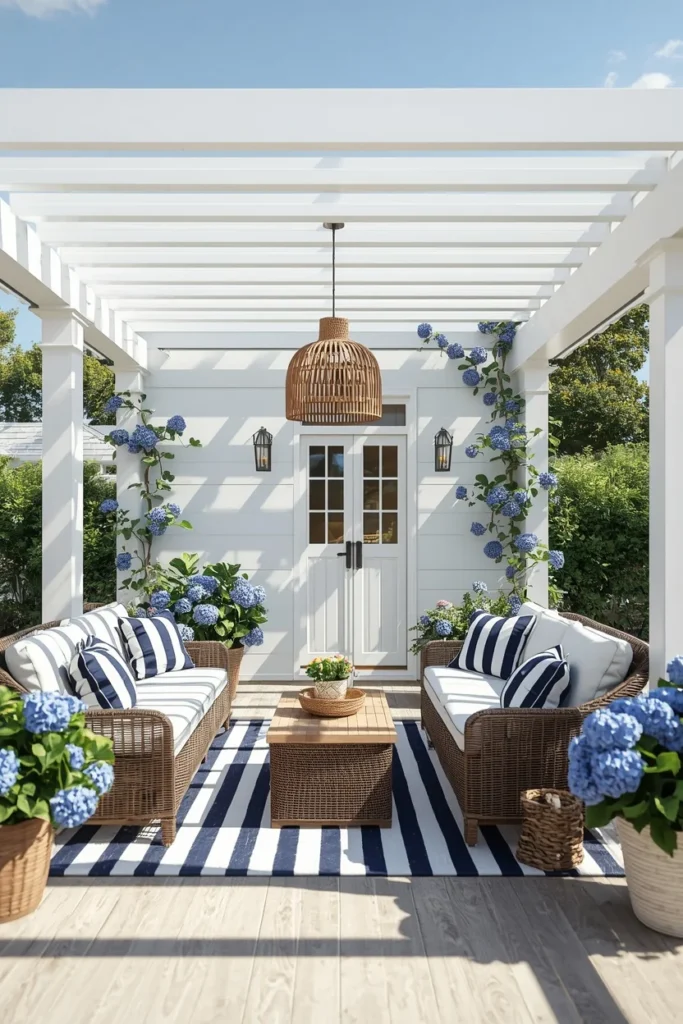
9. Black and White Courtyard Patio
A tight black and white palette keeps a small courtyard patio feeling calm and deliberate instead of cluttered, while a few tropical plants stop it from reading as cold. Paint or leave one wall crisp white, add black-framed furniture or a black pergola structure, and let framed artwork or a mirror lean against the white surface for a curated, gallery-like feel. Large-leaf tropical plants like a fiddle leaf fig or bird of paradise in simple black or terracotta pots bring the only real color into the space. Keep textiles limited to white, cream, and charcoal so nothing competes with the plants or the artwork. This approach suits small urban courtyards and narrow side patios where a busier palette would feel overwhelming in a tight footprint.
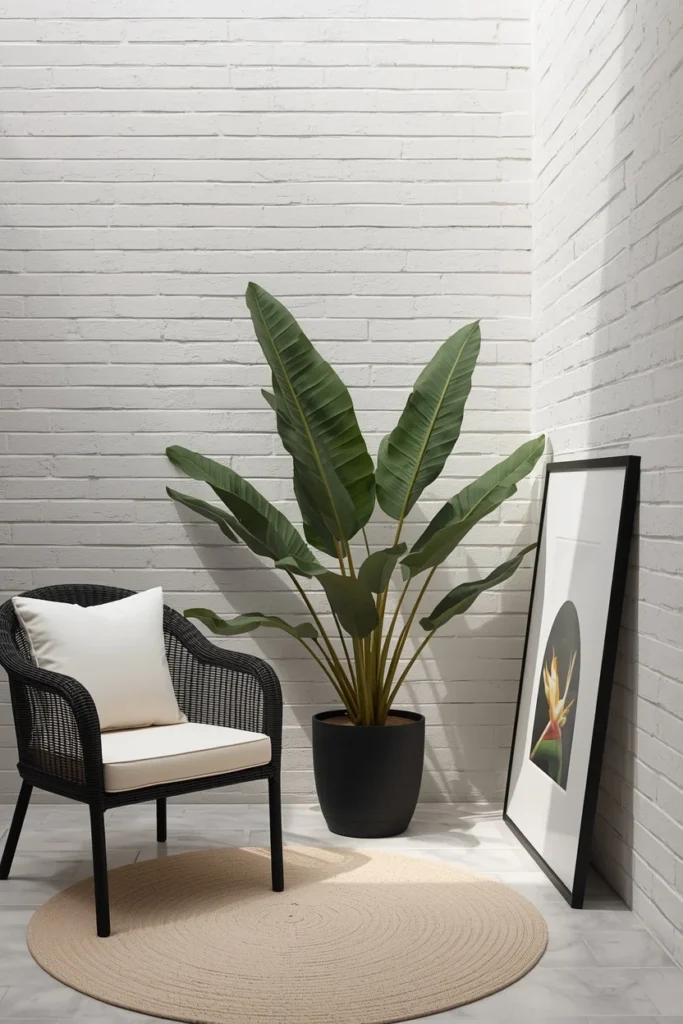
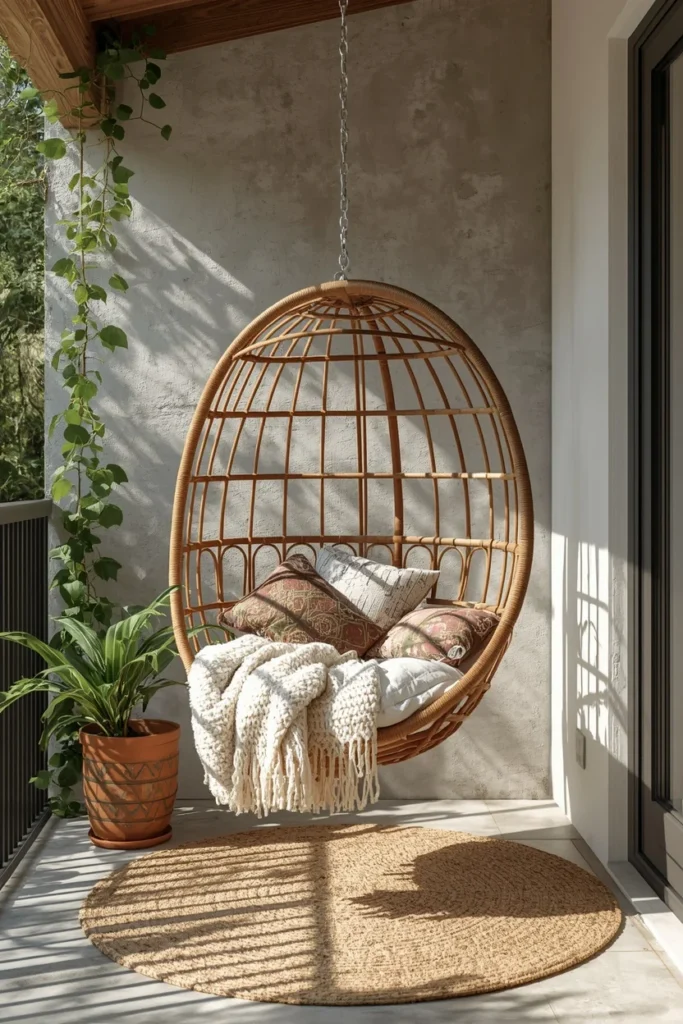
10. Hanging Wicker Pendant Chair Corner
A single hanging chair claims a corner of any patio as a distinct little zone without needing extra square footage. Suspend it from a sturdy pergola beam or a freestanding metal stand, then layer in a sheepskin or chunky knit throw and two mismatched cushions for texture. A round rug underneath visually separates the swing zone from the rest of the patio, even on a small footprint where walls or furniture can’t do that job. Position it to catch a breeze or a partial view rather than facing a blank wall, since the whole appeal of a hanging chair is the gentle movement. This idea consistently performs well for small-space patios and balconies because it adds personality without taking up floor space a regular chair would need.
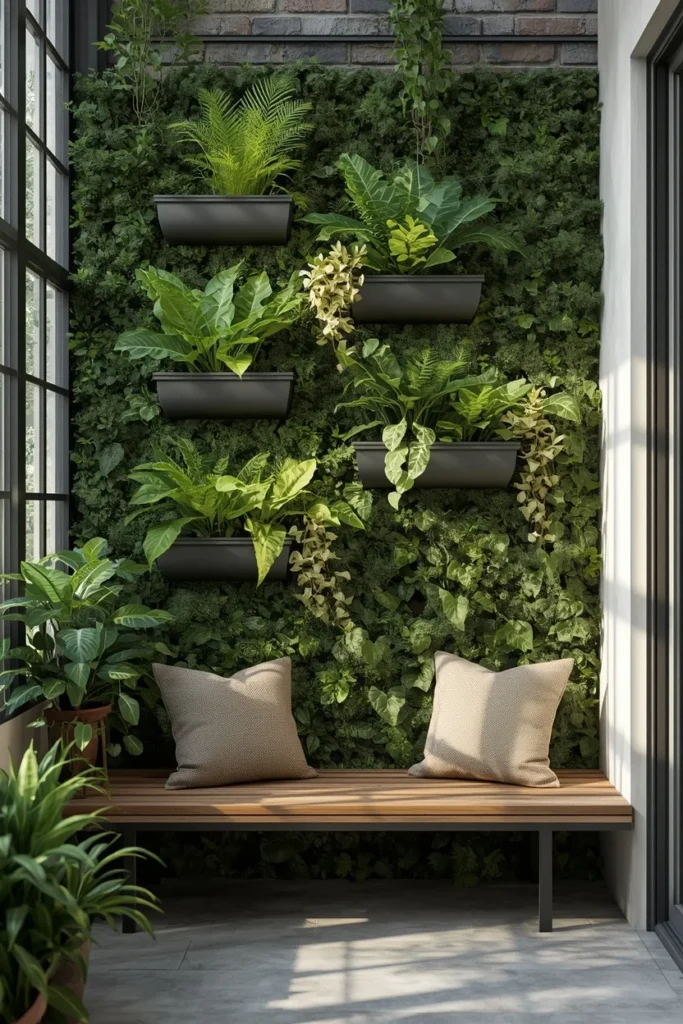
11. Living Wall Garden Patio
A vertical garden along one patio wall turns unused vertical space into the main visual feature, especially useful when floor space is limited. Install a modular planting system or simple wall-mounted planters in staggered rows, then mix trailing plants like pothos with structured ones like ferns for varied height and movement. A basic drip irrigation line keeps maintenance low, which matters since a living wall only stays impressive if it’s actually kept alive. Pair the wall with simple, low-profile seating so the greenery stays the focal point rather than competing with elaborate furniture. This idea does real functional work too, since dense greenery moderates temperature and adds a layer of privacy screening that a bare fence never could.
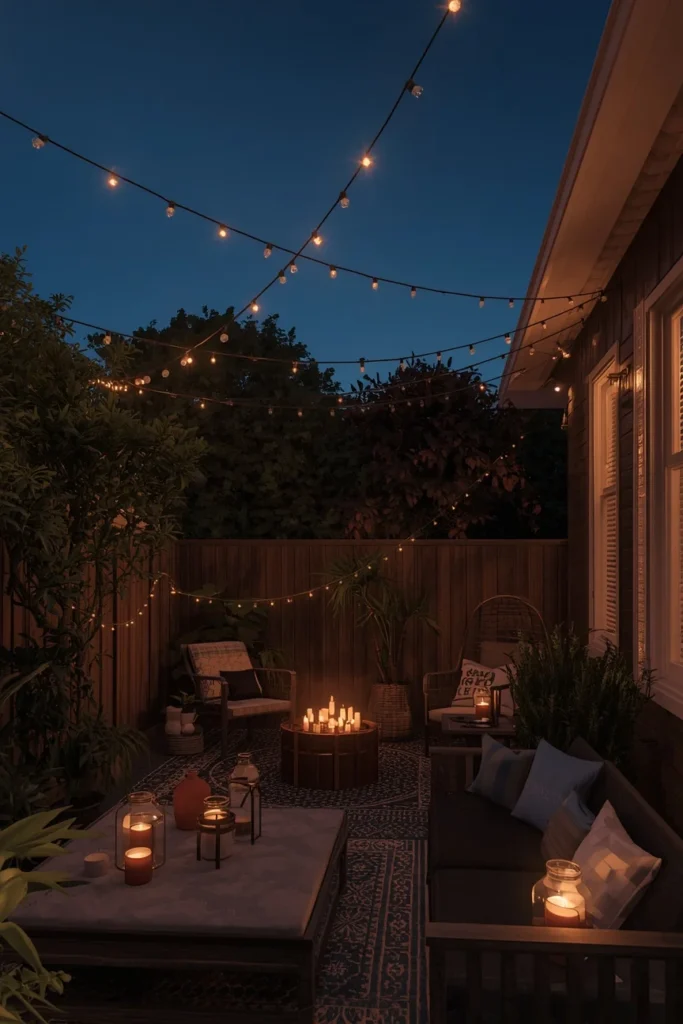
12. Layered String Light and Lantern Patio
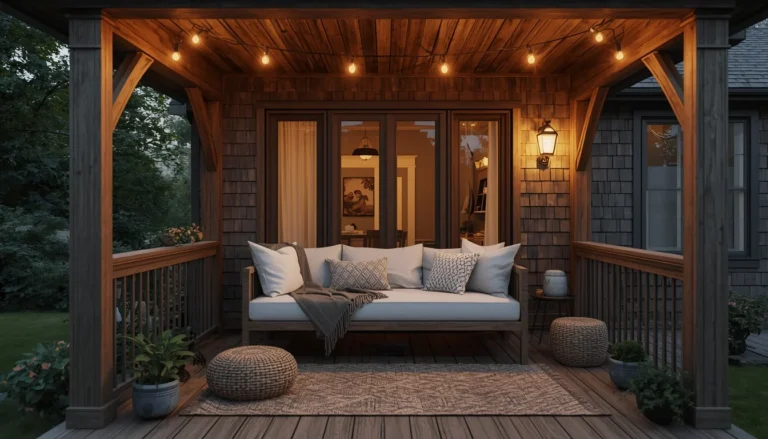
Combining string lights strung overhead with lower lanterns and terracotta candle accents creates the kind of layered lighting that makes a patio feel finished after sunset instead of dark and empty. Run string lights in a criss-cross pattern across the widest span of the patio, then add battery or oil lanterns at seating height along the table or side tables, since overhead light alone tends to flatten everything below it. Terracotta pots holding candles bring warmth at ground level and cost very little to add. The layering matters more than any single fixture — light at three different heights (overhead, table, ground) reads as intentional ambiance rather than a single porch bulb doing all the work. This idea works on virtually any patio size or budget and remains one of the highest-impact, lowest-cost upgrades available.
You may also like 18 Back Porch Ideas That Make Outdoor Living Feel Like Pure Heaven
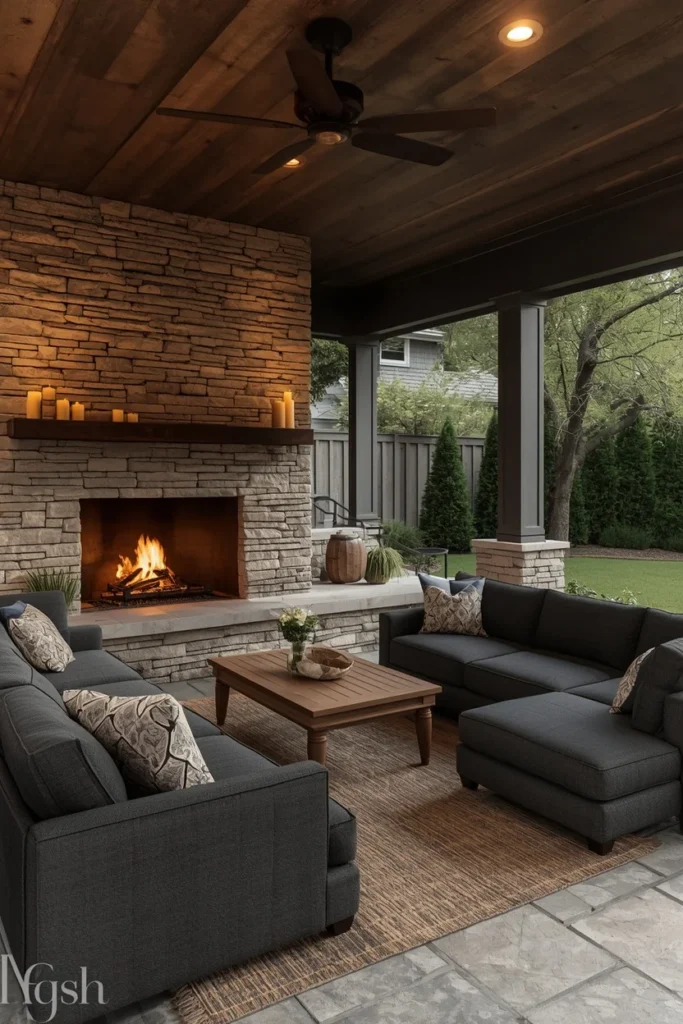
13. Stone Fireplace Covered Patio
A stone fireplace built into the patio wall gives the space a genuine architectural anchor the way a fire pit alone can’t, since it also visually finishes an otherwise blank vertical surface. Stack seating in a loose U-shape facing the fireplace rather than lining it up straight, which keeps sightlines open toward the flame from every seat. Deep-cushioned sofas in weatherproof fabric and a low coffee table complete the living-room feel, while a mantel-style ledge above the firebox holds candles or simple decor. This idea suits covered patios best, since the roof protects the masonry and keeps the fireplace usable in more weather conditions. It works especially well for households that already use their patio heavily through fall and early spring, since the fireplace becomes the reason to stay outside longer.
14. Screened-In Cozy Lounge
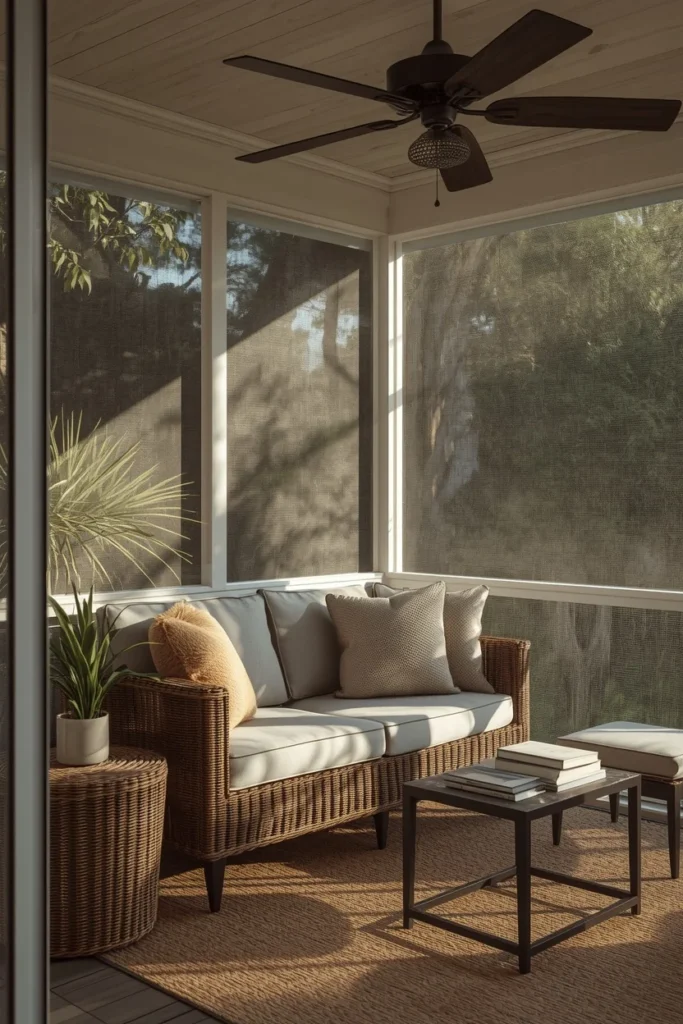
A screened enclosure solves the one problem that keeps most patios unused on the best evenings — bugs — while still keeping the space feeling open and connected to the yard. Fine mesh panels on a simple wood or aluminum frame let breeze and light through without the visual weight of full glass walls. Furnish it like an actual living room, since a screened patio tends to get used more consistently than an open one and deserves comfortable, durable seating rather than folding chairs. Add a ceiling fan if the structure allows for it, since airflow matters more in an enclosed space than an open patio where natural breeze already circulates. This idea earns its cost back quickly for anyone in a climate with a serious mosquito season, since it turns three or four unusable months into fully usable ones.
15. Pergola Outdoor Kitchen and Bar
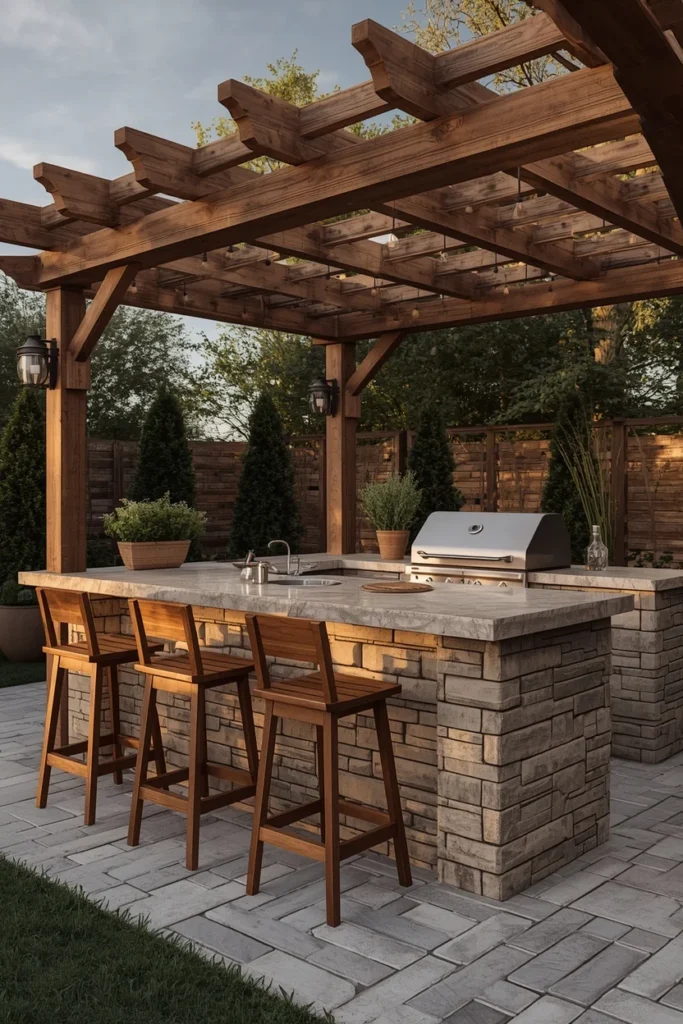
Adding even a compact outdoor kitchen or bar cart under a pergola shifts a patio from a place you visit to a place you actually cook and host in. A built-in grill station with a small counter and bar stools works for larger budgets, while a well-styled bar cart with a mini fridge accomplishes a similar social function on a fraction of the cost. Position the kitchen or bar zone at the edge of the seating area rather than the center, so cooking or mixing drinks doesn’t block the main lounge space. Stone or tile counter surfaces hold up better to weather than wood, and open shelving underneath keeps glassware and tools visible and accessible. This idea consistently increases how often a patio gets used for actual gatherings rather than solo relaxing, since it gives guests a reason to gather around an activity.
16. Renter-Friendly Balcony Micro-Patio
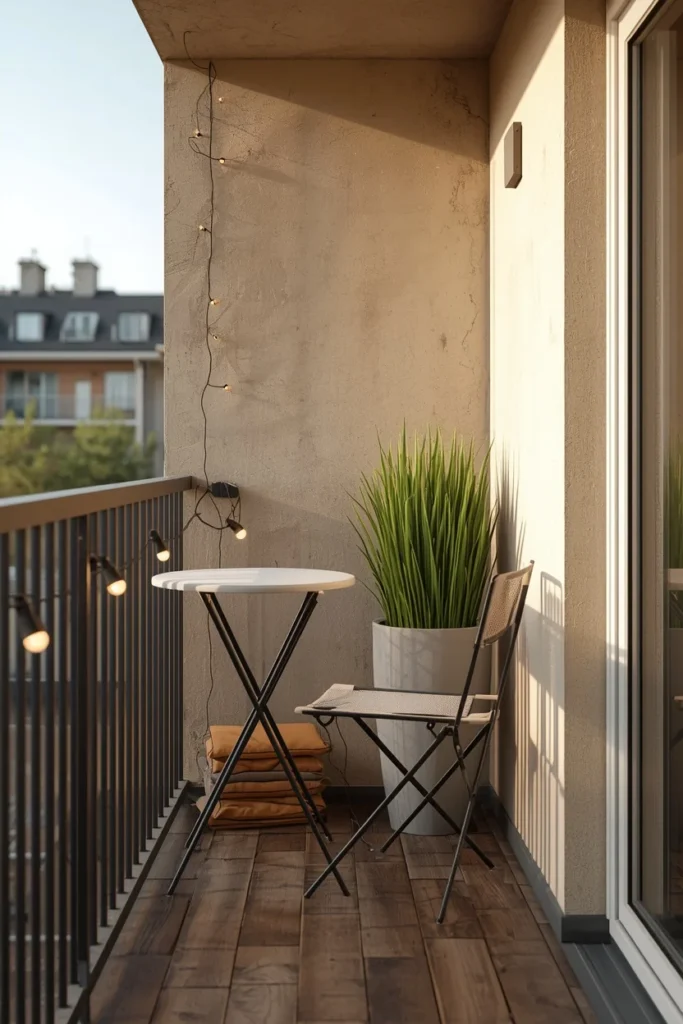
A balcony or tiny concrete patio can hold its own against a full backyard setup with the right compact, non-permanent choices. A folding bistro table and two chairs, a stack of weatherproof floor cushions, and a single tall planter of ornamental grass go a long way in fifty square feet or less. Clip-on solar lights along the railing avoid drilling into rented structures, and a hanging plastic-lined planter box adds greenery without floor space. Choose furniture that folds flat for storage during off-season months, since micro-patios rarely have room for permanent seating that sits unused half the year. This idea directly answers what a growing number of renters are searching for — small, doable outdoor upgrades that don’t require landlord approval or a big upfront investment.
You may also like 18 Backyard Gazebo Ideas That Create the Most Beautiful Outdoor Escape
17. Warm Minimalism Curved Seating Patio
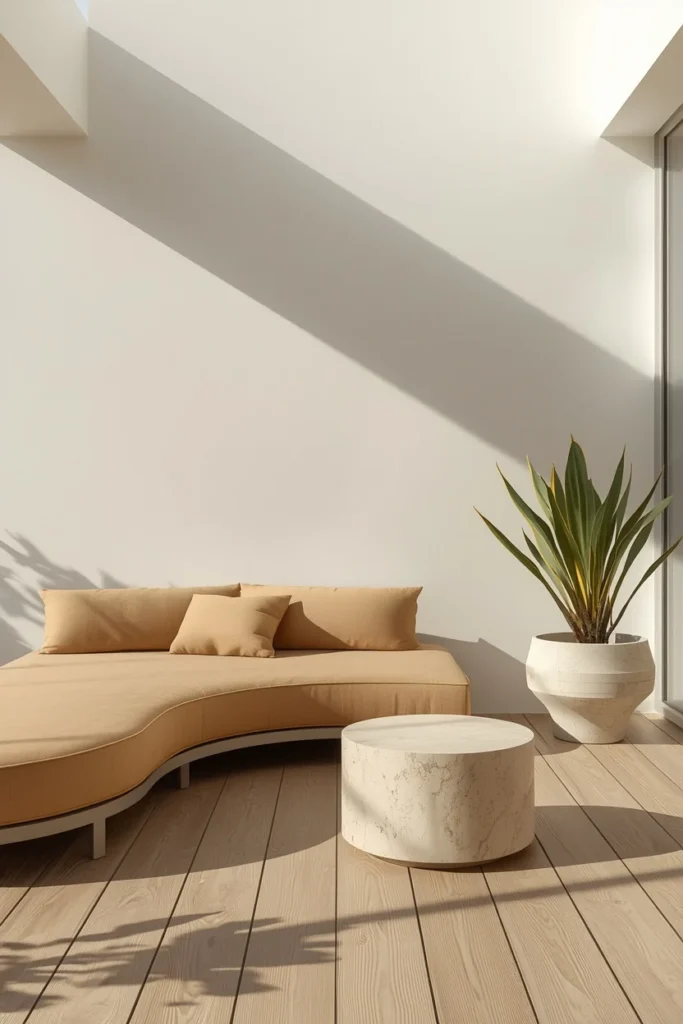
A patio built around a few large, softly curved pieces in warm neutral tones creates calm without feeling empty or unfinished. Choose a low sectional or daybed with a rounded silhouette instead of sharp right angles, upholstered in sand or warm gray rather than stark white or black. A single round side table and one oversized planter, rather than several small decorative pieces, keep the space feeling deliberate rather than sparse. Let natural materials — wood, woven cane, unglazed ceramic — carry the texture instead of patterned textiles, since minimalism depends on restraint in pattern more than restraint in comfort. This layout suits homeowners who want a patio that photographs well year-round without needing seasonal styling changes to stay interesting.
Styling Tips
Layer at least three textures in every seating zone — one woven, one soft textile, one hard material like stone or ceramic — so the space reads as designed rather than furnished from a single catalog page. Keep lighting at three different heights (overhead, table, and ground level) instead of relying on one fixture. Choose two or three colors maximum for cushions and textiles, then let plants and natural wood tones fill in the rest of the palette. Odd-numbered groupings of plants and decor objects consistently look more intentional than even pairs.
Practical Implementation Ideas
Start with flooring and shade before furniture, since those two elements are the most expensive to change later and every other decision depends on them. Measure your seating zone before ordering furniture — most patio sets are sized for spaces larger than what people actually have available. Run electrical for lighting and any heating elements before pouring or laying permanent flooring, since retrofitting wiring afterward is far more disruptive. Buy weatherproof cushion covers separately from the cushion inserts, since covers wear out and fade well before the foam underneath does.
Common Mistakes to Avoid
Placing furniture directly against every wall, leaving a dead, unused zone in the center of the patio. Choosing furniture sized for a showroom photo rather than measured against the actual space. Relying on a single overhead light source, which flattens the whole area after dark instead of creating warmth. Skipping shade planning entirely, which leaves an otherwise nice setup unusable during peak sun hours.
Small-Space Alternatives
A hanging chair or a single cocoon-style seat does more for a tight footprint than a matched two-piece set. Vertical living walls and railing-mounted planters add greenery without consuming any floor space at all. Folding or stackable furniture lets a small patio serve double duty as storage-friendly when it’s not in use. A round rug under a single chair defines a “zone” even when there’s no room for a full furniture arrangement.
Budget-Friendly Alternatives
String lights and lanterns remain the highest-impact, lowest-cost upgrade available for any patio size. Thrifted or upcycled furniture, refreshed with new weatherproof cushions, holds up visually against new furniture at a fraction of the price. Gravel or repurposed pavers cost significantly less than poured concrete or natural stone while still giving a finished, intentional floor surface. Painting one accent wall in an exterior-grade color transforms the mood of a plain patio for the cost of a single can of paint.
Pro Styling Recommendations
Match furniture scale to your indoor rooms if you want the patio to feel like a genuine extension of the house rather than an afterthought. Choose warmer aluminum or wood-toned frames over cool gray metal, since warm tones photograph and age better in direct sun. Invest first in the pieces you’ll touch most — the seat cushion and the lighting — before spending on decorative extras. Repeat one material (stone, wood, or a specific plant) at least three times across the space to create visual rhythm instead of scattered, unrelated choices.
FAQs
Conclusion
None of these seventeen ideas require gutting a backyard and starting over. Most start with one decision — a chair, a wall color, a string of lights — and build outward from there. Pick the version that matches the yard you actually have, not the one in the photo, and let the rest come together over a season or two of actually using it.