22 Mid Century Modern Kitchen Designs That Are Timeless & Stunning
Some design styles come and go. Mid century modern just keeps quietly winning.
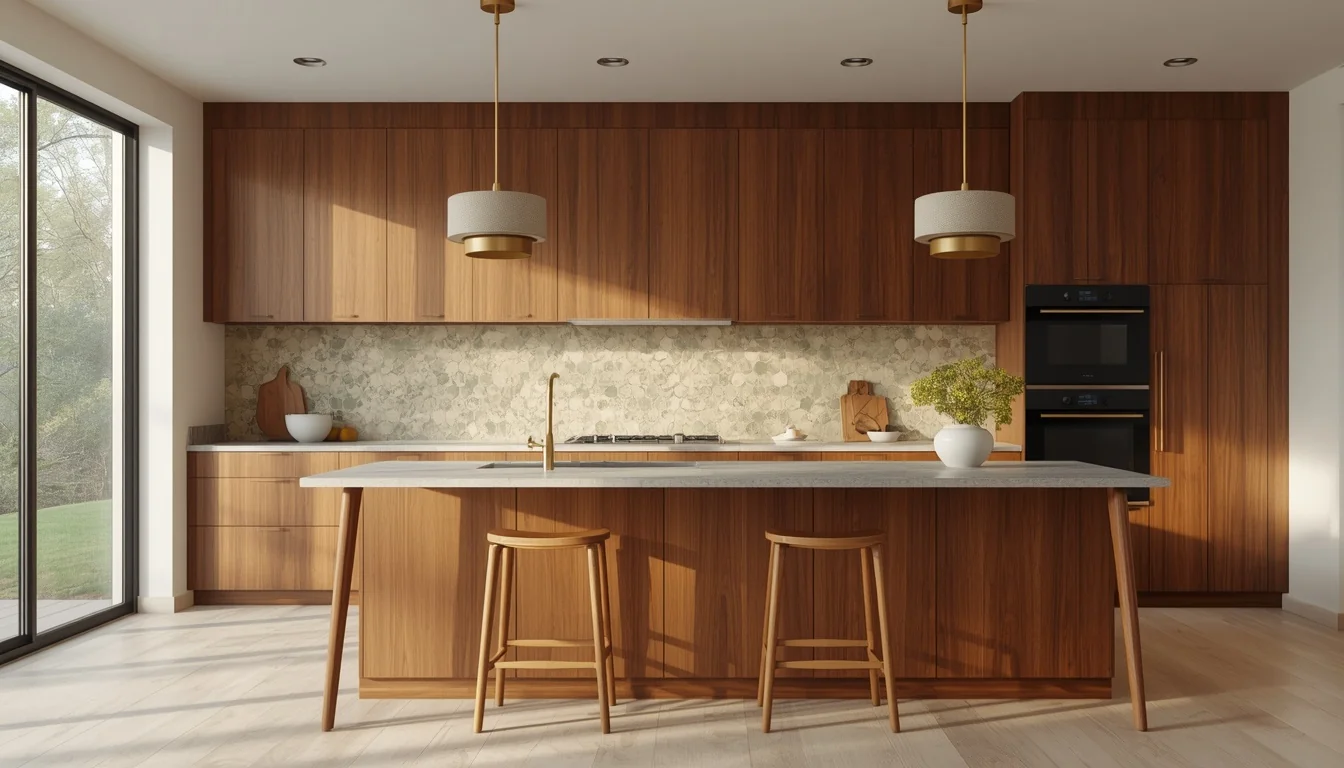
There’s a reason for that. It was never really about a specific color or a specific decade. It was about proportion, warmth, and honesty in materials, walnut left to look like walnut, a clean line left clean, a shape that earns its place instead of hiding behind ornamentation.
A mid century modern kitchen tends to feel calm the moment you walk into it. Warm wood tones instead of cold gray. A pop of color used with restraint instead of everywhere at once. Lighting treated like sculpture instead of an afterthought.
These 22 mid century modern kitchen designs range from a full walnut remodel to a few small, considered updates for a kitchen that isn’t ready for a total overhaul. Some lean retro and playful, some lean quiet and understated, but all of them share the same bones: clean lines, warm materials, and a kind of confidence that doesn’t need to shout.
Table of Contents
1. Walnut Cabinetry With Glossy Green Tile
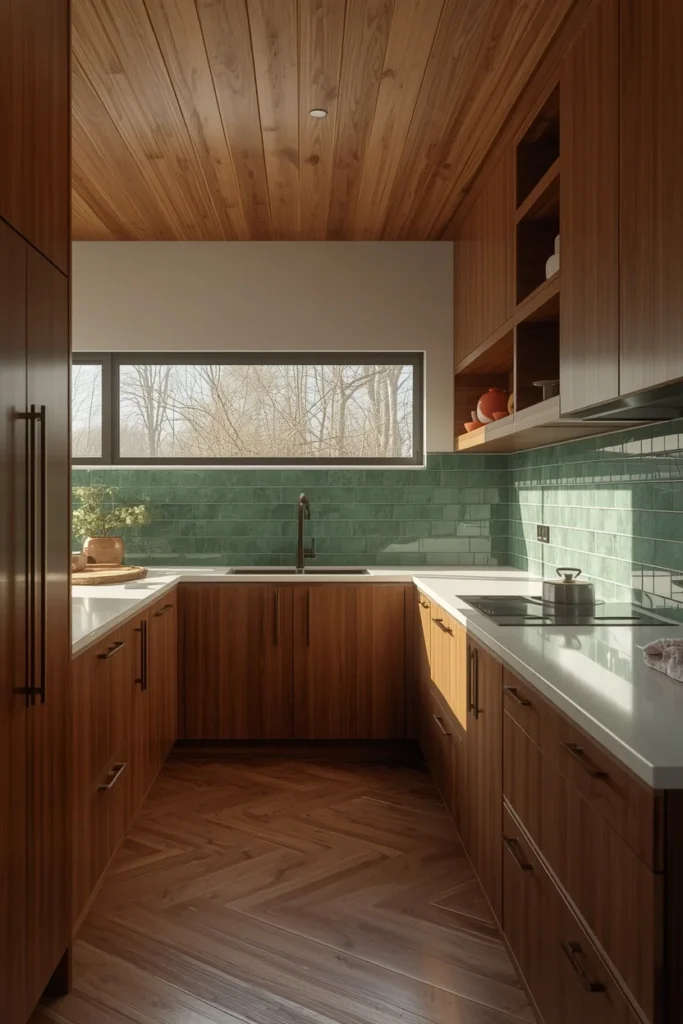
Deep walnut cabinetry paired with a glossy green tile backsplash creates one of the richest, most timeless palettes in mid century design, since the warm wood grounds the space while the tile adds just enough saturated color. A long horizontal window running the length of the backsplash keeps the room bright, which matters in a design built around darker wood tones that can otherwise feel heavy in a room without enough natural light. Adding a simple wood ceiling detail overhead ties the upper and lower parts of the room together without introducing a new material. A single floating shelf, left mostly open, gives the space somewhere to display a few ceramic pieces without disrupting the clean lines the style depends on. This combination doesn’t chase trends, which is exactly why it tends to age so well over time.
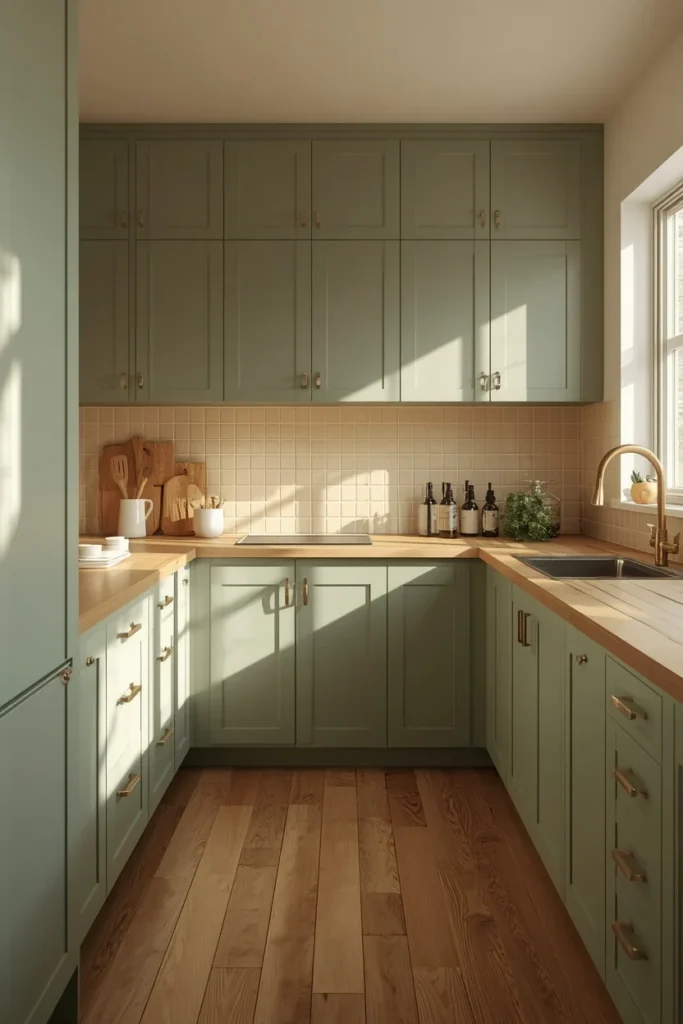
2. Sage Green Cabinets With Brass Hardware
Sage green cabinetry brings mid century color into a kitchen without the boldness of a primary hue, giving the space a calm, earthy quality that pairs naturally with the era’s love of natural materials. Brass hardware and a brass-finished faucet warm up the green further, echoing the metal tones commonly seen in original mid century fixtures. Butcher block or light wood countertops keep the palette from feeling too cool, since sage can lean chilly without a warmer material nearby to balance it. A simple tile backsplash in a cream or off-white tone lets the cabinetry stay the visual focus rather than competing with a busier pattern. This palette works especially well for anyone drawn to mid century style who wants something softer than the bolder colors typically associated with the era.
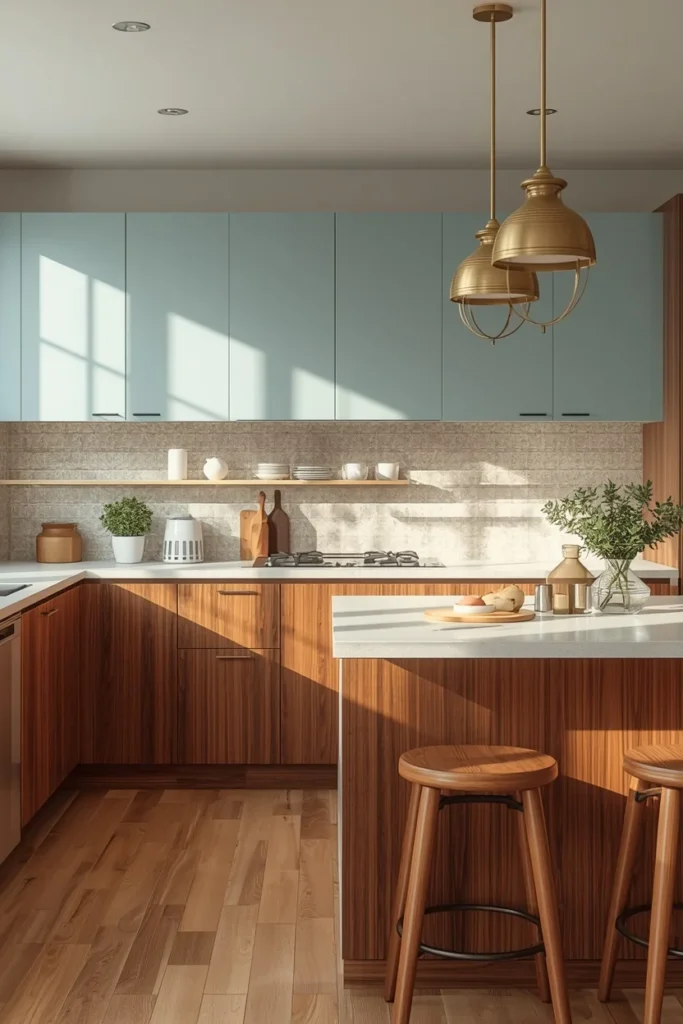
3. Two-Tone Blue and Walnut Cabinetry
A two-tone kitchen with soft blue upper cabinets and walnut lower cabinets shows off mid century design’s playful side, using color contrast the way many 1960s kitchens originally did. Layered pendant lighting over an island or peninsula reinforces the era’s aesthetic while providing genuinely useful task lighting for food prep. A geometric tile backsplash, in a pattern that echoes both the blue and the walnut tones, ties the two cabinet colors together instead of letting them feel like separate design decisions. Keeping the countertop material neutral, like a simple white or light stone, prevents the overall palette from feeling too busy despite the color contrast happening above and below. This design works particularly well for a kitchen owner who wants clear mid century character without going fully retro across every surface.
4. All-White Kitchen With Warm Wood Accents
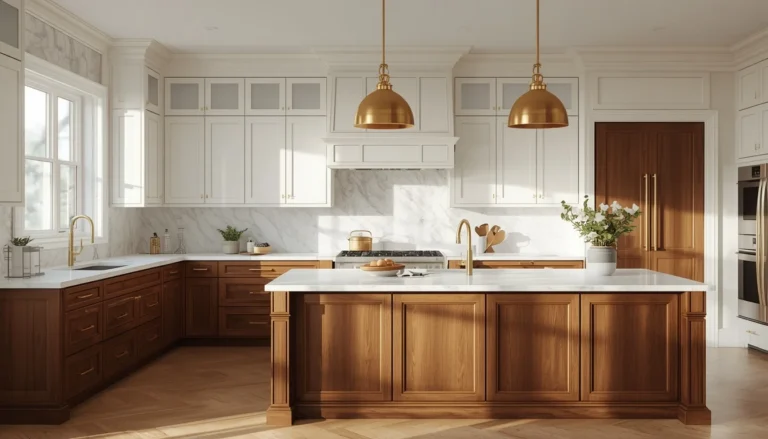
An all-white kitchen base, when paired with warm wood accents like open shelving, a wood range hood, or tapered wood cabinet legs, keeps the mid century feel without leaning on a bold color palette at all. This approach works especially well for smaller kitchens, since white surfaces reflect more light and keep the room feeling open even with the deeper geometry mid century design relies on. A single wood or rattan pendant light over the island introduces texture without adding visual weight the way a darker cabinet color might. Brass or matte black hardware, chosen consistently throughout the space, adds a small metallic detail that reads as intentional rather than accidental. This design proves that mid century style doesn’t require dramatic color to feel authentic; the clean lines and warm material choices carry the aesthetic on their own.
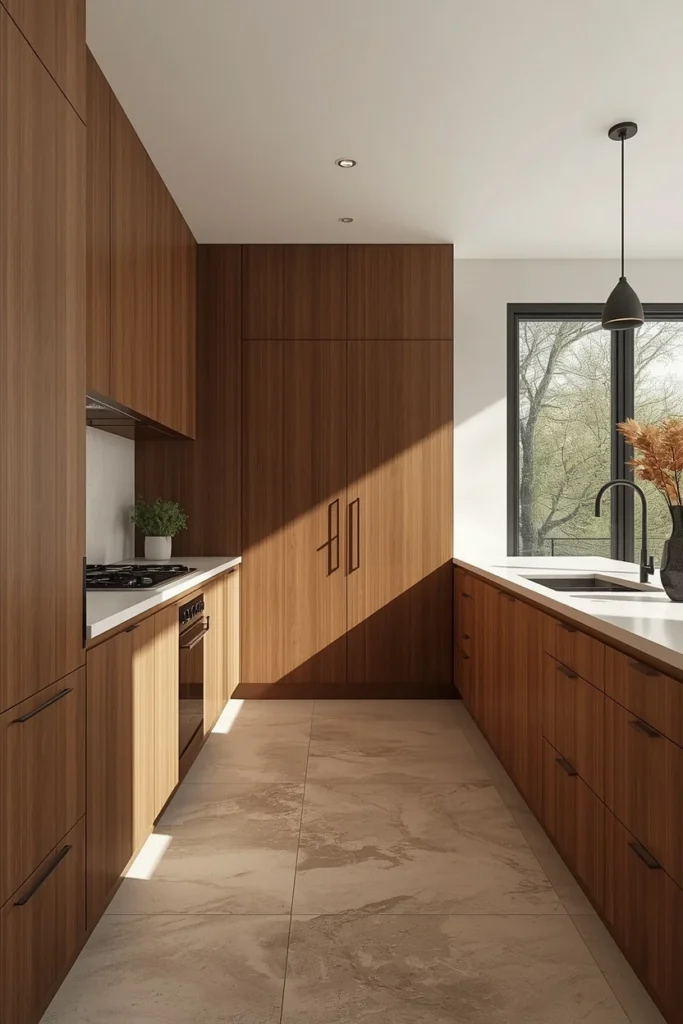
5. Handleless Flat-Panel Walnut Cabinetry
Handleless walnut cabinetry, using push-to-open hardware or a routed finger pull instead of visible knobs or handles, gives a mid century kitchen an especially clean, uninterrupted line across every cabinet front. This detail has become one of the defining features of the style’s current revival, since it keeps the wood grain as the focal point without any hardware breaking up the surface. Full-height cabinetry that runs to the ceiling, rather than stopping short with an open gap above, reinforces the streamlined look this design depends on. Pairing the cabinetry with a simple stone or quartz countertop in a light, neutral tone keeps the overall look from feeling too dark or heavy despite the deep wood tone. This design suits anyone who wants a distinctly mid century feel with a more minimal, contemporary edge than some of the more colorful interpretations of the style.
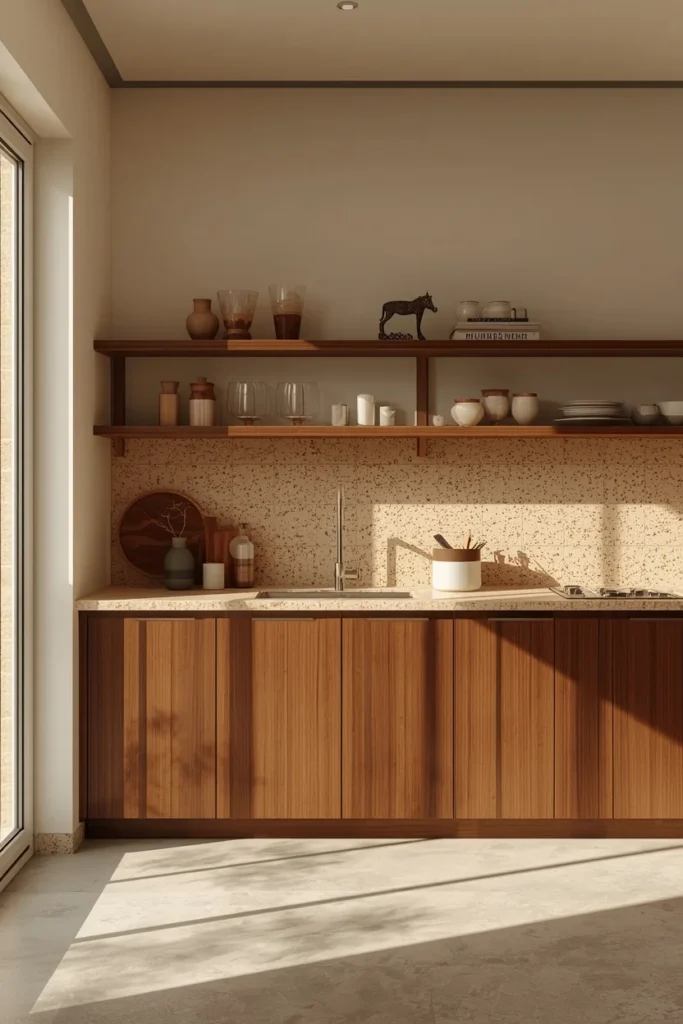
6. Terrazzo Countertops With Walnut Base Cabinets
Terrazzo countertops bring a genuinely mid century material back into a modern kitchen, since the speckled stone-and-chip surface was widely used in original mid century construction and has seen a strong resurgence in recent years. Choosing a terrazzo blend with warm tones, like cream, rust, and brown chips, ties the countertop directly into walnut base cabinets below it. A simple, unpatterned backsplash lets the terrazzo’s natural texture stand out as the room’s main visual detail rather than competing with a busy tile design. Open shelving nearby, styled with a few ceramic pieces, gives the terrazzo room to breathe instead of surrounding it with too many other bold materials. This combination works especially well for someone renovating a kitchen who wants one clearly retro material choice without needing to commit to a fully vintage look throughout the entire space.
7. Mustard Yellow Accent Wall With White Cabinets
A mustard yellow accent wall behind open shelving or a dining nook brings mid century color into the kitchen without needing to commit to colored cabinetry at all. White cabinets throughout the rest of the kitchen keep the space feeling bright and current, letting the accent wall do the work of establishing the era’s signature palette. A walnut dining table and chairs nearby echo the wood tones found elsewhere in classic mid century kitchens, tying the accent wall into the broader room. Simple black or brass pendant lighting over the dining area adds a small metallic detail without competing with the bold wall color. This design works particularly well for renters or anyone hesitant to commit to colored cabinetry, since an accent wall is one of the easiest elements to change again later.
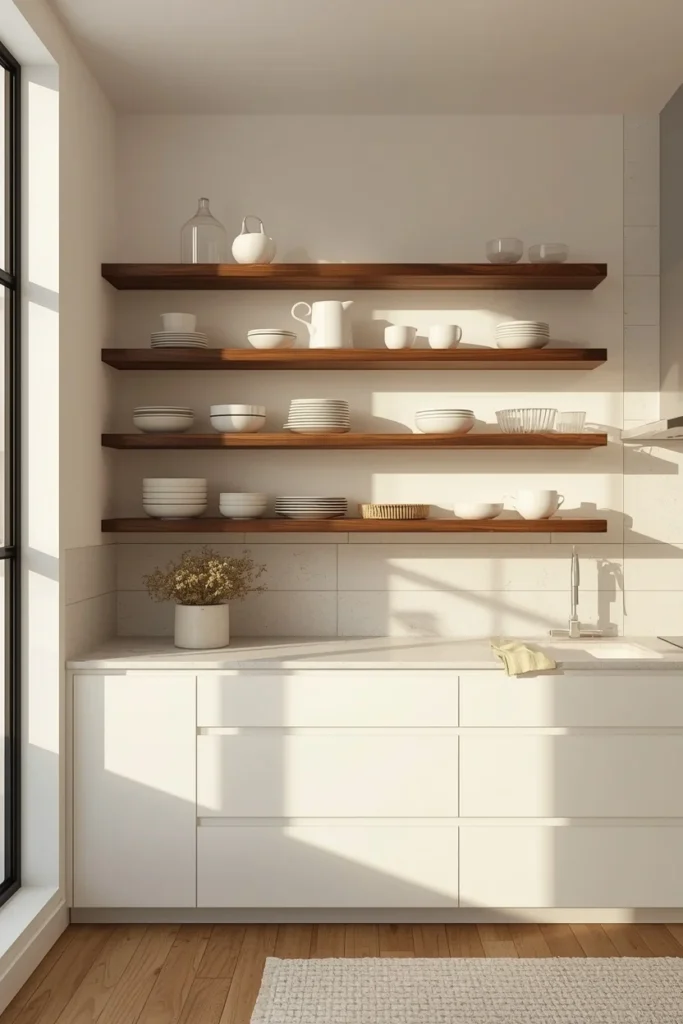
8. Open Shelving With Floating Walnut Shelves
Open shelving built from simple floating walnut boards keeps a mid century kitchen feeling airy while still introducing warm wood tones into the design. Styling the shelves with a mix of ceramic bowls, glassware, and a few cookbooks, spaced with intentional negative space, echoes the era’s preference for function displayed as design rather than hidden away. This approach works especially well in smaller kitchens, since open shelving visually opens up a room in a way that tall, closed upper cabinets typically don’t. Pairing the shelves with simple white or pale cabinetry below keeps the overall palette light, letting the walnut shelving stand out as the main material statement. This design suits kitchens where the owner wants genuine mid century warmth without needing a full cabinetry remodel to achieve it.
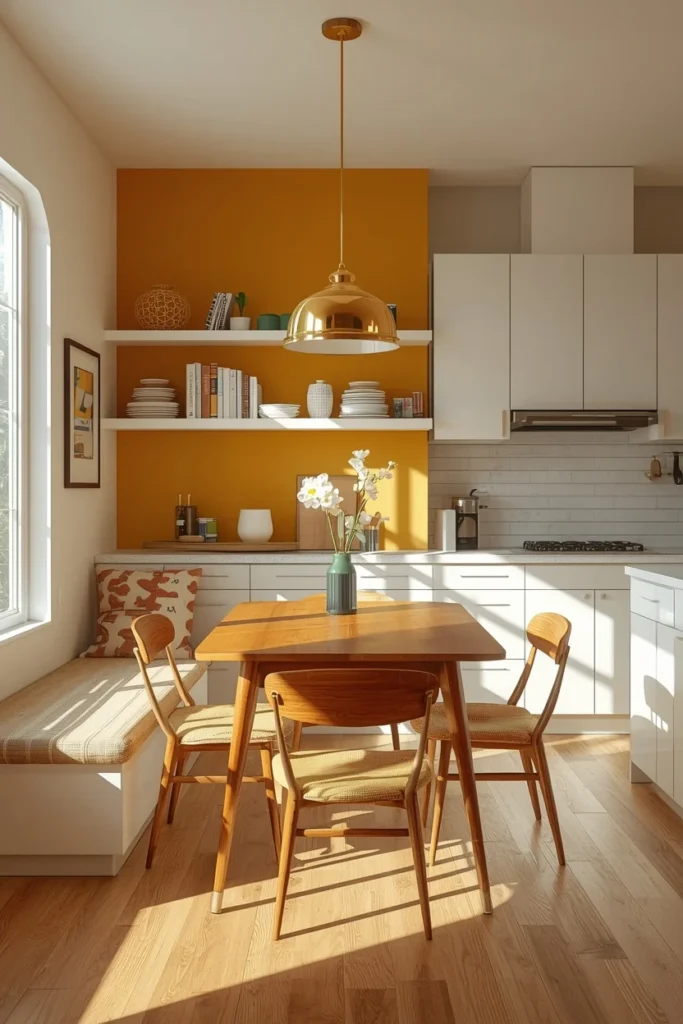
9. Sunken Step-Down Kitchen With Wood Ceiling
A sunken or step-down kitchen, set slightly below an adjoining living or dining space, is one of the more architectural mid century design choices, creating a defined room within an otherwise open floor plan. A wood ceiling detail overhead, running in the same direction as the step, reinforces the sense of a distinct, intentional zone rather than a random change in floor level. Warm wood cabinetry and a simple, low-profile island keep the sight lines open between the sunken kitchen and the surrounding rooms. This layout works especially well in homes with genuine mid century architectural bones, since the level change was a common feature in original construction from the era rather than something added purely for style. For anyone building new or doing a significant renovation, this design choice adds real architectural character that’s difficult to replicate with surface-level updates alone.
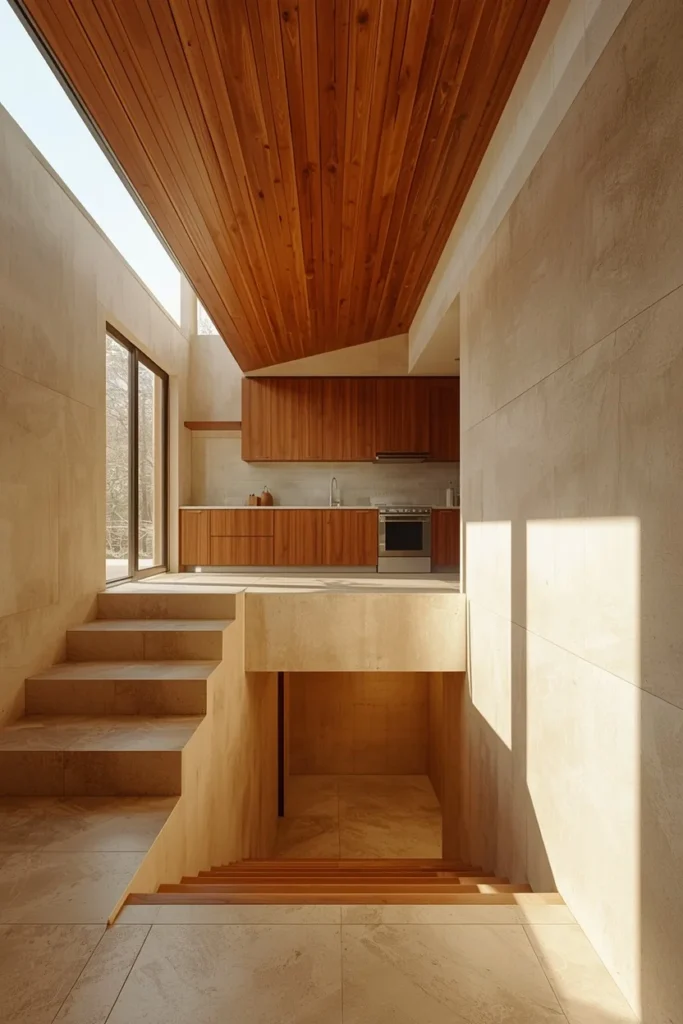
10. Geometric Tile Backsplash
A geometric tile backsplash, using repeating shapes like hexagons, diamonds, or interlocking circles in two or three coordinating colors, brings one of mid century design’s most recognizable details directly into the kitchen. Choosing a palette that echoes the cabinetry, like a green and cream tile against walnut cabinets, keeps the pattern from feeling disconnected from the rest of the room. Running the tile the full height between the counter and upper cabinets, rather than stopping partway, gives the pattern room to actually read clearly instead of looking cut off. This backsplash choice works well as a focused, budget-conscious way to bring genuine mid century character into a kitchen that otherwise has more neutral, modern cabinetry. It also tends to photograph especially well, since the repeating geometry reads clearly even in a smaller image.
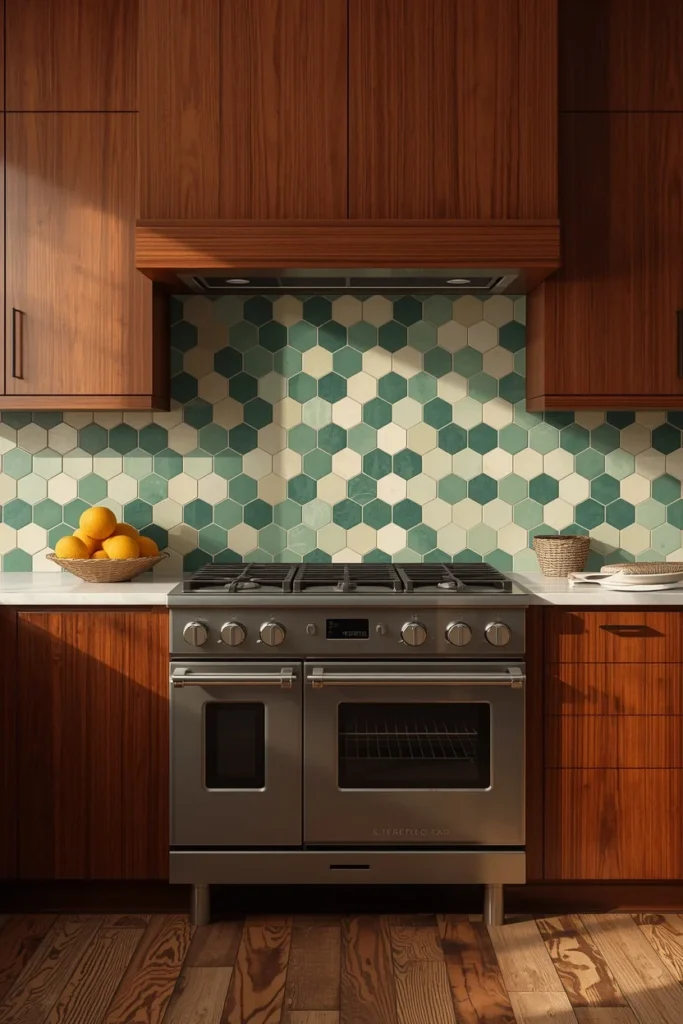
11. Charcoal Gray Cabinets With Brass Fixtures
Charcoal gray cabinetry gives a mid century kitchen a more contemporary edge while still supporting the era’s love of clean lines and rich, saturated color. Brass fixtures and hardware soften the darker cabinet tone, adding warmth that keeps the space from feeling cold or overly modern despite the deep gray palette. A light stone countertop, like a soft cream quartz, provides enough contrast to keep the kitchen from feeling too heavy or dim overall. Geometric pendant lighting overhead adds a small mid century detail that reinforces the era’s aesthetic without needing colorful cabinetry to carry the theme. This combination suits homeowners who want mid century structure and warmth but prefer a moodier, more grounded palette than the brighter colors typically associated with the style.
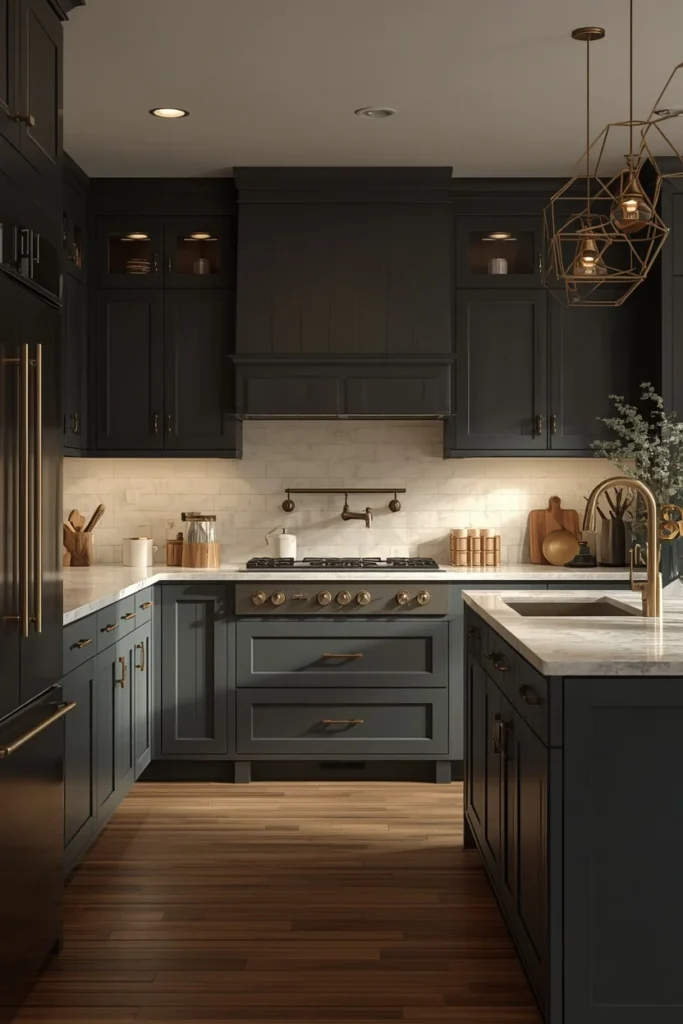
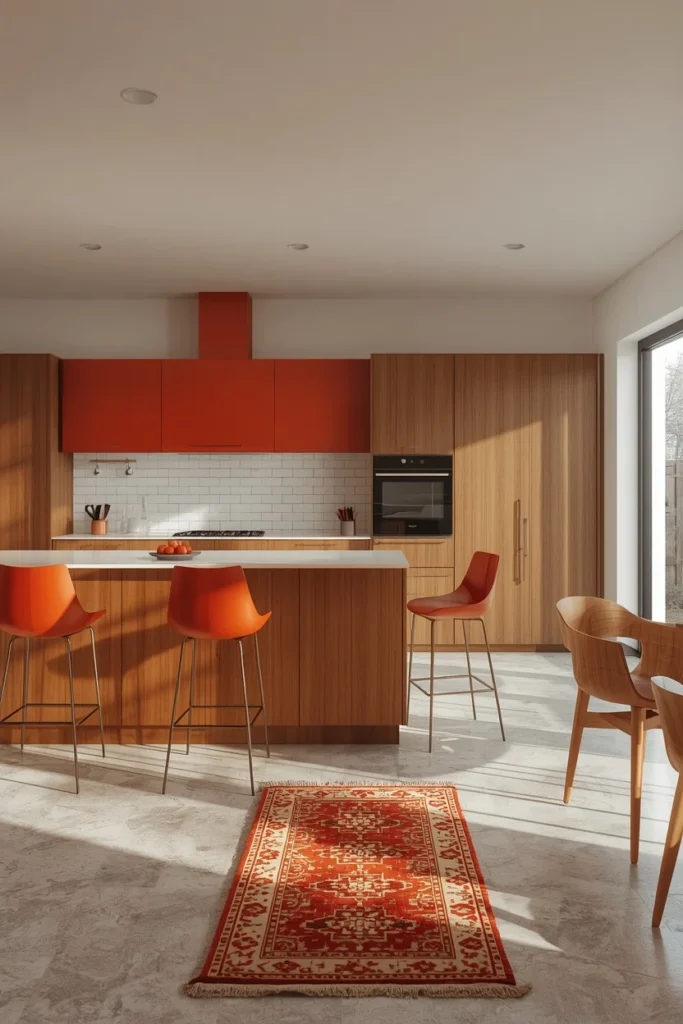
12. Burnt Orange Retro Accents
Burnt orange, used in smaller doses like a range hood, an accent cabinet, or a set of barstools, brings one of mid century design’s most iconic colors into a kitchen without overwhelming the whole space. Pairing it with walnut cabinetry and simple white countertops keeps the orange feeling intentional rather than overpowering, since the surrounding neutrals give the color room to stand out. A patterned runner rug in complementary rust and cream tones ties the floor into the same retro palette established by the accent color. This approach works especially well for anyone who loves the boldness of true mid century color palettes but wants to apply it in a more controlled, modern way. It’s also one of the easier designs to update over time, since a single painted accent or a set of barstools is far less commitment than colored cabinetry throughout.
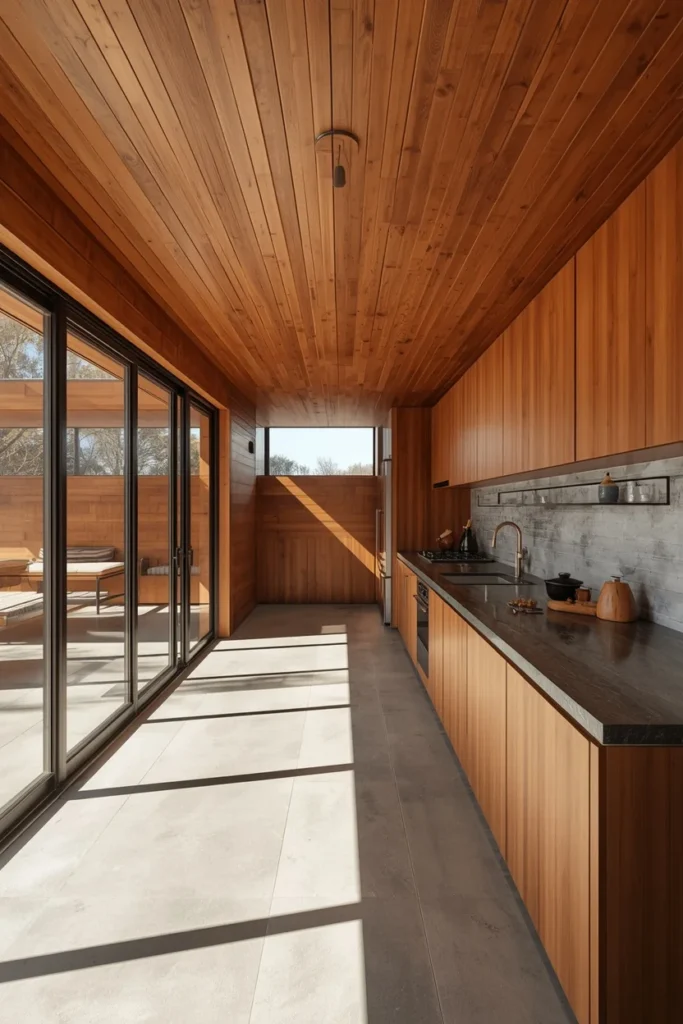
13. Indoor-Outdoor Kitchen With Glass Walls
An indoor-outdoor mid century kitchen, built around a full wall of glass or sliding doors leading to a patio, channels the era’s architectural philosophy of blurring the line between built structure and the natural landscape outside. Warm wood cabinetry and a simple stone countertop keep the interior palette calm enough not to compete with the view beyond the glass. A wood ceiling that extends visually from indoors to the covered patio outside reinforces the sense of one continuous space rather than two separate rooms. This design tends to work best in homes with genuine mid century architecture, like a ranch-style or post-and-beam structure, where large glass walls were often part of the original design intent. For homeowners with the right architecture and layout, this approach delivers one of the most authentic and dramatic expressions of mid century design available.
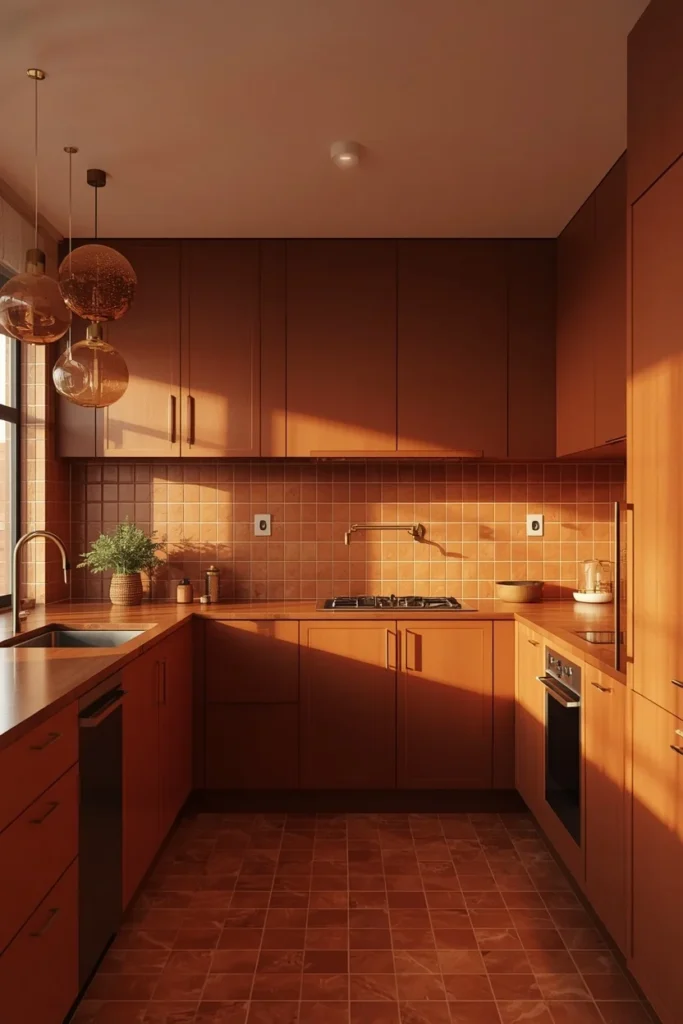
14. Terracotta and Clay-Toned Palette
A terracotta and clay-toned palette brings mid century warmth into a kitchen through earthy, sun-baked colors rather than the brighter primary tones sometimes associated with the era. Terracotta cabinetry or a clay-colored tile backsplash pairs especially well with warm wood countertops and brass fixtures, since all three materials share the same warm undertone. Rounded pendant lighting in a matching clay or amber glass tone reinforces the palette overhead without introducing a new color into the mix. This approach suits a kitchen owner drawn to Southwestern or Mediterranean influences layered into a mid century foundation, since the earthy tones bridge both aesthetics naturally. It also tends to feel especially warm and inviting in kitchens with strong natural light, where the clay tones can really glow throughout the day.
15. Two-Island Layout
A two-island layout, with one island functioning as a dedicated prep station and the second serving as a social gathering spot, reflects mid century design’s emphasis on function without sacrificing an open, entertaining-friendly floor plan. Using the same warm wood tone across both islands keeps the layout feeling cohesive rather than like two unrelated pieces of furniture placed in the same room. Pairing the prep island with practical, close-at-hand storage and the social island with bar seating and pendant lighting overhead clarifies each island’s role at a glance. This layout works best in larger kitchens, since two full islands require enough square footage to keep walkways clear and comfortable. For homeowners who entertain often, this design solves a real functional problem, keeping cooking and socializing separate, while still staying visually unified through consistent materials.
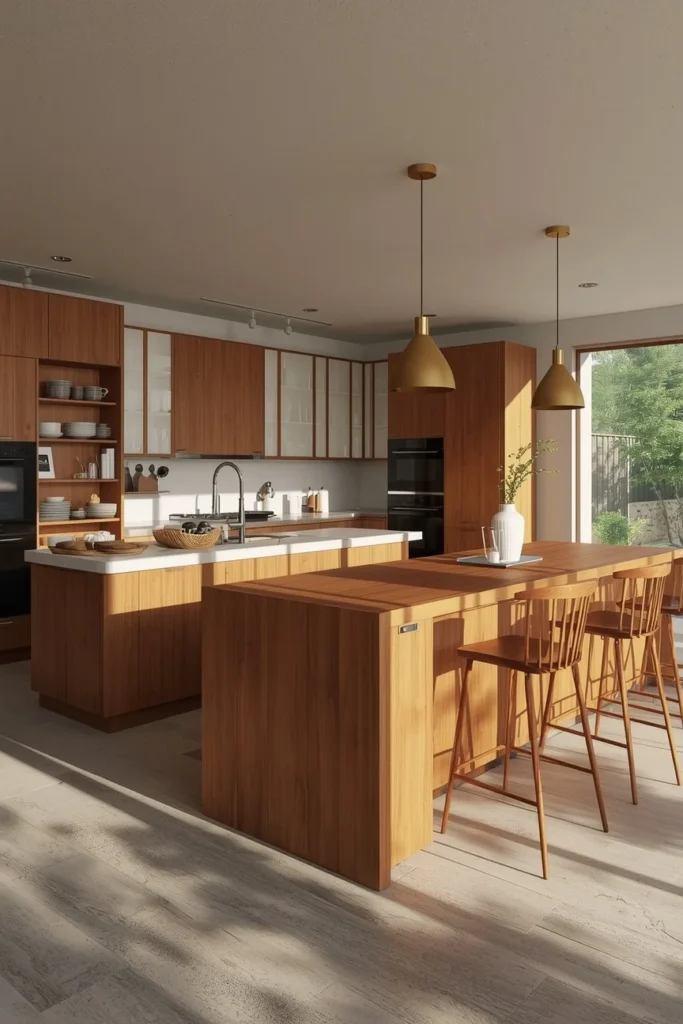
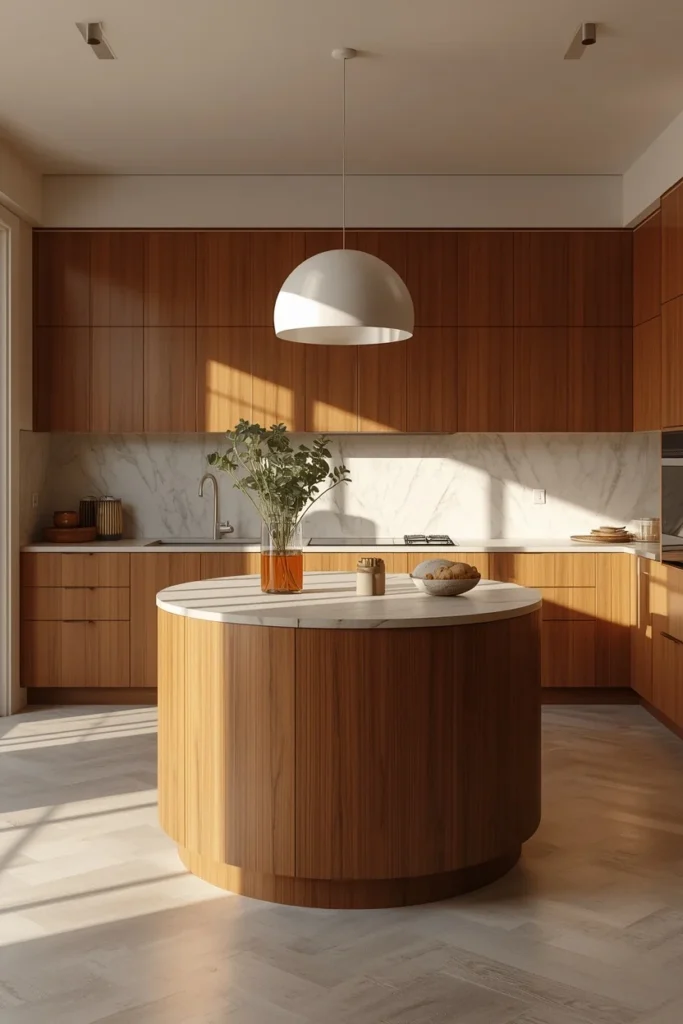
16. Curved Island With Rounded Edges
A curved island with softened, rounded edges brings a gentler, more organic line into a kitchen otherwise defined by the straight geometry mid century design is known for. This detail has grown especially popular in recent years as a way to soften a room without straying from the style’s core material palette of warm wood and clean surfaces. Pairing the curved island with straight-edged perimeter cabinetry keeps the room from feeling overly soft or losing its mid century structure entirely. A rounded pendant light fixture overhead echoes the island’s curve, tying the two design choices together visually. This approach works well for households with young kids, since rounded corners are naturally safer around a busy kitchen island, while still keeping the room feeling intentionally designed rather than compromised.
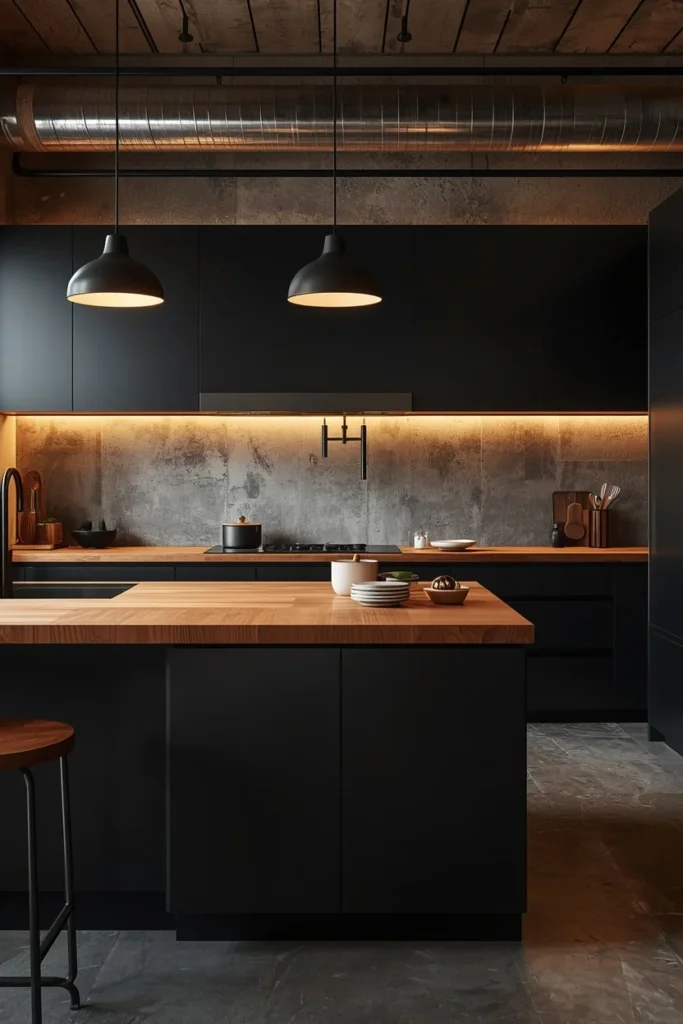
17. Butcher Block Counters With Concrete Backsplash
Pairing butcher block countertops with a concrete backsplash creates one of mid century design’s classic material contrasts, combining a warm, organic surface with something cooler and more industrial. This combination works especially well on an island or peninsula, where the butcher block gets genuine daily use as a cutting and prep surface. Sealing the wood properly is essential for this pairing to hold up long-term, since butcher block sees more direct water and food contact than a standard countertop. Keeping the surrounding cabinetry simple, in either walnut or a matte black finish, lets the contrast between the two main materials stay the visual focus of the kitchen. This design suits a kitchen owner who wants a genuinely mixed-material mid century look rather than a single dominant material carrying the whole design.
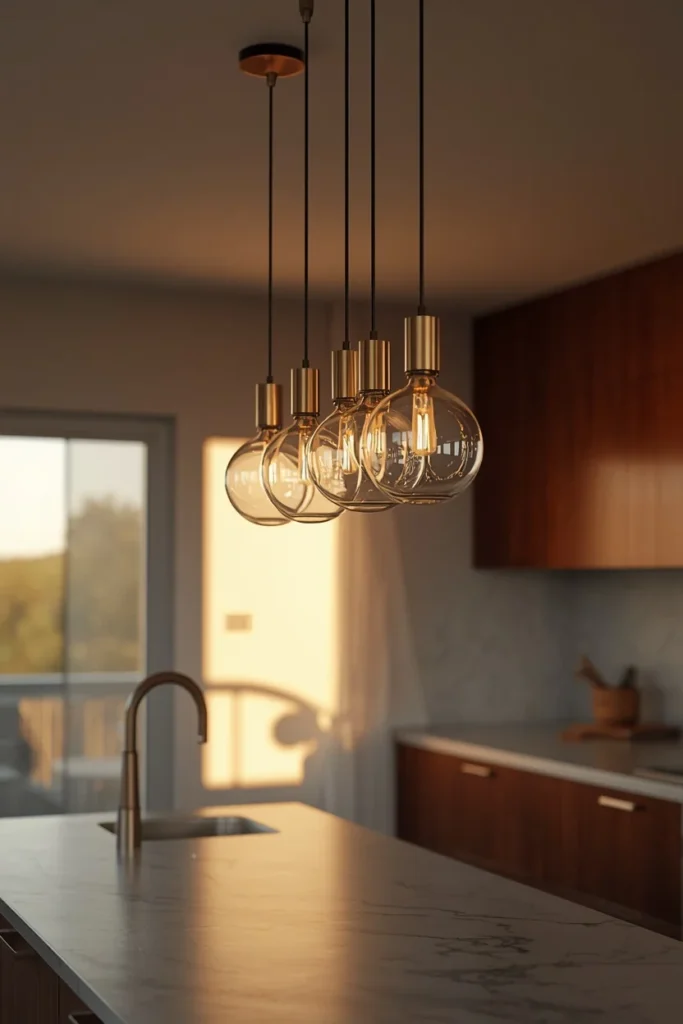
18. Sculptural Pendant Lighting
Sculptural pendant lighting, whether a cluster of small glass globes or a single oversized fixture in brass or wood, treats lighting as a genuine design element rather than a purely functional afterthought. Hanging fixtures over an island or dining area at the correct height, typically 30 to 36 inches above the counter surface, ensures the sculptural detail doesn’t interfere with sightlines across the room. Choosing a fixture in a material that echoes something else already in the kitchen, like a brass pendant matching brass cabinet hardware, ties the lighting choice into the broader design rather than treating it as a separate decision. This detail alone can shift an otherwise simple, modern kitchen firmly into mid century territory, since lighting was one of the era’s most celebrated design categories. For anyone not ready for a full kitchen remodel, updating just the lighting is one of the highest-impact, lowest-effort ways to bring genuine mid century character into the room.
19. Runner Rug With Retro Barstools
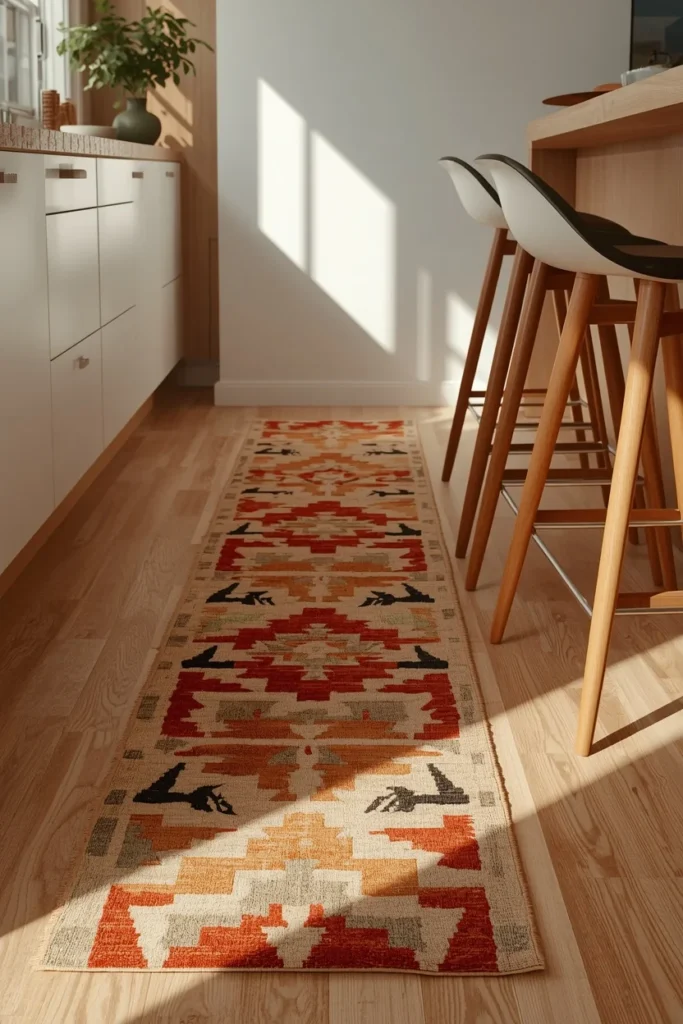
A patterned runner rug running the length of the kitchen floor, paired with a set of retro-style barstools at the island, brings texture and color into the room without touching a single cabinet or countertop. Choosing a rug pattern in geometric shapes or a bold, simple repeat echoes classic mid century textile design from the era. Barstools with tapered wood legs and a simple upholstered or molded seat reinforce the style at counter height, where they’re one of the most visible pieces of furniture in the room. This combination works especially well as a lower-cost way to introduce mid century character into a kitchen that’s otherwise fairly neutral or contemporary. Both elements are also easy to update again in the future, making this one of the more flexible ways to experiment with the aesthetic before committing to anything more permanent.
20. Teak Cabinetry With Scandinavian Influence
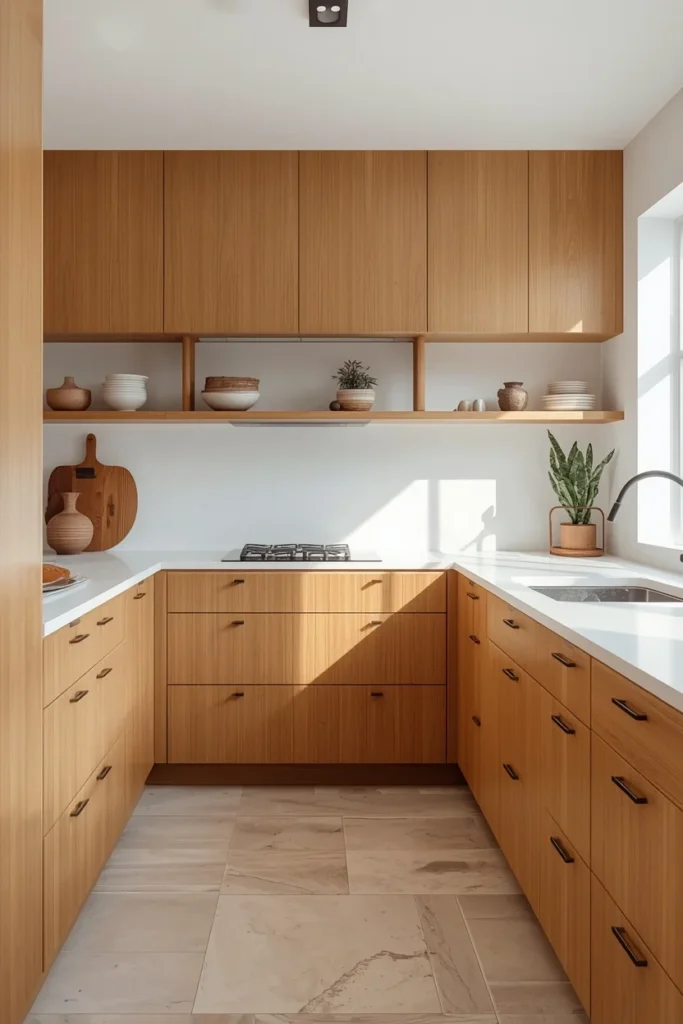
Teak cabinetry, paired with simple white surfaces and minimal ornamentation, blends mid century American design with its closely related Scandinavian counterpart, resulting in a lighter, more understated take on the aesthetic. Teak’s naturally lighter, more golden tone compared to walnut gives this design a slightly airier feel, which suits a kitchen with less natural light than a darker walnut palette might otherwise require. Simple black hardware and matte black faucet fixtures add contrast without introducing a competing wood tone or color into the space. Open shelving and a few simple ceramic pieces, styled sparingly, reflect the Scandinavian half of this influence, which tends to favor even more restraint than classic American mid century design. This combination works well for anyone who loves mid century structure but prefers an overall lighter, calmer palette than deeper walnut tones typically produce.
21. Black and Walnut Contrast Kitchen
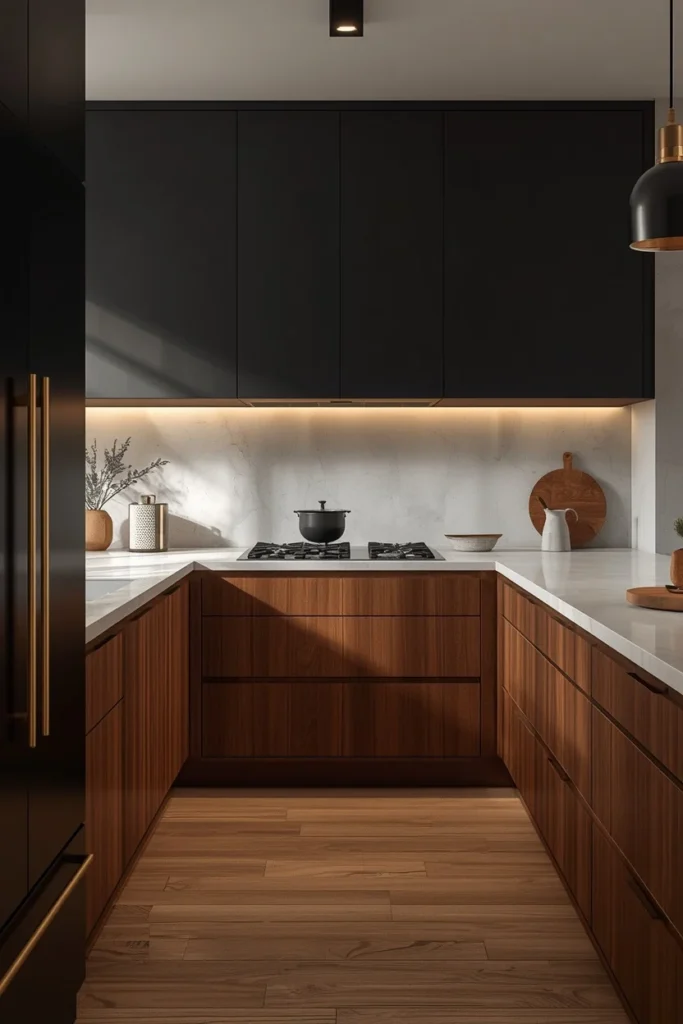
Pairing matte black cabinetry or fixtures with warm walnut creates one of the more dramatic, contemporary interpretations of mid century style, using strong contrast rather than a single dominant wood tone throughout. A black range hood or black lower cabinets against walnut upper cabinets, or the reverse, keeps the two materials in clear conversation with each other rather than blending together. White or light stone countertops act as a visual break between the two darker tones, preventing the kitchen from feeling too heavy overall. Brass or matte gold hardware, used sparingly, adds a small warm accent that ties the black and walnut together without introducing a third dominant color. This design suits a kitchen owner who wants clear mid century structure with a bolder, more modern edge than a purely traditional walnut kitchen would offer.
22. Vintage-Inspired Retro Appliance Kitchen
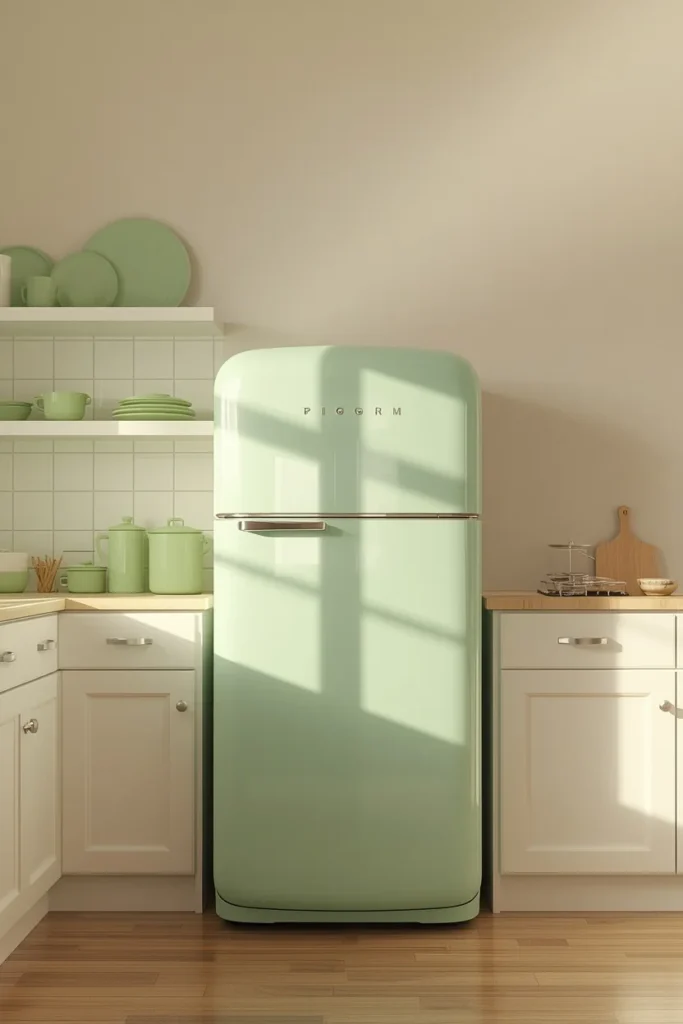
A kitchen built around a genuinely retro-styled appliance, like a colored range or a rounded refrigerator finished in mint, red, or pastel yellow, puts a bold, playful focal point at the center of an otherwise classic mid century layout. Keeping the surrounding cabinetry simple and neutral, in white or a light wood tone, lets the appliance stand out as the clear star of the kitchen rather than competing with busy cabinetry. A matching small accent, like a few dishes or a canister in the same color family as the appliance, ties the look together without overdoing the theme. This design works especially well for anyone who wants an unmistakably retro kitchen with genuine personality, rather than a more subtle, understated interpretation of the style. It’s also one of the more flexible designs on this list, since a single appliance swap can transform a kitchen’s whole personality without touching the cabinetry at all.
STYLING TIPS
- Keep material choices honest. Real wood grain, real stone texture, and matte metal finishes read as more authentically mid century than anything trying to imitate another material.
- Use color with restraint. Most successful mid century kitchens lean on one or two bold choices, like a tile backsplash or an accent wall, rather than color everywhere at once.
- Choose lighting as a genuine design feature, not just a functional necessity. Sculptural or geometric fixtures do a lot of visual work in establishing the era’s aesthetic.
- Balance dark and light materials in the same kitchen. A fully dark walnut kitchen can feel heavy without a lighter counter, backsplash, or wall color to offset it.
- Look to genuine mid century architecture, like ranch-style homes or post-and-beam construction, for inspiration on how the era originally handled light, openness, and material honesty.
PRACTICAL IMPLEMENTATION IDEAS
- Start with lighting and hardware if a full remodel isn’t in the budget yet, since both are relatively low-cost, high-impact ways to introduce the style.
- Choose one dominant wood tone, like walnut or teak, and stick to it throughout the kitchen rather than mixing several different wood finishes together.
- Consider handleless or minimal-hardware cabinetry if a full replacement is planned, since this detail has become one of the clearest signals of a current mid century kitchen.
- Test paint or tile colors on a small sample area before committing to a full accent wall or backsplash, since mid century colors can read differently under different lighting.
- Work with what the home’s existing architecture already offers. A kitchen in a true mid century home has a head start that a newer build may need more effort to recreate.
COMMON MISTAKES TO AVOID
- Overloading the kitchen with too many bold colors at once, which can tip a genuine mid century palette into looking more like a costume than a design choice.
- Mixing multiple different wood tones without a clear plan, which creates visual competition rather than the cohesive warmth the style depends on.
- Choosing hardware or fixtures in a finish that doesn’t match anything else in the kitchen, breaking the material consistency mid century design relies on.
- Skipping lighting as a design consideration, since generic fixtures can undercut an otherwise well-executed mid century kitchen.
- Forcing curved or organic shapes into a kitchen with otherwise strict, straight-lined architecture, which can look disconnected rather than intentional.
SMALL-SPACE ALTERNATIVES
- No room for a full island: a peninsula with the same warm wood tone and pendant lighting can deliver a similar mid century anchor point in less space.
- No budget for full cabinetry replacement: refinishing existing cabinets in a walnut stain or painting them a mid century color, paired with new hardware, achieves a similar look for less.
- No space for two islands: a single island with clearly zoned sections, one for prep and one for seating, offers a similar function in a smaller footprint.
- No architecture for a sunken kitchen: a simple change in flooring material or a low platform can visually define a kitchen zone without a structural step-down.
- No room for a full geometric tile backsplash: a smaller tiled accent behind just the stove or sink introduces the same detail in a contained area.
BUDGET-FRIENDLY ALTERNATIVES
- Paint existing cabinets in a mid century color, like sage green or charcoal, instead of replacing them entirely.
- Swap only the cabinet hardware to brass or matte black instead of a full cabinet replacement.
- Add a single statement pendant light over an island or sink instead of rewiring the whole kitchen for new fixtures.
- Introduce color through a runner rug, barstools, or a small accent wall instead of colored cabinetry or tile.
- Shop secondhand or vintage furniture marketplaces for genuine mid century pieces, like a credenza or dining set, instead of buying new reproduction furniture.
PRO STYLING RECOMMENDATIONS
- Anchor the kitchen’s material palette with one dominant wood tone and one dominant metal finish, then repeat both consistently throughout the space.
- Choose furniture and fixtures with tapered legs, a clear mid century signature, wherever the kitchen includes freestanding pieces like a table or stools.
- Balance bold color choices with enough neutral surface area, like white countertops or a plain backsplash, so the space doesn’t feel overwhelming.
- Use open shelving sparingly and style it with intention, since overcrowded open shelves can undercut the clean lines mid century design depends on.
- Photograph or view the kitchen at different times of day before finalizing darker wood or bold color choices, since natural light changes how these palettes read throughout the day.
FAQS
CONCLUSION
Mid century modern design has outlasted plenty of trends that came after it, and it’s not hard to see why.
It never asked for much. Warm materials left honest. Color used with intention instead of everywhere at once. Clean lines that don’t need to compete for attention.
Whether that means a full walnut remodel with a sunken floor and a wood ceiling, or just a new brass pendant light and a can of sage green paint, the same principles carry the style either way.
Pick the version that fits your budget and your home’s existing architecture, and let the calm confidence of the style do the rest.