
19 Renter-Friendly Bedroom Ideas That Feel Like a Real Home, Not a Rental
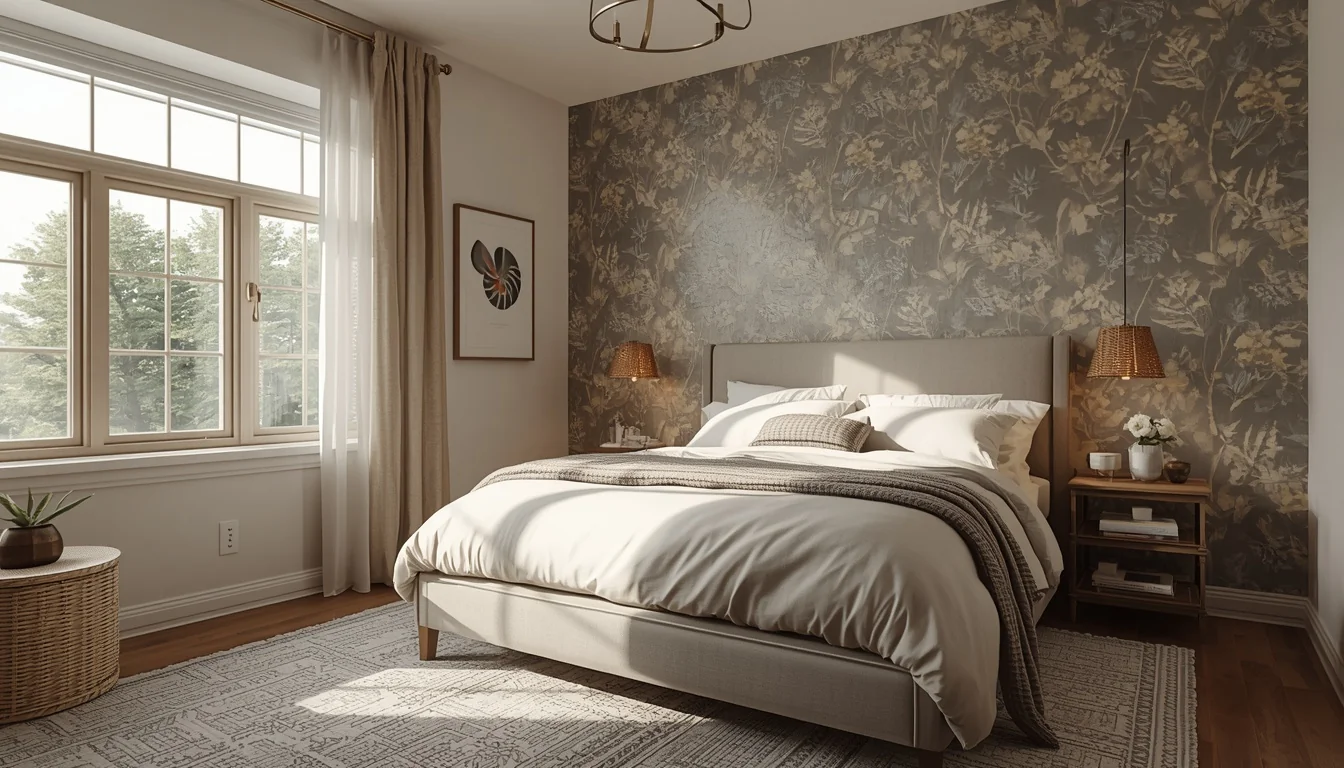
There’s a specific kind of sadness that comes from standing in a rental bedroom with white walls, beige carpet, and a ceiling light you can’t stand, knowing you’re not allowed to fix any of it the “real” way. But a bedroom doesn’t need paint or a hammer to feel like it belongs to you. It needs layers, light, and a handful of pieces that pack up as easily as they went up.
Below are 19 ways to make a rented bedroom feel like a finished, personal space, with the styling logic behind each idea and an image prompt to help you picture it before you buy anything.
Table of Contents
- Peel-and-Stick Wallpaper Accent Wall
- Command Hook Gallery Wall
- Tension Rod Curtain Layering
- No-Sew Fabric Headboard
- LED Strip Accent Lighting
- Plug-In Pendant Light Swap
- Statement Rug Over Ugly Flooring
- Freestanding Room Divider Zone
- Layered Textile Bedding
- Removable Wall Decal Mural
- Tapestry Headboard Wall Hanging
- Floor Lamp Mood Lighting
- Command Strip Mirror Wall
- Vintage Thrifted Furniture Layer
- Closet Curtain Swap
- Under-Bed Storage Styling
- Plant Corner for Color
- Peel-and-Stick Tile Nightstand Refresh
- Woven Wall Basket Display
1. Peel-and-Stick Wallpaper Accent Wall
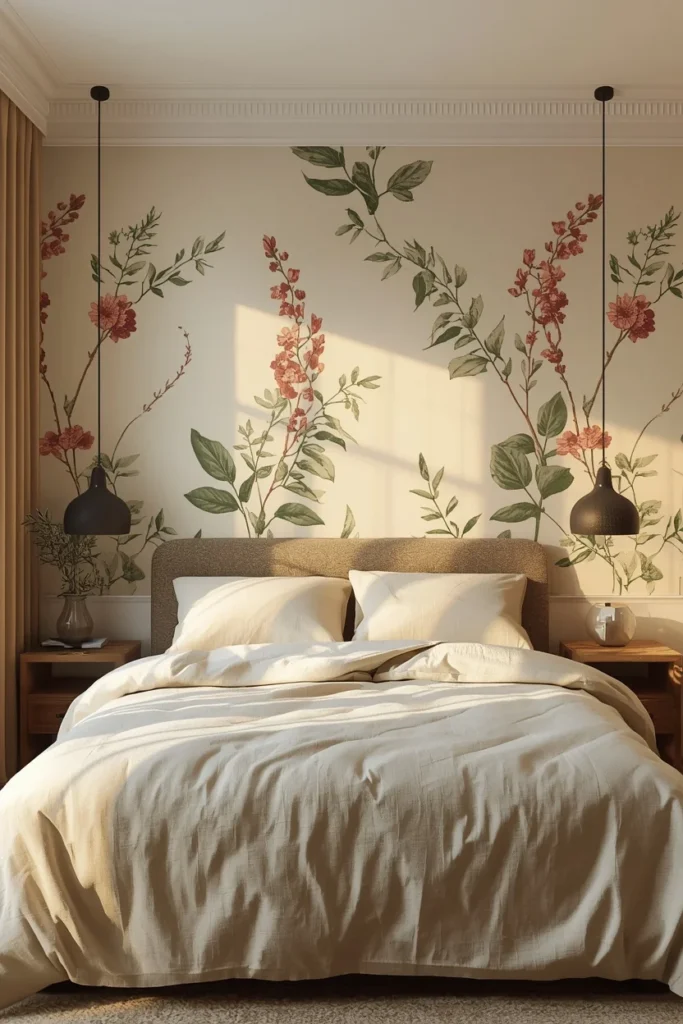
A single wall covered in peel-and-stick wallpaper does more to personalize a rental bedroom than almost any other single change, and it comes off cleanly at move-out without touching the paint underneath. Choosing just one wall, usually the one behind the bed, keeps the cost and installation time manageable for a weekend project. Textured or grasscloth-look designs read as more expensive than they are, while a bold botanical or checkerboard pattern adds instant personality to an otherwise blank room. Smoothing the paper with a plastic scraper as you go prevents the bubbling that makes peel-and-stick projects look amateur. This single wall then becomes the anchor the rest of the room’s colors and textures can build around.
2. Command Hook Gallery Wall
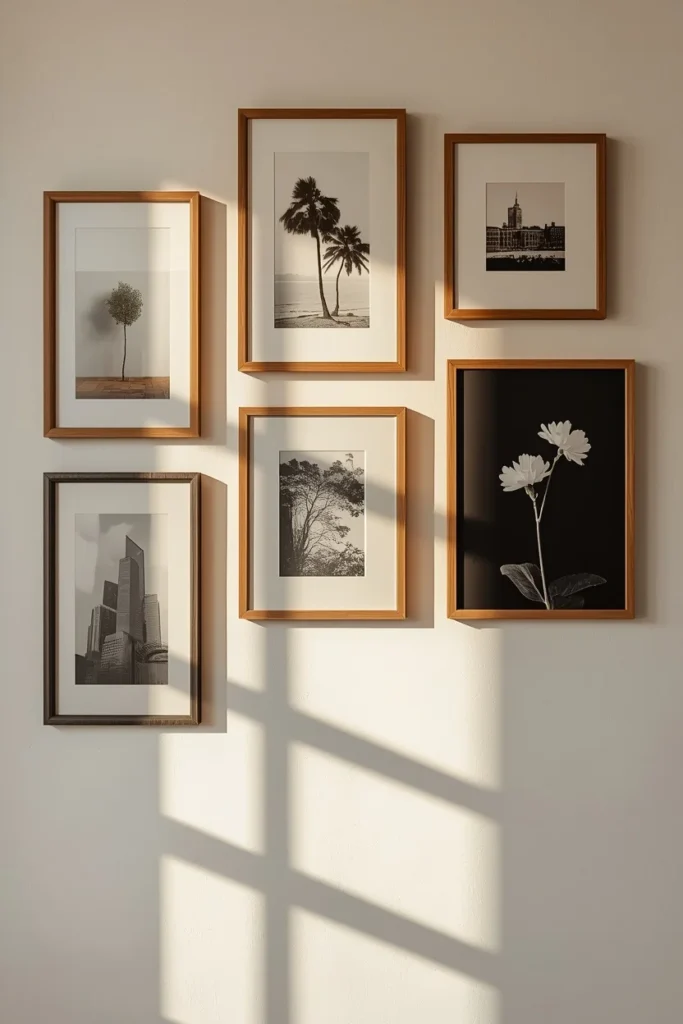
A full gallery wall of framed prints, photos, and small shelves is entirely achievable without a single nail, using adjustable command strips rated for the weight of each piece. Laying the arrangement out on the floor first, then transferring it to the wall with painter’s tape as a guide, keeps the spacing even and avoids repeated strip removal. Mixing frame sizes and a couple of unframed prints pinned directly to the wall adds variety without needing every piece to match. Command strips remove cleanly from most painted walls when applied and removed correctly, which makes this one of the lowest-risk ways to fill wall space in a rental. The result reads as a curated, lived-in collection rather than a rushed dorm-room poster wall.
3. Tension Rod Curtain Layering
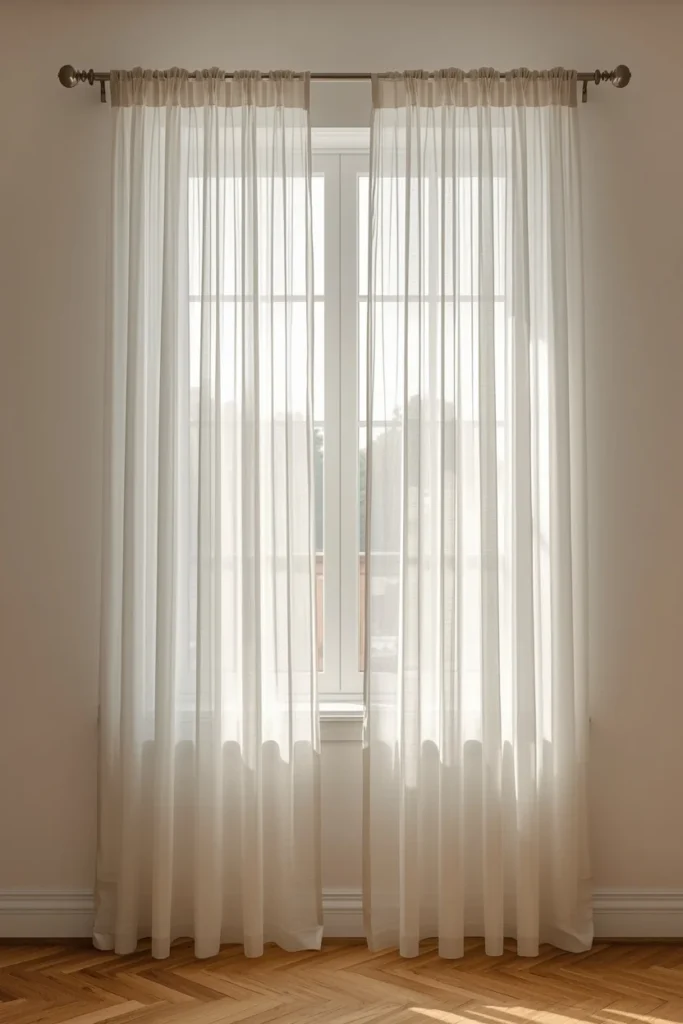
Most rental bedrooms come with basic mini blinds or nothing at all, and a tension rod mounted inside the window frame lets you hang real curtains without drilling a single hole. Layering a sheer curtain underneath a heavier blackout panel gives both privacy during the day and the option to block light completely at night. Choosing a rod that extends slightly wider than the window makes the curtains look fuller and more intentional once they’re hung. Floor-length curtains, even slightly puddled at the bottom, make ceilings feel taller and the whole room feel more finished than blinds ever will on their own. This is one of the fastest upgrades on this list in terms of visual impact per dollar spent.
4. No-Sew Fabric Headboard
A headboard instantly makes a bed look intentional rather than like a mattress pushed against the wall, and a no-sew version built from foam, batting, and a fabric of your choice can be leaned against the wall or attached to the bed frame without any wall damage at all. A staple gun and a piece of plywood cut to size form the base, with the fabric wrapped and stapled around the back the way you’d wrap a gift. Choosing a textured fabric, like boucle or velvet, adds a hotel-quality look for a fraction of the cost of a store-bought headboard. Because the whole piece is freestanding, it moves with you to the next apartment without needing to be unmounted from anything. This project alone can change the entire feel of the bed from temporary to designed.
5. LED Strip Accent Lighting
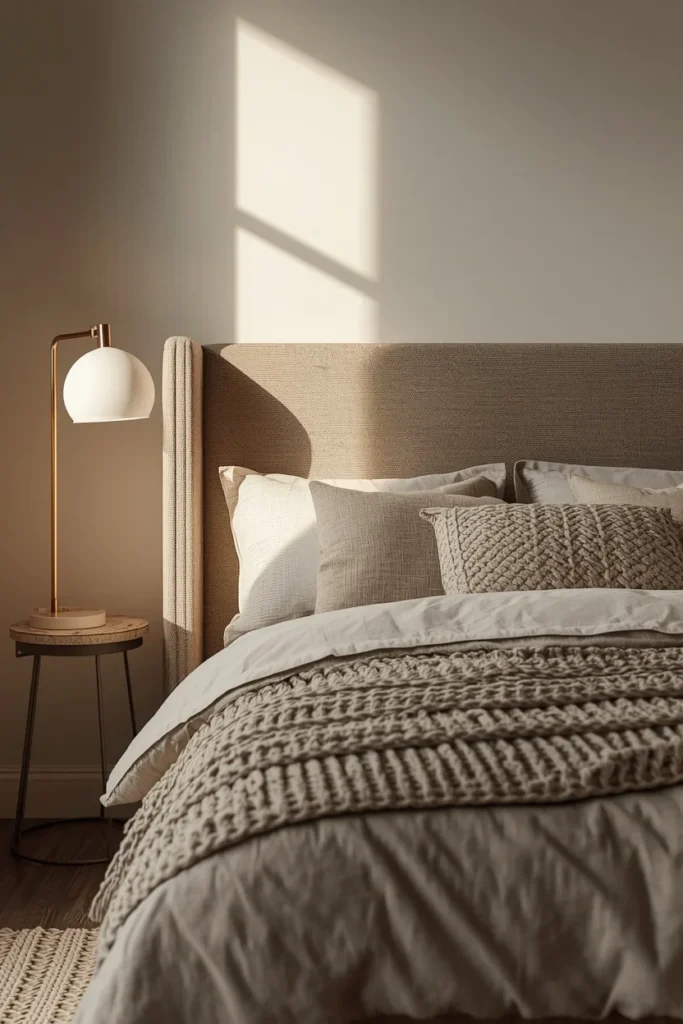
Battery-powered or plug-in LED strips tucked behind a headboard, along a shelf, or beneath the bed frame add a soft glow that overhead lighting can’t replicate, and most stick-on strips use adhesive gentle enough to remove without peeling paint. Warm white tones, rather than the cooler blue-white options, keep the effect feeling cozy instead of clinical. Running the strip along the top of a shelf or behind a mirror creates a soft halo effect that photographs beautifully in low light. Because these strips run on remote or app control, the brightness and color can shift from a bright reading glow to a dim nighttime setting without needing to touch a single switch. This is one of the easiest ways to add mood lighting to a room with no ceiling fixture worth using.
6. Plug-In Pendant Light Swap
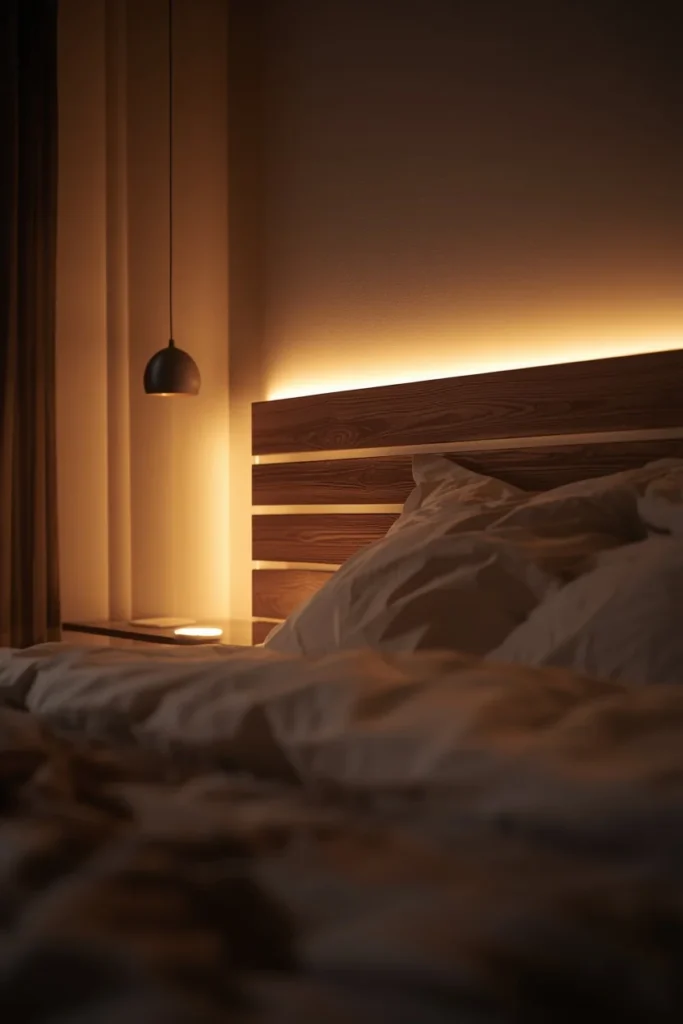
A boring builder-grade overhead fixture can be swapped for a plug-in pendant light that hangs from a hook in the ceiling rather than being hardwired, which means no electrician and no violation of a standard lease. The cord runs along the ceiling and down the wall, tucked behind a cord cover or simply left as an intentional design line, to reach the nearest outlet. Choosing a woven rattan or fabric shade adds texture overhead, a spot most bedrooms leave completely bare. This swap alone can shift a room from feeling like a builder showroom to feeling like a space someone actually chose. At move-out, the original fixture goes back up in minutes and the pendant travels to the next place.
7. Statement Rug Over Ugly Flooring
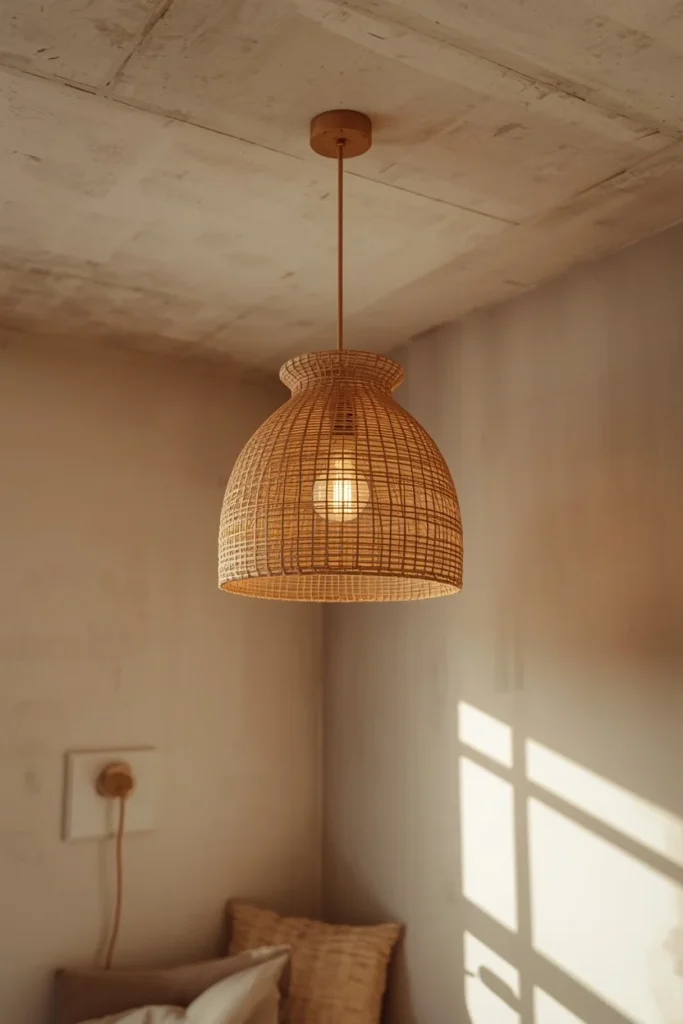
Rental carpet and vinyl flooring rarely match anyone’s actual taste, and a large statement rug laid over it can hide most of the floor while adding color and softness underfoot. Sizing the rug so it extends at least a foot beyond the sides of the bed keeps the room from looking like the rug is floating in the middle of an empty floor. A vintage-style or bold pattern rug does the most visual work here, since it’s one of the largest surfaces in the room and sets the tone for everything else. Rug pads underneath prevent slipping and also protect the original flooring from wear, which matters at move-out inspection time. This single addition often makes more difference to how “finished” a room feels than any wall decor.
8. Freestanding Room Divider Zone
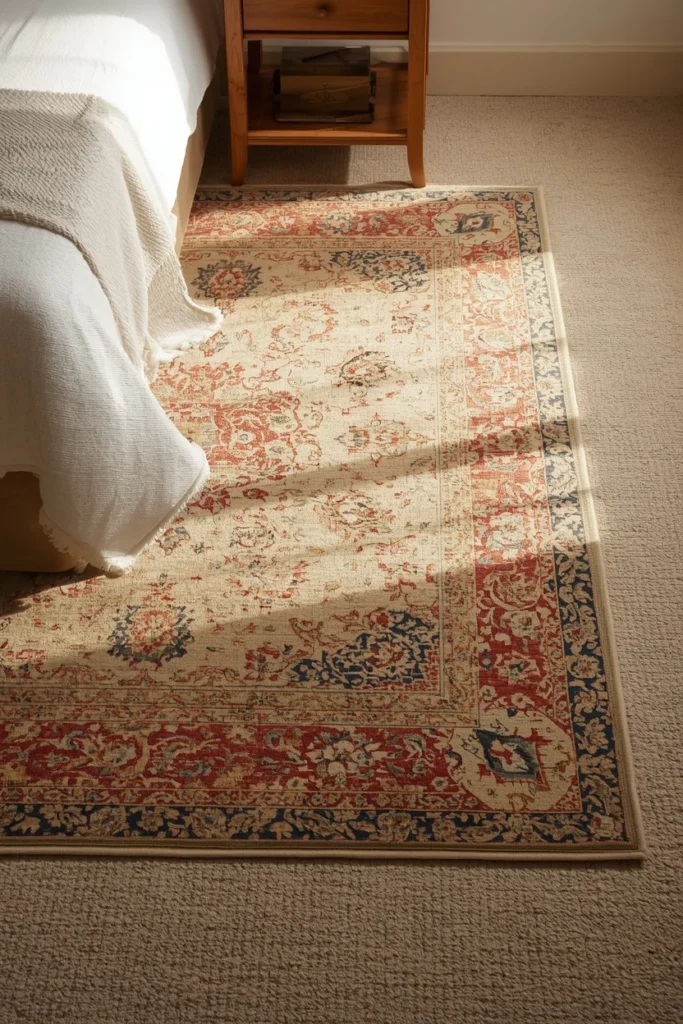
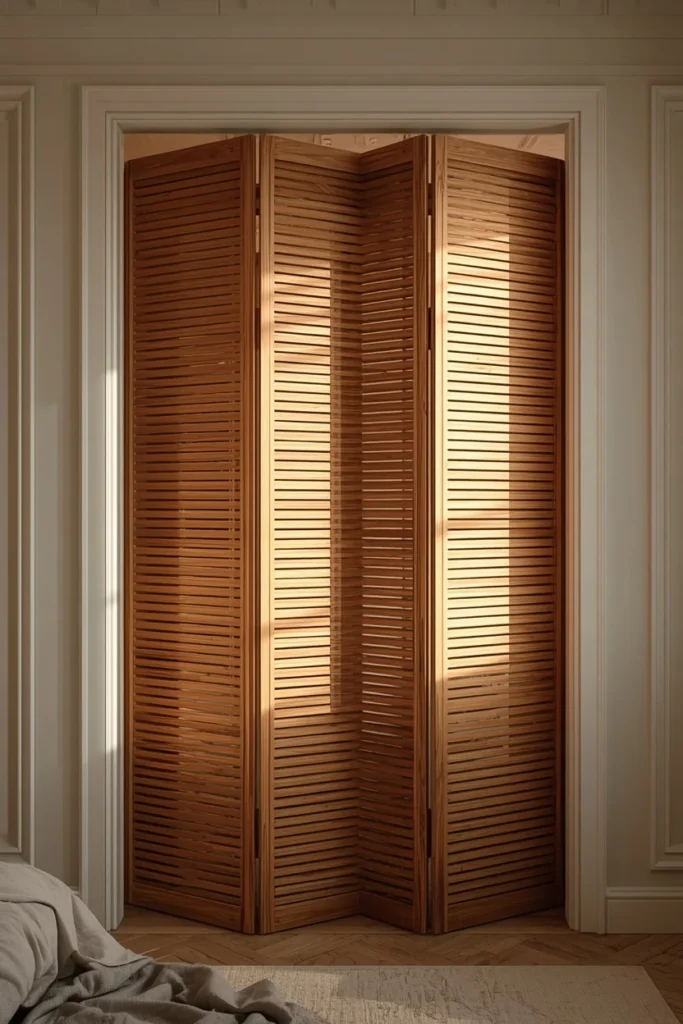
In a studio or a shared bedroom, a freestanding folding screen or open shelving unit can carve out a private sleep zone without any construction at all. Positioning the divider between the bed and the rest of the room creates a sense of separation that a single open space can’t offer on its own. A woven or slatted wood screen lets light and air pass through while still blocking a direct sightline to the bed. Because the divider isn’t attached to anything, it can be repositioned in minutes or taken along at move-out. This idea works especially well for renters sharing a one-bedroom or studio layout with a roommate or partner who keeps a different schedule.
9. Layered Textile Bedding
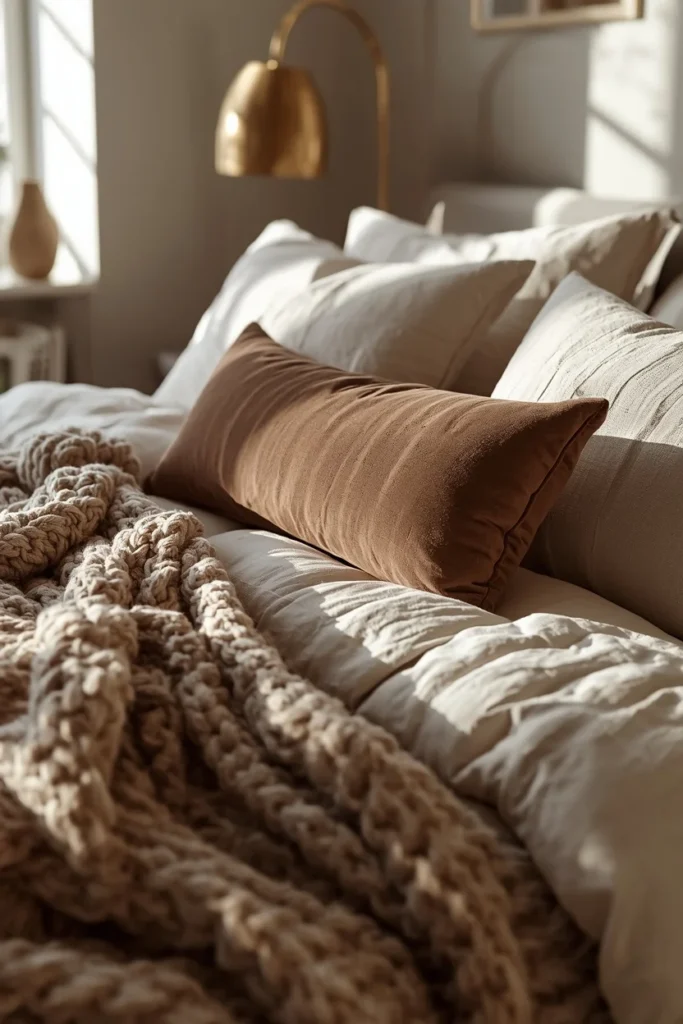
Nothing signals “lived-in and loved” faster than a bed layered with a fitted sheet, a duvet, a woven throw, and a handful of pillows in varying textures and sizes. Mixing a knit throw with a velvet lumbar pillow and a couple of linen shams adds depth without needing every piece to match perfectly. Keeping the color palette within two or three tones, even while mixing textures, stops the layered look from turning chaotic. This is one of the cheapest ways to transform a bed’s entire presence in the room, since textiles are inexpensive relative to furniture and take up zero wall or floor space beyond the bed itself. A well-layered bed also tends to be the first thing anyone notices when they walk into the room.
10. Removable Wall Decal Mural
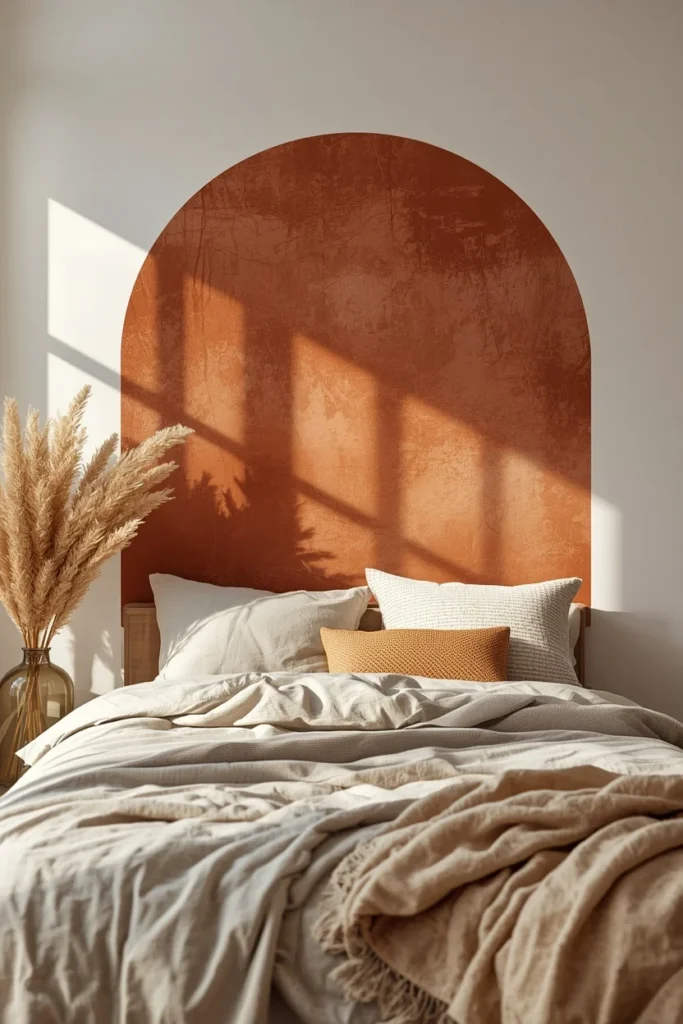
For renters who want more visual impact than a single accent wall but still can’t commit to full wallpaper, a large-scale removable decal mural, like an arch, a botanical scene, or an abstract shape, adds a focal point that peels away cleanly at move-out. Positioning the mural behind the headboard or above a reading chair gives it a clear “frame” within the room rather than floating awkwardly on a blank wall. Because decals apply flat and thin, unlike full wallpaper rolls, they’re often easier for a first-time renter to install alone. Choosing a shape-based design, like an arch or a sun motif, rather than a busy pattern, keeps the mural from competing with other decor in the room. This idea works especially well in bedrooms with otherwise plain, boxy proportions.
11. Tapestry Headboard Wall Hanging
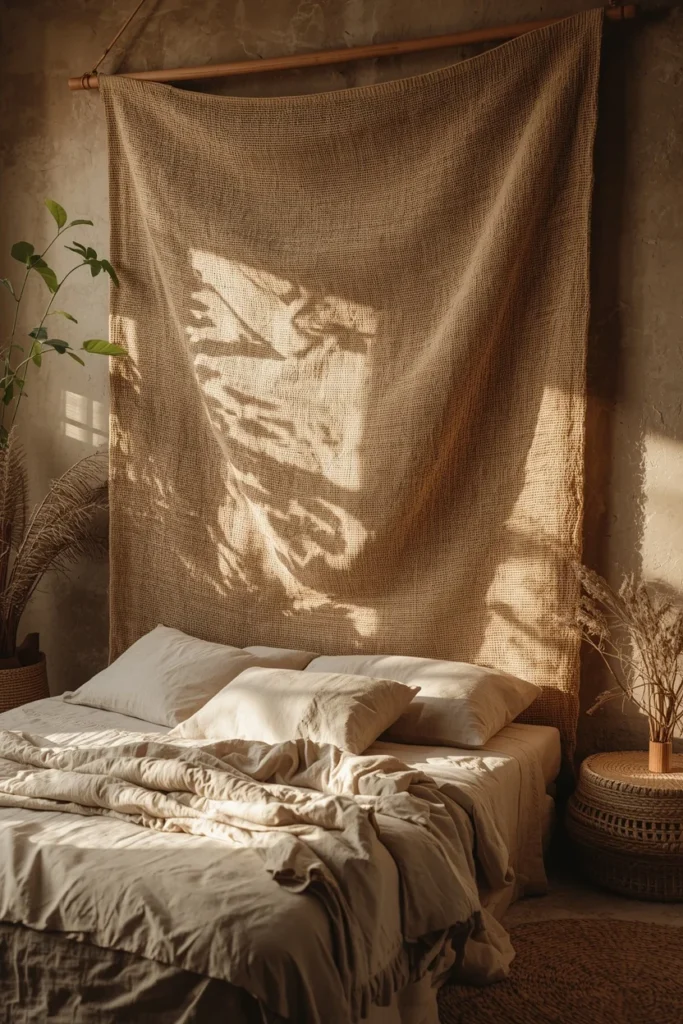
A large woven tapestry or textile hung behind the bed with a simple curtain rod or command hooks does the visual job of a headboard and an accent wall at the same time, without needing either. Natural fiber weaves in warm neutral tones tend to look more elevated than printed fabric tapestries, and they add real texture to a wall that would otherwise stay flat. Hanging the tapestry slightly wider than the bed frame makes it read as an intentional design choice rather than an afterthought. Because it hangs from a rod or a couple of adhesive hooks, it comes down in minutes with zero wall damage. This idea suits bedrooms with high ceilings especially well, since a tall tapestry draws the eye upward and makes the room feel larger.
12. Floor Lamp Mood Lighting
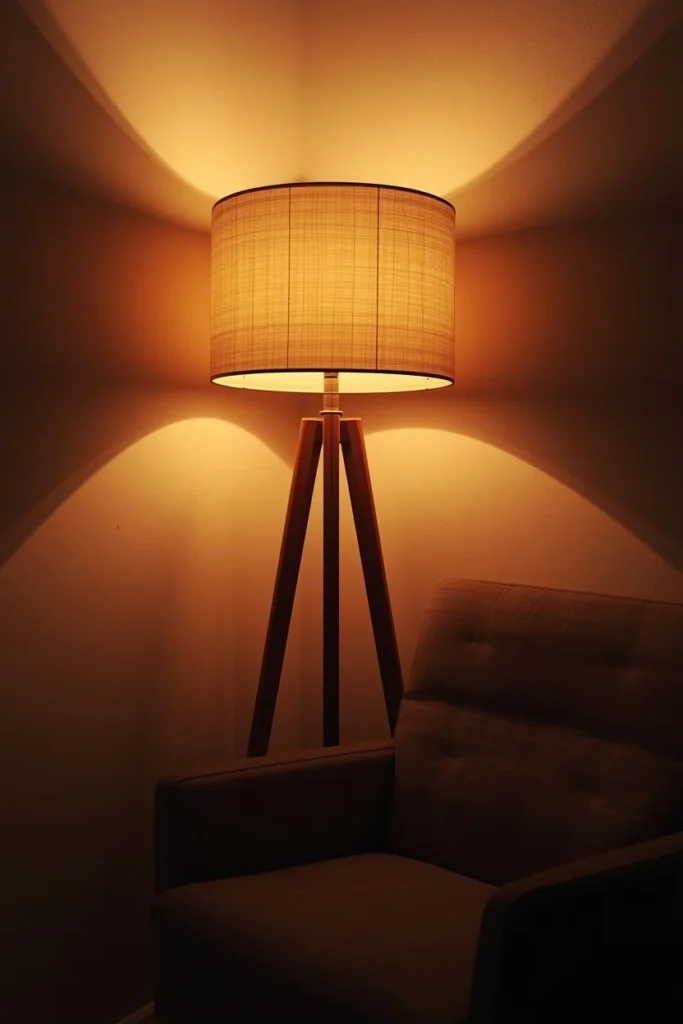
A single overhead bulb is the least flattering light source in most rental bedrooms, and a floor lamp with a warm-toned bulb and a fabric shade can replace it as the room’s main light source entirely. Positioning the lamp in a corner, rather than centered, casts a softer, more directional glow that makes the whole room feel calmer in the evening. A dimmable bulb, even in a lamp without a built-in dimmer switch, lets the light shift from bright enough to get dressed by to dim enough to wind down. Choosing a lamp with a woven or linen shade adds texture to a corner that might otherwise sit empty. This single swap often does more for a room’s evening mood than any wall decor could.
13. Command Strip Mirror Wall
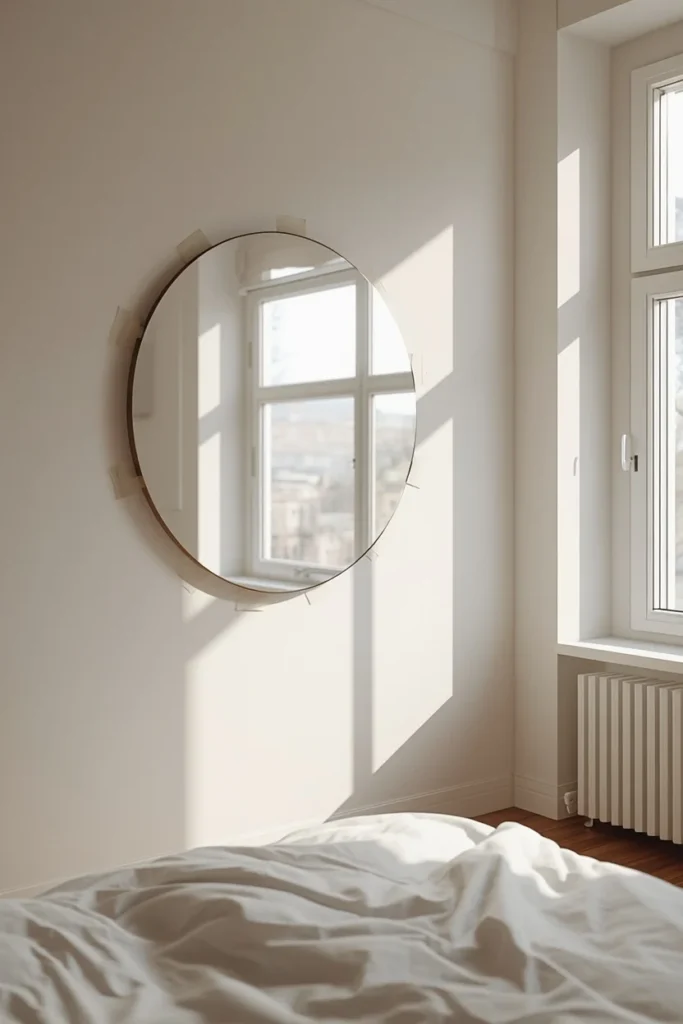
A large mirror, or a cluster of smaller ones, mounted with heavy-duty command strips rated for its exact weight can make a small rental bedroom feel noticeably larger by bouncing light and reflecting the window view. Positioning the mirror across from the window, rather than beside it, maximizes how much natural light it reflects back into the room. A cluster of three or four smaller mirrors in varying shapes adds visual interest as an alternative to one large piece, and spreads the weight across more adhesive points. Testing the strips with a lighter item first, and confirming the wall surface is compatible, helps avoid any risk of a heavier mirror pulling away from the wall. The reflective surface alone can make a cramped bedroom feel close to double its actual size.
14. Vintage Thrifted Furniture Layer
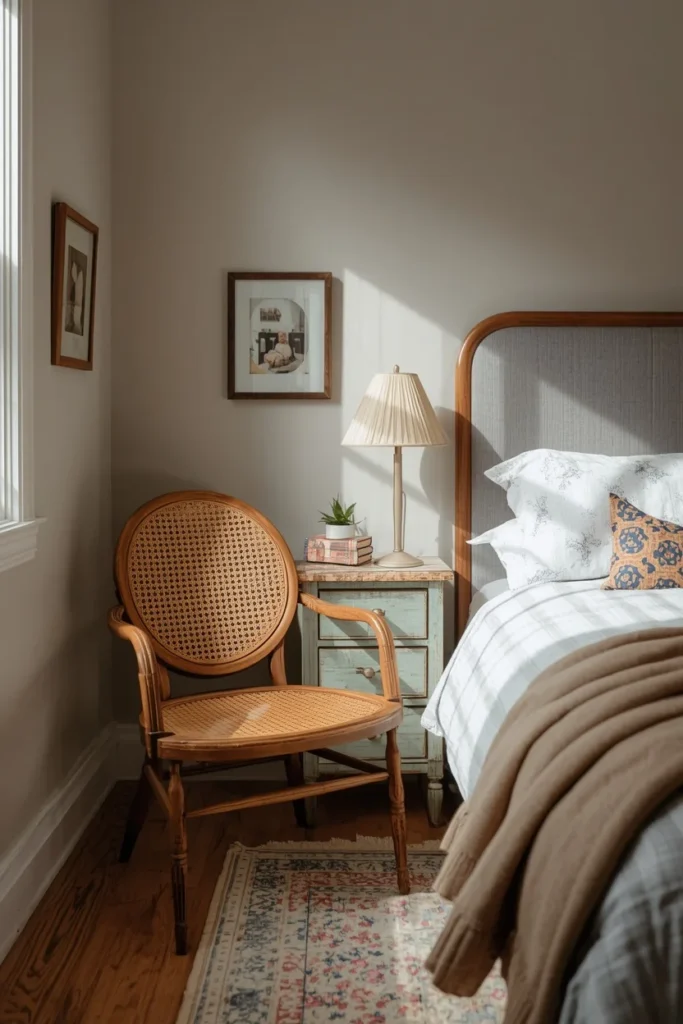
A single thrifted piece, like a wooden nightstand, a cane-backed chair, or a small dresser, adds character that new flat-pack furniture rarely has, and it usually costs less too. A quick coat of paint or new hardware can update a dated piece to match the room’s palette without hiding its original texture and grain completely. Mixing one or two secondhand pieces with newer furniture keeps the room from looking like a full matching set straight out of a catalog. Because these pieces are freestanding, they move easily from one apartment to the next and tend to hold their character better than mass-produced furniture over time. This approach also tends to be the most budget-friendly way to add real personality to a room.
15. Closet Curtain Swap
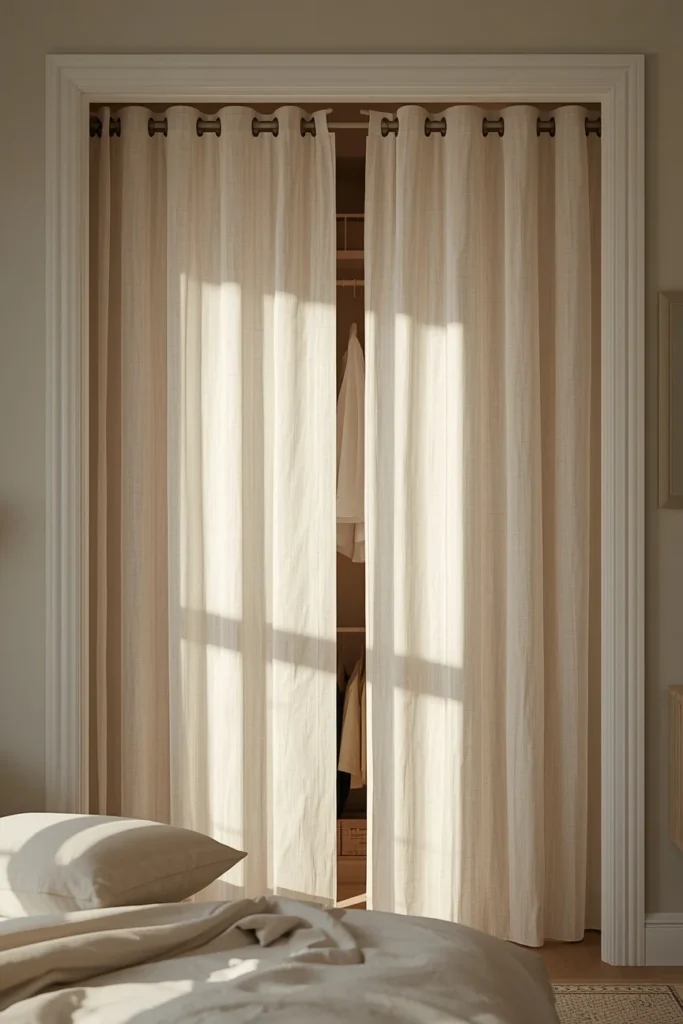
Swapping a bifold or sliding closet door for a simple curtain on a tension rod softens a hard architectural line in the room and can make a small bedroom feel less boxy overall. Choosing a fabric that matches or complements the window curtains ties the whole room together visually. This swap also solves the common rental closet door problem of doors that stick, squeak, or don’t slide smoothly, without needing a repair request to the landlord. At move-out, the original doors go back on their tracks and the curtain simply comes down. This idea works especially well in bedrooms where the closet takes up a large, visually heavy section of one wall.
16. Under-Bed Storage Styling
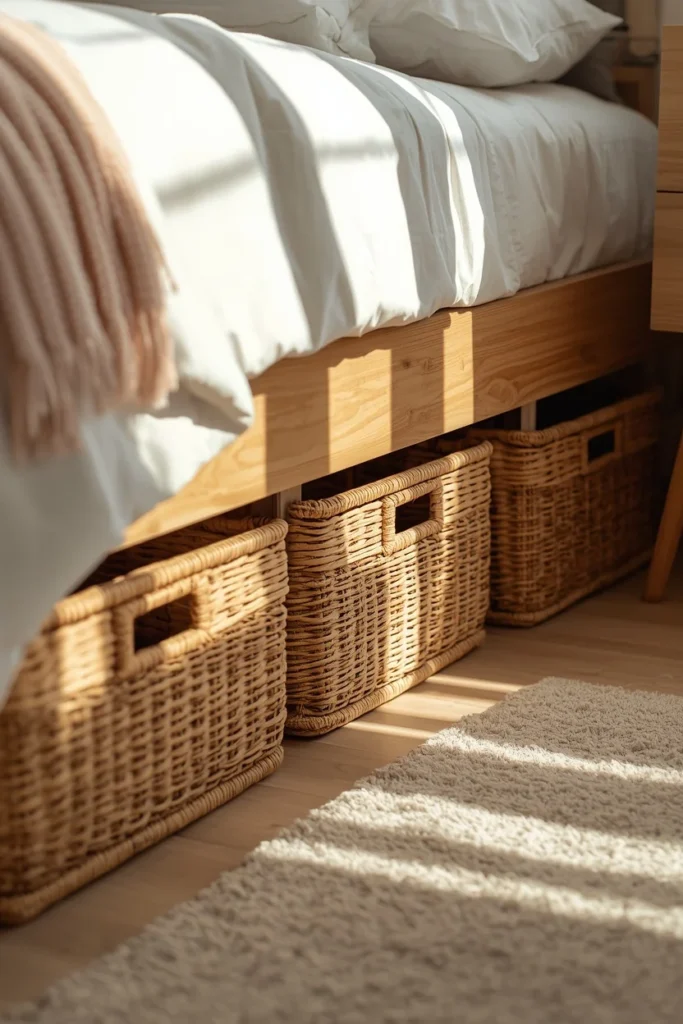
Storage bins or a low storage cart slid under the bed frame use dead space most rental bedrooms waste entirely, and keeping the containers uniform in color and material makes the space look tidy even when it’s opened often. Woven baskets with lids work as well as they look, hiding off-season clothing or extra bedding without needing a dresser large enough to hold everything. Labeling each bin, even with a simple tag, makes the system easier to maintain past the first organizing weekend. This approach clears floor space elsewhere in the room, which matters most in smaller bedrooms where every visible surface affects how calm or cluttered the space feels. A tidier floor, more than almost anything else, makes a small room read as larger.
17. Plant Corner for Color
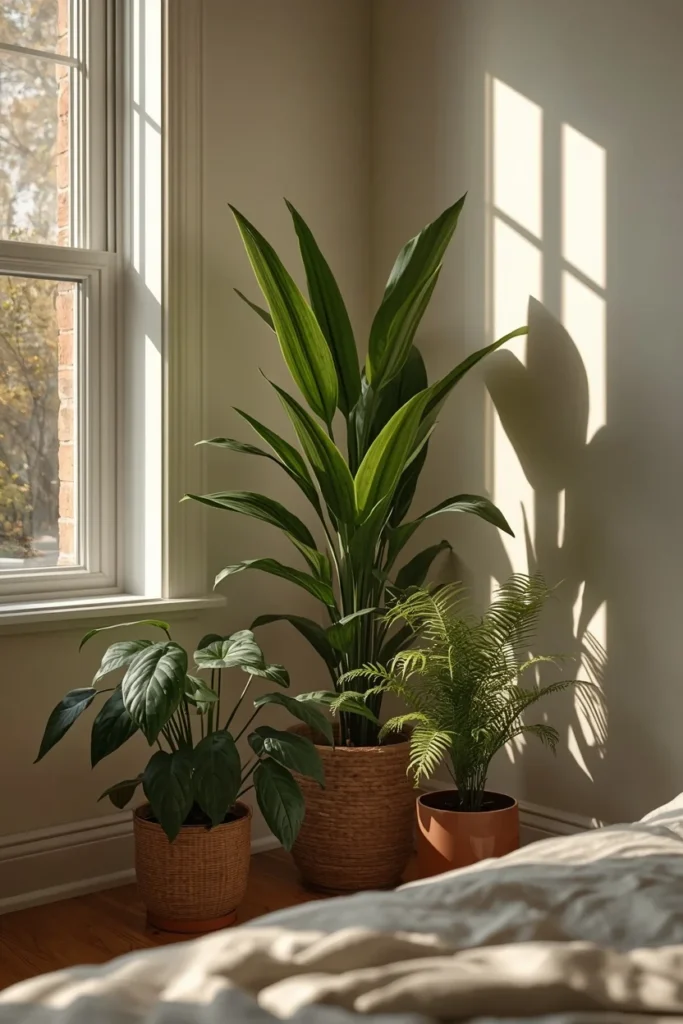
A cluster of two or three low-maintenance plants, like a pothos, a snake plant, and a small fern, adds color and life to a bedroom corner without needing a green thumb or any wall-mounted planters. Varying the pot heights, using a small stool or stack of books under one pot, adds visual interest to what would otherwise be a flat grouping. Plants also soften hard rental furniture lines, like a plain particleboard dresser or a boxy nightstand, just by sitting nearby. Because none of this requires drilling or hanging planters, it’s one of the lowest-commitment ways to bring in the earthy tones and organic shapes currently trending in bedroom decor. A single plant on a nightstand can do a surprising amount of work in an otherwise sparse room.
18. Peel-and-Stick Tile Nightstand Refresh
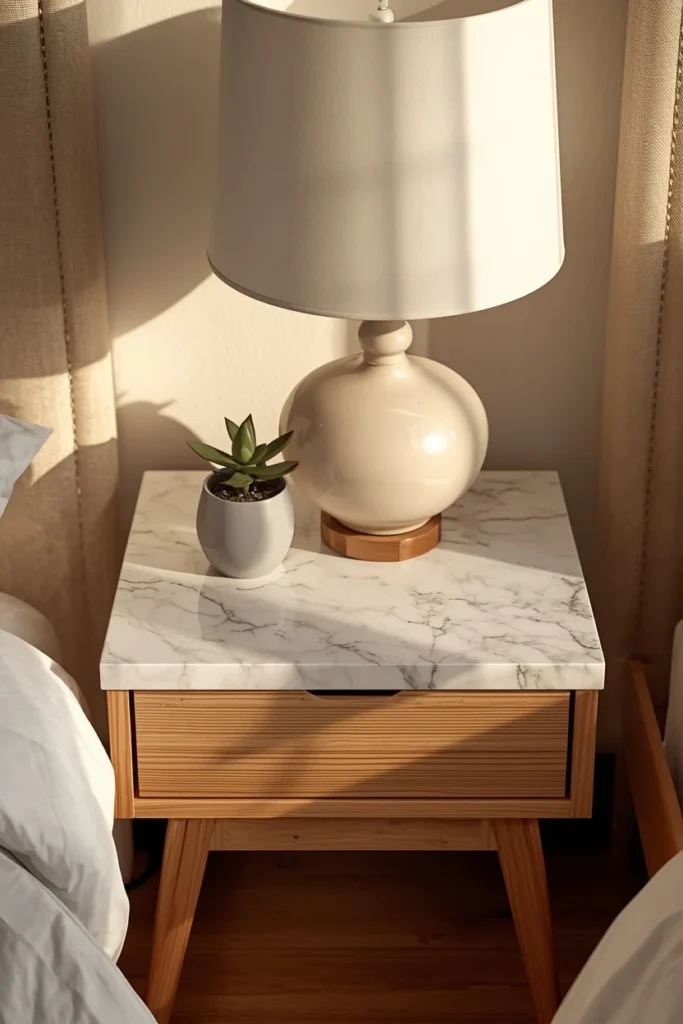
A dated laminate nightstand or dresser top can get a full visual refresh with a small sheet of peel-and-stick tile or marble-look vinyl cut to size and applied directly to the surface. This works especially well on a piece already provided by the landlord in a furnished rental, since it updates the look without needing to buy new furniture entirely. Choosing a marble or stone-look pattern adds a higher-end finish for the cost of a single small roll of material. Because the application is surface-level and fully removable, the original laminate underneath stays protected and unchanged. This is one of the more overlooked upgrades on this list, but it solves a very specific rental problem: furniture you can’t replace but also can’t stand looking at.
19. Woven Wall Basket Display
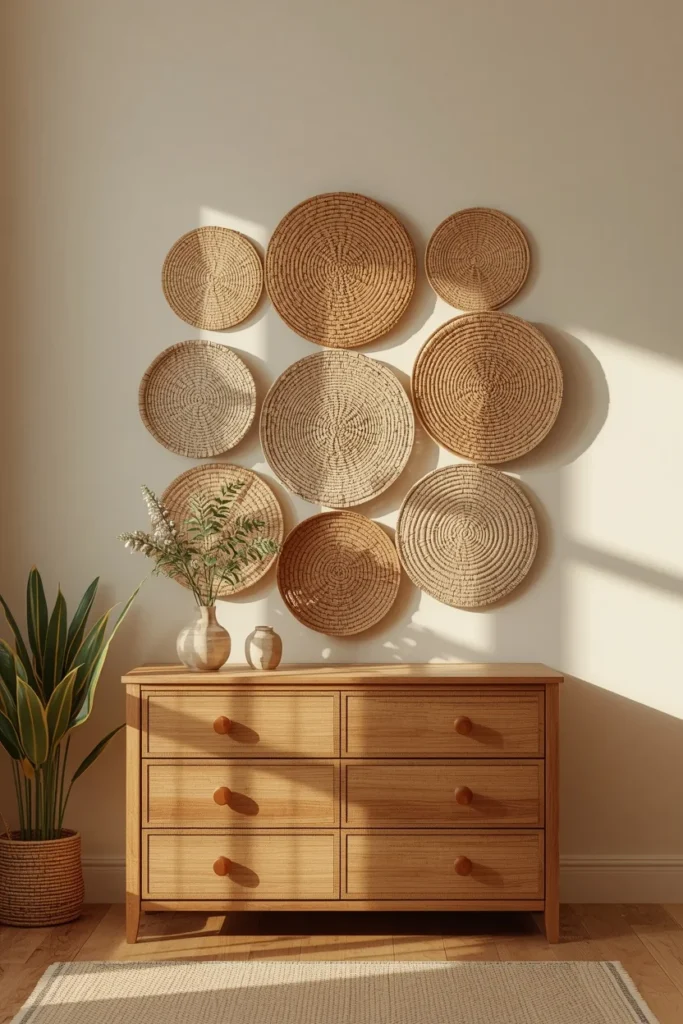
A cluster of flat woven baskets mounted with command strips in a loose arrangement above the bed or dresser adds texture and a handmade feel without needing any actual storage function from the baskets themselves. Overlapping a few different basket sizes, rather than lining them up evenly, gives the arrangement a more organic, gallery-like feel. This idea pairs especially well with a neutral or earth-toned bedroom palette, since the natural fiber tones tend to blend with warm wood and linen accents already in the room. Because each basket is lightweight, the command strips hold securely without the risk that heavier framed art might carry. This display option gives renters who want texture over art or photography a low-cost, fully removable alternative.
Styling Tips
- Pick one dominant textile color and repeat it across curtains, bedding, and one accent piece so the room reads as planned, not thrown together.
- Layer at least two light sources beyond the overhead fixture — a floor lamp and either LED strips or a plug-in pendant — so the room has real evening ambiance.
- Keep wall-mounted pieces to command strips rated for their exact weight, and test the surface with a lighter item first before hanging anything heavy.
- Choose one or two thrifted or vintage pieces to mix with newer furniture so the room doesn’t read as a single matching set.
Practical Implementation Ideas
- Start with lighting and textiles before wall decor, since both are cheap, fully portable, and change the room’s mood the fastest.
- Measure your specific wall type before buying command strips, since textured or heavily painted walls sometimes need specific adhesive strengths.
- Lay out any gallery wall arrangement on the floor first, then transfer it with painter’s tape as a placement guide.
- Photograph the original state of any fixture you swap, like an overhead light, so it’s easy to reinstall correctly at move-out.
Common Mistakes to Avoid
- Skipping the weight rating on command strips, which leads to art or mirrors falling and damaging both the item and the wall.
- Choosing wallpaper or decals not labeled as removable, which can pull paint off the wall when taken down.
- Overcrowding a small bedroom with too many furniture pieces instead of a few multi-functional ones.
- Forgetting to keep original hardware and fixtures stored somewhere safe for reinstallation before moving out.
Small-Space Alternatives
- A folding screen or curtain divider adds privacy in a studio without needing any permanent wall.
- Under-bed storage clears floor space that a small bedroom needs most.
- A wall-mounted or floating shelf, installed with landlord permission, adds storage without using floor space at all.
- Choosing furniture with slim, visible legs rather than boxy bases makes a small room feel less crowded, since the floor stays visually open underneath.
Budget-Friendly Alternatives
- Thrifted furniture and a fresh coat of paint cost far less than new pieces and often have better bones.
- A single peel-and-stick accent wall costs a fraction of full-room wallpaper and still delivers most of the visual impact.
- Layered textiles, like an inexpensive throw blanket and a couple of new pillow covers, refresh a bed for very little money.
- LED strip lighting kits are inexpensive and reusable across multiple future apartments.
Pro Styling Recommendations
- Test any adhesive product in a small, hidden section of the wall first to confirm it won’t damage the paint underneath.
- Choose warm-toned bulbs (around 2700K to 3000K) for lamps and LED strips, since cooler tones tend to feel more clinical than cozy in a bedroom.
- Keep a small toolkit of touch-up paint matching the wall color on hand, in case any adhesive product needs to be removed and patched before move-out.
- Invest slightly more in one or two statement pieces, like a headboard or a rug, and keep the rest of the room’s decor simple and inexpensive.
FAQs
Conclusion
A rental bedroom stops feeling temporary the moment it starts reflecting an actual person instead of a landlord’s blank slate. None of these 19 ideas require a drill, a paint roller, or a conversation with the leasing office. Start with one or two changes, like better lighting and a layered bed, and let the room build from there over the next few weekends. By the time the lease is up, the space will feel less like somewhere you’re staying and more like somewhere you actually live.