17 Garage Door Designs That Completely Transform Your Home’s First Impression
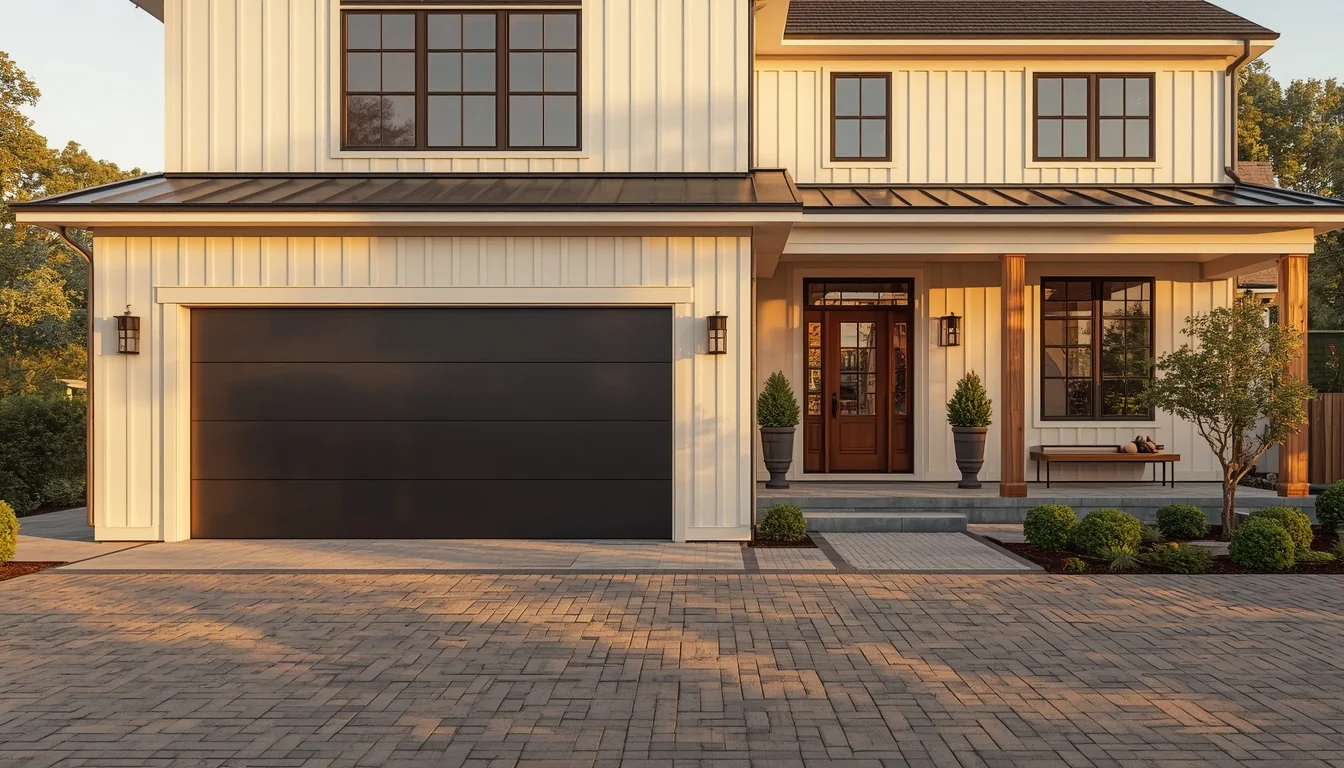
Pull into your own driveway and really look at your garage door. Not a quick glance — a real look, the way a stranger would see it for the first time.
For most homes, that door is the single largest flat surface on the entire front façade. It can quietly blend into the background, or it can do the heavy lifting on curb appeal while your porch, landscaping, and siding just support the look.
The good news: you don’t need a full exterior remodel to change how your home reads from the street. A well-chosen garage door, paired with the right color, texture, and hardware, can do more for first impressions than a fresh coat of paint on the whole house.
Below are 17 garage door design directions, organized by material, color, and architectural style, so you can find the one that actually belongs on your home instead of one that just looked good on someone else’s.
Table of Contents
- Matte Black Flush-Panel Modern Door
- Carriage-Style Faux Wood Composite Door
- Full-View Glass and Aluminum Door
- Vertical Cedar Slat Door
- Two-Tone Door with Contrasting Trim
- Craftsman Door with Top-Row Windows
- Farmhouse White Door with Black Hardware
- Deep Navy Coastal Door
- Chevron Pattern Wood Door
- Frosted Glass Privacy Door
- Espresso Woodgrain Steel Door
- Board-and-Batten Rustic Door
- Arched-Top French Country Door
- Industrial Steel Door with Exposed Hardware
- Louvered Shutter-Style Door
- Charcoal Door with Wood Accent Insert
- Statement Door Framed by an Arbor
- Styling Tips
- Practical Implementation Ideas
- Common Mistakes to Avoid
- Small-Space Alternatives
- Budget-Friendly Alternatives
- Pro Styling Recommendations
- FAQs
- Conclusion
1. Matte Black Flush-Panel Modern Door
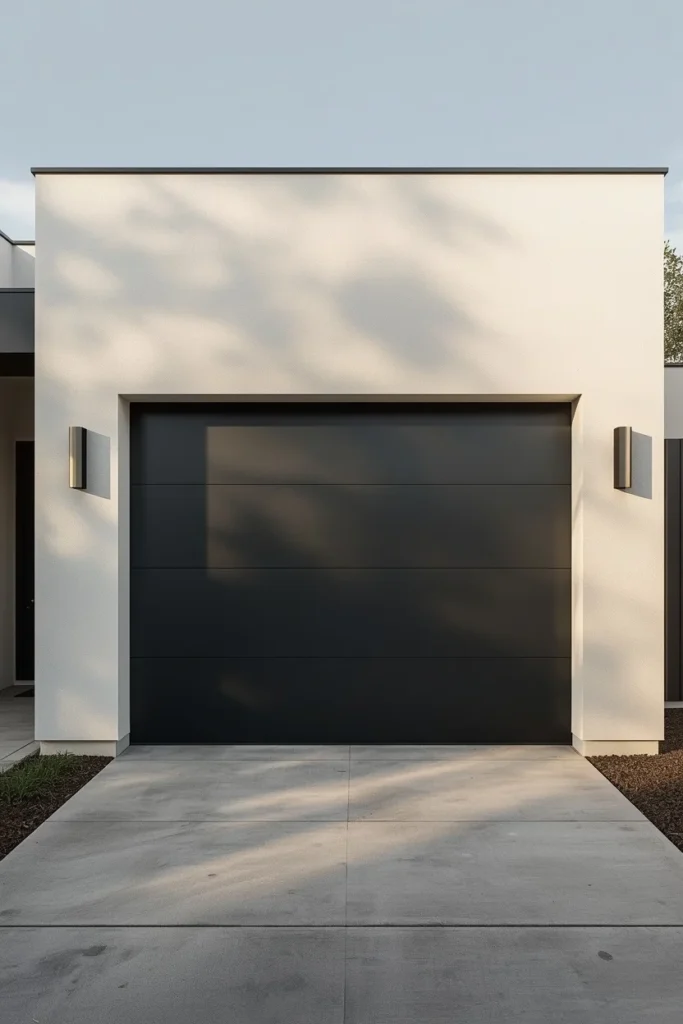
A flush panel door with a matte black finish reads as clean, architectural, and deliberate, which is exactly why it has become the go-to choice for contemporary and transitional homes. The flat surface skips the busy grooves and moldings of traditional doors, so the door reads as one solid, graphic block against lighter siding. Matte finishes also do a quiet favor for maintenance: they hide fingerprints, water spots, and small dings far better than gloss black ever could. Pair it with brushed nickel or matte black step lights along the driveway edge, and the door becomes a nighttime focal point instead of a dark void. This works especially well on homes with white, light gray, or greige siding, where the contrast does most of the visual work without needing extra decoration.
2. Carriage-Style Faux Wood Composite Door
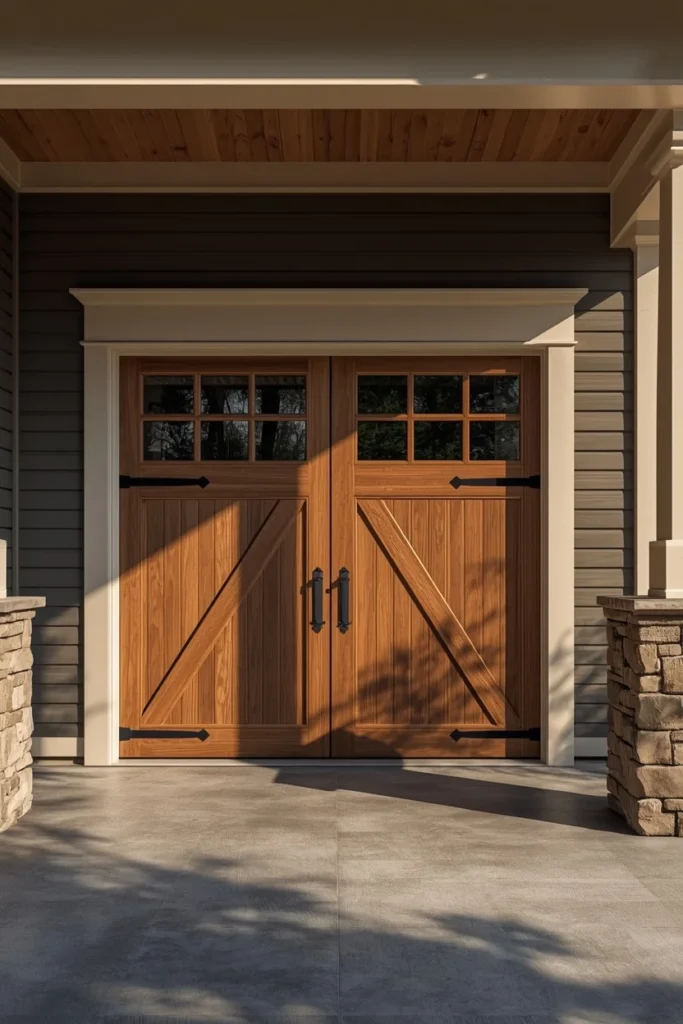
Carriage-style doors borrow their look from the swing-out doors on old carriage houses, complete with crossbuck overlays, decorative strap hinges, and oversized handles, but modern composite versions roll up on standard tracks like any other sectional door. Faux wood composite gives you the warm, grained look of stained cedar or mahogany without the sanding, sealing, and re-staining that real wood demands every few years. The layered construction also holds up better in humid or coastal climates, where solid wood tends to warp or crack over time. This style pairs naturally with craftsman bungalows, modern farmhouses, and traditional colonials, especially when the hardware finish echoes the porch light fixtures or house numbers. Choosing a woodgrain tone that’s a shade or two darker than your front door keeps the look layered instead of matchy.
3. Full-View Glass and Aluminum Door
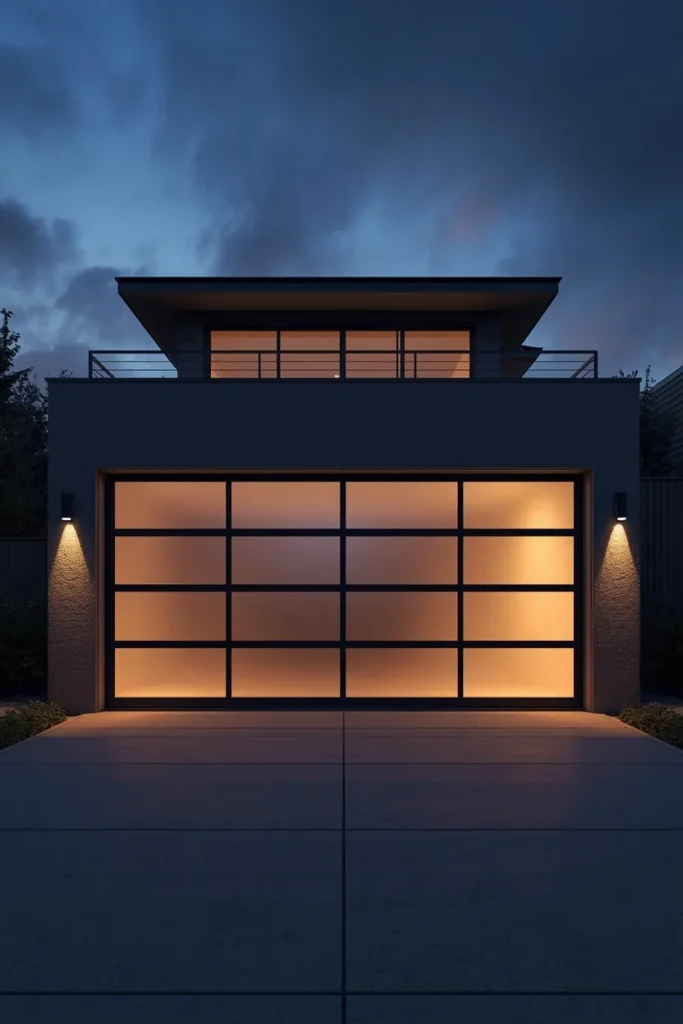
A full-view door swaps solid panels for tempered glass set into a slim anodized aluminum frame, which turns the garage into a source of natural light instead of a closed-off box. On industrial-style or mid-century homes, this design choice does double duty: it looks sleek from the street and makes the garage genuinely usable as a workspace, studio, or gym during the day. Frosted or reeded glass keeps the privacy intact while still letting daylight spill through, which matters if the garage sits close to a neighbor’s sightline. The thin aluminum grid pattern also adds a subtle architectural rhythm that plain steel doors can’t replicate. This is one of the higher-investment options on the list, but it’s also one of the most transformative, since it changes the entire character of the façade rather than just its color.
4. Vertical Cedar Slat Door
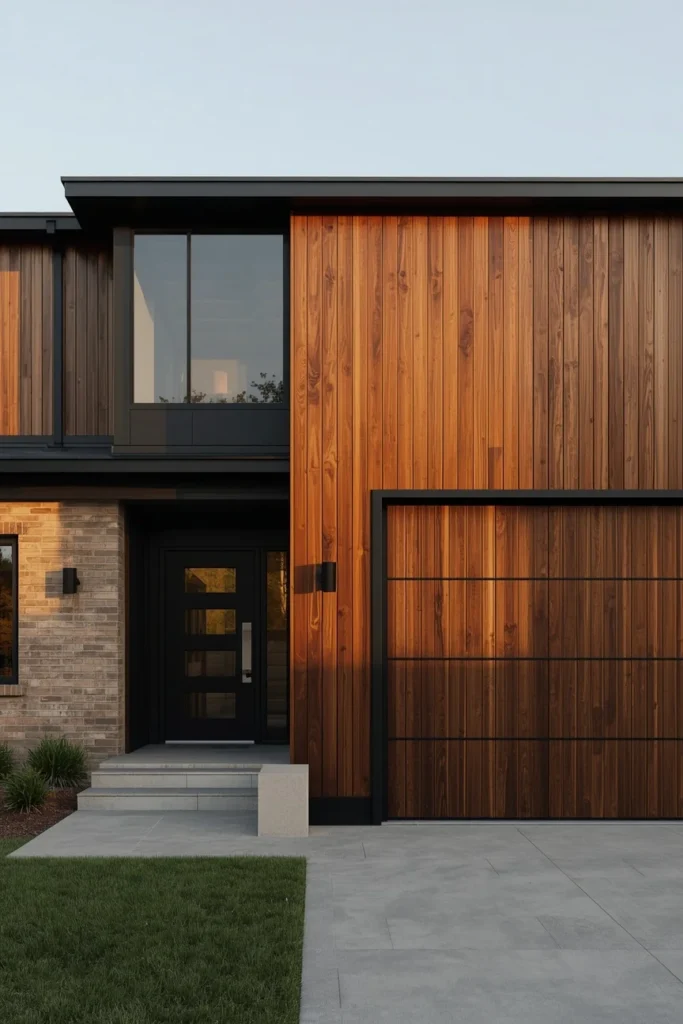
Vertical slats made from real or composite cedar create a completely different visual rhythm than the horizontal panels most people picture when they think “garage door.” The upward lines make a low, wide garage opening feel taller and less bulky, which is a genuine styling win on ranch-style and single-story homes. A charred or Shou Sugi Ban-style dark cedar finish adds texture without adding busyness, since the grain still reads clearly under close inspection. This design pairs beautifully with black-framed windows and matte black exterior lighting, tying the garage into the rest of a modern exterior palette. Sealing the wood every couple of years keeps the tone even, though many composite slat versions skip that maintenance step entirely while still showing convincing wood texture.
5. Two-Tone Door with Contrasting Trim
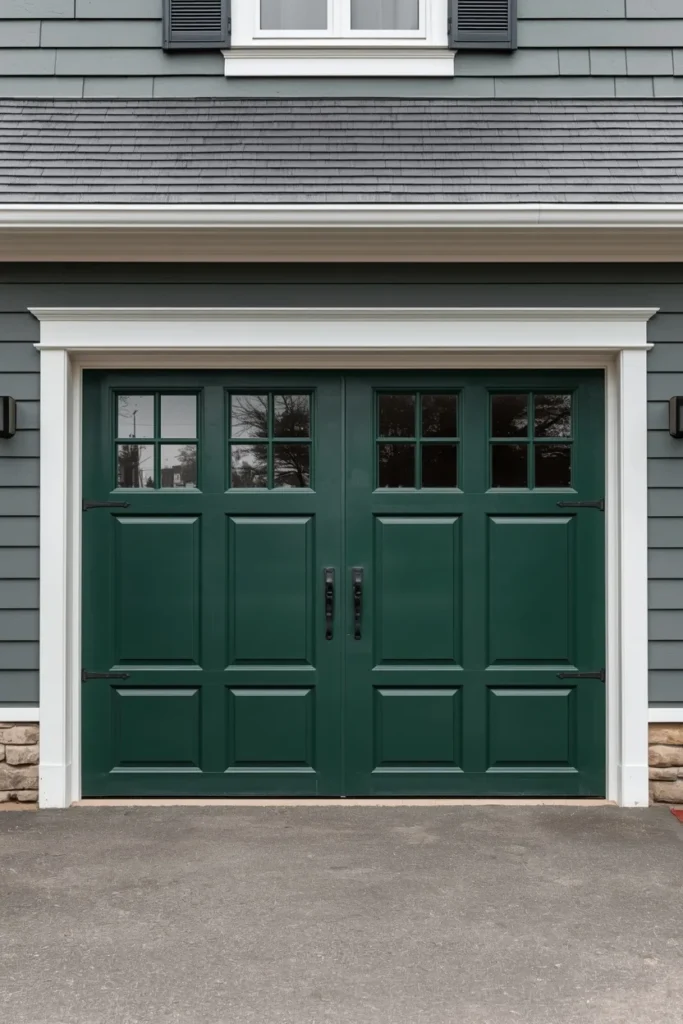
A two-tone garage door pairs a bold body color, often black, navy, or deep green, with crisp white trim outlining each panel edge, creating definition that a single flat color can’t achieve on its own. This treatment works particularly well on carriage-style and raised-panel doors, where the trim highlights the existing panel lines instead of fighting them. The contrast also draws the eye toward the hardware, so upgrading to black hinges and a substantial handle set makes a real visual difference here. On homes with white or cream siding, the white trim on the door creates a visual bridge between the door color and the house color, so the whole combination feels planned rather than accidental. This is one of the easiest updates on the list to DIY, since it’s primarily a paint project rather than a full door replacement.
6. Craftsman Door with Top-Row Windows
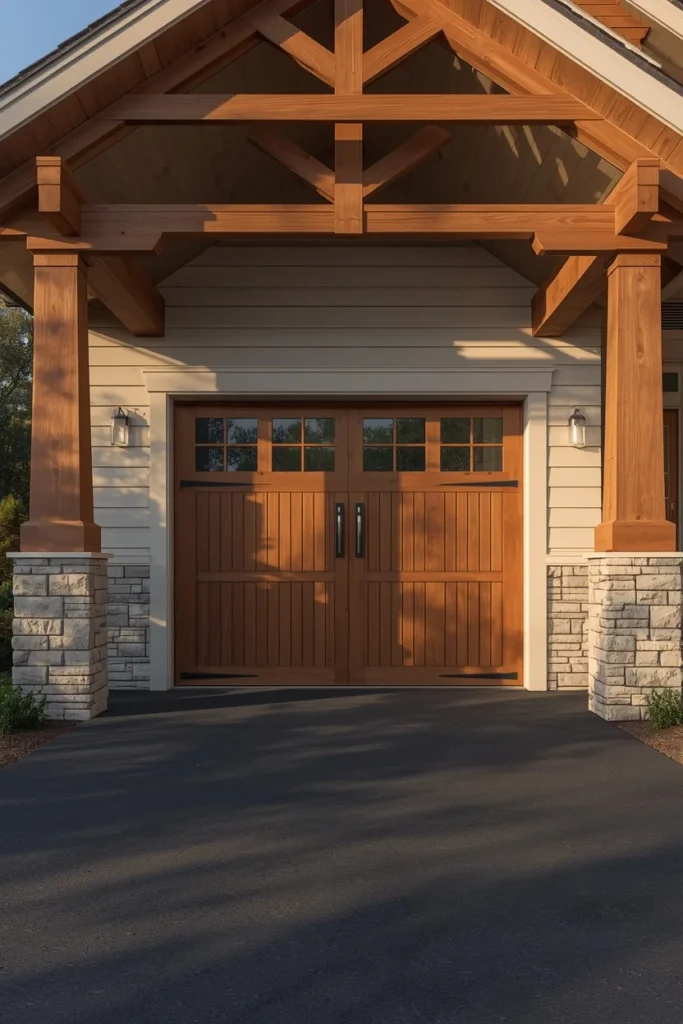
Craftsman-style garage doors take their cues from the front door and porch details of Arts and Crafts homes: horizontal panel lines, square or rectangular top-row windows, and simple, honest hardware instead of anything overly ornate. Placing the windows only in the top row keeps the design grounded and proportional, echoing the divided-lite windows common on craftsman porches and entryways. Natural wood tones or a steel door with a realistic woodgrain finish both work here, as long as the panel lines stay straight and horizontal rather than curved or raised. Black hardware in a simple, flat style ties the door back to craftsman porch lighting and house numbers without introducing a competing decorative element. This design earns its keep on bungalows, foursquare homes, and mission-influenced houses where symmetry and natural materials already define the exterior.
7. Farmhouse White Door with Black Hardware
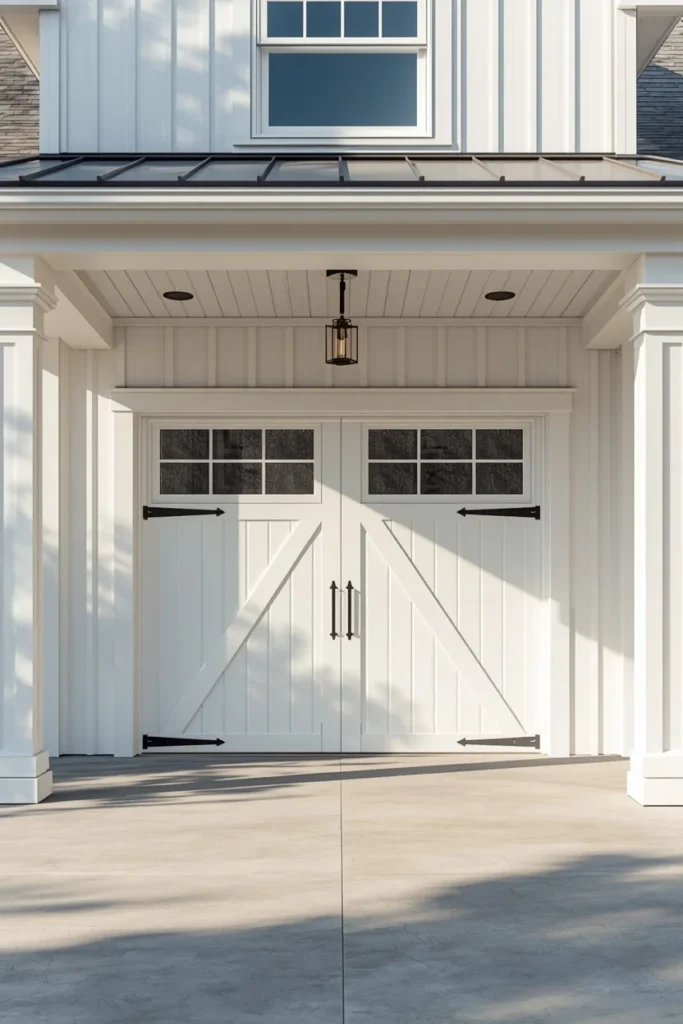
An all-white raised-panel or carriage-style door is the quiet workhorse of modern farmhouse curb appeal, especially when paired with black exterior lighting, black window frames, and a matching black front door. The white finish keeps the façade feeling open and airy, which matters on homes with large expanses of siding where a dark garage door could otherwise feel heavy. Black strap hinges and an oversized handle set add just enough contrast to keep the door from disappearing into the siding entirely. This combination photographs especially well against board-and-batten siding, metal roofing accents, and covered front porches, which is part of why it shows up so often in modern farmhouse Pinterest boards. Keeping the white a true, slightly warm white rather than a stark white helps it blend with cream or ivory trim instead of clashing with it.
8. Deep Navy Coastal Door
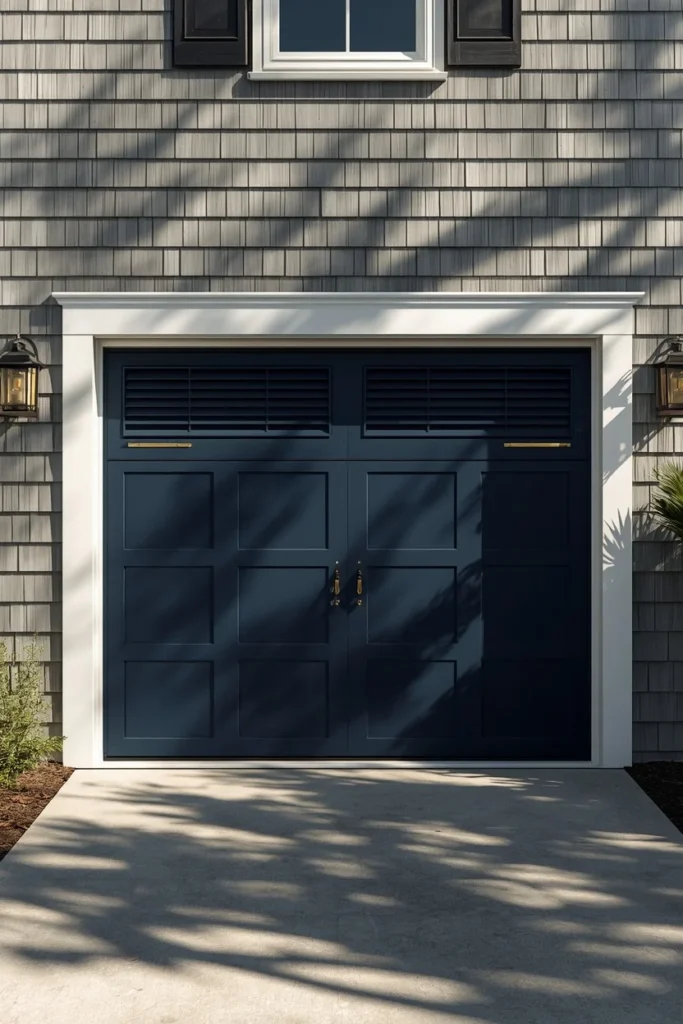
Navy blue has become one of the standout garage door colors for coastal and shingle-style homes, offering the drama of black without feeling quite as stark against sandy or weathered-gray siding. On homes near salt air, anodized aluminum framing and marine-grade hardware finishes resist corrosion far better than standard steel components, which matters more here than on an inland property. The color pairs naturally with white trim, natural rope or jute doormats, and brass or oil-rubbed bronze house numbers for a look that feels collected rather than themed. Louvered or shutter-style panel inserts on the same door add a breezy, beach-house detail that plain flat panels can’t offer. This design choice tends to photograph beautifully in both bright midday sun and the softer blue light of early evening, giving it strong versatility for seasonal styling.
9. Chevron Pattern Wood Door
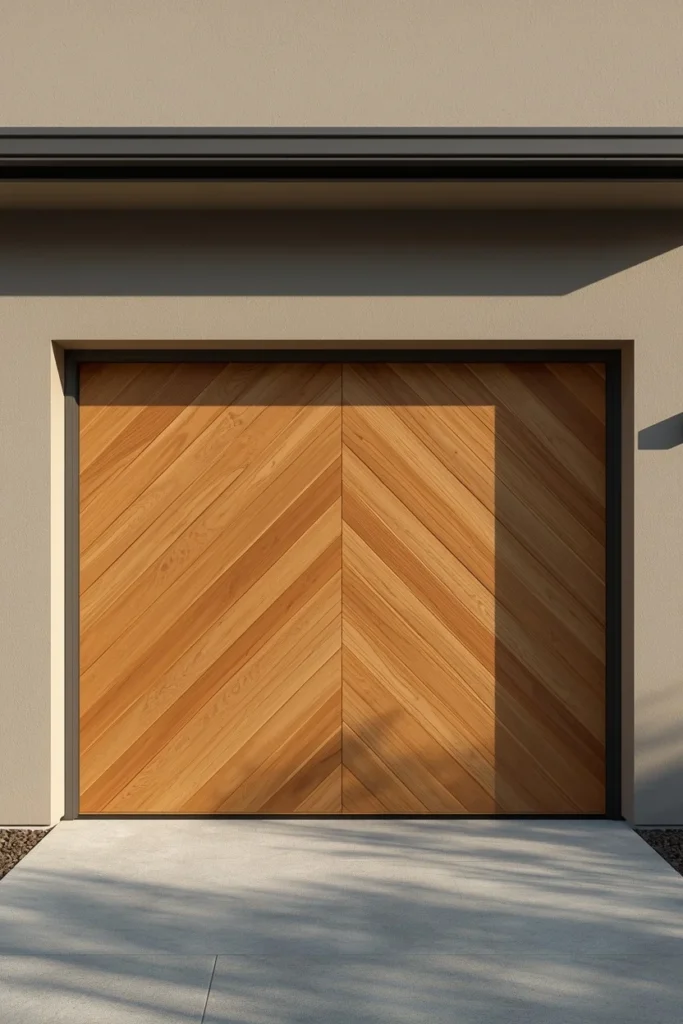
A chevron or herringbone panel arrangement takes the wood tones homeowners already love and gives them a more current, geometric edge, since the angled slats create visual movement across a surface that’s usually flat and static. This detail works especially well as a focal-point upgrade on an otherwise simple modern or transitional home, where the rest of the exterior stays intentionally minimal so the door can carry the visual interest. Real wood chevron doors require sealing to prevent moisture from creeping into the angled joints, while composite versions replicate the pattern with far less upkeep. Keeping the surrounding trim and siding in quiet, neutral tones lets the pattern read clearly instead of competing with busy landscaping or brick. This is a design that tends to age well because the interest comes from craftsmanship and pattern rather than a trend-driven color.
10. Frosted Glass Privacy Door
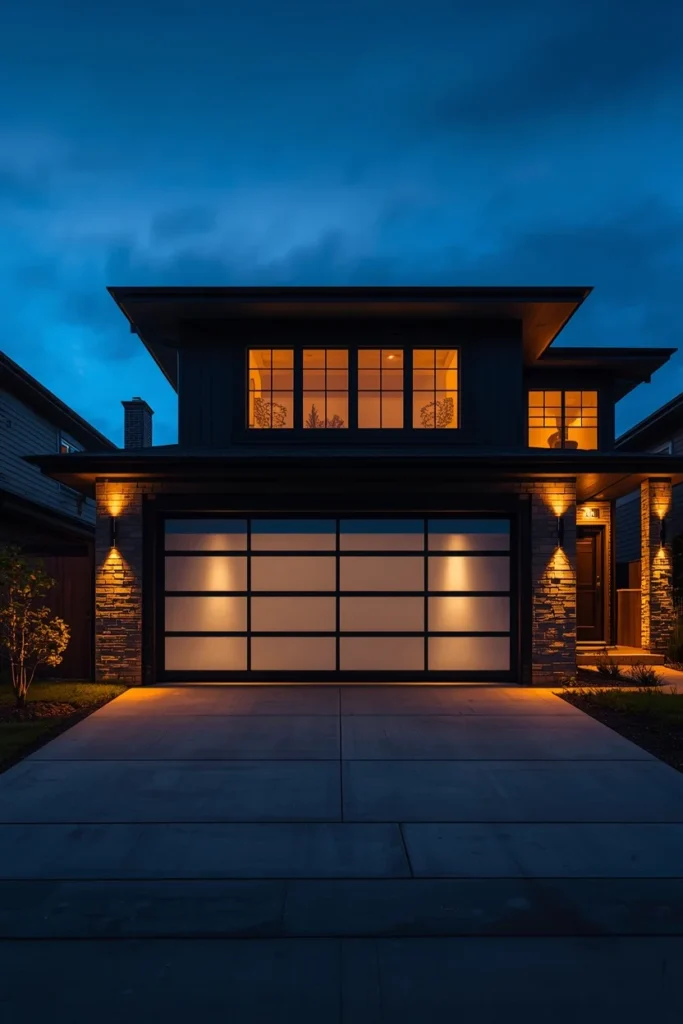
Frosted or obscure glass panels give a garage door the light-filled look of a full-view door while keeping the contents of the garage completely private from the street. This works well for homeowners who want a modern, glass-forward exterior but also use their garage for storage, hobbies, or parking that they’d rather not put on display. Aluminum framing keeps the weight manageable and resists the dents that steel doors can pick up over years of use. At night, interior garage lighting turns the frosted panels into a soft, glowing rectangle, which adds a genuinely dramatic lighting moment to the front of the house after dark. This design pairs naturally with other frosted or reeded glass elements on the home, like a sidelight next to the front door or a frosted transom window, so the material choice feels consistent rather than isolated.
11. Espresso Woodgrain Steel Door
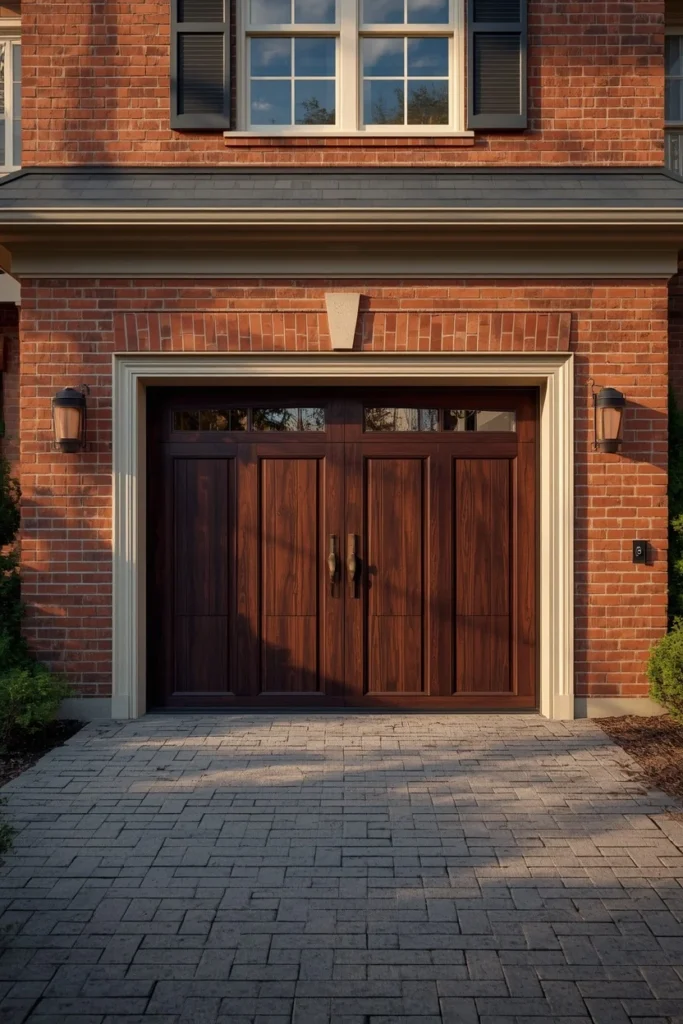
An espresso or deep walnut woodgrain finish on a steel door gives homeowners the rich, saturated wood tone they want without the weight, cost, or upkeep of solid hardwood. Steel construction resists warping, cracking, and pest damage in a way that natural wood simply can’t, which makes it a practical choice for homes in humid or heavily wooded areas. The deep brown tone reads as warm rather than heavy, especially against warm white, tan, or brick exteriors where it functions almost like a piece of furniture set into the façade. Insulated steel core doors in this finish also help regulate garage temperature, which matters for attached garages sitting below a bedroom or home office. Pairing the door with oil-rubbed bronze hardware and a matching stained wood front door pulls the whole color story together without needing any additional accent pieces.
12. Board-and-Batten Rustic Door
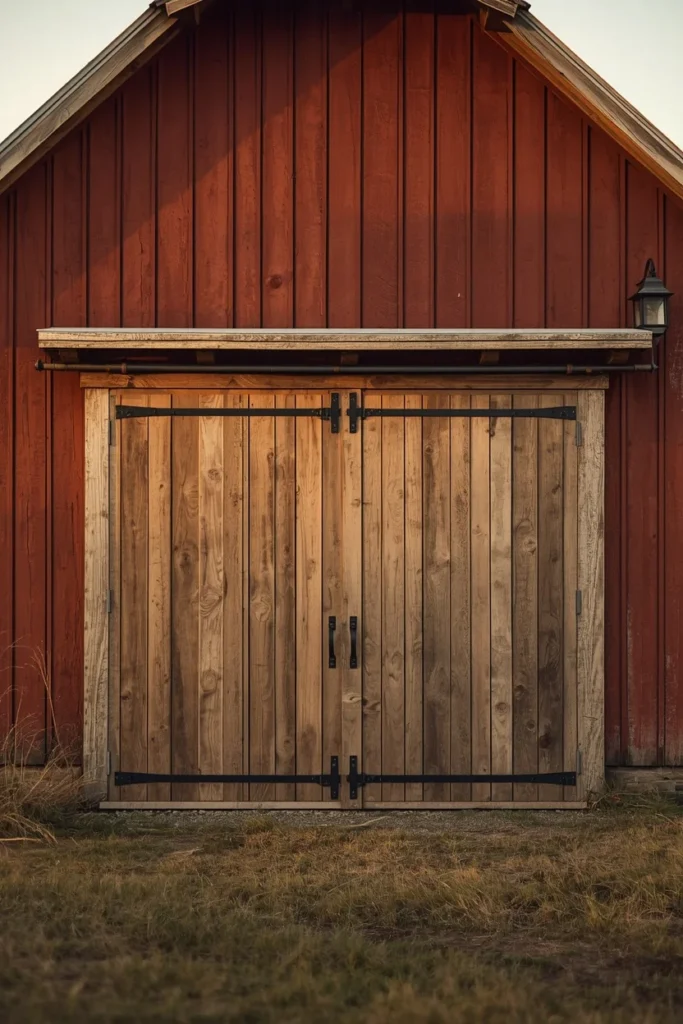
Board-and-batten garage doors use wide vertical planks separated by narrower batten strips, mimicking the barn and farmhouse doors that inspired the modern farmhouse trend in the first place. The visible seams and slightly rough-sawn wood texture give the door a handmade quality that flush or raised panels can’t replicate. This style holds up especially well on properties with real barns, outbuildings, or rural surroundings, where a sleek modern door would feel out of place against the landscape. Staining rather than painting the wood lets the natural grain variation show through, which keeps the door from looking flat or uniform. Adding a black metal strap or ring pull hardware set reinforces the barn-door reference without requiring the door to actually slide.
13. Arched-Top French Country Door
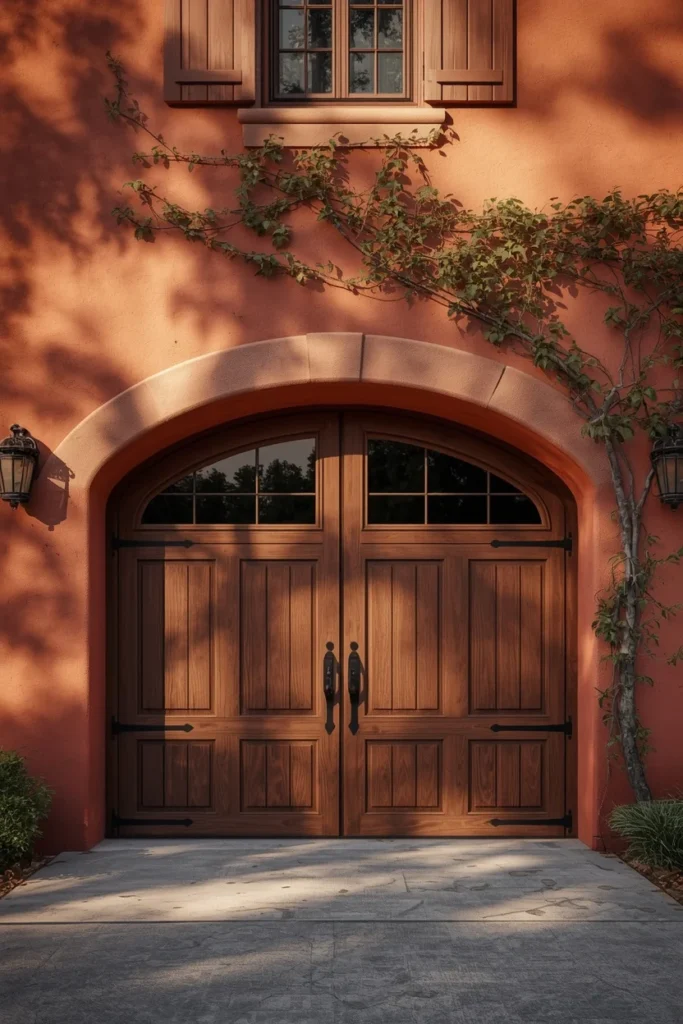
An arched-top garage door softens the typically rectangular, boxy shape of a standard opening, borrowing its silhouette from French country and Mediterranean architecture. The curve at the top pairs naturally with arched entry doors, arched porch openings, or arched windows elsewhere on the home, creating a repeated architectural detail that ties the whole façade together. Wood or wood-look composite in a lightly whitewashed or honey tone keeps the look soft rather than heavy, especially when paired with wrought iron hardware and small leaded-glass window inserts. This design works best on homes that already lean traditional or European in their massing, since introducing a strong arch onto an otherwise flat, modern box can feel disconnected. Stucco exteriors in warm cream or terracotta tones make an especially strong backdrop for this style.
14. Industrial Steel Door with Exposed Hardware
An industrial-style door leans into raw steel texture, visible rivets, and exposed track hardware instead of hiding them behind trim or paint, which suits modern farmhouse, loft-style, and converted warehouse homes especially well. Leaving hardware finishes in raw or matte black steel instead of a polished chrome keeps the look intentional rather than unfinished. Corrugated or ribbed steel panel texture adds depth without requiring paint, since the metal itself catches and scatters light differently depending on the time of day. This style pairs naturally with metal siding accents, black-framed windows, and exposed structural beams elsewhere on the home’s exterior. It tends to work best as a full design commitment rather than a single accent, since one industrial element on an otherwise soft, traditional home can look like a mismatch instead of a style choice.
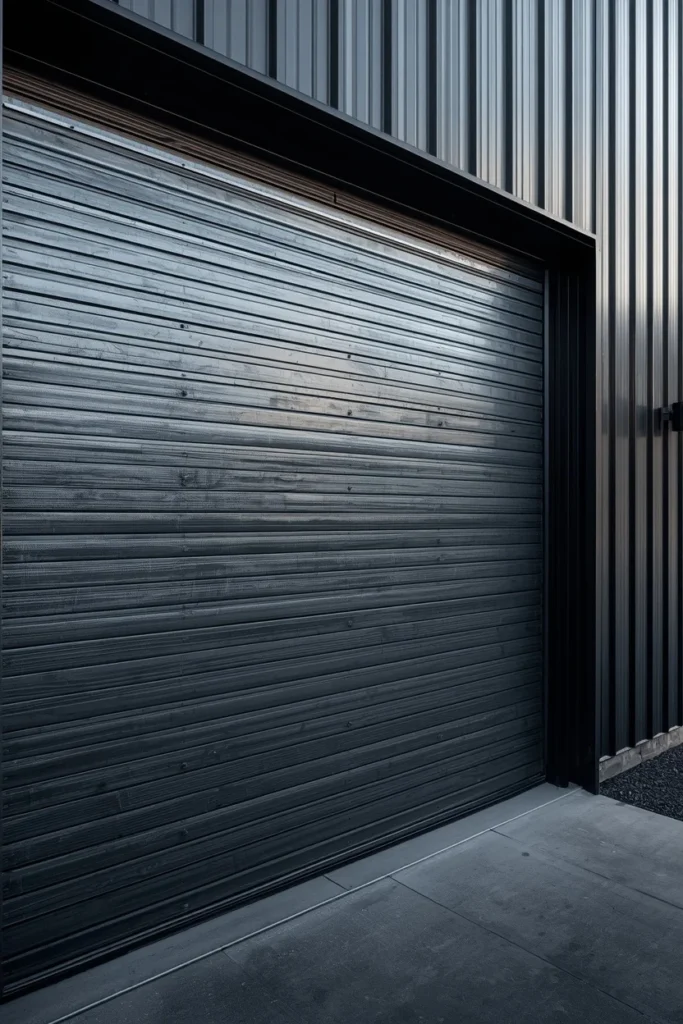
15. Louvered Shutter-Style Door
Louvered or shutter-style garage doors use horizontal slats similar to plantation shutters, and in some designs, the slats can actually be angled open to let air and light into the garage during the day. This style has strong roots in beach and coastal architecture, where ventilation and a breezy, relaxed look both matter more than in a typical suburban setting. White or soft blue-gray finishes keep the look light and airy, especially against weathered wood siding or crisp white stucco. The horizontal slat pattern also gives the door texture and shadow lines without needing any applied hardware or trim, so it stays clean even up close. This design pairs beautifully with outdoor shower fixtures, coastal grasses, and other beach-house details that reinforce the same relaxed, warm-weather mood.
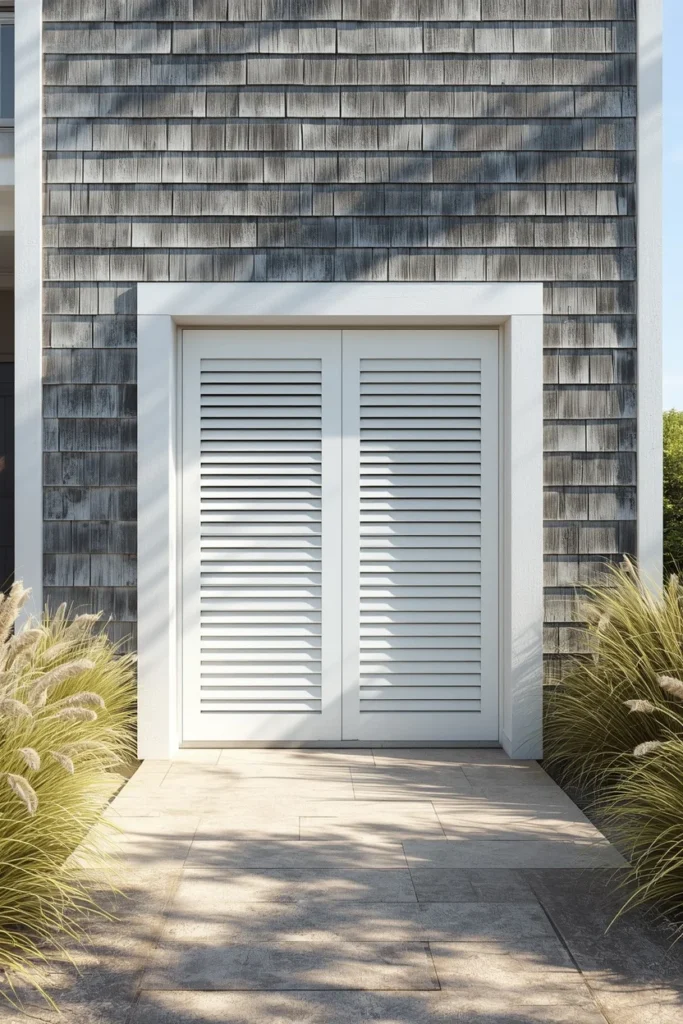
16. Charcoal Door with Wood Accent Insert
Mixing charcoal-toned steel panels with a horizontal wood-look insert running through the center gives a garage door depth and visual interest without committing to an entire wood or entire dark-metal look. The steel sections handle durability and low maintenance, while the wood insert adds warmth exactly where the eye naturally lands first. This combination suits transitional and modern homes that want to soften an otherwise all-gray or all-black color scheme with a single warm element. Keeping the wood tone consistent with a front porch, deck, or entry door elsewhere on the home makes the accent feel planned rather than random. This is also one of the more forgiving options for resale, since the mostly neutral charcoal base won’t compete with a future buyer’s taste the way an all-wood or brightly colored door might.
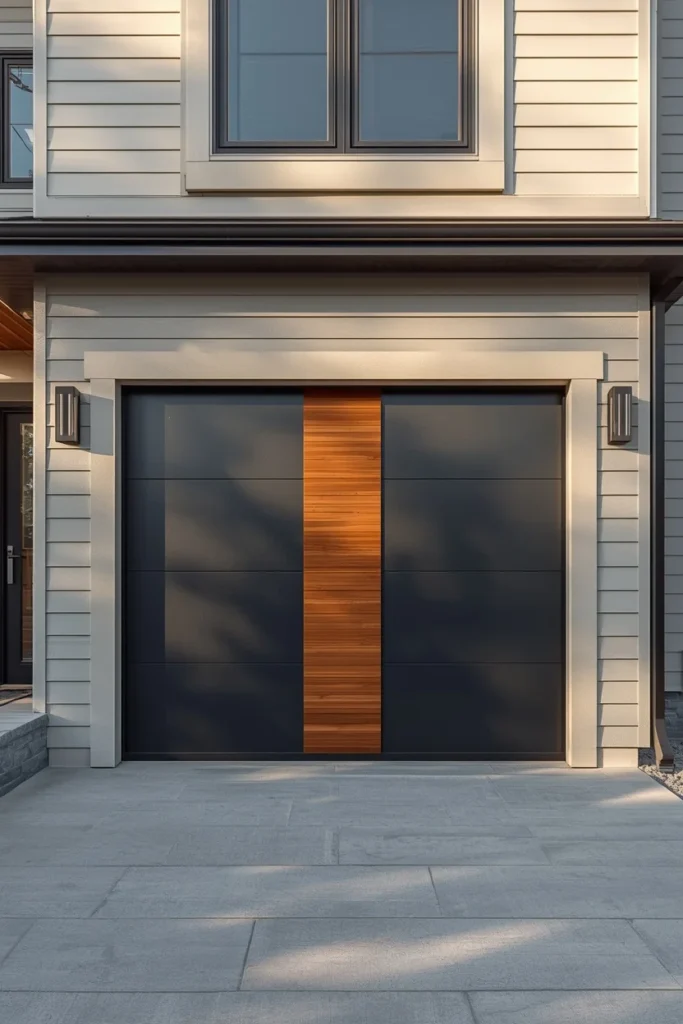
17. Statement Door Framed by an Arbor
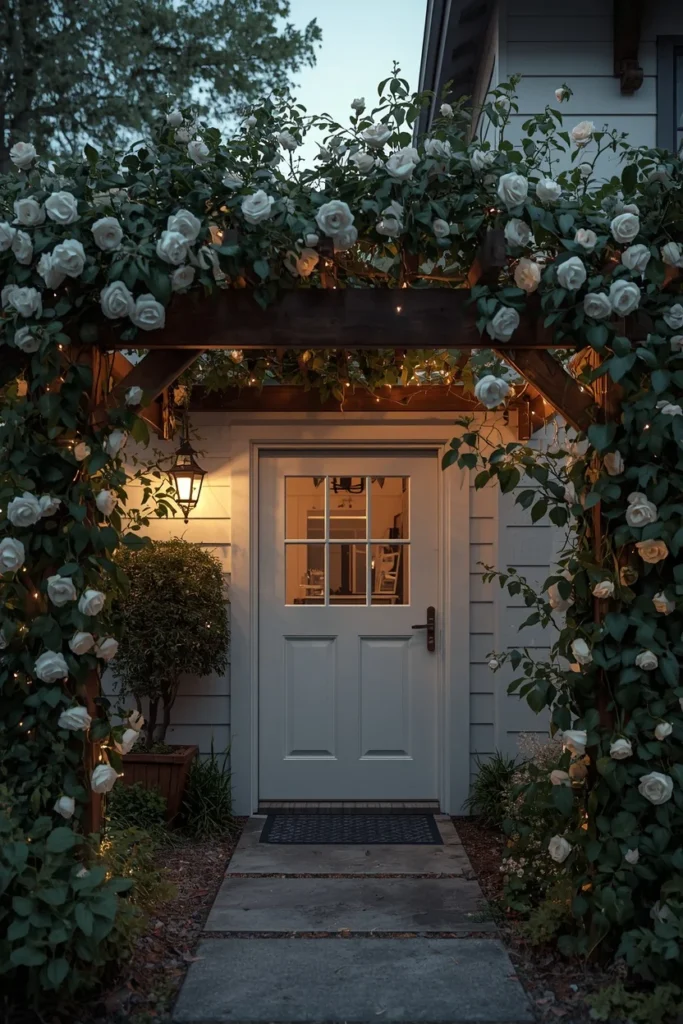
Sometimes the most transformative change isn’t the door itself but what surrounds it, and a simple wood or metal arbor built over the garage entry turns even a straightforward flush-panel door into a genuine architectural moment. Climbing vines like clematis, jasmine, or climbing roses trained along the arbor soften the hard lines of the garage and draw the eye upward instead of straight at the flat panel surface. This treatment works especially well on homes where the garage door faces the street directly and needed a way to feel less like a big blank wall and more like an intentional part of the entry sequence. Landscape lighting tucked into the arbor framing extends the effect into the evening, casting soft dappled shadows across the door surface. This is a lower-cost way to add drama to a garage that may already have a perfectly good door, since the transformation comes from the structure and greenery around it rather than a full door replacement.
Styling Tips
Match your garage door finish to your home’s dominant material rather than its trim color. A brick home reads best with warm wood tones or deep matte colors, while stucco and stone exteriors can handle both warm and cool palettes depending on the undertone of the stone itself.
Keep hardware finish consistent across the garage door, front door, house numbers, and exterior light fixtures. Mixing brushed nickel, oil-rubbed bronze, and matte black across different elements is one of the fastest ways to make an otherwise well-chosen door look unplanned.
Consider the door’s proportions relative to your garage opening. A single wide door on a two-car garage can look heavy on a smaller home, while two separate single doors with a shared column between them often reads as more custom and architecturally interesting.
Practical Implementation Ideas
Start with a color test before committing to a full replacement. Many manufacturers offer online visualizer tools where you upload a photo of your actual home and preview different door colors and styles directly on your existing façade.
If a full replacement isn’t in the budget yet, a garage door refacing kit or a professional paint job can update an existing door’s color and add faux hardware for a fraction of the cost of a new install.
Time major garage door projects alongside other exterior updates, like a new front door color or updated house numbers, so the whole front of the home gets refreshed in one coordinated pass rather than in disconnected pieces over several years.
Common Mistakes to Avoid
Choosing a garage door style that doesn’t match the home’s architecture is the most common misstep, and it’s usually the reason a technically nice-looking door still feels off once it’s installed. A heavily rustic carriage door on a sleek contemporary home, or a stark glass-and-aluminum door on a traditional colonial, tends to read as mismatched no matter how well-made the door itself is.
Skipping insulation to save money upfront often costs more over time, especially for attached garages below living space, since an underinsulated door can noticeably affect indoor comfort and energy bills.
Going too dark without checking sun exposure can lead to premature warping or fading on doors without adequate heat-resistant coatings, particularly in climates with intense, direct afternoon sun.
Small-Space Alternatives
Single-car garages and narrow driveways can still use nearly every style on this list, just scaled down. A single vertical cedar slat door or a single carriage-style door often reads as more custom than a wide double door, simply because the proportions feel more considered.
For homes where the garage sits close to the front door, choosing a lighter finish, like farmhouse white or a soft gray, keeps the entry area from feeling visually crowded by two large dark elements sitting side by side.
Homes without room for a full arbor structure can still borrow the greenery idea from that design by adding a simple trellis panel or a few tall potted plants flanking the door instead.
Budget-Friendly Alternatives
A fresh coat of exterior-grade paint in a current color, paired with new hardware, can deliver much of the visual impact of a full door replacement at a fraction of the price.
Faux wood grain vinyl wraps and adhesive overlay kits have improved significantly and now offer a convincing textured finish over an existing steel door for homeowners who want the carriage-style or woodgrain look without a full replacement.
Adding decorative window inserts to an existing plain door is often available as a retrofit kit, giving the top-row window look from the craftsman design without needing to replace the entire door panel.
Pro Styling Recommendations
Choose a door color that appears in at least one other spot on the home’s exterior, whether that’s the shutters, the front door, or an accent trim color, so the whole palette feels cohesive rather than like two separate decisions.
When in doubt on scale, go slightly bolder on hardware size rather than door color. Oversized handles and hinges photograph well and read as intentional, while an overly bold or trendy color can feel dated faster than classic hardware ever will.
Test your chosen finish at multiple times of day before finalizing it, since matte black, in particular, can look nearly navy in shade and true black in direct sun, which changes how it pairs with your siding color.
FAQs
Conclusion
A garage door rarely gets the attention it deserves in a home exterior refresh, yet it’s often the single largest design decision on the entire front of the house. Whether the right fit turns out to be a moody matte black flush panel, a warm carriage-style wood look, or something as simple as an arbor and a few climbing vines, the details that matter most are consistency with your home’s existing architecture and hardware that feels intentional rather than accidental. Pick the direction that matches your house, not just the one that looked best on someone else’s feed, and the first impression takes care of itself.