21 Summer Bedding Ideas That Make Your Bed Look Fresh & Resort-Ready
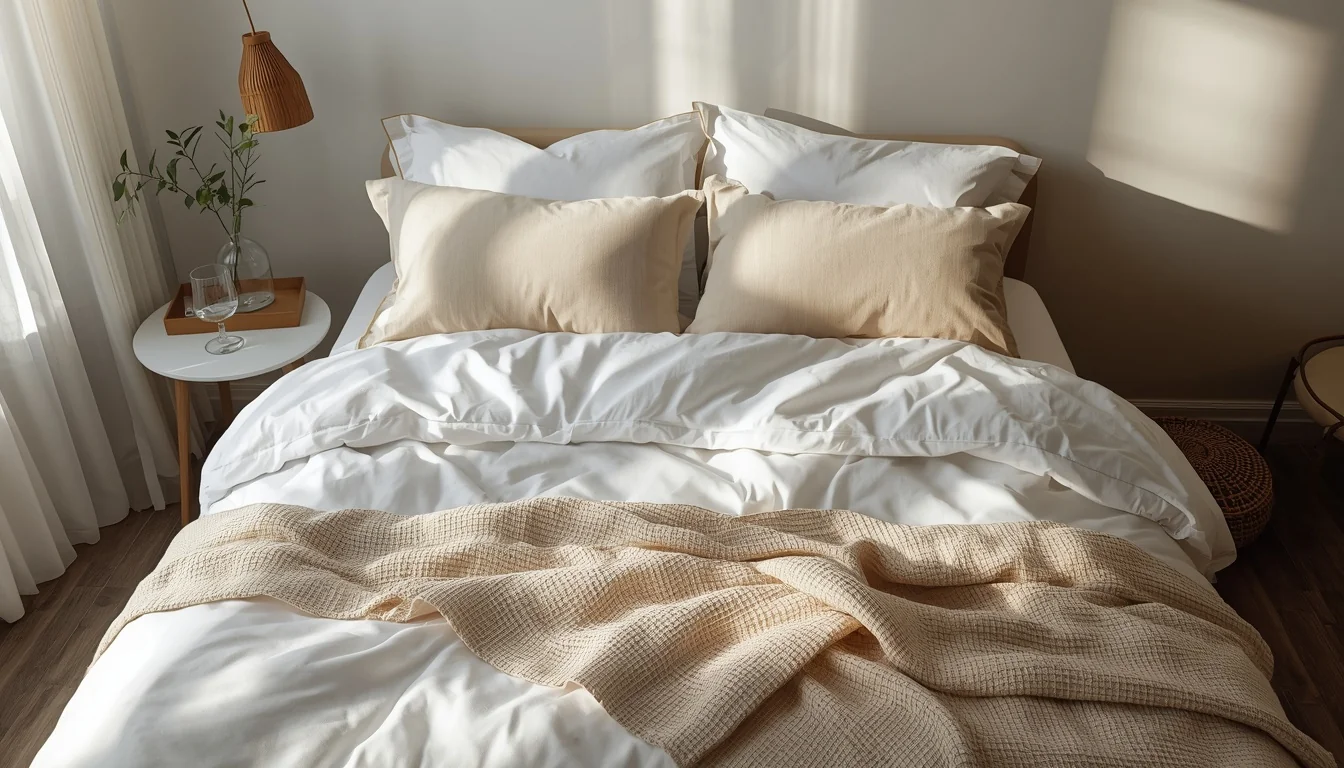
There’s a specific feeling a bed has in a nice hotel room in the summer. It looks crisp without looking cold. It’s layered without being heavy. You want to lie down in it the second you walk in, not because it’s fancy, but because it looks cool, calm, and easy. That’s the resort-ready feeling most people are actually chasing when they say they want to “refresh” their bedding for summer.
The good news is that look isn’t built on expensive linens or a full bedroom renovation. It comes down to fabric choice, a simplified color palette, and a few smart layering tricks that hotels and resorts rely on every day. Below are 21 ways to bring that fresh, breathable, put-together feeling to your own bed, along with styling tips, budget swaps, and small fixes for beds of every size and budget.
Table of Contents
- What Makes Bedding Feel Resort-Ready
- 21 Summer Bedding Ideas
- Styling Tips
- Practical Implementation Ideas
- Common Mistakes to Avoid
- Small-Space Alternatives
- Budget-Friendly Alternatives
- Pro Styling Recommendations
- FAQs
- Conclusion
What Makes Bedding Feel Resort-Ready?
A resort-ready bed isn’t about more decoration, it’s about fewer, better-chosen layers. Breathable fabric against the skin, a simplified color palette, and a handful of well-placed textures do more than a pile of decorative pillows ever could. The goal in summer is a bed that looks finished with two or three layers instead of five or six, since anything heavier tends to look and feel out of season. Every idea below builds toward that same lighter, calmer version of a made bed.
Summer Bedding Ideas
Idea 1: Crisp White Cotton Sheet Base
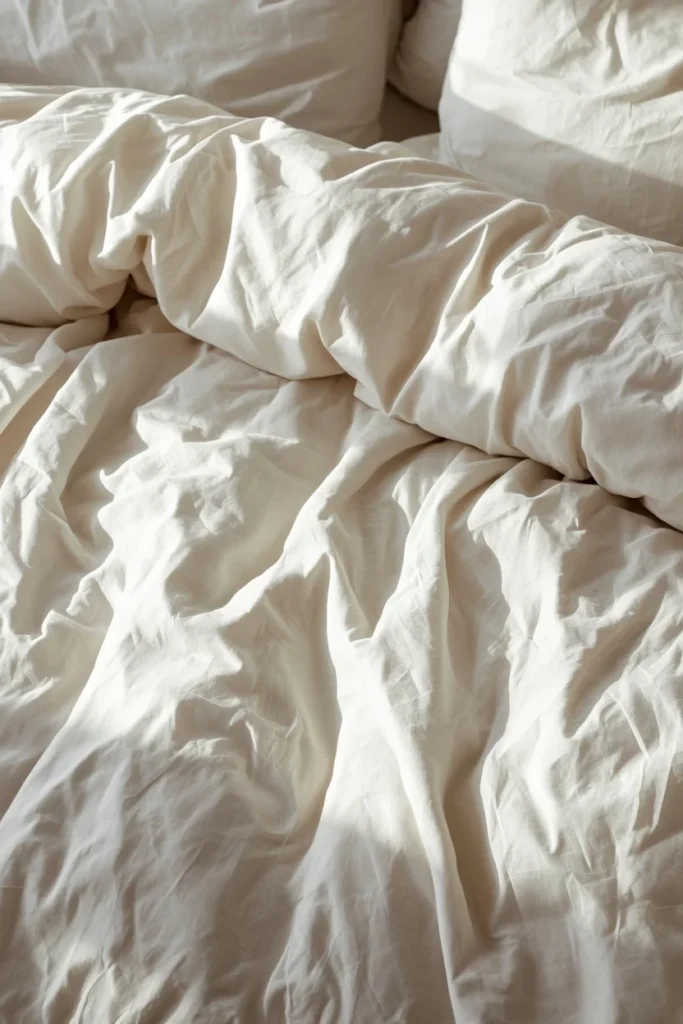
Nothing signals “fresh” faster than crisp white cotton sheets pulled tight with clean fold lines. Cotton has a slightly structured hand that holds its shape well, which is exactly what gives hotel beds that just-made look even hours after someone’s been sleeping in them. Choose a percale weave over a heavier sateen if you want that crisp, cool-to-the-touch feeling, since percale breathes more easily in warm weather. This base works with almost every color and texture you might add on top, which makes it one of the most versatile starting points on this entire list. A white sheet base also photographs beautifully, reflecting light back into the room rather than absorbing it the way darker tones do.

Idea 2: Warm Neutral Palette Swap
Swapping bright seasonal colors for a warm neutral palette — oatmeal, pale clay, warm white, and light sand — keeps a summer bed feeling calm rather than busy. These tones read as intentional and elevated rather than plain, especially when paired with a bit of texture in the fabric itself. This palette also has staying power beyond one season, since none of the colors are tied to a specific trend that will feel dated in a year. Layer two or three of these tones together rather than sticking to just one, which adds depth without introducing any bold color. This approach works particularly well for anyone who wants their bedroom to feel like a calm retreat rather than a styled seasonal display.
Idea 3: Lightweight Linen Duvet Cover
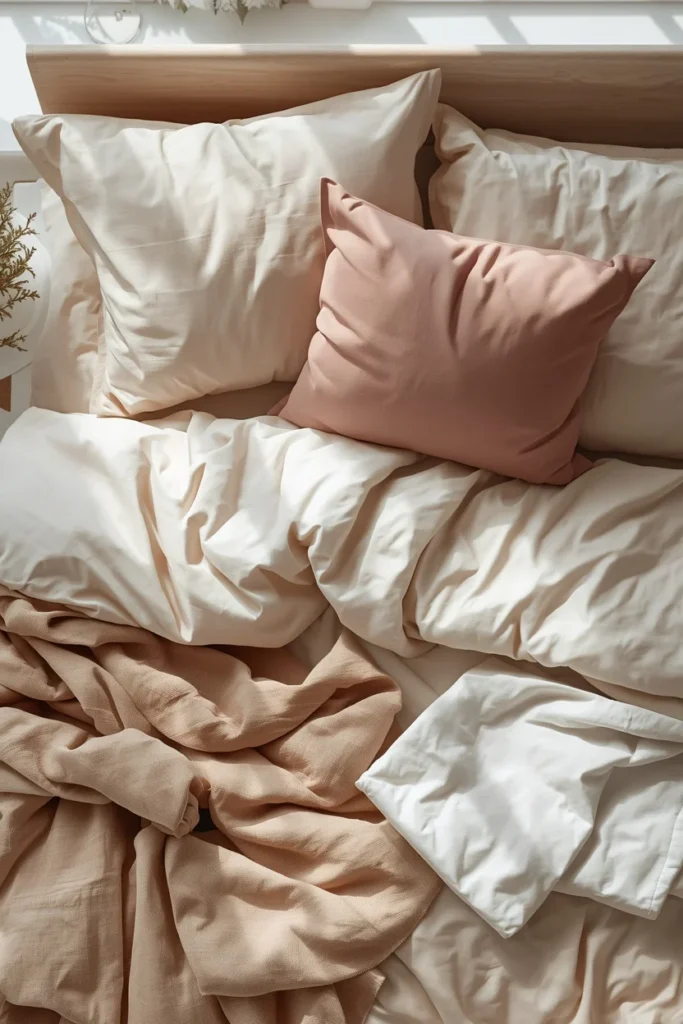
A linen duvet cover brings texture and breathability that most other fabrics can’t match, with a slightly rumpled, relaxed look that actually works in its favor rather than against it. Linen’s natural texture means the bed doesn’t need to look perfectly smooth to look intentional, which takes some of the daily effort out of bed-making during the busiest months of the year. It also has natural temperature-regulating properties, which matters more in summer than almost any other bedding decision on this list. Choose a mid-weight linen rather than the thinnest option, since a little more weight helps it drape properly instead of looking flimsy. This is one of the higher-impact fabric swaps for anyone who wants their bed to feel noticeably different once summer starts.
Idea 4: Smooth Sateen Sheets for a Soft Sheen
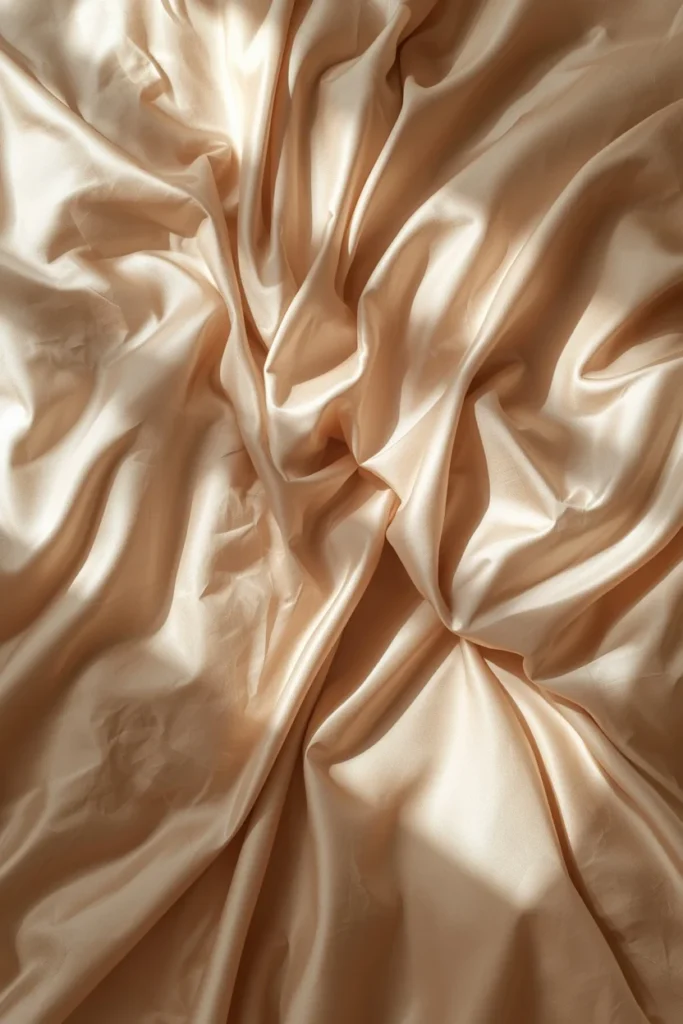
Sateen sheets have a softer drape and a subtle sheen that gives a bed a slightly more polished, fluid look compared to matte cotton. This makes them a good choice for a primary bedroom where the goal is closer to hotel luxury than casual coastal ease. The subtle shine also catches light beautifully in photos, which is part of why sateen shows up so often in styled bedroom images. Pair sateen with a simple duvet cover in a coordinating tone rather than a heavily patterned one, since the sheen already adds enough visual interest on its own. This fabric choice works especially well in bedrooms that get a lot of natural light, since the sheen responds directly to how much light is in the room.
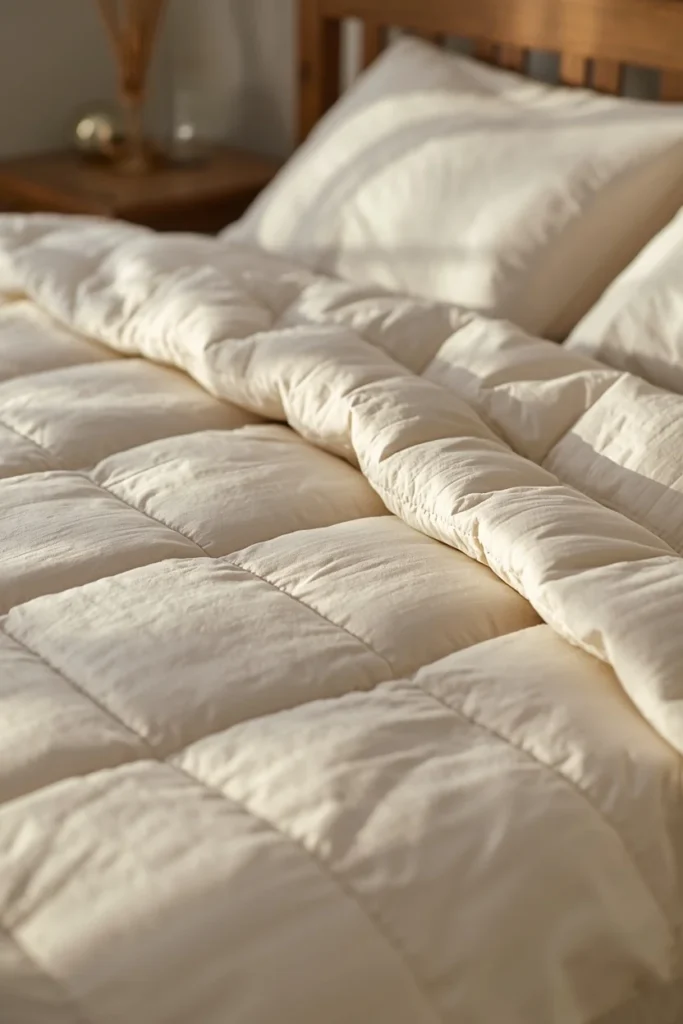
Idea 5: Quilted Coverlet as a Summer Top Layer
A lightweight quilted coverlet adds just enough dimension to a bed without the heaviness of a full comforter, making it one of the best summer alternatives for anyone who still wants a bit of texture on top. Fold it in thirds and drape it across the foot of the bed rather than pulling it all the way up, which keeps the look layered without adding warmth where it isn’t needed. Quilting in a subtle geometric or channel pattern reads as more elevated than a plain flat topper, giving the bed visual texture from a distance. This piece also doubles as a light layer for cooler summer nights, so it isn’t purely decorative. It’s a practical middle ground between a bare sheet set and a full decorative bedding stack.
Idea 6: Waffle-Texture Blanket for Texture Without Heat
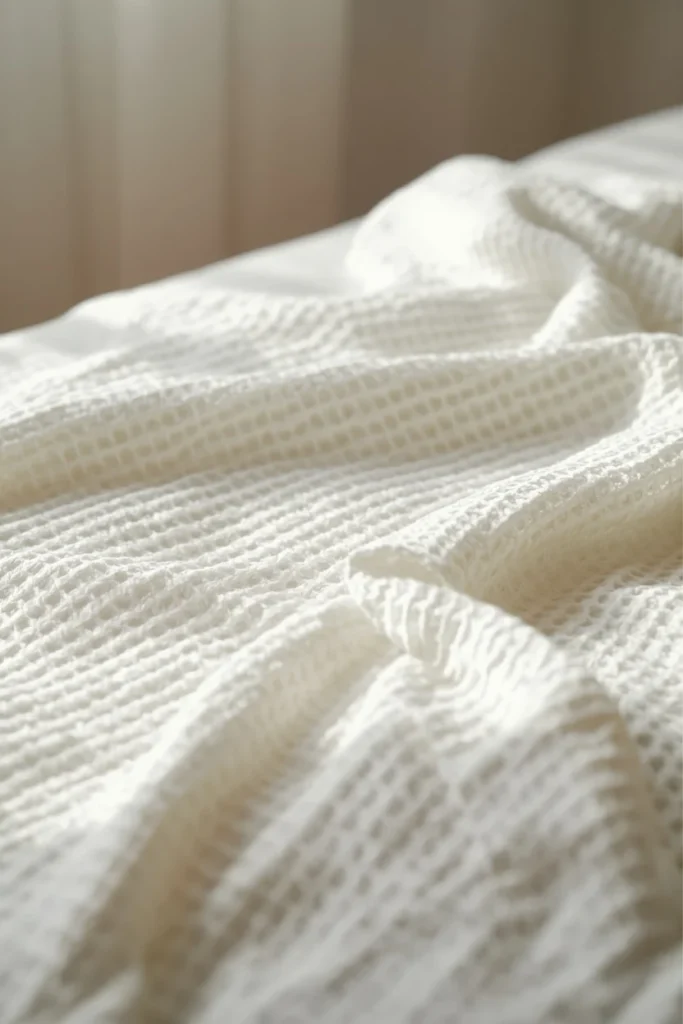
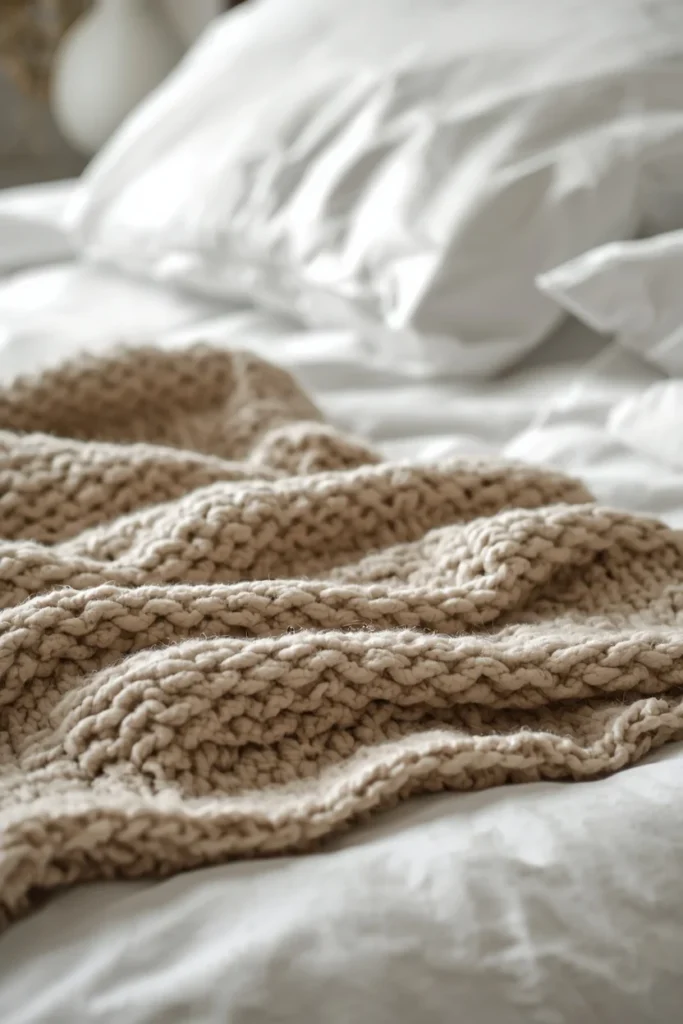
A waffle-weave blanket adds visible texture and dimension to a bed while staying lightweight enough for warm weather. The raised grid pattern catches light and shadow in a way that flat fabric can’t, giving the bed visual depth even in a completely neutral color palette. This is a particularly good choice for anyone who finds a fully smooth, minimal bed a little too plain, since the texture does the visual work that a bold color or pattern might otherwise handle. Drape it folded at the foot of the bed or layered loosely across one side rather than centered, for a slightly more relaxed, lived-in look. Waffle-texture pieces are also widely available in cotton, which keeps the breathability consistent with the rest of a summer bedding setup.
Idea 7: Scalloped-Edge Quilt for Vintage Softness
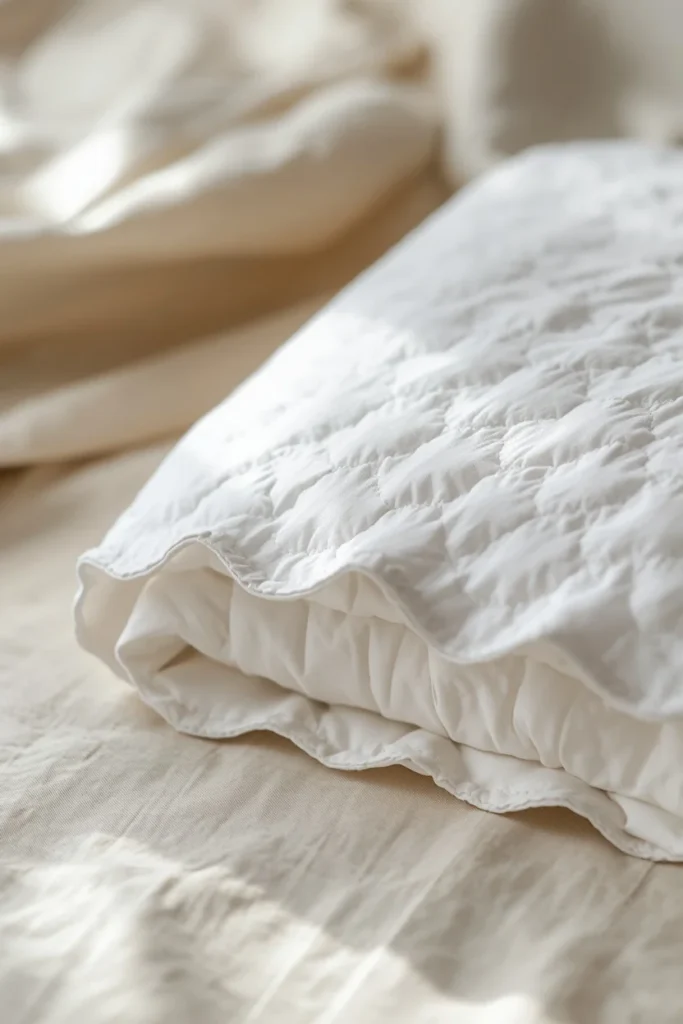
A scalloped-edge quilt brings a soft, romantic detail to a bed without needing any additional decorative pillows to feel finished. The wavy border reads as vintage-inspired and adds a bit of visual interest along the edges of the bed, which is otherwise one of the most overlooked areas in most bedding setups. Pairing a scalloped quilt with simpler, more modern sheets keeps the overall look balanced rather than overly frilly. This is a strong choice for a guest room or a primary bedroom that leans slightly traditional, since the detail feels intentional without requiring a full themed redesign. Rounded corners on this style of quilt also tend to drape more naturally over the sides of the bed than a standard squared edge.
Idea 8: Striped Hotel-Style Bedding
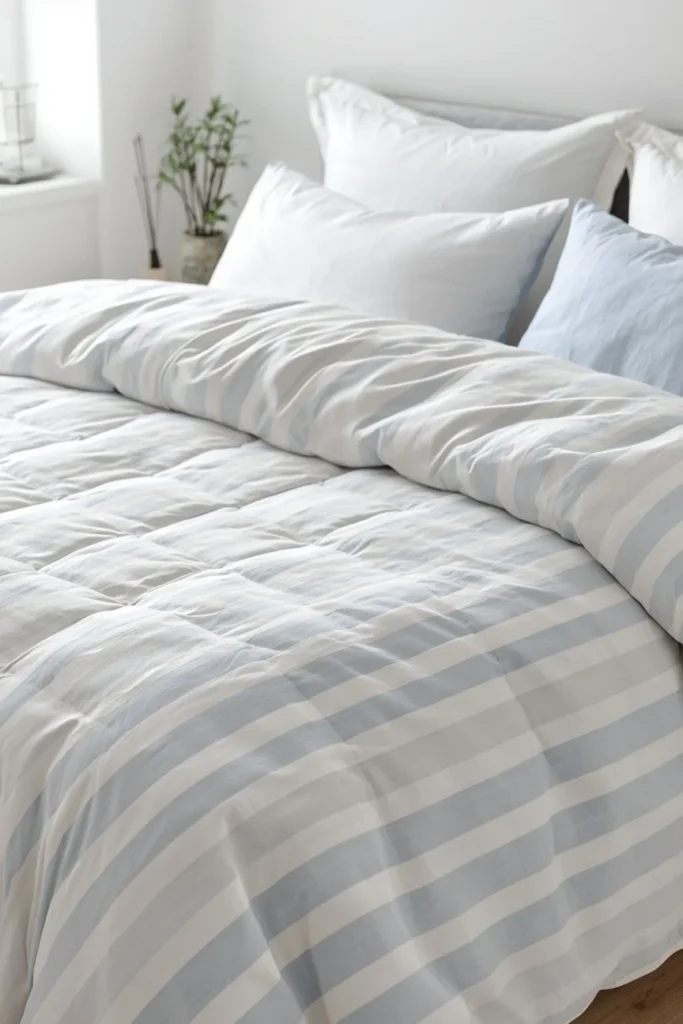
A subtle stripe, whether woven into the sheets or added through a striped duvet cover, brings in a classic hotel reference point that reads as clean and put-together rather than plain. Keep the stripe tone-on-tone or in a soft contrast, like white and pale blue, rather than a bold, high-contrast pattern, which keeps the overall look calm instead of graphic. This detail works particularly well paired with simple white shams and a folded textured throw, since the stripe already provides the bed’s main visual interest. Striped bedding also tends to photograph well in natural light, since the lines create gentle definition across an otherwise flat surface. This is one of the easiest ways to add a classic, timeless detail to a summer bed without introducing color or heavy pattern.
Idea 9: Coastal Fisherman-Stripe Accents
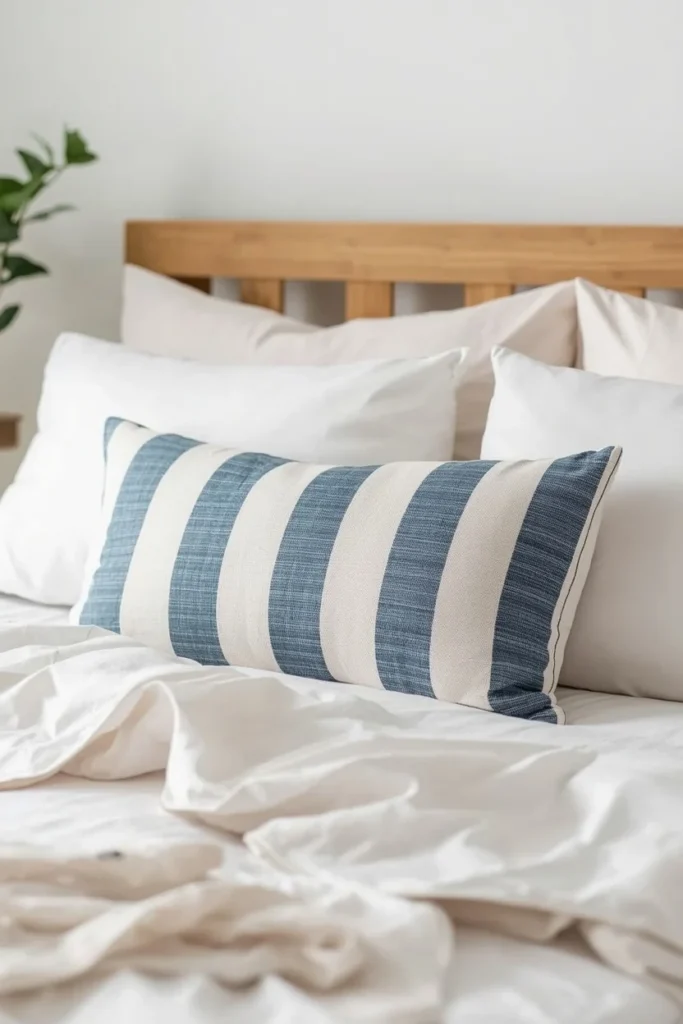
A slightly bolder stripe, sometimes called the fisherman or coastal stripe, brings a beachy, breezy feeling into a bedroom without requiring any literal nautical decor like anchors or shells. Use it in one accent piece, such as a throw pillow or a lumbar cushion, rather than across the entire bed, so the reference stays subtle rather than themed. This works especially well in a bedroom with natural wood furniture or woven textures nearby, since the stripe pairs naturally with those materials. Keep the rest of the bedding in soft neutrals so the striped accent has room to stand out as the one clear pattern in the room. This idea is a good fit for anyone wanting a coastal feeling in their bedroom without fully committing to a beach house theme.
Idea 10: Sage Green Bamboo Viscose Duvet
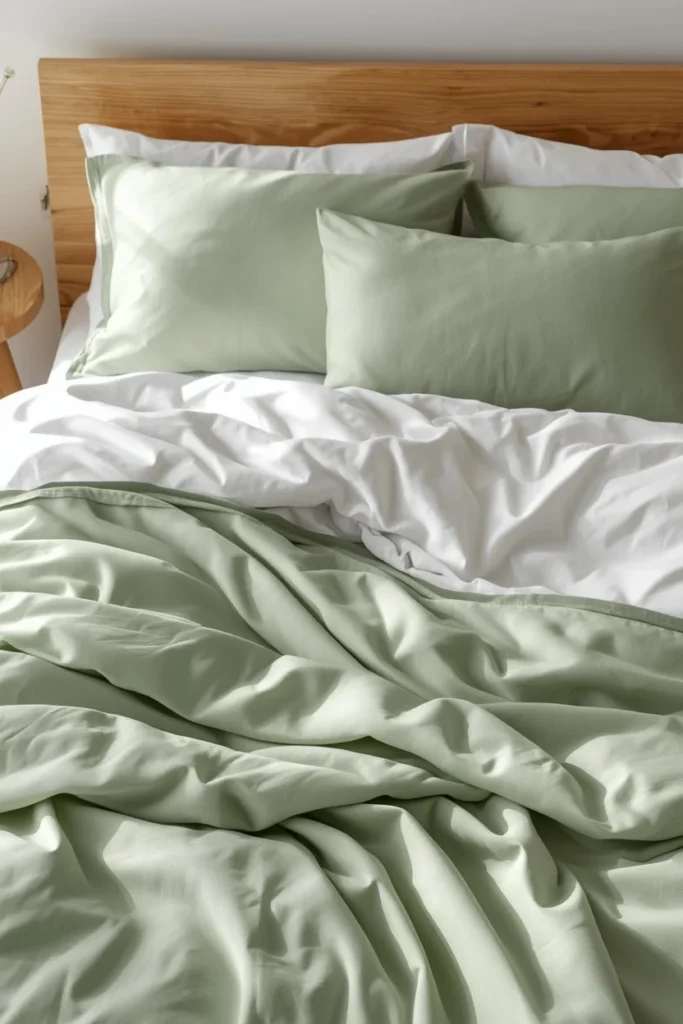
A sage green duvet cover in a breathable bamboo viscose fabric introduces color without breaking away from the softer, nature-inspired palette trending for summer. Bamboo viscose has a naturally cooling, silky feel against the skin, which makes it a practical choice for warm nights as much as a styling one. Sage works almost like a neutral, meaning it pairs easily with wood furniture, white trim, and most existing wall colors without requiring a full room redesign. This muted green also tends to feel calming rather than bold, which fits the broader 2026 shift toward softer, more livable bedroom colors. Pair it with simple white sheets underneath to let the sage tone stand out clearly as the main color statement.
Idea 11: Dusty Blue Tonal Layering
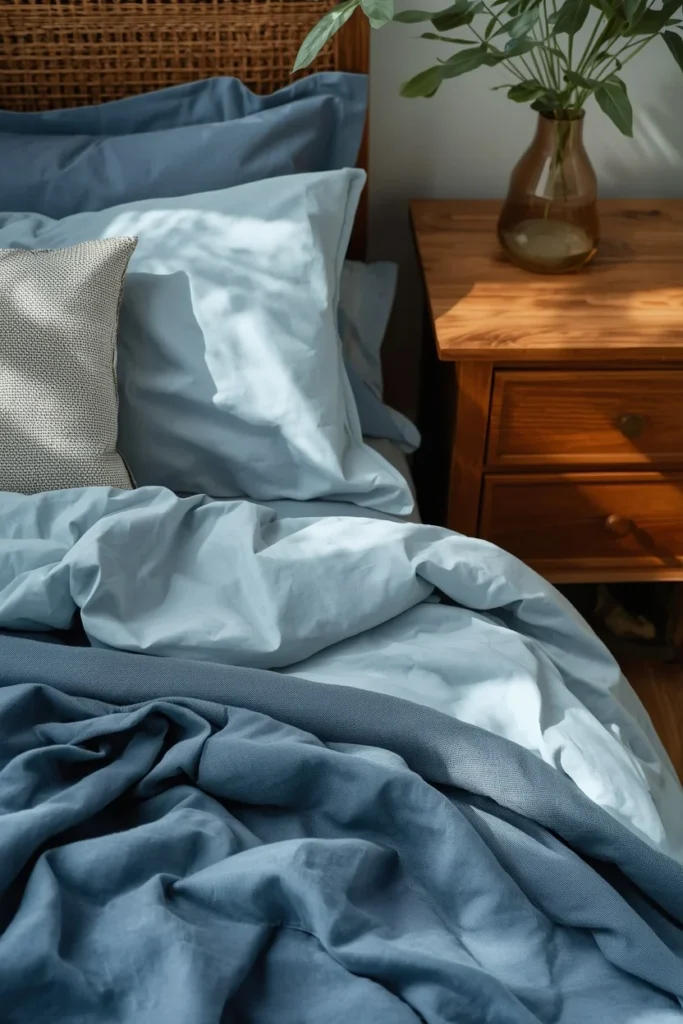
A dusty, smoky blue functions almost like a neutral while still adding a clear sense of color to a summer bedroom. Layering two or three shades of this same blue family — a pale blue sheet, a slightly deeper blue throw, and a muted blue accent pillow — creates depth without introducing any competing colors. This tonal approach feels more elevated than a single flat color block, since the subtle variation reads as intentional layering rather than a matched set straight out of the package. Dusty blue also has a naturally cooling visual effect, which reinforces the “fresh and breathable” feeling a summer bed is going for even before anyone touches the fabric. This is a good option for anyone who wants color in their bedding without moving away from a calm, restful palette.
Idea 12: Large-Scale Floral Quilt
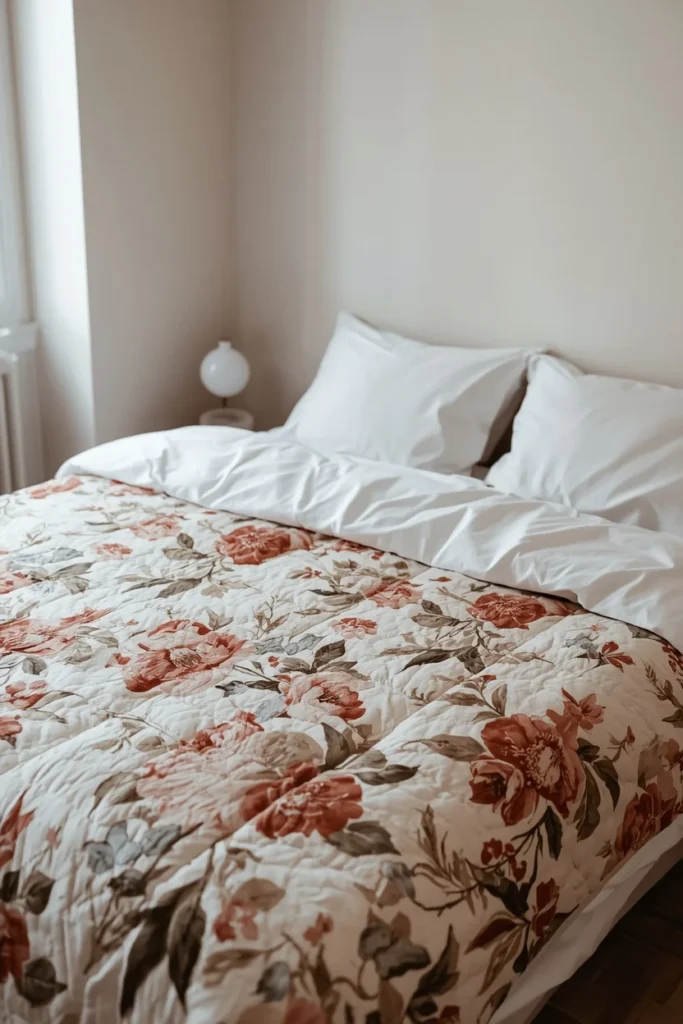
Floral bedding is returning in 2026, and the key to making it feel current rather than dated is choosing a larger, more confident print instead of a small, tightly packed pattern. A large-scale floral quilt or bedspread reads as a deliberate design choice, especially when paired with simple, solid-colored sheets and shams underneath. This works particularly well in a bedroom that could use a bit more personality, since the floral pattern does the visual work that several smaller decorative items would otherwise need to accomplish. Keep the rest of the room’s textiles, like curtains or a rug, relatively simple so the floral bedding remains the clear focal point. This is a bolder choice on this list, but it fits directly into where bedding design is heading in 2026.
Idea 13: Macrame Throw Draped Over the Foot of the Bed
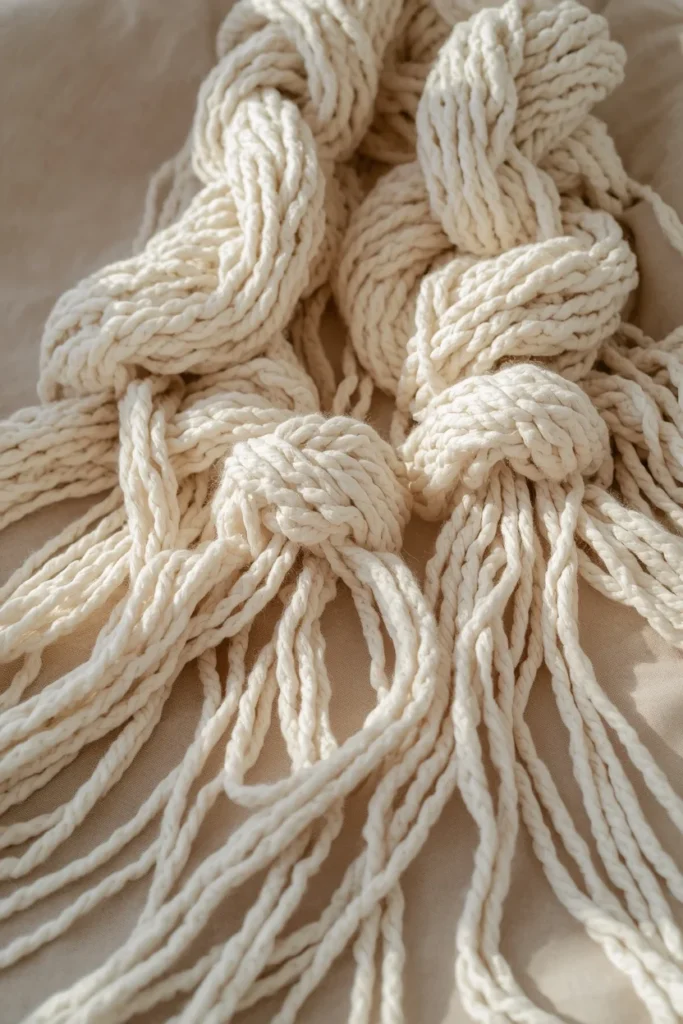
A hand-knotted macrame throw draped over the foot of the bed or a nearby chair adds an artisanal texture that solid bedding colors let shine. This detail has moved beyond wall hangings into bedding styling directly, with oversized knots and multi-tone fibers giving it a richer, more contemporary look than earlier, simpler macrame patterns. Pairing it with a solid-colored duvet lets the texture of the throw stand out clearly, rather than competing with a patterned bedding set. This idea also brings a bit of boho warmth into an otherwise minimal or coastal summer bedroom without requiring any other changes to the room. Keep it washed regularly, since the open knot pattern can collect dust more visibly than a tightly woven fabric.
Idea 14: Minimalist “Fewer Pieces” Pillow Styling
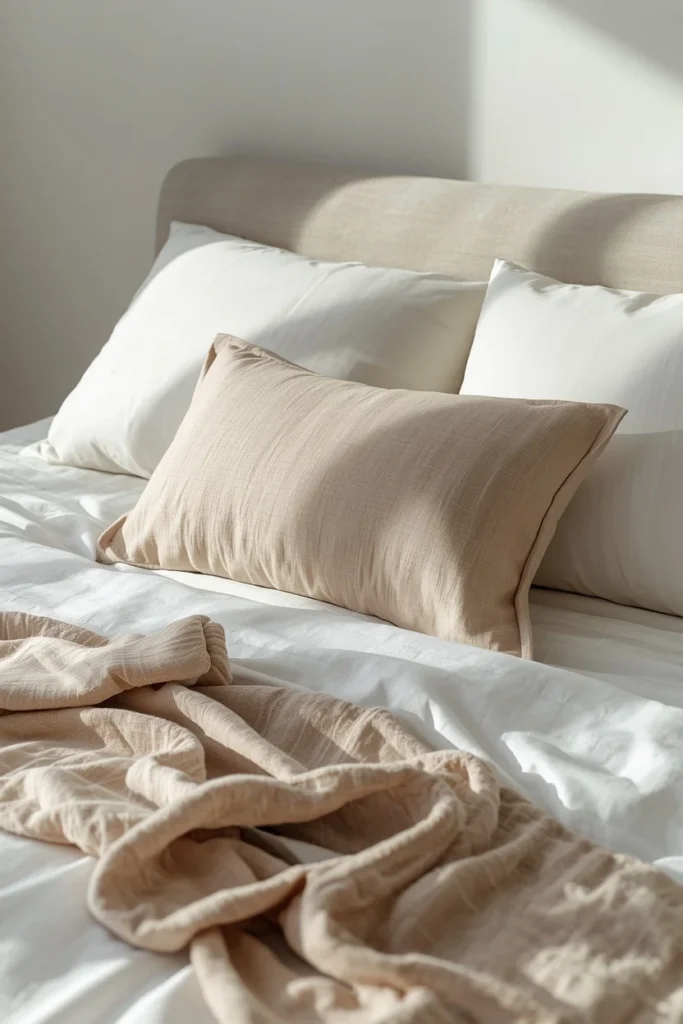
One of the clearest shifts in summer bedding for 2026 is doing less rather than more: two sleeping pillows, two decorative shams, and one folded textile at the foot of the bed is often enough to look complete. This works especially well if the rest of the room already has visual interest, like a patterned rug or textured curtains, since a busier bed would compete rather than complement. Choose shams in a slightly different but coordinating tone from the sleeping pillows, so there’s some variation without introducing a full pattern. This approach also makes the bed faster to make each morning, which matters more in summer when bedding gets used and reset more frequently. It’s a good default for anyone who tends to overdo pillow styling and wants an easier, cleaner look.
Idea 15: Embroidered French Lace Ruffle Duvet
For a softer, more romantic take on summer bedding, an embroidered duvet cover with subtle lace or ruffle detailing adds texture and personality without relying on bold color. Folding the duvet halfway down the bed, rather than pulling it all the way up, shows off the detail while still keeping the overall look breathable and uncluttered. Pairing it with crisp, simple pillowcases rather than more decorative pillows keeps the ruffle detail from feeling overdone. This style leans slightly more feminine and detailed than a strictly minimalist approach, making it a good fit for anyone who wants their summer bed to feel a little more elevated and personal. The embroidery also adds a layer of texture that photographs well without needing color to carry the visual interest.
Idea 16: Monochromatic White-on-White Layering
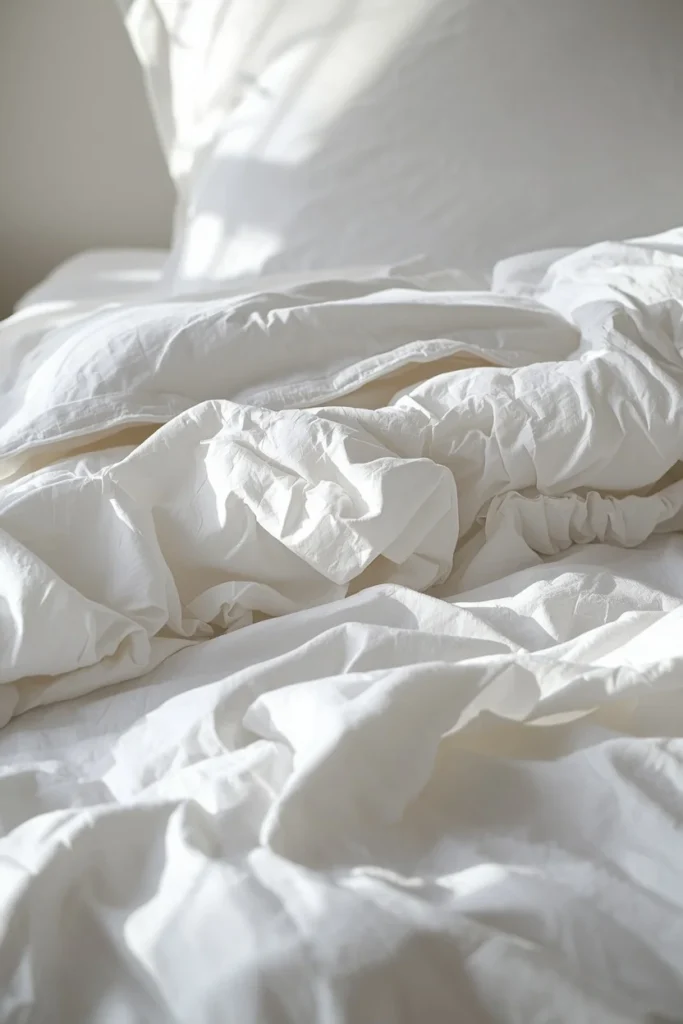
Building an entire bed in different shades and textures of white — a crisp sheet, a slightly textured duvet, a waffle throw — creates a monochromatic look that feels both fresh and quietly luxurious. The interest comes entirely from texture rather than color, which keeps the bed feeling calm and bright even with several layers stacked together. This approach works particularly well in bedrooms with a lot of natural light, since white reflects rather than absorbs it, keeping the whole space feeling airy. It also pairs easily with almost any wall color or furniture finish, making it one of the more flexible ideas on this list for anyone unsure of a broader color direction. Mixing textures is essential here, since an all-white bed without any texture variation can look flat rather than intentional.
Idea 17: Folded Throw Blanket at the Foot for Texture
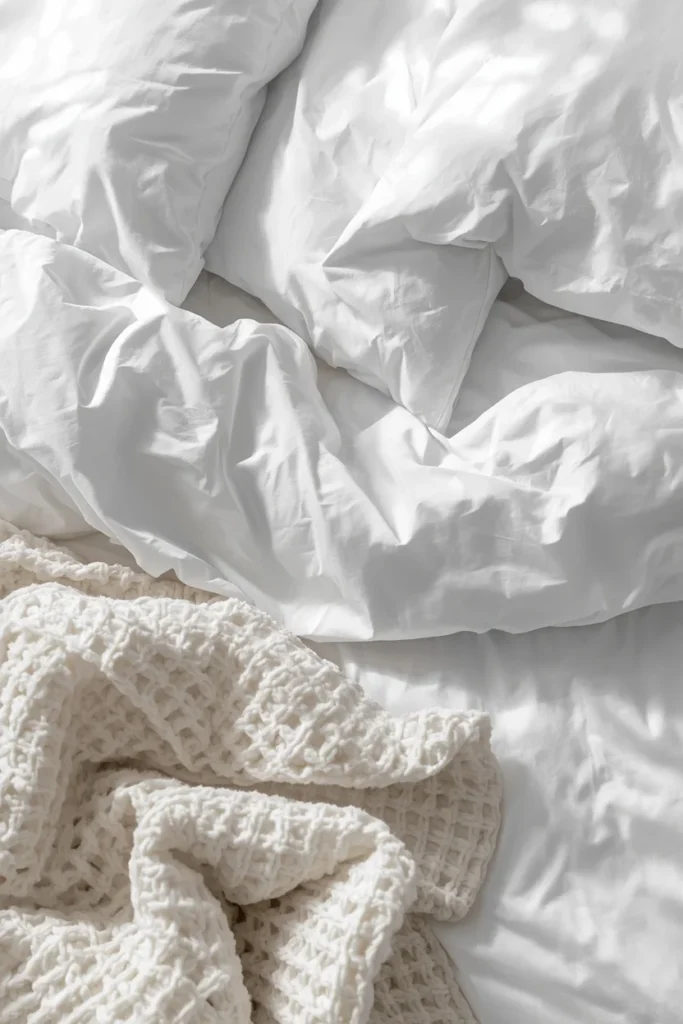
A single throw blanket folded neatly at the foot of the bed is a small styling detail that adds a finished, intentional look without any real effort. Choose a blanket in a different texture from the rest of the bedding, such as a knit or waffle weave against smooth cotton sheets, so it reads as a deliberate layer rather than an extra blanket left out. This detail also serves a practical purpose during summer, when a full comforter is too warm but a light throw is still useful for cooler early mornings. Keep the fold simple and structured, in thirds or in a single lengthwise fold, rather than draping it loosely, which keeps the bed looking styled rather than messy. This is one of the lowest-effort, highest-impact details on the entire list.
Idea 18: Breathable Bamboo or Organic Cotton Sheets
Beyond color and texture, the actual fiber content of your sheets makes a real difference in how a summer bed performs, not just how it looks. Bamboo and organic cotton blends are both naturally breathable and moisture-wicking, which matters directly for comfort during warm nights. These materials also tend to be more sustainably produced than standard synthetic blends, which is an increasingly common consideration for shoppers in 2026. Choose a percale weave in either fiber for the coolest hand-feel, since a tighter weave traps less heat than a heavier sateen. This is one of the more practical ideas on this list, focused on how the bed actually feels rather than purely how it photographs.
Idea 19: Tonal Euro Shams for Hotel Structure
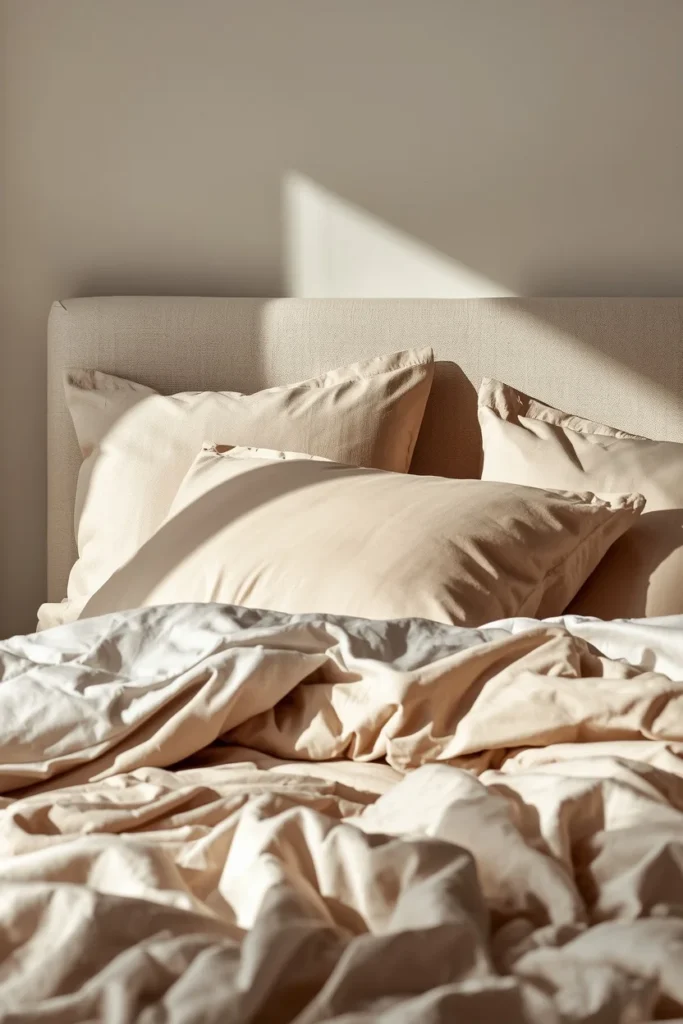
Large tonal euro shams propped upright against the headboard give a bed the structured, layered look associated with hotel styling, without needing a heavier decorative pillow arrangement. Choose a euro sham in a slightly deeper or lighter tone than the sleeping pillows in front of them, so there’s gentle contrast without introducing a full pattern. This creates visual height at the head of the bed, which helps balance out a lighter, simpler duvet or coverlet on top. Euro shams also give the eye a clean line to rest on, which is part of why hotel beds often look more put-together than an average home bed with the same number of pillows. This detail is especially effective in bedrooms with a simple, plain headboard that could use a bit more visual structure behind the pillows.
Idea 20: Light Terracotta or Clay Accent Pillow
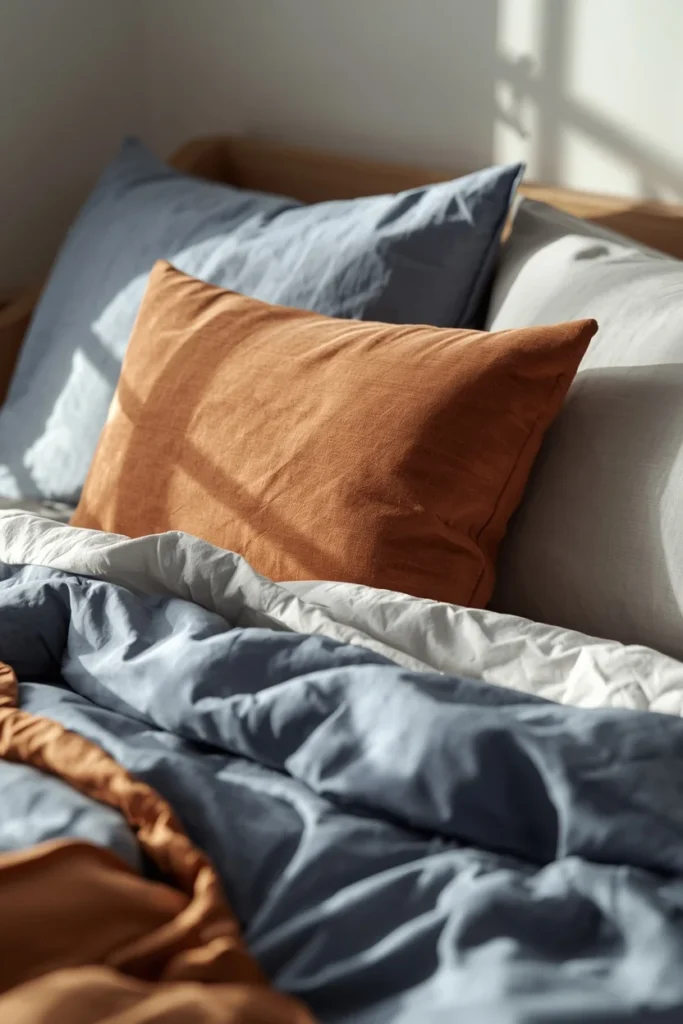
A single terracotta or clay-toned accent pillow introduces warmth into an otherwise cool, neutral summer bed without overwhelming the palette. This works particularly well against dusty blue or sage bedding, since the warm tone provides just enough contrast to keep the color scheme from feeling flat. Keep this to one pillow rather than several, since the goal is a small accent rather than a competing color story. This idea is an easy way to tie a bedroom’s existing warm-toned decor, like wood furniture or a terracotta vase, back into the bedding itself. It’s also one of the simplest updates on this list, since it requires swapping only a single pillow cover rather than any part of the core bedding set.
Idea 21: Airy Sheer Bed Canopy or Curtain Drape
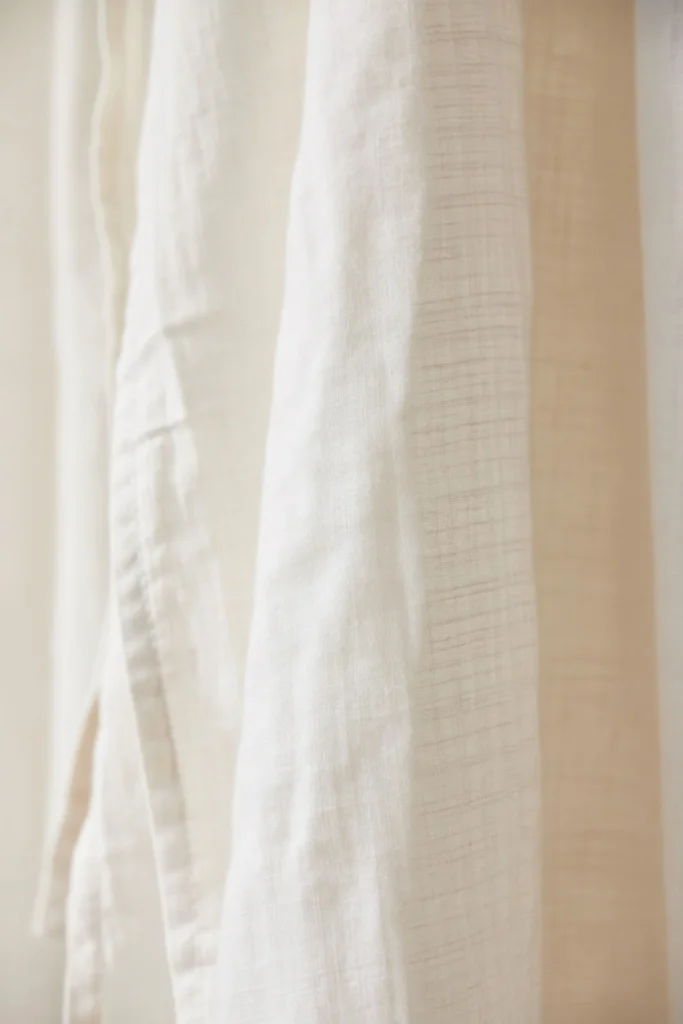
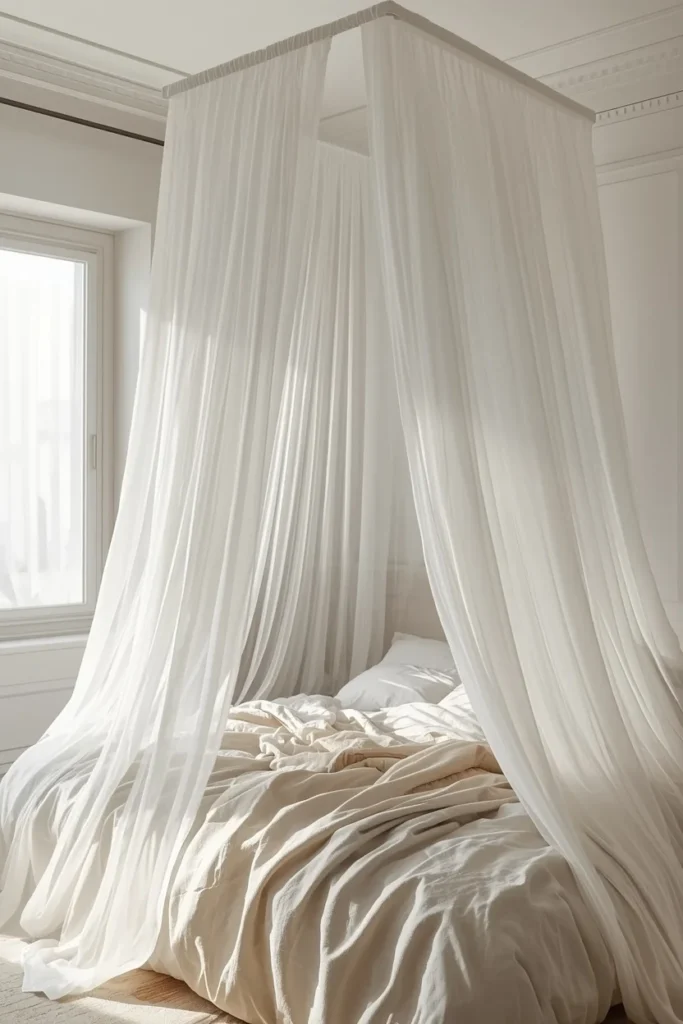
A sheer fabric canopy or curtain panel draped from the ceiling above the bed adds a soft, resort-like feeling without requiring any change to the bedding itself. The lightweight, semi-transparent fabric moves gently with airflow, which reinforces the breathable, warm-weather feeling the rest of the bedding is going for. This works particularly well in bedrooms with higher ceilings or a four-poster frame, though a simple ceiling-mounted curtain rod can achieve a similar effect in most rooms. Keep the fabric in white or a very pale neutral so it reads as airy rather than heavy or dramatic. This is one of the more transformative ideas on this list, since it changes the overall feeling of the room rather than just the bed itself.
Styling Tips
- Keep the total layer count to three or four pieces in summer — a sheet, a light duvet or coverlet, and one or two accent pieces — rather than a full seasonal bedding stack.
- Choose one texture-forward piece, like waffle weave or macrame, to carry visual interest instead of relying on printed pattern.
- Stick to a maximum of two colors beyond your neutral base, so the bed reads as calm rather than busy.
- Fold and drape rather than fully cover, letting some texture and layering show instead of pulling every piece flat and taut.
- Match your fabric choice to how you actually sleep — cooler percale or linen for hot sleepers, sateen for those who prioritize a softer feel.
Practical Implementation Ideas
Start with the sheet fabric first, since it has the biggest impact on how the bed actually feels overnight, then build the visual layers on top of that choice. Once the base sheet and duvet or coverlet are settled, add no more than two accent pieces, such as a throw and one accent pillow, to avoid overcomplicating the look. If you’re working with an existing bedding set you don’t want to fully replace, focus your first purchase on a single new textured throw or pillow cover, since that alone can shift the entire look of the bed. Reassess the setup after a week of actually sleeping in it, since comfort should guide any further styling changes more than appearance alone.
Common Mistakes to Avoid
- Keeping heavy winter bedding, like a thick down comforter, underneath a lighter top layer, which defeats the purpose of a summer refresh.
- Overloading the bed with too many decorative pillows, which looks cluttered rather than styled and takes longer to manage daily.
- Choosing an entirely new bold color scheme instead of a few accent pieces, which can make a summer refresh feel more like a full renovation than it needs to be.
- Ignoring fabric weave in favor of color or pattern alone, which can leave a good-looking bed feeling uncomfortably warm at night.
- Matching every piece exactly, which removes the subtle tonal variation that makes layered bedding look intentional rather than store-bought as a single set.
Small-Space Alternatives
In a smaller bedroom, skip the sheer bed canopy and instead rely on a lighter overall color palette to create that same airy feeling. A single folded throw and two shams, rather than a full euro sham and pillow stack, keeps the bed from visually overwhelming a tighter room. Choose a duvet cover with texture instead of pattern, since texture reads as detail without adding visual weight the way a bold print can in a small space. Sticking to one main color family throughout the bedding, rather than introducing several accent tones, also helps a small room feel more open. Vertical elements, like tall euro shams, can help draw the eye upward in a room where floor space is limited.
Budget-Friendly Alternatives
A new set of pillowcases or a single throw blanket can refresh the entire look of a bed without replacing the full bedding set. Secondhand and outlet retailers are a reliable source for linen and organic cotton pieces at a lower price point than premium retail brands. Dyeing or bleaching an existing plain duvet cover can achieve a similar tonal effect to buying new bedding in a trending color. Focus spending on the piece closest to your skin, the sheets, since that’s where fabric quality has the most direct impact on comfort, and treat decorative layers as lower-priority purchases. A single well-chosen accent pillow is one of the least expensive ways to introduce color into an otherwise neutral summer bed.
Pro Styling Recommendations
Treat texture as your primary design tool in summer, since color alone can’t carry a bed that’s intentionally simplified. Keep one piece of the bedding slightly imperfect or relaxed, like a linen duvet with visible wrinkles, so the overall look doesn’t feel too rigid or staged. Repeat at least one material or tone from the rest of the bedroom, like a wood nightstand or a woven rug, somewhere in the bedding to tie the whole space together. Step back and remove one item before finishing, since summer bedding almost always looks more resort-ready with slightly less than expected rather than more.
FAQs
Conclusion
A resort-ready bed isn’t about buying more, it’s about choosing better. The right sheet fabric, a simplified color palette, and one or two textured layers do more for a summer bedroom than a full stack of decorative pillows ever will. Start with whichever piece feels most overdue for a refresh, whether that’s the sheets themselves or a single new throw, and build outward from there using the ideas above.