20 Back Deck Ideas That Make Your Outdoor Space Impossibly Inviting
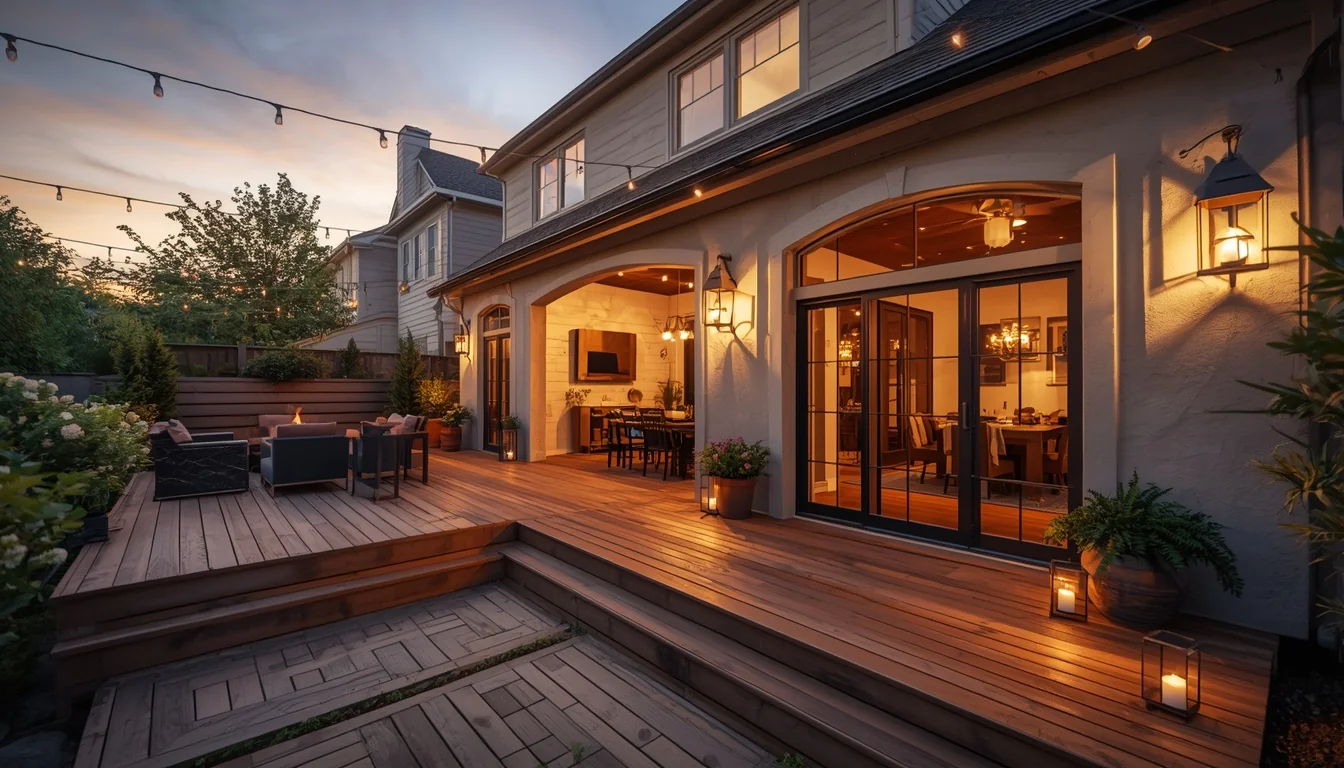
Summer evenings have a way of pulling everyone toward the back door, and a deck that actually earns its square footage can turn a quick trip outside into hours you didn’t plan on spending there. The difference between a deck people walk past and one they linger on usually comes down to a handful of choices: how the space is zoned, what the light does after 6 p.m., and whether there’s somewhere comfortable to actually sit for longer than five minutes.
Below are 20 ways to rethink your back deck, with the styling logic behind each one to help you picture it before you buy a single thing.
Table of Contents
1. Warm Neutral Zoned Deck
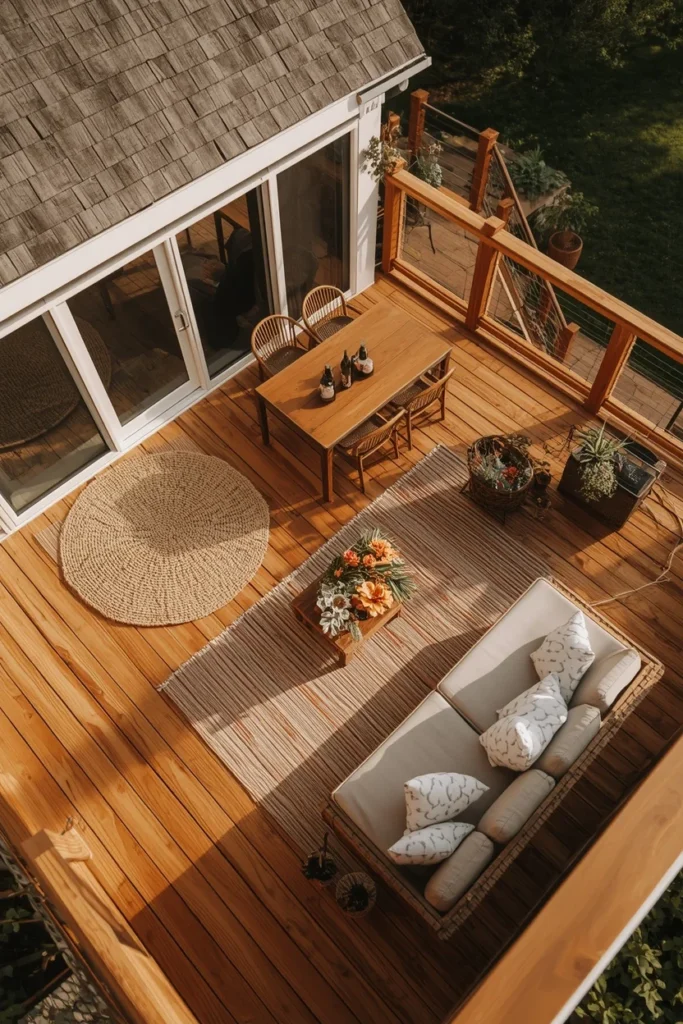
Instead of one open platform with furniture pushed against the railing, this deck gets split into clear zones: a dining area near the door, a lounge area farther out, and maybe a small bar cart tucked to one side. Sun-washed browns and honey-toned wood tones carry across the decking, railing, and furniture so the whole space reads as one cohesive room rather than several mismatched corners. A woven outdoor rug under each seating group helps visually separate the zones without needing any actual walls or dividers. This layout works especially well for decks that host both quiet mornings and bigger weekend gatherings, since each zone can function on its own or together depending on the crowd.
2. Sunken Lounge Conversation Pit
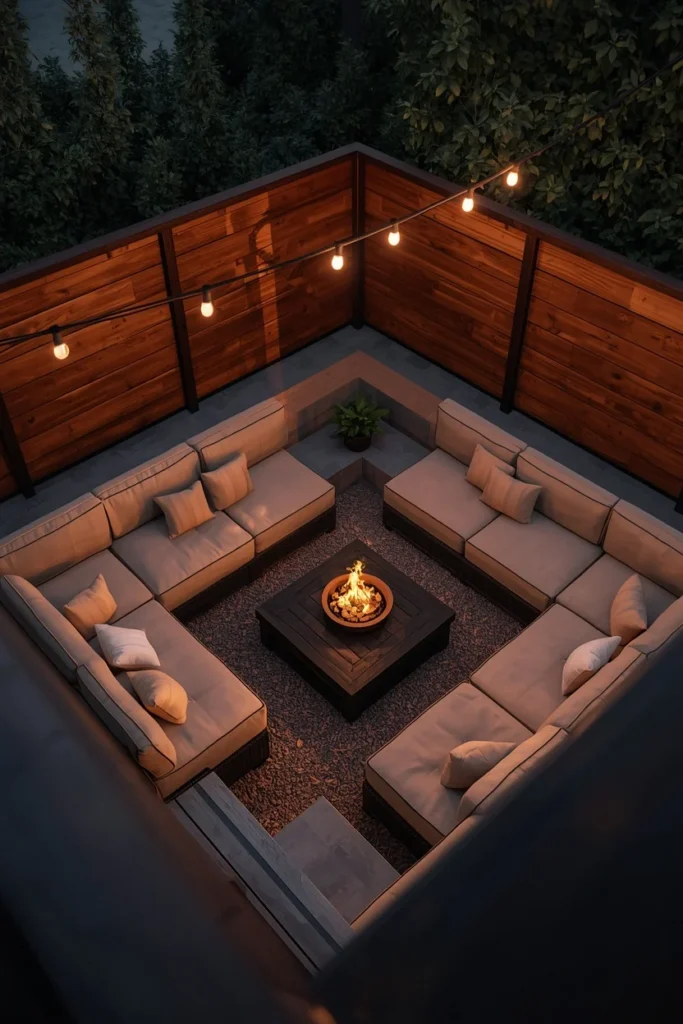
A slightly lowered section of the deck, even just one step down, creates a built-in sense of enclosure for a conversation area without needing walls. Low-profile sectional seating lines the perimeter, facing inward toward a central coffee table or fire bowl, which naturally pulls guests into conversation instead of scattering them along a railing. Deep cushions in a weather-resistant fabric make the sunken area feel like an actual living room moved outside. This idea works best on larger decks with room to dedicate a full section to lounging alone, separate from any dining or cooking space.
3. String-Light Canopy Dining Deck
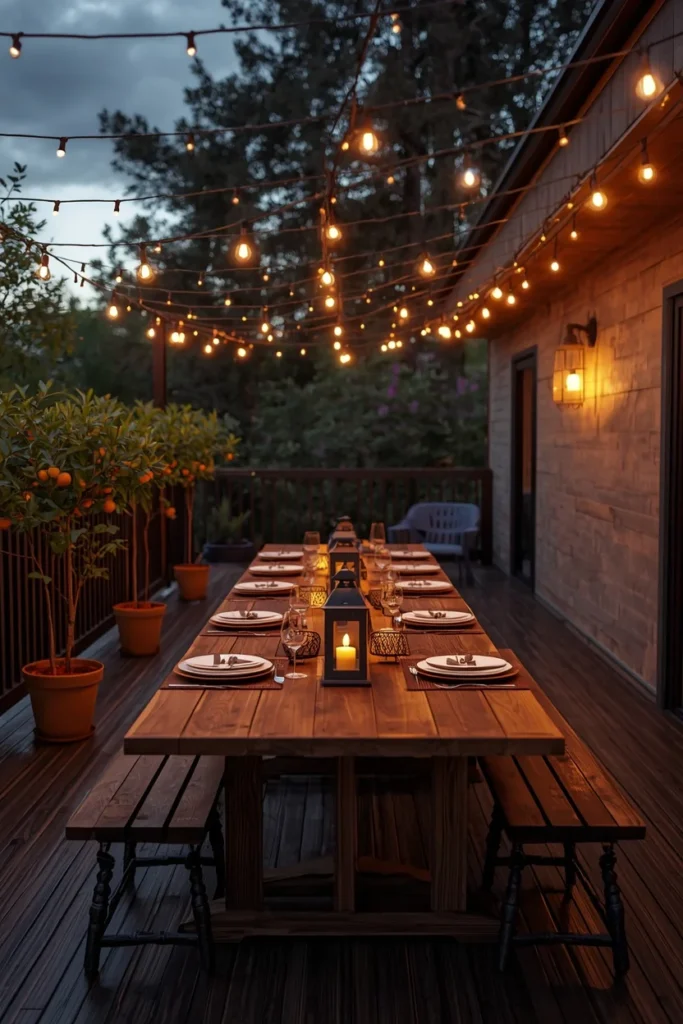
Crisscrossing string lights overhead turn a plain dining table into the kind of setup people photograph before they even sit down. Warm white bulbs, rather than cool white, keep the light flattering and the mood relaxed once the sun goes down. A long wooden table with mismatched lanterns down the center adds texture without needing a full centerpiece, and a few potted olive or citrus trees at the corners help frame the canopy from below. This idea works in nearly any size deck, since the string lights do most of the visual heavy lifting regardless of the furniture underneath them.
4. Under-Deck Covered Lounge
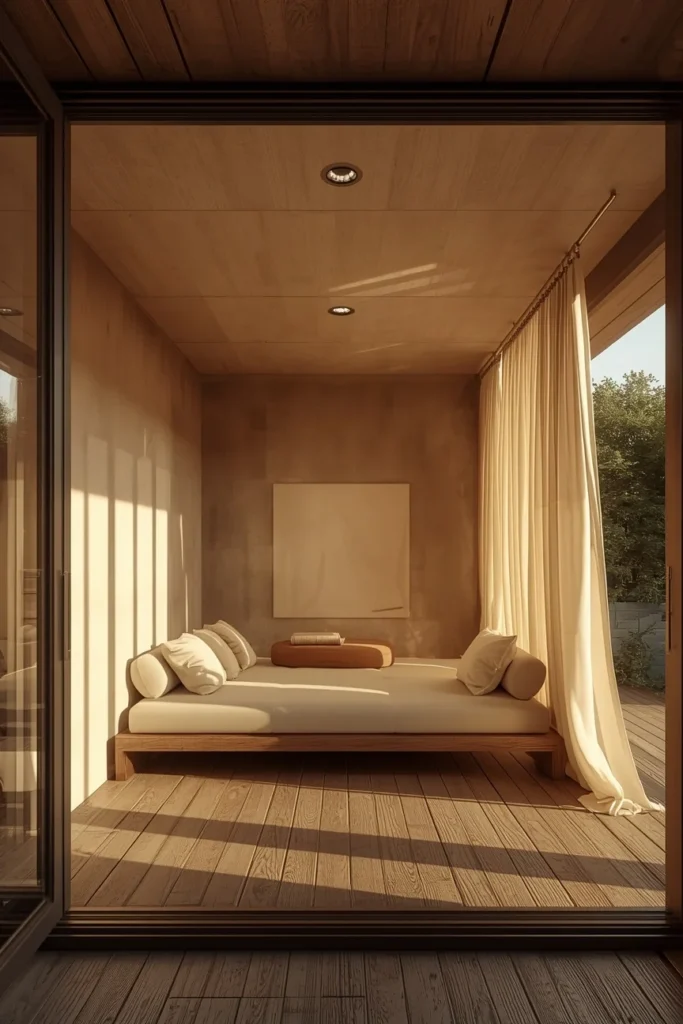
The space beneath an elevated deck is one of the most overlooked square-footage opportunities in a backyard, and a simple drainage system underneath can turn it into a fully usable, weatherproof lounge. Outdoor curtains along the open sides add privacy and shade while still letting air move through, and a low daybed or a pair of oversized chairs make the space feel like a shaded retreat on the hottest days. Since this area stays dry even when the upper deck doesn’t, it becomes one of the few outdoor spots usable during light rain. Pairing the under-deck ceiling with recessed lighting keeps the space usable well after sunset too.
You may also like 17 Wood Privacy Fence Ideas That Are Beautiful, Functional & Totally Chic
5. Coastal Warm Wood Deck
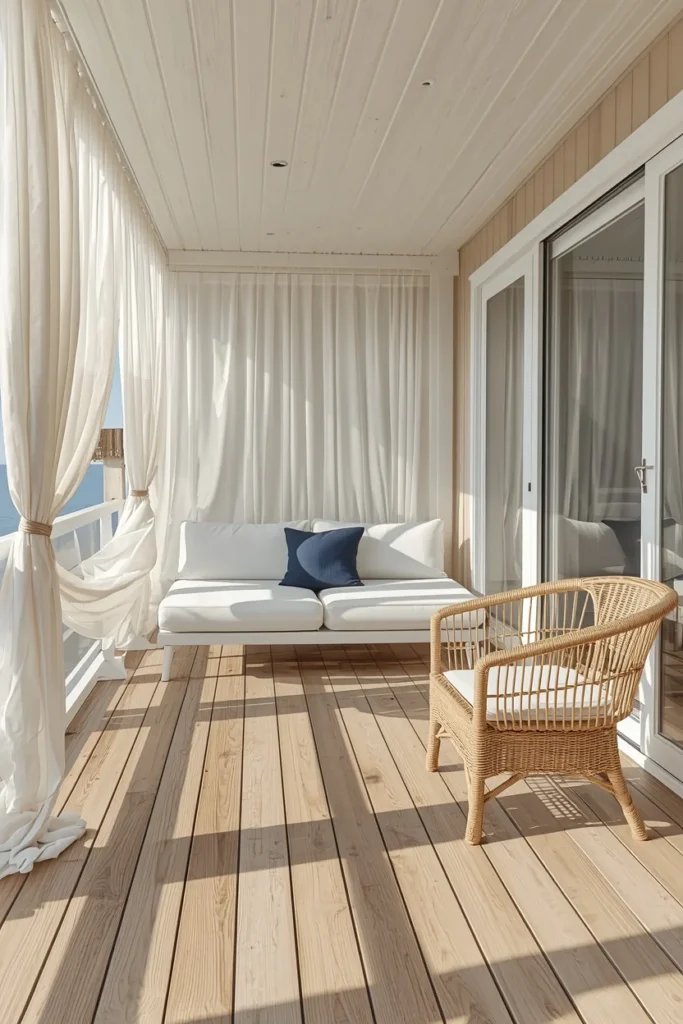
This look leans on light, sun-bleached wood tones, white cushions, and rope or rattan accents that never tip into anything overly nautical. A single navy or seafoam throw pillow is usually enough color to anchor the palette, while the rest of the space stays soft and neutral. Sheer outdoor curtains hung from a simple frame add movement in the breeze and a sense of privacy without blocking the view. Because the palette stays so light, this style works particularly well on decks that get strong afternoon sun, since it reflects rather than absorbs heat the way darker wood tones do.
6. Built-In Bench Around a Tree
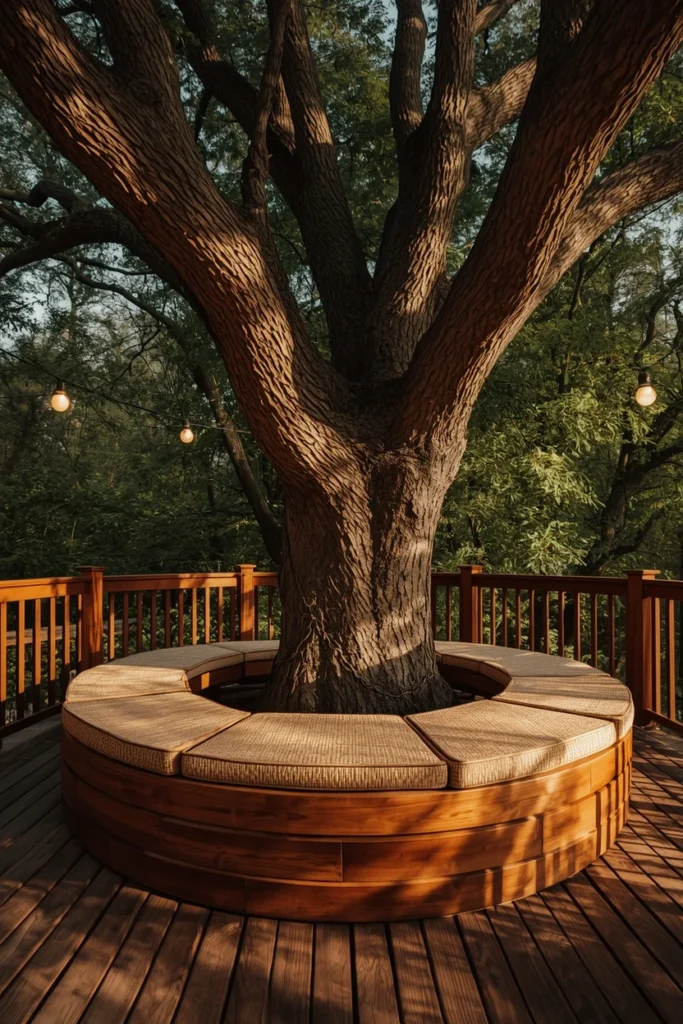
If a mature tree grows through or near the deck, a custom bench built around the trunk turns an awkward obstacle into the best seat on the entire deck. The bench can run in a full circle or a simple U-shape, depending on the tree’s position, and a few flat cushions make it functional for actual lounging rather than just perching. Dappled shade from the canopy above means this spot usually stays cooler than the rest of the deck on hot afternoons, which makes it a natural gathering point without any extra shade structure needed. String lights wound loosely around the lower branches add a soft glow once evening comes.
7. Fire Pit Gathering Deck
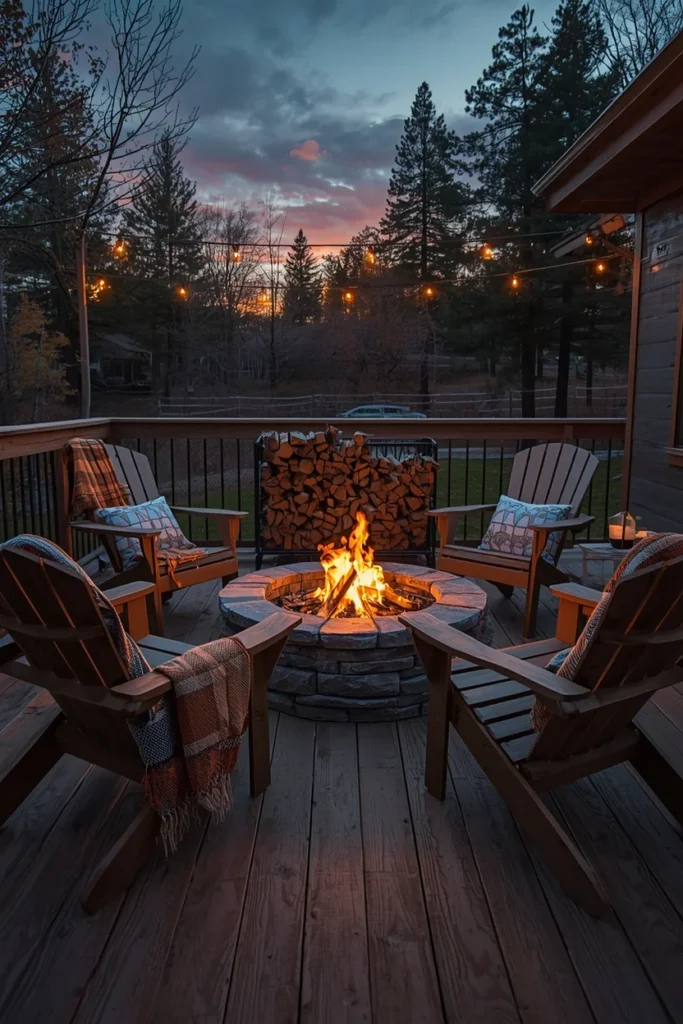
A built-in or portable fire pit at the center of a seating circle stretches the usable deck season well into fall, since the heat alone can add another hour or two of outdoor time on a cool evening. Deep-seated Adirondack chairs or a low sectional arranged in a loose circle keep everyone facing the flame, which does most of the ambiance work on its own. A stack of firewood in a simple metal rack nearby adds function and texture at the same time. Wool throws draped over the arms of each chair signal that this spot is meant for lingering, not just walking past.
8. Pergola-Shaded Retreat
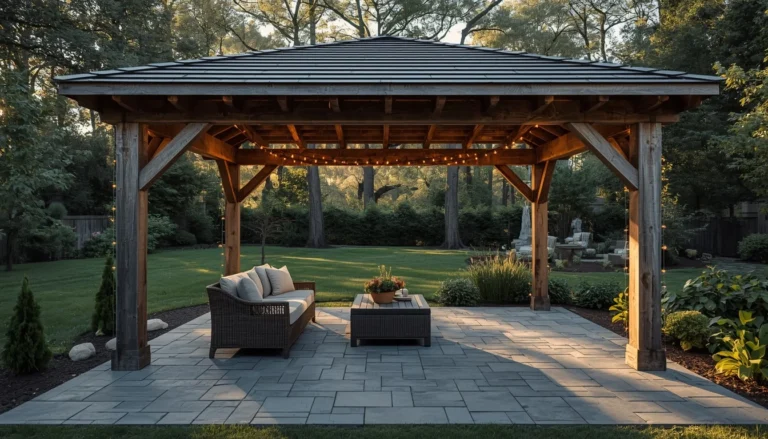
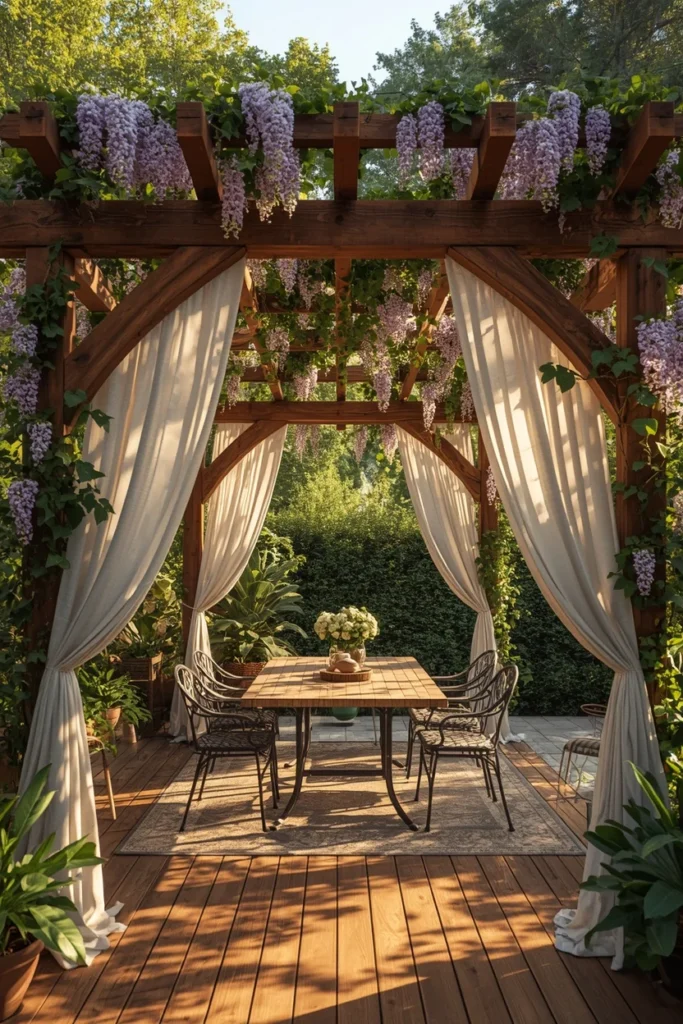
A wooden or metal pergola over part of the deck adds architectural structure while cutting down on direct sun during the hottest part of the day. Climbing vines like wisteria or clematis trained along the beams soften the hard lines over a season or two, giving the whole structure a slightly wild, established look. Outdoor drapery hung from the corners can be pulled closed for extra shade or privacy, or left open to let the breeze through. This idea works especially well paired with a dining or lounge zone directly underneath, since it turns one section of an open deck into a shaded room of its own.
9. Screened-In Porch Deck
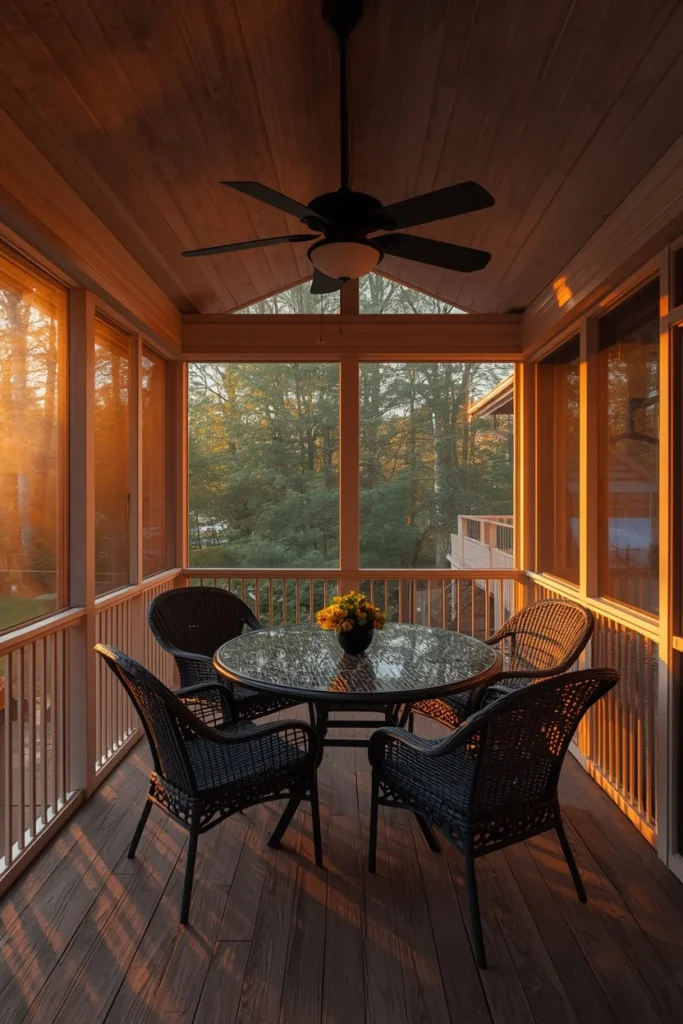
Adding screening to part of a deck solves the single biggest complaint about outdoor living in warmer climates: bugs. A screened section can house the dining table or a full seating area, letting the space stay usable during dusk and after dark without citronella candles doing all the work. Ceiling fans mounted inside the screened area keep air moving on still summer nights, and simple roll-down shades add extra shelter during storms. This idea suits decks attached directly to the house best, since the screened section can function almost like an additional room with its own access point.
You may also like 18 Back Porch Ideas That Make Outdoor Living Feel Like Pure Heaven
10. Small Deck Multi-Function Corner
A narrow or small deck doesn’t need to choose between dining and lounging if the furniture is chosen with double duty in mind. A drop-leaf table that folds down against the railing when not in use, paired with two stackable chairs, keeps the space open for lounging most of the time and ready for dining when guests come over. Vertical planters mounted on the railing add greenery without eating into floor space, and a single weatherproof storage bench doubles as extra seating and a place to stash cushions overnight. This approach proves that square footage matters less than how intentionally it gets used.
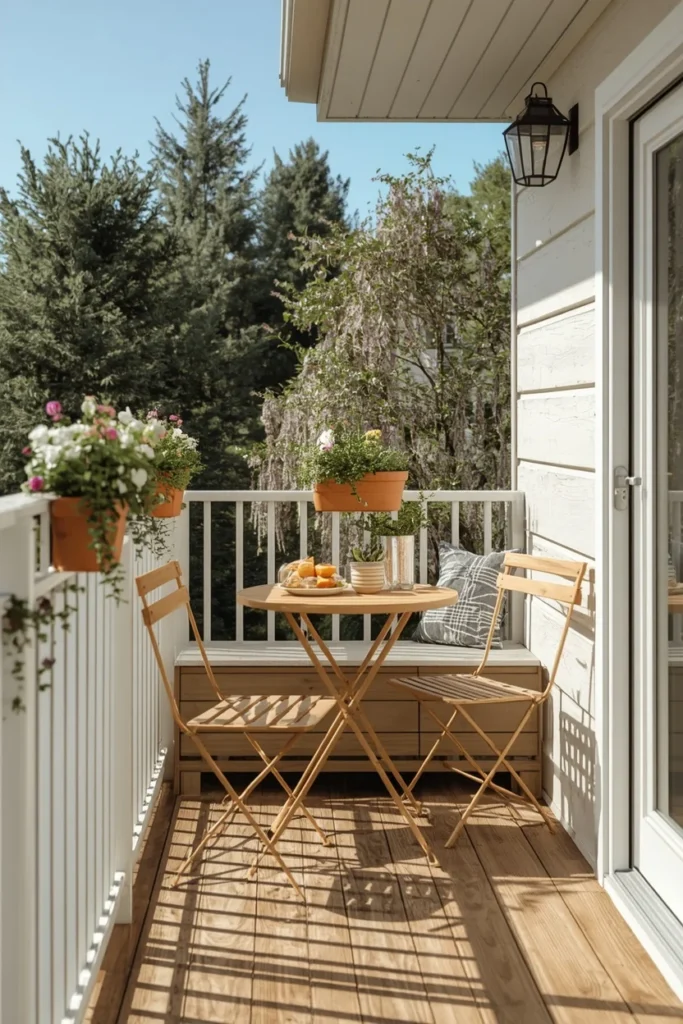
11. Outdoor Kitchen Deck
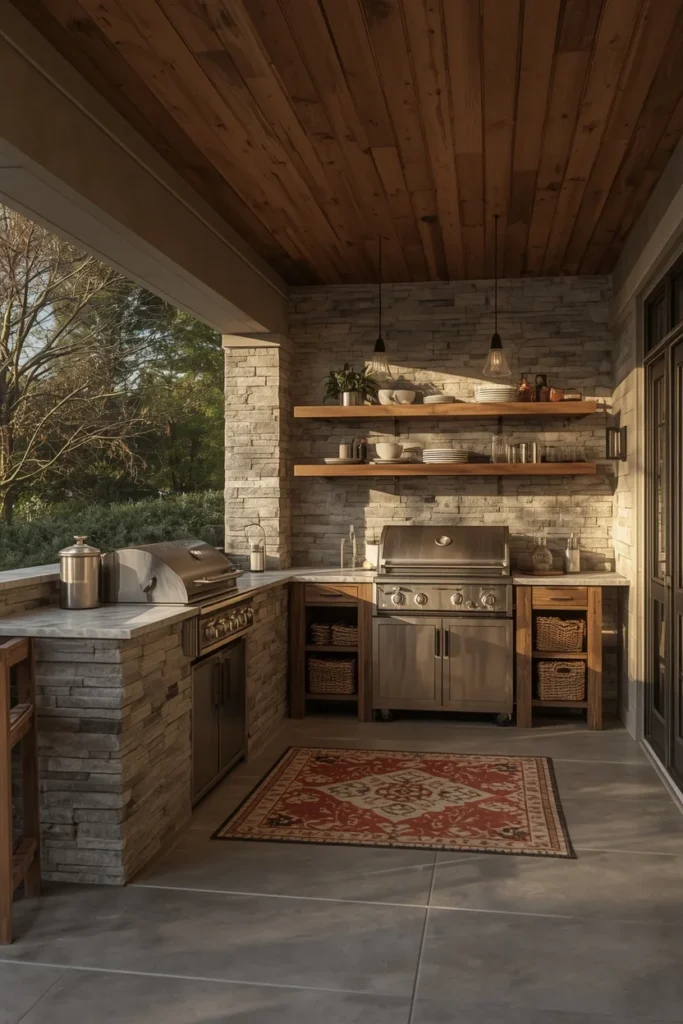
A built-in grill station, small counter, and a mini fridge turn a deck into a genuine second kitchen instead of just a spot to eat. Stone or brick facing on the counter base ties the kitchen zone visually to the house, while open shelving nearby keeps grilling tools and serving dishes within reach. A pull-down pendant light or a string of task lighting over the counter makes evening cooking realistic, not just daytime. Positioning this zone near the kitchen door cuts down on trips back and forth during a cookout, which matters more than most people expect once the space actually gets used.
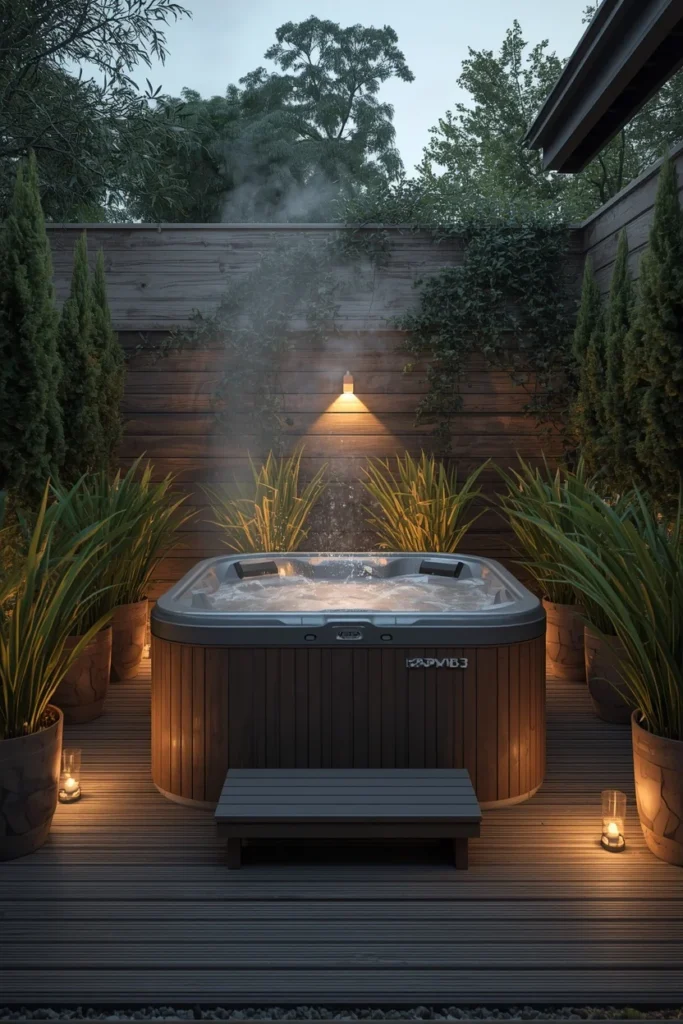
12. Hot Tub Spa Deck
A dedicated section for a hot tub, framed by privacy lattice or tall potted grasses, turns a deck into a genuine retreat rather than just an entertaining space. Slip-resistant decking material around the tub matters as much as the style, since safety underfoot has to come before aesthetics in this particular zone. Warm sconce lighting mounted lower on the wall, rather than overhead, keeps the glare down for nighttime soaks. A small side table within arm’s reach for towels and drinks finishes the setup without needing much else.
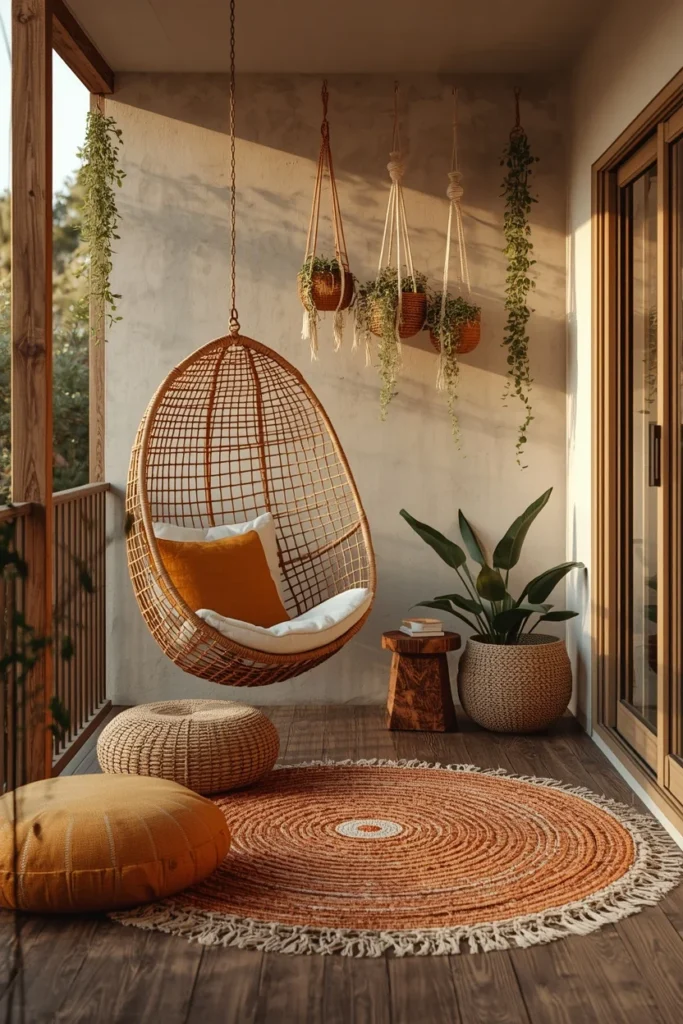
13. Boho Layered Deck
Woven poufs, a low rattan coffee table, and layered outdoor rugs in warm terracotta and mustard tones give this deck its collected, well-traveled feel. A hanging egg chair or macrame swing adds a focal point without taking up much floor space, and trailing plants cascading from hanging planters fill in the vertical space above eye level. Mixing textures matters more than matching colors here — rattan, woven cotton, and rough linen can all sit together as long as the palette stays warm. This style tends to feel most at home on decks surrounded by greenery, where the layered textures echo the garden just beyond the railing.
14. Modern Minimalist Deck
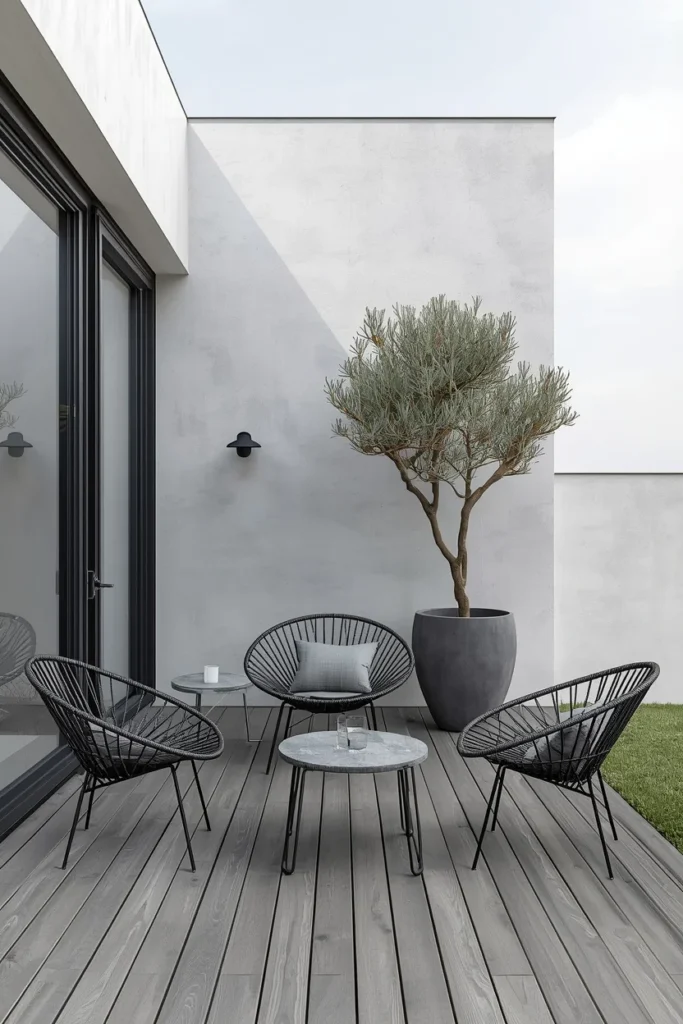
Clean-lined furniture in charcoal or black metal, paired with a neutral composite decking surface, gives this style its architectural, low-maintenance appeal. A single oversized planter with one structural plant, like an olive tree or ornamental grass, does more visual work than a dozen small pots scattered around. Furniture stays low to the ground and sparse, with negative space treated as part of the design rather than something to fill in. This aesthetic suits contemporary homes especially well, since the deck ends up echoing the same restrained lines as the architecture behind it.
15. Cottage Garden Deck With Planters
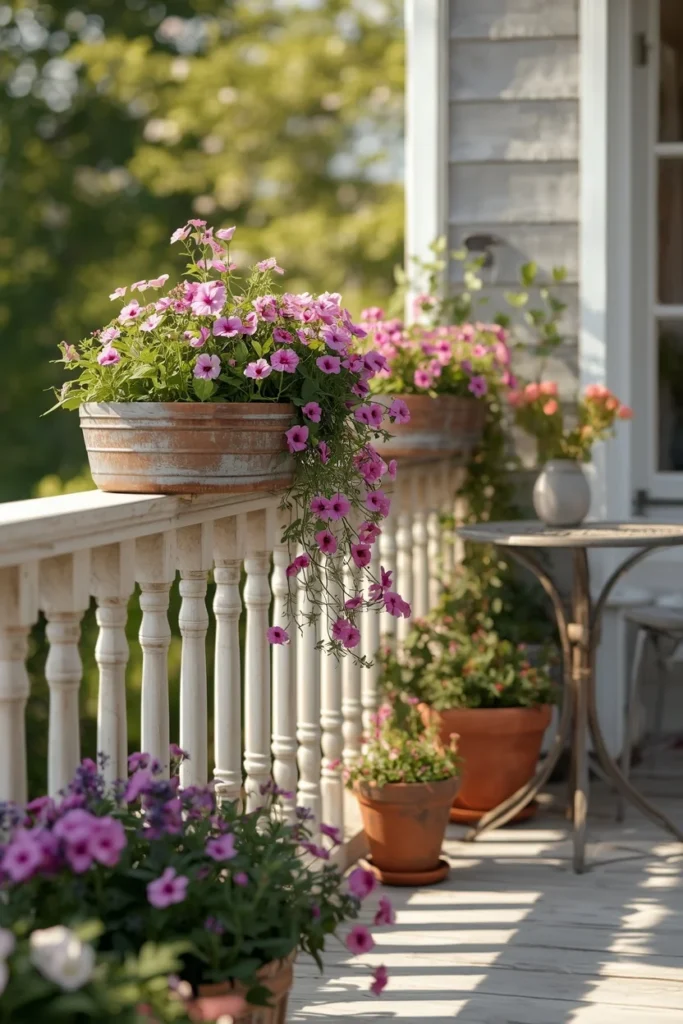
Window boxes and railing planters overflowing with trailing flowers turn a plain railing into the deck’s main visual feature. Mixing height in the planters, tall spikes of salvia next to low trailing lobelia, for example, keeps the display from looking flat. A mismatched collection of vintage watering cans or terracotta pots doubles as decor even when they’re not actively holding anything. This idea works on decks of any size, since the flowers do the styling work along the perimeter without needing extra furniture in the middle.
16. Hammock Reading Nook Deck
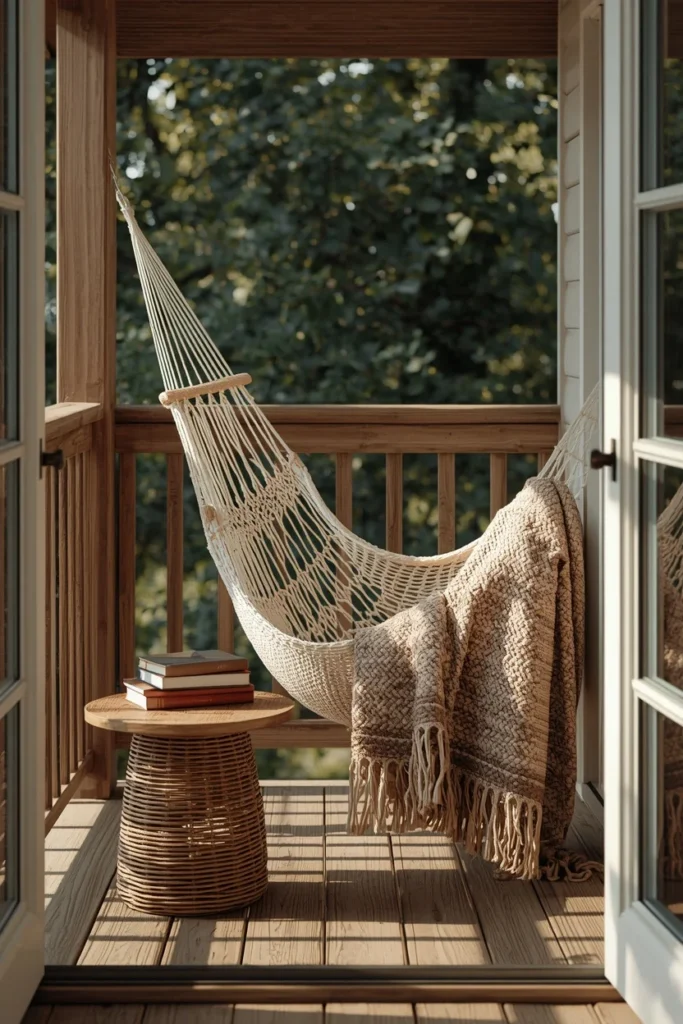
A single hammock or hammock chair strung between two posts or a sturdy frame carves out a quiet corner meant for one person and a book, separate from any group seating elsewhere on the deck. A small side table within reach holds a drink and a stack of paperbacks, and a woven blanket draped over the hammock’s edge signals this spot is built for lingering. Positioning it in a partly shaded corner keeps it usable through the warmer parts of the day. This idea works especially well as a secondary zone on a larger deck, giving the space a quiet retreat option alongside a more social area.
17. Poolside Composite Deck
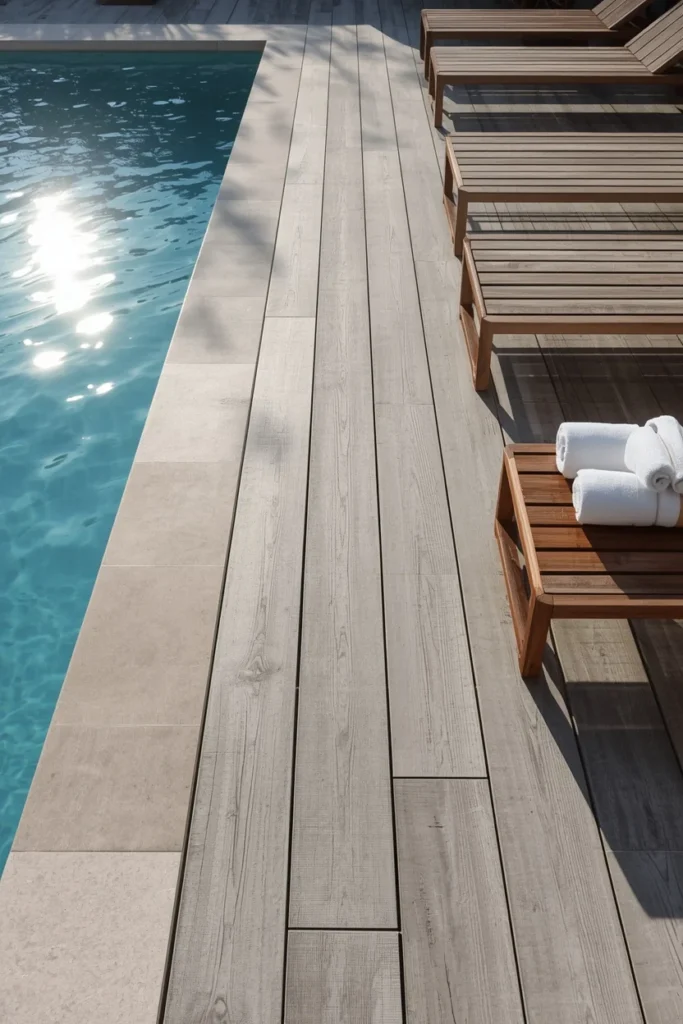
A deck that wraps or borders a pool needs decking material chosen for grip and heat resistance first, style second, since bare feet are the primary users of this space. Light-toned composite boards stay cooler underfoot than darker wood in direct sun, which matters more here than almost anywhere else on this list. Built-in bench seating along the pool’s edge doubles as extra lounging space without needing to drag furniture in and out each season. A simple outdoor shower or a rack of rolled towels nearby keeps the whole zone feeling resort-like rather than improvised.
you may also like 21 Pool House Ideas That Make Your Backyard Feel Like a Luxury Resort
18. Rustic Farmhouse Deck
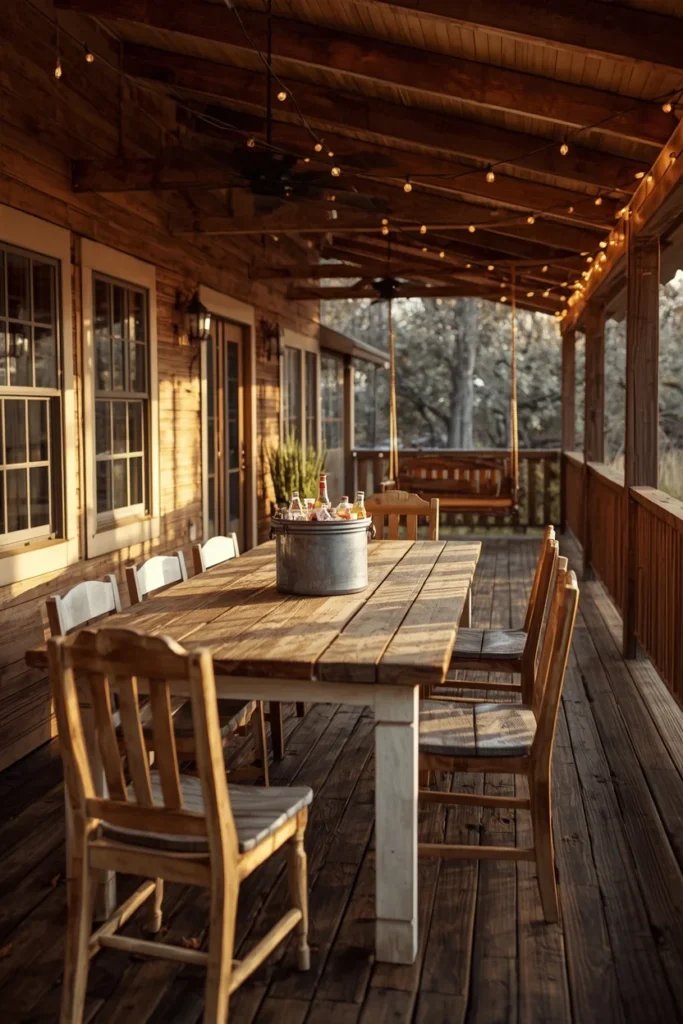
Weathered wood furniture, a galvanized metal tub used as a drink cooler, and a porch swing give this deck its lived-in, generations-old feel. String lights strung between exposed roof beams or posts add a soft glow without looking overly polished, and a woven picnic-style tablecloth on the dining table keeps the mood casual. Mismatched wooden chairs, rather than a matching set, actually reinforce the farmhouse feel here, since the style depends on looking gathered rather than bought as a single collection. This aesthetic suits decks attached to older or more traditional homes especially well.
You may also like 16 Craftsman Exterior Ideas That Are Classic, Detailed & Endlessly Beautiful
19. Moody Evening Entertaining Deck
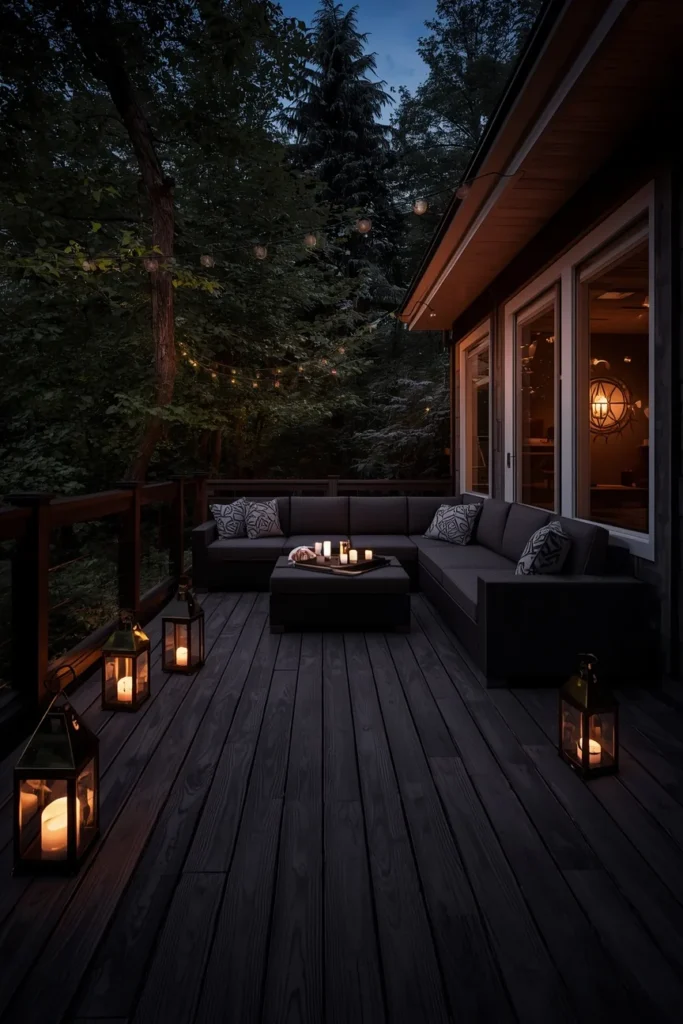
Deep charcoal or black outdoor furniture, paired with warm amber lighting, gives this deck a dramatic, after-dark presence that a bright daytime-focused deck can’t match. Low lanterns with real or flickering LED candles scattered across the table do more for atmosphere than any single overhead fixture could. A dark stain on the decking boards themselves, rather than a natural or light finish, deepens the moody effect and makes any brass or gold accents stand out even more. This style is built specifically for evening use, so it’s worth pairing with layered outdoor lighting rather than relying on daylight to carry the look.
20. Multi-Level Zoned Deck
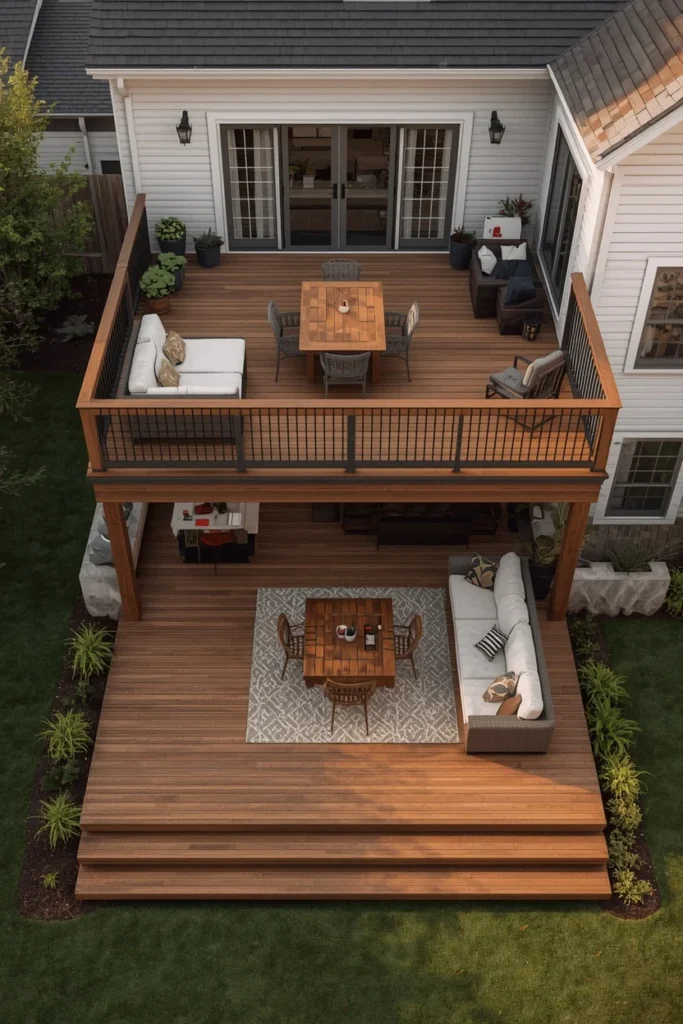
On sloped or larger properties, a deck built across two or three levels can separate dining, lounging, and a fire pit or garden area without needing furniture arrangement to do all the zoning work. Wide, shallow steps between levels double as extra casual seating during larger gatherings, and a consistent railing style across all levels keeps the multi-tier structure feeling like one connected space rather than several disconnected platforms. Planting along the level changes, rather than leaving them bare, softens the transitions and adds privacy between zones. This approach takes more planning upfront but tends to get more consistent daily use than a single flat platform, since it naturally suits different moods and group sizes.
Styling Tips
- Pick one dominant wood tone or decking color and repeat it across furniture, planters, and accents so the whole deck reads as one space.
- Layer lighting at three heights — overhead string lights, low lanterns on the table, and ambient sconces — so the deck stays usable well past sunset.
- Keep at least one zone shaded, whether by a pergola, umbrella, or overhang, so the space stays usable during the hottest part of the day.
- Choose an accent color and repeat it in at least two spots, like a cushion and a planter, so it reads as a choice rather than an accident.
Practical Implementation Ideas
- Start with the layout and zoning before buying furniture, since the wrong zone placement is the hardest thing to fix after the fact.
- Test furniture placement with painter’s tape marked on the deck boards before committing to a full furniture order.
- Add planters and greenery early, since they take a season or two to fill in and soften the space.
- Prioritize slip resistance and heat resistance in decking material choice near pools or hot tubs, ahead of color or finish.
Common Mistakes to Avoid
- Pushing all the furniture to the edges, which leaves the middle of the deck empty and unused.
- Skipping shade entirely, which limits the deck to early morning or evening use during summer.
- Choosing decor that isn’t weather-rated, leading to fading, rust, or mildew within a single season.
- Overcrowding a small deck with too many furniture pieces instead of choosing fewer, multi-functional ones.
Small-Space Alternatives
- A drop-leaf or wall-mounted folding table keeps a narrow deck open most of the time and ready for guests when needed.
- Vertical railing planters add greenery without using any floor space at all.
- A single bistro set with two chairs often serves a small deck better than a full sectional that overwhelms the space.
- Stackable or foldable furniture makes it easy to reset a small deck for different uses throughout the week.
Budget-Friendly Alternatives
- String lights are one of the highest-impact, lowest-cost upgrades a deck can get, and they work with almost any existing style.
- Secondhand wood furniture takes outdoor stain or paint well and often has better bones than budget flat-pack sets.
- A portable fire bowl delivers most of the ambiance of a built-in fire pit at a fraction of the cost and effort.
- Outdoor rugs from discount retailers can define a seating zone without needing any structural changes to the deck itself.
Pro Styling Recommendations
- Match furniture scale to the actual size of the deck — oversized sectionals on a small deck make the whole space feel cramped rather than cozy.
- Choose quick-dry outdoor cushion fabric over standard indoor fabric, since deck furniture deals with dew and rain even under cover.
- If privacy is a concern, tall potted grasses or a simple lattice screen solve it without blocking airflow the way a solid fence would.
- Leave a little open floor space near any dining or lounge zone so people can move chairs and gather without feeling boxed in.
FAQs
Conclusion
A back deck earns its place in the backyard when it gives people an actual reason to stay outside, not just walk past on the way to the yard. Pick one zone from this list to start with, layer in lighting and one or two plants, and let the rest of the space build outward from there over a season or two. The deck will start feeling like a room, not an afterthought, long before every detail is finished.