18 Home Gym Ideas That Make Working Out at Home Feel Seriously Motivating
A lot of home gyms fail before the first workout even happens. The equipment gets bought, the corner gets cleared out, and within a few weeks it feels more like a storage room than a place anyone wants to spend time in.
The gyms that actually get used share a few things in common that have nothing to do with how much equipment is packed inside. Flooring that feels right underfoot. Light that doesn’t feel like a hallway. A layout that makes sense for how the space actually gets moved through.
This list walks through 18 ways to build that kind of space, whether it’s a full converted garage, a spare room, or a single motivated corner of an apartment.
Table of Contents
- Rubber Flooring Foundation
- Full-Height Mirror Wall
- Natural Light and Window Placement
- Biophilic Plant Corner
- Exposed Brick Industrial Strength Zone
- Motivational Quote or Chalkboard Wall
- LED Accent Light Strips
- Earthy Grounded Color Palette
- Curated Equipment with the 3-3-3 Rule
- Garage Gym Conversion with Epoxy Flooring
- Small-Space Fold-Away Setup
- Cork-Floored Zen Yoga Corner
- Open Shelving and Wall-Mounted Storage
- Neon Sign Energy Accent
- Sound System and Cardio Entertainment Zone
- Wall-Mounted Weight Rack
- Salt Lamp and Candle Calming Corner
- Ventilation and Climate Comfort Setup
1. Rubber Flooring Foundation
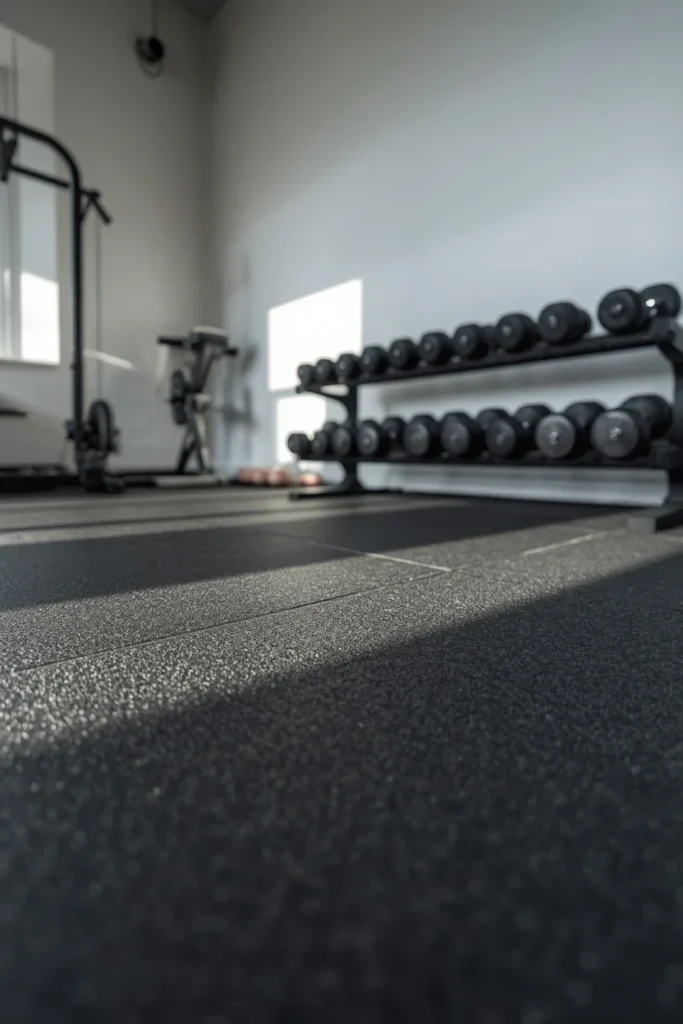
Flooring is the single most consequential decision in any home gym, more than the equipment or the color on the walls. Rubber tiles, typically three-quarters of an inch thick, cushion joints during high-impact cardio, provide grip for weightlifting, and deaden the sound of dropped weights, which matters most in apartments or homes with shared walls. They also lay without adhesive, which means the layout can shift as the gym’s use changes over time. Beyond the function, dedicated flooring signals that the room is a real gym rather than a space where exercise sometimes happens, which changes how seriously most people treat their own routine in it. Choosing charcoal or deep gray tiles over standard black keeps the room from feeling like a commercial facility.
2. Full-Height Mirror Wall
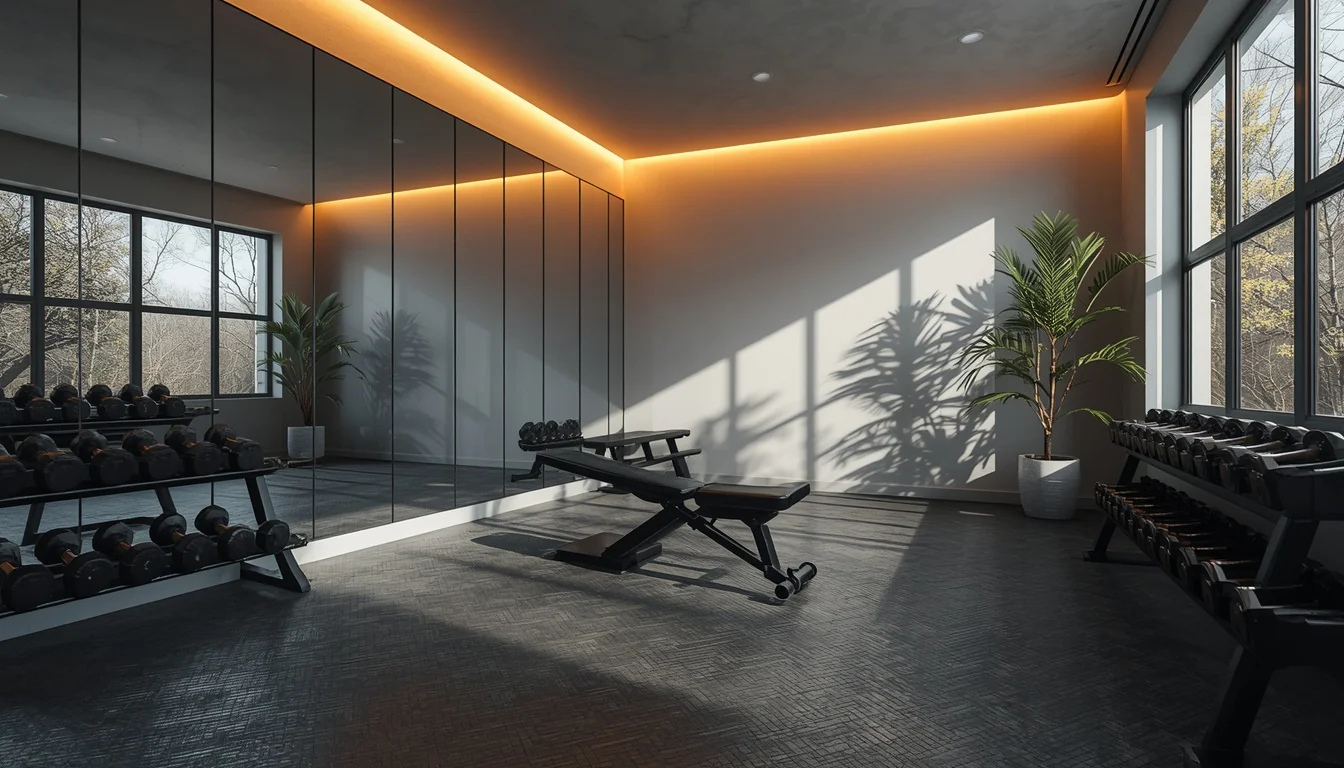
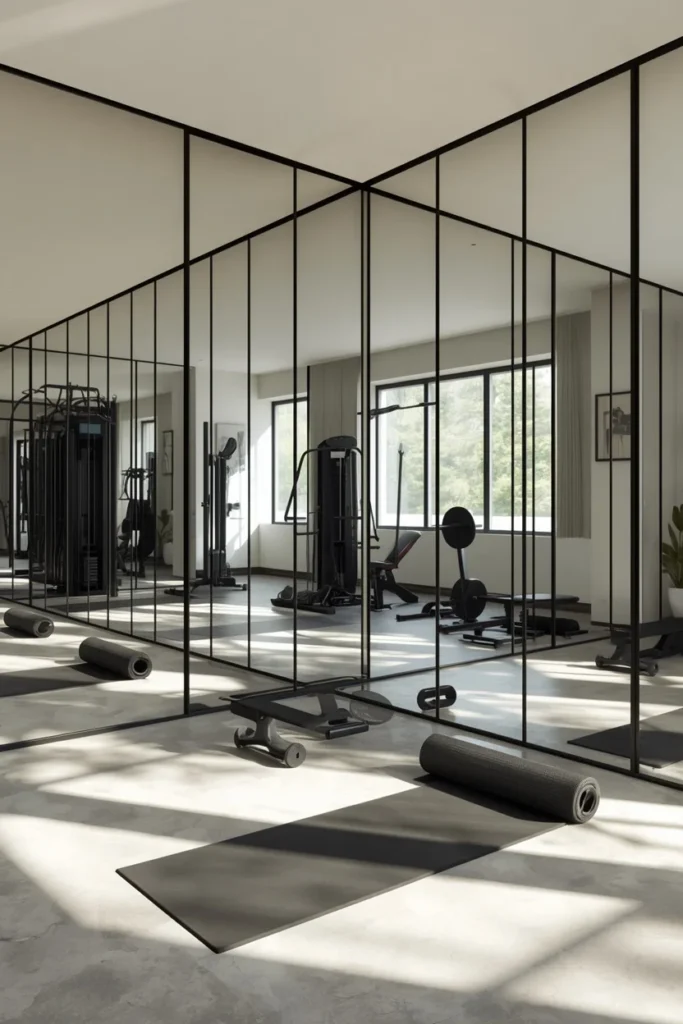
A wall of full-height mirrors does more than help with form, it makes a small room feel considerably larger and brighter, which matters most in gyms converted from spare bedrooms or basements. Position the mirror wall opposite the main window if possible, so daylight bounces further into the room. Beyond function, mirrors reflect movement, and that visual feedback during a workout genuinely helps people notice and correct form issues in real time rather than guessing. A simple black or brass frame around the mirror sections ties the hardware finish to the rest of the room’s metal accents. This is one of the highest-impact upgrades for gyms that feel cramped or dim.
3. Natural Light and Window Placement
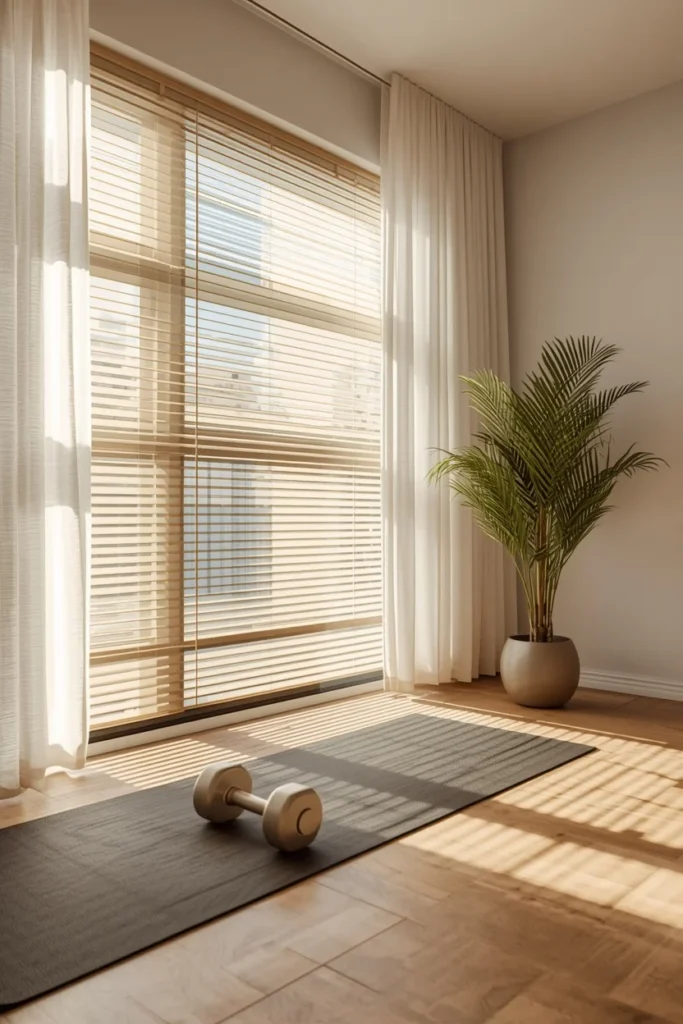
Positioning the main equipment near a window rather than in the darkest corner of the room genuinely correlates with longer, more enjoyable workout sessions, not just a nicer view. If the room has more than one window, keep the main cardio or strength zone near the largest one, and use adjustable blinds so daylight can be dialed up or down depending on the time of day. A sheer curtain softens harsh midday sun without blocking the light entirely. This detail matters because most people underestimate how much a windowless, dim gym contributes to skipping workouts compared to a bright, naturally lit one.
4. Biophilic Plant Corner
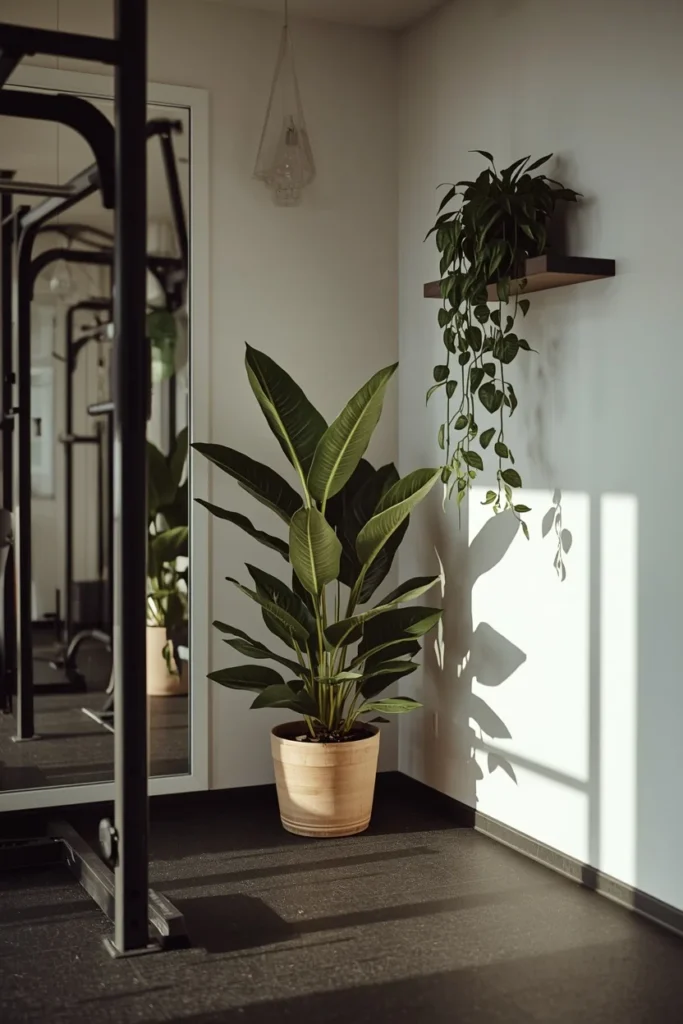
Greenery in a home gym does more than decorate the space, plants have been shown to improve air quality and reduce psychological stress, both of which affect how a workout actually feels, not just how the room looks. Keep larger plants, like a fiddle leaf fig or snake plant, tucked into a corner away from the main equipment path, since a plant next to a treadmill becomes an obstacle rather than a feature. A trailing pothos on a high shelf adds greenery without taking up floor space. This detail pairs especially well with earthy color palettes, since the live greenery reinforces the grounded, natural feeling those tones are going for.
5. Exposed Brick Industrial Strength Zone
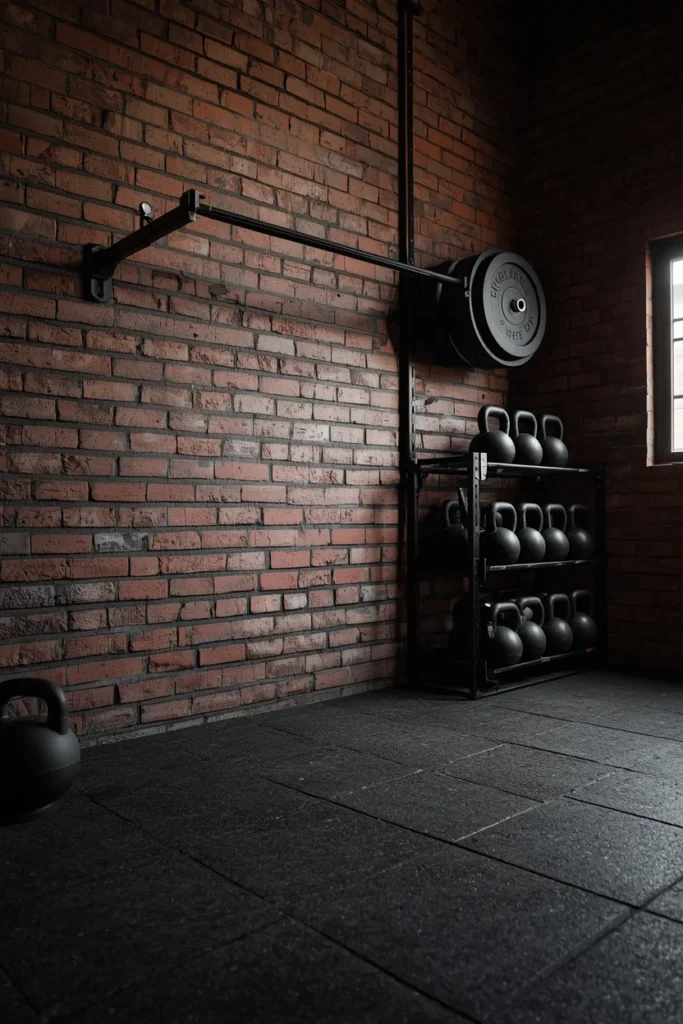
For strength-focused workouts, exposed brick paired with metal equipment and raw concrete or rubber flooring creates a rugged atmosphere that feels intentional rather than unfinished. Keep the color palette limited to black, gray, and the natural brick tone so the room doesn’t feel busy. A pull-up bar mounted directly into the brick or an adjacent stud wall adds a serious, CrossFit-adjacent focal point. This style works particularly well in garages or basements where the raw materials are often already present, meaning less renovation work to achieve the aesthetic. It signals a strength-training identity the moment someone walks in, rather than a general-purpose spare room.
6. Motivational Quote or Chalkboard Wall
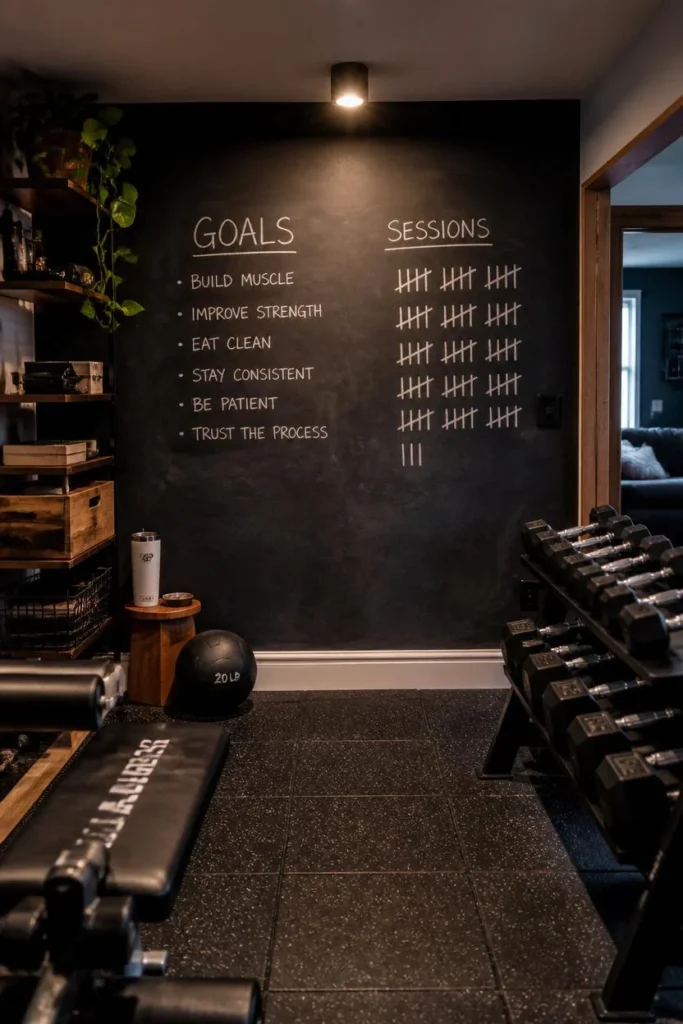
A single wall dedicated to a rotating chalkboard or a bold-lettered motivational quote gives the room a personality beyond the equipment inside it. A chalkboard works especially well for tracking daily goals, workout counts, or a running note to self, since it changes as often as the routine does. If a permanent quote feels more fitting, keep the lettering large and simple rather than a busy paragraph, since the message needs to register in a glance during a workout, not be read line by line. This detail matters because a visible, personal goal reinforces intent every time someone enters the room, rather than just showing up to lift or run without a clear why.
7. LED Accent Light Strips
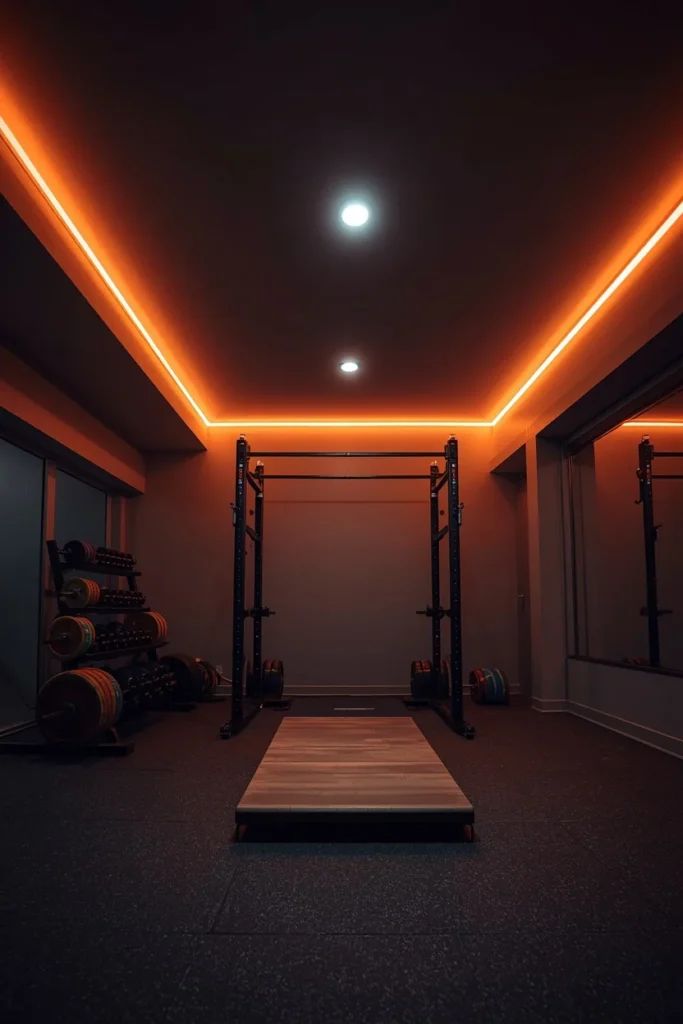
Warm LED strips installed along the ceiling edge or around a lifting platform add a modern, energizing glow that standard overhead lighting can’t replicate. Keep the main lighting bright and functional for safety, and use the LED strips as a secondary accent layer rather than the primary light source. Color-changing strips let the mood shift between an energetic warm-up tone and a cooler, more focused tone for heavy lifting sessions. This detail works particularly well in windowless basement or garage gyms, where the accent lighting does real work compensating for the lack of natural daylight elsewhere in the room.
8. Earthy Grounded Color Palette
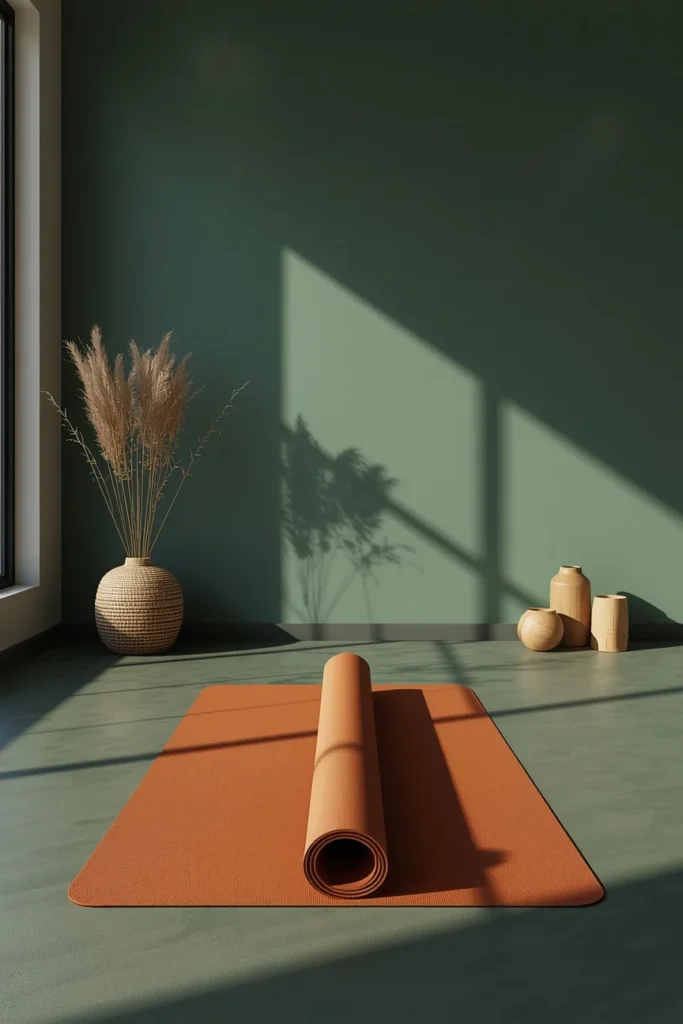
Deep sage, charcoal, and warm terracotta have replaced the all-white, clinical gym aesthetic that used to dominate home fitness spaces. These grounded tones work because they feel calming rather than sterile, which supports longer, more sustainable workout habits instead of a burst of initial motivation that fades. Paint just one accent wall in the chosen tone, keeping the rest of the room neutral so the equipment and flooring stay the visual focus. Pair the wall color with matching accessories, a terracotta yoga mat or sage resistance bands, to tie the palette together without needing much decor.
9. Curated Equipment with the 3-3-3 Rule
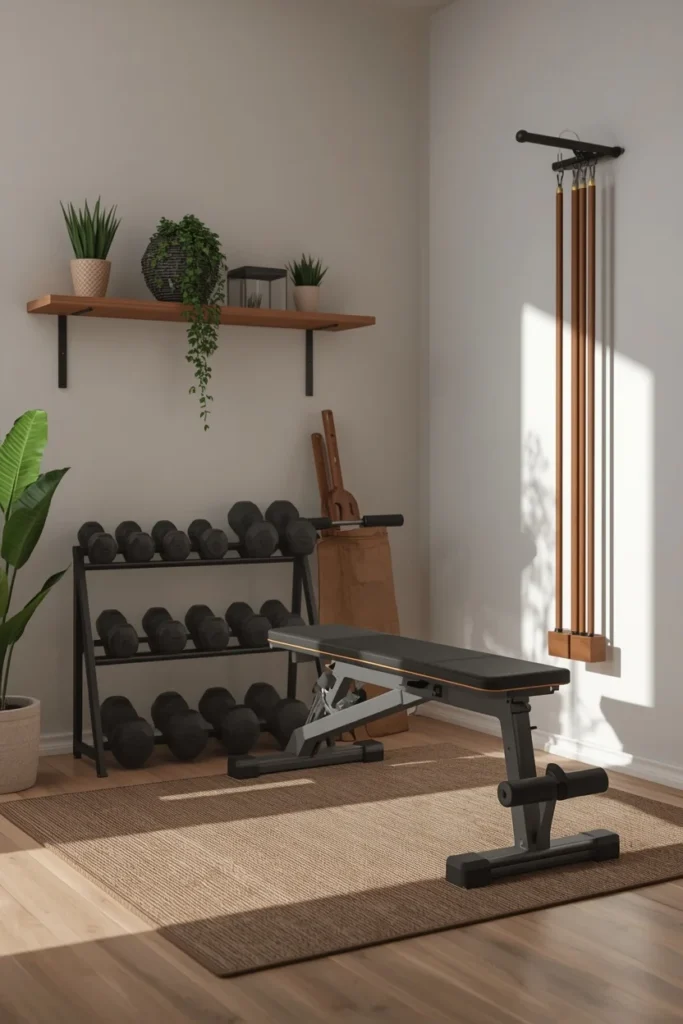
More equipment doesn’t make a better gym, and a room stuffed with single-purpose cardio machines tends to collect dust faster than a smaller, well-chosen setup. The 3-3-3 approach works well as a planning guide: three main pieces of equipment, three decorative elements like plants or art, and three storage solutions to keep everything organized. A single adjustable dumbbell set, a foldable bench, and a cable machine or resistance bands often outperform a room full of mediocre machines. This restraint also makes the space look considerably more put-together in photos and in person, since clutter is one of the fastest ways to make a gym feel unfinished.
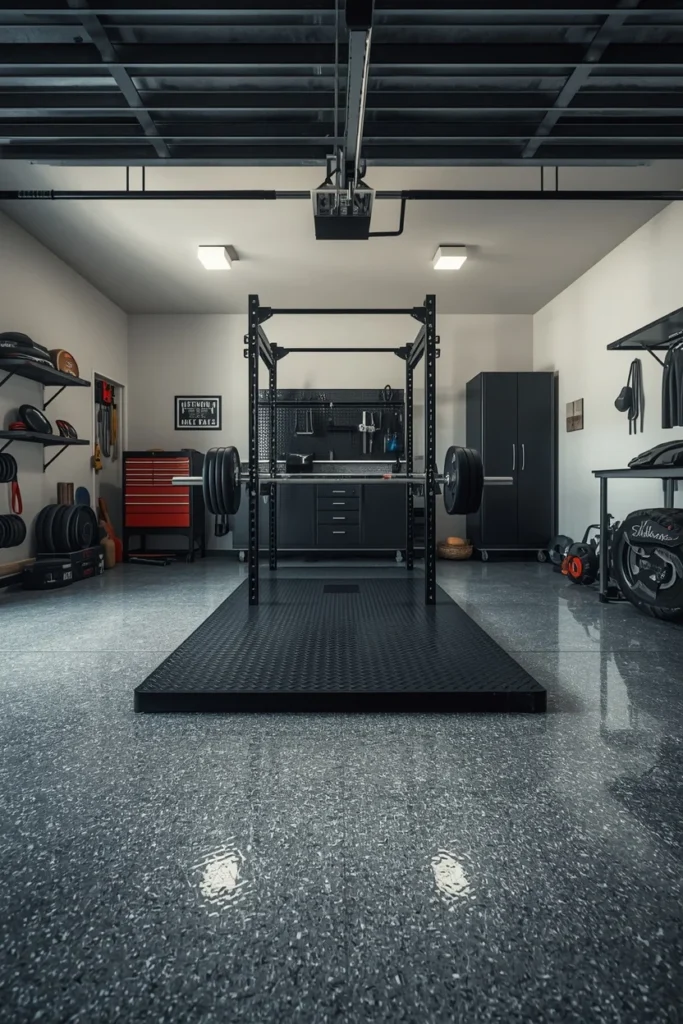
10. Garage Gym Conversion with Epoxy Flooring
A garage offers more square footage than most spare rooms, and an epoxy floor coating gives it a durable, easy-to-clean surface with strong traction for weightlifting and functional movement. Add rubber tiles over the epoxy in the heaviest lifting zone to protect the floor from dropped weights. Insulating the garage walls and adding a space heater or fan helps regulate temperature, since an uninsulated garage can become genuinely uncomfortable to train in during extreme weather. A wall-mounted storage system keeps tools and seasonal items that might already live in the garage from competing with the workout space. This conversion works especially well for anyone wanting a full strength-training setup without sacrificing an interior room.
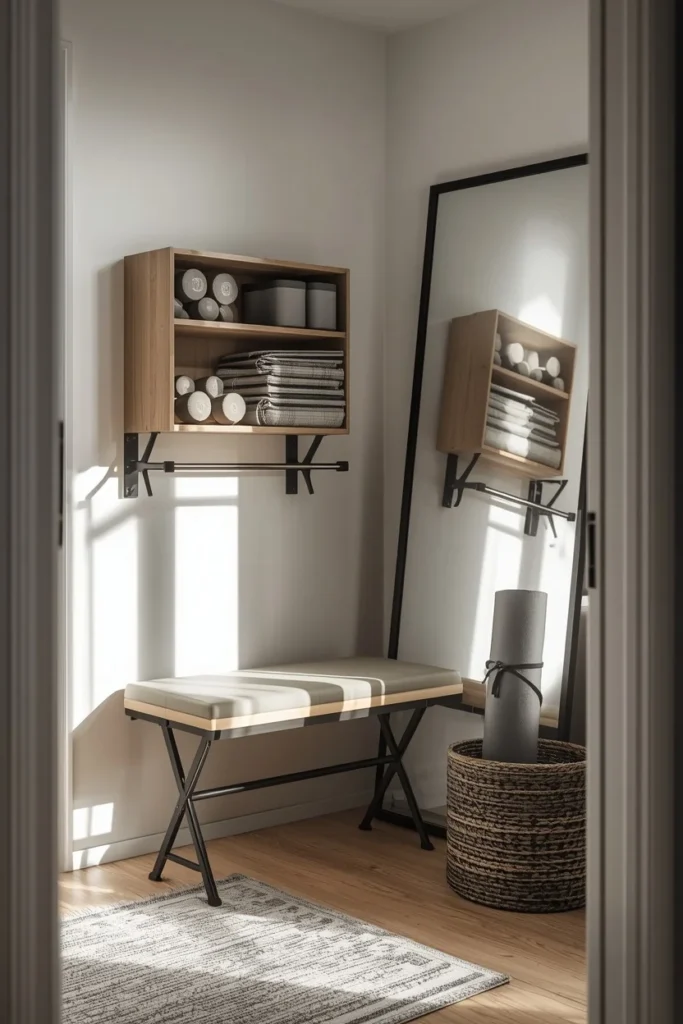
11. Small-Space Fold-Away Setup
In apartments or shared rooms, a gym that folds away when not in use solves the biggest obstacle to consistency: a workout space that gets in the way of daily life outside of exercise time. Wall-mounted fold-down benches, stackable dumbbells in a corner bin, and a yoga mat rolled and stood in a basket all disappear quickly when the room needs to return to its other function. A large mirror leaned against the wall, rather than mounted, still delivers the size-expanding effect without needing permanent installation in a rental. This approach works because a gym that has to be set up and broken down every single time is a real barrier, and removing that friction directly supports consistency.
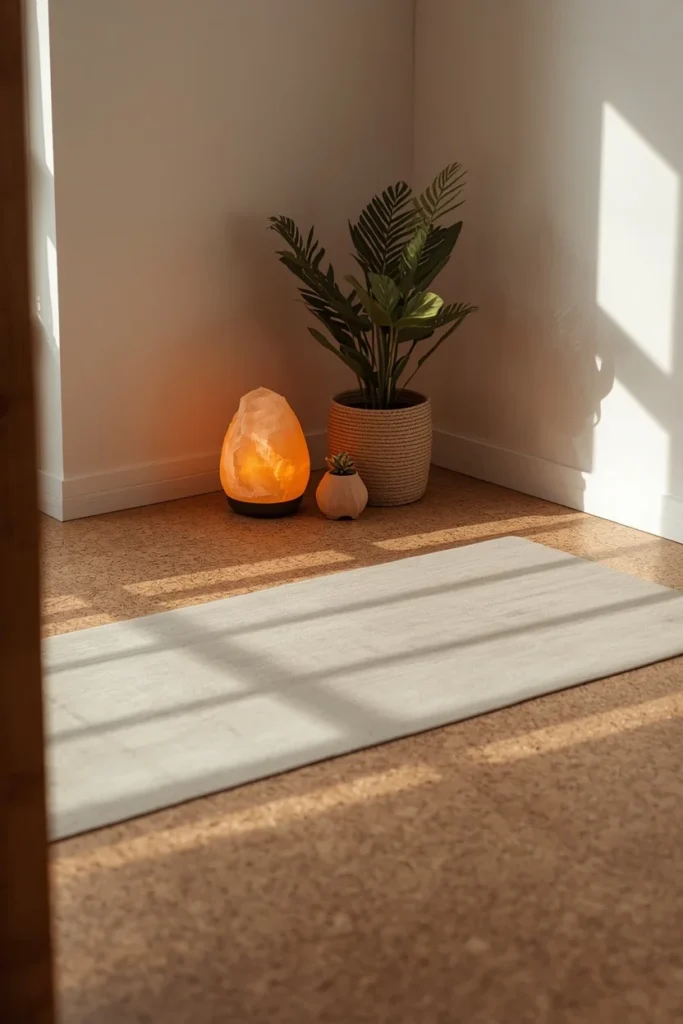
12. Cork-Floored Zen Yoga Corner
Cork flooring brings a naturally antimicrobial, moderately cushioned surface that suits yoga, pilates, and stretching far better than rubber tiles built for heavy impact. The organic texture and warm tone align with the biophilic gym trend, and cork also insulates against both temperature and sound, which matters in a quiet corner meant for slower, more mindful movement. Pair the flooring with a Himalayan salt lamp or a few candles for a soft, warm glow during stretching or meditation sessions. This zone works best set apart from the main strength or cardio area, even if it’s just a rug or visual boundary separating the two, so the calmer pace of yoga doesn’t compete with the higher-energy zone nearby.
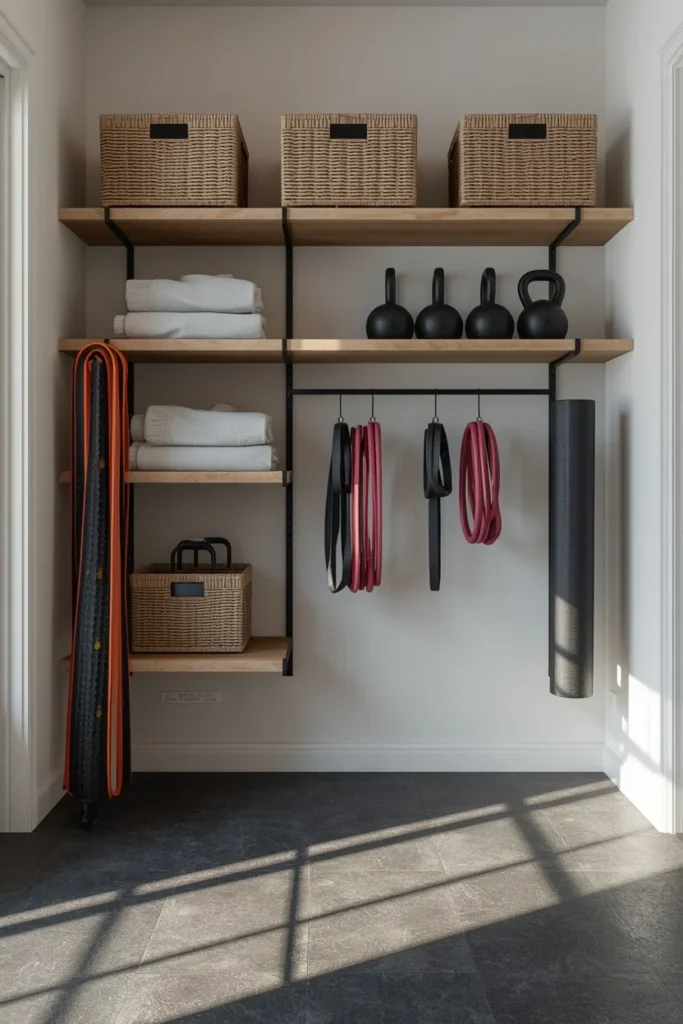
13. Open Shelving and Wall-Mounted Storage
Equipment left scattered across the floor is both a safety hazard and one of the fastest ways to make a home gym feel disorganized and uninviting. Open shelving units hold folded towels, resistance bands, and smaller accessories in woven baskets, while wall-mounted racks keep barbells, kettlebells, and yoga mats off the ground entirely. Labeling bins or baskets, even simply by category, keeps the system functional rather than just decorative. This detail matters because a gym that’s easy to reset after each session is one people are far more likely to keep using consistently, since the friction of a messy space adds up over time.
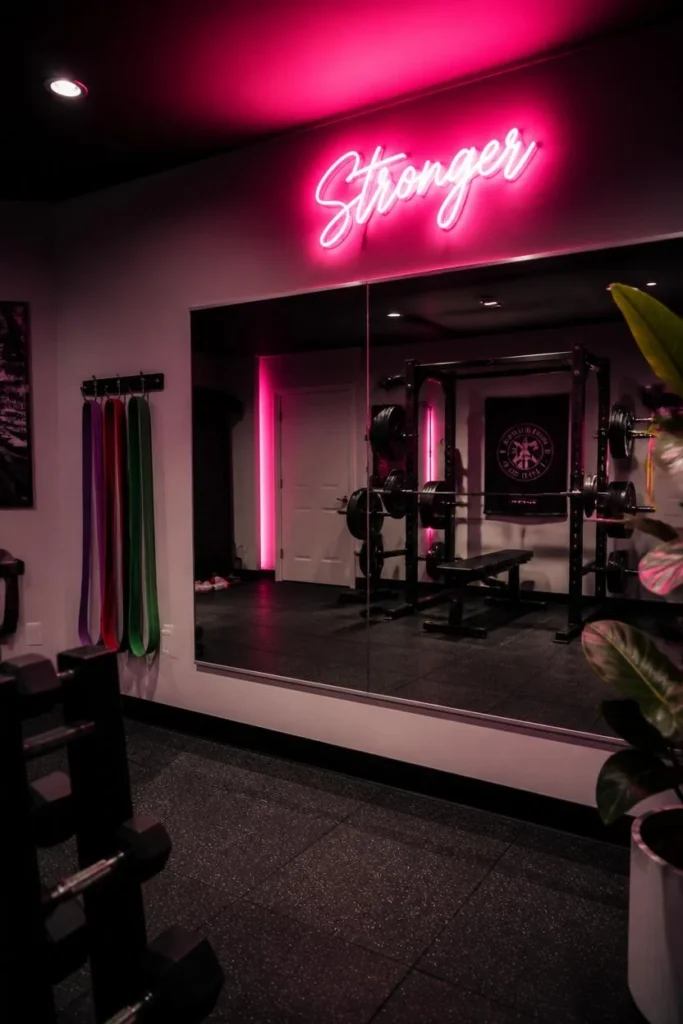
14. Neon Sign Energy Accent
A single neon or LED script sign, a short word or phrase rather than a full sentence, adds a bold, energetic focal point that suits gyms leaning into a younger, more playful aesthetic. Keep the rest of the wall simple so the sign reads clearly rather than competing with other decor. Positioned above the main mirror or cardio zone, the glow adds visual interest during evening workouts without needing additional accent lighting. This detail works particularly well in gyms designed to feel high-energy and motivational in a more youthful, boutique-studio style, rather than the calmer, earth-toned palettes used elsewhere on this list.
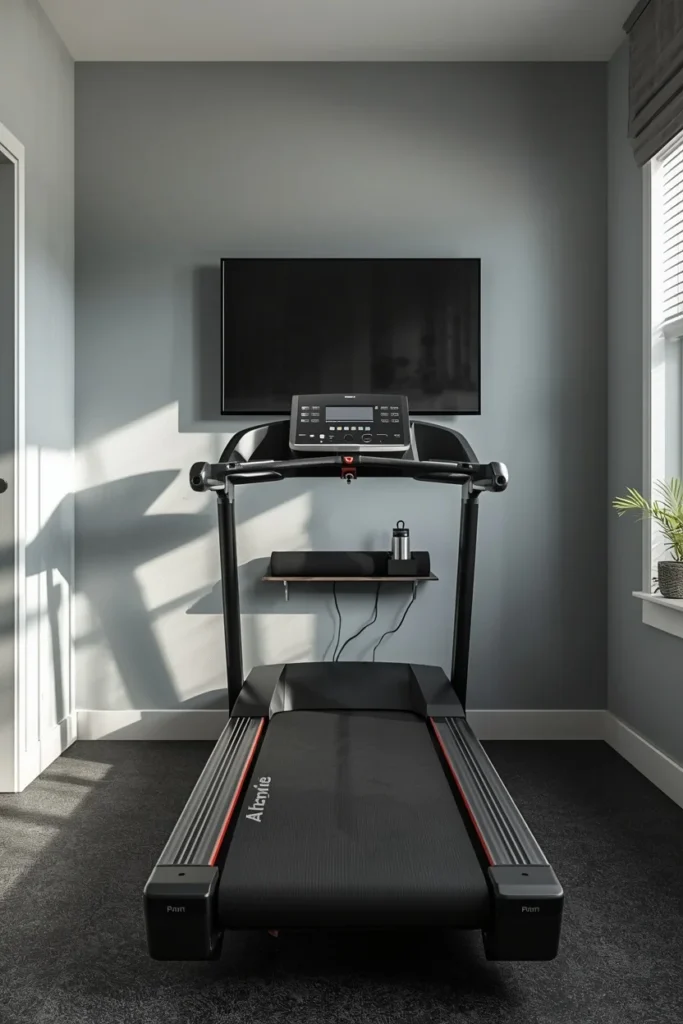
15. Sound System and Cardio Entertainment Zone
Positioning a TV or tablet mount in front of the treadmill or stationary bike, paired with a real sound system rather than a phone speaker, makes long cardio sessions feel far less tedious. Keep cables managed along the wall or floor track so the entertainment setup doesn’t create a trip hazard near moving equipment. A simple shelf beside the cardio zone holds a water bottle and towel within reach without needing to step off the machine. This detail matters because entertainment access directly affects how long people are willing to stay on a cardio machine, which compounds meaningfully over weeks and months of consistent use.
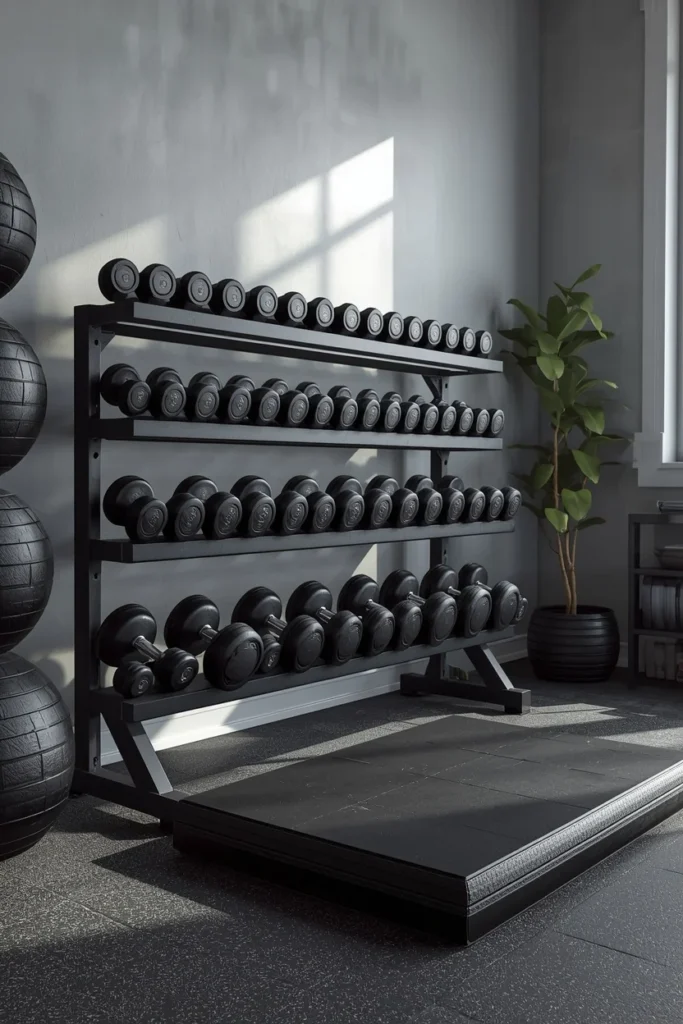
16. Wall-Mounted Weight Rack
A dedicated wall-mounted rack for dumbbells or kettlebells keeps equipment organized by weight and easy to grab mid-set, which matters more than it seems during a fast-paced strength circuit. Choose a rack with a natural wood or matte black finish depending on the room’s overall palette, so the storage piece reads as intentional rather than purely utilitarian. Positioning it within arm’s reach of the main lifting platform reduces the walking and searching that slows down a workout’s momentum. This detail is a small one, but it removes a surprising amount of daily friction from a strength-focused routine.
17. Salt Lamp and Candle Calming Corner
Not every part of a workout is high-intensity, and a small calming corner with a Himalayan salt lamp or a few candles supports the stretching, breathing, or cool-down portion of a session. Keep this corner visually distinct from the main equipment, a different flooring texture or a small rug works well, so the shift in pace feels intentional rather than incidental. Soft, warm light in this zone contrasts with brighter, more functional lighting in the main workout area, reinforcing the different purpose of each space. This detail matters most for anyone whose routine includes yoga, meditation, or a genuine cool-down period rather than stopping abruptly after the last rep.

18. Ventilation and Climate Comfort Setup
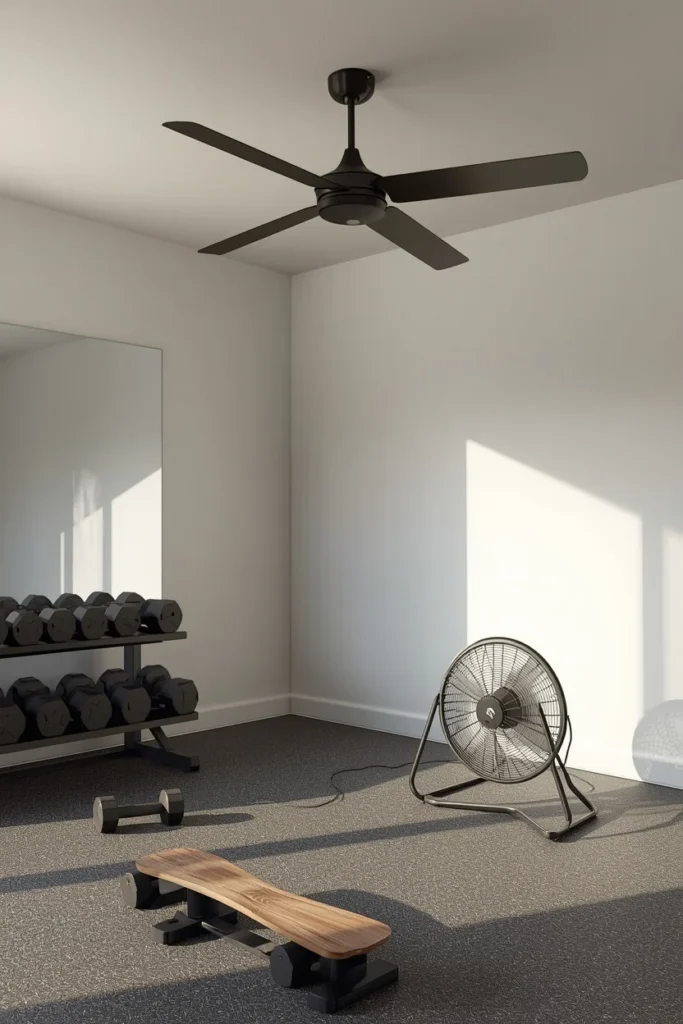
Air circulation rarely makes it onto a home gym mood board, but a stuffy, overheated room is one of the fastest ways to cut a workout short regardless of how well the space is styled. A ceiling fan, a floor fan positioned near the main equipment, or a small window unit in an unventilated garage or basement all make a measurable difference in how long a session actually lasts. Insulating an uninsulated space, particularly garages, protects against both summer heat and winter cold. This detail is entirely functional rather than decorative, but it directly supports every other design choice on this list by making the room genuinely comfortable to spend real time in.
Styling Tips
Keep the color palette limited to two or three tones throughout the room, an earthy accent, a neutral base, and one metal finish, so equipment and decor feel connected instead of scattered. Layer lighting the same way a living room would, bright functional light for safety, plus one warmer accent layer for mood. A single large mirror does more for the feel of a small gym than almost any other single purchase.
Practical Implementation Ideas
Measure the room and map out equipment placement before buying anything, since a treadmill or rack that blocks a doorway or walking path gets used far less than one placed thoughtfully. Test flooring samples underfoot before committing to a full room, since rubber, cork, and foam all feel meaningfully different depending on the type of workouts planned. Install storage before equipment arrives so gear has an assigned spot from day one instead of ending up stacked on the floor.
Common Mistakes to Avoid
The most common mistake is buying too much equipment upfront, which tends to result in a room stuffed with underused machines rather than a curated, functional layout. Skipping proper flooring is a close second, since bare concrete or hardwood under heavy lifting or high-impact cardio damages both joints and floors over time. Placing the gym in the darkest, most windowless part of the house without adding compensating light also quietly undermines motivation more than most people expect.
Small-Space Alternatives
Fold-away benches, stackable storage bins, and a leaning rather than mounted mirror all let a small gym disappear when the room needs to serve another purpose. A single multi-functional piece of equipment, an adjustable bench or a resistance band system, often replaces several single-purpose machines in a tight footprint. Vertical wall storage keeps the floor clear in rooms where every square foot matters.
Budget-Friendly Alternatives
Foam tiles offer a lower-cost flooring option for yoga, stretching, and light bodyweight work compared to full rubber tiles built for heavy impact. A secondhand adjustable bench and a basic set of dumbbells often cost a fraction of a single large cardio machine and offer more versatile training options. A single plant, a rug, and a motivational print can transform a plain corner without needing a full equipment overhaul.
Pro Styling Recommendations
Commit to the 3-3-3 approach, three main equipment pieces, three decorative elements, three storage solutions, before adding anything else to the room. Choose one accent wall color and repeat it in at least one accessory, a mat or a set of resistance bands, so the palette feels intentional rather than accidental. Reassess equipment every few months, since a curated gym should evolve with actual training needs rather than accumulating machines that no longer get used.
FAQs
Conclusion
A motivating home gym isn’t built by filling a room with equipment and hoping the willpower follows. It’s built from the floor up, literally, with flooring that supports the movement planned for it, light that makes the room feel worth entering, and a layout curated enough to feel intentional rather than crowded. Any of these 18 ideas can work in a full garage conversion, a spare room, or a single well-planned apartment corner. The goal isn’t a gym that looks impressive in a photo. It’s one that makes showing up feel like the natural next step instead of the hardest part of the day.