16 Green Living Room Ideas That Bring Life, Calm & Color to Any Space
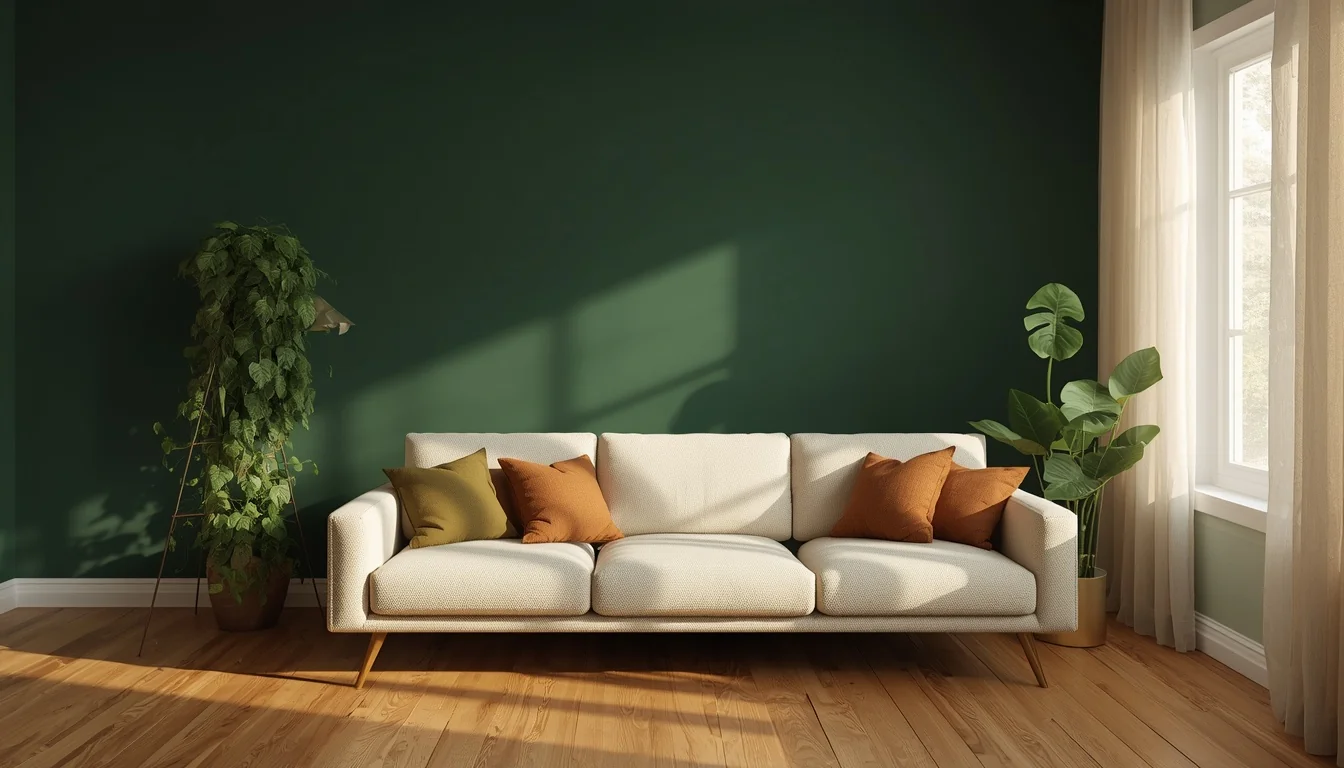
Picture this: you walk into your living room after a long day, and instead of feeling flat or forgettable, the space actually settles your nerves. That’s what a well-styled green living room can do. Green sits closer to nature than almost any other color, and it has a strange, quiet way of making a room feel both grounded and alive at the same time.
Maybe you’ve scrolled past a dozen green living rooms on Pinterest already and thought, “I want that, but where do I even start?” That’s exactly what this guide is for. Whether you’re drawn to a deep, moody forest green or a soft, barely-there sage, there’s a version of this trend that fits your space, your budget, and your lifestyle. No gutting your living room. No guessing games. Just 16 real, doable ideas you can start pulling from today.
Table of Contents
Why Green Living Rooms Feel So Calm?
Green sits in the exact middle of the visible light spectrum, which is part of why the human eye processes it with so little strain compared to sharper colors like red or orange. In a living room, that translates to a space that feels easy to sit in for hours, whether you’re reading, hosting friends, or half-watching a movie. Designers also point to green’s built-in connection to the outdoors — leaves, moss, hills, forests — as the reason it reads as fresh and grounding rather than trendy or loud. Unlike a lot of statement colors, green also plays well with almost every other palette in a home, from warm wood tones to cool grays to metallics like brass and black. That flexibility is exactly why it keeps showing up as one of the most requested living room colors year after year.
16 Green Living Room Ideas
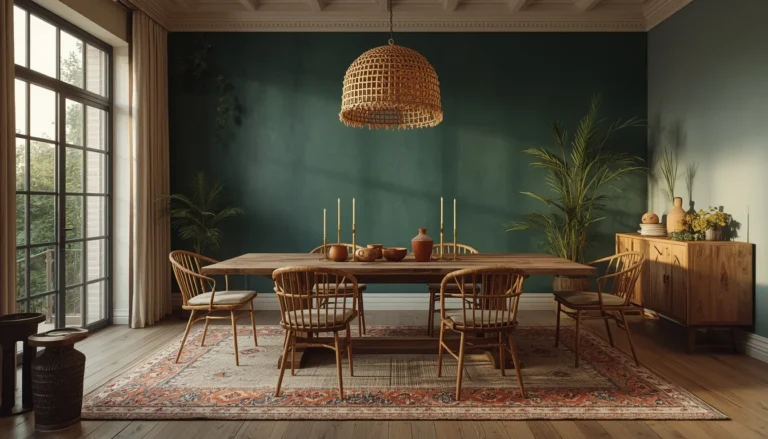
1. Color-Drench the Room in Deep Forest Green
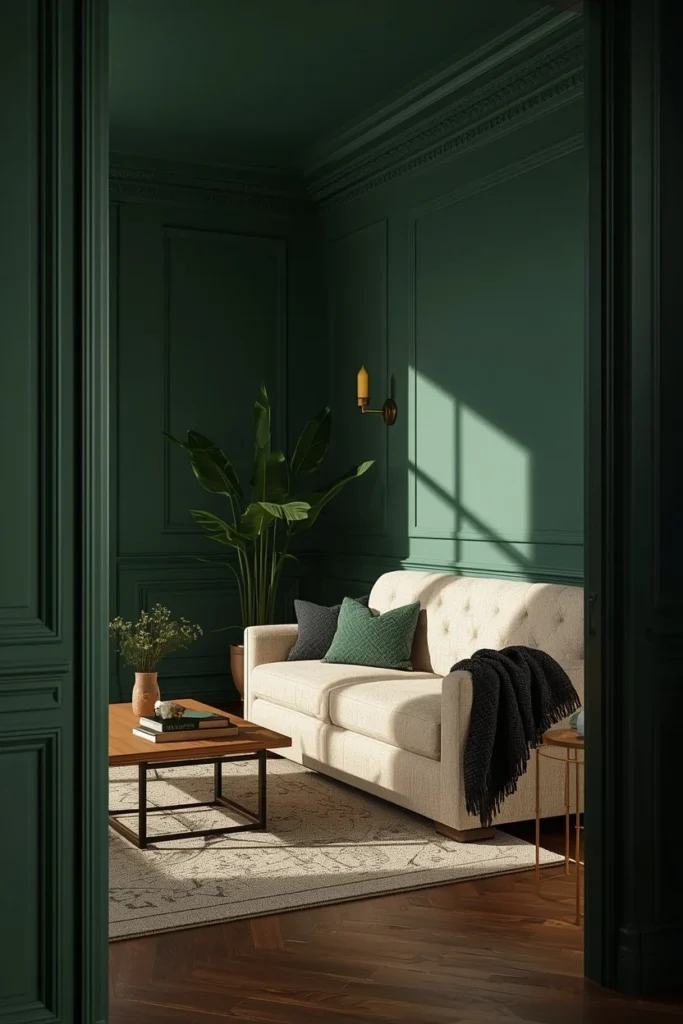
Color drenching means painting the walls, trim, ceiling, and sometimes even the doors in one continuous shade, and forest green is one of the most striking colors to try it with. The technique removes the visual “stop” that trim usually creates, so the room feels taller, more cocoon-like, and intentional rather than half-finished. Pair a matte forest green with warm wood furniture and brass hardware to keep the look from feeling too dark or heavy. A cream or oatmeal sofa breaks up the color block and gives your eye somewhere to rest. This works especially well in living rooms with good natural light, since the depth of the green will shift beautifully from morning to evening.
2. Layer in Soft Sage as a Neutral Base
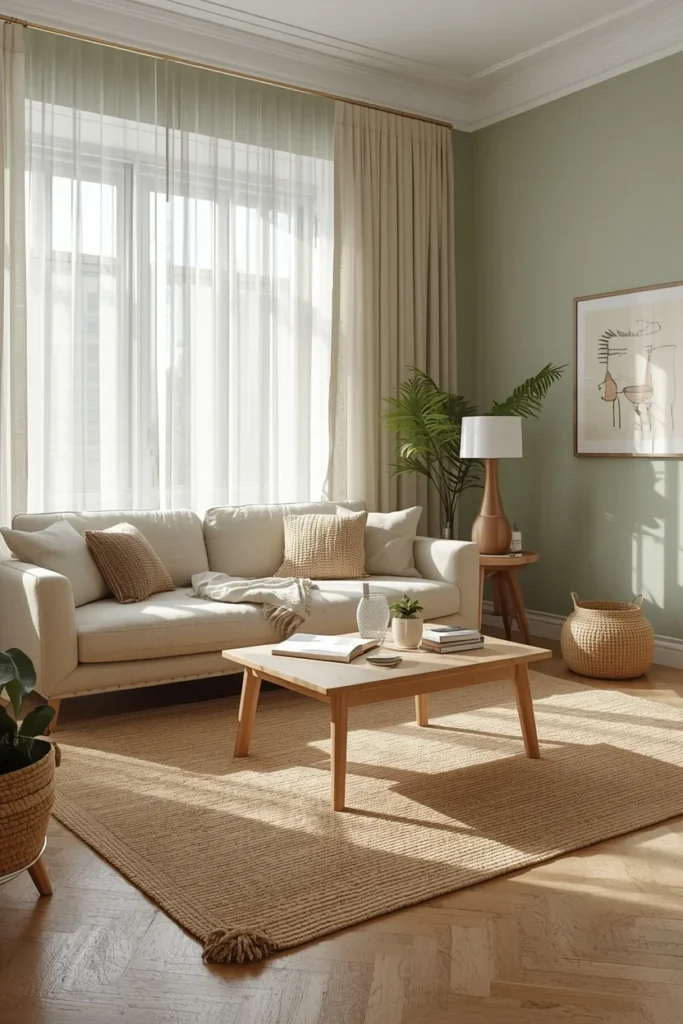
Sage green works almost like a neutral, which makes it one of the easiest greens to start with if you’re nervous about commitment. Use it on the walls as a soft backdrop, then build the rest of the room around warm creams, natural linen, and light oak furniture so the space feels airy instead of flat. Sage also photographs beautifully in both bright daylight and warm lamp light, which is part of why it’s such a popular choice for Pinterest-worthy living rooms. Add a jute or wool rug underfoot to ground the softness with some texture. This combination reads as calm and collected rather than themed, which is exactly the goal with a neutral-leaning green.
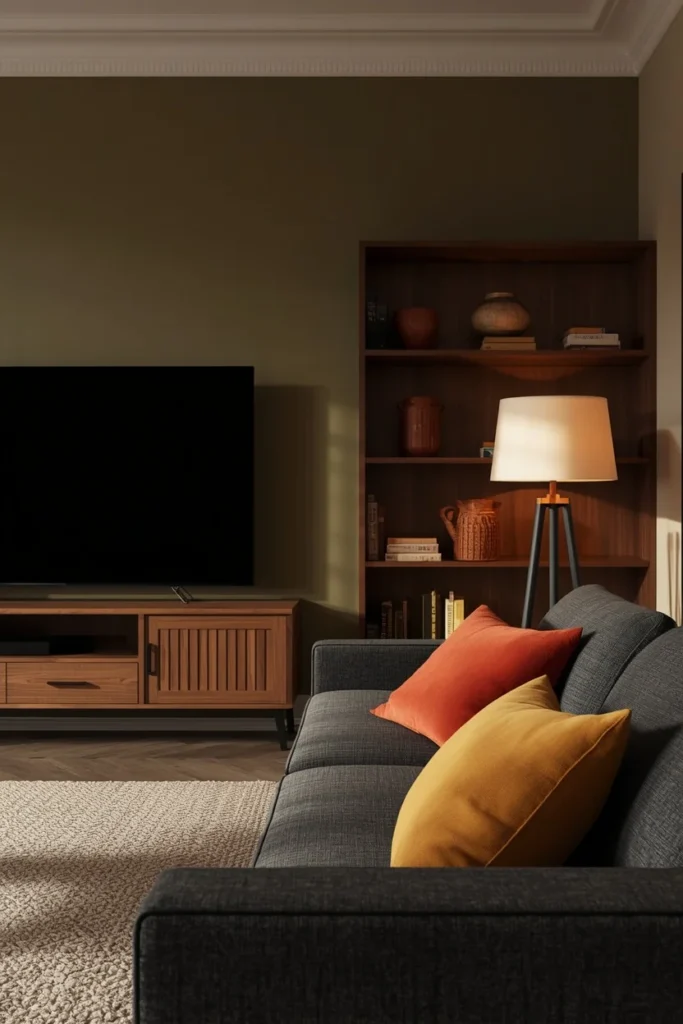
3. Go Bold With an Olive Green Feature Wall
Olive green carries a warmth that forest and sage don’t quite have, thanks to its yellow-brown undertone, which makes it feel especially cozy in the colder months. Instead of painting the whole room, try it on a single feature wall behind the sofa or media console so it acts like a piece of art rather than an overwhelming backdrop. Pair olive with rust, mustard, or terracotta accents for a palette that feels like an autumn afternoon indoors year-round. Dark wood furniture, like walnut or espresso-stained oak, deepens the moodiness in a good way. This is a strong option if you want the impact of a bold color without repainting the entire room.
4. Add a Pop of Lime or Chartreuse
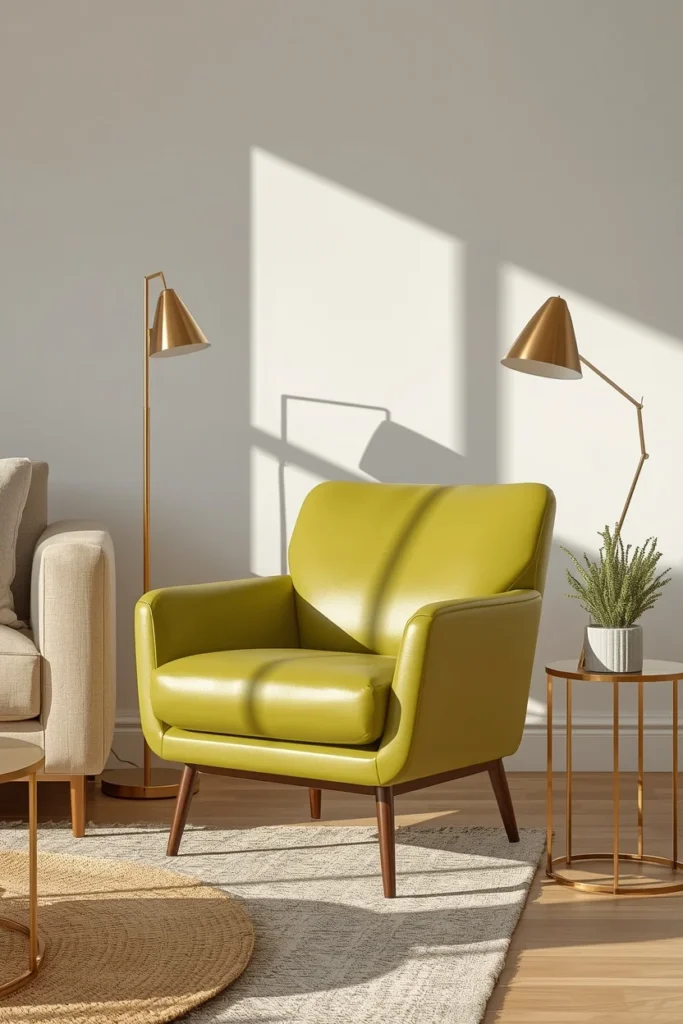
If deep, moody greens feel too heavy for your space, lime and chartreuse bring the opposite energy: bright, playful, and a little unexpected. Use it sparingly, on a single accent chair, a set of throw pillows, or a piece of art, so it acts like a spark rather than the main event. Lime works best next to a calmer backdrop, like white walls or warm beige, so the color has room to actually stand out. Mixing in a high-gloss or lacquered finish, like a lime green side table, adds a bit of drama without overwhelming the room. This is a great option for anyone who wants their living room to feel current and a little unexpected.
5. Build a Living Plant Wall or Plant Cluster
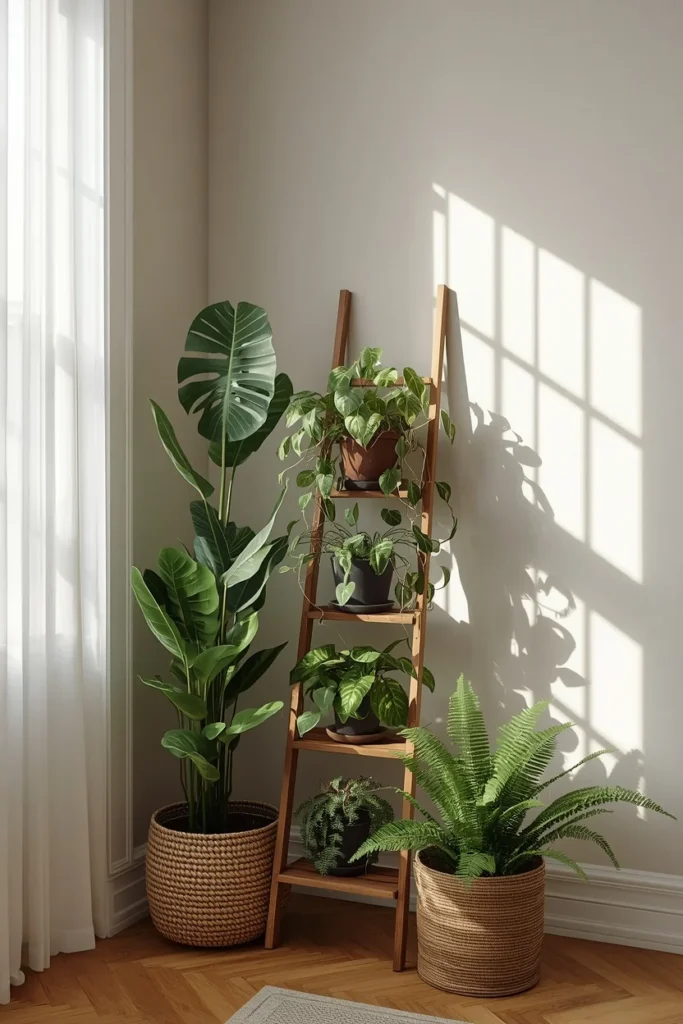
Instead of relying on paint color alone, some of the most striking green living rooms lean into actual greenery, using a cluster of plants at varying heights to create a living, breathing accent wall. Group a tall fiddle leaf fig or rubber plant with medium pothos and trailing ivy on a plant stand or low shelf to build layers instead of a single flat row. This approach adds texture, air quality benefits, and a sense of life to the room that paint alone can’t replicate. Keep the plant grouping near a window with filtered light so everything actually thrives instead of just looking good for a week. It also gives you an easy way to shift the room’s mood seasonally, just by rotating which plants take center stage.
6. Choose a Green Sofa as the Anchor Piece
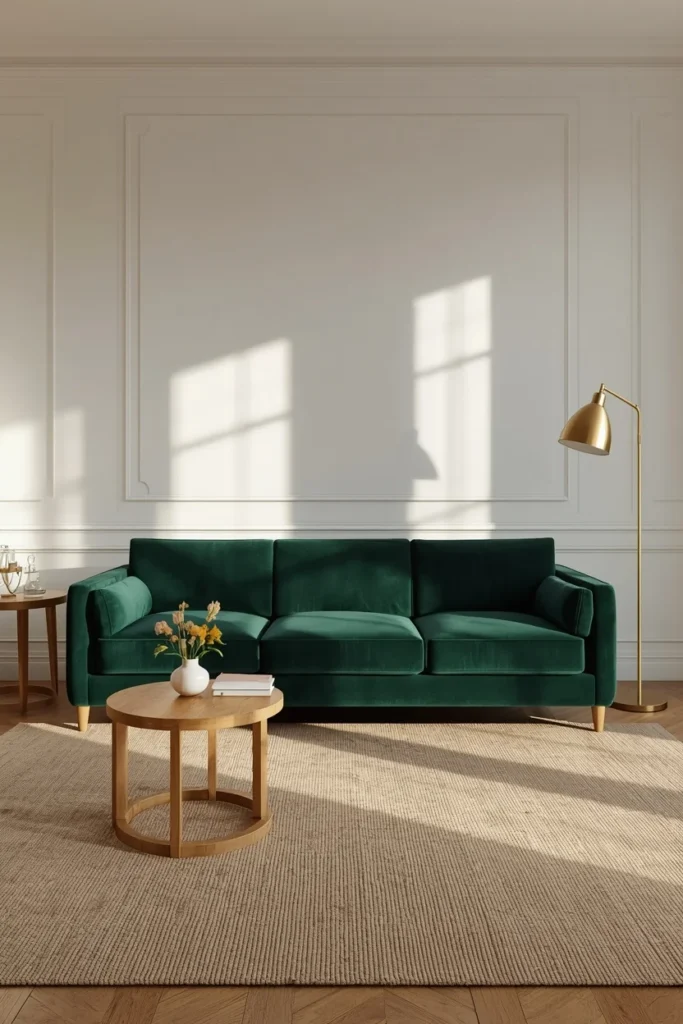
If painting a wall feels like too big a commitment, a green sofa gives you the same visual impact without touching the walls at all. A deep emerald or forest green velvet sofa becomes an instant focal point, especially against warm white or soft gray walls that let the color pop. Velvet upholstery specifically adds a slight sheen that shifts with the light, giving the sofa a richer, more dimensional look than a flat cotton or linen would. Balance the boldness with simple, neutral side tables and a plain area rug so the sofa stays the star of the room. This is one of the easiest ways to commit to the green living room trend if you rent or move often, since the sofa travels with you.
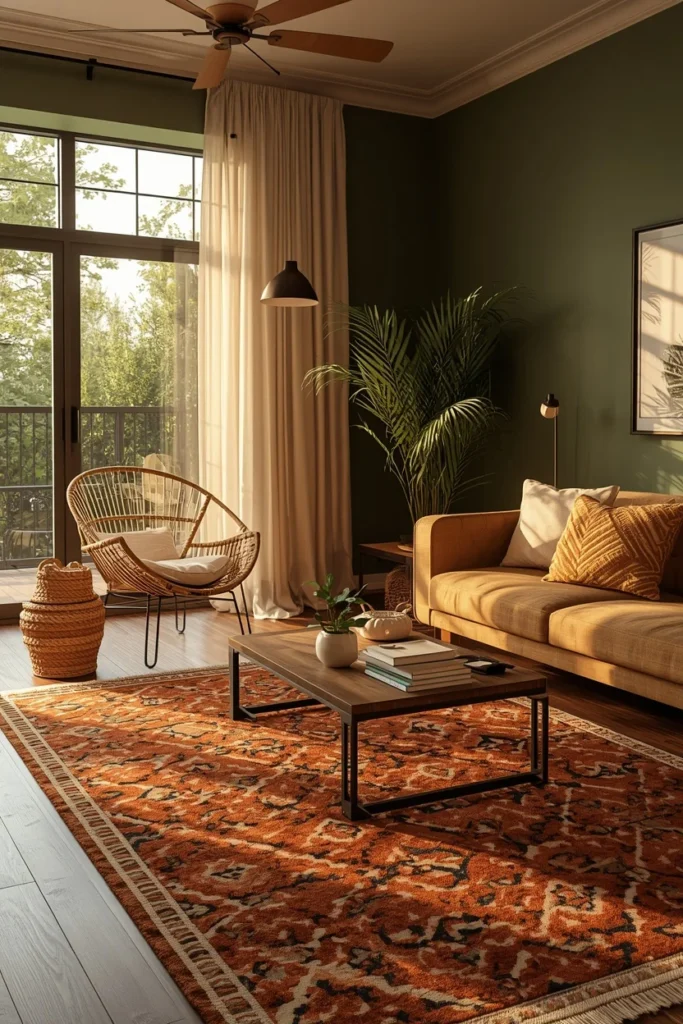
7. Pair Green With Warm Terracotta Tones
Green and terracotta share an earthy, sun-baked quality that makes them feel like they were always meant to sit in the same room. Use a muted terracotta on a rug, throw blanket, or ceramic vases, and let a deeper green, like moss or pine, hold down the walls or a large upholstered piece. This pairing works especially well in living rooms with lots of natural wood, since both colors read as warm rather than cool. Adding woven textures, like a rattan chair or seagrass basket, reinforces the earthy, sun-drenched feeling even further. It’s a combination that feels lived-in and collected rather than overly styled, which is exactly the look most people are chasing right now.
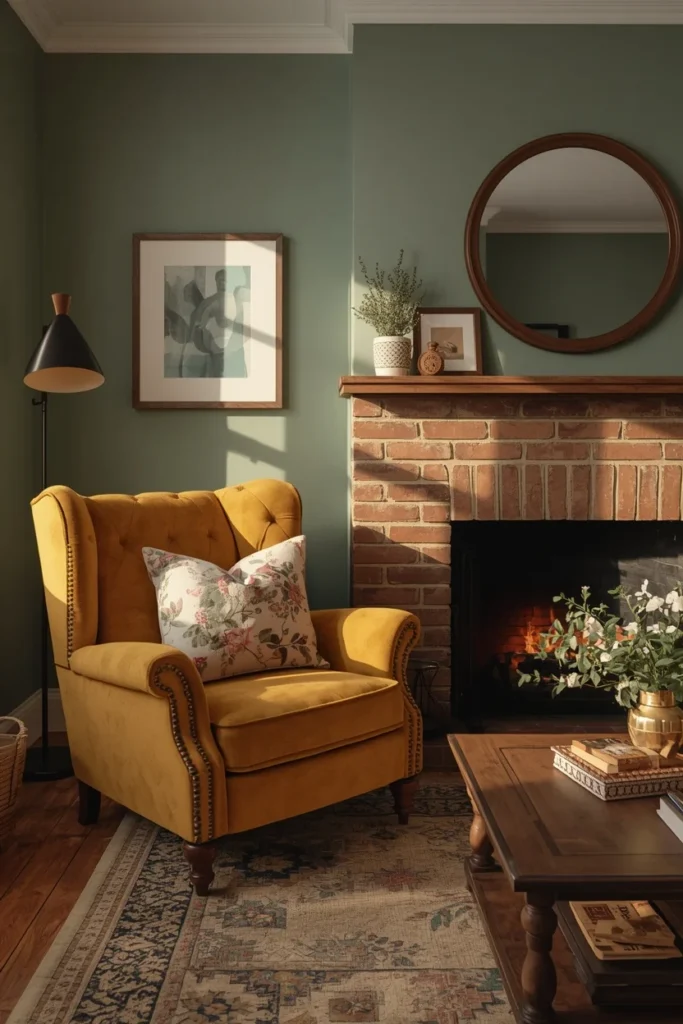
8. Try a Cottage-Style Green and Mustard Combo
For a room that feels cozy, charming, and a little nostalgic, pair a soft sage or moss green with warm mustard accents and a brick or exposed wood fireplace if you have one. This combination leans into a countryside, cottage-core aesthetic that feels collected over time rather than bought all at once. Mix patterned throw pillows, like small florals or gingham, with the solid green upholstery to keep the room from feeling too matched. A vintage or vintage-style coffee table adds even more warmth and history to the space. This idea works particularly well if your living room already has architectural character, like exposed beams or an older fireplace, since the green and mustard combination enhances rather than competes with those details.
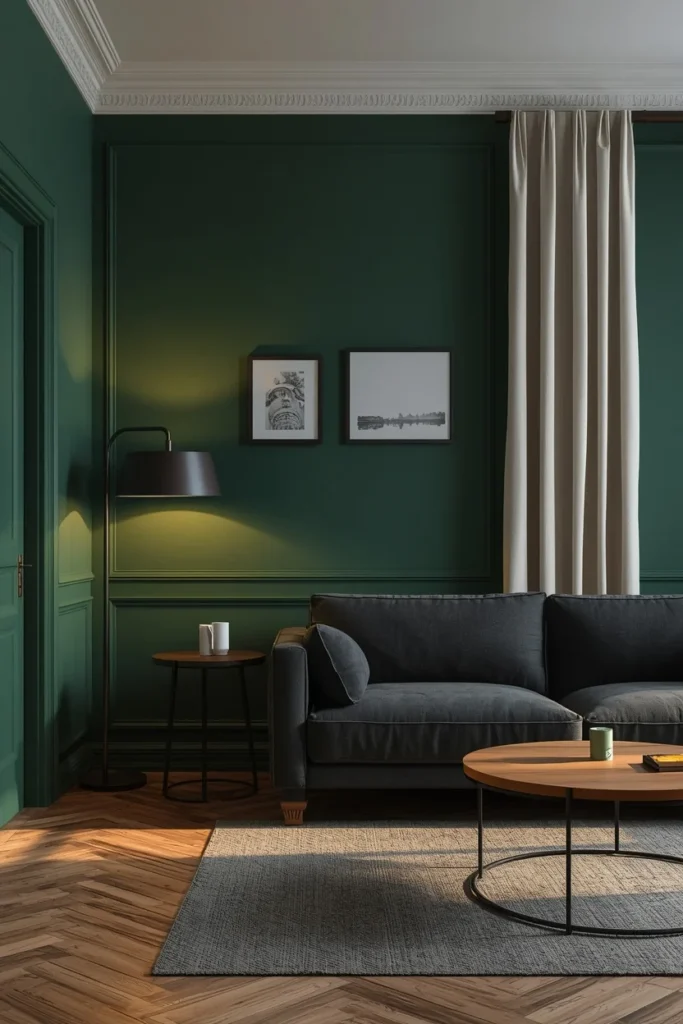
9. Create a Green and Black Modern Contrast
For a living room with a more contemporary edge, pair a deep green, like bottle or hunter green, with black accents, matte black light fixtures, and simple geometric furniture. The high contrast between the deep green and black keeps the room feeling sharp and intentional rather than soft or cottage-like. Add a single warm wood element, like an oak side table, so the palette doesn’t tip into feeling cold or sterile. Simple, unfussy window treatments, like linen curtains in a neutral tone, keep the focus on the color and shape of the furniture. This combination works especially well in living rooms with clean architectural lines, like exposed concrete or minimalist trim.
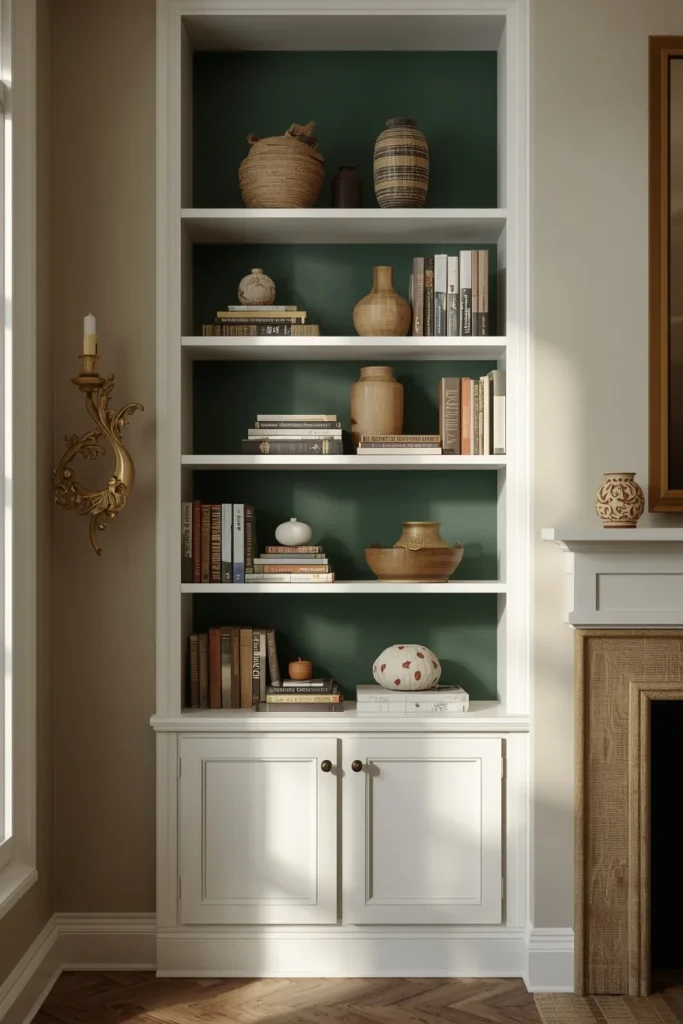
10. Style Open Shelving or Built-Ins in Green
If you have built-in bookshelves or open shelving, painting the interior backs of the shelves a rich green while keeping the frame white or wood creates depth without repainting the whole wall. This technique, sometimes called a “color pop,” makes displayed books, ceramics, and framed photos stand out more clearly against the darker backdrop. Choose a green with a slight sheen, like a satin or eggshell finish, so the color catches the light rather than absorbing it completely. Group items by color and height rather than spreading everything evenly, which reads as more curated on camera and in person. This is one of the lowest-commitment ways to try a bold green if you’re not ready to touch your main walls.
11. Use Green Curtains to Frame the Room
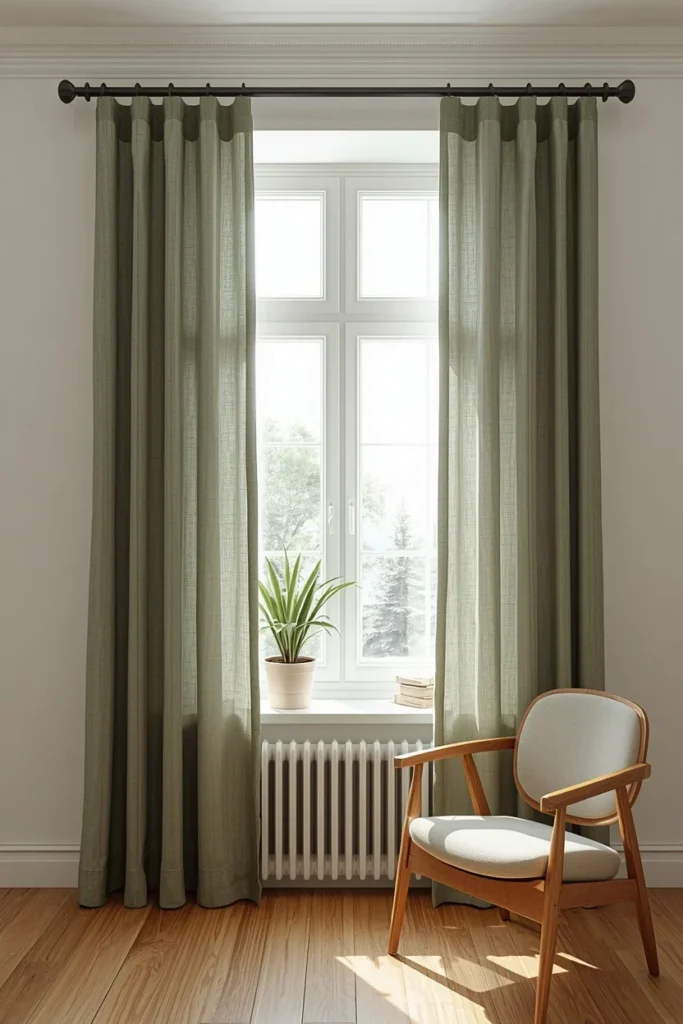
Curtains are one of the most overlooked ways to bring green into a living room, especially in a rental where painting isn’t an option. Floor-length curtains in a soft sage or forest green frame the windows and draw the eye upward, which makes ceilings feel taller and the whole room feel more finished. Choose a linen or cotton blend fabric so the curtains have some drape and movement rather than sitting stiff against the wall. Hang the curtain rod a few inches above the actual window frame and extend it slightly wider than the window itself, so the fabric doesn’t block light when open. This is a simple, renter-friendly way to commit to the green trend without any permanent changes.
12. Mix Tonal Greens for a Layered, Collected Look
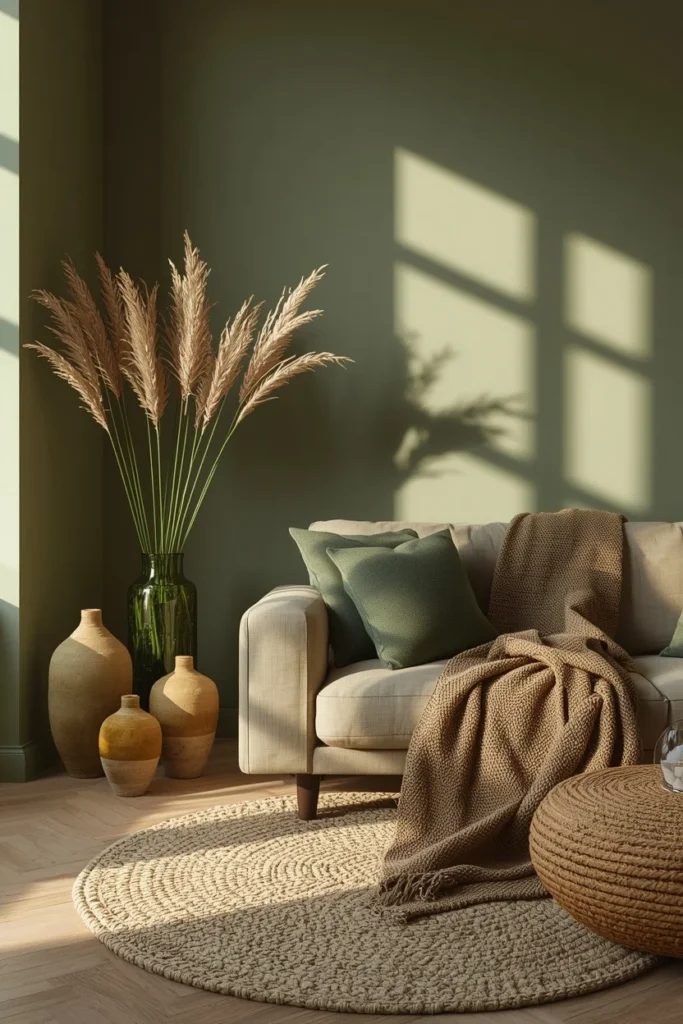
Instead of picking just one shade, tonal green rooms layer two or three related greens, like sage walls, olive cushions, and moss green ceramics, so the room feels rich and intentional rather than matched. The key to pulling this off is varying the texture alongside the tone, mixing a smooth ceramic vase with a nubby wool throw and a woven rattan basket. This approach mimics the way green actually appears in nature, where no two leaves are exactly the same shade. Keep one element, like the walls or the sofa, as the dominant tone so the room doesn’t feel visually busy. Tonal layering is one of the most designer-approved ways to use color right now, since it reads as thoughtful rather than trend-driven.
13. Add Green Through Art and Textiles Only
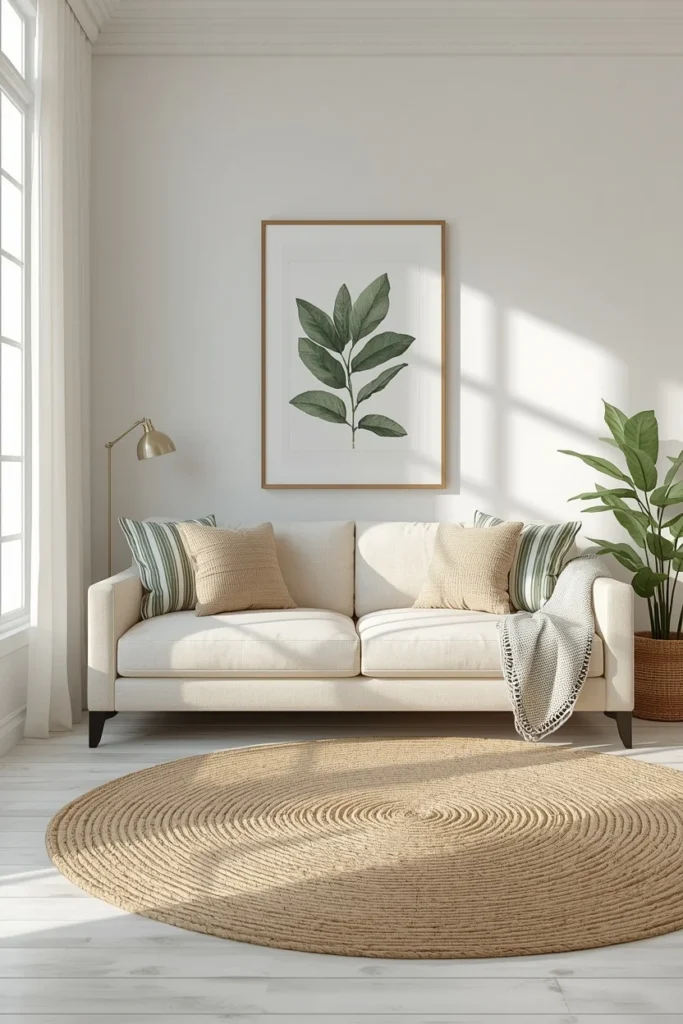
If you’re renting, sharing a space, or just not ready to commit to a big color change, you can get the entire look through art, pillows, throws, and a rug alone. Choose one or two botanical or abstract art prints with a dominant green tone to anchor the palette without touching the walls. Layer in a green striped or solid throw pillow on a neutral sofa, then add a jute or patterned rug with hints of green woven through it. This approach is fully reversible, which makes it ideal for rentals or for anyone who likes to switch up their decor seasonally. It proves you don’t need a full green wall to get the calming, grounded effect this trend is known for.
14. Go Glam With Emerald and Brass
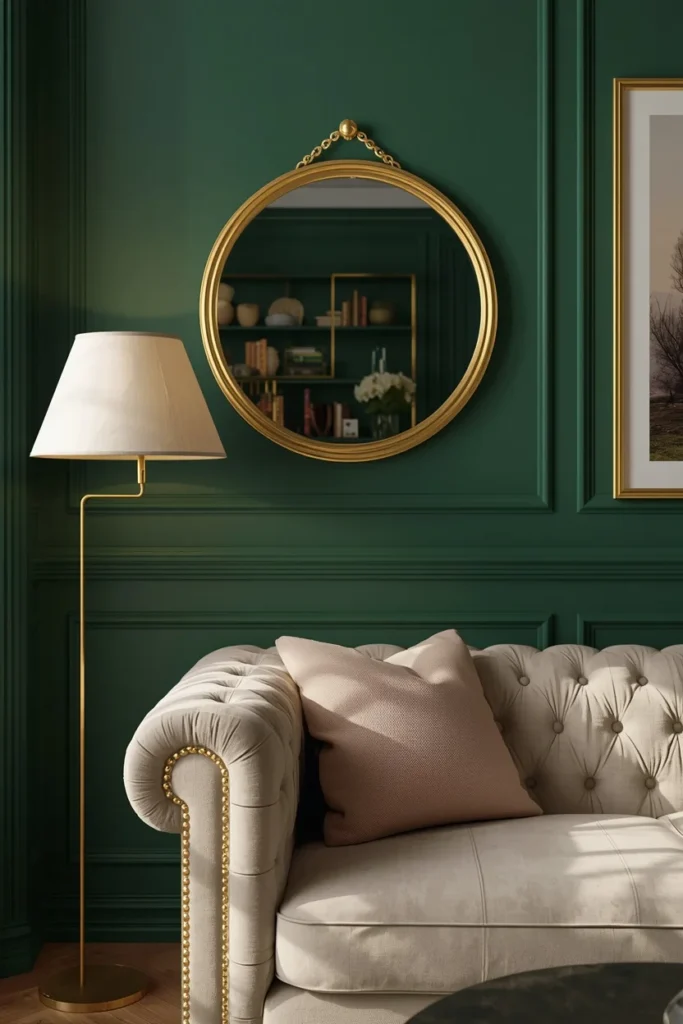
For a living room with a bit more polish and drama, pair a rich, jewel-toned emerald green with brass or gold hardware, light fixtures, and picture frames. The combination reads as quietly luxurious rather than flashy, especially when paired with velvet or silk-blend textiles. A statement mirror with a brass frame reflects light back into the room and keeps the deep green from feeling too heavy. Keep the rest of the palette simple, with cream or ivory furniture, so the emerald and brass have room to shine. This pairing works especially well in smaller, more formal living rooms where a little glamour goes a long way.
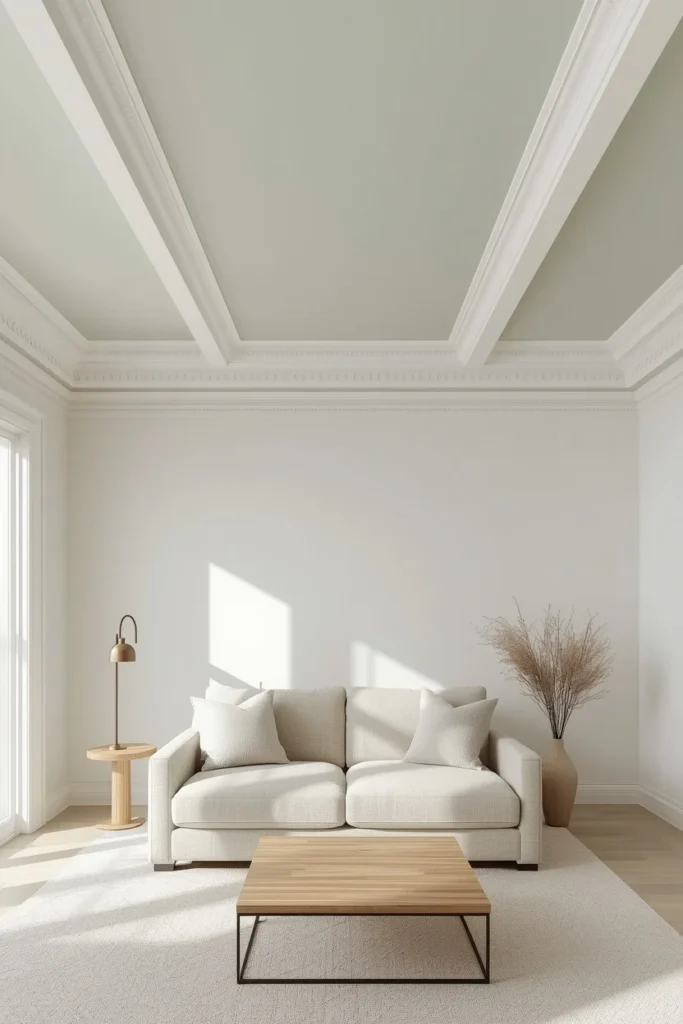
15. Use Green as a Ceiling Color
The “fifth wall” trend, painting the ceiling instead of or in addition to the walls, works especially well with green because it draws the eye upward and makes the room feel more architecturally interesting. A soft sage or muted pine on the ceiling, paired with plain white walls, adds color without overwhelming the room at eye level. This technique is particularly effective in living rooms with crown molding or ceiling details, since the color highlights the architecture rather than hiding it. Keep the furniture and rug neutral so the ceiling color remains the standout feature. This idea is a great way to experiment with a bolder green if you’re hesitant to commit to full walls.
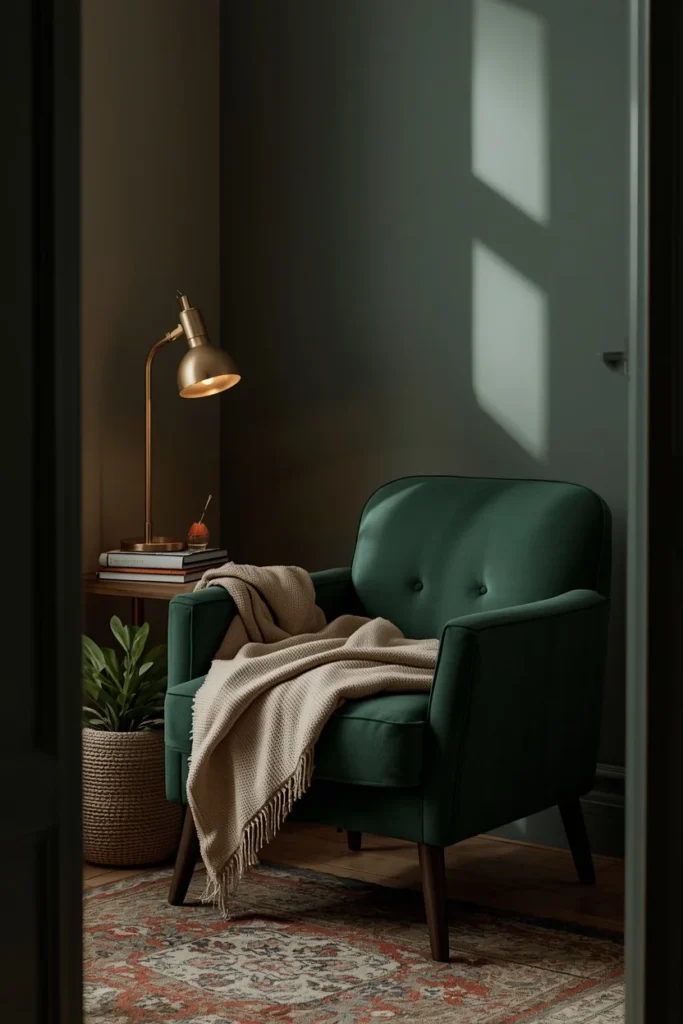
16. Create a Cozy Reading Nook in Green
If a full living room makeover feels like too much, start with a single corner and build a green reading nook instead. A deep green accent chair, a small side table, and a warm reading lamp create an intimate spot that still contributes to the overall green palette of the room. Add a stack of books, a soft throw blanket, and a small potted plant to round out the vignette. This approach lets you test how you feel about the color in daily life before committing to a larger area. It’s also one of the easiest ideas to recreate in an apartment, a shared living room, or even a bedroom corner.
Styling Tips for a Green Living Room
- Test paint swatches on the actual wall for at least 24 hours, since green shifts dramatically between morning, afternoon, and lamp light.
- Balance a bold green with at least one warm neutral, like cream, oatmeal, or warm white, so the room doesn’t feel like a single flat block of color.
- Mix textures deliberately: pair smooth velvet with nubby wool, woven rattan, or matte ceramic so the green has visual depth beyond just its shade.
- Bring in real plants even in a room that’s already green, since the contrast between painted green and living green actually reads as more intentional, not repetitive.
- Use metallics sparingly, brass or gold work especially well, to keep a deep green from feeling flat or too matte.
Practical Implementation Ideas
Start with a single, low-commitment change, like a green throw pillow or a small plant grouping, before moving to paint or furniture. If you’re ready for more, test a feature wall behind the sofa or media console rather than painting all four walls at once, since it gives you the visual impact with less risk. For renters, curtains, rugs, and art are the easiest ways to bring in the color without touching a single wall. If you do commit to paint, a sample pot on poster board that you can move around the room will show you how the color behaves in different light throughout the day.
Common Mistakes to Avoid
One of the biggest mistakes is choosing a green based on a photo alone without checking how it looks in your specific lighting, since north-facing and south-facing rooms will shift the same paint color noticeably. Another common issue is going too matchy, where every element in the room is the exact same shade of green, which flattens the space instead of adding depth. Skipping texture is another misstep — a room that’s all smooth surfaces, even in a beautiful green, will feel one-dimensional compared to one that mixes velvet, wood, wool, and ceramic. Finally, forgetting to balance a bold green with a neutral resting point, like a cream sofa or a plain rug, can make the whole room feel visually loud instead of calm.
Small-Space Alternatives
In a smaller living room, skip color-drenching the full space and instead use green on a single accent wall, the ceiling, or through curtains and textiles alone. Vertical elements, like floor-length curtains or a tall plant, draw the eye up and make a small room feel taller rather than more cramped. Lighter, softer greens, like sage or seafoam, tend to open up a small space more than deep forest or emerald tones, which can feel heavier in a tight footprint. Mirrors placed opposite a green accent wall also bounce light back into the room, keeping the space from feeling closed in.
Budget-Friendly Alternatives
If a full repaint isn’t in the budget right now, a few green throw pillows and a patterned rug with green tones can bring in most of the visual impact for a fraction of the cost. Thrifted ceramic vases, secondhand frames, and DIY-painted planters are an easy way to add green accents without buying everything new. A single gallon of paint on one accent wall costs far less than repainting an entire room and still delivers a strong visual statement. Propagating plant cuttings from a friend’s existing plants, rather than buying full-grown greenery, is another simple way to add real, living green for close to nothing.
Pro Styling Recommendations
Designers often recommend choosing your green undertone first, whether it leans blue, yellow, or gray, and then building the rest of your palette around that undertone for a cohesive look. Layering in at least three different textures per room, smooth, woven, and soft, keeps a green space from feeling flat no matter which shade you choose. Bringing in one unexpected element, like a lime green vase in an otherwise sage-toned room, adds personality without disrupting the overall calm. Finally, most designers suggest living with a paint sample for several days before committing, since green is one of the most light-sensitive colors in the entire palette.
FAQs
Conclusion
A green living room isn’t about picking one perfect shade and calling it done. It’s about layering the right green for your space, your light, and your lifestyle, then building texture and warmth around it until the room feels like it was always meant to look that way. Whether you start with a single green pillow or go all in with a color-drenched wall, the goal is the same: a living room that feels calmer, warmer, and a little more alive every time you walk into it.