22 Genius Playroom Ideas That Kids Will Love & Parents Will Actually Appreciate
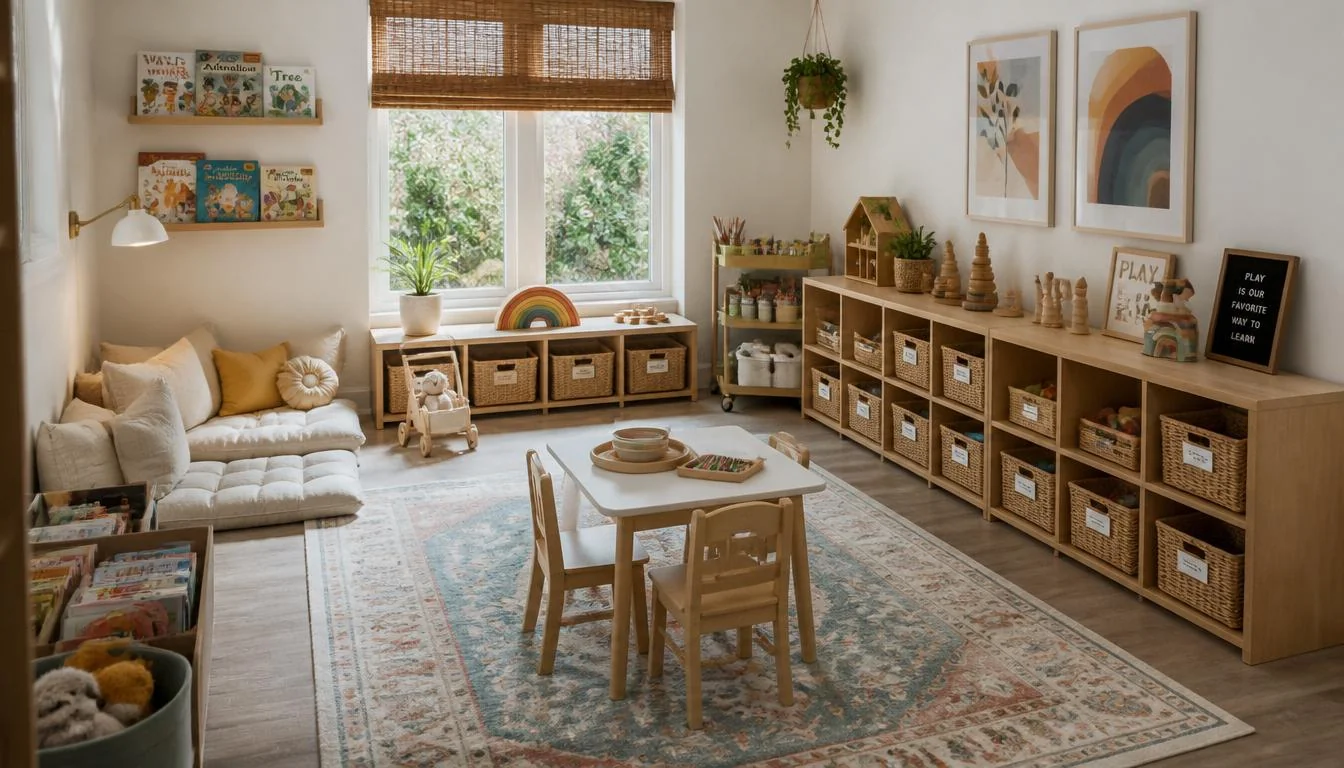
Every parent has stood in the doorway of a playroom at 6 p.m. and felt their shoulders drop. Toys everywhere, puzzle pieces under the couch, a bin of stuffed animals that’s somehow always overflowing. It’s not that the room needs more stuff. It usually needs a better system.
The best playrooms aren’t the ones with the most toys or the most Pinterest-perfect decor. They’re the ones built around how kids actually play and how parents actually need to reset the space at the end of the day. These 22 ideas cover both sides of that equation: the parts that spark imagination and keep kids engaged on their own, and the parts that make cleanup something your child can genuinely help with instead of something you’re doing alone after bedtime. Some of these ideas cost nothing more than a label maker. Others are bigger projects. All of them are things real families have tested and kept using.
Table of Contents
The 22 Genius Playroom Ideas
1. Zone the Room by Activity, Not Just by Toy Type
Instead of organizing a playroom purely around what category of toy goes where, divide the physical space into zones based on the type of play that happens there: an active zone with open floor space, a creative zone with a table and supplies, and a calm zone with soft seating for reading or quiet time. This gives kids an immediate visual cue for what kind of activity fits where, which naturally reduces the “everything dumped in the middle of the floor” problem. A simple rug or a slight change in wall color can mark the boundary of each zone without needing an actual wall or divider. Parents benefit because clean-up instructions become specific and obvious — “put the blocks back in the active zone” is a lot clearer than “clean your room.” This is the single structural change most 2026 playroom designers point to as the biggest shift in how these spaces are being planned.
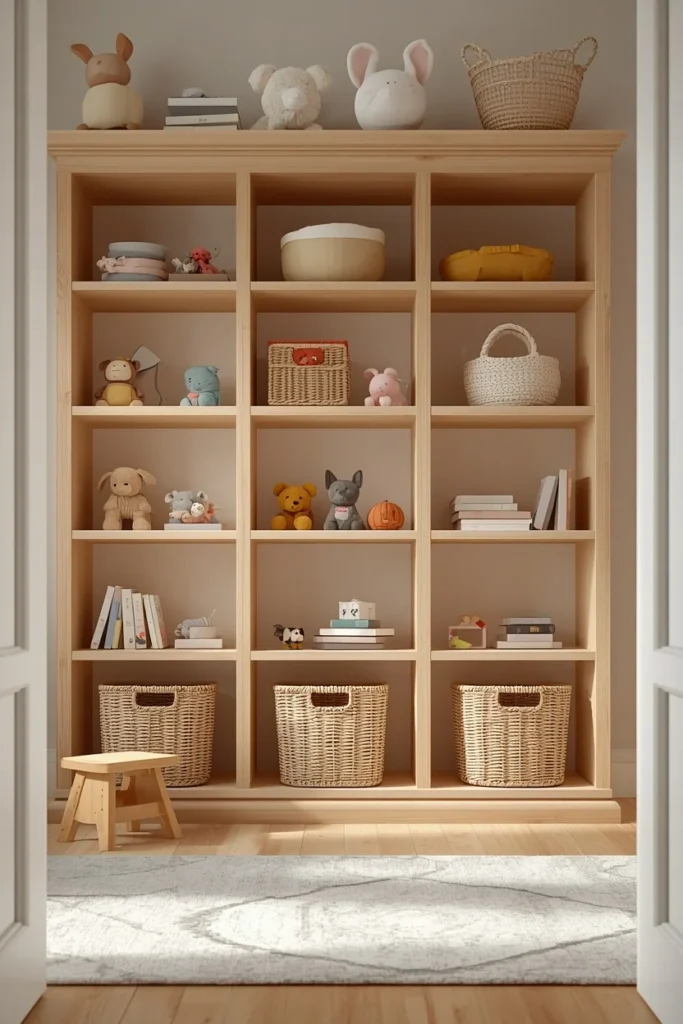
2. Kid-Height Open Shelving for True Independence
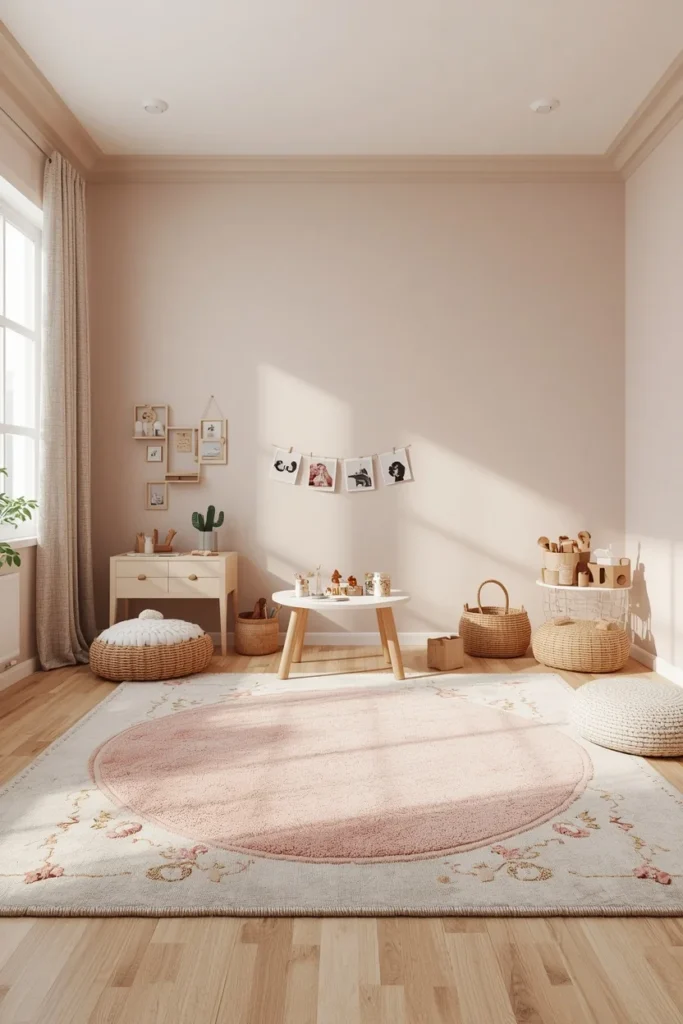
Storage that sits above a child’s reach line might look tidy, but it guarantees an adult has to fetch every single toy. Open shelving installed at a height kids can actually reach turns clean-up and toy selection into something they can manage entirely on their own. This single change reduces the number of times a parent gets called into the room just to hand something down. Pairing the shelves with a small step stool for slightly higher rows extends the same independence a little further as kids grow. The payoff compounds over time: a four-year-old who can already reach, choose, and replace their own toys needs far less hands-on management by the time they’re six.
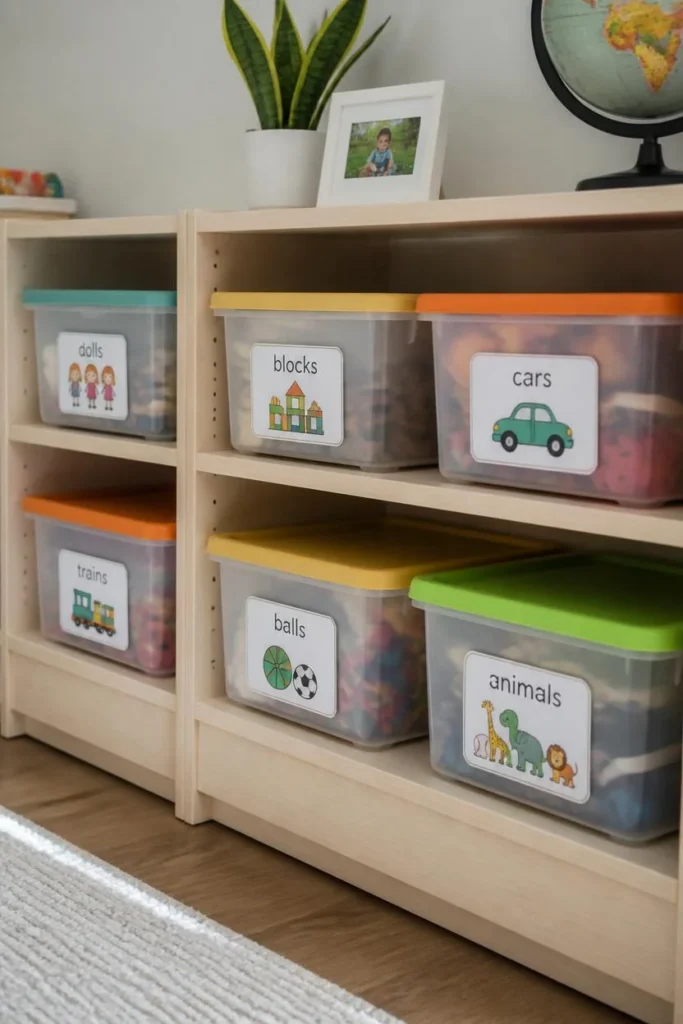
3. Picture-Labeled Bins for Kids Who Can’t Read Yet
Text labels only work once a child can read, which leaves a big gap of years where “put it away” still requires a parent’s help. Adding a simple picture or icon to each bin — a photo of blocks, a drawing of a doll, a printed icon of crayons — lets even toddlers match toys to their home without needing an adult to translate. This small addition makes the entire labeling system usable years earlier than text alone, and it turns cleanup into a matching game kids often enjoy rather than resist. Color-coding the bins to match the picture adds another layer of visual matching for very young children. It’s a five-minute label-maker project that saves hundreds of “where does this go” questions down the road.
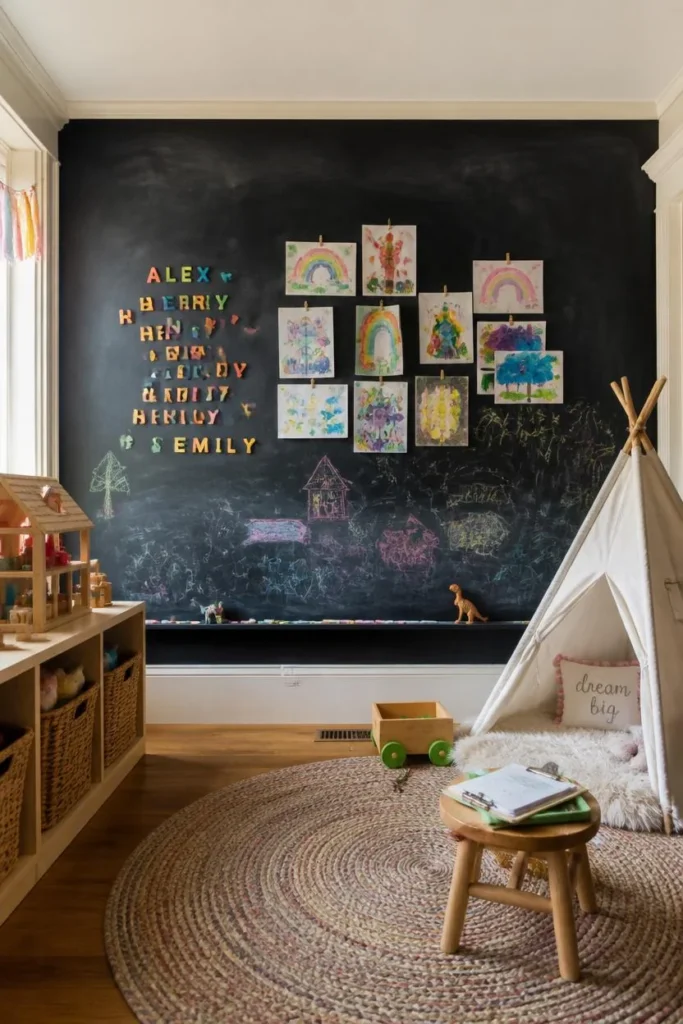
4. A Magnetic or Chalkboard Wall for Mess-Free Creativity
Turning one wall or a large panel into a magnetic surface or chalkboard gives kids a place to draw, build, and display without leaving a single permanent mark anywhere else in the room. Magnetic paint underneath a chalkboard finish lets kids hang up magnetic letters, art, or small toys directly on the wall, adding a layer of interactive play beyond just drawing. This solves one of the most common parent anxieties in a playroom: the fear of crayon or marker ending up somewhere it shouldn’t. Because the surface is meant to be drawn on and erased, kids get full creative freedom, and parents get total peace of mind about the rest of the room staying clean. It’s one of those features that photographs beautifully and gets used almost every single day.
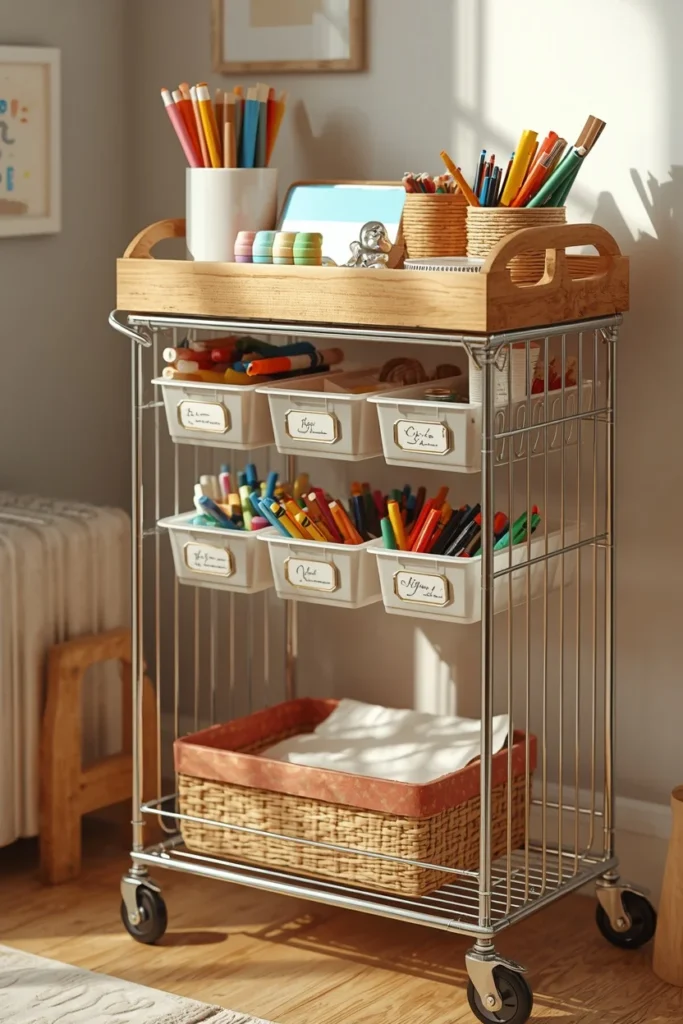
5. A Rolling Art Cart with Grouped Supplies
A cart on wheels dedicated entirely to art supplies keeps everything a child needs for a craft project in one mobile spot, and it can be rolled out of reach entirely when supervision is limited. Group supplies by type across the cart’s shelves — markers and crayons on top, loose parts like pom-poms and pipe cleaners in the middle, paper on the bottom — so kids can find what they need without digging through a mixed bin. Keeping scissors or anything requiring more supervision on the top shelf, slightly out of a younger child’s direct line of sight, adds a simple safety layer without hiding the supplies entirely. Because the whole cart moves, it can also roll into a kitchen or dining area for supervised craft time without setting up an entirely new station. It’s contained creativity that travels with your family’s actual daily routine.
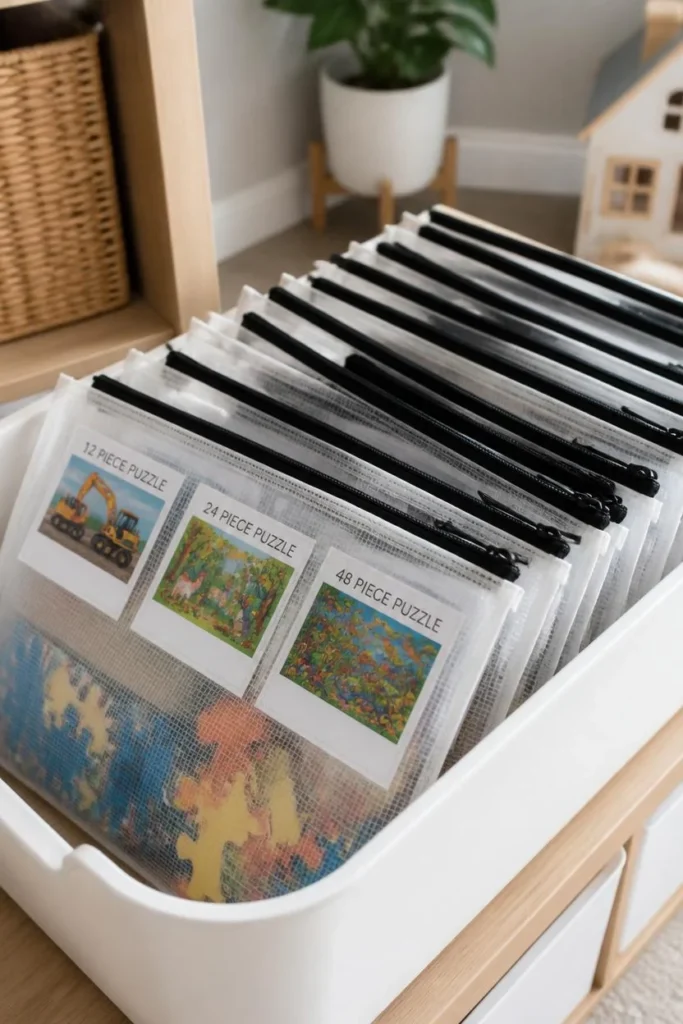
6. A One-Bag-Per-Puzzle Storage System
Stepping on a stray puzzle piece or discovering a favorite jigsaw is missing its corner is one of the most universal playroom frustrations. Sorting each puzzle into its own labeled zippered bag or pouch, rather than a shared bin, keeps every set complete and ready to play the moment it’s pulled out. This system also takes up far less shelf space than stacking bulky puzzle boxes, since flat bags can slide into a bin vertically like files. Label each bag with a photo of the completed puzzle so kids can identify the right one without adult help. It’s a small organizational shift that solves a problem almost every family with young kids has run into.
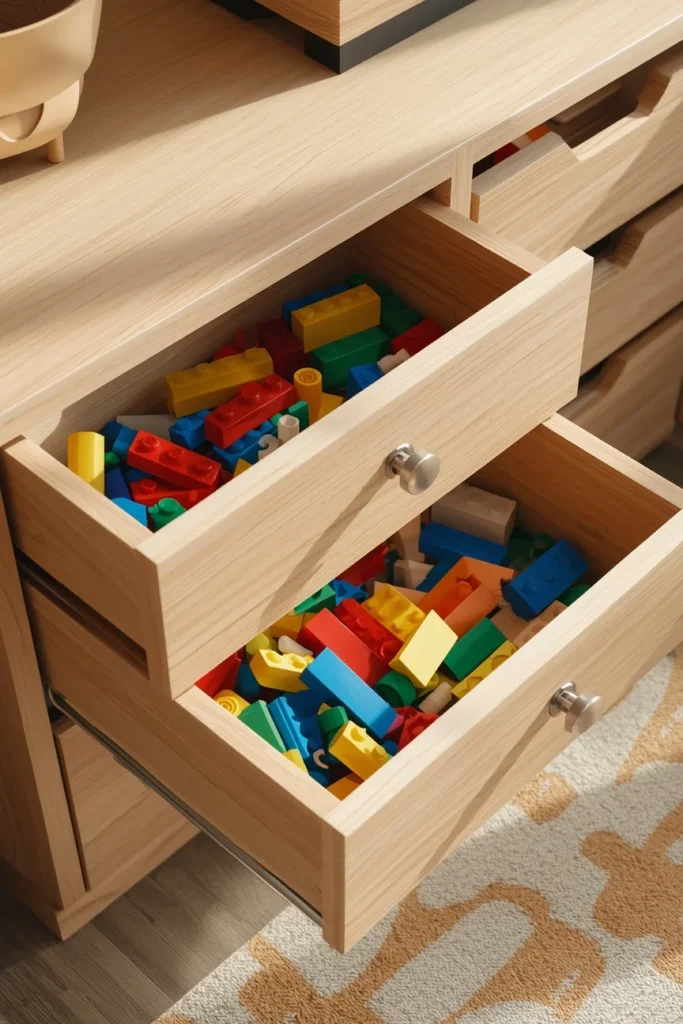
7. Color-Sorted Lego Drawers
Loose building bricks scattered across a floor are both a mess and a genuine hazard underfoot. A set of shallow, wide drawers dedicated entirely to building bricks, sorted loosely by color or piece size, keeps the pieces contained while still leaving them easy to dig through and use creatively. Choosing a neutral drawer unit rather than one covered in bright primary colors also lets the storage blend into the rest of the room’s design instead of standing out as an eyesore. Drawers work better than a single deep bin here because kids can see and access more of the pieces at once without dumping everything onto the floor first. This is one of the rare storage upgrades that both prevents an actual safety issue and keeps the room looking pulled together.
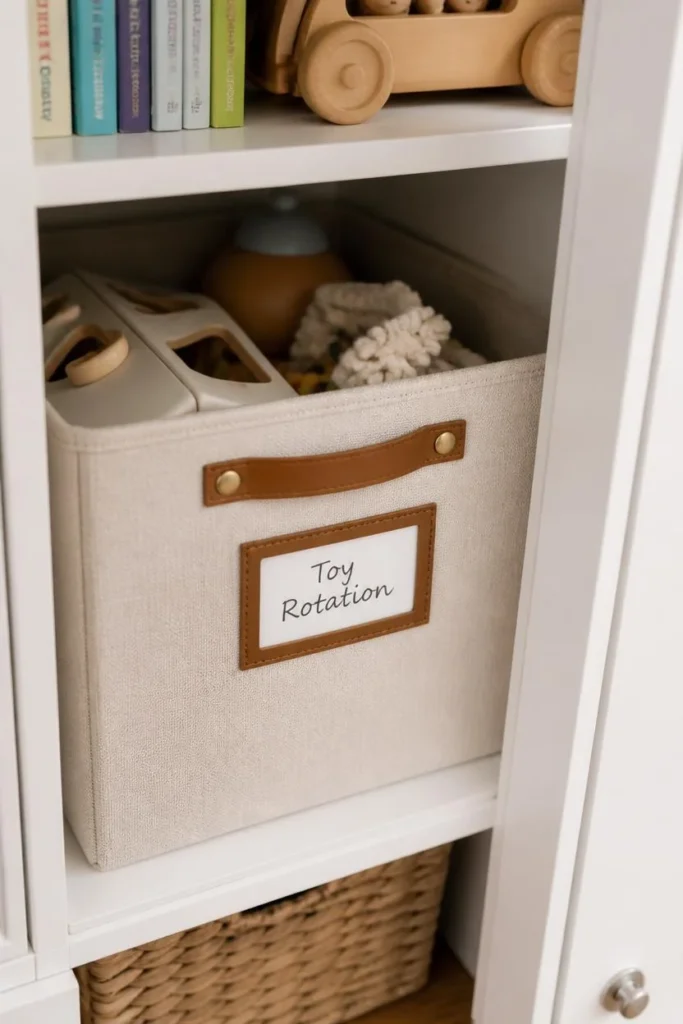
8. A “Rotate Later” Bin for Toy Rotation
Instead of keeping every toy your child owns out and accessible at once, keep a portion in rotation and store the rest away temporarily. A single labeled “rotate later” bin in a closet gives you a place to stash toys and decor that are still loved but not currently in heavy use, without the guilt of getting rid of them outright. Swapping the rotation every few weeks makes the same handful of toys feel new again, and it keeps the visible play space from feeling overwhelming with choice. This approach also reduces the sheer volume of stuff a child has to manage and put away during daily cleanup, since fewer toys out means a faster, less overwhelming tidy-up. It’s a simple system that costs nothing beyond one extra storage bin.
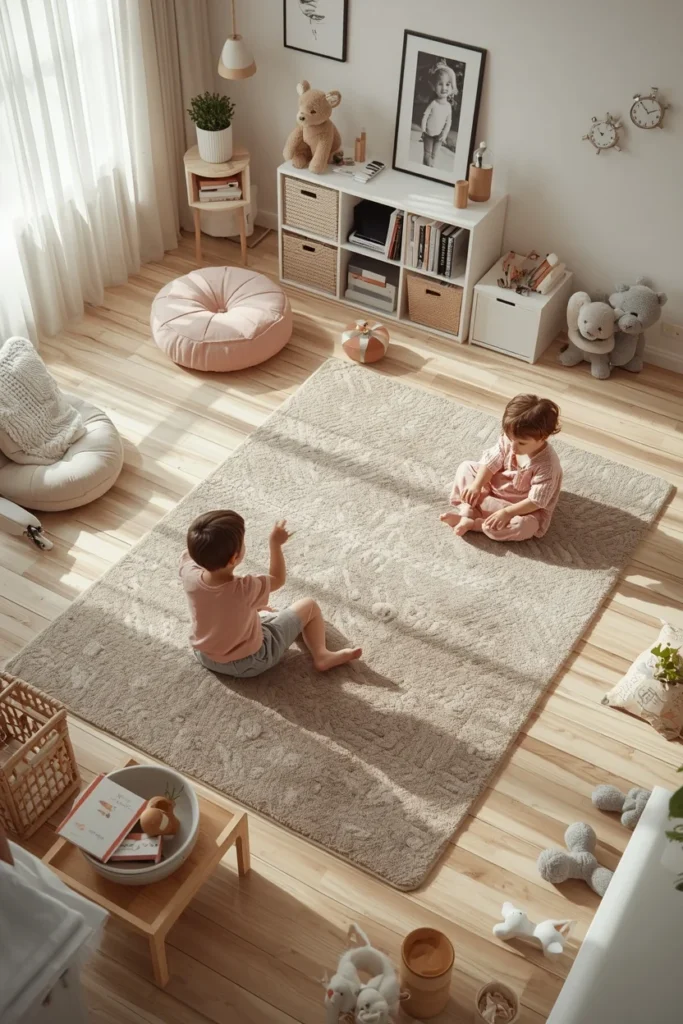
9. Washable Rugs and Interlocking Foam Tiles
Flooring takes the brunt of daily playroom wear, from spilled juice to marker mishaps to the occasional fall during active play. A fully washable rug, one that can go directly into a washing machine, removes the anxiety around ruining an expensive floor covering with the first accident. Interlocking foam tiles serve a similar purpose while adding a layer of cushioning that makes tumbles less scary and floor-based play more comfortable. Both options are simple to wipe down or launder, which matters far more in daily practice than a rug’s appearance in a single photo. This is one of the most practical, least glamorous upgrades on this list, and also one parents mention appreciating the most once it’s in place.
10. A Dedicated Reading Nook
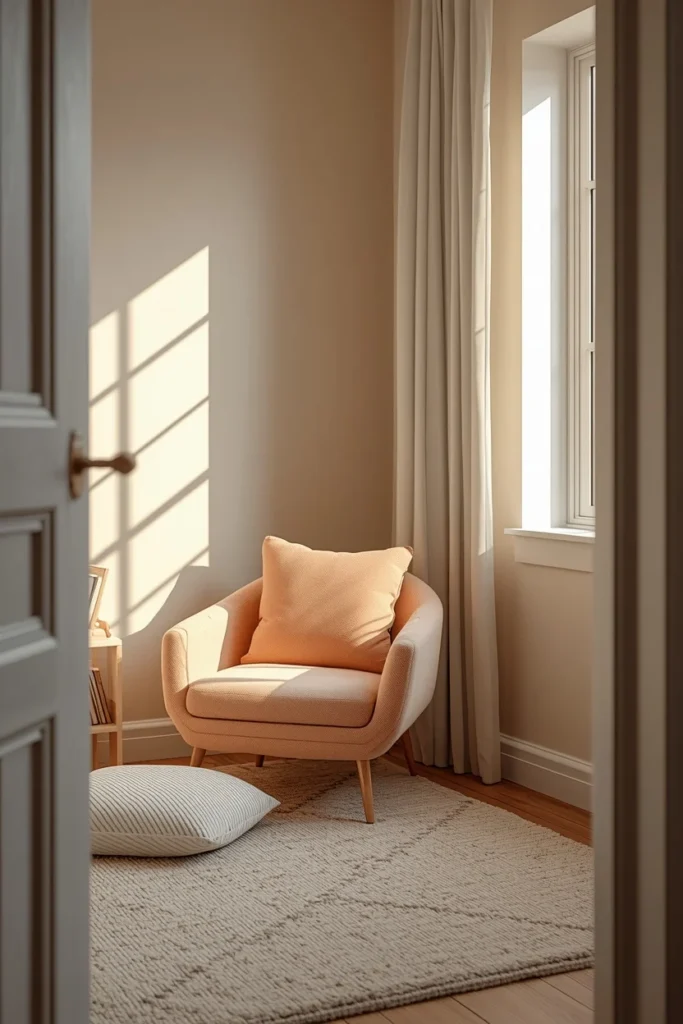
Carving out one small corner specifically for reading, with a comfortable chair or floor cushion, a soft rug, and a low shelf of books facing outward, gives kids an obvious, inviting spot to slow down between more active play. Facing book covers outward rather than storing them spine-out on a shelf makes titles easier for young kids to recognize and choose independently, which encourages more voluntary reading time. Soft, warm lighting in this corner, separate from the brighter task lighting elsewhere in the room, helps signal that this is a calmer zone the moment a child steps into it. This nook doesn’t need to be large: a single chair and a shelf can be enough to create a meaningfully different mood from the rest of the room. It’s one of the easiest zones to add real coziness to without much cost.
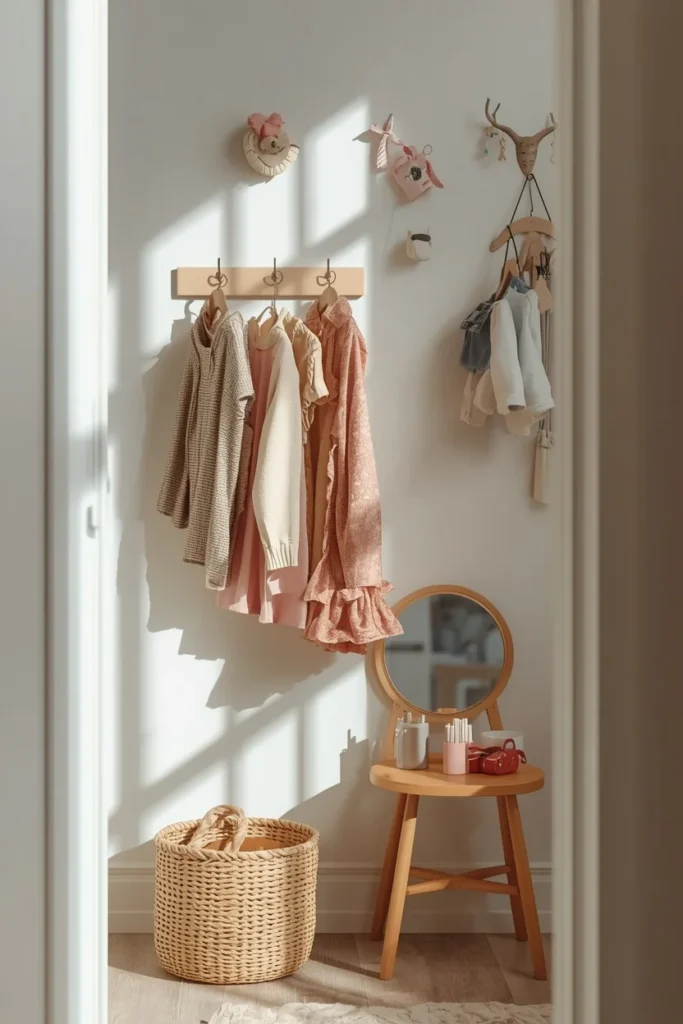
11. A Simple Dress-Up Station with Hooks and a Mirror
A small corner with a hanging rack or wall-mounted hooks, a basket for shoes and accessories, and a low mirror turns pretend play into a self-contained station instead of a pile of costumes scattered across the floor. Hooks work better than a closed closet here because kids can see every costume option at a glance instead of digging through a hidden rack. A mirror at a child’s eye level adds an extra layer of engagement, since dressing up is often about seeing the transformation as much as wearing the outfit. This setup is genuinely gender-neutral and adapts easily as interests shift from superheroes to princesses to whatever comes next, since it’s really just a flexible display system rather than a themed built-in. It’s a small footprint idea that consistently ranks among the most-used corners in any playroom.
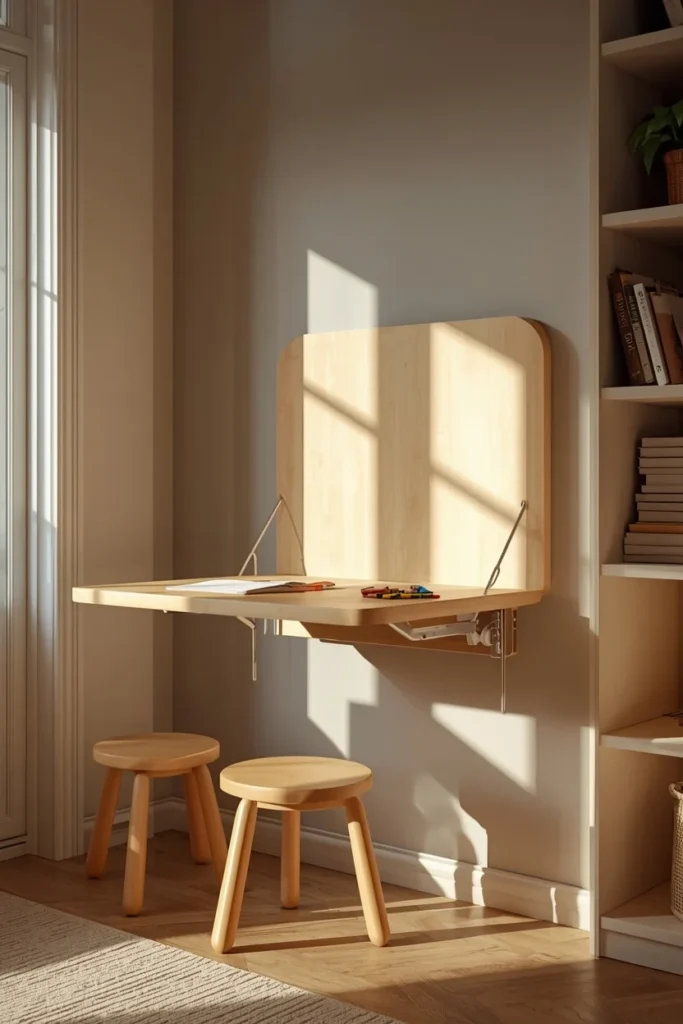
12. A Fold-Down Wall-Mounted Table
In smaller playrooms, a table that folds flat against the wall when not in use solves the eternal tension between needing a flat surface for crafts and homework and needing open floor space for active play. When folded down, it provides a full surface for coloring, puzzles, or snack time; when folded up, it disappears almost entirely, freeing the floor for building forts or running around. Mounting it near existing storage for art supplies or snacks creates a compact activity station without dedicating permanent floor space to a table and chairs. This is one of the best small-space solutions on this entire list because it genuinely doubles the usable function of the same square footage. It’s a project that can usually be completed in a single weekend.
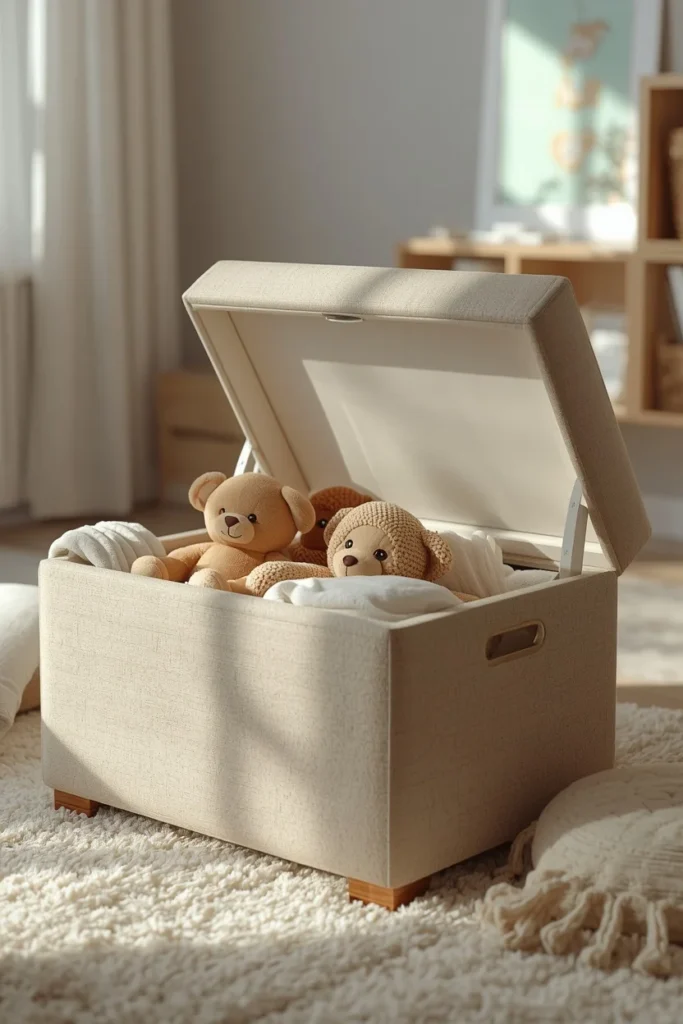
13. Storage Ottomans and Benches for Hidden Mess
Soft ottomans and benches with hollowed-out interiors provide extra seating while doubling as a place to stash whatever doesn’t have a designated home yet. This is especially useful for the category of items that seem to multiply overnight, like stuffed animals, loose blankets, or the day’s accumulated art projects. Because the storage is hidden under a soft, upholstered lid, the room can look considerably tidier at a glance even when it’s genuinely full underneath. Choosing a durable, wipeable fabric keeps these pieces functional even with frequent daily use and the occasional spill. It’s furniture that quietly does two jobs at once, which is exactly the kind of efficiency a busy playroom benefits from most.
14. A Climbing Structure That Grows with Them
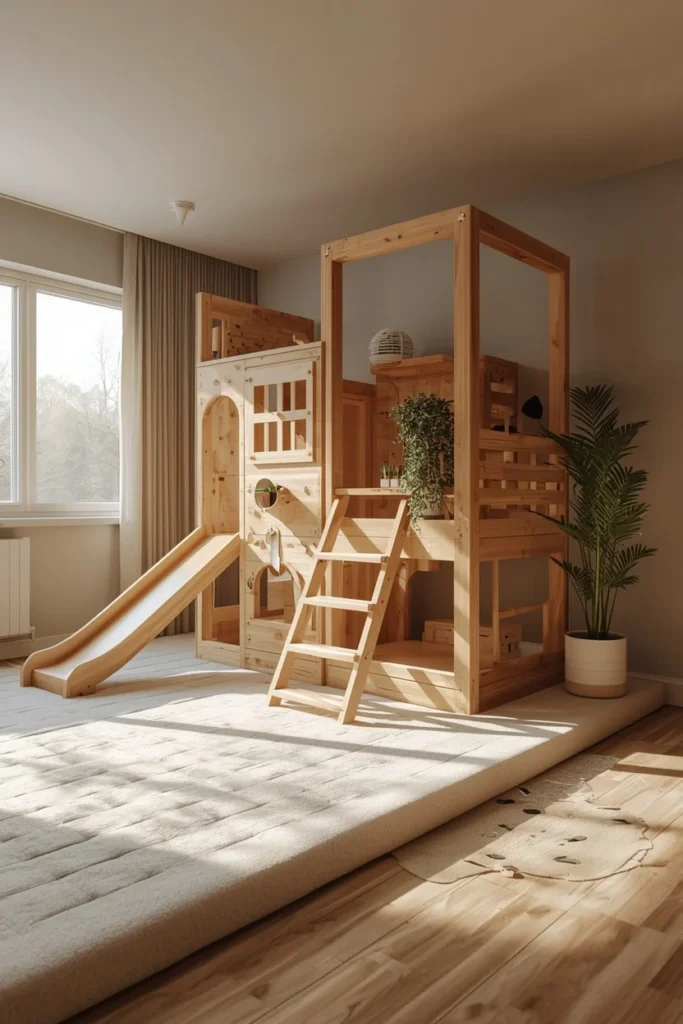
Rather than buying a climbing toy sized for a single age range, a modular climbing structure with adjustable pieces, like a wall ladder, small rock wall, and slide combination, can be reconfigured as a child grows from toddler to elementary age. This kind of active, structured movement option gives kids an outlet for physical energy indoors, which matters especially on days when outdoor play isn’t possible. Because the pieces are modular, parents aren’t stuck replacing the entire structure every year or two as skills and interests change. Positioning it against a padded wall or over a foam mat adds a layer of safety cushioning for the inevitable slips. It’s a bigger investment than most ideas on this list, but the adjustability means it earns its keep over several years instead of one season.
15. A Sensory Swing for Movement Breaks
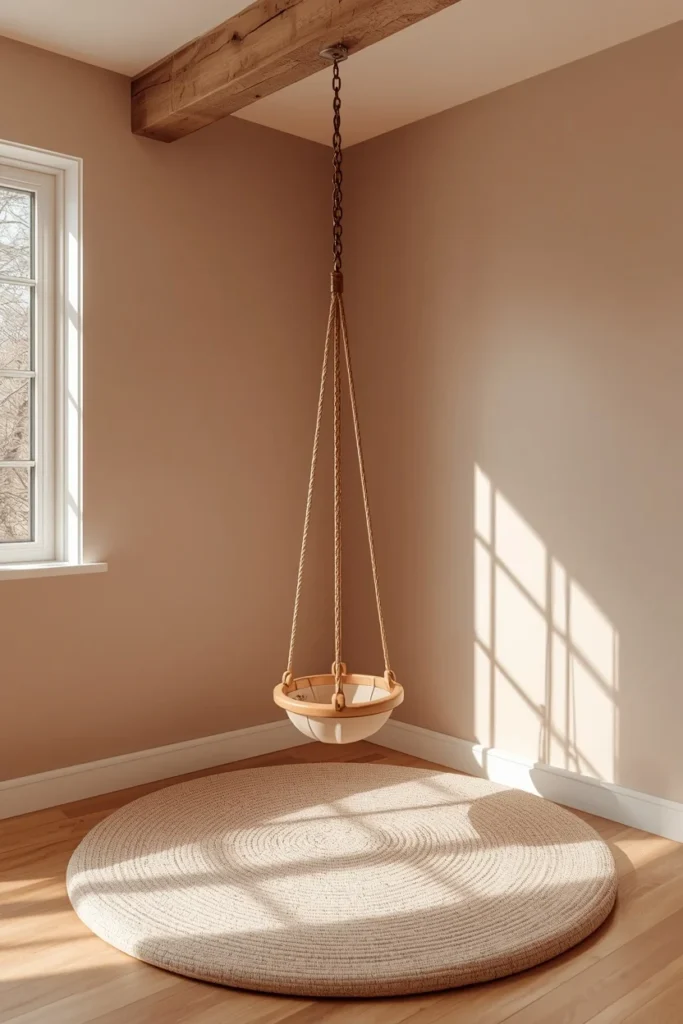
A hanging swing mounted from a ceiling beam or reinforced joist gives kids a satisfying outlet for movement and sensory input without needing to leave the room at all. This kind of gentle, repetitive motion can help some kids reset and refocus after a period of high-energy play or a tricky moment in the day. Installing it in a corner away from the main open floor space keeps it from interfering with other activities happening in the room at the same time. A soft foam mat underneath adds a cushioned landing zone for getting on and off. It’s a feature kids tend to return to again and again, and it adds a genuinely different type of play to a room that might otherwise be mostly toys and tables.
16. An Under-Stairs or Closet Playroom Nook
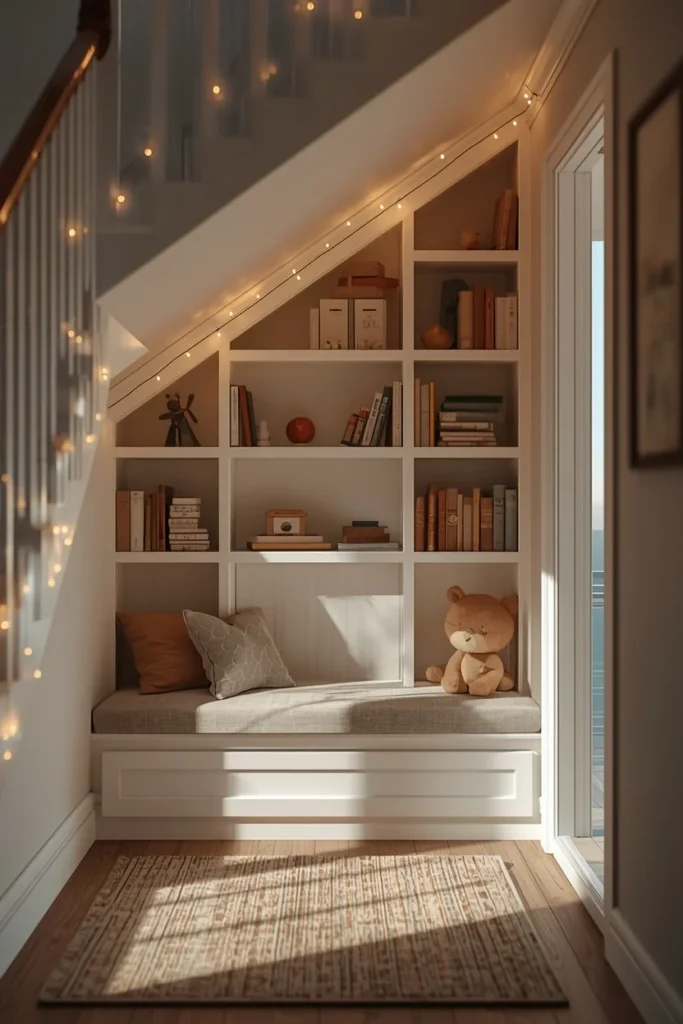
Not every home has a spare room to dedicate entirely to play, and an underused space like the area beneath a staircase or a deep closet can become a surprisingly complete mini playroom. Built-in shelving that follows the slanted ceiling line maximizes what would otherwise be wasted, awkward space, and a small cushion or bench at the lower end creates a cozy reading or quiet corner. Because the space is naturally enclosed, it also tends to feel like a secret hideout to kids, which adds an extra layer of appeal beyond just function. This approach works particularly well in open-concept homes, where a full separate playroom might not be an option but a defined nook still is. It’s proof that a genius playroom doesn’t require a dedicated room at all.
17. Removable Wallpaper and Decals Instead of Permanent Decor
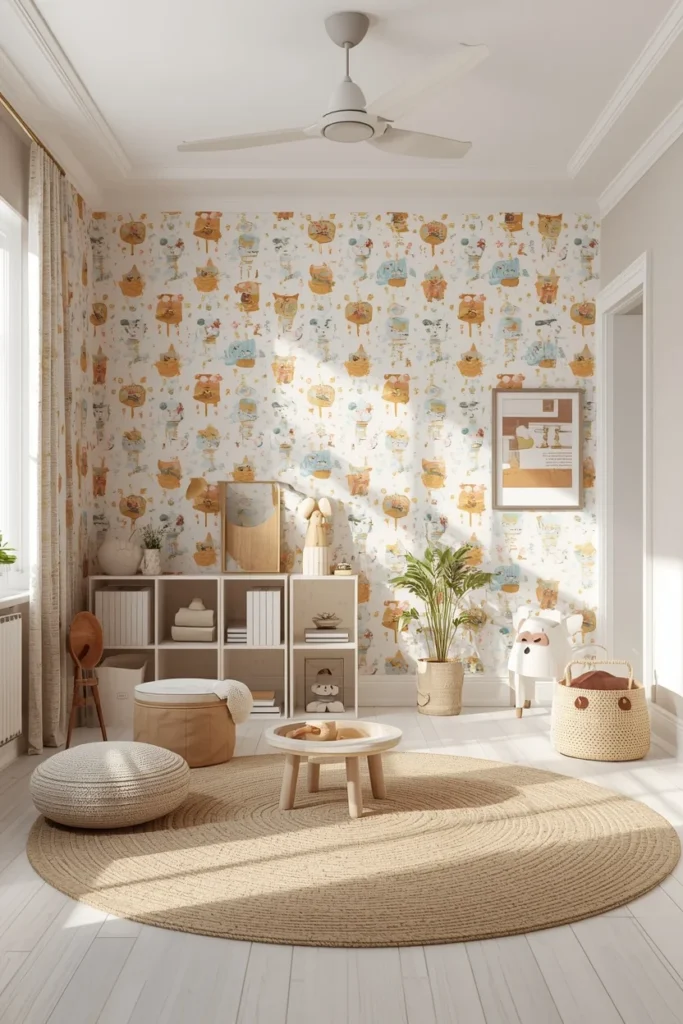
Kids’ interests shift fast, and committing to a fully painted mural or a single themed wall can feel outdated within a year or two. Peel-and-stick wallpaper and wall decals let you introduce color, pattern, or a specific theme without any permanent commitment, and they can be swapped as easily as they were applied when tastes change. This is especially useful for renters, who often can’t paint walls at all but still want a playroom that feels personal and current. Keeping large furniture and flooring neutral while using removable wallpaper for personality means big-ticket items don’t need replacing every time preferences shift. It’s a flexible decor system that keeps the room feeling fresh without requiring an actual renovation each time.
18. Modular Cube Storage to Define Boundaries
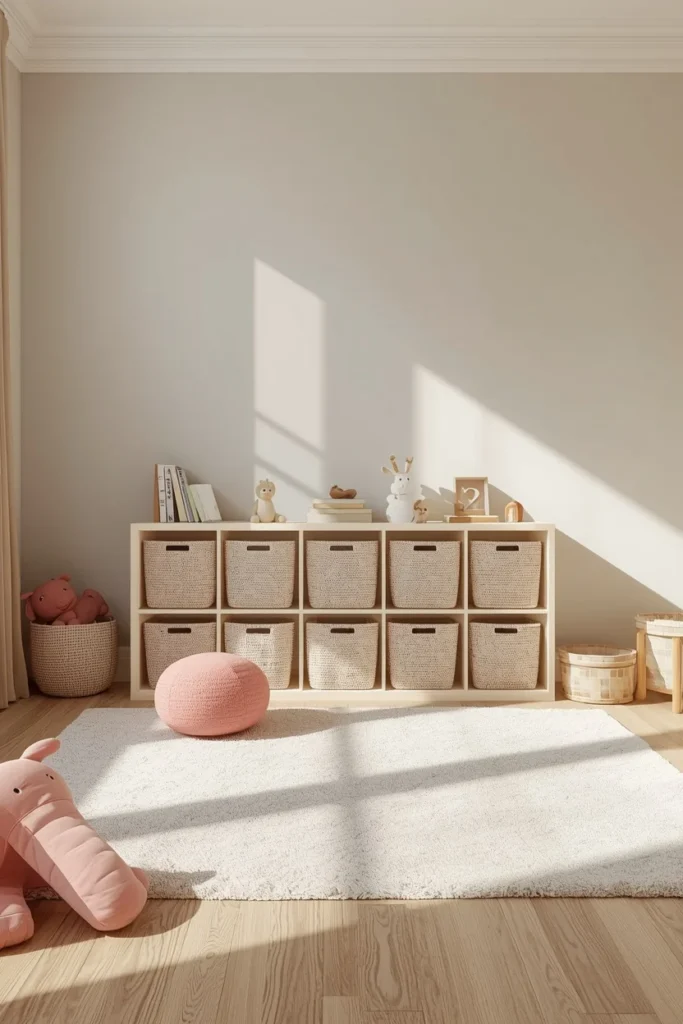
A cube storage unit does double duty as both a place to stash toys and a soft, low-height divider that can visually separate one zone of the room from another. Because the cubes come as individual sections, the same unit can be reconfigured into an L-shape, a straight line, or a room divider as the family’s needs and the room’s layout change over time. Matching fabric bins across every cube keeps the unit looking cohesive rather than like a mismatched pile of storage. This is one of the most flexible pieces of furniture a playroom can have, since it adapts to a new house, a new room shape, or an added sibling without needing to be replaced. It’s a practical backbone that quietly supports almost every other zone or system on this list.
19. Clear Bins and Over-the-Door Organizers for Small Parts
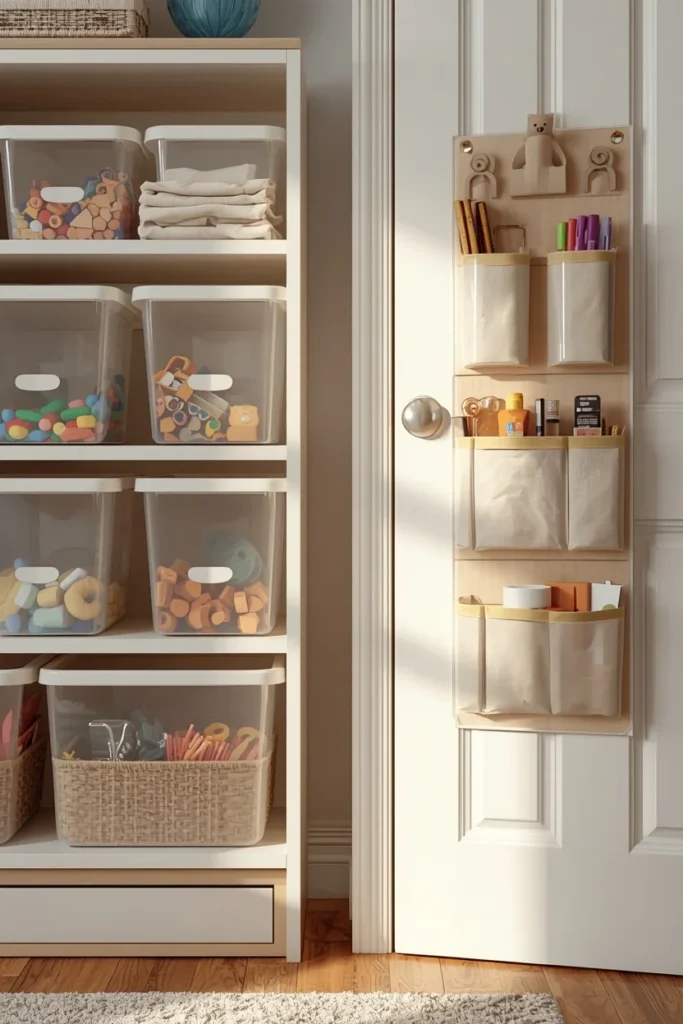
Small toy pieces, craft supplies, and game components are the fastest things to disappear into couch cushions or get lost entirely. Clear bins let kids see exactly what’s inside without opening every container to search, which speeds up both playtime and cleanup considerably. An over-the-door pocket organizer adds storage without using any floor or shelf space at all, making it especially useful in smaller rooms where every inch of surface area matters. These are some of the least expensive additions on this entire list, often costing very little, but they solve one of the most persistent small-scale organization problems in any playroom. Pairing clear storage with the picture-label system mentioned earlier makes an already visible system even easier for young kids to use independently.
20. A Labeled Board Game Station
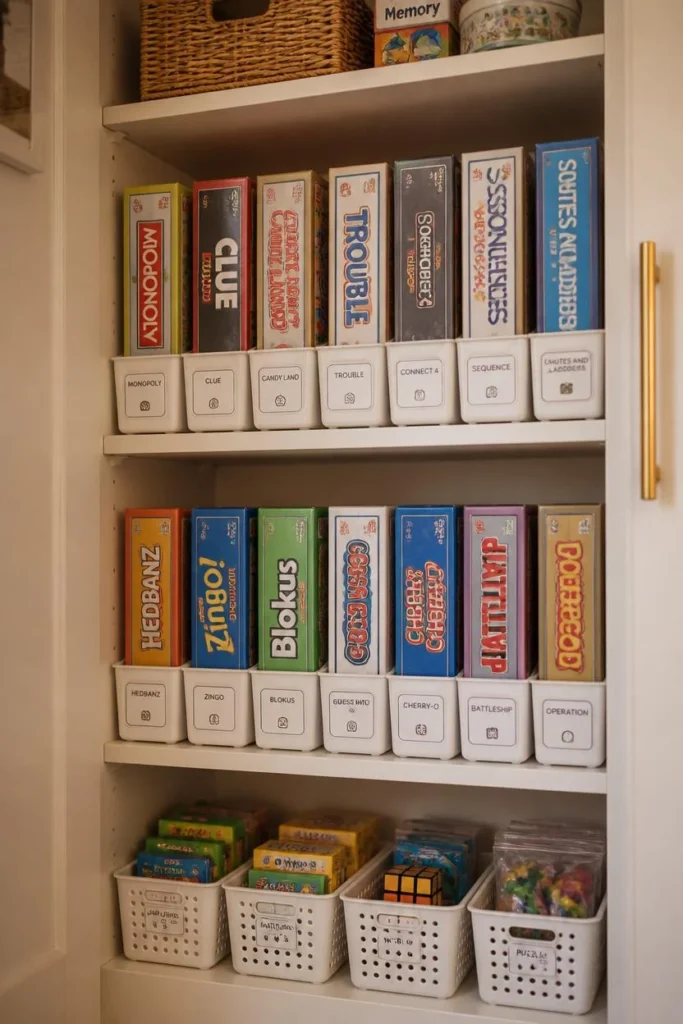
Board games are notoriously awkward to store because of their mismatched box sizes, and pieces easily go missing when boxes get worn or crushed. A dedicated station with uniform storage bins or a labeling kit for each game keeps every set complete and easy to identify without needing to open every box to check. Stacking games vertically like books, rather than horizontally in a pile, also makes it far easier to see and grab a specific title without disturbing the rest of the stack. This kind of station works especially well tucked into a nearby closet or a lower cabinet shelf, since board games don’t need to be on constant display the way daily-use toys do. Setting this system up once saves a meaningful amount of frustration on every future family game night.
21. A Curtain Stage Corner for Pretend Play
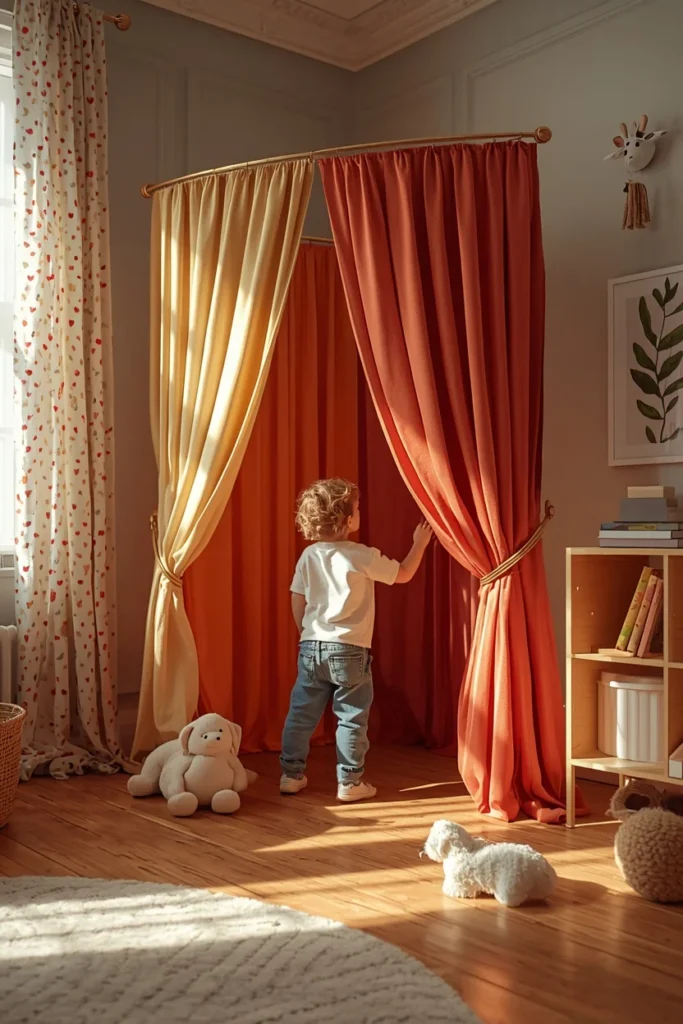
A simple curtain rod and a set of drapery panels mounted in one corner of the room can transform into a stage, a puppet theater, or a private fort with almost no construction required. This kind of open-ended prop supports imaginative play far longer than a single-purpose toy would, since kids can reinvent what the space represents depending on the game of the day. It’s also one of the lowest-cost ideas on this entire list, since it requires only a tension rod and fabric rather than any built-in construction. Positioning it in a corner keeps it from interfering with the room’s main open floor space while still giving it enough presence to feel like a real destination within the room. Kids tend to return to this kind of flexible prop across a much wider age range than most themed furniture.
22. Natural Materials and Soft Textures for a Calm Baseline
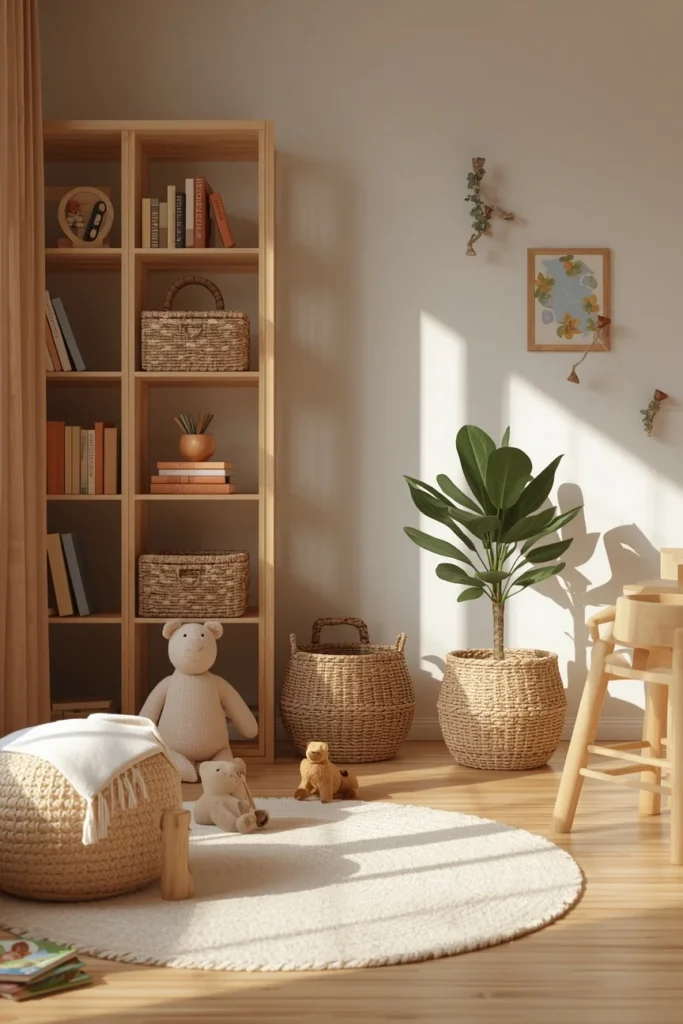
A playroom doesn’t need bright plastic and primary colors on every surface to feel fun. Leaning on natural wood tones, woven baskets, and soft layered textures for the room’s base, then adding color through toys, art, and swappable decor, creates a calmer backdrop that many parents and designers alike say helps kids settle in and focus longer during play. This approach also ages better over time than an intensely themed room, since a neutral, natural foundation doesn’t need to be redone every time interests shift. Adding a few real plants or leafy greenery reinforces the same grounding, biophilic effect and brings a bit of the outdoors into an indoor play space. It’s less about restraint for its own sake and more about giving the room’s more colorful, changeable elements — the toys, the art, the decor — a calm stage to stand out against.
Styling Tips
Keep large furniture pieces and flooring in a neutral, natural palette so color and pattern can come from swappable elements like toys, art, and removable decor instead of a fully committed theme. Match storage bins and baskets across each shelf so the room reads as organized even on a busy day. Use lighting differences, warmer and softer in calm zones, brighter in creative zones, to reinforce the room’s layout without needing walls or furniture to do all the work.
Practical Implementation Ideas
Start with one zone, most often the storage and shelving system, before tackling bigger structural additions like a climbing wall or built-in bench. Test any labeling system with your child directly to confirm the picture or color code actually makes sense to them before committing to bins for the whole room. If space is limited, prioritize furniture that serves two purposes, like a storage ottoman or a fold-down table, over single-purpose pieces.
Common Mistakes to Avoid
Buying storage before deciding on a zone layout often means ending up with mismatched bins that don’t actually solve the underlying organization problem. Choosing only text labels for a room used by children who can’t read yet creates a system only parents can maintain. Skipping washable materials on rugs and furniture tends to be one of the most regretted decisions once the first real spill or art mishap happens.
Small-Space Alternatives
A fold-down wall table, an under-stairs nook, or a single defined corner of a shared room can deliver most of the same benefits as a full dedicated playroom. Vertical storage, like tall narrow shelving or over-the-door organizers, makes better use of limited square footage than wide, low furniture. Choosing multi-purpose furniture, like a storage bench that also provides seating, becomes even more important when floor space is tight.
Budget-Friendly Alternatives
A label maker, a set of clear bins, and picture labels cost very little and solve one of the most common organization complaints in any playroom. Peel-and-stick wallpaper or decals refresh a room’s look for a fraction of the cost of a full repaint or built-in feature. A simple tension rod and fabric panels create an entire pretend-play stage corner without any construction cost at all.
Pro Styling Recommendations
Set up one visible system, like the picture-labeled bins, before adding more advanced storage, since a working foundation makes every other addition easier to maintain. Rotate a portion of toys out of sight on a regular schedule rather than trying to store everything a child owns in the room at once. Reassess the zone layout every year or so as your child’s interests and abilities change, since a system that worked for a toddler often needs small adjustments by the time they’re in elementary school.
FAQs
Conclusion
A genius playroom isn’t the one with the most toys or the most elaborate build. It’s the one where a child can find what they want, play with it fully, and put it back again largely on their own, while the room still looks like somewhere a family actually wants to spend time. Pick a few ideas from this list that match your space and your child’s current stage, whether that’s a picture-labeled bin system for a toddler or a modular climbing structure that’ll grow alongside a school-aged kid. The mess doesn’t disappear entirely — that’s still childhood — but it gets a lot more manageable.